Parliament of Canada
The Parliament of Canada is the federal legislature of Canada, a bicameral institution composed of the Crown, represented by the governor general, an appointed upper house called the Senate, and an elected lower house called the House of Commons. Parliament holds the authority to make laws on matters of national jurisdiction, such as the military, currency, and the postal service, control government spending, and hold the executive to account. Its operations and procedures are rooted in the Westminster parliamentary tradition inherited from the United Kingdom. This format is a near-identical copy of the Parliament at Westminster, with differences stemming from Canada's unique situation, such as the lack of a peerage to form the Senate.
Constitutional Composition and Roles
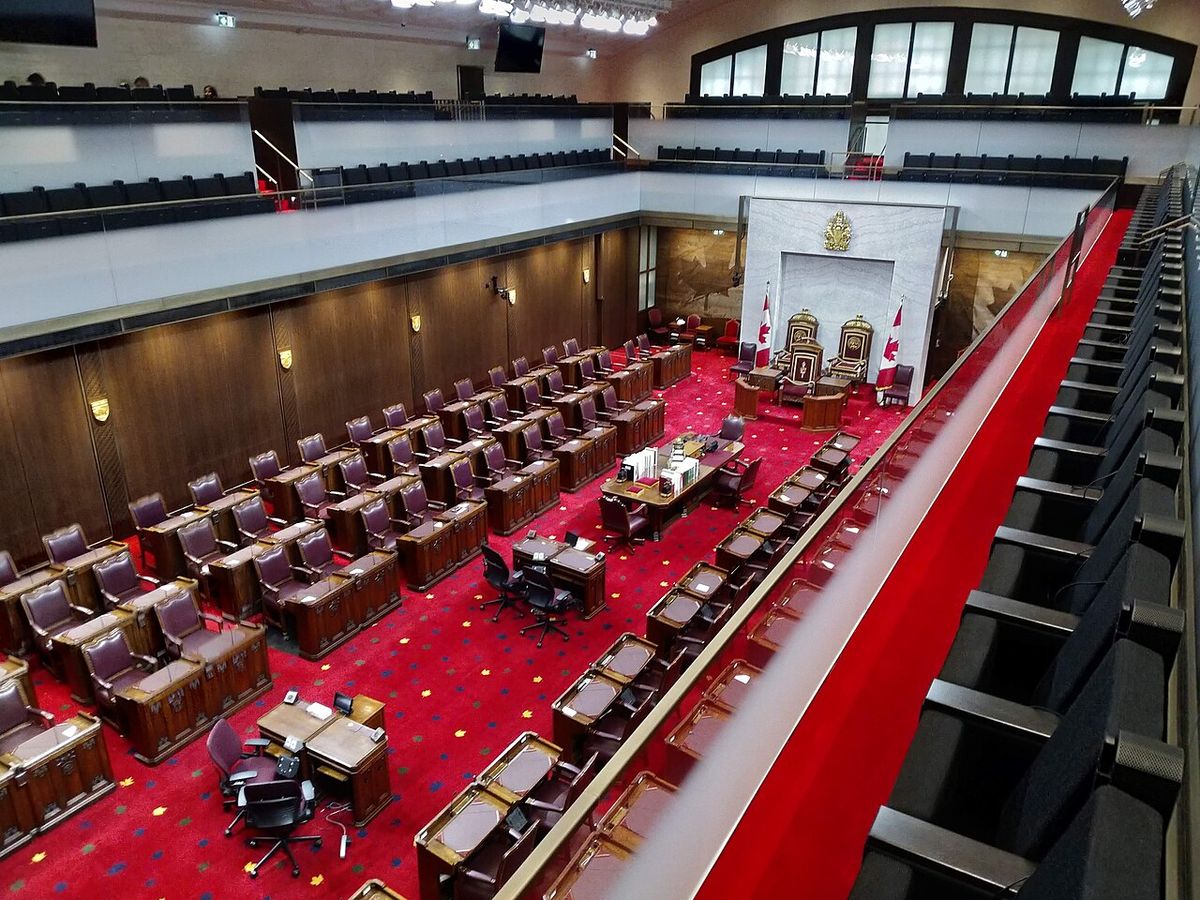
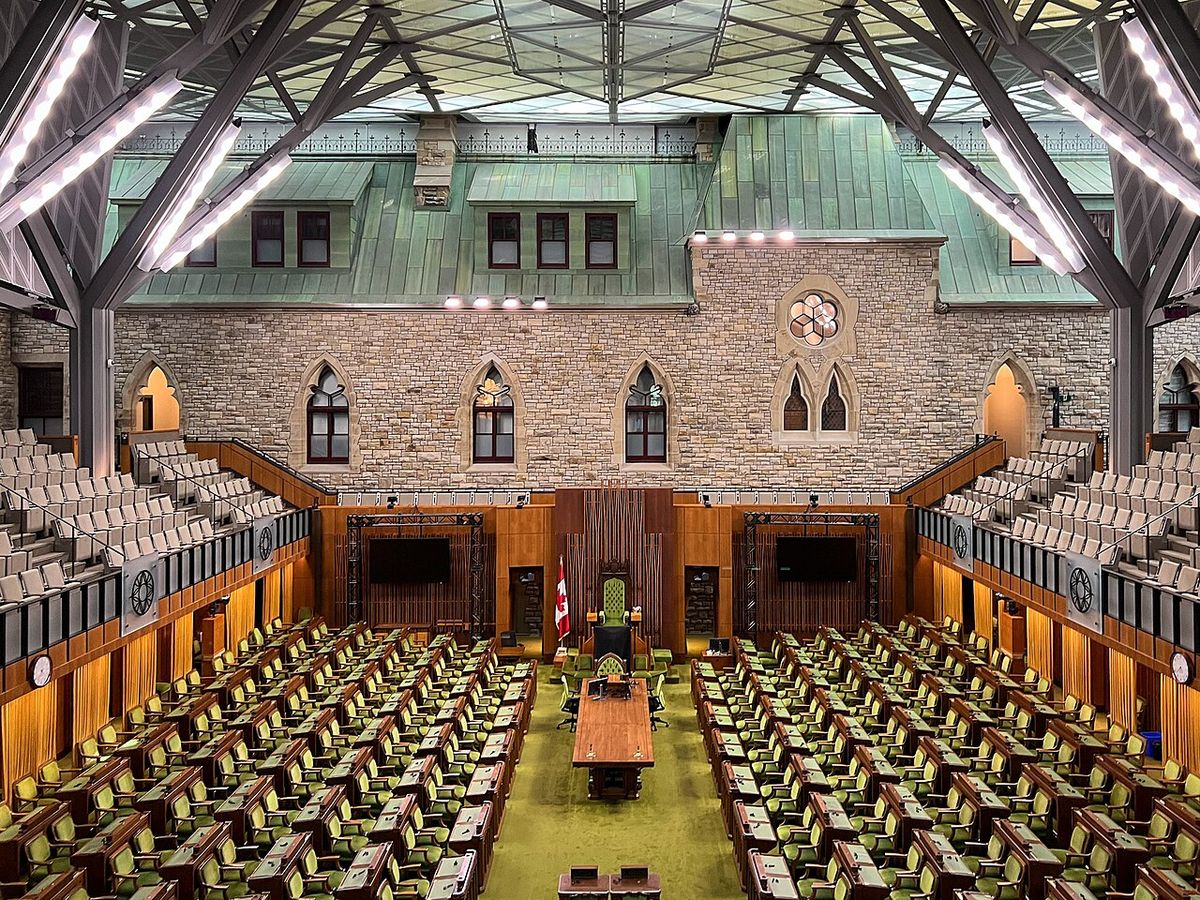
The Parliament of Canada is formally constituted by three elements: the monarch, the Senate, and the House of Commons. The King of Canada, currently King Charles III, is the head of state and a component of Parliament, though his duties are carried out by the governor general. The governor general summons, prorogues, and dissolves Parliament on the advice of the prime minister and grants royal assent to turn bills into law. The Senate, or upper house, consists of 105 members appointed by the governor general on the prime minister's advice, designed to provide sober second thought and regional representation. The House of Commons, or lower house, is the elected chamber with 343 members, each representing a federal electoral district known as a riding. By constitutional convention and the Westminster system, the House of Commons is the dominant chamber, with the Senate rarely opposing its will on major matters, especially those concerning government spending. The two houses work in conjunction within the legislative process, but each has distinct officers, traditions, and rules of procedure.
The Senate: Appointment and Regional Representation
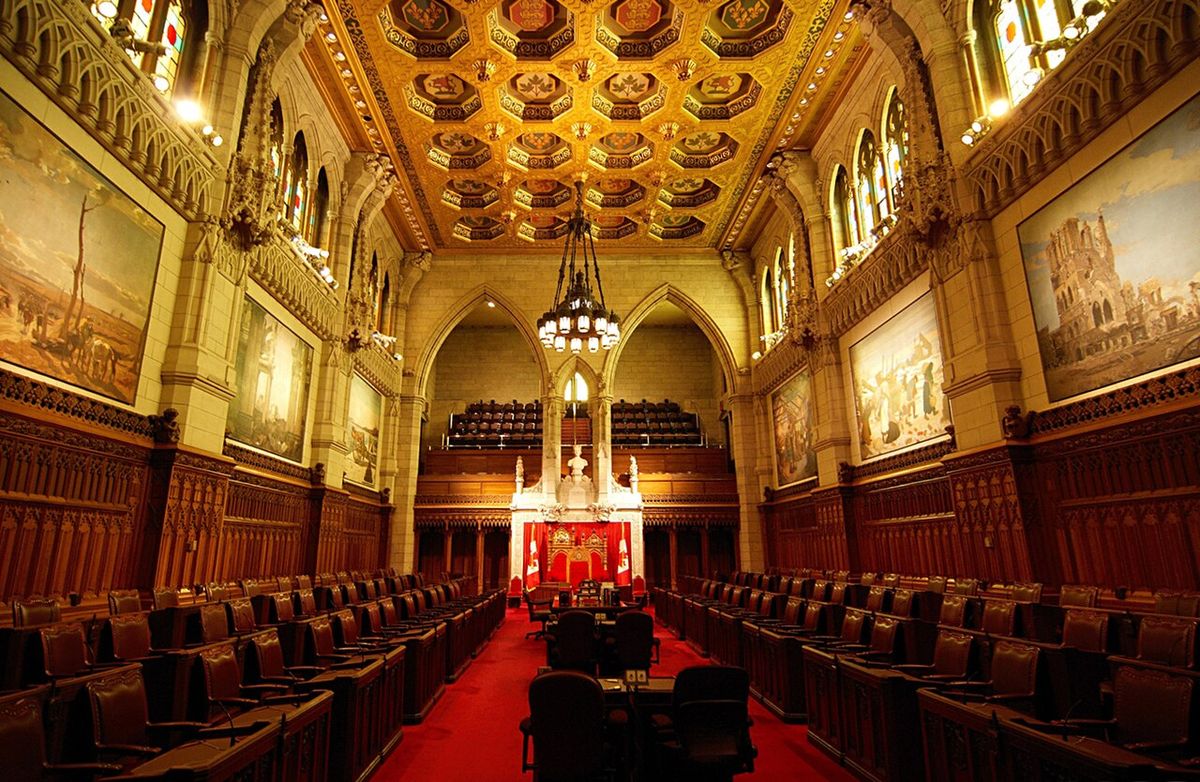
The Senate serves as the appointed chamber of Parliament, intended to provide regional balance and review legislation passed by the popularly elected House of Commons. Senators are appointed by the governor general on the advice of the prime minister and must meet specific constitutional requirements. To be eligible, an individual must be at least 30 years old, a subject of the monarch, and own property with a net worth of at least $4,000, plus own land worth no less than $4,000 within the province they are appointed to represent. Senators originally served for life, but since a 1965 constitutional amendment, they must retire at the age of 75. They can also resign earlier or lose their seat for failing to attend two consecutive sessions of Parliament.
The principle underlying Senate composition is equality among Canada's major geographic regions, known as divisions. The constitution allocates 24 senators for Ontario, 24 for Quebec, 24 for the Maritime provinces (10 for Nova Scotia, 10 for New Brunswick, and 4 for Prince Edward Island), and 24 for the Western provinces (6 each for Manitoba, British Columbia, Saskatchewan, and Alberta). Additional senators are appointed for areas outside these divisions. Newfoundland and Labrador has 6 senators, and each of the three territories, the Northwest Territories, Yukon, and Nunavut, has 1 senator. The governor general can appoint an additional 4 or 8 senators, with the monarch's approval, provided the four main divisions are equally represented. This power to expand the Senate has been used only once since 1867, by Prime Minister Brian Mulroney in 1990 to ensure passage of the Goods and Services Tax bill, temporarily increasing the Senate's size to a maximum of 113.
The House of Commons: Election and Representation
The House of Commons is the elected and predominant chamber of Parliament, where the government is formed. Its 343 members, known as Members of Parliament or MPs, are elected by a plurality of voters in federal electoral districts across the country. To run for a seat, a candidate must be a Canadian citizen and at least 18 years old. MPs hold office until Parliament is dissolved, typically every four years, after which they may seek re-election. The distribution of seats among the provinces is based primarily on population, using an electoral quotient determined by each decennial census. However, constitutional clauses guarantee certain provinces a minimum number of seats, resulting in a deviation from strict representation by population.
The House of Commons is the source of most government bills, especially those involving the raising or spending of public revenue, which must originate in this chamber. The political party that commands the confidence of the House, usually the one with the most seats, forms the government, with its leader becoming prime minister. The incumbent 45th Parliament is a Liberal majority government. The House Administration provides non-partisan services and advice to MPs, supporting their work as lawmakers and representatives of their constituents. A Report to Canadians is published, such as the one for 2026, summarizing the work of MPs and the support provided by the House Administration to promote transparency in public governance.
- Total Seats: 343
- Election Method: Plurality voting in single-member ridings
- Term: Until dissolution (maximum 5 years by constitution)
- Key Function: Holds the government to account through daily Question Period and committee scrutiny.
- Officers: Includes the speaker, the clerk, and other procedural officers.
Legislative Powers and Jurisdiction
The legislative powers of the Parliament of Canada are divided and limited by the Constitution Act, 1867, which outlines federal and provincial areas of jurisdiction. Parliament holds exclusive authority over matters of national concern, while provinces legislate on topics explicitly reserved for them. The federal Parliament alone can pass laws relating to the postal service, census, military, navigation and shipping, fishing, currency, banking, weights and measures, bankruptcy, copyrights, patents, First Nations, and naturalization. In areas of concurrent or overlapping jurisdiction, such as agriculture, taxation, and the punishment of crimes, both federal and provincial legislatures may operate. For instance, Parliament regulates marriage and divorce in general, but the solemnization of marriage is regulated by provincial legislatures. The powers of Parliament are also constrained by the Canadian Charter of Rights and Freedoms. Any law that violates the constitution, including the division of powers or the Charter, can be ruled invalid and unconstitutional by the courts. This system of judicial review ensures that Parliament operates within its defined legal boundaries.
Officers and Parliamentary Administration
Each chamber of Parliament is presided over by a speaker. The Speaker of the Senate is appointed by the governor general on the advice of the prime minister. The Speaker of the House of Commons is an MP elected by fellow members of that house at the beginning of a new Parliament. The speaker's role is to maintain order and decorum, interpret parliamentary rules, and oversee administration. The powers of the House Speaker are generally greater than those of the Senate Speaker, reflecting the Commons' dominance, though Senate Speaker powers were expanded in 1991.
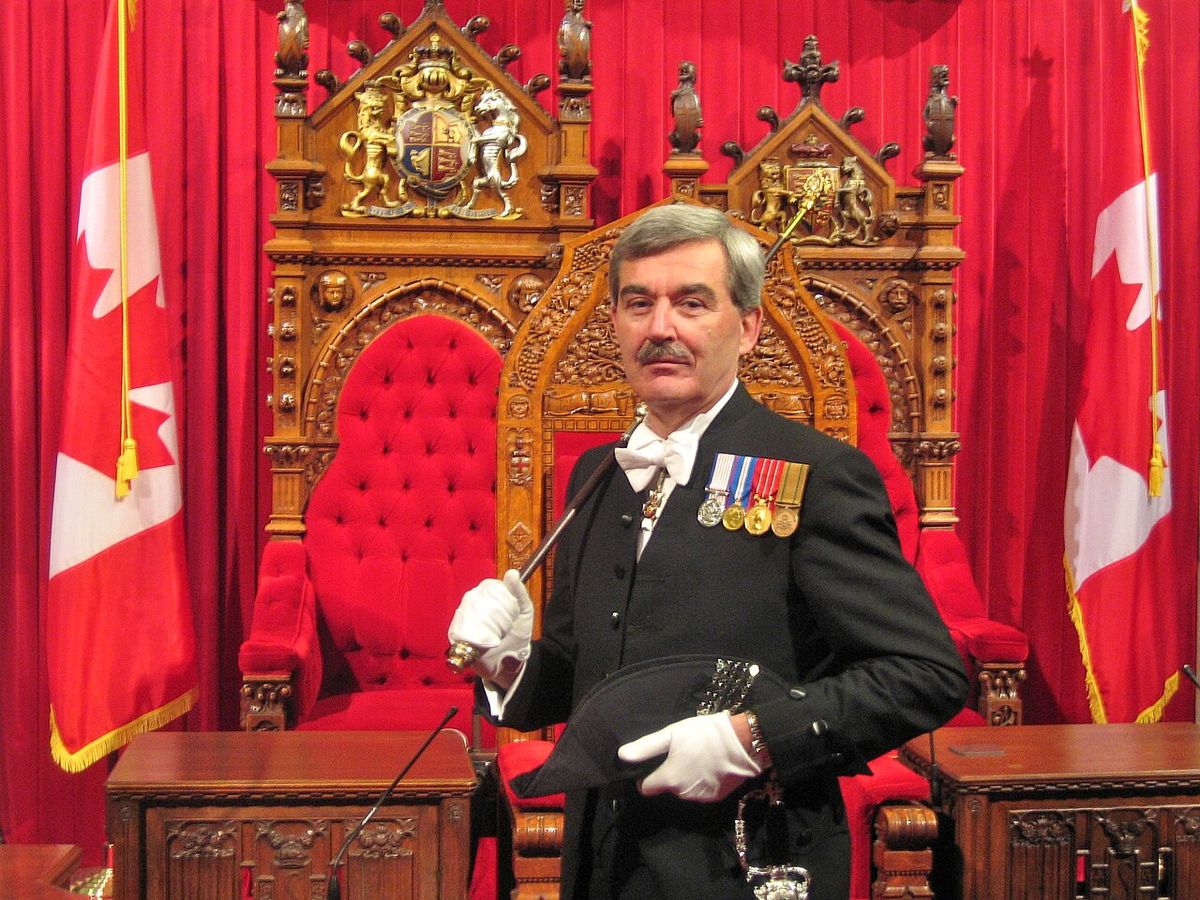
Several other key officers support parliamentary work. The Usher of the Black Rod of the Senate is the most senior protocol position, serving as the personal messenger of the sovereign and governor general to the legislature and responsible for security and major events on Parliament Hill. Independent Officers of Parliament, sometimes called Agents of Parliament, are appointed to oversee specific areas of public administration. These include the auditor general, chief electoral officer, official languages commissioner, privacy commissioner, information commissioner, conflict of interest and ethics commissioner, public sector integrity commissioner, and commissioner of lobbying. They report to Parliament through the speakers. The Parliamentary Librarian, a position established in 1871, directs the Library of Parliament, providing research and information services to parliamentarians.
- Speaker of the Senate: Appointed by the governor general
- Speaker of the House of Commons: Elected by MPs
- Usher of the Black Rod: Senior protocol and security officer for the Senate
- Officers of Parliament: Include auditor general, chief electoral officer, ethics commissioner, etc.
- Parliamentary Librarian: Heads the Library of Parliament
- House of Commons Administration: Provides non-partisan support to MPs.
Parliamentary Procedure and Sessions
A Parliament begins with a summons by the governor general after a general election. The opening of a new session is marked by a ceremony where the Speech from the Throne is delivered by the governor general, or occasionally the monarch, outlining the government's agenda. During this ceremony, the Usher of the Black Rod summons MPs from the Commons to the Senate chamber, where they stand behind a bar to hear the speech, symbolizing the Commons' independence. A parliamentary session lasts until prorogation, which ends all business until a new session is called. After several sessions, a Parliament ends via dissolution, triggering a general election. Fixed election date legislation sets elections every four years on the third Monday in October, though the governor general may dissolve Parliament earlier on the prime minister's advice, often following a loss of confidence.
Legislative business is conducted through a defined process. Bills may be introduced in either chamber, but money bills must start in the Commons. Most bills are government bills introduced by cabinet ministers. Bills undergo first reading, second reading for debate on principles, committee study where amendments can be proposed, report stage, and third reading. Voting is typically by voice vote, but recorded votes can be demanded. The quorum is 15 senators and 20 MPs. The Speaker of the Commons votes only to break a tie, conventionally in favour of the status quo. Simultaneous interpretation in English and French is provided at all times during sessions. Committees, like the Senate's Banking, Commerce and the Economy committee, are central to the legislative process, scrutinizing bills and hearing from witnesses.
Initiatives and Public Engagement
Parliament engages with the public and specialist communities through various programs and reports. The House of Commons Administration publishes an annual Report to Canadians, such as the 2026 edition, which summarizes MPs' work and explains the parliamentary system to promote transparency. The Teachers Institute on Canadian Parliamentary Democracy is a week-long professional development program for educators, with sessions scheduled for November 2026. A significant initiative is Science Meets Parliament (SMP), a program designed to strengthen connections between scientists and policymakers. The 2026 edition, the sixth since the program's 2018 inauguration, is tentatively scheduled for November 23-24 in Ottawa, subject to the parliamentary calendar.
The Science Meets Parliament program brings early-career scientists to Parliament Hill to learn about policymaking and discuss their research with parliamentarians. It involves virtual workshops and in-person meetings, including attendance at House and Senate committees. The program is adapted from a successful Australian model and aims for mutual understanding, not advocacy. By 2026, over 150 scientists had participated in past Canadian editions. Parliament also undertakes major infrastructure projects, such as the construction of the new Parliament Welcome Centre within the Centre Block rehabilitation, with updates provided in 2026. These efforts align with the House Administration's strategic priorities to support parliamentary democracy.
| Program/Initiative | Purpose | Next Scheduled Date (from notes) |
|---|---|---|
| Report to Canadians | Summarize MP work and promote transparency | 2026 edition published |
| Teachers Institute | Educator professional development | 1-6 November 2026 |
| Science Meets Parliament | Connect scientists and policymakers | 23-24 November 2026 (tentative) |
| Parliament Welcome Centre | New visitor and operational space | Construction update in 2026 |
Symbols and Traditions
The authority and traditions of Parliament are embodied in physical symbols and ceremonies. Each chamber possesses a ceremonial mace, which represents the authority of the King-in-Parliament and must be present for the chamber to sit. The Senate's 1.6-metre-long mace is made of brass and gold and typically rests on the table with the crown facing the throne. The House of Commons mace was donated by the City of London in 1917 after the original was destroyed in the 1916 Centre Block fire. A temporary wooden mace, used until the replacement arrived, is still carried into the Senate each February 3 to commemorate the fire. The tradition of the Usher of the Black Rod summoning MPs to the Senate for the throne speech involves the doors of the Commons being shut, then opened after the Black Rod knocks, symbolizing the Commons' right to control its own proceedings.
All new parliamentarians must swear the Oath of Allegiance to the sovereign before taking their seats, showing loyalty to the Crown. The official opposition is formally styled as His Majesty's Loyal Opposition, emphasizing that political opposition is directed at the government's policies, not the apolitical monarchy. Major ceremonies, such as the opening of Parliament, royal assent, or state funerals, are managed with strict protocol, often coordinated by the Usher of the Black Rod. These symbols and rituals connect the modern institution to its historical roots in the Westminster system and the constitutional monarchy. The Parliament of Canada was granted its own heraldic badge by the Canadian Heraldic Authority on 15 April 2008.
Questions about Parliament of Canada
What is the difference between the Senate and the House of Commons?
The Senate and House of Commons are the two chambers of Canada's Parliament. The House of Commons is the elected lower house, with 343 Members of Parliament chosen by voters in federal ridings. It is the dominant chamber where most legislation, especially bills involving money, originates and where the government is formed. The Senate is the appointed upper house, with 105 senators selected by the governor general on the prime minister's advice. Its primary roles are to provide regional representation and 'sober second thought' on legislation passed by the Commons. While both must pass a bill for it to become law, the Senate rarely blocks the will of the elected House.
How are senators chosen and how long do they serve?
Senators are appointed by the governor general on the formal advice of the prime minister. To be eligible, a person must be at least 30 years old, a subject of the monarch, and own property worth at least $4,000 within the province they will represent. Senators no longer serve for life. Since a 1965 constitutional amendment, they must retire at age 75. They can also resign their seats earlier. Senators can lose their position if they fail to attend two consecutive sessions of Parliament. The appointments are structured to ensure regional balance across Canada's major geographic divisions.
What is the Speech from the Throne?
The Speech from the Throne is a ceremony that marks the opening of a new session of Parliament. It is delivered by the governor general, or occasionally the monarch, in the Senate chamber. The speech outlines the government's broad agenda and policy goals for the upcoming parliamentary session. During the ceremony, MPs are summoned from the House of Commons by the Usher of the Black Rod. The event is rich with symbolism, including the closed doors of the Commons, which are opened after the Black Rod knocks, representing the independence of the elected house from the Crown.
Can the Senate reject bills passed by the House of Commons?
Yes, the Senate has the constitutional power to reject or amend bills passed by the House of Commons, as both chambers must agree on a bill's final text for it to receive royal assent. However, by longstanding constitutional convention rooted in the Westminster system, the appointed Senate rarely exercises this power to outright block the will of the elected House, especially on matters of confidence or major government legislation. The Senate more commonly proposes amendments or conducts detailed reviews. Its power is also limited because bills for raising or spending public revenue must originate in the Commons.
What is Science Meets Parliament?
Science Meets Parliament (SMP) is a program designed to strengthen connections between Canada's scientific community and federal policymakers. Adapted from a successful Australian model, it brings early-career scientists to Parliament Hill to learn about the legislative process and discuss their research with parliamentarians. The 2026 edition, scheduled for November 23-24, involves virtual workshops and in-person meetings, including attendance at parliamentary committees. The goal is to foster a two-way dialogue and mutual understanding about the role of scientific evidence in policy-making, not to advocate for specific funding or positions. Over 150 scientists have participated since the program's Canadian launch in 2018.
How often are federal elections held?
Federal elections are constitutionally required at least every five years, but fixed election date legislation sets a regular cycle of every four years. The law stipulates that a general election is to be held on the third Monday of October in the fourth calendar year following the previous election. However, the governor general retains the prerogative to dissolve Parliament and call an election earlier, typically on the advice of the prime minister. This can happen if the government loses the confidence of the House of Commons on a major vote, such as a budget, or for other political reasons. The chief electoral officer can recommend moving the fixed date to the following Tuesday or Monday if necessary.
Sources and further reading
- Parliament of Canada (Wikipedia)
- Report to Canadians (2026) (ourcommons.ca)
- Science Meets Parliament 2026 (SMP 2026) - CSPC (sciencepolicy.ca)
Checked by the Nosy Mag desk. Last updated 2026-10-27.