History of Ontario
The history of Ontario encompasses millennia of human habitation, from the arrival of the first Paleo-Indians to its evolution into Canada's most populous province. Its story is defined by the enduring presence of Indigenous nations, the rivalries of French and British empires, the influx of Loyalists, and its central role in the formation of Canada. The province's development was shaped by conflict, including the War of 1812, political reform movements, and rapid economic expansion in the 19th century. Understanding Ontario's past is central to understanding the economic, political, and cultural foundations of modern Canada.
Indigenous Foundations and Early European Contact
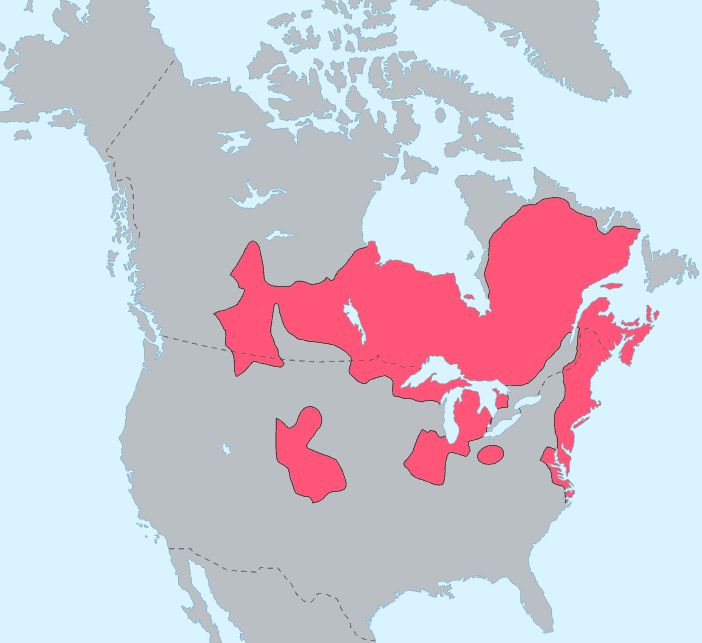
Human history in Ontario begins approximately 11,000 years ago with the migration of Paleo-Indians across the Bering land bridge from Asia to North America. During the Archaic period, from 8000 to 1000 BC, a warmer climate supported a slowly growing population of hunter-gatherers in a generally egalitarian society, and early trade routes began to form along the St. Lawrence River and around the Great Lakes. The subsequent Woodland period introduced ceramics in its early phase and saw horticultural experimentation with crops like maize during the Middle Woodland. By the Late Woodland period, agriculture and village settlements emerged in southern Ontario, while northern Ontario saw changes in pottery and continued mound building practices, with pictographs appearing that later depicted European horses and ships. Distinct Northern Iroquoian and Algonquian societies had established themselves across the territory, with key Iroquoian confederacies including the interconnected Wendat (Huron), Petun, and Neutral peoples, while Algonquian nations such as the Ojibwe, Cree, and Algonquin inhabited vast regions. French exploration commenced with Étienne Brûlé's surveys between 1610 and 1612, followed by Samuel de Champlain's arrival at Lake Huron in 1615, while English claims followed Henry Hudson's 1611 voyage into Hudson Bay. Jesuit missionaries established posts and alliances, notably with the Wendat, but French settlement was hampered by hostilities with the Haudenosaunee (Iroquois) Confederacy, who were allied with the British. By the early 1650s, using British and Dutch arms, the Haudenosaunee had succeeded in pushing the Petun and Neutral nations out of or to the fringes of southern Ontario. The French established a permanent foothold in 1747 with the settlement of Petite Côte near Detroit, the oldest continuously inhabited European community in western Ontario.
From New France to Upper Canada
British victory in the Seven Years' War resulted in the 1763 Treaty of Paris, which transferred New France, including the Pays d'en Haut region encompassing Ontario, to Britain. The territory was bundled with other former French lands and renamed the Province of Quebec. The first significant English-speaking settlement occurred between 1782 and 1784, as approximately 5,000 American Loyalists, fleeing the aftermath of the American Revolution, settled in the Thousand Islands and Niagara Peninsula. From 1783 to 1796, Britain granted these individuals 200 acres of land per household and other items as compensation for their losses and a start for rebuilding. In response to this growing population, the British Parliament passed the Constitutional Act of 1791, which divided the Province of Quebec into Lower Canada (southern Quebec) and Upper Canada (southern Ontario). John Graves Simcoe was appointed the first Lieutenant-Governor of Upper Canada in 1793. The new province was initially governed by a small elite, but the influx of settlers laid the groundwork for future political and economic development. The land grants to Loyalists were instrumental in establishing agricultural communities and securing British influence in the region against potential American expansion, creating a society distinct from the United States.
The War of 1812 and Its Aftermath
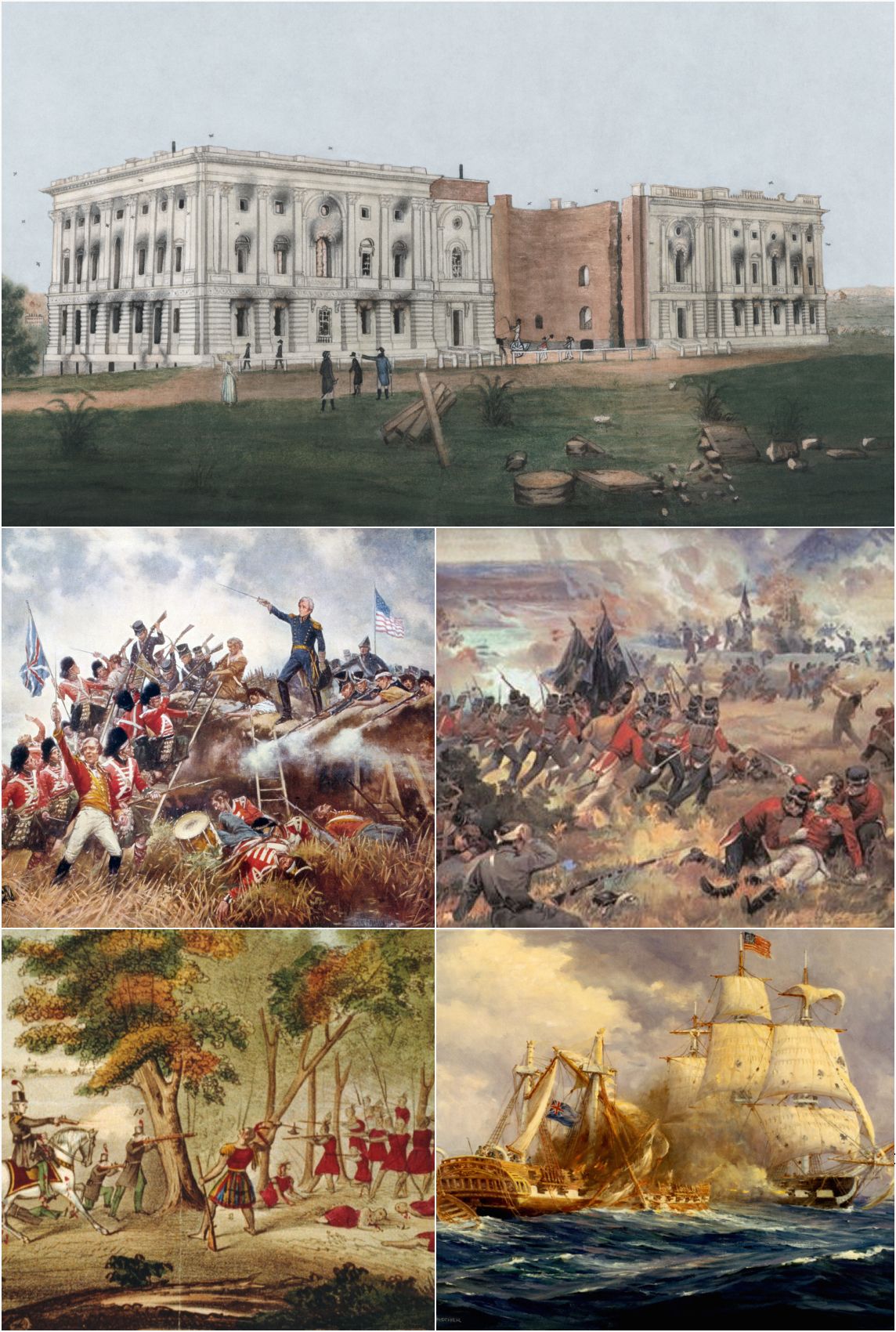
Upper Canada became a primary theatre of war following the American declaration of war against Britain on July 1, 1812, due to grievances over the impressment of American sailors and suspected British support of Indigenous nations in the American Northwest Territory. Early American offensives targeted the southwestern region and the upper Great Lakes, with forces briefly crossing into present day southwestern Ontario before a British-First Nations force launched a counter-offensive into the Michigan Territory. A decisive moment came on September 10, 1813, when American naval control of Lake Erie forced a British retreat from Detroit and a decision to withdraw from the entire area. This withdrawal led to the Battle of the Thames, where American forces under William Henry Harrison caught up to and decisively defeated the retreating British-First Nations force, resulting in the death of Shawnee leader Tecumseh and disrupting that military alliance. The Niagara Peninsula witnessed intense fighting, including the British victory at Queenston Heights in October 1812, where Major-General Isaac Brock was killed. In April 1813, American forces raided and burned York, the provincial capital, and a month later captured Fort George, prompting a British retreat to Burlington Heights. Further American advances were halted at the battles of Stoney Creek and Beaver Dams, leading to an eventual withdrawal from the peninsula on December 10, 1813. Another American thrust toward Montreal was repulsed at the Battle of Chrysler's Farm on November 13, 1813. In the summer of 1814, another invasion of the Niagara Peninsula saw an American victory at Chippewa but a stalemate at Lundy's Lane on July 25, which prompted an American withdrawal to Fort Erie where they repulsed a British siege before evacuating in November 1814. The war concluded with the Treaty of Ghent in December 1814. The conflict fostered a sense of collective identity and loyalty to Britain among many colonists, who celebrated their militia's role in defeating American annexation attempts.
Political Evolution, Rebellion and Union
Post-war immigration from Britain and Ireland increased, shifting the demographic balance away from American-born settlers and attracting newcomers with the promise of relative stability after the conflict. Colonial leaders encouraged this new immigration, though many arriving newcomers found frontier life difficult and some with the means returned home or went south, but population growth far exceeded emigration in the following decades. Economic growth was spurred by capital-intensive infrastructure projects like the Welland Canal, completed in 1829, which connected to the Oswego Canal in New York to create a new trade route to the Atlantic as an alternative to the Erie Canal. Political power, however, remained concentrated in the hands of a conservative oligarchy known as the Family Compact, which dominated the executive, judicial, and economic power from the 1810s to the 1830s and was integrated with Toronto bankers and merchants promoting canals and railroads. Composed largely of Anglican elites like Bishop John Strachan, the Compact opposed democratic reform and was challenged by reformers such as Methodist leader Egerton Ryerson. This led to the Act of Union in 1840, which merged Upper and Lower Canada into the Province of Canada, with Upper Canada becoming known as Canada West and the capital at Kingston. Parliamentary self-government was granted in 1848. Waves of immigration in the 1840s made the population of Canada West more than double by 1851 over the previous decade, surpassing the French-speaking population of Canada East for the first time and tilting the representative balance of power. An economic boom in the 1850s, brought on by factors such as a free trade agreement with the United States and massive railway expansion across the province, furthered the economic strength of the region that would become Ontario.
Key figures in the political struggles of this era included John Strachan, the Anglican bishop of Toronto and a leader of the conservative Family Compact. Opposing him was Methodist leader Egerton Ryerson. In the rebellions, William Lyon Mackenzie led the Upper Canada Rebellion in favour of responsible government. Following the rebellions, Lord Durham was sent to investigate and recommended self-government and the reunion of the colonies. Later, Liberal Party leader Oliver Mowat became premier and fought tenaciously for provincial rights against the federal government.
- John Graves Simcoe: First Lieutenant-Governor of Upper Canada (1793).
- John Strachan: Anglican Bishop of Toronto and leading member of the Family Compact.
- Egerton Ryerson: Methodist leader and prominent opponent of the Family Compact.
- William Lyon Mackenzie: Leader of the Upper Canada Rebellion.
- Lord Durham: British politician who recommended responsible government and union.
Confederation and the Mowat Era
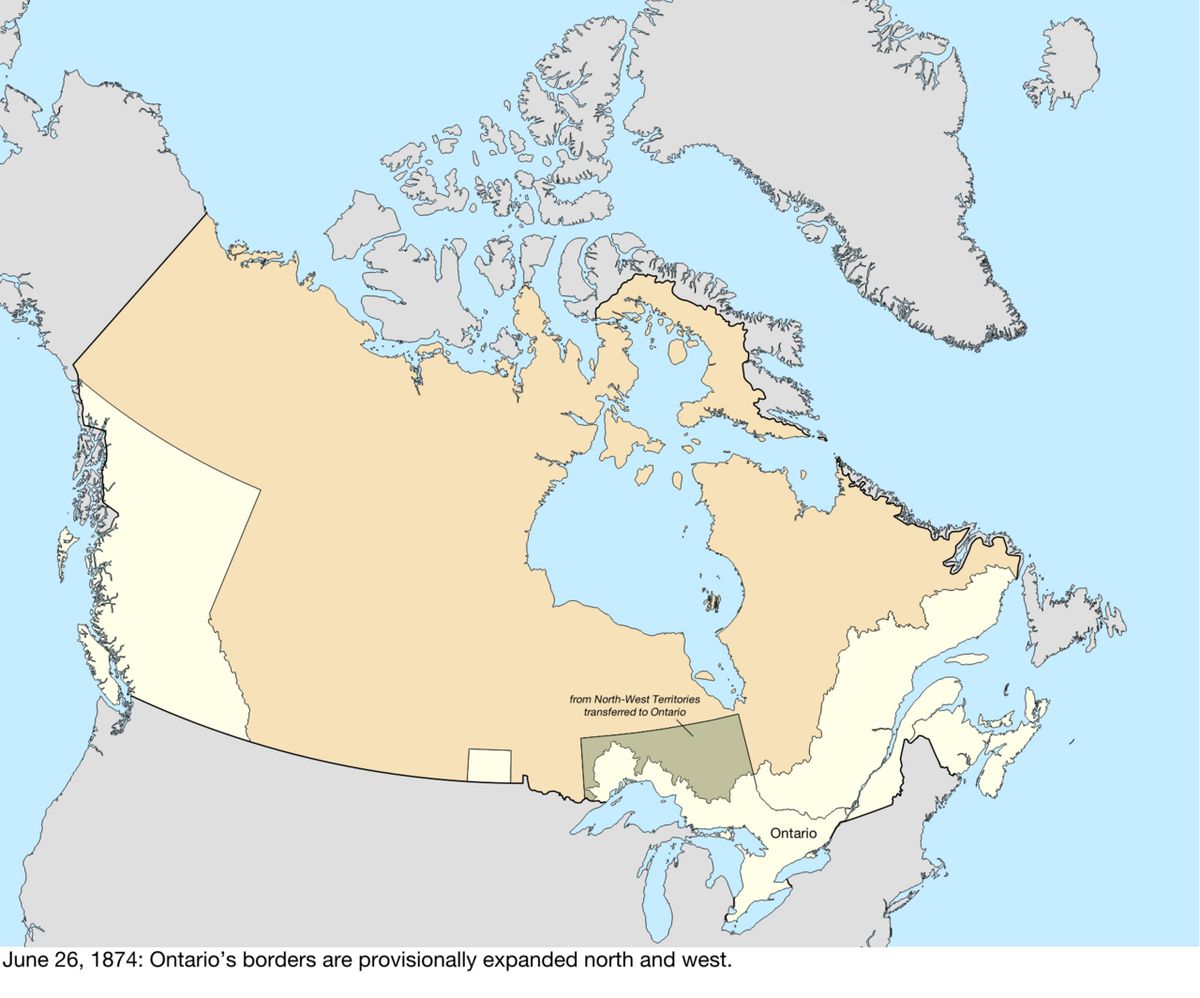
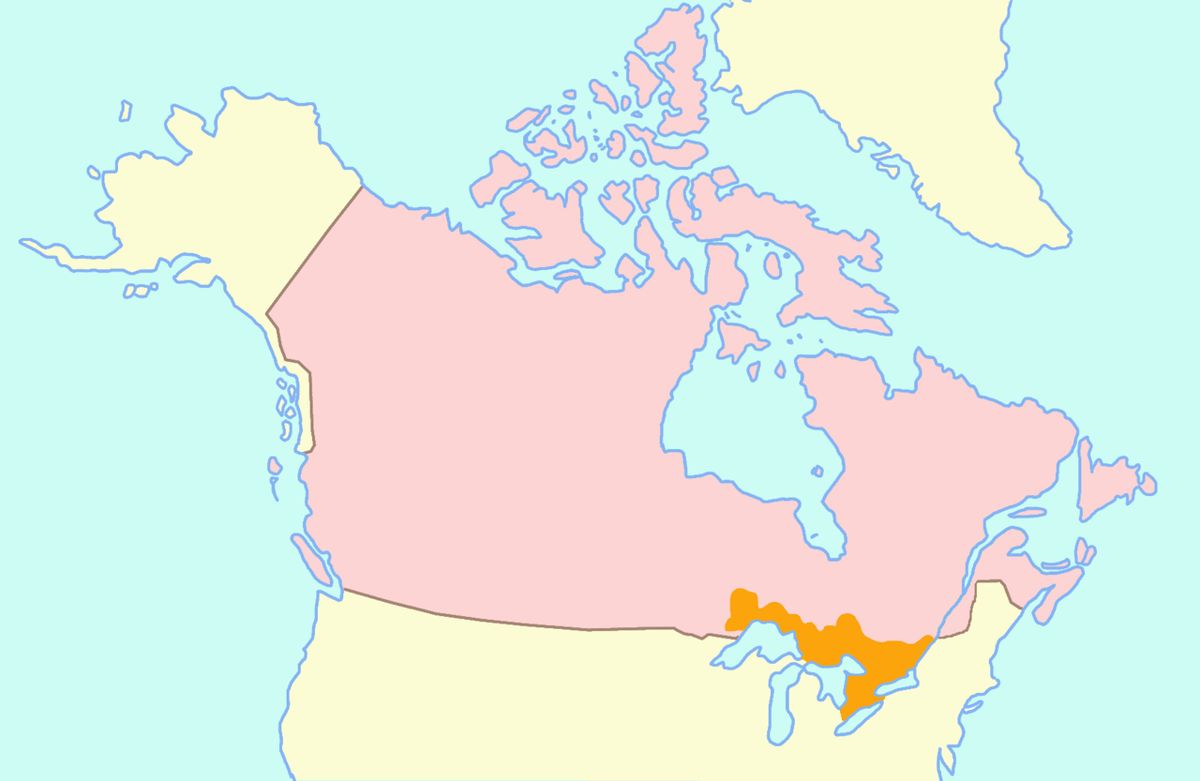
Political deadlock between the French- and English-speaking legislators in the Province of Canada, combined with fears of American annexation influenced by British policy during the American Civil War, led the political elite to hold a series of conferences in the 1860s to effect a broader federal union. The British North America Act, which came into effect on July 1, 1867, established the Dominion of Canada with four provinces, and the Province of Canada was divided into Ontario and Quebec. Section 93 of the Act required Ontario to safeguard existing educational rights and privileges of the Protestant and Catholic minorities, permitting separate Catholic schools and school boards. The province's most influential early premier was Oliver Mowat, a Liberal who held office from 1872 to 1896, despite Conservative control of the federal government for much of that time. Mowat fought for provincial rights, weakening the power of the federal government in provincial matters through well-argued appeals to the Judicial Committee of the Privy Council in London, which then served as Canada's highest appeal court. His government consolidated and expanded Ontario's educational and provincial institutions, created districts in Northern Ontario, and fought to ensure that those parts of Northwestern Ontario not historically part of Upper Canada would become part of the province. This victory was embodied in the Canada (Ontario Boundary) Act of 1889, which followed a hotly contested boundary dispute with Manitoba where Mowat sent police into the disputed territory. This period, often called 'Empire Ontario,' saw the province emerge as the economic powerhouse of Canada, benefiting from the federal National Policy's protective tariffs after 1879. Mowat's battles greatly decentralized Canada, giving the provinces far more power than Prime Minister John A. Macdonald had intended. In the 1894 election, Mowat's Liberals maintained their large majority despite the main issues being the 'Ontario System,' opposition to French language schools, a rise in anti-Catholicism led by the Protestant Protective Association, and the demands of the Patrons of Industry, labour unions, and the temperance movement.
Major developments under Premier Oliver Mowat included his fight for provincial rights, which greatly decentralized Canada by weakening federal power in provincial matters. He consolidated and expanded Ontario's educational and provincial institutions and created districts in Northern Ontario. Mowat successfully fought to ensure that parts of Northwestern Ontario historically part of the District of Keewatin would become part of Ontario, a victory confirmed by the Canada (Ontario Boundary) Act, 1889. He also presided over Ontario's emergence as the economic powerhouse of Canada, often called Empire Ontario, during an economic boom fueled by railway expansion and trade.
- Assertion of provincial rights against federal authority through successful Privy Council appeals.
- Expansion of Ontario's northern boundaries to Hudson Bay through the 1889 Boundary Act.
- Creation of districts in Northern Ontario.
- Consolidation of provincial educational and social institutions.
- Economic growth supported by the National Policy tariffs and railway expansion.
- Victory in the 1894 election despite challenges from the Patrons of Industry and the PPA.
Economic and Social Development in the 19th Century
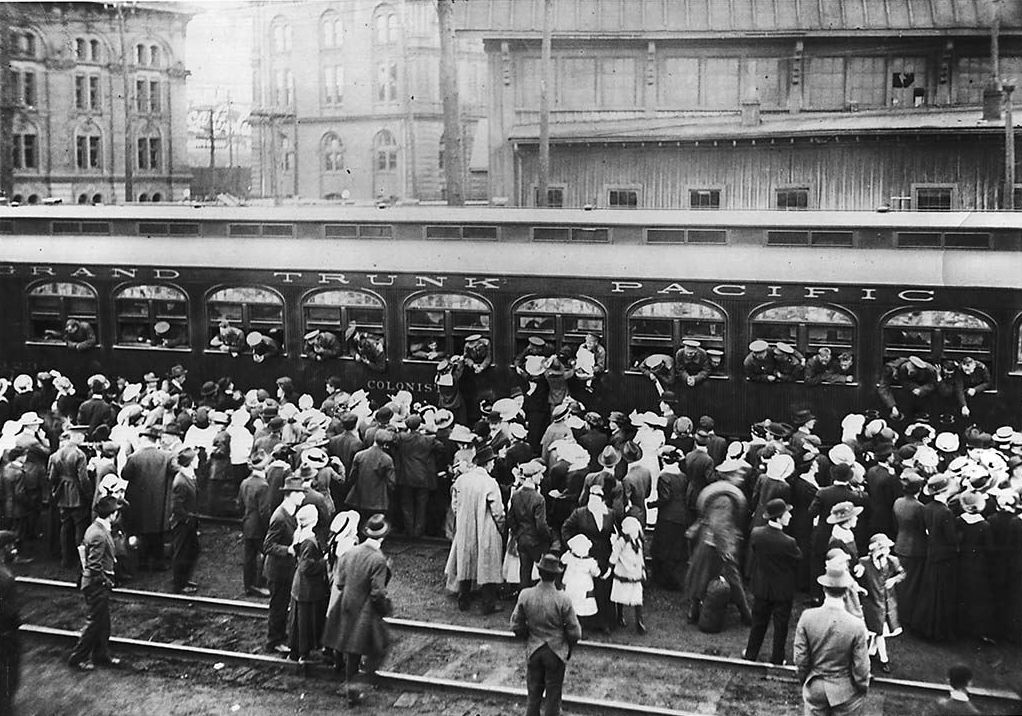
As the population increased through the 19th century, so did Ontario's industries and transportation networks, which in turn led to further development and by the end of the century the province vied with Quebec as the nation's leader in terms of growth in population, industry, arts, and communications. The province's large manufacturing and finance sectors waxed profitable in the late 19th century, with lucrative new markets opening up nationwide thanks to the federal government's high-tariff National Policy after 1879, which limited competition from the United States. The transportation network was critical to this growth, with canals like the Welland and plank roads spurring greater trade within the colony and with the United States. Ontario's numerous waterways not only aided travel and transportation into the interior but also supplied water power for industrial development, and canal projects were capital-intensive infrastructure projects that facilitated trade. The Oswego Canal, built in New York between 1825 and 1829, was a vital commercial link in the Great Lakes, Atlantic seaway and its connection to the Welland Canal in 1829 offered an alternate route to the St. Lawrence River and Europe. This economic transformation was accompanied by social and political debates, including the rise of the temperance movement, early calls for woman suffrage, and the demands of labour unions, all of which featured in provincial elections like that of 1894 where William Ralph Meredith's Conservatives were undercut by lack of national party support and his own elitist aversion to popular politics. The Ontario Agricultural College was established in Guelph in 1874 to improve farming techniques. Commercial wine production began in the 1860s with Count Justin McCarthy De Courtenay in Peel County.
Commemorating Heritage in Modern Ontario
Ontario's rich history is actively preserved and celebrated through numerous public programs and institutions. The Ontario Heritage Trust launched Doors Open Ontario in 2002, the first provincewide event of its kind in Canada, which has attracted visitors to unique heritage sites and cultural tourism experiences, with over 9.5 million visits since its launch, and the program will continue in 2026 with communities participating across the province. This initiative allows the public to explore architecturally and culturally significant buildings that are often closed to the public. At a national level, Historic Places Days, hosted by the National Trust for Canada, is scheduled for July 11 to 25, 2026, with a theme exploring 'Communication Through Place and Time' and marking the 150th anniversary of Alexander Graham Bell's telephone patent in Canada. The Ontario Black History Society highlights the contributions of Black Canadians, hosting an annual Black History Month Kick-Off Brunch, which in 2026 will be held on Sunday, February 1 at the Liberty Grand in Toronto featuring a keynote from former Hamilton Centre MP Matthew Green and the theme 'History Starts at Home' to encourage documenting family histories. These events, alongside the work of local historical societies like the Oakville Historical Society offering 1830s pioneer living experiences during Culture Days and the Niagara Military Museum hosting its 104th Annual Battle of Queenston Heights Commemorative Dinner on October 16, 2026, ensure that Ontario's history, from Indigenous beginnings to contemporary stories, remains accessible and engaging for all residents. The Ontario Historical Society calendar for October 2026 alone lists numerous events including a Providence Cemetery tour in Caledon, a historitour of Wychwood Park in Toronto, and the Wellington County Black Heritage Society's Calabash Harvest Festival on October 10.
| Event | Organization | 2026 Date |
|---|---|---|
| Doors Open Ontario | Ontario Heritage Trust | April, October 2026 |
| Historic Places Days | National Trust for Canada | July 11-25, 2026 |
| Black History Month Kick-Off Brunch | Ontario Black History Society | February 1, 2026 |
| Ontario Culture Days | Provincewide | September 18-October 4, 2026 |
| Battle of Queenston Heights Dinner | Niagara Military Museum | October 16, 2026 |
| Caledon's Culture Days Cemetery Tour | Providence Cemetery Board | October 3, 2026 |
| Calabash Harvest Festival | Wellington County Black Heritage Society | October 10, 2026 |
| Oakville Historical Society, Culture Days | Oakville Historical Society | October 3, 2026 |
Questions about History of Ontario
When did Ontario become a province?
Ontario officially became a province on July 1, 1867, with the enactment of the British North America Act, which created the Dominion of Canada. It was formed from the western portion of the former Province of Canada, which was divided into Ontario and Quebec at Confederation. Toronto was established as the provincial capital. This date is now celebrated annually as Canada Day.
What was Ontario's role in the War of 1812?
Upper Canada (modern Ontario) was a major battleground in the War of 1812. Key events included the British victory at the Battle of Queenston Heights in 1812, the American burning and brief occupation of York (Toronto) in 1813, and the British-First Nations defeat at the Battle of the Thames in 1813, which resulted in the death of Tecumseh. American forces also captured Fort George and were halted at Stoney Creek and Beaver Dams. The war solidified a distinct colonial identity and loyalty to Britain, as local militia fought alongside British regulars to repel multiple American invasions.
Who was Oliver Mowat and why was he important?
Oliver Mowat was the Liberal Premier of Ontario from 1872 to 1896, the longest-serving premier of the 19th century. He is renowned for vigorously defending provincial rights against the federal government, often through successful appeals to the Privy Council in London. Mowat oversaw Ontario's economic expansion, secured its northern boundaries to Hudson Bay in the 1889 Boundary Act after a territorial dispute with Manitoba, and built up its educational and institutional framework. His policies significantly decentralized Canadian federalism, empowering all provinces.
Who were the first people to live in Ontario?
The first people to live in Ontario were Paleo-Indians, who arrived about 11,000 years ago after crossing the Bering land bridge from Asia. During the subsequent Archaic period, a warmer climate supported a slowly increasing population of hunter gatherers. By the Woodland period, distinct Indigenous societies had formed, including Northern Iroquoian confederacies like the Wendat, Petun, and Neutral, as well as Algonquian peoples such as the Ojibwe, Cree, and Algonquin. These groups developed trade routes along the St. Lawrence River and Great Lakes, and in southern Ontario, they established agriculture and village settlements by the Late Woodland period.
What was the Family Compact?
The Family Compact was an oligarchy that controlled most political, judicial, and economic power in Upper Canada from the 1810s to the 1830s. It consisted of English gentry and sons of United Empire Loyalists, with Anglican Bishop John Strachan as a key leader. This group, based in Toronto, was deeply conservative and opposed to democracy, modelling itself on British landed aristocracy. It governed through patronage and personal connections, appointing allies to local offices. Its anti democratic nature and control over the best lands spurred resentment that contributed to the Upper Canada Rebellion.
How can I explore Ontario's heritage sites?
You can explore Ontario's heritage sites through programs like Doors Open Ontario, launched by the Ontario Heritage Trust in 2002, which offers provincewide access to historic sites from April to October. Another major event is Historic Places Days, a national event hosted by the National Trust for Canada, scheduled for July 11 to 25, 2026. Many local societies also host events, such as the Ontario Black History Society's Black History Month kickoff brunch in February 2026. Additionally, community events and celebrations occur during Ontario Culture Days, typically held in late September and early October.
Sources and further reading
- History of Ontario (Wikipedia)
- Events Calendar, The Ontario Historical Society (ontariohistoricalsociety.ca)
- Doors Open Ontario, History (doorsopenontario.on.ca)
- Historic Places Days, Every Place A Story (historicplacesdays.ca)
- EVENTS | OBHS (blackhistorysociety.ca)
Checked by the Nosy Mag desk. Last updated 2026-10-23.