Electoral district
An electoral district in Canada is a geographical constituency that forms the unit of the country's representative democracy. Known officially in French as a circonscription and colloquially as a riding or comté, each district elects a single representative to a legislative body. For federal elections, each of the 343 districts returns one Member of Parliament to the House of Commons. Provincial and territorial districts elect members to their respective legislatures. The boundaries and names of these districts are periodically adjusted through a process called redistribution to reflect demographic changes measured by the national census.
Terminology and Historical Origins
The term 'riding' is the most common colloquial English word for an electoral district in Canada. Its origins are in Old English and Old Norse meaning 'one-third'. This term was historically applied to the three administrative subdivisions of Yorkshire in England, specifically the North, West, and East Ridings established during Viking rule in the late 9th century. The concept was imported to Upper Canada by Lieutenant Governor John Graves Simcoe in a royal proclamation on July 16, 1792, which defined the province's original nineteen counties. Simcoe's proclamation further divided three counties, Glengarry, Lincoln, and York, into ridings for judicial purposes, stating they were created 'for the speedy execution of justice'. Ridings were not initially defined for electoral purposes. The two York ridings shared a single seat with Durham County and the first riding of Lincoln in the 1st Parliament of Upper Canada convened in 1792. It was not until the 12th Parliament convened in 1834 that every defined riding gained its own representative, though they still constituted only eight of the assembly's sixty-one seats. In French Canada, the informal term comté, meaning 'county', is widely used, reflecting the historical organization of electoral divisions around county lines. Some early census records show Ontario residents listing their riding as their county of residence. Although 'riding' is no longer the official legal term, it remains embedded in Canadian political culture. A political party's local organization is generally known as a riding association, though the legal term federally is an electoral district association (EDA).
Representation and Seat Allocation Formulas
Canada's system of electoral districts is based on the principle of representation by population, as established at Confederation in the British North America Act, 1867, later renamed the Constitution Act, 1867. The initial allocation of seats used Quebec's 65 electoral districts as a benchmark, preserving the seat count for Canada East from the pre-Confederation Parliament of the Province of Canada. Seats for Ontario, New Brunswick, and Nova Scotia were allocated by dividing the average population of Quebec's 65 districts into their own populations. The constitution specified that distribution and boundary reviews should occur after each decennial census. This led to early redistributions via Representation Acts in 1872, 1882, 1892, 1903, 1914, 1924, 1933, 1947, and 1952. The current formula for allocating seats to provinces was adopted in 2022. It involves calculating an electoral quotient based on the average growth rate of the provinces since the last redistribution. The previous redistribution's electoral quotient is multiplied by this average growth rate. Each province's population is then divided by this new quotient and rounded up to determine its seat entitlement. Canada's three territories, Yukon, Northwest Territories, and Nunavut, each automatically receive one seat, regardless of population. This mathematical formula is modified by several constitutional and legislative clauses.
The protective clauses that modify the basic formula include the Senatorial Clause and the Grandfather Clause. The Senatorial Clause, incorporated into the Constitution Act, 1867 in 1915, prescribes that a province's number of seats in the House of Commons can never be lower than the province's representation in the Senate. The Grandfather Clause, first enacted in the Representation Act, 1985, guarantees each province no fewer seats than it had at a particular point in history. The 1985 legislation set each province's baseline number to their seat count in the 33rd Parliament. These baseline numbers were updated to the provinces' seat counts in the 43rd Parliament by the government of Prime Minister Justin Trudeau in 2022 through the Preserving Provincial Representation in the House of Commons Act.
As a result of these rules, the 2022 redistribution maintained 343 total seats, with several provinces retaining more seats than a strict application of the electoral quotient would allow. Prince Edward Island was entitled to only 2 seats by the quotient but kept 4 via the Senatorial Clause, matching its four Senators. New Brunswick similarly maintained ten seats under the senatorial clause. Quebec would have received 71 seats by the quotient alone but maintained 78 seats under the historic seats provision linked to the 43rd Parliament. Saskatchewan, Manitoba, Nova Scotia and Newfoundland and Labrador also maintained seats under this historic seats provision. In practice, these protective clauses mean that only the fastest-growing provinces, Ontario, Alberta, and British Columbia, typically see seat increases during redistributions. The 2012 redistribution, which added three new seats in Quebec under a representation rule, was the first time since 1985 that any of the other seven provinces had gained new seats.
The Redistribution Process and Boundary Commissions
The process of adjusting electoral district boundaries to reflect population changes is known as redistribution. This non-partisan process is governed by the Electoral Boundaries Readjustment Act passed in November 1964, which established independent electoral boundaries commissions for each province. The commissions' work results in a Representation Order, prepared by the Chief Electoral Officer, given legal effect by proclamation of the Governor-in-Council, and published in the Canada Gazette. Boundary changes do not take immediate effect. They become operational only at the first subsequent general election or by-election called at least seven months after the proclamation is issued. This delay allows new riding associations time to organize. Since the 1964 act, redistribution has followed each census, with Representation Orders issued in 1966, 1976, 1987, 1996, 2003, 2013, and 2023. The 2023 Representation Order, defining the 343 districts first used in the 2025 federal election, was proclaimed on September 22, 2023. The process for the 2023 order incorporated the new seat allocation formula passed in 2022 and responded to population shifts recorded in the 2021 census.
The names of electoral districts are primarily geographic, chosen to represent the community or region within the boundaries. Quebec and Alberta also use names of historical figures. Occasionally, riding names are changed without a boundary adjustment if the existing name is deemed insufficiently representative. Such changes are effected through specific legislation, like the An Act to change the names of certain electoral districts, 2026, which came into force on September 16, 2026. This act amended both the first and second representation orders from 2023 to update several district names. The first representation order was amended for districts like 'Cape Spear' which became 'Cape Spear, Mount Pearl, Paradise' and 'Halifax West' which became 'Halifax West, Peggy’s Cove'. The second representation order, which pertains to Quebec, saw changes such as 'Argenteuil, La Petite‑Nation' becoming 'Argenteuil, Papineau, Des Collines' and 'Jonquière' becoming 'Jonquière, Hébertville, Pays-des-Bleuets'. These legislative name changes are the only circumstance where a sitting MP's riding name may be altered between elections.
Historical Use of Multi-Member Districts and Voting Systems
While all Canadian electoral districts are now single-member constituencies, multi-member districts were used extensively at both federal and provincial levels in the past, employing a variety of voting systems. Federally, ridings like Ottawa elected two members from 1872 to 1933. Halifax elected two from 1867 to 1966 as prescribed in the original British North America Act. Victoria elected two from 1872 to 1903. Eight other federal ridings used multiple members at different times. Provincially, the use of multi-seat districts was more varied and lasted longer. These districts typically employed plurality block voting, where voters could cast as many votes as there were seats, often leading to a single party sweeping all seats. Several provinces experimented with alternative voting systems. Manitoba used the single transferable vote (STV) in a city-wide district for Winnipeg from 1920 to 1949 to elect ten MLAs, and later in three four-member districts. Alberta used STV in multi-member districts in Calgary, Edmonton, and Medicine Hat from 1924 to 1956, with district magnitudes varying from two to seven members. Saskatchewan used multi-member districts with block voting from 1921 to 1967 in Saskatoon, Regina, and Moose Jaw, with district magnitudes ranging from two to four. British Columbia had a mix of single and multi-member districts from 1871 to 1991, using instant-runoff voting (IRV) in all districts for the 1952 and 1953 elections. Prince Edward Island used two-member districts with separate contests for each seat from Confederation until the 1996 election. New Brunswick used multi-member districts with block voting between 1935 and 1974, with districts ranging in size from two to four members. Ontario briefly used a city-wide multi-member district for Toronto in 1886 and 1890, employing limited voting.
The different voting systems used in these historic multi-member districts produced distinct electoral outcomes. Block voting usually resulted in one-party sweeps of all seats in a district. In contrast, STV, used in Alberta and Manitoba, almost always produced mixed representation with no single party taking all seats. Limited voting, as used in Toronto, restricted the number of votes a voter could cast to fewer than the seats available, which also aimed to prevent sweeps. Instant-runoff voting, used in British Columbia in 1952 and 1953, ensured the winner in each contest had majority support but did not produce proportional results across a multi-member district.
Provincial and Territorial Variations and Alignment
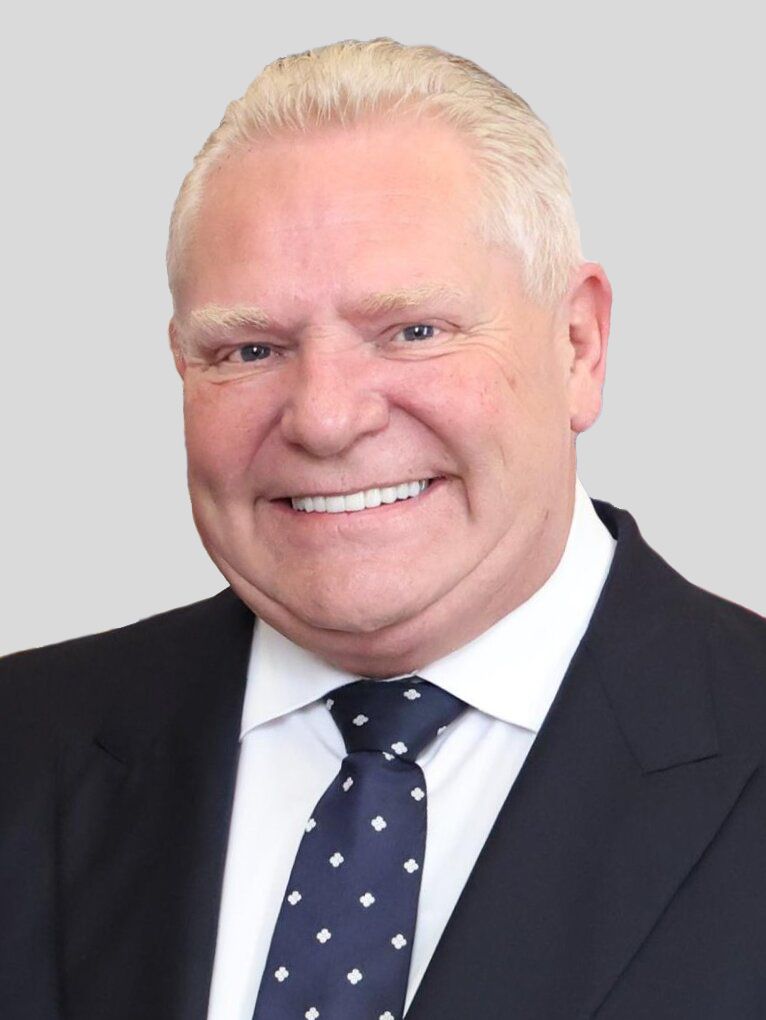
Electoral districts at the provincial and territorial level operate independently of the federal system. Each jurisdiction sets its own number of districts and boundaries through its own legislative authority. Provincial representatives bear different titles: Member of the Legislative Assembly (MLA) in most provinces and territories, Member of the National Assembly (MNA) in Quebec, Member of Provincial Parliament (MPP) in Ontario, and Member of the House of Assembly (MHA) in Newfoundland and Labrador. Each province and territory has its own independent elections agency, such as Elections Ontario or Elections BC. Historically, Ontario aligned most of its provincial electoral districts with federal boundaries. This practice ended in 2024. The government of Premier Doug Ford did not adopt the new federal boundaries from the 2022 redistribution for the 2025 Ontario general election. Instead, it used the older 2012 federal boundaries that were used in the previous provincial election. This created a divergence between federal and provincial riding boundaries in the province. The ward boundaries for Toronto City Council are aligned with provincial electoral district boundaries and are numbered with the provincial district names in brackets. Naming conventions for districts also vary by province. Quebec and Alberta frequently name districts after historical figures, such as Louis-Hébert or Edmonton-Decore, while other provinces predominantly use geographic names.
The allocation of seats to provinces for federal elections has occasionally been adjusted to accommodate new provinces joining Confederation. Seats were added for Prince Edward Island at the election held in 1874, for the Northwest Territories in 1887, for Alberta and Saskatchewan in 1908, and for Newfoundland in 1949. These additions were separate from the decennial redistribution process and were handled by specific statutes. The provincial and territorial legislatures themselves have used multi-member districts in the past. The territories of Yukon and the North-West Territories also used them at one time.
Electoral District Results, By-elections and Recent Activity
The results of federal elections are reported and validated by electoral district. The most recent federal election was held in 2025, which was the first to use the new boundaries from the 2023 Representation Order and the total of 343 seats. By-elections are held to fill vacant seats between general elections. Federal by-elections were scheduled for August 31, 2026, in the electoral districts of Beaches, East York in Ontario and Chicoutimi, Le Fjord in Quebec. The process of redistribution and name changes ensures the electoral map remains current. The legislative changes enacted in September 2026, which renamed several districts, took effect just prior to those by-elections. The independent commissions that handle redistribution aim to create districts that are relatively equal in population. They may consider communities of interest, historical patterns, and geographic factors, leading to some permitted deviations from strict parity.
The history of redistribution shows how the process has evolved to become more independent and regularized. Before the 1964 Electoral Boundaries Readjustment Act, redistributions were carried out by statutes like the Representation Acts. The post-1964 commission model was a significant reform. Its first use with 1961 census data was delayed, resulting in the 1966 Representation Order not taking effect until the 1968 election. Since the modern process began, Representation Orders have been issued in 1966, 1976, 1987, 1996, 2003, 2013, and 2023. Each order came into force for the first general election called at least seven months after its proclamation.
Questions about Electoral district
What is the difference between a riding and an electoral district?
There is no legal difference. The terms are synonymous. 'Electoral district' is the formal term used in legislation, while 'riding' is the common colloquial term used in everyday Canadian English. The word 'riding' has historical roots in the administrative subdivisions of Yorkshire, England, and was adopted in early Upper Canada for judicial districts before gaining electoral use. In French, the official term is circonscription, but comté is also widely used informally. Political parties refer to their local organizations as riding associations, though the legal term at the federal level is electoral district association (EDA).
How often are federal electoral district boundaries changed?
Federal electoral district boundaries are reviewed and potentially adjusted after each decennial census, a process called redistribution, as mandated by the Constitution Act, 1867. The actual redrawing is carried out by independent, non-partisan electoral boundaries commissions in each province, established under the Electoral Boundaries Readjustment Act of 1964. The commissions' proposals are formalized in a Representation Order, proclaimed by the Governor-in-Council. The changes become operational for the first general election or by-election called at least seven months after the proclamation. This cycle has produced Representation Orders in 1966, 1976, 1987, 1996, 2003, 2013, and 2023 since the modern process began.
Why does Prince Edward Island have four MPs when its population is smaller than some single ridings?
Prince Edward Island is guaranteed a minimum of four seats in the House of Commons due to the Senatorial Clause, a constitutional rule added in 1915 as section 51A of the Constitution Act, 1867. This clause states that a province cannot have fewer MPs than it has Senators. Since every province has a constitutionally defined number of Senators, and PEI has four Senators, it is therefore entitled to at least four MPs. During the 2022 redistribution, the strict electoral quotient calculated from population would have given PEI only two seats, but the Senatorial Clause overrode that calculation to preserve its four seats.
Can the name of an electoral district change between elections?
Yes, but only under specific circumstances and through an act of Parliament. The name of an electoral district can be changed without altering its geographic boundaries, typically when the existing name is deemed insufficiently representative of the communities within the district. For example, in September 2026, 'An Act to change the names of certain electoral districts, 2026' came into force, amending the 2023 Representation Order to update district names. These legislative changes are the only instance where a sitting MP's riding name may be altered during a Parliament.
Did Canada ever have electoral districts that elected more than one representative?
Yes, multi-member districts were used historically at both federal and provincial levels. Federally, ridings like Halifax elected two MPs from 1867 to 1966. Provincially, their use was more widespread. For instance, Winnipeg used a city-wide district to elect ten MLAs via single transferable vote (STV) from 1920 to 1949. Alberta used STV in multi-member districts in Calgary and Edmonton from 1924 to 1956. Prince Edward Island used two-member districts until the 1996 election. These districts employed block voting, STV, limited voting, or instant-runoff voting, but were gradually phased out.
How many federal electoral districts are there in Canada and how is that number determined?
As of the 2025 federal election, there are 343 federal electoral districts in Canada. The number was determined by a formula adopted in 2022 that starts with an electoral quotient based on provincial population growth, then applies constitutional and legislative clauses like the Senatorial Clause and the updated Grandfather Clause. The Chief Electoral Officer announced the allocation in July 2022 after the passing of the Preserving Provincial Representation in the House of Commons Act. The 2023 Representation Order defined the new boundaries for these 343 districts.
Sources and further reading
- Electoral district (Wikipedia)
- An Act to change the names of certain electoral districts, 2026 (laws-lois.justice.gc.ca)
Checked by the Nosy Mag desk. Last updated 2026-10-22.