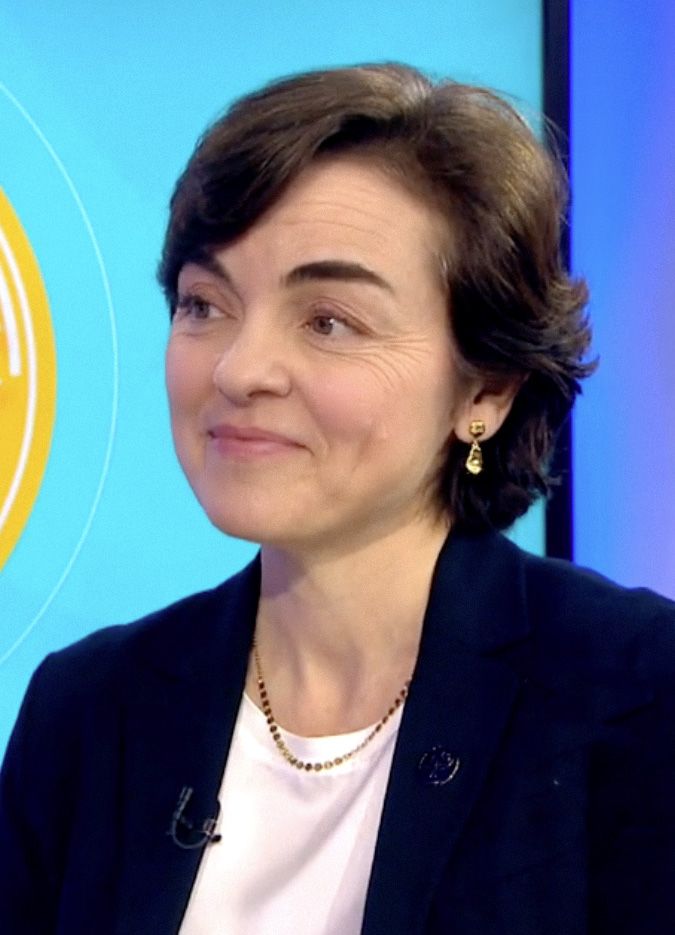
Doug Ford
Douglas Robert Ford Jr. is a Canadian politician and businessman who has served as the 26th premier of Ontario and leader of the Ontario Progressive Conservative Party since 2018. He represents the Toronto riding of Etobicoke North in the Legislative Assembly of Ontario. Ford has led his party to three consecutive majority governments in the 2018, 2022, and 2025 general elections. His tenure as premier has been marked by significant policy changes on healthcare, municipal governance, and economic issues, alongside controversies including the Greenbelt scandal and the management of the Skills Development Fund.
Early Life, Family, and Education
Douglas Robert Ford Jr. was born on November 20, 1964, in Etobicoke, Ontario, the second of four children of Doug Ford Sr. and Ruth Diane Ford. His father, Doug Ford Sr., later served as a Progressive Conservative Member of Provincial Parliament from 1995 to 1999, establishing the family's political roots. Ford's paternal grandparents were immigrants from England. He attended and graduated from Scarlett Heights Collegiate Institute. His formal post-secondary education was brief, consisting of only two months at Humber College before he dropped out without earning a diploma. In recognition of his later career, he was awarded an Honorary Doctorate in Humane Letters from Saginaw Valley State University in the United States.
Business Career and Deco Labels
Ford's professional life began in the family business, Deco Labels and Tags, a printing company co-founded by his father in 1962 that specializes in pressure-sensitive labels for plastic-wrapped grocery products. He became deeply involved in running the company in the 1990s. In 2002, he was named president of Deco and was personally responsible for overseeing the company's expansion into the Chicago market. As his father neared the end of his life, the ownership of Deco was divided, with Doug Jr. receiving a 40 percent share, his brother Randy receiving 40 percent, and his brother Rob receiving the remaining 20 percent. In 2008, Ford led the purchase of Wise Tag and Label in New Jersey, subsequently firing that company's manager. Former employees have suggested the Chicago branch was well-managed under Doug Jr.'s leadership and that he was well-liked, but that the company's fortunes declined under his brother Randy's management after Doug Jr. entered politics full-time in 2010. As of 2011, Ford and his mother were listed as directors of the company, which was managed by his brother Randy.
Entry into Politics and Municipal Career
Doug Ford's first political involvement was not as a candidate but as a supporter. In 1994, Doug Holyday approached Deco Labels to print campaign stickers for his Etobicoke mayoral bid, and Ford took it upon himself to canvass for Holyday. He then assisted in his father's unsuccessful campaigns for the provincial legislature in 1995 and 1999. Ford managed his younger brother Rob's campaigns for Toronto city council in 2000, 2003, and 2006, and played a key role in Rob's successful 2010 campaign for mayor of Toronto. Following his brother's move to the mayor's office, Doug Ford was elected as the city councillor for Ward 2 Etobicoke North on October 25, 2010. Upon his election, he announced he would donate his entire $100,000 annual council salary to community organizations. His voting record as councillor included support for privatizing garbage collection west of Yonge Street, declaring the TTC an essential service, reducing councillor office budgets, and eliminating the city's vehicle registration tax.
Controversies and the 2014 Mayoral Bid
Ford's time on city council was punctuated by several controversies. In 2013, he commented that a subpoena for his brother Mayor Rob Ford was 'payback' against Toronto Police Chief Bill Blair, leading Blair to file a defamation lawsuit. Ford apologized and retracted his statements to settle the suit. That same year, an investigative report by The Globe and Mail alleged, based on anonymous sources, that Ford had sold hashish in the 1980s. Ford denied the allegations, accused the paper of targeting his brother, and initially threatened a libel lawsuit but later called it a 'waste of time'. The Ontario Press Council dismissed complaints against the newspaper, finding its coverage fair. Ford also opposed a group home for developmentally disabled youth in his ward, claiming it had 'ruined the community'. After initially stating he would not run for re-election in 2014, Ford entered the mayoral race at the last minute following his brother Rob's cancer diagnosis and withdrawal. His campaign was fined for placing hundreds of illegal signs and faced criticism for alleged misogyny and antisemitism. He finished second with 34 percent of the vote, behind winner John Tory's 40 percent.
Path to the Ontario PC Leadership
Following his mayoral defeat, Ford briefly considered a run for the provincial Progressive Conservative leadership in late 2014 but ultimately endorsed family friend Christine Elliott. He later announced a second run for Toronto mayor in 2017 but withdrew in early 2018 to pursue the PC leadership after Patrick Brown's sudden resignation. In the leadership race, Ford positioned himself as an outsider against 'insiders' and 'political elites'. He made specific pledges focused on Northern Ontario, including developing the Ring of Fire mineral region and reinstating the Northlander passenger train service. He criticized the healthcare system as 'broken', recounting a story of his brother Rob falling in an understaffed hospital. Polling during the race was mixed, with one showing strength in Toronto and another suggesting he had less support than other candidates. The March 2018 leadership vote was extremely close and disputed, requiring a recount before Ford was declared the winner on the third ballot over Christine Elliott, who conceded the next day.
2018 Election Victory and Early Premiership
Ford quickly became the PC candidate in Etobicoke North and led the party into the June 2018 general election. He criticized the incumbent Liberal government's pre-election budget as a 'spending spree' and condensed the PC platform into a five-point plan focusing on health, education, jobs, scrapping the carbon cap-and-trade program, and cutting electricity rates. He promised to review the 2015 sex education curriculum and suggested he would allow a bill requiring parental consent for minors seeking abortions. He also pledged to revive manufacturing by cutting taxes and regulations. His campaign received endorsements from former mayors Mel Lastman and Hazel McCallion, and he was often compared to U.S. President Donald Trump, a comparison he rejected while praising some Trump policies. Ford led the PCs to a majority government victory on June 7, 2018, winning 76 of 124 seats. He was sworn in as premier on June 29 in an outdoor ceremony at Queen's Park, becoming the first newly elected MPP to become premier since 1934.
Key Policy Initiatives as Premier
Ford's government has pursued a broad policy agenda. One of its first major acts was to cut the size of Toronto City Council during the 2018 municipal election. In provincial finances, Finance Minister Vic Fedeli tabled the 2018 Economic Outlook which included the Low-income Individuals and Families Tax (LIFT) credit, a tax cut of up to $850 for individuals. The government also froze the minimum wage at $14 per hour, cancelling a planned increase. A signature promise was the 'buck-a-beer' policy, which lowered the legal minimum price for beer to $1, though adoption by breweries was limited. The Strong Mayors, Building Homes Act granted enhanced powers to the mayors of Toronto and Ottawa, and later other cities, to accelerate housing development. In healthcare, the Your Health Act (Bill 60) was enacted to expand the use of private clinics for publicly funded surgeries and procedures. The government has also engaged in major infrastructure spending, citing plans for transit, hospitals, and schools. Despite a 2018 promise of a balanced budget, Ontario's debt increased by $86 billion between his taking office and December 2024.
Major Scandals and Investigations
The Ford premiership has been clouded by several significant scandals. The most prominent is the Greenbelt scandal, where the government removed land from the protected Greenbelt for housing development, a decision later reversed after intense public backlash and allegations of favouritism toward certain developers. More recently, the government has faced severe criticism over the $2.5 billion Skills Development Fund (SDF). In December 2024, the auditor general found the process for awarding grants from the fund was not fair, transparent, or accountable, identifying roughly $750 million in grants that were hand-picked by political staff rather than awarded through a competitive process. Reports indicated some grants went to companies that had hired lobbyists with ties to Ford, and nearly $10 million went to a company linked to an adult entertainment club. The integrity commissioner launched an investigation into then-Minister David Piccini's handling of the fund, which was still ongoing as of September 2026.
Recent Political Maneuvering and 2026 Shuffle
By early 2026, Premier Ford was making what analysts called a series of politically risky decisions. He immodestly proclaimed his government as Ontario's 'First Government For the People'. The legislative session for 2026 had only sat for 29 days up to that point, indicating a slow pace. The summer of 2026 saw the resignation of three cabinet ministers, including Caroline Mulroney. In September 2026, Ford conducted a significant cabinet shuffle. Despite the ongoing integrity commissioner investigation, David Piccini was moved from Minister of Labour, Immigration, Training and Skills Development to Minister of Infrastructure. Ford defended the move as 'natural', citing Piccini's work on training and the government's $235 billion infrastructure portfolio. Trevor Jones took over Piccini's old portfolio, and Sam Oosterhoff became the new Minister of Agriculture. The shuffle was criticized by NDP Leader Marit Stiles as a 'desperate act by a flailing premier' and a reward for mismanagement. The opposition Liberals have also positioned themselves to challenge Ford in the next election.
Political Evolution and Personal Life
Doug Ford's political style has evolved since he entered provincial politics. Initially, his rhetoric and policies were characterized as conservative and right-wing populist, echoing his approach during his years in Toronto municipal politics. Since 2020, however, political commentators have noted a gradual shift toward the political centre. This shift is attributed to the practical demands of governing through the COVID-19 pandemic, which required cooperation with the federal Liberal government, as well as responding to the Freedom Convoy protests and U.S. trade tariffs. His public support for the federal Conservative Party has seemed less pronounced during this period. In his personal life, Ford is a devoted husband and father of four daughters. He remains passionate about his home neighbourhood of Etobicoke North, which he represents. The Ford family is a well-known political dynasty in the area, with his brother Rob having served as Toronto's mayor until his death in 2016.
Questions about Doug Ford
What business does Doug Ford own?
Doug Ford is a co-owner of Deco Labels and Tags, a printing business founded by his father in 1962 that manufactures pressure-sensitive labels primarily for grocery product packaging. He became president of the company in 2002 and oversaw its expansion into the United States, specifically Chicago. Ownership was divided among him and his brothers following their father's death, with Doug Jr. and his brother Randy each holding 40 percent. The company is now managed by his brother Randy, as Doug Jr. focuses on his political career.
How many times has Doug Ford been elected premier?
Doug Ford has been elected premier of Ontario three times. He led the Progressive Conservative Party to victory in the 2018 general election, winning a majority government. He was re-elected with another majority government in the 2022 general election. Ford then secured a third consecutive majority government in the 2025 general election.
What is the Strong Mayors, Building Homes Act?
The Strong Mayors, Building Homes Act is legislation enacted by Premier Doug Ford's government. This act grants extra powers to designated mayors in Ontario. These powers are intended to help mayors advance provincial priorities, particularly related to housing construction. The act was part of the government's response to address housing supply issues in the province.
What is the controversy around the Skills Development Fund?
The Skills Development Fund (SDF) is a $2.5 billion provincial program meant to train workers for in-demand jobs. The controversy stems from a December 2024 report by Ontario's auditor general, which found the process for awarding grants was not fair, transparent, or accountable. The audit identified approximately $750 million in grants that were handed out to applicants selected directly by political staff, bypassing a competitive process. Some grants went to companies with lobbyists connected to Premier Ford, and nearly $10 million went to a company tied to an adult entertainment club. The integrity commissioner is investigating the conduct of the minister then responsible, David Piccini.
Has Doug Ford's relationship with the federal government changed?
Yes, political observers have noted a shift in Doug Ford's relationship with the federal government, particularly the Liberal government in Ottawa. During his early years as premier, his stance was more confrontational and aligned with right-wing populism. Since 2020, necessitated by crises like the COVID-19 pandemic and the Freedom Convoy, he has adopted a more cooperative and centrist approach, working pragmatically with the federal Liberals on issues like pandemic funding and responding to U.S. tariffs. This shift has coincided with what commentators see as less overt public support for the federal Conservative Party.
Sources: Wikipedia and current public reporting, checked by the Nosy Mag desk. Last updated 2026-10-18.