Canadian Human Rights Act
The Canadian Human Rights Act (CHRA) is a federal statute enacted by the Parliament of Canada in 1977 to ensure equal opportunity and protect individuals from discrimination in areas of federal jurisdiction. It establishes a legal framework prohibiting discrimination based on specific grounds such as race, national or ethnic origin, colour, religion, age, sex, sexual orientation, marital status, family status, genetic characteristics, disability, and conviction for an offence for which a pardon has been granted or a record suspension has been ordered. Gender identity or expression was added in 2017. The Act created two key institutions: the Canadian Human Rights Commission, which investigates complaints and promotes human rights, and the Canadian Human Rights Tribunal, which adjudicates cases. This legislation is a fundamental part of Canada's human rights protections, operating alongside provincial and territorial laws.
Historical Context and Enactment
The Canadian Human Rights Act emerged from a growing national and international movement to codify protections against discrimination. Before the federal enactment, all ten provinces had passed their own anti-discrimination laws, beginning with Ontario's Racial Discrimination Act in 1944 and the Saskatchewan Bill of Rights in 1947. The Ontario act was the first in Canada to prohibit the publication or display of signs expressing racial or religious discrimination. The Saskatchewan bill was the first comprehensive human rights code in Canada, prohibiting discrimination in employment, accommodation, and services. This provincial leadership created a patchwork of protections that did not cover federally regulated industries and services. The federal Parliament moved to fill this gap by passing the CHRA in 1977 to establish a consistent standard for equality and non-discrimination in areas under federal authority. The legislation has been periodically amended to reflect evolving societal understandings of equality and discrimination.

Scope and Application
The Canadian Human Rights Act applies throughout Canada but only to federally regulated activities. This includes sectors such as federal Crown corporations, banks, airlines, interprovincial transportation and communications, and the federal public service. The Act also applies to First Nations governments and certain aspects of the Indian Act. For matters outside federal jurisdiction, each province and territory administers its own human rights legislation, such as the Ontario Human Rights Code or the Quebec Charter of Human Rights and Freedoms. The Act's primary function is to prohibit discrimination in employment and in the provision of goods, services, facilities, and accommodation customarily available to the public. It creates a duty to accommodate individuals to the point of undue hardship based on any of the prohibited grounds of discrimination. The Act does not apply to matters under the Indian Act that pertain to the legal status of individuals as Indians.
Prohibited Grounds of Discrimination
The Act defines discrimination as a distinction, exclusion, or preference based on a prohibited ground that has the effect of nullifying or impairing a person's right to equal treatment. The list of prohibited grounds has expanded since 1977 to reflect a broader understanding of human rights. The current grounds are race, national or ethnic origin, colour, religion, age, sex, sexual orientation, gender identity or expression, marital status, family status, genetic characteristics, disability, and conviction for an offence for which a pardon has been granted or a record suspension has been ordered. The ground of sexual orientation was read into the Act by judicial interpretation before being explicitly included. The addition of gender identity or expression in 2017 through Bill C-16 was a significant amendment that explicitly extended protections to transgender, non-binary, and gender-diverse Canadians. This amendment also added the same ground to the hate propaganda provisions of the Criminal Code. The ground of genetic characteristics was added to prevent discrimination based on genetic testing.

Administrative Structure and Process
The Canadian Human Rights Act established a two-pillar administrative structure for enforcing its provisions: the Canadian Human Rights Commission and the Canadian Human Rights Tribunal. The Commission is Canada's national human rights institution, tasked with promoting human rights, investigating complaints, and attempting to resolve disputes through mediation. If a complaint cannot be resolved, the Commission may refer it to the Tribunal for a formal hearing. The Tribunal operates independently from the Commission and functions like a court, hearing evidence and making legally binding decisions. Before a case can be brought to the Tribunal it must go through several stages of investigation and remediation by the Commission. The process is generally known as the Meiorin test, which requires a respondent to justify a discriminatory standard or policy by demonstrating it is a bona fide occupational requirement. In 2018, the Supreme Court of Canada found the Tribunal's determination that the Indian Act did not violate the Canadian Human Rights Act was reasonable. The Commission also has the power to initiate complaints on its own if it believes a practice is discriminatory.
The Commission's Contemporary Role and Priorities
As Canada's national human rights institution, the Canadian Human Rights Commission's role has expanded. It operates with a planned budget of $38,268,771 and 267 full-time equivalent staff for 2026 to 2027. It advances human rights through a coordinated approach across its core responsibilities. The Commission supports several specialized commissioners, including the Pay Equity Commissioner and the Accessibility Commissioner, in their outreach, compliance promotion, and oversight work. A key priority is modernizing its complaints processing system to improve efficiency and enhance digital services. The Commission also focuses on advancing compliance and oversight in employment equity, pay equity, and accessibility by launching audits and publishing guidance. It maintains its A-status accreditation under the UN Paris Principles, affirming its independence and credibility. The Commission also monitors Canada's implementation of international human rights treaties such as the International Covenant on Civil and Political Rights. It provides an annual report to Parliament on its activities and the state of human rights in Canada.

Interaction with Other Laws and Systems
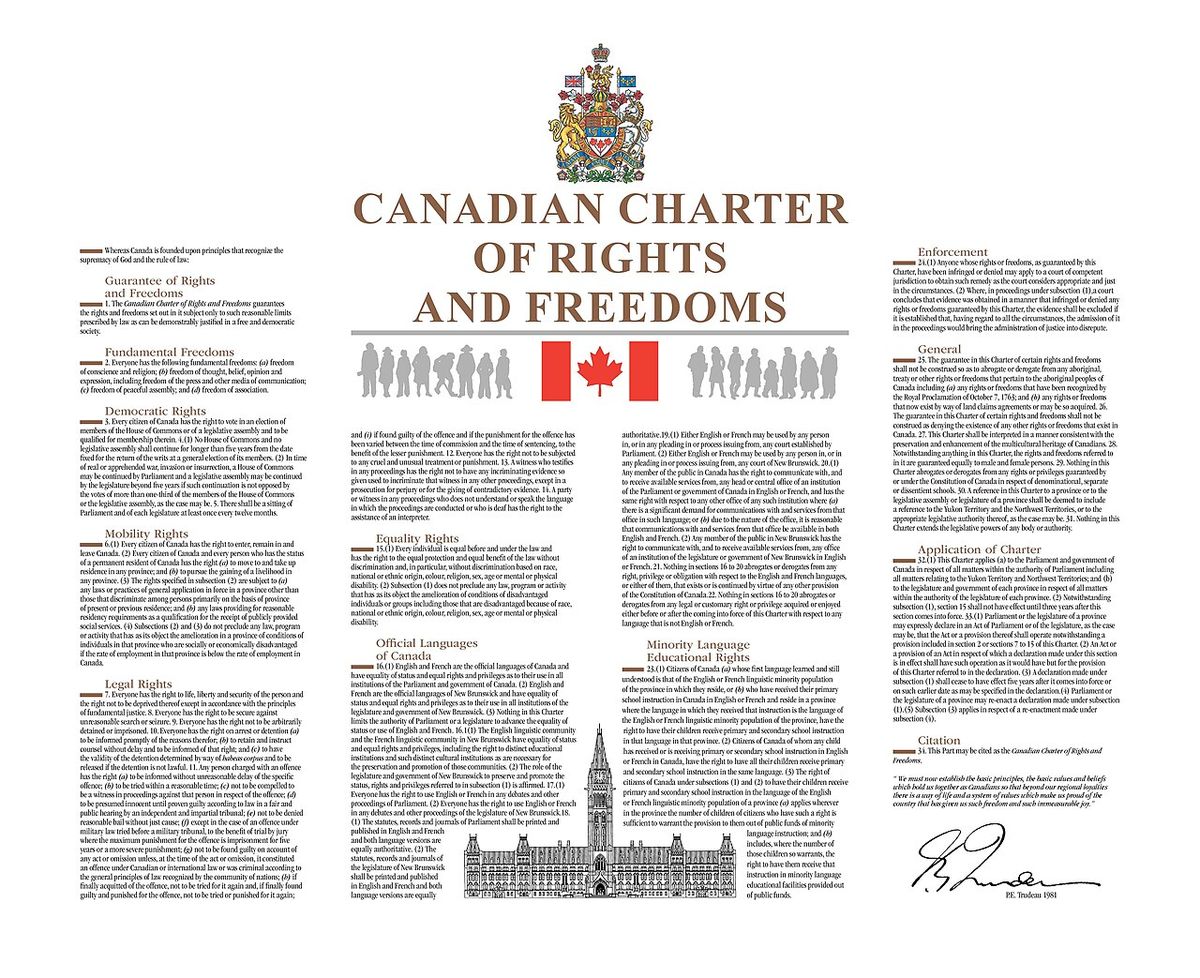
The Canadian Human Rights Act exists within a complex ecosystem of domestic and international human rights protections. Domestically, it works in tandem with the Canadian Charter of Rights and Freedoms, which provides constitutional guarantees, and the Canadian Bill of Rights, a federal statutory bill of rights. The Act is explicitly subject to the Canadian Charter of Rights and Freedoms. Its provisions also interact with specific federal laws like the Employment Equity Act, the Pay Equity Act, and the Accessible Canada Act. The Act formerly had a provision, section 13, dealing with communication of hate messages, which was repealed by Parliament in June 2013 with the repeal coming into force one year later. The Act and its provincial counterparts create a comprehensive system where jurisdiction determines the applicable law. The Act also interacts with the Indian Act, as seen in the 2018 Supreme Court case. The Commission works with provincial human rights commissions through the Canadian Association of Statutory Human Rights Agencies.
Recent and Planned Initiatives
The Canadian Human Rights Commission has outlined specific initiatives for the 2026 to 2027 period to fulfil its mandate more effectively. The Commission is updating its Complaints Processing Accountability Framework to streamline operations and better prioritize cases involving vulnerable individuals or systemic discrimination. It is advancing accessible, user-centred digital services and enhancing processing tools to improve the experience for complainants and respondents. The Commission plans to strengthen its outreach with civil society, governments, employers, and rights holders to promote human rights proactively. In its oversight role, it will launch audits and publish reports related to employment equity, pay equity, and accessibility compliance. The Commission is implementing its Accessibility Plan for 2026 to 2028 to ensure its own services and operations are barrier-free. It is also developing new guidance on the duty to accommodate and on preventing discrimination based on genetic characteristics. The Commission will continue its work supporting the Federal Housing Advocate in addressing systemic housing issues.
Statistical and Operational Overview
The operations of the Canadian Human Rights Commission are detailed in its departmental plans. For the 2026 to 2027 period the Commission's total planned spending is $38,268,771, covering all its core responsibilities and internal services. The planned full-time equivalent staff count for the same period is 267. These figures reflect planned spending reductions as part of a government-wide commitment to restrain the growth of day-to-day operational spending. The budget supports several key areas of activity, including complaint processing and mediation, human rights promotion and advocacy, and the oversight functions of the Pay Equity and Accessibility Commissioners. The planned results for 2026 to 2027 include strengthened public awareness, improved access to justice through modernized systems, and enhanced compliance by federally regulated entities. The Commission's core responsibilities are organized into three categories: providing a national voice for human rights, ensuring compliance and oversight, and delivering efficient redress mechanisms. The Commission tracks its performance against these planned results annually.
| Resource Category | 2026 to 2027 Planned Amount |
|---|---|
| Total Planned Spending | $38,268,771 |
| Total Planned Full-Time Equivalents | 267 |
Questions about Canadian Human Rights Act
What is the difference between the Canadian Human Rights Act and the Charter of Rights and Freedoms?
The Canadian Human Rights Act is a federal statute that prohibits discrimination by federally regulated employers and service providers. It establishes an administrative complaint process through the Canadian Human Rights Commission and the Canadian Human Rights Tribunal. The Canadian Charter of Rights and Freedoms is part of the Constitution and guarantees fundamental rights and freedoms against government action. The Charter applies to all levels of government, while the CHRA applies primarily to private entities under federal regulation. The CHRA's enforcement mechanism involves the Commission and Tribunal, whereas Charter challenges are heard by the courts. The CHRA is subject to the Charter, meaning its provisions must be consistent with constitutional rights.
How do I file a discrimination complaint under the Canadian Human Rights Act?
If you believe you have faced discrimination in a federally regulated area, you must file a complaint with the Canadian Human Rights Commission. The process begins with contacting the Commission for an assessment of whether your complaint falls under its jurisdiction. Before a case can be brought to the Tribunal it must go through several stages of investigation and remediation by the Commission. The process emphasizes early resolution and may offer mediation. If the complaint is not resolved and is accepted, it may be investigated and potentially referred to the Canadian Human Rights Tribunal for a hearing. Complaints must generally be filed within one year of the alleged discriminatory act. The Commission can also initiate complaints on its own if it finds evidence of a discriminatory practice.
What are the prohibited grounds of discrimination under the Act?
The Act prohibits discrimination based on the following grounds: race, national or ethnic origin, colour, religion, age, sex, sexual orientation, gender identity or expression, marital status, family status, genetic characteristics, disability, and conviction for an offence for which a pardon has been granted or a record suspension ordered. Gender identity or expression was added in 2017 through Bill C-16. The ground of sexual orientation was read into the Act by judicial interpretation before being explicitly included in the text. The ground of genetic characteristics was added to prevent discrimination based on genetic testing. This list is exhaustive, meaning a complaint must be linked to one or more of these specific grounds to be considered under the Act.
Does the Canadian Human Rights Act apply to all employers in Canada?
No, the Act applies only to employers and service providers under federal jurisdiction. This includes the federal government, Crown corporations, banks, airlines, and interprovincial transportation and communications companies. It also applies to First Nations governments and certain federal works and undertakings. Most employers in Canada are regulated by provincial or territorial laws. For example, a retail store in Ontario would be covered by the Ontario Human Rights Code, not the federal Act. It is important to determine the correct jurisdiction before filing a complaint to ensure it is processed by the appropriate human rights commission. The Canadian Human Rights Commission website provides guidance on determining jurisdiction.
What is the role of the Canadian Human Rights Commission?
The Canadian Human Rights Commission is Canada's national human rights institution. Its roles include promoting human rights awareness and investigating complaints of discrimination under the Act. The Commission attempts to resolve disputes through mediation and refers cases to the Tribunal when necessary. It also supports the Pay Equity Commissioner and the Accessibility Commissioner. The Commission advises Parliament on human rights issues and reports on Canada's international human rights commitments. The Commission maintains its A-status accreditation under the UN Paris Principles. It also has the power to initiate complaints on its own and to intervene in cases before the Tribunal or courts that raise important human rights issues.
When was gender identity added as a protected ground?
Gender identity or expression was added as a prohibited ground of discrimination under the Canadian Human Rights Act in 2017. This was done through the legislative amendment Bill C-16. The bill was introduced in the House of Commons in 2016. It passed the Commons on November 18, 2016, and the Senate on June 15, 2017. It received royal assent on June 19, 2017, coming into effect immediately. The amendment explicitly protects transgender, non-binary, and gender-diverse Canadians from discrimination in federally regulated areas. The same amendment also added gender identity or expression to the hate propaganda provisions of the Criminal Code. This change made Canada one of the first countries to provide explicit national protections for gender identity.
Sources and further reading
- Canadian Human Rights Act (Wikipedia)
- Canadian Human Rights Commission 2026 to 2027 ... (chrc-ccdp.gc.ca)
- Canadian Human Rights Act: Quick Reference, 2026 Edition (store.thomsonreuters.ca)
- Ontario Human Rights Commission: Homepage (ohrc.on.ca)
Checked by the Nosy Mag desk. Last updated 2026-11-01.