Canadian Bill of Rights
The Canadian Bill of Rights is a federal statute enacted on August 10, 1960, under the government of Prime Minister John Diefenbaker. It was Canada's first federal law to explicitly protect human rights and fundamental freedoms. The Bill's significance lies in its role as a foundational, though limited, precursor to the later, constitutionally entrenched Canadian Charter of Rights and Freedoms. While still in force, its application is restricted to federal laws and it was largely superseded by the Charter in 1982.
Historical Context and Development
The push for a national bill of rights in Canada was a response to decades of civil liberties violations and growing domestic and international advocacy. During both World Wars, the federal government used the War Measures Act to suspend rights like habeas corpus, leading to the internment of thousands of Canadians. In 1919, the government added Section 98 to the Criminal Code, broadening sedition laws in response to labour unrest like the Winnipeg General Strike. These events highlighted the vulnerability of rights without explicit legal protection. The international movement for human rights gained powerful momentum with the United Nations' adoption of the Universal Declaration of Human Rights in 1948, drafted in part by Canadian law professor John Peters Humphrey.
Domestically, the pioneering Saskatchewan Bill of Rights, enacted in 1947, provided a direct provincial model. It prohibited discrimination in employment and services and protected freedoms of conscience and association. This legislation was influenced by earlier proposals from John Diefenbaker, then a Member of Parliament from Prince Albert, and in turn helped shape his vision for a federal law. Parliamentary committees investigated a national bill of rights three times between 1948 and 1950 but rejected the idea, with figures like Justice Minister James Ilsley arguing it would unduly limit parliamentary sovereignty. The repeated rejections by Parliament set the stage for Diefenbaker's eventual push to enact the law a decade later when he achieved power. The Canadian common law had already recognized an implied Bill of Rights before the 1960 statute.

John Diefenbaker's Role and Motivation
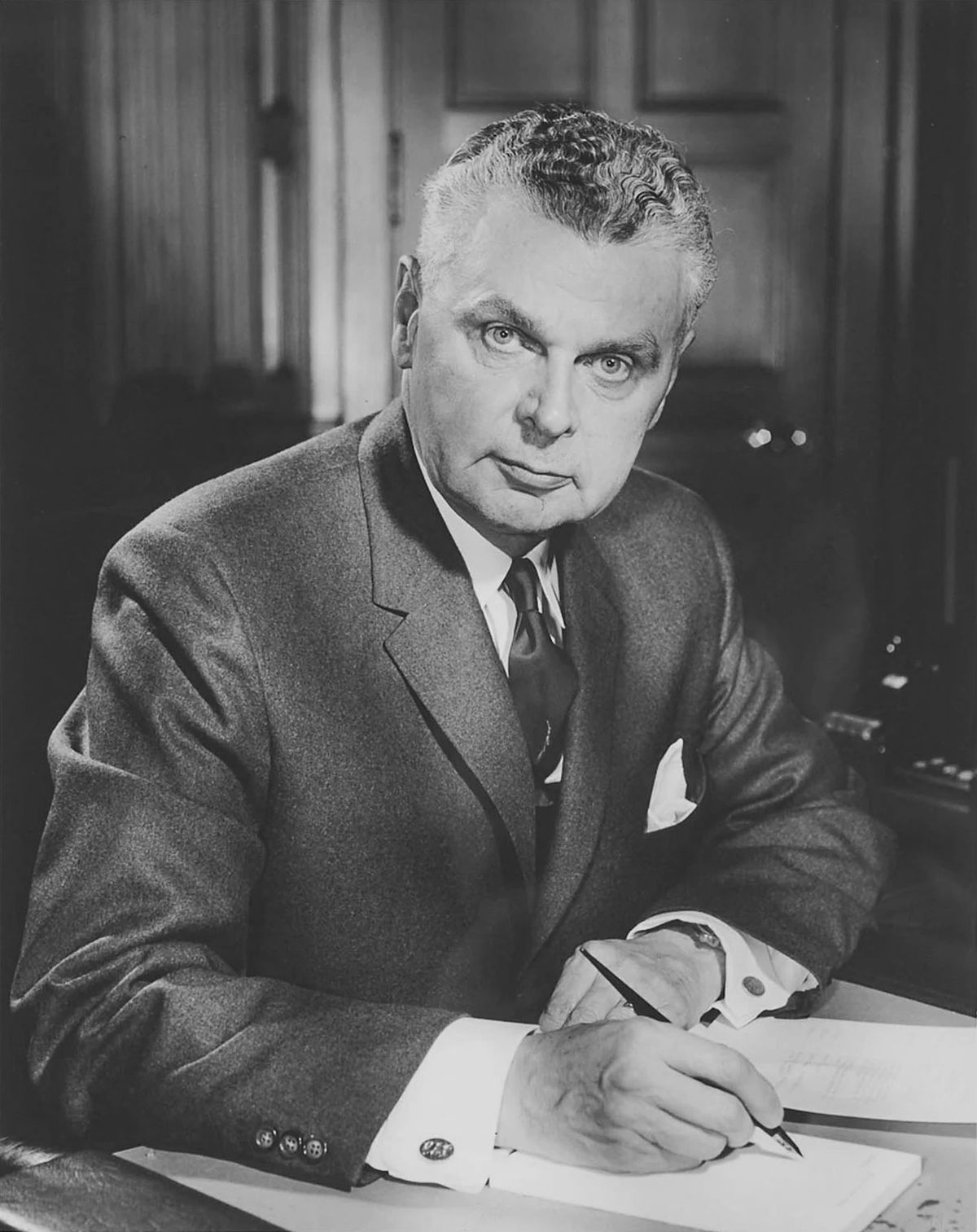
Prime Minister John Diefenbaker was the unequivocal driving force behind the Canadian Bill of Rights, a project he called one of his proudest achievements. Diefenbaker, whose father was a German immigrant, witnessed prejudice against newcomers, French Canadians, and Indigenous peoples in the Saskatchewan region where he grew up. He later stated that until the end of the Second World War, it seemed only those of English or French descent were considered first-class citizens. This early exposure led him to devote his career to the principle of equality for all Canadians, and he began drafting his version of a bill of rights as early as 1936, four years before his election to Parliament.
As a young lawyer in Wakaw, Saskatchewan, he built a practice focused on human rights cases. He publicly advocated for the need to take a forthright stand against discrimination based on colour, creed, or racial origin, telling a public forum in 1950 that individual freedoms were threatened by the state. After becoming Prime Minister following the 1957 election, he fulfilled this long-standing pledge by introducing the Bill of Rights in Parliament in 1960, seeing it as a way to give Canadians of all backgrounds the same rights and privileges. Key milestones in Diefenbaker's journey to the Bill include:
- 1936: Began drafting his personal bill of rights.
- March 16, 1950: Publicly argued for a bill of rights at a forum, stating freedoms were threatened by the state.
- 1957: Advocated for a bill of rights during the federal election campaign that brought him to power.
- 1960: Introduced the Canadian Bill of Rights as Prime Minister.
- August 10, 1960: Saw the Canadian Bill of Rights receive Royal Assent.
Key Provisions and Protected Rights
The Canadian Bill of Rights recognizes and declares a set of fundamental human rights and freedoms that exist in Canada without discrimination based on race, national origin, colour, religion, or sex. Its substantive rights are primarily outlined in its first two sections. Section 1(a) guarantees the right of the individual to life, liberty, security of the person, and the enjoyment of property, a combination not fully replicated in the later Charter. Section 1(b) affirms the right to equality before the law and the protection of the law. The Bill also protects freedoms of religion, press, speech and association, which were later explicitly enumerated in the Charter. Section 2 contains a detailed list of specific legal rights that federal laws must not infringe, functioning as a directive for how all federal statutes are to be interpreted and applied.
The rights enumerated in Section 2 include protection from arbitrary detention, imprisonment, or exile and protection from cruel and unusual treatment or punishment. It guarantees the right, upon arrest or detention, to be informed of the reason, to retain counsel without delay, and to habeas corpus. The section also affirms the right not to be compelled to give evidence if denied counsel or protection against self-incrimination, the right to a fair hearing in accordance with fundamental justice, and the right to be presumed innocent until proved guilty in a fair public hearing. A critical feature of Section 2 is its 'notwithstanding' wording, which states that every law of Canada must be applied so as not to infringe these rights, unless an Act of Parliament expressly declares it shall operate notwithstanding the Bill of Rights. Section 3 of the Bill creates a procedural safeguard, requiring the Minister of Justice to examine all new government bills and regulations for inconsistency with the Bill's purposes and to report any such inconsistency to the House of Commons. The Bill protects several specific rights not all found together in any other Canadian law:
- The right to the enjoyment of property (Section 1(a)).
- The right to equality before the law and the protection of the law (Section 1(b)).
- The right to retain and instruct counsel without delay upon arrest (Section 2(c)(ii)).
- The right to a fair hearing in accordance with fundamental justice (Section 2(e)).
- The right to the presumption of innocence (Section 2(f)).
- The right to the assistance of an interpreter in proceedings (Section 2(g)).
- The right to reasonable bail without just cause (Section 2(f)).
- The right to protection against self-incrimination when compelled to give evidence (Section 2(d)).
Legal Limitations and Judicial Interpretation
Despite its ambitious goals, the Canadian Bill of Rights proved to have significant legal limitations that curtailed its effectiveness from the outset. The most deep limitation was its status as an ordinary federal statute, not a constitutional document. This meant it was binding only on the federal government and applied solely to matters under federal jurisdiction as defined by Section 91 of the Constitution Act, 1867. It did not apply to provincial laws, a major gap in a federation where provinces hold significant power over areas like education, property, and civil rights. Because it was not constitutionally entrenched, there was legal debate about whether a future Parliament could simply repeal or override it. The courts generally interpreted the Bill cautiously, treating it as an interpretive aid rather than a tool to invalidate conflicting laws. Judges often employed a doctrine of 'implied repeal,' suggesting that a newer federal law could override the Bill of Rights if Parliament's intent was clear. This led to several high-profile disappointments for rights advocates, including the cases of Bliss v Canada (AG) and Canada (AG) v Lavell. A notable exception where it was used to strike down a law was R v Drybones. Between 1960 and 1982, the Bill was cited in 35 cases, with courts rejecting its application in thirty of them, a record that demonstrated its limited judicial power and fueled the demand for a stronger constitutional charter.
Relationship to the Canadian Charter of Rights and Freedoms
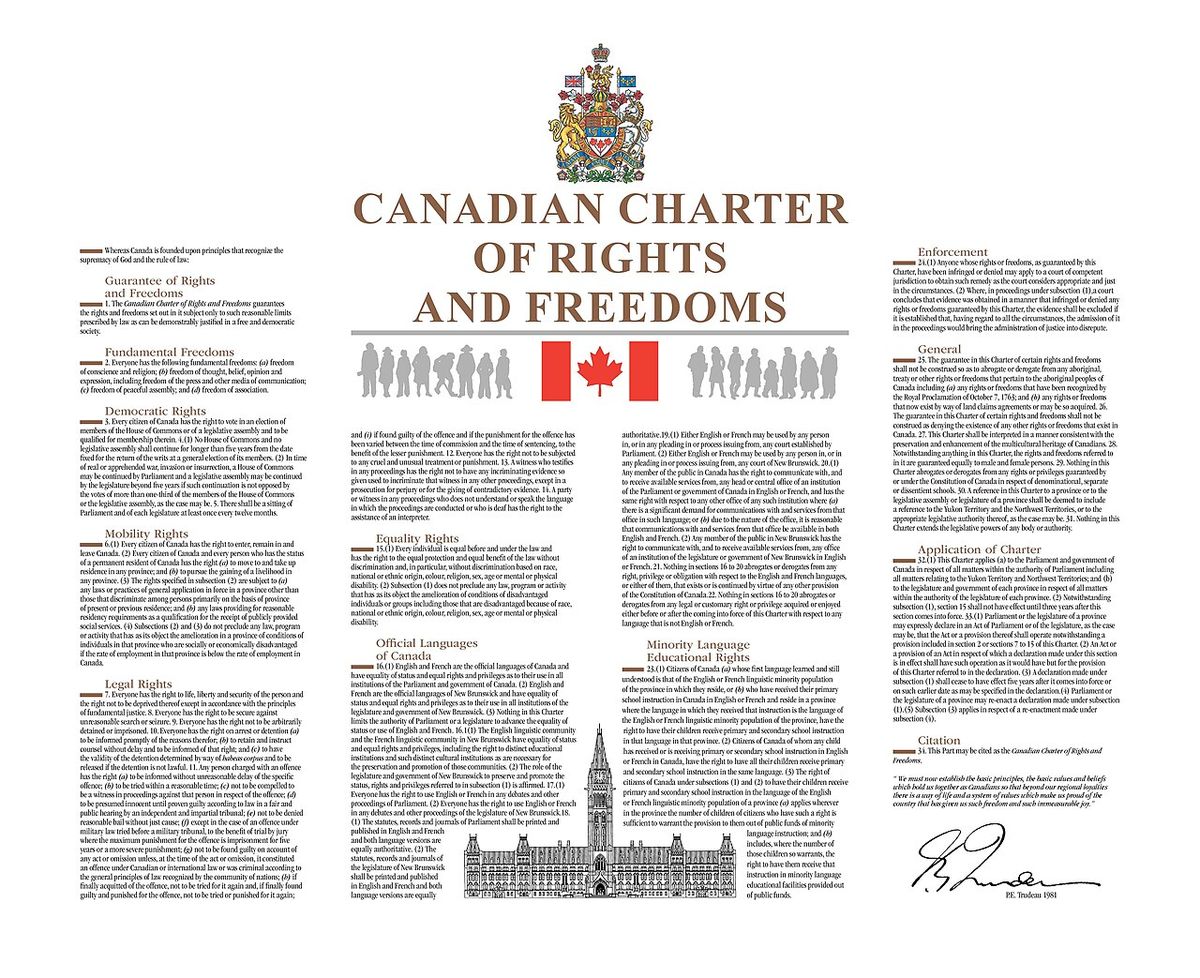
The recognized shortcomings of the Canadian Bill of Rights were the primary catalyst for the creation of a constitutionally entrenched charter. The movement for patriation of the constitution included a strong push for a more robust and universally applicable bill of rights. This culminated on April 17, 1982, with the proclamation of the Constitution Act, 1982, which included the Canadian Charter of Rights and Freedoms as its first part. The Charter addressed the core weaknesses of the Bill of Rights by being part of the supreme law of Canada, applying to both federal and provincial governments, and providing courts with the clear power to strike down inconsistent laws. While the Charter superseded the Bill of Rights as the primary guardian of rights in Canada, the 1960 statute remains in force and retains niche relevance.
Its most significant continuing utility lies in its protection of the right to the 'enjoyment of property,' a right not explicitly included in the Charter. Consequently, the Bill of Rights is still referenced in court cases pertaining to property issues under federal jurisdiction. The Charter also expanded upon and refined many rights first articulated in the Bill, such as by explicitly listing fundamental freedoms in Section 2 and providing a more comprehensive equality rights guarantee in Section 15. The key differences that made the Charter a more powerful instrument include:
- Constitutional entrenchment as part of the supreme law, versus the Bill's status as an ordinary statute.
- Application to both federal and provincial governments, versus the Bill's federal-only scope.
- Explicit power for courts to invalidate inconsistent laws, versus the Bill's weaker interpretive role.
- A more detailed and enforceable equality rights guarantee in Section 15.
- The Charter includes mobility rights, which the Bill does not.
Enduring Significance and Modern Relevance
The Canadian Bill of Rights holds an important place in Canada's legal and political history as a foundational human rights document. It represented a monumental symbolic step, formally declaring Parliament's commitment to equality and fundamental freedoms for all Canadians. For its era, it was a groundbreaking assertion that the state must respect individual rights, and it helped cultivate a national culture of rights consciousness. The Bill is regarded as a declaration symbolizing a history of dedication to civil liberties, even if its legal teeth were weak. Its preamble, affirming the supremacy of God, the dignity of the human person, and the role of the family, reflects the philosophical underpinnings of its time.
In practical terms, the Bill's modern application is limited but not obsolete. It continues to serve as a tool for interpreting federal statutes and can be invoked in cases where its protections, like property rights, exceed those in the Charter. The procedural requirement for the Minister of Justice to vet legislation for compliance remains operational. The Bill's history provides a crucial lesson in Canadian constitutional development, illustrating why a mere statute was insufficient and demonstrating the political and legal journey toward a truly supreme constitutional charter. It is the direct predecessor to one of Canada's most defining documents, the Charter of Rights and Freedoms.
Questions about Canadian Bill of Rights
What is the Canadian Bill of Rights?
The Canadian Bill of Rights is a federal statute enacted on August 10, 1960. It was Canada's first federal law to explicitly protect human rights and fundamental freedoms such as life, liberty, security, property, equality, and specific legal rights. Introduced by Prime Minister John Diefenbaker, it is an ordinary Act of Parliament. Its primary importance today is as the historical precursor to the Canadian Charter of Rights and Freedoms, and it remains in force for certain federal matters.
How is the Bill of Rights different from the Charter of Rights and Freedoms?
The key differences are legal scope and power. The Bill of Rights is a federal statute that applies only to the federal government, while the Charter is part of the Constitution and applies to all levels of government. The Charter allows courts to strike down inconsistent laws, whereas courts were hesitant to do so under the Bill of Rights. The Charter also includes explicit rights not in the Bill, like mobility rights, but the Bill uniquely protects the right to the enjoyment of property.
Is the Canadian Bill of Rights still in effect today?
Yes, the Canadian Bill of Rights remains in force as a federal statute. However, its practical use is limited because most of its protections are covered more robustly by the Canadian Charter of Rights and Freedoms. It is still referenced in legal cases, particularly those involving property rights under federal jurisdiction, as the Charter does not explicitly protect property rights. The Minister of Justice also continues to examine new bills for consistency with the Bill of Rights.
Why was the Bill of Rights considered ineffective?
The Bill of Rights was considered ineffective for several interconnected reasons. As a federal statute, it did not apply to provincial laws, creating a major gap. Courts largely treated it as a mere interpretive guide and were reluctant to use it to invalidate conflicting federal laws, as seen in cases like Lavell and Bliss. Its status as an ordinary law also meant a future Parliament could easily override it. These limitations directly motivated the push for a constitutionally entrenched charter.
What role did John Diefenbaker play in creating the Bill of Rights?
John Diefenbaker was the central figure in the creation of the Canadian Bill of Rights. He began drafting it as early as 1936, motivated by personal experiences with discrimination. As a Member of Parliament, he consistently advocated for such a law. After becoming Prime Minister in 1957, he fulfilled this long-standing pledge by introducing and steering the Bill through Parliament until it received Royal Assent in 1960. The Saskatchewan Bill of Rights of 1947 also influenced his vision.
Sources and further reading
- Canadian Bill of Rights (Wikipedia)
- Canadian Bill of Rights ( SC 1960, c. 44) - Justice Canada (laws-lois.justice.gc.ca)
- Canadian Bill of Rights (thecanadianencyclopedia.ca)
- The Canadian Bill of Rights, Diefenbaker Canada Centre (diefenbaker.usask.ca)
- The Canadian Charter of Rights and Freedoms (justice.gc.ca)
Checked by the Nosy Mag desk. Last updated 2026-10-23.