Capital punishment in Canada
Capital punishment in Canada refers to the state-sanctioned practice of executing individuals as a penalty for crimes, a practice that has been fully abolished in Canadian law since 1999. The death penalty was a feature of the Canadian justice system from the colonial period through to the mid-20th century, with hanging serving as the primary method for civilian executions. Its abolition followed decades of parliamentary debate and shifting public opinion, culminating in the removal of the death penalty for all crimes under the Criminal Code in 1976 and from the National Defence Act in 1999.
Historical Development
The use of capital punishment in Canada dates to its earliest colonial history under French and British rule. In New France, the position of executioner was deeply unpopular, leading authorities to spare the lives of condemned criminals if they agreed to take on the role. One of the earliest recorded executions in English-speaking Canada occurred in Halifax in 1749, when sailor Peter Cartcel was hanged for murder after a swift trial. Following Canadian Confederation in 1867, the number of capital offences was reduced, and in 1868, executions were moved inside prison walls, ending the era of public hangings. By the 1870s, gallows were constructed close to the ground with a pit underneath, reflecting an evolution in execution technology aimed at a more controlled process. The drive for abolition began in earnest in the 20th century, with Member of Parliament Robert Bickerdike presenting a private member's bill calling for its end as early as 1914.
Significant legal limitations on capital punishment occurred in the mid-20th century. Canada abolished the death penalty for rape in 1954, though no one had been executed for a non-fatal rape since 1867. A major reform came in July 1961 with legislation that reclassified murder into capital and non-capital categories. Capital murder, which carried a mandatory death sentence, included planned and deliberate murder, murder during violent crimes, or the murder of a police officer or prison guard. This law also officially raised the minimum age for execution to 18, with the last juvenile offender, Lloyd Wellington Simcoe, having been hanged in 1945. After this reform, the only two death sentences carried out were those of Ronald Turpin and Arthur Lucas in 1962. The period also saw cases that highlighted racial bias, such as the 1927 death sentence for William James McCathern, a Black man convicted of rape, which was overturned on appeal amid a racist judicial atmosphere.
Path to Abolition
The practical end of capital punishment in Canada began in January 1963 when the federal cabinet, under Prime Minister Lester Pearson, commuted all death sentences as a matter of policy. A formal five-year moratorium on the use of the death penalty, except for murders of police and corrections officers, was enacted through Bill C-168 on November 30, 1967. When this experimental period expired in 1973, the Solicitor General of Canada continued the partial ban. The definitive legislative step came on July 14, 1976, when the House of Commons passed Bill C-84 by a narrow margin of 130 to 124 in a free vote. This bill abolished the death penalty for murder, treason, and piracy under the Criminal Code, receiving royal assent on July 16 and coming into force on July 26, 1976. Capital murder was replaced with first-degree murder, carrying a mandatory life sentence without parole eligibility for 25 years, while non-capital murder became second-degree murder with a life sentence and parole ineligibility set between 10 and 25 years.
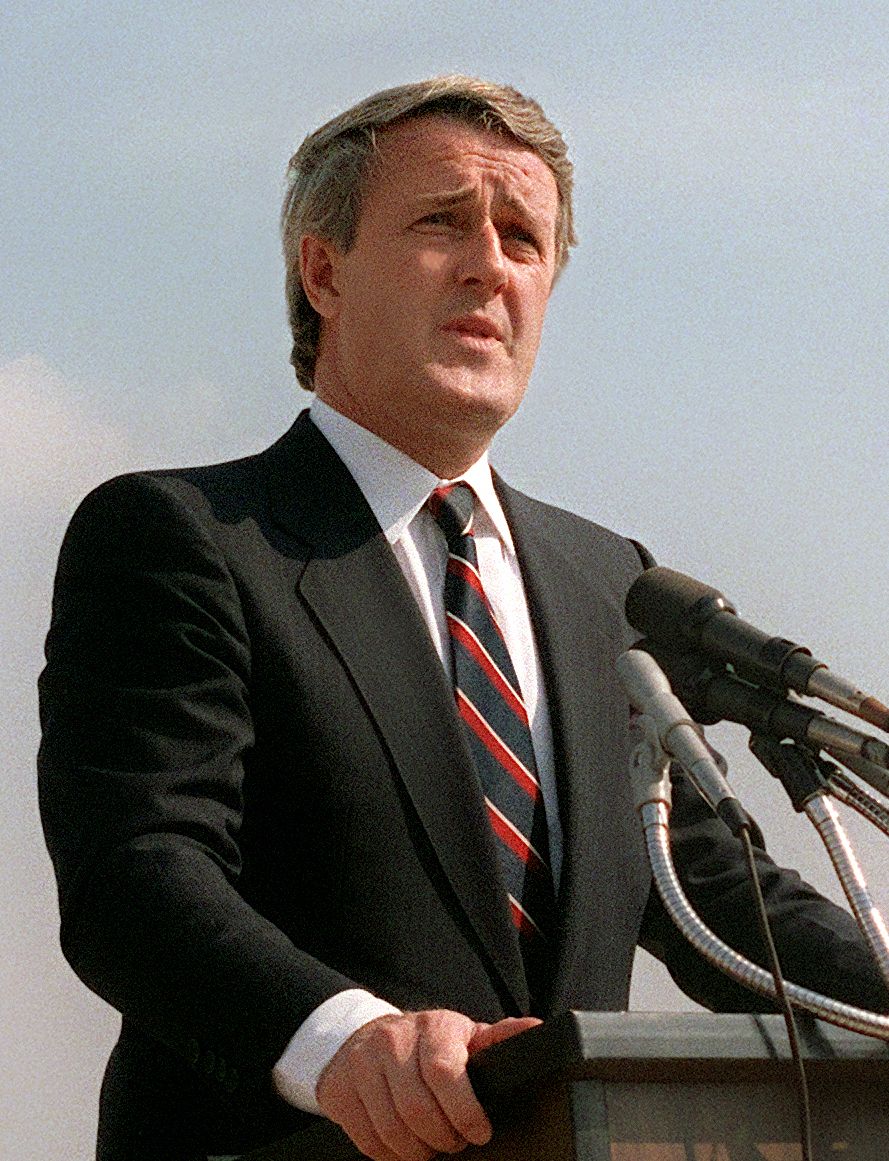
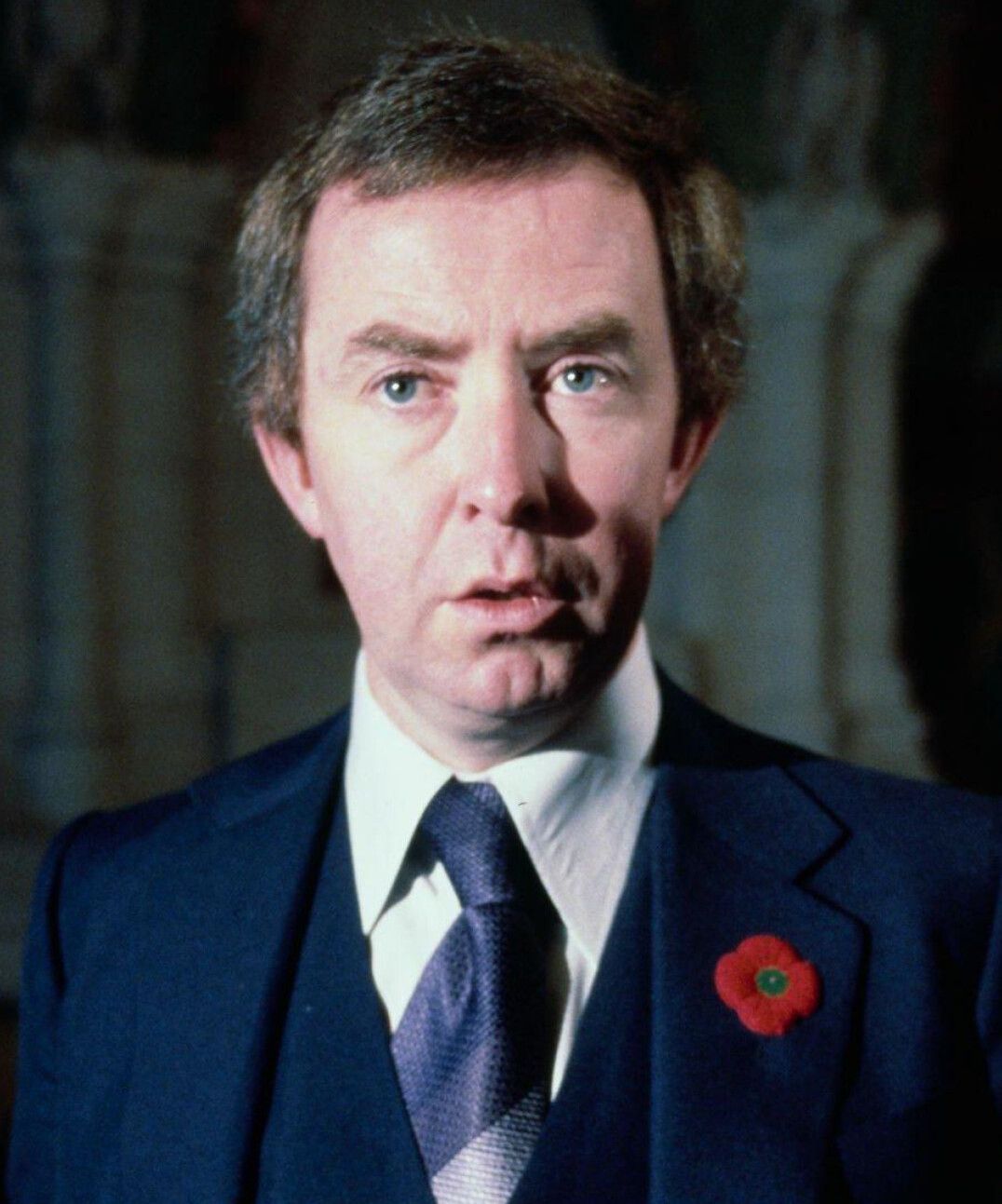
A subsequent attempt to restore the death penalty was decisively defeated on June 30, 1987, when the House of Commons voted 148 to 127 against reinstatement. Prime Minister Brian Mulroney, Justice Minister Ray Hnatyshyn, and External Affairs Minister Joe Clark opposed the bill, while Deputy Prime Minister Donald Mazankowski and a majority of Progressive Conservative MPs supported it. The death penalty remained in the National Defence Act for certain military offences, including cowardice, desertion, unlawful surrender, and spying for the enemy if committed traitorously. This final vestige was eliminated when Parliament passed legislation in December 1998 to replace those death penalties with life imprisonment. The change came into force on September 1, 1999, marking the complete legal abolition of capital punishment in Canada.
Final Executions and Notable Cases
The last executions in Canada were carried out in the early morning of December 11, 1962, at the Don Jail in Toronto. Ronald Turpin, 29, was hanged for murdering a police officer, and Arthur Lucas, 54, was hanged for a premeditated murder. These were the only executions carried out after the 1961 murder law reform. The last woman executed was Marguerite Pitre on January 9, 1953, at Bordeaux Prison in Montreal for her role in the bombing of Canadian Pacific Air Lines Flight 108. The last person sentenced to death was Mario Gauthier on May 14, 1976, for murdering a prison guard in Quebec. He was reprieved when capital punishment was abolished for Criminal Code offences later that same July.
Several executions from earlier periods remain historically significant for their impact on public opinion and legal discourse. The 1837 hanging of Patrick Fitzpatrick in Windsor, Ontario, for an alleged rape, later proven to be committed by another man who confessed on his deathbed, contributed to abolitionist sentiment and influenced the abolition of capital punishment in neighbouring Michigan. The 1926 case of William James McCathern, a Black man sentenced to death for rape, has been cited as an example of institutional racism, especially when contrasted with the lenient sentences given to four white men convicted in a brutal gang rape the same year. The execution of Thomasina Sarao in 1935, which resulted in decapitation due to a botched hanging, also drew public attention to the potential for error and cruelty in the process.
Military Executions and War Crimes
Capital punishment under Canadian military law followed a separate trajectory from civilian law. During World War I, 25 Canadian soldiers were executed, most for service offences like desertion and cowardice, though two were for murder. In World War II, one Canadian soldier, Private Harold Pringle, was executed by firing squad for murder under military law. Another six Canadian soldiers, including August Sangret, were executed for murder in Britain after being tried by civilian courts under English law. After the war, Canada carried out executions of German war criminals convicted of crimes against Canadian prisoners of war. On April 15, 1946, Wilhelm Jung and Johann Georg Schumacher were executed by firing squad for murder, and on May 11, 1946, Robert Hölzer and Walter Weigel were executed for the murder of three Canadian prisoners. These were the last executions by firing squad conducted by Canadian authorities.
In 1946, five German prisoners of war convicted of murdering other POWs were also executed in Canada. Four of them were among the five executed in Canada's last mass execution on December 18, 1946. These trials and executions were conducted under Canadian civil law and authority, not military law. The National Defence Act retained the death penalty for specific military offences until 1999, though no military executions had been carried out since 1946. The complete removal of these provisions in 1999 aligned Canadian military justice with the country's abolitionist stance.
Executioners and Methods
The role of executioner in Canada was often filled by individuals operating under pseudonyms due to the social stigma attached to the job. John Radclive became Canada's first professional executioner in 1892, placed on the federal payroll by an order-in-council. He is credited with at least 69 executions, though contemporary reports suggested a total near 150. He died in Toronto in 1911. He was succeeded by Arthur Ellis, the pseudonym of Arthur B. English, who served as the official hangman from 1913 until 1935. Ellis's career ended after the botched execution of Thomasina Sarao in Montreal, where she was decapitated. He died in poverty in 1938. The Crime Writers of Canada later named their annual literary award, the Arthur Ellis Awards, after this pseudonym. Following Ellis, the executioner known as Camille Branchaud carried out many post-war executions, including the 1952 double hanging of Leonard Jackson and Steven Suchan of the Boyd Gang.
The primary method of execution for civilians in Canada was hanging. The development of the 'long-drop' method, pioneered in the United Kingdom by William Marwood, became standard. This technique used a calculated drop length to break the neck instantly, causing death by asphyxia while unconscious, which was considered more humane. Despite the aim for a quick death, accidents occurred, including decapitations at Headingley Jail in Manitoba and Bordeaux Jail in Montreal. Most executions took place on temporary scaffolds in jail yards, though some institutions like the Don Jail in Toronto and Bordeaux Prison in Montreal had permanent indoor facilities. Military executions were conducted by firing squad.
- John Radclive: First professional executioner (1892 to 1911).
- Arthur Ellis (Arthur B. English): Official hangman (1913 to 1935).
- Camille Branchaud: Pseudonym for post-World War II executioner.
- Primary method: Long-drop hanging for civilians.
- Military method: Execution by firing squad.
- Last mass execution: December 18, 1946 (German POWs).
Public Opinion and Contemporary Debate
Public support for the death penalty in Canada has fluctuated over time, with recent polling indicating a majority in favour of its reinstatement for murder. A Research Co. poll conducted in June 2026 found that 60 percent of Canadians supported reinstating the death penalty for murder, an increase of six percentage points from early 2025, while 30 percent were opposed. Support was highest in Saskatchewan and Manitoba and British Columbia at 67 percent, and lowest in Quebec at 50 percent. When asked to choose between punishments for murder, 49 percent of Canadians preferred life imprisonment without parole, while 39 percent preferred the death penalty. The poll revealed a stark political divide, with a majority of 2025 Conservative voters preferring the death penalty, while majorities of Liberal and New Democratic Party voters preferred life imprisonment.
The arguments for and against capital punishment have remained consistent over decades. Supporters often cite the principle of 'a life for a life,' with 56 percent in the 2026 poll stating the punishment fits the crime, and 52 percent believing it serves as a deterrent. Opponents' primary concern, held by 66 percent, is the risk of executing an innocent person due to wrongful conviction. Other arguments against include the belief that murderers should serve prison time as sentenced and moral objections to state-sanctioned killing. Historically, studies in Western societies have shown that homicide rates are not significantly affected by the presence or absence of the death penalty. No major Canadian political party currently advocates for the return of capital punishment, and its reinstitution is considered extremely unlikely given the legal and international human rights commitments Canada has undertaken since abolition.
Statistical Overview of Executions
From 1867 to the abolition of the death penalty for murder in 1976, a total of 1,481 people were sentenced to death in Canada. Of these, 710 individuals were executed, comprising 697 men and 13 women. The method was exclusively hanging for civilians after the end of the French regime. The period from 1892, with the professionalization of the role of executioner, saw a concentration of executions. For instance, executioner John Radclive was responsible for a significant portion of these. The Bordeaux Prison in Montreal was the site of the most executions between 1912 and 1960, with 85 carried out there. The following table provides a breakdown of key statistical figures related to capital punishment in Canada. The data shows the scale of capital punishment's application in Canadian history before its abolition. The decline in executions was gradual, with a de facto moratorium beginning in 1963 after the last two hangings. The complete abolition in 1999 closed the book on a penal practice that had been part of the Canadian legal landscape for over two centuries.
| Category | Figure | Timeframe/Details |
|---|---|---|
| Total Executed | 710 | 1867 to 1976 |
| Men Executed | 697 | 1867 to 1976 |
| Women Executed | 13 | 1867 to 1976 |
| Total Death Sentences | 1,481 | 1867 to 1976 |
| Last Executions | 2 (Turpin & Lucas) | December 11, 1962 |
| WWII Military Executions (by Canada) | 1 (Harold Pringle) | 1945 |
| German War Criminals Executed | 4 | April, May 1946 |
Questions about Capital punishment in Canada
When was the death penalty abolished in Canada?
Capital punishment was abolished in Canada in two stages. The death penalty for murder, treason, and piracy under the Criminal Code was abolished on July 26, 1976, following the passage of Bill C-84. The death penalty for military offences under the National Defence Act was abolished through legislation passed in December 1998, which came into force on September 1, 1999.
Who were the last people executed in Canada?
The last people executed in Canada were Ronald Turpin, age 29, and Arthur Lucas, age 54. They were hanged simultaneously at 12:02 am on December 11, 1962, at the Don Jail in Toronto. Turpin was executed for murdering a police officer, and Lucas was executed for a premeditated murder.
What method of execution was used in Canada?
The sole method used for civilian capital punishment in Canada after the French regime was hanging. The 'long-drop' method, developed to break the neck instantly, became standard. Military prisoners sentenced to death under Canadian military law were executed by firing squad.
Does Canadian public opinion support bringing back the death penalty?
According to a June 2026 poll by Research Co., 60 percent of Canadians support reinstating the death penalty for murder, while 30 percent are opposed. Support varies by region, being highest in Saskatchewan, Manitoba, and British Columbia (67%) and lowest in Quebec (50%). However, when asked to choose between punishments, 49 percent prefer life imprisonment without parole for murder, compared to 39 percent who prefer the death penalty.
Were any women executed in Canada?
Yes, 13 women were executed in Canada between 1867 and 1976. The last woman to be executed was Marguerite Pitre on January 9, 1953, at Bordeaux Prison in Montreal for her role in the bombing of Canadian Pacific Air Lines Flight 108.
What replaced the death penalty for murder in Canada?
The death penalty for murder was replaced with mandatory life imprisonment. First degree murder, which replaced capital murder, carries a life sentence without eligibility for parole for 25 years. Second degree murder carries a life sentence with parole ineligibility set by a judge for a period between 10 and 25 years.
Sources and further reading
- Capital punishment in Canada (Wikipedia)
- Death Penalty in Canada (amnesty.ca)
- Capital Punishment in Canada (thecanadianencyclopedia.ca)
- Support for Return of Death Penalty Rises Markedly in ... (researchco.ca)
- List of Defendants Executed in 2026 (deathpenaltyinfo.org)
Checked by the Nosy Mag desk. Last updated 2026-10-23.