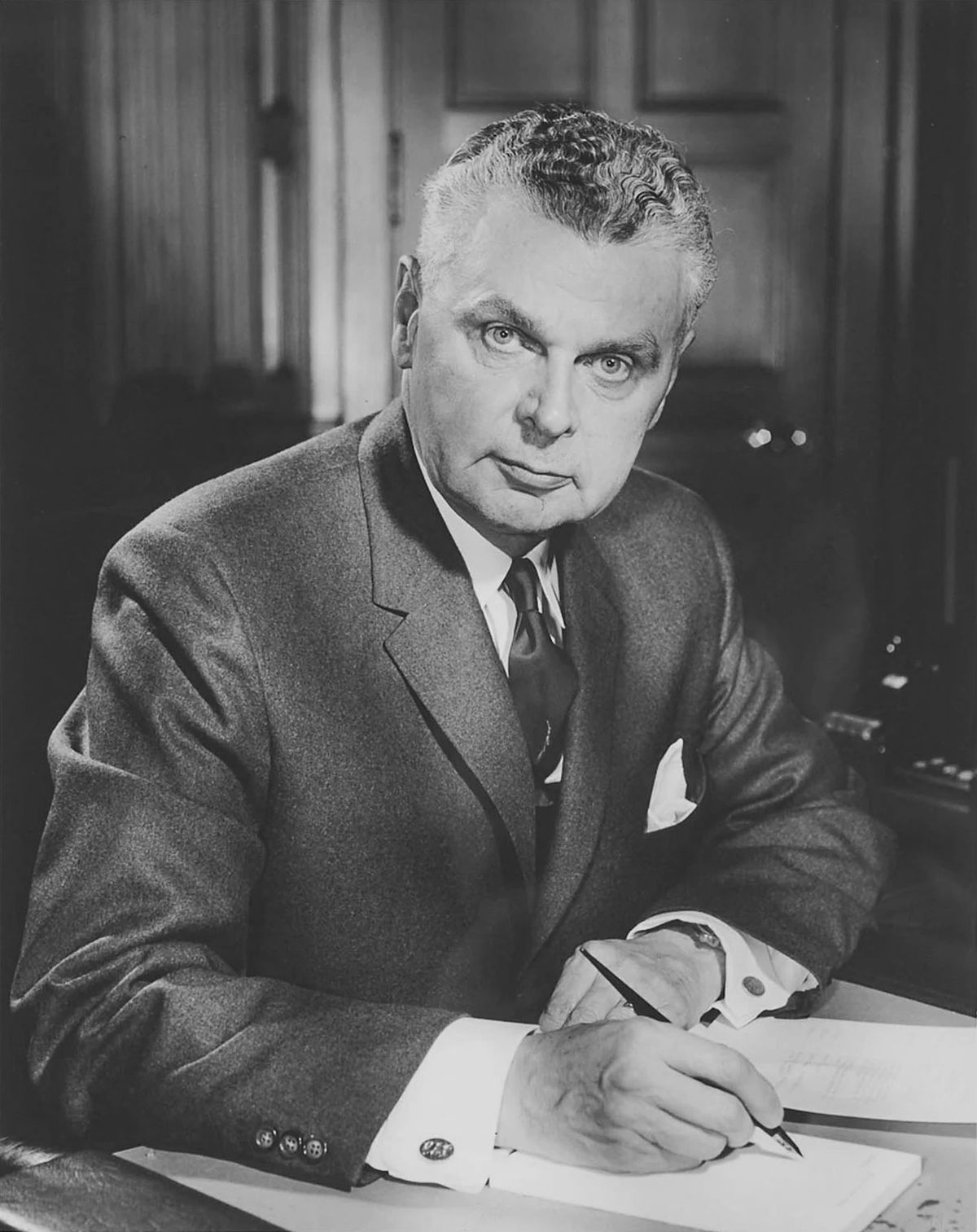
Arthur Lucas
Arthur Lucas was one of the last two people executed in Canada, hanged alongside Ronald Turpin at Toronto's Don Jail on December 11, 1962. A 54-year-old American from Georgia, Lucas was convicted of the capital murder of Therland Crater, a Detroit drug dealer and police informant, in a Toronto hotel room on November 17, 1961. He is also assumed to have killed Carolyn Ann Newman, Crater's common-law wife. His case, marked by questions of guilt and a brutal execution, became a focal point in the national debate over capital punishment. The deaths of Lucas and Turpin marked the final application of the death penalty in Canada, preceding its formal abolition for murder in 1976.
The Toronto Murders and Investigation
The crimes for which Arthur Lucas was convicted occurred on November 17, 1961, at a hotel in Toronto. The victims were Therland Crater, a 44-year-old drug dealer and police informant from Detroit, and his 20-year-old common-law wife, Carolyn Ann Newman. Crater had been shot four times, while Newman was nearly decapitated with her throat slashed. Police evidence placed Lucas at the scene. A ring belonging to Lucas was found in a pool of Newman's blood. When Lucas was arrested, he was found to have recently cut his nails, and blood was found underneath one of them. He also had gunpowder embedded in his hand. There were bloodstains found in the car used by Lucas to travel to Toronto, which matched that of Crater and Newman. The car was traced to a Detroit drug dealer named Saunders, the individual against whom Crater was supposed to testify, suggesting a possible motive tied to silencing a witness. Lucas was charged with the capital murder of Crater, a charge requiring proof of premeditation under Canada's new 1961 law. He was never formally tried for Newman's death, though he was assumed to be her killer.
Legal Proceedings and Appeal
Arthur Lucas's trial proceeded under Canada's revised homicide laws. In July 1961, the government had established two degrees of murder, with capital murder carrying a mandatory death sentence and non-capital murder carrying a life sentence with parole eligibility after 10 years. Lucas was convicted of capital murder for the killing of Therland Crater. His defense argued that his actions were inconsistent with premeditated murder, noting he had registered at the hotel under his own name and correct address. They also highlighted that U.S. federal authorities had described Lucas as having dull normal intelligence. The case relied heavily on the testimony of Morris Thomas, a drug addict and convicted drug dealer, whom the defense characterized as an unreliable witness. Lucas appealed his conviction to the Ontario Court of Appeal, which unanimously dismissed it. He subsequently sought leave to appeal to the Supreme Court of Canada under the case Arthur Lucas v. Her Majesty the Queen. The Supreme Court heard a full appeal but ultimately upheld the conviction, clearing the final legal hurdle before his execution.
Doubts and Investigative Journalism
Following the execution, significant doubts about Lucas's guilt were raised by pioneering Canadian journalist Betty Lee in a 1963 investigation. Lee conceded that Lucas was an unsavoury career criminal with prior convictions for armed robbery, mail fraud, and pimping. However, she pointed to several inconsistencies in the case against him. She noted that Lucas had no blood on his clothes despite the extremely violent nature of the murders. Her reporting cast further suspicion on the reliance of the prosecution's case on the testimony of Morris Thomas. Above all, she emphasized the seemingly illogical behaviour of a man committing a premeditated contract murder registering at the crime scene under his own identity. These questions contributed to a growing public sense that the justice system may have executed a man based on flawed evidence, fuelling the anti-capital punishment movement.
The Final Execution in Canada
In the early hours of December 11, 1962, Arthur Lucas and Ronald Turpin were executed by hanging at the Toronto Don Jail. The double hanging was conducted back-to-back on a single gallows, using two ropes and one trapdoor. The hangman, who used the pseudonym Jack Ellis to protect his identity, was paid $500 by the York County sheriff's office for each man. To prepare, he calculated the rope lengths using sandbags matched to the condemned men's weights, which he obtained through conversations with guards. Salvation Army chaplain Lieutenant-Colonel Cyril Everitt, who had ministered to both men for the ten months preceding their execution, read Psalm 23 as they stood hooded on the scaffold. At two minutes past midnight, the trapdoor was sprung. The men were officially declared dead sixteen minutes later. Their bodies were removed through a side door and buried side by side in unmarked graves in Section 13 of Prospect Cemetery. Prison chaplain Cyril Everitt later revealed that the hanging had been botched, stating that Lucas's head had been torn right off because the hangman had miscalculated his weight, leaving his head hanging by the sinews of his neck.
Outside the jail, a crowd of about 150 demonstrators braved freezing temperatures to protest the executions. Members of the Don Heights Unitarian Congregation held a death-watch service in their church. Turpin's girlfriend, Lillian White, dressed in black, joined this vigil. The event sparked immediate controversy, exemplified by the CBC's last-minute cancellation of a scheduled radio talk by law professor and death penalty opponent John Desmond Morton. The Toronto Star mocked deterrence arguments in an editorial the next day, questioning the logic of hiding the execution from public view if it was meant to deter crime.
Personal Background and Final Hours
Arthur Lucas was a 54-year-old Black man originally from Georgia, described in court and press reports as a pimp and hired killer from Detroit. He had a substantial criminal record in the United States. In the hours before his execution, both he and Ronald Turpin reportedly maintained a calm demeanour. Lucas requested that his favourite psalm, Psalm 35, be read to him. The psalm includes the lines, Let them be ashamed and brought to confusion together that rejoice at mine hurt. According to Chaplain Everitt's son, Bramwell Everitt, Lucas made a confession to his father on the night of the execution. Lucas maintained that he was framed for the murders of Crater and Newman but added that he'd done many other terrible things in his so-called career that it was just catching up with him. His co-condemned, Ronald Turpin, wrote a note of forgiveness, stating, I know you did me wrong, but I can't go into eternity with feelings of resentment on my soul. For years after the burial, Chaplain Everitt visited their graves annually, later confessing, To this day I don't believe it pleased almighty God.
Context and Abolition of Capital Punishment
The executions of Lucas and Turpin occurred during a period of intense national debate over capital punishment in Canada. Between 1867 and 1962, Canada had executed 710 people, always by hanging. Prime Minister John Diefenbaker had commuted many death sentences, leading to hope for a last-minute reprieve for the two men. However, the federal cabinet decided against intervention. The double hanging proved to be a watershed, as no further civilian executions were carried out in Canada. The movement to abolish the death penalty gained momentum, culminating in 1976 when Parliament removed capital punishment for murder from the Criminal Code, replacing it with a mandatory life sentence. The death penalty was fully abolished from Canadian law, including the National Defence Act, in 1998, closing a long and contentious chapter in the nation's legal history.
Capital punishment has a long history in Canada, where it was originally applied for many offences but by 1865 was reserved for murder, rape, and treason. The first formal effort to abolish it was an unsuccessful private member's bill proposed by Robert Bickerdike in 1914. In July 1961, the Canadian government adopted a law establishing capital murder, which carried a mandatory death sentence, and non-capital murder, which carried a life sentence. Capital punishment for murder was removed from Canada's Criminal Code in 1976, but could still be used under the National Defence Act until 1998.
- 1865: The death penalty was reserved for murder, rape, and treason in the colonial era.
- 1914: MP Robert Bickerdike proposed the first unsuccessful private member's bill to abolish the death penalty.
- July 1961: Parliament adopted a law establishing capital and non-capital murder, with capital murder retaining the mandatory death sentence.
- December 11, 1962: The executions of Arthur Lucas and Ronald Turpin, the last civilian hangings in Canada.
- 1976: Capital punishment for murder was abolished and removed from the Criminal Code.
- 1998: The death penalty was fully abolished, including its removal from the National Defence Act.
Key Figures in the Case
The case of Arthur Lucas involved several individuals whose roles defined its legal and human dimensions. Therland Crater was the 44-year-old victim, a Detroit drug dealer and police informant hiding in Toronto, whose testimony was sought in a U.S. drug trial. Carolyn Ann Newman was Crater's 20-year-old common-law wife, also killed in the attack but for whose murder Lucas was never tried. Morris Thomas was a drug addict and convicted drug dealer whose testimony was a central part of the prosecution's case against Lucas. Jack Ellis was the pseudonym of the experienced hangman who carried out the execution. Lieutenant-Colonel Cyril Everitt was the Salvation Army prison chaplain who ministered to Lucas and Turpin, witnessed the botched execution, and later revealed its graphic details. Betty Lee was the investigative journalist whose 1963 work cast serious doubt on the evidence used to convict Lucas. Ronald Turpin was the 29-year-old career criminal executed alongside Lucas for the unrelated murder of Toronto police constable Frederick Nash.
Historical Significance and Legacy
The execution of Arthur Lucas holds a permanent and grim place in Canadian legal history. He and Ronald Turpin are recorded as the last individuals to suffer civilian capital punishment in Canada. Their deaths marked the end of an era and accelerated the political and social forces that led to abolition. The case continues to resonate for several reasons. The serious questions about Lucas's guilt raised by Betty Lee show the irreversible risk of judicial error inherent in the death penalty. The brutal nature of his execution, as later disclosed by the chaplain, highlighted the physical horror of state-sanctioned killing. The side-by-side burial of Lucas and Turpin in unmarked graves at Prospect Cemetery serves as a tangible, sombre monument to this chapter of Canadian history. Their case is frequently cited in discussions about justice, morality, and the limits of state power, ensuring that the names Arthur Lucas and Ronald Turpin remain inextricably linked to the story of capital punishment's end in Canada.
- Execution Site: The Toronto Don Jail, where the double hanging took place in a converted washroom that housed the gallows.
- Burial Site: Section 13 of Prospect Cemetery, where Lucas and Turpin were buried in adjacent, unmarked graves.
- Final Words: Lucas's requested Psalm 35 and Turpin's written note of forgiveness.
- Botched Execution: The 1986 revelation by Chaplain Everitt that Lucas's head was torn off during the hanging.
- Journalistic Work: Betty Lee's 1963 investigative report that cast doubt on the conviction.
- Legal Precedent: The Supreme Court of Canada case Arthur Lucas v. Her Majesty the Queen (1962).
- Protest Action: The death-watch service held by the Don Heights Unitarian Congregation on the night of December 10, 1962.
Questions about Arthur Lucas
How did Arthur Lucas die?
Arthur Lucas was executed by hanging at the Toronto Don Jail at 12:02 a.m. on December 11, 1962. He and Ronald Turpin were hanged back-to-back on a single gallows in a double execution. Prison chaplain Cyril Everitt later revealed the execution was botched. He stated that Lucas's head was torn off due to a miscalculation of his weight by the hangman, Jack Ellis, and that it was hanging by the sinews of his neck.
Who was Arthur Lucas?
Arthur Lucas was a 54-year-old American career criminal originally from the state of Georgia. He was a pimp and hired killer from Detroit with prior convictions for armed robbery, mail fraud, and pimping. Lucas was convicted of the capital murder of Therland Crater, a drug dealer and police informant, and executed on December 11, 1962. He was executed alongside Ronald Turpin, becoming one of the last two people to be executed in Canada.
What crime was Arthur Lucas convicted of?
Arthur Lucas was convicted of the capital murder of 44-year-old Therland Crater, a drug dealer and police informant from Detroit. The murder took place at a hotel in Toronto on November 17, 1961. Lucas was also assumed to have killed Carolyn Ann Newman, Crater's common-law wife, but was never tried for her death. The crime was deemed capital murder, meaning it was premeditated, under Canada's 1961 homicide law.
Why are there doubts about Arthur Lucas's guilt?
Doubts about Arthur Lucas's guilt were raised in a 1963 investigation by journalist Betty Lee. She noted Lucas had no blood on his clothes despite the violent murders. The case relied heavily on the testimony of Morris Thomas, a drug addict and convicted drug dealer. The defense argued Lucas's actions, like registering at the hotel under his own name, were unfitting for premeditated murder. Lucas maintained he was framed for these specific murders.
Where is Arthur Lucas buried?
Arthur Lucas is buried in an unmarked grave in Section 13 of Prospect Cemetery in Toronto. Following his execution, his body was buried side by side with that of Ronald Turpin. Salvation Army chaplain Cyril Everitt, who ministered to the men before their deaths, visited their graves annually for many years. The location of his burial in the Toronto cemetery is a historical detail of his case.
How did Lucas's execution affect capital punishment in Canada?
The execution of Arthur Lucas and Ronald Turpin on December 11, 1962, was the last civilian execution in Canada. The controversy around their cases, including doubts about Lucas's guilt and the botched hanging, fuelled public debate. Capital punishment for murder was removed from the Criminal Code in 1976. It was fully abolished from all Canadian law, including the National Defence Act, in 1998.
Sources and further reading
- Arthur Lucas (Wikipedia)
- Rage Against the Noose (canadashistory.ca)
- Lucas, Arthur and Ronald Turpin (mountpleasantgroup.com)
- Arthur Lucas and Ronald Turpin: Canada's Last Executions (mpg200.ca)
- Supreme Court of Canada | 09713 (scc-csc.ca)
Checked by the Nosy Mag desk. Last updated 2026-10-26.