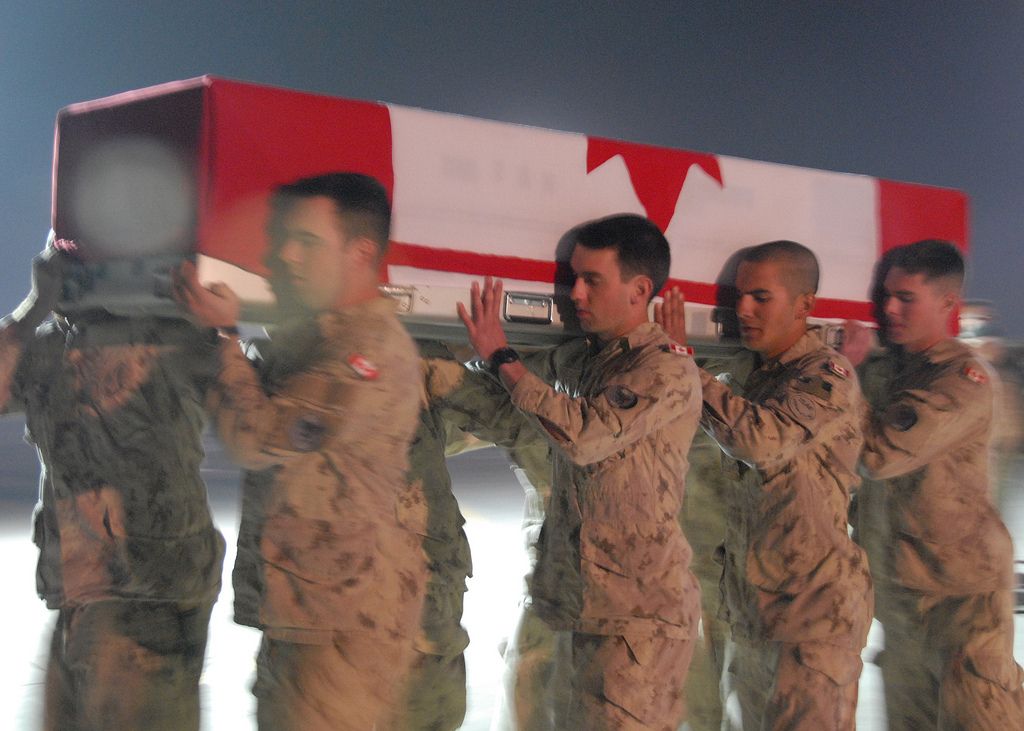
Royal Canadian Air Force
The Royal Canadian Air Force (RCAF) is the air and space force of Canada and one of the three environmental commands within the unified Canadian Armed Forces. Its core missions include defending Canadian and North American airspace in partnership with the United States Air Force through NORAD, providing all primary air resources for the National Search and Rescue Program, and supporting the operations of the Royal Canadian Navy and the Canadian Army. With a history dating to 1920 and a royal title granted in 1924, the RCAF has served in major conflicts from the Second World War to recent NATO operations. As of 2020, the force consisted of 12,074 Regular Force and 1,969 Primary Reserve personnel, supported by 1,518 civilians, and operated 258 manned aircraft and nine unmanned aerial vehicles. It is led by Commander Lieutenant-General Jamie Speiser-Blanchet, appointed in 2025.
Historical evolution
The origins of the Royal Canadian Air Force lie in the Canadian Air Force (CAF), established in 1920 as the successor to a short-lived two-squadron Canadian Air Force formed during the First World War. Wing Commander John Scott Williams was tasked in 1921 with organizing the CAF, handing command over later the same year to Air Marshal Lindsay Gordon. Initially a training militia for veteran pilots under the Air Board, the CAF became responsible for all flying operations in Canada in 1923. King George V granted the royal title in 1924, forming the Royal Canadian Air Force. Most of its early work was civil, including forestry patrols and aerial photography surveys. After budget cuts in the early 1930s, the air force began to rebuild towards a more military role.
During the Second World War, the RCAF was a major contributor to the British Commonwealth Air Training Plan and served in operations across multiple theatres. By the war's end, the RCAF had become the fourth largest Allied air force. Its wartime headquarters in London was at 20-23 Lincoln's Inn Fields. After the war, the RCAF reduced its strength but reoriented towards Cold War threats. Canada joined NATO in 1949, leading to the establishment of No. 1 Air Division RCAF with fighter wings based in France and West Germany. The RCAF supported the Korean War through transport missions, though it did not deploy combat units. Continental defence became a priority, with the RCAF heavily involved in operating the Pinetree Line, Mid-Canada Line, and DEW Line radar networks. The 1957 creation of the North American Air Defense Command (NORAD) with the United States formalized this partnership.
The controversial unification of the Canadian Forces in 1968, overseen by Defence Minister Paul Hellyer, amalgamated the RCAF with the navy and army. Air assets were split between several functional commands like Air Defence Command, Air Transport Command, and Maritime Command. These disparate commands were consolidated in 1975 under a single environmental command named Air Command (AIRCOM). In the 2000s, AIRCOM was heavily involved in the Afghanistan War, later establishing the Joint Task Force Afghanistan Air Wing, which operated until 18 August 2011. On 16 August 2011, the Government of Canada announced the restoration of the historic name Royal Canadian Air Force, along with the names Royal Canadian Navy and Canadian Army. The RCAF adopted a new badge in 2013 and restored traditional insignia in 2015, including replacing the rank of "private" with "aviator."
Command and organizational structure
The Royal Canadian Air Force is led by the Commander of the RCAF, a lieutenant-general based at RCAF Headquarters in Ottawa. The commander reports to the Chief of the Defence Staff, who in turn reports to the Minister of National Defence. The headquarters also includes a deputy commander, typically a major-general, and the Chief Warrant Officer of the Air Force. The RCAF has four major formations responsible to the commander, overseeing a total of 15 wings. This structure provides clear lines of authority for air and space operations, training, and capability development.
1 Canadian Air Division, headquartered in Winnipeg, is the operational headquarters for the RCAF. It is responsible for maintaining readiness and providing deployable air power for domestic and international missions. The division commander also holds the roles of Commander of the Canadian NORAD Region, Joint Force Air Component Commander, and Commander of Search and Rescue Region Trenton. It oversees 11 wings across Canada, encompassing fighter, tactical aviation, maritime patrol, air mobility, and search and rescue capabilities. Key units reporting directly to the division include the Combined Aerospace Operations Centre and the Aerospace and Telecommunications Engineering Support Squadron.
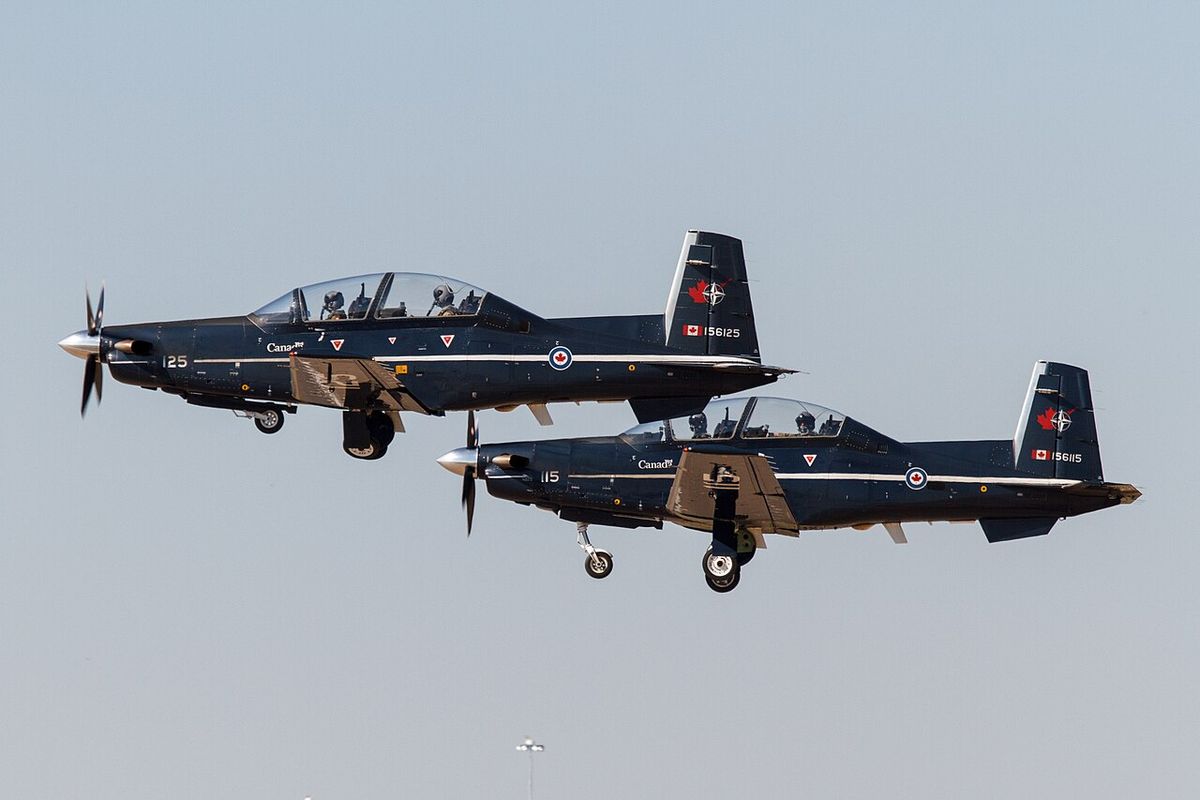
2 Canadian Air Division, also based in Winnipeg, is the RCAF's training and education authority. It manages the entire training continuum, from individual education and core developmental courses to broader training management. Three wings report to this division: 15 Wing Moose Jaw, 16 Wing Borden, and 17 Wing Winnipeg. The Canadian Forces Aircrew Selection Centre falls under its purview, ensuring a standardized pipeline for aircrew recruitment and training.
3 Canadian Space Division, headquartered in Ottawa, is responsible for delivering space power effects in support of Canadian Armed Forces operations. The RCAF serves as the authority for the Department of National Defence and CAF Joint and Combined Space Program. The division's four prioritized mission areas are satellite communication and navigation, space domain awareness, space-based intelligence, surveillance and reconnaissance, and space control. Its commander also acts as the Joint Force Space Component Commander. The division includes one wing, 7 Wing (Space), which comprises two squadrons focused on these space missions.
The RCAF Aerospace Warfare Centre in Trenton, Ontario, is the RCAF's centre of excellence for advancing techniques, technology, innovation, and concepts in air and space power. It supports the development of doctrine, professional education, operational test and evaluation, and electronic warfare. The centre also serves as the steward of RCAF history and heritage. Units under the centre include 414 Electronic Warfare Support Squadron, 434 Operational Test and Evaluation Squadron, the Air and Space Power Development Centre, the Centre for Operational Research and Analysis, and RCAF History and Heritage.
Primary aircraft fleets and capabilities
As of 2020, the Royal Canadian Air Force operated 258 manned aircraft and nine unmanned aerial vehicles. However, a 2025 Department of National Defence readiness report indicated only about 40 per cent of aircraft were considered serviceable. A concurrent Auditor General's report identified shortages of trained fighter pilots and aircraft maintenance technicians as significant challenges. RCAF aircraft are sourced from domestic and allied NATO manufacturers and are designated with an alphanumeric system starting with "C," followed by a role letter and a three-digit number. The role designators include electronic support (E), fighter (F), helicopter (H), patrol (P), trainer (T), transport (C), and unmanned (U).
The mainstay of the RCAF's fighter capability is the CF-188 Hornet, a multi-role aircraft used for air defence, ground attack, and training since 1982. Originally acquiring 138 aircraft, the fleet had 72 CF-188A and 31 CF-188B models in the inventory, with 85 in service as of 2025. To supplement this aging fleet, 18 used F/A-18s were purchased from Australia between 2018 and 2021. A major modernization effort is underway with the 2023 agreement to acquire 88 Lockheed Martin F-35A Lightning II aircraft, with the first four expected for delivery in 2026. For airborne early warning and control, the RCAF selected the Saab GlobalEye system on a Bombardier Global 6500 platform in 2026, with negotiations to acquire five or six aircraft.
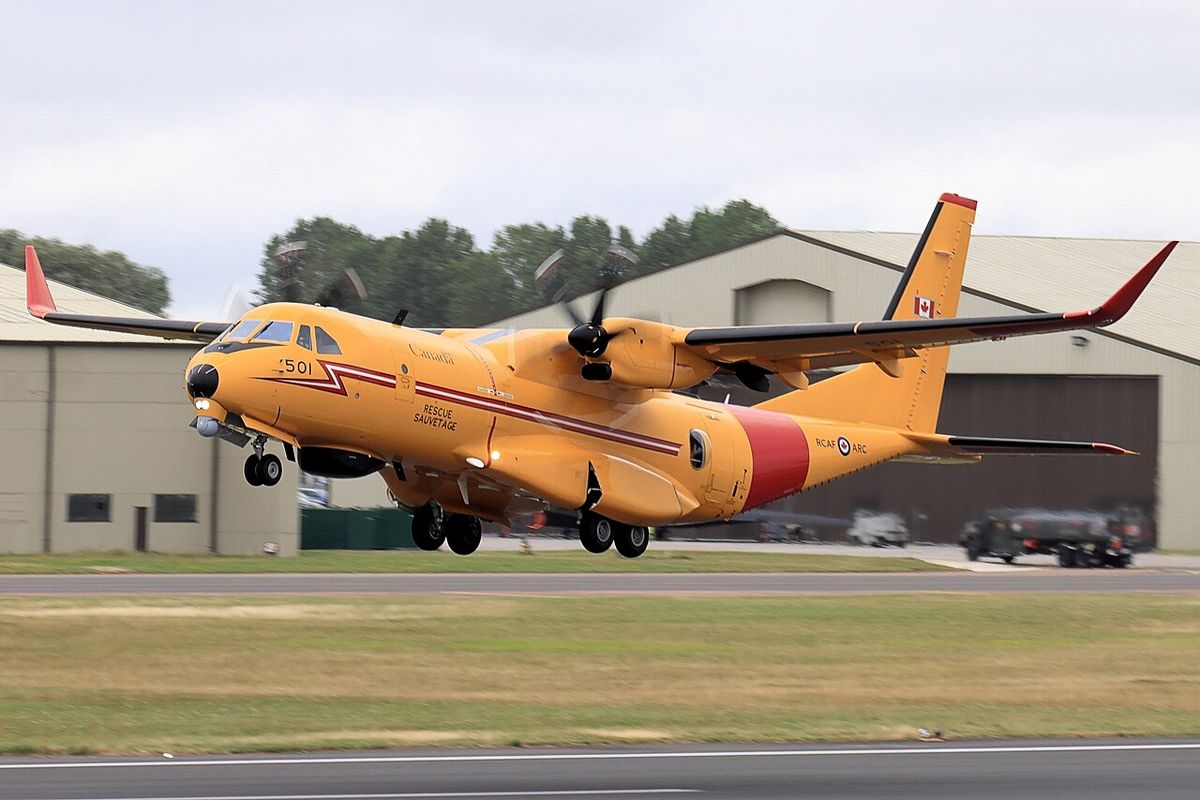
The helicopter fleet provides critical tactical, maritime, and search and rescue support. The CH-147F Chinook is the heavy-lift helicopter, with 14 of an original 15 in service as of 2025 after one was lost in a 2023 crash. They are operated by 450 Tactical Helicopter Squadron from Garrison Petawawa. The utility CH-146 Griffon is widely used for troop transport and other duties, with 85 in service across ten wings as of 2024. For maritime operations, the CH-148 Cyclone serves as the primary ship-borne helicopter for the Royal Canadian Navy, with 27 of 28 ordered remaining in service after a 2020 accident. The long-range search and rescue CH-149 Cormorant fleet operates from three wings, with 13 in service as of 2023 and an additional three ordered that year.
The RCAF ordered three CE-145C Vigilance aircraft, which are Beechcraft King Air 350ER twin-turboprop aircraft modified with advanced sensors and secure communications equipment. All three CE-145C aircraft were delivered in 2024 to 8 Wing Trenton. These aircraft are used to support Canadian Special Operations Forces Command. The patrol fleet includes ten CP-140 Aurora long-range patrol aircraft, with 14 remaining in service as of 2025 after life-extension refits. In 2024, 14 Boeing P-8 Poseidons were ordered to replace the CP-140 fleet, with deliveries expected in 2027.
- CF-188 Hornet: 85 in service (2025), primary fighter since 1982.
- F-35A Lightning II: 88 ordered in 2023, first delivery expected 2026.
- CH-146 Griffon: 85 utility helicopters in service (2024).
- CH-147F Chinook: 14 heavy-lift helicopters in service (2025).
- CH-148 Cyclone: 27 maritime helicopters in service.
- CH-149 Cormorant: 13 search and rescue helicopters in service (2023).
- CP-140 Aurora: 10 long-range patrol aircraft (14 in inventory, 2025).
- CE-145C Vigilance: 3 electronic support aircraft delivered in 2024.
Domestic and international operations
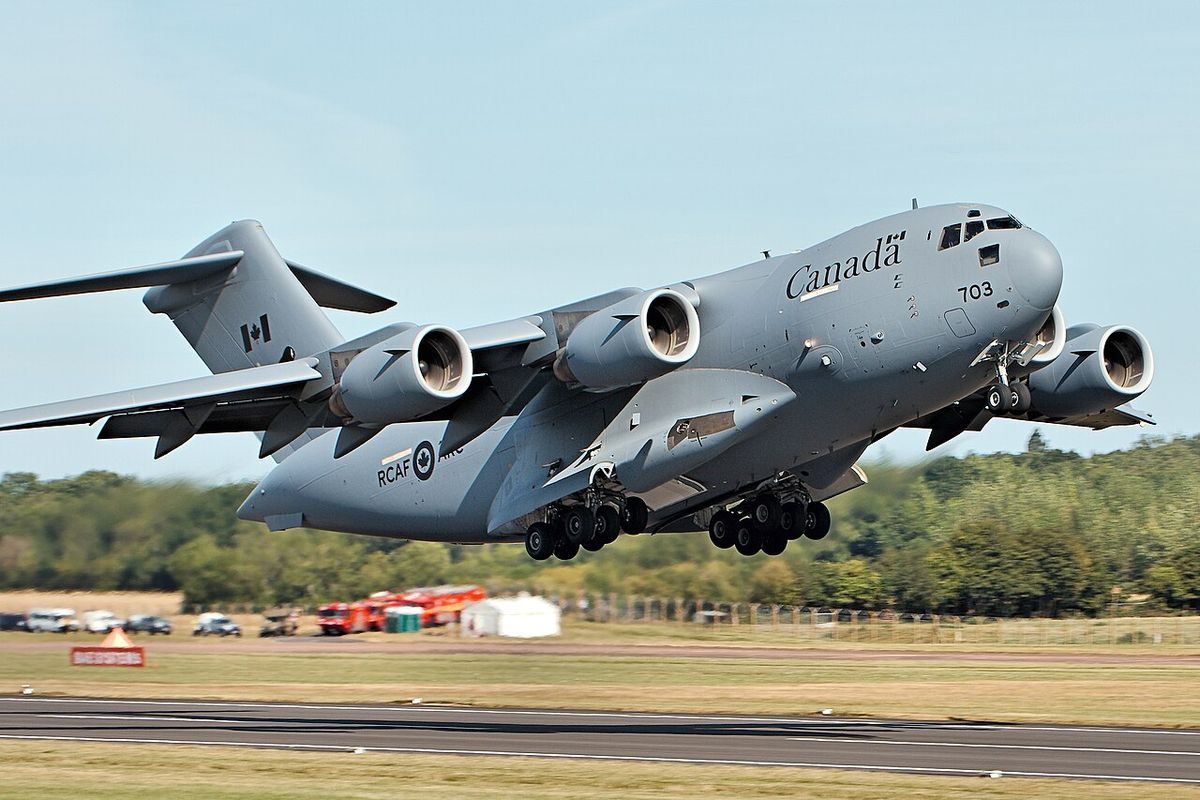
The Royal Canadian Air Force conducts a wide range of operations to protect Canadian sovereignty, support allies, and contribute to global security. Its most enduring commitment is the defence of North American airspace in partnership with the United States Air Force under the North American Aerospace Defense Command (NORAD). This bi-national command requires the RCAF to maintain constant readiness for aerospace warning and control. Domestically, the RCAF is the lead provider for the National Search and Rescue Program, coordinating and flying missions across Canada's vast territory and coastlines. The force also provides essential airlift and support to other government departments for tasks like disaster relief and sovereignty patrols in the Arctic.
Internationally, the RCAF has a long history of contributing to coalition operations. In the early 1990s, CF-18 Hornets were deployed for Operation Desert Shield, performing combat air patrols and ground attack missions in the Persian Gulf. During the late 1990s, CF-18s participated in NATO's Operation Allied Force over Yugoslavia. The 2000s saw a major commitment to the Afghanistan War, where the RCAF transported troops and equipment and later stood up the dedicated Joint Task Force Afghanistan Air Wing, equipped with helicopters, transport aircraft, and unmanned aerial vehicles. This wing operated until 18 August 2011.
More recent deployments include Operation Mobile in 2011, where seven CF-18s and support aircraft contributed to the NATO mission in Libya. In 2014, Canada dispatched six CF-18s to Eastern Europe as part of NATO reassurance measures following Russia's annexation of Crimea. The RCAF continues to support United Nations peacekeeping missions and NATO operations worldwide, providing air mobility, surveillance, and tactical aviation. These operations demonstrate the RCAF's role as a flexible instrument of Canadian foreign and defence policy.
- Operation Desert Shield (1990s): CF-18 Hornets deployed for air defence and ground attack in the Persian Gulf.
- Afghanistan War (2000s-2011): Major air transport and support role. Joint Task Force Afghanistan Air Wing stood down 18 August 2011.
- Operation Mobile (2011): Seven CF-18s supported NATO operations in Libya.
- NATO Reassurance (2014): Six CF-18s deployed to Eastern Europe.
- NORAD: Ongoing continental air defence partnership with the United States, established 1957.
Recruitment, careers and community
The Royal Canadian Air Force offers over 100 different occupations, providing career opportunities far beyond pilot and aircrew roles. These include technical trades such as Aerospace Telecommunication and Information Systems Technician, Construction Technician, and specialist officer positions like Bioscience Officer. Pay is standardized, with a newly joined Aviator earning an annual salary of $52,044, which increases to $82,296 upon promotion to Corporal. Reservists are paid a daily rate, starting at $143 for an Aviator. The CAF covers relocation costs for postings and provides comprehensive support for members and their families.
Canada is a world leader in military gender integration, and women can enroll in any RCAF occupation, including all operational trades. Selection for training, promotions, and postings is based solely on rank, qualifications, and merit. Women serve across the full spectrum of global operations. The RCAF actively recruits through partnerships, such as a four-year, $34.4 million collaboration with Fanshawe College announced in October 2026, and by adding new trades like Air Operations Support Technician. As of September 2023, the RCAF included 15,553 Regular Force members and 2,160 Primary Reserve members, supported by 1,448 Department of National Defence public service employees as of 2025.
The Royal Canadian Air Force Association (RCAFA) is a national organization dedicated to preserving the heritage of Canada's air forces and advocating for a strong, modern air force. Established to commemorate achievements since 1924, it organizes events like the annual Air Force Day on the Hill on Parliament Hill. The association also manages a kit shop selling branded items and publishes Airforce Magazine. It maintains a network of sponsors and partners committed to supporting the air force community. Key institutions include the Royal Military College of Canada, which celebrated its 150th anniversary on 1 June 2026, and the National Air Force Museum of Canada at 8 Wing Trenton, which displays over 30 aircraft. The RCAF's official mascot, Astra, was introduced in March 2024. The force uses several symbols, including a badge approved in 2013, an ensign, a roundel with a red maple leaf centre, and an official tartan registered in 1942.
- Annual Salary (Aviator): Starts at $52,044.
- Daily Reserve Pay (Aviator): Starts at $143.
- Partnership: $34.4 million, four-year collaboration with Fanshawe College (announced October 2026).
- Key Institution: Royal Military College of Canada, 150th anniversary 1 June 2026.
- Museum: National Air Force Museum of Canada at 8 Wing Trenton, with over 30 aircraft.
- Association Event: Annual Air Force Day on the Hill on Parliament Hill.
Current challenges and future direction
The Royal Canadian Air Force faces significant readiness and modernization challenges as it looks to the future. Internal reports from 2025 highlighted that only about 40 per cent of its aircraft fleet was serviceable, pointing to aging platforms and sustainment issues. The Auditor General of Canada identified critical shortages in both trained fighter pilots and aircraft maintenance technicians as major obstacles to operational effectiveness. These personnel and maintenance gaps directly impact the RCAF's ability to meet its domestic and international commitments. Concurrently, the force is managing a complex fleet renewal program while maintaining current operations.
The most prominent modernization project is the acquisition of 88 F-35A Lightning II stealth fighters to replace the legacy CF-188 Hornet fleet, with deliveries scheduled to begin in 2026. This program represents the largest capital procurement in Canadian history. Other fleet updates include the selection of the Saab GlobalEye for airborne early warning and control in 2026, the ongoing integration of CH-148 Cyclone maritime helicopters, and the delivery of additional CH-149 Cormorant search and rescue helicopters ordered in 2023. The force is also investing in unmanned systems, with the acquisition of 11 General Atomics MQ-9 Reaper (designated CQ-9B Guardian) announced in 2024 for Arctic patrol, and space capabilities through 3 Canadian Space Division.
To address personnel shortfalls, the RCAF has launched recruitment campaigns and formed educational partnerships, such as the one with Fanshawe College. It is also working to improve retention by emphasizing career development, family support, and healthy living programs. The restoration of the RCAF name and heritage elements since 2011 has been part of an effort to bolster institutional identity and pride. Looking ahead, the RCAF must successfully integrate new technologies like the F-35, overcome its readiness deficits, and continue to adapt its force structure to meet evolving threats in the air and space domains.
Questions about Royal Canadian Air Force
What is the main role of the Royal Canadian Air Force?
The main role of the Royal Canadian Air Force is to provide the Canadian Forces with relevant, responsive and effective airpower. It is responsible for all aircraft operations of the Canadian Forces, enforcing the security of Canada's airspace and providing aircraft to support the missions of the Royal Canadian Navy and the Canadian Army. The RCAF is a partner with the United States Air Force in protecting continental airspace under the North American Aerospace Defense Command (NORAD). The RCAF provides all primary air resources to and is responsible for the National Search and Rescue Program.
How many aircraft does the RCAF have?
As of 2020, the Royal Canadian Air Force operated 258 manned aircraft and nine unmanned aerial vehicles. An internal Department of National Defence readiness report published in early 2025 noted that only about 40 percent of aircraft could be considered serviceable. That same year, the Auditor General of Canada reported that the RCAF faced a significant shortage of both trained fighter pilots and aircraft maintenance technicians. The RCAF's aircraft inventory includes a variety of types such as fighters, transport planes, helicopters, and patrol aircraft.
What is the new fighter jet replacing the CF-18 Hornet?
The RCAF is replacing its CF-188 Hornet fleet with 88 Lockheed Martin F-35A Lightning II stealth fighters. An agreement for the acquisition was signed in 2023, with the first four aircraft expected to be delivered in 2026. This new fighter jet will provide advanced capabilities for air defence, air superiority, and ground attack missions. The F-35A is intended to ensure the RCAF remains interoperable with key allies like the United States Air Force.
Who is the current commander of the RCAF?
The current Commander of the Royal Canadian Air Force is Lieutenant-General Jamie Speiser-Blanchet, who was appointed in 2025. The commander, who holds the rank of lieutenant-general, is based at RCAF Headquarters in Ottawa. This position reports directly to the Chief of the Defence Staff, who in turn reports to the Minister of National Defence. The commander is responsible for leading the air and space force component of the Canadian Armed Forces.
Can women serve in all roles in the RCAF?
Yes, women can serve in any occupation within the Royal Canadian Air Force, including all operational and combat roles. Selection for all positions is based solely on rank, qualifications, and merit. The Canadian Armed Forces have been recognized as a world leader in military gender integration. This policy allows women to serve as pilots, technicians, and in all other trades and officer classifications.
What is the Royal Canadian Air Force Association?
The Royal Canadian Air Force Association is a national, non-profit organization established to preserve and commemorate the history of Canada's air forces. It was founded in 1924, the same year the Royal Canadian Air Force received its royal title. The association advocates for a strong air force and organizes events such as Air Force Day on the Hill. It also publishes Airforce Magazine and operates a kit shop for members and enthusiasts.
Sources and further reading
- Royal Canadian Air Force (Wikipedia)
- Royal Canadian Air Force Association (rcafassociation.ca)
- The Royal Canadian Air Force (forces.ca)
Checked by the Nosy Mag desk. Last updated 2026-10-19.