Official bilingualism in Canada
Official bilingualism in Canada is the constitutional and legal framework that establishes English and French as the country's two official languages with equal status, rights, and privileges in all federal institutions. This policy mandates that the federal government conduct its business and provide services in both languages, protects the linguistic rights of minority communities across provinces, and places obligations on certain private entities. Rooted in the Constitution Act, 1867 and significantly expanded by the Canadian Charter of Rights and Freedoms in 1982, official bilingualism is a defining feature of Canadian national identity and governance. The policy remains a fundamental component of federal operations and a subject of ongoing political and social discussion regarding its implementation and impact on national unity.
Historical Foundations
The principle of institutional bilingualism in Canada predates Confederation in 1867, with French established as a language of administration following the arrival of settlers in Acadia in 1604 and Quebec in 1608. Following the British Conquest, English became the dominant language of government in most regions, though French retained a strong cultural and legal presence. The constitutional foundation was laid at Confederation with Section 133 of the Constitution Act, 1867, which mandated the use of both English and French in the federal Parliament, its records and journals, and in federal courts, while placing similar obligations on the legislature and courts of Quebec. This provision granted limited but formal recognition to both languages, though English occupied a de facto privileged position for many subsequent decades. This legislative framework was substantially reinforced and expanded following the patriation of the constitution and the entrenchment of language rights in the Canadian Charter of Rights and Freedoms in 1982.
Constitutional Framework
The constitutional protections for English and French in Canada are found in two primary documents. Section 133 of the Constitution Act, 1867 provides the original guarantee for the use of both languages in Parliament and federal courts. The Canadian Charter of Rights and Freedoms, which became law in 1982, provides a much more comprehensive framework in sections 16 through 23. Sections 16 to 19 declare English and French as Canada's official languages with equal status and rights in all federal institutions, and require that all statutes, records, and journals of Parliament be published in both languages with equal authority. Section 20 guarantees the right of the public to communicate with and receive services from federal offices in either official language where there is significant demand, a term later defined in regulations under the Official Languages Act. The Charter places identical constitutional obligations on the Province of New Brunswick, making it the only officially bilingual province. Section 21 ensures these Charter rights supplement, rather than replace, any pre-existing constitutional language rights, while Section 22 clarifies that the Charter does not diminish rights pertaining to other languages.
Minority Language Education Rights
Section 23 of the Charter provides a right for Canadian citizens to have their children receive primary and secondary education in the official language of the minority in their province. This means the right to English-language schooling in Quebec and to French-language schooling in the other provinces and territories. This right is not absolute and applies where the number of children warrants the provision of instruction out of public funds. The application of these rights is asymmetrical between Quebec and the rest of Canada due to Section 59 of the Constitution Act, 1982. In Quebec, a child qualifies for English-language public education only if at least one parent or sibling was educated in English in Canada. In the rest of Canada, qualification extends to children if a parent or sibling was educated in French in Canada or if at least one parent has French as their mother tongue. This asymmetry means that immigrants arriving in Quebec from other countries, including those educated in English, generally only have access to French-language public schools for their children. The phrase 'where numbers warrant' has been the subject of significant litigation, with the Supreme Court of Canada establishing in Mahe v. Alberta (1990) that it implies a 'sliding scale' of services, from minority-language classrooms to dedicated schools, depending on the number of eligible students.
Federal Legislation and Implementation
The current Official Languages Act (OLA), adopted in 1988 and amended in 2023, is the primary statute implementing Canada's constitutional language commitments. The Act formalizes Charter provisions and sets out specific measures to achieve two core objectives: specifying the duties of federal institutions regarding official languages, and supporting the development of English and French linguistic minority communities. Key parts of the Act mandate that the work environment in federal institutions within designated bilingual regions, such as the National Capital Region, be conducive to the use of both French and English. It also prohibits discrimination based on first language learned in federal employment opportunities and advancement. The Act establishes the Office of the Commissioner of Official Languages, headed by Commissioner Kelly A. Burke, who is empowered to investigate complaints, conduct audits, and report to Parliament. A critical component of implementation is the definition of 'significant demand' for minority language services. Regulations define bilingual regions where services must be offered in both languages, typically where the official-language minority population numbers at least 5,000 persons or constitutes 5% of the local population, whichever is smaller. The federal government's current policy direction is outlined in the Action Plan for Official Languages 2023 to 2028, which commits to protecting and promoting French across Canada.
Bilingualism in the Public Service
The federal public service is a primary vehicle for implementing official bilingualism, with thousands of positions requiring proficiency in both English and French. Federal employees in designated bilingual regions have the right to work in the official language of their choice. Language requirements for specific positions are determined by the population served, leading to a geographic patchwork. Outside Quebec, most federal positions are unilingual English, with bilingual positions concentrated in areas with significant French-speaking minorities, such as parts of Ontario and New Brunswick. Within Quebec, most federal positions operate primarily in French, with bilingual positions more common in Montreal and the Gatineau area of the National Capital Region. Proficiency is assessed through the standardized Second Language Evaluation (SLE), which tests reading, writing, and oral interaction on a scale from A (basic) to C (advanced). Specific language profiles, such as BBB or CBC, are required for bilingual positions, with management and executive roles typically demanding higher levels. This system makes formal language certification a gateway to promotion and influence within the federal government, though analysts note persistent tensions between measured competence and the everyday practice of bilingualism in the workplace.

Provincial and Territorial Landscape
While the federal government is officially bilingual, language policies vary significantly across provinces and territories. The Constitution Act, 1982 recognizes and guarantees the equal status of French and English only in New Brunswick, making it the sole officially bilingual province. Quebec has declared French its sole official language through the Charter of the French Language, though it provides English-language education and certain services. Manitoba's official bilingual status was restored by a court ruling in 1985, but French-language services are provided only in some regions. Alberta and Saskatchewan are considered unilingual English in practice. All three territories have official languages beyond English and French. Nunavut also recognizes Inuktitut, and the Northwest Territories recognizes nine Aboriginal languages. In practice, all provinces offer some level of services in both official languages and provide publicly funded minority-language education up to the high school level where numbers warrant. The following list outlines the official language status in each jurisdiction.
- Federal Government: Officially bilingual (English and French).
- New Brunswick: Officially bilingual (constitutional guarantee).
- Quebec: Official language is French (by provincial statute).
- Manitoba: De jure bilingual (by court ruling), services limited.
- Ontario: Not officially bilingual, but offers French-language services.
- Alberta & Saskatchewan: De facto unilingual English.
- British Columbia, Newfoundland and Labrador, Nova Scotia, Prince Edward Island: Not officially bilingual.
- Yukon: English and French are official by statute.
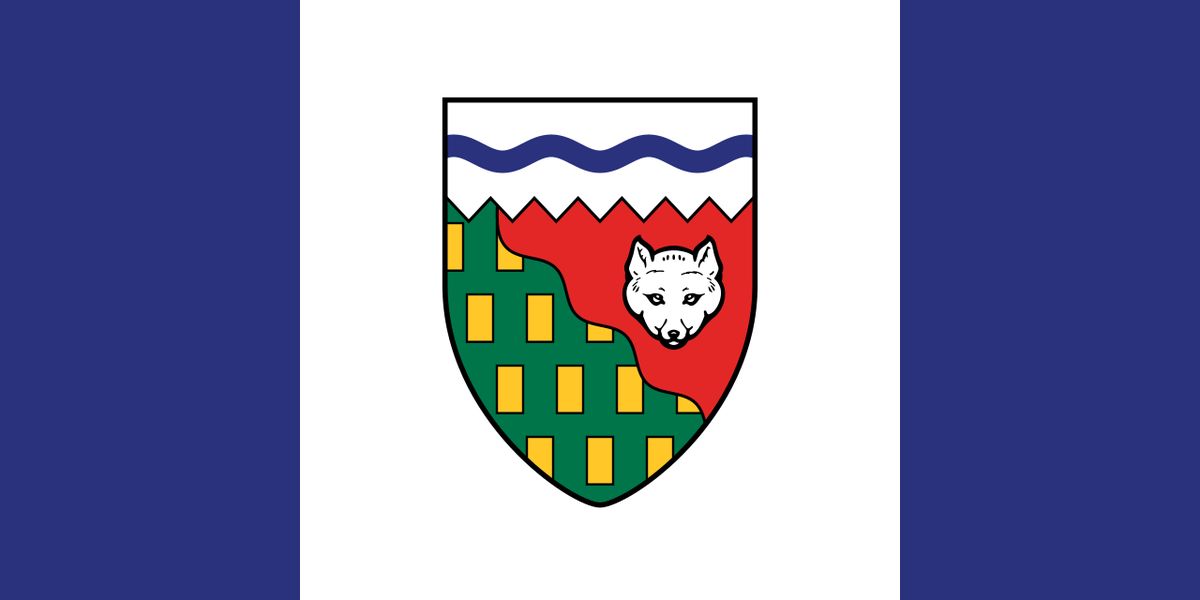
- Northwest Territories: 11 official languages including English, French, and 9 Aboriginal languages.
- Nunavut: English, French, and Inuktitut are official.
Demographics and Contemporary Debates
According to the 2021 census, 17.4 percent of Canadians reported being able to conduct a conversation in both English and French, an increase from just over 12 percent in 1961. Quebec has the highest concentration of bilingual individuals, with over 40.6 percent of its population able to speak English, largely due to the necessity of English in a predominantly anglophone continent. Nationally, francophones exhibit a higher rate of bilingualism than anglophones. The census also recorded that 4.6 million Canadians, or 12.7 percent of the population, predominantly spoke a language other than English or French at home, reflecting the growing allophone population driven by immigration. Support for official bilingualism remains steadfast among many Canadians, who view it as a key element of national identity that distinguishes Canada from the United States. However, the policy is not without criticism. Some argue it imposes significant costs, creates barriers to merit-based advancement in the public service for unilingual Canadians, and disproportionately focuses political attention on English-French relations at the expense of other ethnic and linguistic groups. Debates also persist about the effectiveness of the regime in ensuring the substantive equality of French outside Quebec and in creating genuine bilingual workplaces within federal institutions.
Language Education and Economic Sector
Canada's commitment to bilingualism supports a significant language education sector for both domestic and international students. Organizations like Languages Canada represent over 160 accredited English and French language programs in public and private institutions across nine provinces. This sector educates over 150,000 international students annually, who come to learn Canada's official languages and experience its culture. The federal and provincial governments also invest in official-language education for Canadian citizens through core funding, immersion programs, and support for minority-language schools. The economic and cultural value of this sector is recognized in initiatives like the 2027 Languages Canada Annual Conference in Vancouver. The following table provides a snapshot of key statistics related to bilingualism and language education from recent data, illustrating the scale of this national endeavour.
| Metric | Figure or Detail |
|---|---|
| National Bilingualism Rate (2021) | 17.4% |
| English-Speaking Rate in Quebec (2021) | 40.6% |
| Allophone Population (2021) | 4.6 million (12.7% of population) |
| International Language Students (annual) | Over 150,000 |
| Accredited Programs (Languages Canada) | Over 160 |
| Federal Action Plan Period | 2023 to 2028 |
Questions about Official bilingualism in Canada
Which provinces in Canada are officially bilingual?
At the provincial level, only New Brunswick is constitutionally recognized as an officially bilingual province, guaranteeing equal status for English and French. Quebec's official language is French by provincial statute. Manitoba is considered de jure bilingual due to a court ruling, but French-language services are limited. All other provinces are not officially bilingual, though they offer varying levels of services and education in both languages.
What are minority-language education rights under the Charter?
Section 23 of the Canadian Charter of Rights and Freedoms gives Canadian citizens the right to have their children receive primary and secondary education in the official language of the minority in their province, meaning English in Quebec and French elsewhere. This right applies where the number of children warrants it. The rules differ between Quebec and other provinces. In Quebec, access to English schools is generally restricted to children of Canadian-educated anglophones.
What percentage of Canadians are bilingual?
According to the 2021 census, approximately 17.4 percent of Canadians reported being able to conduct a conversation in both English and French. In Quebec, over 40.6 percent of the population can speak English. Nationally, francophones tend to have a higher bilingualism rate than anglophones. The number of Canadians whose first language is neither English nor French (allophones) continues to grow, representing 12.7 percent of the population in 2021.
What does official bilingualism mean in Canada?
Official bilingualism means that English and French have equality of status and equal rights and privileges as to their use in all institutions of the Parliament and Government of Canada. This principle is enshrined in the constitution. It collectively describes the policies, constitutional provisions, and laws that ensure legal equality of English and French in Parliament and courts. These measures protect the linguistic rights of English and French speaking minorities in different provinces and ensure a level of government services in both languages across Canada.
How does the federal government determine where to offer services in both languages?
The federal government determines where to offer services in both languages based on the concept of 'significant demand' as outlined in the Official Languages Act. Section 20 of the Canadian Charter of Rights and Freedoms guarantees the right to communicate with federal offices in either English or French where a significant demand exists. This concept is legally defined in regulations authorized by Section 32 of the Official Languages Act of 1988. The specific regulation states an area is served in both languages if at least 5,000 persons there or 5 percent of the local population, whichever is smaller, belongs to the province's official language minority group.
What is the role of the Commissioner of Official Languages?
The Commissioner of Official Languages is an independent officer established by the Official Languages Act. The role involves hearing and investigating complaints from the public regarding official languages matters. The Commissioner makes recommendations to Parliament and delegates authority on official languages issues. Canada's current Commissioner of Official Languages is Kelly A. Burke. The Commissioner also publishes an annual report, such as the one for 2025 to 2026, to inform Parliament and the public about the state of official languages in Canada.
Sources and further reading
- Official bilingualism in Canada (Wikipedia)
- Performative bilingualism? Canadian language law in the ... (eurac.edu)
- Bilingualism in Canada | Language and Linguistics (ebsco.com)
Checked by the Nosy Mag desk. Last updated 2026-11-04.