Patriot War
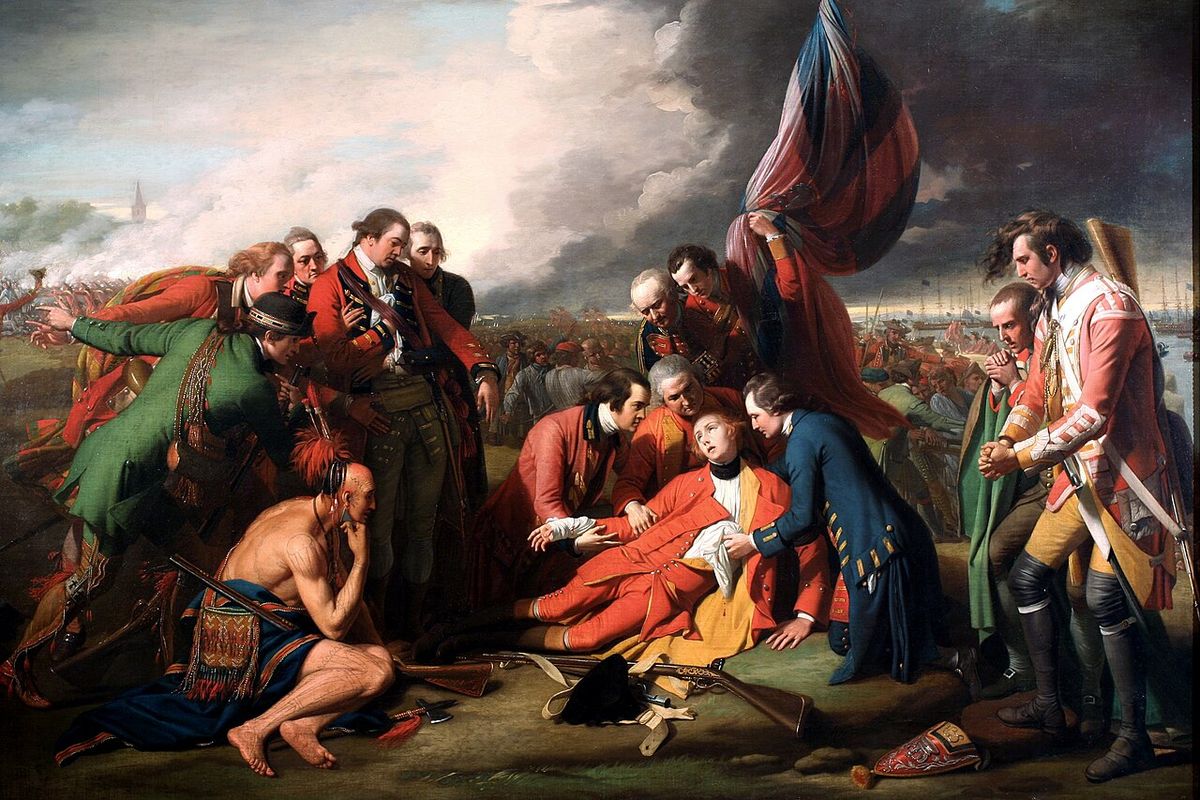
The Patriot War was a series of armed incursions launched from the United States against the British colony of Upper Canada between December 1837 and December 1838. Driven by American sympathizers and Canadian rebels exiled after the failed 1837 Rebellions, the conflict saw more than a dozen raids aimed at overthrowing British rule and establishing a republican government in Canada. It involved secret societies like the Hunter's Lodge, dramatic but failed invasions such as the Republic of Canada on Navy Island, and significant battles at Pelee Island, the Windmill, and Windsor. The war ended after the largest deployment of U.S. troops against American citizens since the Whiskey Rebellion of 1794 helped disperse the militants.
Origins and Context
The Patriot War emerged directly from the ashes of the 1837 Rebellions in Upper and Lower Canada. After British forces crushed the uprisings at locations like Montgomery's Tavern, rebel leaders including William Lyon Mackenzie fled across the border to the United States to escape arrest. In American cities like Buffalo, Cleveland, and Detroit, these exiles found a receptive audience among citizens sympathetic to republican ideals and anti-British sentiment. Public meetings were swiftly organized to raise support, funds, and volunteers for a renewed campaign against British rule in Canada. A committee of thirteen was appointed in Buffalo on December 5, 1837, formalizing this cross-border support network. The movement was not sanctioned by the US government but was a grassroots effort by armed militants and their supporters, setting the stage for a year of border raids. William Lyon Mackenzie's speech at a Buffalo meeting specifically spurred Thomas Jefferson Sutherland to commit to an invasion of Upper Canada, with other audience members promising to arrange resources and equipment for the planned campaign.
The Republic of Canada and the Caroline Affair
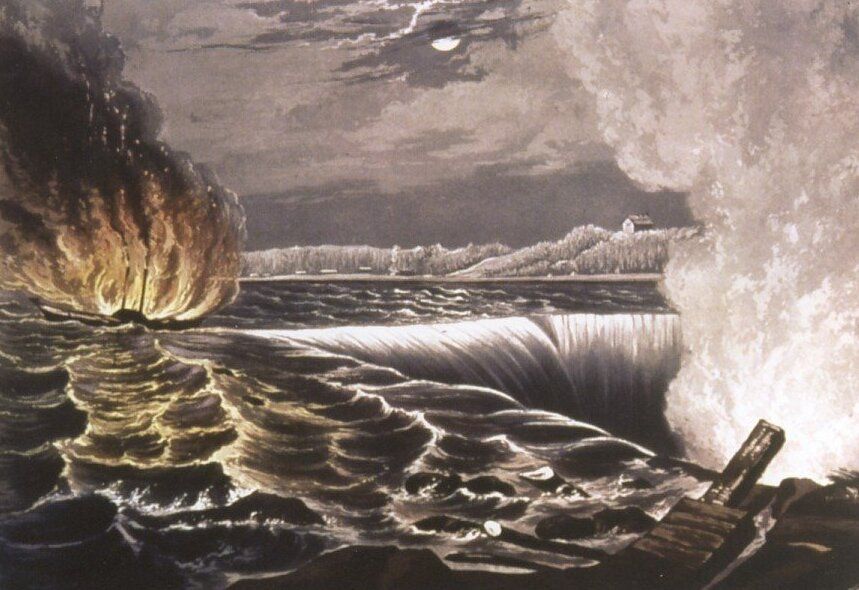
The first major action of the Patriot War was the establishment of the short-lived Republic of Canada. On December 14, 1837, William Lyon Mackenzie, Rensselaer van Rensselaer, and two dozen followers seized Navy Island in the Niagara River, declaring a provisional government. They promised volunteers three hundred acres of land and were soon reinforced by several hundred men ferried by the American steamer Caroline. During December, large supportive meetings were held in northern US towns including Burlington, Albany, Rochester, Buffalo, Cleveland, and Detroit, with aid promised to the cause. The British response was swift and provocative. Under the command of Colonel Allan MacNab and Captain Andrew Drew of the Royal Navy, a force crossed into US waters, seized the Caroline, chased off its crew, set it afire, and cast it adrift over Niagara Falls after killing an American named Amos Durfee. This Caroline affair became a major diplomatic incident that would later be resolved in the Webster-Ashburton Treaty of 1842. With the failure of Charles Duncombe's concurrent revolt in the London district, the purpose for holding Navy Island vanished, and the republic was evacuated on January 14, 1838, after a United States commandant outbid a Buffalo committee supplying the island, hampering their efforts.
The Failed Raids of Early 1838
Following the Navy Island evacuation, a series of poorly coordinated raids demonstrated the Patriots' logistical woes and the increasing vigilance of American authorities. In Detroit, leaders including Henry S. Handy, Dr. Edward A. Theller, and Thomas Jefferson Sutherland had organized an invasion force, raiding the Detroit jail on January 5, 1838, to seize 450 muskets and reportedly stealing another 200 weapons from the US marshal's office. On January 8, the schooner Anne, commanded by Theller, attacked Fort Malden at Amherstburg but was beached, leading to Theller's capture and imprisonment in Quebec City. Simultaneous attacks were planned for George Washington's birthday on February 22, 1838. On February 23, over 400 troops from Cleveland under General Donald McLeod landed on Fighting Island near Detroit but were poorly equipped as American authorities had captured their arms. British troops crossed the ice and dispersed the Patriots on February 25, with US troops marking the border with red flags to prevent British pursuit. That same day, General Van Rensselaer and Daniel Heustis occupied Hickory Island with less than 100 men, hoping for a thousand more to capture Kingston, but the plan was abandoned when reinforcements failed to arrive.
The next significant engagement was the Battle of Pelee Island on March 3, 1838. Patriots under Captain George van Rensselaer and General Thomas Jefferson Sutherland took the island in Lake Erie, but again their expected arms were captured by US authorities, leaving only 200 guns for all the men. British forces attacked, killing Van Rensselaer and ten of his troops and capturing numerous others, while five British soldiers died. The retreating Patriots were forced to surrender their arms by US authorities and disbanded. By this period, William Lyon Mackenzie was at odds with other leaders and was soon arrested for breach of American neutrality laws, while Thomas Jefferson Sutherland was captured by the British near Detroit and jailed in Toronto, where he witnessed the hanging of rebel organizer Samuel Lount.
Organizational Evolution: Secret Societies and the Hunter's Lodge
As spontaneous raids faltered, the rebel movement began to coalesce into more structured secret societies. In March 1838, a committee including General Donald McLeod, William Lyon Mackenzie, Dr. Charles Duncombe, and Dr. Alexander Mackenzie met at Lockport to form the Canadian Refugee Relief Association, with Dr. A. Mackenzie as president and McLeod as general organizer. This group was loosely connected to later attacks like the burning of the Sir Robert Peel and the Short Hills raid. The first Hunter's Lodge, or Frères chasseurs, was formed earlier in the spring of 1838 in north Vermont by Dr. Robert Nelson and spread rapidly within Quebec. A distinct organization was also forming in Cleveland under Dr. Charles Duncombe, planning a July 4 invasion. Under McLeod's influence, the Cleveland group adopted the form of the Hunter's Lodge. Meanwhile, in Michigan, Henry S. Handy had organized lodges of the Secret Order of the Sons of Liberty, planning a revolutionary army of 20,000 to capture Windsor. This group soon merged into the Hunters' Lodges after their plans failed.
The Hunters' Lodges were modelled on Masonic lodges, adopting similar secret signs, hierarchical orders, and rituals. The Grand Lodge was at Cleveland, where Duncombe was a tireless promoter. The four degrees of the Lodge were Snowshoe for soldiers, Beaver for commissioned officers, Grand Hunter for field officers, and Patriot Hunter for the highest ranking commissioned officers. In September 1838, 160 delegates from western lodges attended a secret, week-long Patriot Congress in Cleveland. They appointed a provisional Canadian republican government that included several key figures from the American side.
- President: A.D. Smith, chief justice of the peace at Cleveland.
- Vice-President: Colonel Nathan Williams, a wholesale grocer in Cleveland.
- Secretary of the Treasury: Judge John Grant Jr. of Oswego.
- Secretary of War: Donald McLeod.
- Commander-in-chief of the Patriot Army of the West: Lucius V. Bierce, an attorney at Akron.
- Commodore of the Patriot Navy on Lake Erie: Gilman Appleby, former captain of the Caroline.
- Commodore of the Patriot Navy on Lake Ontario: Bill Johnston.
The delegates aimed to coordinate a general invasion of the Canadas, which was planned for November 1, 1838. This event, a secret week-long Patriot Congress in Cleveland, Ohio, involved 160 delegates from western Hunters' Lodges. They appointed a provisional Canadian republican government, including President A.D. Smith and Secretary of War Donald McLeod. This congress marked the peak of the Patriots' organizational efforts before their military campaigns, which included the planned attacks on Prescott and Detroit.
Major Engagements: The Windmill and Windsor
The conflict reached its climax in late 1838 with two major, disastrous battles for the Patriot cause. The Hunters' Lodges had agreed to launch a general invasion of the Canadas on November 1. The Eastern division began an attack on Quebec on November 3, while the Western division planned an attack at Detroit. However, Major General John Ward Birge convinced eastern New York lodges to attack Prescott on the St. Lawrence instead. The leader of this attack was Nils Szoltevsky Von Schoultz, a Finnish-Swedish veteran of the Polish Rebellion. On November 11, four hundred men boarded the steamboat United States at Sackets Harbor, but disagreements led Birge to withdraw with 200 men. Von Schoultz and 150 men reached Windmill Point near Prescott on November 12. British and American troops cut off all supplies, and the standoff ended on November 16 when artillery was brought from Kingston. The result was 80 Patriots killed and 137 taken prisoner, defended in court by the young lawyer John A. Macdonald.
The final planned Hunter attack was the assault on Windsor on December 4, 1838, organized from Cleveland with the intention of driving inland to London. A diversionary attack on Sarnia was aborted. About 135 men landed north of Windsor at 2 am, splitting into detachments under Cornelius Cunningham, William Putnam, and S. S. Coffinbury. They killed a black Canadian loyalist named Mills after he refused to join them and cheered for the Queen, and they also killed Surgeon John Hume of the 32nd Foot, mutilating his body. The Patriots took positions at the Baby farm orchard. Only 20 militiamen were billeted in Windsor, but a 60-man company of Canadian militia from Sandwich successfully repelled the invasion before British regulars arrived. Colonel John Prince arrived later and ordered four prisoners shot without trial. Total fatalities were 25 Patriots and 8 British forces. US authorities prevented a second attack, and the volunteer army dispersed, ending the Patriot War.
American Intervention and Enforcement of Neutrality
A defining feature of the Patriot War was the active role of the United States government in suppressing the cross-border raids. American authorities were bound by the Neutrality Act of 1794 and repeatedly intervened to seize Patriot arms, as seen before the Fighting Island and Pelee Island expeditions. US troops were deployed to guard the border, including placing a line of red flags on the ice near Detroit to mark the international boundary and prevent British pursuit. This deployment involved the largest number of US troops used against American citizens since the Whiskey Rebellion of 1794. After the Battle of Windsor, the US steamer Erie, under command of the Detroit militia, captured some Patriots but soon released them on US soil, and the government prevented a second attack from Detroit. Leaders like Rensselaer van Rensselaer and William Lyon Mackenzie were arrested for violating neutrality laws. Michigan Governor Stevens T. Mason personally led a militia force to thwart Patriots during earlier fighting. This collaboration between US and British authorities was instrumental in crushing the Patriot movement.
Aftermath: Trials, Transportation and Legacy
In the wake of the failed raids, British and American authorities moved decisively against the captured Patriots. Many leaders faced legal consequences. Van Rensselaer was arrested upon returning to the mainland after the Navy Island evacuation, and Mackenzie was sentenced to 18 months imprisonment in the United States for violating neutrality. Those captured by British forces, particularly after the Battle of the Windmill, faced trials for treason and insurrection. The British response was severe and intended as a final deterrent. In total, 93 Americans and 58 Patriot prisoners from Lower Canada were convicted in Montreal in late 1838 or early 1839. They were transported to Australia on HMS Buffalo in September 1839, arriving in February 1840. The Americans were disembarked at Hobart, Van Diemen's Land, and the French-Canadians were taken to Sydney, New South Wales. The Patriot War, while a military failure, had lasting effects. It solidified the need for border security cooperation between the US and Britain, directly leading to the diplomatic resolution of the Caroline affair in the 1842 Webster-Ashburton Treaty. The U.S. Army later constructed Fort Wayne in Detroit in 1842 to counter the British presence at Fort Malden.
Key Figures and Their Roles
The Patriot War involved a diverse cast of characters, from idealistic exiles to seasoned military adventurers. William Lyon Mackenzie, the fiery Scottish-born reformer, was the most famous figure, though his influence waned after the Navy Island debacle. Dr. Charles Duncombe and General Donald McLeod were central organizers, helping to form the Canadian Refugee Relief Association and later the Hunter's Lodges, with McLeod serving as Secretary of War in the provisional government. Thomas Jefferson Sutherland was an aggressive military leader involved in the Navy Island, Detroit, and Pelee Island operations. Henry S. Handy, a US Army engineer appointed to oversee Chicago Harbour construction, organized the Secret Order of the Sons of Liberty in Michigan before its merger with the Hunters. Nils Von Schoultz, the Finnish-Swedish soldier, led the doomed Windmill attack. On the British side, Colonel Allan MacNab and Captain Andrew Drew were known for their decisive action in the Caroline affair. The conflict also featured a young John A. Macdonald in a lesser-known role, providing legal defence for captured Patriots, an early chapter in his long political career. Other notable figures include Dr. Edward A. Theller, who was captured at Fort Malden and later escaped imprisonment in Quebec, and Lucius V. Bierce, the attorney who served as Commander-in-chief of the Patriot Army of the West.
- Navy Island Invasion: Began December 14, 1837. Evacuated January 14, 1838.
- Schooner Anne Attack on Fort Malden: January 8-9, 1838. Theller captured.
- Fighting Island Raid: February 23-25, 1838. Over 400 Patriots dispersed.
- Battle of Pelee Island: March 3, 1838. 10 Patriots and 5 British killed.
- Burning of the Sir Robert Peel: May 29, 1838. Steamer destroyed by Patriots.
- Short Hills Raid: June 21-23, 1838. 24 men captured, including James Morreau.
- Battle of the Windmill: November 13-18, 1838. 80 Patriots killed, 137 captured.
- Battle of Windsor: December 4, 1838. 25 Patriots and 8 British killed.
Questions about Patriot War
What was the main goal of the Patriot War?
The primary goal was to overthrow British colonial rule in Upper Canada and establish an independent republican government. The participants, comprising American sympathizers and exiled Canadian rebels, launched more than a dozen armed raids across the border between 1837 and 1838. They were motivated by the ideals of the 1837 Rebellions and anti-British sentiment. Their efforts were not supported by the United States government and were ultimately unsuccessful.
Who were the Hunters' Lodges?
The Hunters' Lodges were secret societies formed in the United States in 1838 to support the invasion of Canada. Modelled on Masonic lodges, they used secret signs, rituals, and a hierarchical structure with four degrees of membership: Snowshoe, Beaver, Grand Hunter, and Patriot Hunter. The organization began in Vermont as the Frères chasseurs and spread westward. In September 1838, a Patriot Congress in Cleveland appointed a provisional government for Canada, with Donald McLeod as Secretary of War. The Lodges planned and executed several of the largest raids.
What was the Republic of Canada?
The Republic of Canada was a short-lived provisional government declared by William Lyon Mackenzie on Navy Island in the Niagara River on December 14, 1837. Mackenzie promised volunteers 300 acres of land and was joined by several hundred men ferried by the steamer Caroline. It was established as a base to support a wider uprising in Upper Canada. The republic ended after a month when British forces bombarded the island and American authorities hampered supply efforts, leading to its evacuation on January 14, 1838.
How did the United States government respond to the raids?
The United States government enforced its neutrality laws, opposing the Patriot raids. US troops and officials seized arms destined for the invaders, arrested leaders like Mackenzie and Van Rensselaer for violating the Neutrality Act, and deployed soldiers to the border to prevent cross-border incursions. This intervention included the largest deployment of US troops against American citizens since the Whiskey Rebellion of 1794. After the Battle of Windsor, US forces actively prevented a second attack from Detroit. This cooperation with British authorities was crucial in ending the conflict.
What was the outcome for captured Patriot prisoners?
Captured Patriot prisoners faced severe punishment. Many leaders were tried and imprisoned in the United States for neutrality violations. Those captured by British forces, particularly after battles like the Windmill, were tried for treason. In total, 93 Americans and 58 Patriot prisoners from Lower Canada were convicted in Montreal and transported to Australia in 1839, arriving in February 1840 on HMS Buffalo.
What is the connection between the Patriot War and John A. Macdonald?
John A. Macdonald, who later became Canada's first prime minister, defended Patriot prisoners as a lawyer in Kingston. This occurred after the Battle of the Windmill in November 1838, where British forces captured 137 men following a standoff at Windmill Point near Prescott. His legal involvement in this case is a noted fact from his early career before Confederation. The battle itself ended with 80 Patriots killed and the capture of those Macdonald defended.
Sources and further reading
- Patriot War (Wikipedia)
- Patriot War, History Dispatches (podcasts.apple.com)
Checked by the Nosy Mag desk. Last updated 2026-10-27.