Lester B. Pearson
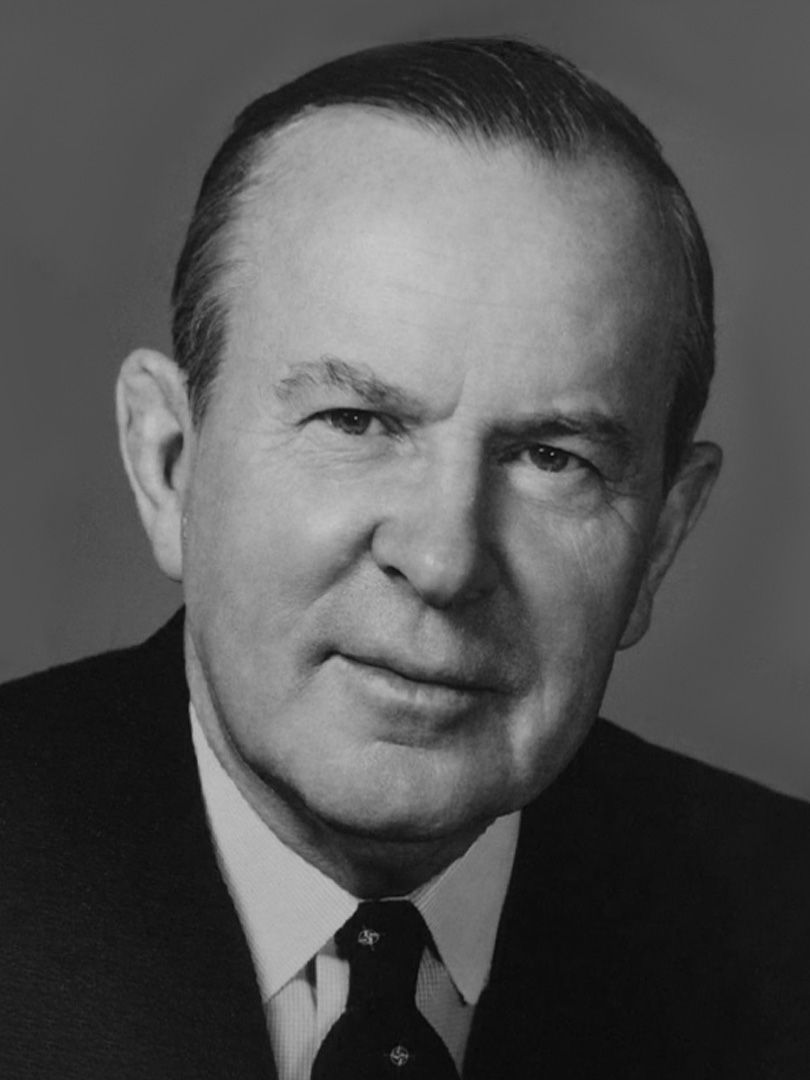
Lester Bowles "Mike" Pearson was the 14th prime minister of Canada, serving from 1963 to 1968. A former diplomat and Nobel Peace Prize laureate, Pearson led two successive minority Liberal governments that reshaped Canada. His tenure saw the introduction of universal health care, the Canada Pension Plan, a new national flag, and official bilingualism. Pearson is regarded as one of Canada's most influential prime ministers.
Early Life and Education
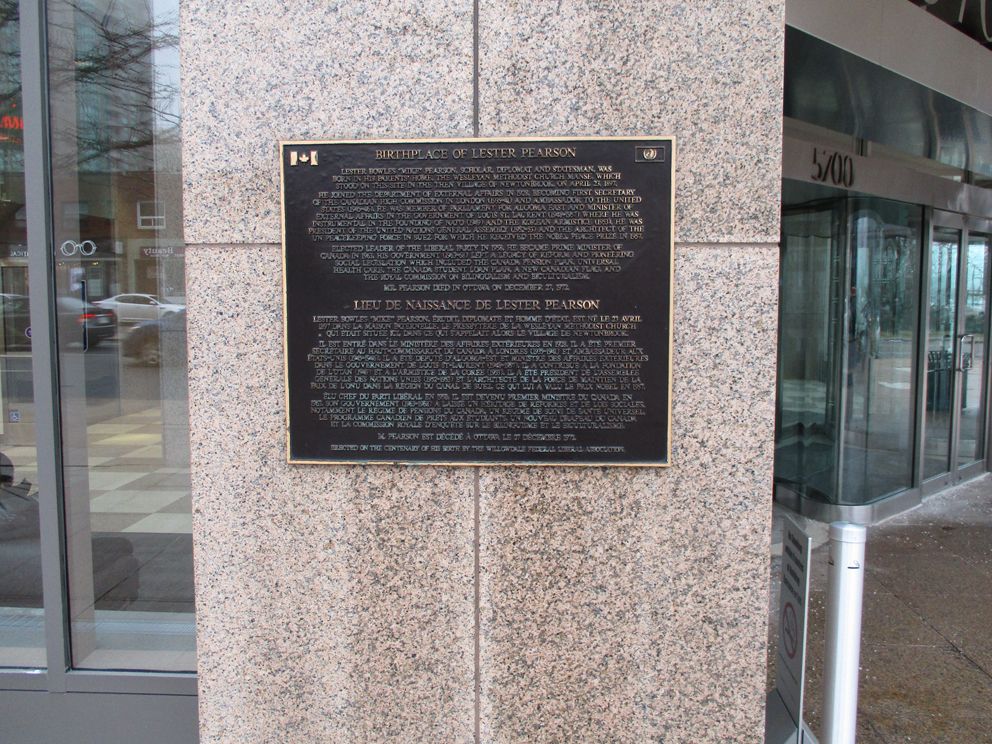
Lester Bowles Pearson was born on 23 April 1897 in Newtonbrook, Ontario, a community that is now part of Toronto. He was the son of Edwin Arthur Pearson, a Methodist minister, and Annie Sarah Bowles. The family moved several times during his childhood, living in Aurora and Peterborough before settling in Toronto. Pearson attended Dewson Street Public School in Toronto and Peterborough Collegiate Institute. He graduated from Hamilton Collegiate Institute in 1913 and entered Victoria College at the University of Toronto. At university, Pearson was an active student, participating in theatrical productions and excelling academically. He was elected to the Pi Gamma Mu honour society. His studies were interrupted by the First World War, but he returned to complete his Bachelor of Arts degree in 1919 under a special ruling for returned servicemen.
After working in the meat-packing industry, Pearson won a scholarship from the Massey Foundation to study at the University of Oxford. He attended St John's College from 1921 to 1923, earning a BA with second-class honours in modern history and later a Master of Arts in 1925. At Oxford, he played for the Oxford University Ice Hockey Club, which won the first Spengler Cup in 1923, and toured North America with a combined Oxford and Cambridge lacrosse team. Upon returning to Canada, Pearson joined the History Department at the University of Toronto as an instructor, where he also helped coach the university's football and ice hockey teams. In 1925, he married Maryon Moody, a former student, with whom he had two children, Geoffrey and Patricia.
Military Service and Early Career
During the First World War, Pearson volunteered for service in 1915, initially serving as a stretcher-bearer with the Canadian Army Medical Corps in Egypt and on the Salonika front in Greece. He was commissioned as a temporary lieutenant in August 1917 and subsequently transferred to Britain's Royal Flying Corps, where he trained as a pilot. It was during this time that a flight instructor gave him the nickname "Mike," deeming "Lester" too mild for an airman. Pearson survived an airplane crash during training and was later injured after being hit by a bus during a London blackout in 1918, which led to his demobilization in April 1919. Following the war, Pearson began a career in the Canadian foreign service, scoring top marks on the entry exam in 1927 and joining the Department of External Affairs in 1928.
His early diplomatic postings included significant roles on government inquiries, such as the Royal Commission on Grain Futures in 1931 and the Royal Commission on Price Spreads in 1934, work for which he was appointed an Officer of the Order of the British Empire. He was posted to the High Commission of Canada in the United Kingdom in 1935, where he served through the early years of the Second World War, coordinating military supply and refugee issues. In 1942, he was posted to the Canadian legation in Washington, D.C., rising to become Canada's ambassador to the United States in January 1945. During this period, Pearson played a part in founding key international institutions, participating in the Dumbarton Oaks and San Francisco conferences that led to the creation of the United Nations.
Diplomatic Achievements and Nobel Peace Prize
Lester Pearson's diplomatic career reached its zenith in the post-war period. In 1948, Prime Minister Louis St. Laurent appointed him Secretary of State for External Affairs, a portfolio he held for nine years. In this role, Pearson was instrumental in the formation of the North Atlantic Treaty Organization (NATO), drafting the speech where St. Laurent proposed the alliance and signing the treaty in 1949. He headed the Canadian delegation to NATO until 1957 and served as chairman of the NATO Council in 1951 and 1952. Concurrently, Pearson was deeply involved with the United Nations, heading the Canadian delegation from 1946 to 1956 and serving as president of the UN General Assembly from 1952 to 1953. He was a leading candidate for UN secretary-general in 1946 and again in 1953 but was vetoed on both occasions by the Soviet Union.
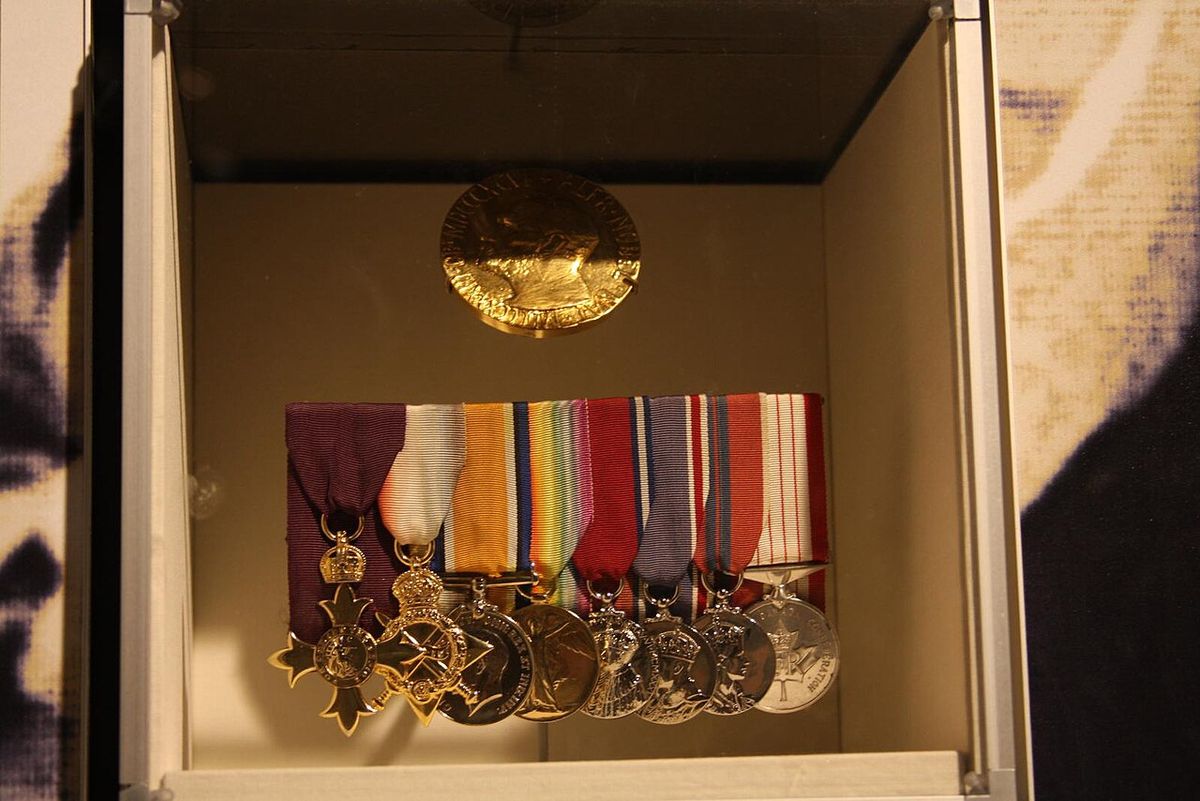
Pearson's most celebrated diplomatic accomplishment came during the 1956 Suez Crisis. When Britain, France, and Israel invaded Egypt, Pearson conceived and organized the United Nations Emergency Force (UNEF), a peacekeeping mission to supervise the withdrawal of invading forces and stabilize the region. Working closely with UN Secretary-General Dag Hammarskjöld, Pearson orchestrated the force's creation in a matter of days following an emergency session of the General Assembly. For this action, which helped avert a larger war, Pearson was awarded the Nobel Peace Prize in 1957. The Nobel committee stated he had saved the world, and he and Hammarskjöld are considered the fathers of modern UN peacekeeping. His Nobel medal was displayed for many years at the Lester B. Pearson Building in Ottawa before being loaned to the Canadian Museum of History in 2017.
Path to Power and Minority Governments
Pearson entered electoral politics in 1948, winning a seat in the House of Commons for the riding of Algoma East in northern Ontario, which he would hold for two decades. After the Liberal government's defeat in 1957, party leader Louis St. Laurent retired and endorsed Pearson as his successor. Pearson was elected leader of the Liberal Party at its 1958 convention. His initial foray as opposition leader was rocky. A poorly calculated request for the Conservatives to cede power without an election backfired, contributing to a historic defeat in the 1958 election. John Diefenbaker's Progressive Conservatives won 208 of 265 seats, while the Liberals were reduced to 48 seats.
Pearson rebuilt the party, convening an influential Thinkers' Conference in Kingston, Ontario, in 1960, which developed many policy ideas he would later implement. Pearson then capitalized on a Cabinet crisis over whether to accept American nuclear warheads for Canadian BOMARC missiles. After the government lost two non-confidence motions on the issue in February 1963, an election was called. Pearson led the Liberals to victory, winning 129 seats and 41 percent of the popular vote, but fell five seats short of a majority. With pledged support from Social Credit MPs, Pearson was able to form a minority government and was sworn in as prime minister on 22 April 1963. Hoping to secure a majority, he called another election in November 1965, but the Liberals gained only two additional seats, resulting in a second consecutive minority government.
- 1948: Elected MP for Algoma East and appointed Secretary of State for External Affairs.
- 1958: Elected leader of the Liberal Party of Canada.
- 1958 federal election: Liberals defeated, winning only 48 seats.
- 1962 federal election: Liberals recover, Conservatives reduced to a minority.
- February 1963: Pearson's Liberals defeat Diefenbaker's government on non-confidence motions.
- April 1963: Pearson sworn in as prime minister after winning a minority government.
- November 1965: Pearson calls and wins a second minority government, finishing two seats short of a majority.
- 1968: Resigns as prime minister and retires from politics.
Domestic Policy and Legacy as Prime Minister
Despite never commanding a majority in Parliament, Lester Pearson's government enacted a sweeping array of social programs and national institutions that define modern Canada. His administration introduced universal health care, building on Tommy Douglas's Saskatchewan model, and established the Canada Pension Plan and the Canada Assistance Plan to support seniors and those in need. Pearson created the Canada Student Loan Program to improve access to post-secondary education and updated labour standards by introducing a 40-hour work week, two weeks of vacation, and a new federal minimum wage through the Canada Labour Code. Another foundational achievement was the adoption of the Maple Leaf flag in 1965 after the protracted Great Canadian flag debate.
Pearson also initiated major royal commissions that had deep long-term effects on Canadian society. The Royal Commission on Bilingualism and Biculturalism led to the Official Languages Act, making English and French the official languages of Canada. The Royal Commission on the Status of Women, established in 1967, laid the groundwork for advancing legal equality for women. In 1966, his government unified the Canadian Army, Royal Canadian Navy, and Royal Canadian Air Force into a single Canadian Armed Forces. Pearson's government oversaw the introduction of the world's first points-based immigration system in 1967. He presided over the nationwide celebrations of Canada's Centennial in 1967, a unifying moment of national pride for which he was named Newsmaker of the Year.
Foreign Policy and Later Life
In foreign affairs, Pearson maintained Canada's independent stance while strengthening ties with its allies. A key achievement was the signing of the Canada, United States Automotive Products Agreement, known as the Auto Pact, in January 1965, which integrated the two countries' automotive industries. Consistent with his peacekeeping ethos, Pearson kept Canada out of the Vietnam War, despite pressure from the United States, though he supported American policy in a 1965 speech. He also continued to support NATO and UN peacekeeping missions. After five years as prime minister, Pearson resigned in 1968 and retired from political life. He was succeeded by Pierre Trudeau. His legacy is honoured in numerous ways, including the Lester B. Pearson College of the Pacific, Pearson International Airport in Toronto, and the Pearson Medal of Peace. Pearson's electoral performance in his riding of Algoma East demonstrated remarkable consistency. He won the seat seven consecutive times from 1949 to 1965, which showed his personal popularity and political durability even as the Liberal Party's fortunes fluctuated nationally.
| Election Year | Result | Vote Share |
|---|---|---|
| 1949 | Elected | Liberal majority government |
| 1953 | Elected | Liberal majority government |
| 1957 | Elected | Liberal minority government |
| 1958 | Elected | Progressive Conservative majority government |
| 1962 | Elected | Progressive Conservative minority government |
| 1963 | Elected | Liberal minority government |
| 1965 | Elected | Liberal minority government |
Questions about Lester B. Pearson
Why is Lester B. Pearson important to Canada?
Lester B. Pearson is one of Canada's most important prime ministers due to his major domestic policies and his Nobel Prize-winning work in international diplomacy. As prime minister from 1963 to 1968, he introduced universal health care, the Canada Pension Plan, and the Canada Student Loan Program. He also oversaw the adoption of the Maple Leaf flag and the move toward official bilingualism. His earlier role in creating the United Nations Emergency Force during the Suez Crisis established Canada's reputation as a peacekeeping nation and earned him the Nobel Peace Prize in 1957.
What did Lester B. Pearson do before becoming prime minister?
Before entering politics, Pearson had a distinguished career as a diplomat and public servant. He joined the Department of External Affairs in 1928 and served as Canadian ambassador to the United States from 1945 to 1946. He was appointed Secretary of State for External Affairs in 1948, a position he held for nine years. In this role, he helped found NATO, served as president of the United Nations General Assembly, and won the Nobel Peace Prize for resolving the Suez Crisis. He was first elected as the Member of Parliament for Algoma East in 1948.
How did Lester B. Pearson get the nickname 'Mike'?
Pearson received the nickname "Mike" during his service in the First World War. After being commissioned as a lieutenant in 1917, he transferred to Britain's Royal Flying Corps to train as a pilot. His flight instructor felt that "Lester" was too mild a name for an airman and declared, "That's a sissy's name. You're Mike. The nickname stuck with him for life. He used "Lester" on official documents and in public life, but was always addressed as Mike by his friends, family, and close colleagues.
What major social programs did Pearson introduce?
Pearson's minority governments introduced a suite of major social programs that form the backbone of Canada's social safety net. These include the introduction of a universal health care system, the Canada Pension Plan for retirement security, and the Canada Assistance Plan for provincial social services. His government also created the Canada Student Loan Program to help students afford post-secondary education. In the workplace, he brought in the 40-hour work week, two weeks of vacation, and a new federal minimum wage through updates to the Canada Labour Code.
Did Lester B. Pearson ever win a majority government?
No, Lester B. Pearson never won a majority government. He led the Liberal Party to victory in two consecutive federal elections, in 1963 and 1965, but both resulted in minority governments. In 1963, the Liberals won 129 seats, five short of a majority. In 1965, hoping to secure a majority, Pearson called an early election but gained only two more seats, finishing two seats short. Despite this, his governments were remarkably productive, passing landmark legislation with support from other parties like the New Democrats.
What was Pearson's role in creating the Canadian flag?
Pearson made the adoption of a new national flag a key priority for his government, seeking to replace the Canadian Red Ensign. This initiative led to a significant national discussion known as the Great Canadian flag debate. Ultimately, his government selected the single red maple leaf design. The new flag was officially proclaimed by Parliament in 1965 and became a unifying symbol for the country. Pearson hoped this would help forge a distinct Canadian identity separate from its British colonial past.
Sources and further reading
- Lester B. Pearson (Wikipedia)
- Lester Bowles Pearson, Biographical (nobelprize.org)
- Pearson Becomes Canada's Prime Minister | History (ebsco.com)
Checked by the Nosy Mag desk. Last updated 2026-10-21.