Great Canadian flag debate
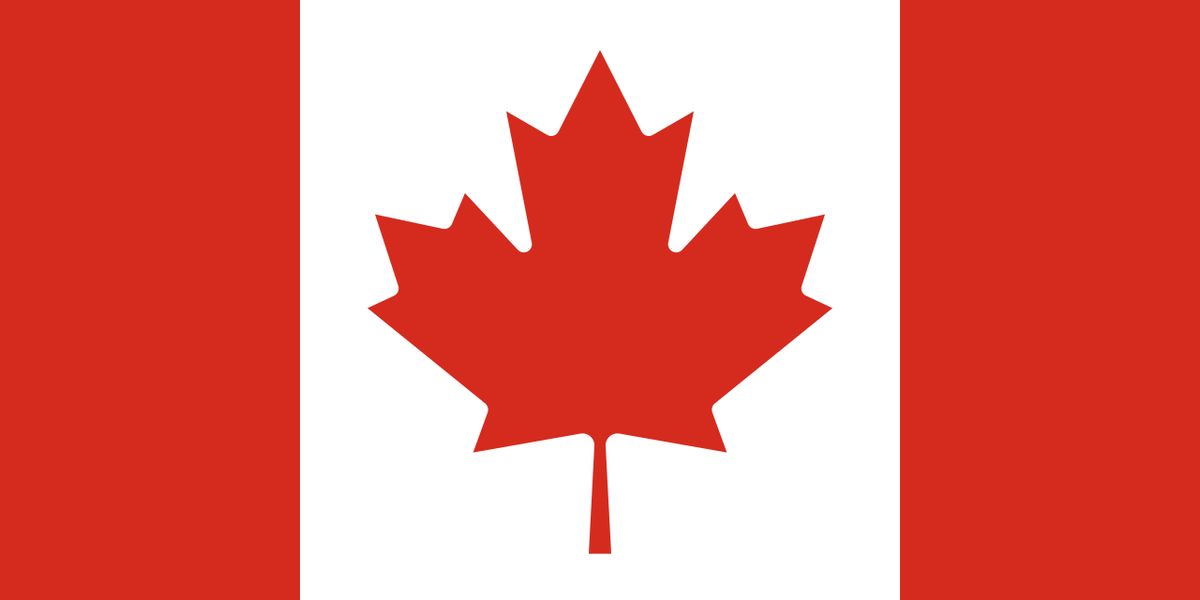
The Great Canadian Flag Debate was a national debate that took place in 1963 and 1964, culminating in the adoption of the Maple Leaf flag. The official parliamentary debate began on June 15, 1964, and lasted more than six months. The process, driven by Prime Minister Lester B. Pearson, divided the country along linguistic and cultural lines. It resulted in the selection of the red-and-white Maple Leaf design, which was inaugurated on February 15, 1965, a date now commemorated annually as National Flag of Canada Day.
Historical Context and Precursors
For nearly a century after Confederation, Canada lacked a distinct national flag, relying instead on symbols of its British heritage. The Union Jack served as the formal national flag from Confederation to 1965, while the Canadian Red Ensign was used unofficially from the late 19th century. Prime Minister Sir Wilfrid Laurier raised the Union Jack over Parliament in 1904 under imperial pressure, but the Red Ensign re-emerged as a popular symbol in the 1920s. Prime Minister William Lyon Mackenzie King made two significant attempts to address the flag issue, in 1925 and 1946. The 1946 proposal involved a committee that recommended a Red Ensign with a gold maple leaf, but fears of political instability led King to shelve the project. A compromise was reached in 1945 via an order-in-council, which designated the Red Ensign as the flag to be flown on federal buildings until Parliament decided otherwise.
Public opinion on the matter evolved significantly in the post-war period. An extensive poll in 1958 revealed that over 80 percent of opinionated Canadians wanted a flag entirely different from any other nation's, with 60 percent desiring the maple leaf. By April 1963, a poll of 2,262 Canadians showed 52 percent supported a new national flag. However, the division was starkly linguistic, with 90 percent of Francophones preferring a new flag compared to only 35 percent of Anglophones. Combined support for retaining either the Union Jack or the Red Ensign stood at 65 percent among English Canadians, setting the stage for a deeply contentious debate.
Pearson's Campaign and the 'Pearson Pennant'
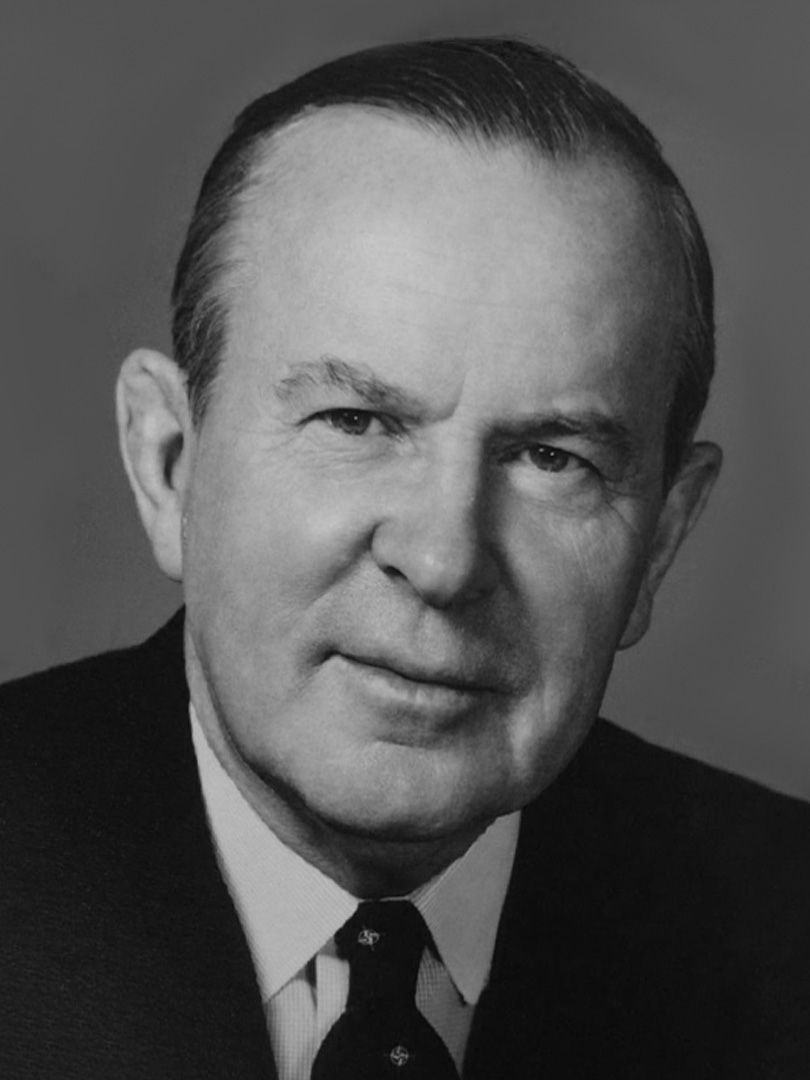
Lester B. Pearson, first as leader of the opposition and then as prime minister, became the driving force behind the push for a new flag. His commitment was shaped by a personal experience during the 1956 Suez Crisis, where Egyptian officials objected to Canadian peacekeepers because their Red Ensign contained the British Union Jack. Pearson saw a distinctive flag as a tool to strengthen national unity, particularly amid rising Quebec nationalism during the Quiet Revolution. He first issued a policy statement on the flag on January 27, 1960, and by 1961 it was formal Liberal Party policy. During the 1963 election campaign, Pearson promised a new flag within two years of taking office, a pledge no previous leader had made with such a deadline.
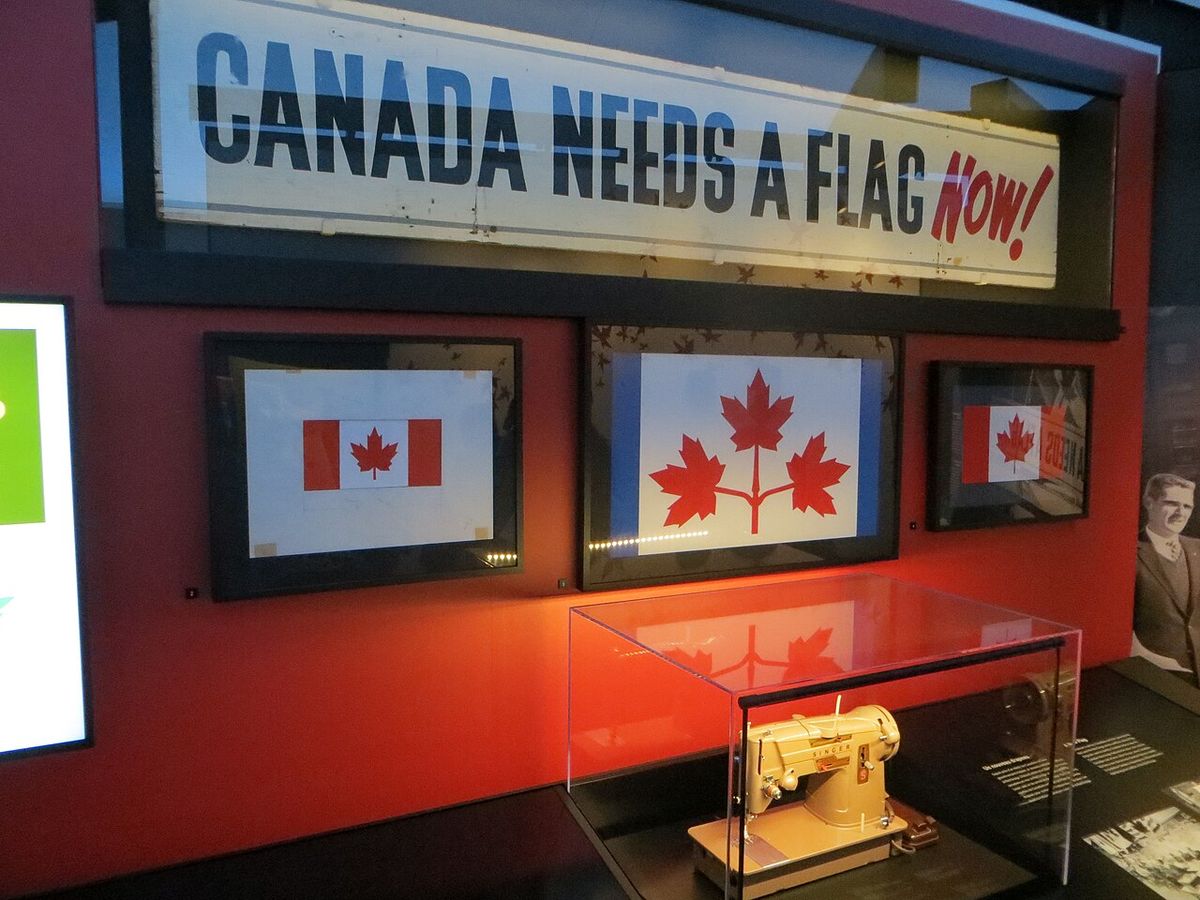
Upon winning a minority government in 1963, Pearson moved forward with his plan. His preferred design, created by heraldry expert Alan Beddoe, was nicknamed the 'Pearson Pennant' by opponents. It featured three red maple leaves on a white square, with two vertical blue bars on either side, intended to reflect the national motto 'from sea to sea'. In February 1964, a version of this design was leaked to the press, sparking early controversy. Pearson faced significant public opposition, notably from veterans' groups like the Royal Canadian Legion, which wanted the Union Jack retained as a symbol of Commonwealth ties and wartime sacrifice. At the Legion's convention in Winnipeg on May 17, 1964, Pearson delivered a passionate speech to a largely hostile audience, wearing his First World War medals to connect with the veterans, and argued for a flag relevant to all Canadians.
The Parliamentary Debate and Stalemate
Prime Minister Pearson officially opened the parliamentary debate on June 15, 1964, by introducing a resolution for a flag featuring three red maple leaves on a white field with blue borders. The opposition, led by former Prime Minister John Diefenbaker, mounted a fierce and protracted filibuster. Diefenbaker argued vehemently for the retention of the Canadian Red Ensign, demanding any new flag honour Canada's 'founding races' by including the Union Jack. The debate raged through the summer, with Pearson forcing Parliament to remain in session, but no side would yield. The acrimonious exchanges divided the House of Commons and the public, with the Toronto Star later dubbing the spectacle 'The Great Flag Farce'. By early September, it was clear a compromise within the full House was impossible.
Facing a deadlock, Pearson yielded on September 10, 1964, and agreed to refer the matter to a special all-party committee of 15 Members of Parliament. The committee was given a six-week mandate to choose a final design from public submissions. Its composition included seven Liberals, five Conservatives, and one member each from the New Democratic Party, the Social Credit Party, and the Ralliement créditiste. The Conservatives initially saw this as a victory, believing past committees had failed, but the dynamic was about to change under the leadership of key Liberal member John Matheson.
The Special Flag Committee and Design Selection
The 15-member flag committee, chaired by Liberal MP Herman Batten, undertook a rigorous process, holding 35 lengthy meetings over six weeks. The public was deeply engaged, submitting thousands of design suggestions. The committee reviewed approximately 5,000 entries, which were later narrowed to 3,541 for formal consideration. An analysis of these submissions revealed common national symbols.
- 2,136 designs contained maple leaves.
- 408 designs contained Union Jacks.
- 389 designs contained beavers.
- 359 designs contained Fleurs-de-lys.
As the deadline approached, John Matheson introduced a design based on a memorandum from historian George Stanley, dated March 23, 1964. Stanley's memo argued a new flag must avoid 'divisive' national symbols like the Union Jack or Fleur-de-lis. His proposed design was inspired by the flag of the Royal Military College of Canada, featuring a single red maple leaf on a white square flanked by two red bars. A more polished version was rendered by graphic artist Jacques Saint-Cyr, who adjusted the proportions so the centre white section was a perfect square. The final committee vote on October 22, 1964, pitted the 'Pearson Pennant' against the 'Stanley flag'. Assuming the Liberals would vote for Pearson's design, the Conservatives backed Stanley's as a tactical move. They were outmanoeuvred when the Liberals and the other three committee members also voted for the Stanley design, resulting in a unanimous 14-0 vote with the chairman abstaining.
Closure and the Final Parliamentary Vote
Despite the committee's decisive recommendation, the battle was not over in the House of Commons. John Diefenbaker remained implacably opposed, and the Conservatives launched another filibuster, prolonging the debate for another six weeks. The atmosphere grew increasingly ugly and divisive. The impasse was broken when senior francophone Conservative Léon Balcer, alongside Réal Caouette of the Créditistes, advised the government to end debate by applying closure. Prime Minister Pearson accepted this advice. After approximately 250 speeches, closure was invoked, and the final vote was held in the early morning hours of December 15, 1964. With Balcer and other francophone Conservatives supporting the government, the motion passed by a vote of 163 to 78. Immediately after the vote, John Matheson wrote to George Stanley to congratulate him on the approval of his design. Diefenbaker, bitter in defeat, denounced the outcome as 'a flag by closure, imposed by closure.' On the afternoon of December 15, the Commons also voted in favour of continued use of the Union Flag as an official flag to symbolize Canada's allegiance to the Crown and its membership in the Commonwealth of Nations. The Union Jack, or the Royal Union Flag, as it would be officially termed in the parliamentary resolution, would be put alongside the new flag at federal government buildings, federally operated airports, military installations, at the masthead of Royal Canadian Navy ships within Canadian waters, and at other appropriate establishments on Commonwealth Day, Victoria Day, the anniversary of the Statute of Westminster 1931, and when otherwise instructed. Senate approval followed on December 17, 1964, completing the parliamentary process.
Inauguration and Immediate Aftermath
The new Maple Leaf flag was officially inaugurated on February 15, 1965, in a ceremony on Parliament Hill in Ottawa. The event was presided over by Governor General Georges Vanier, with Prime Minister Pearson, the Cabinet, and parliamentarians in attendance. Simultaneously, across Canada and at Canadian posts worldwide, the Red Ensign was lowered and the new flag was raised. Journalist George Bain captured the moment, noting the flag 'looked bold and clean, and distinctively our own.' The date of the inauguration has been commemorated as National Flag of Canada Day since 1996. The adoption of the flag did not instantly unite the country, as some, particularly in veterans' circles, saw it as a betrayal of tradition and wartime sacrifice. However, over time, the Maple Leaf grew into a powerful and universally recognized symbol of Canada.
Forgotten Contenders and Public Submissions
The flag committee's review of thousands of public submissions provides a snapshot of mid-1960s Canadian identity. Beyond the well-known proposals, many alternative designs were promoted with patriotic fervour. Some proponents were so convinced of their designs that they produced full-size cloth prototypes, several of which are now held in museum collections. These forgotten contenders reveal common themes and the challenge of finding a simple, unifying symbol, with many featuring the maple leaf but often in more complex, multi-coloured arrangements that were less distinct at a distance than the final 11-point leaf.
- One design promoted from the 1940s by the Ligue du drapeau national and the Native Sons of Canada featured a central maple leaf with two blue bars, and the group distributed thousands of printed versions to encourage its adoption.
- A mysterious prototype in the Canadian Museum of History collection features a red, white, and blue cross with ten stars, symbolizing the ten provinces and blending British and French heraldic motifs.
- Designer George Bist submitted a flag remarkably similar to the final choice, but with blue stripes instead of red, which was seriously considered by the committee and favoured by Toronto MP Reid Scott.
Long-term Legacy and Symbolic Shifts
The Great Flag Debate was a national conversation about identity, history, and the future. The adoption of the Maple Leaf flag marked a deliberate shift away from colonial symbols toward a modern, bilingual, and multicultural vision of Canada. It was a key part of Prime Minister Pearson's nation-building agenda during the 1960s. The debate also had political consequences, hardening the opposition under John Diefenbaker and contributing to the bitter political climate of the era. The flag's successful adoption demonstrated that Parliament could, albeit with great difficulty, make decisive changes to national symbols. The legacy of the old symbols persisted in various forms. The Canadian Red Ensign is still flown by some veterans' associations. Provincial flags also reflect the transition. Newfoundland used the Union Jack as its provincial flag from 1952 until 1980, while British Columbia's flag, introduced in 1960, incorporates the Union Jack in its design. The Great Flag Debate set a precedent for future national conversations about symbols, foreshadowing later debates over constitutional renewal and multiculturalism.
Questions about Great Canadian flag debate
What was the main reason Lester B. Pearson wanted a new Canadian flag?
Prime Minister Lester B. Pearson wanted a new flag primarily to strengthen national unity, especially in response to rising Quebec nationalism during the Quiet Revolution. He believed removing colonial symbols like the Union Jack from the flag would help create a distinct national identity for all Canadians. A personal catalyst was his experience during the 1956 Suez Crisis, where the Egyptian government objected to Canadian peacekeepers because their Red Ensign contained the British symbol. Pearson sought a flag that was unmistakably Canadian and free from associations that could be seen as divisive.
What was the 'Pearson Pennant' and who designed it?
The 'Pearson Pennant' was the nickname given, often derisively by opponents, to Prime Minister Pearson's preferred flag design. It was created by heraldry expert and war veteran Alan B. Beddoe. The design featured three red maple leaves on a white centre square, with two vertical blue bars on each side. The blue bars were intended to represent Canada's motto 'from sea to sea'. Pearson formally proposed this design to Parliament on June 15, 1964, but it was ultimately rejected in favour of the single-leaf design during the flag committee's deliberations.
Who designed the winning Maple Leaf flag and what was the inspiration?
The winning Maple Leaf flag design was conceptualized by historian and author George F.G. Stanley. He outlined the idea in a detailed memorandum to MP John Matheson in March 1964. Stanley's inspiration came directly from the flag of the Royal Military College of Canada in Kingston, Ontario, which features a mailed fist on a red-white-red background. Stanley argued for a simple, bold design that avoided divisive symbols like the Union Jack. Graphic artist Jacques Saint-Cyr later produced a polished version, adjusting the proportions to make the centre white section a perfect square.
How did the public participate in the Great Flag Debate?
The public participated extensively by submitting thousands of flag design proposals to the government and the special parliamentary committee. The committee reviewed approximately 5,000 submissions, with 3,541 formally documented. Canadians also expressed their opinions through polls, letters to newspapers, and membership in advocacy groups like the Royal Canadian Legion, which strongly opposed change. Gallup polls tracked shifting public opinion, revealing deep divisions between linguistic groups. Many citizens created full-size cloth prototypes of their designs, demonstrating a high level of patriotic engagement with the issue.
Why was the debate so bitter and divisive?
The debate was bitter because it tapped into fundamental questions of Canadian identity, history, and allegiance. For many English Canadians, particularly veterans, the Red Ensign and Union Jack symbolized sacrifice in two world wars and ties to the British Commonwealth. For many French Canadians and modernizers, these same symbols represented a colonial past that excluded them. The political clash between Prime Minister Pearson and Opposition Leader John Diefenbaker personalized the conflict, leading to a parliamentary filibuster. The debate exposed a national rift between traditionalist and progressive visions for the country's future.
What happened to the old Canadian Red Ensign after 1965?
After the inauguration of the Maple Leaf flag on February 15, 1965, the Canadian Red Ensign was officially retired as a national symbol. However, it was not banned. The flag continues to be used ceremonially by some veterans' associations and historical groups to honour Canada's military heritage prior to 1965. Provincially, the symbolism persisted. For example, the flag of British Columbia, adopted in 1960, incorporates the Union Jack, and Newfoundland used the Union Jack as its provincial flag from 1952 until 1980. The Red Ensign remains a historical emblem from a specific era in Canadian history.
Sources and further reading
- Great Canadian flag debate (Wikipedia)
- The Great Flag Debate (thecanadianencyclopedia.ca)
- The Great Flag Debate (canadashistory.ca)
- Remembering the “Also-Rans” of the Great Flag Debate (historymuseum.ca)
- One Flag For The Nation: The Great Canadian Flag Debate (podcasts.apple.com)
Checked by the Nosy Mag desk. Last updated 2026-10-28.