Canadian Expeditionary Force
The Canadian Expeditionary Force (CEF) was the expeditionary field force of Canada during the First World War. Formed on August 15, 1914, following Britain's declaration of war, the CEF grew from a single infantry division into a national army of over 619,636 enlistees, including volunteers and conscripts. Its main fighting formation, the Canadian Corps of four infantry divisions, earned a reputation as one of the most effective Allied forces on the Western Front through major battles like Ypres, the Somme, Vimy Ridge, and Passchendaele. The CEF's immense sacrifice and battlefield achievements are central to Canada's emergence as an independent nation on the world stage.
Formation and Composition
The Canadian Expeditionary Force was established by the Canadian government on August 15, 1914, as a distinct overseas force separate from the home-defence militia. As a Dominion of the British Empire, Canada was automatically at war when Britain declared war on Germany, but it possessed only a tiny permanent force. The CEF was therefore built largely from scratch through a massive volunteer recruitment campaign. Initial popular support was strongest in English Canada, particularly among recent British immigrants, while recruitment proved more difficult in French Canada, though the French-speaking 22nd Battalion, the "Van Doos," was a notable exception. The force's composition was remarkably diverse, including significant contributions from Indigenous peoples, Black Canadians, and Black Americans, alongside the many British nationals resident in Canada.
The CEF's structure expanded far beyond its initial infantry battalions to encompass a vast array of specialized units necessary for modern warfare. It eventually included 260 numbered infantry battalions, two named battalions (the Royal Canadian Regiment and Princess Patricia's Canadian Light Infantry), and 17 mounted regiments. Support and administrative corps grew to include 13 railway troop battalions, five pioneer battalions, over 80 field and heavy artillery batteries, 15 field ambulance units, and 23 general and stationary hospitals. Other vital components were the Canadian Machine Gun Corps, the Canadian Forestry Corps, and numerous engineering, tunnelling, labour, and service units. While most infantry battalions were used as reinforcements, with about fifty seeing action, the artillery and engineering units underwent continuous reorganization to meet evolving tactical demands.
The core of the CEF's combat power was the Canadian Corps, which was formed as divisions arrived in Europe and reached its full strength of four infantry divisions by 1916. A fifth division was partially raised in 1917 but was broken up for reinforcements the following year. Other significant formations operating independently included the Canadian Cavalry Brigade and the Canadian Railway Troops, who served on the Western Front and in the Middle East. The CEF also maintained a large reserve and training organization in England and a recruiting structure in Canada to sustain the force throughout the conflict.
Recruitment and Conscription
For the first three years of the war, the Canadian Expeditionary Force was a volunteer army. An estimated 619,636 Canadians enlisted between 1914 and 1918, with about 424,000 of those serving overseas. Recruitment drives initially saw men rush to join, but as the war dragged on and casualty lists grew, voluntary enlistment began to wane. This decline led to a deep political and social crisis. In August 1917, the Canadian government passed the Military Service Act, introducing conscription. The move was deeply divisive, sparking the Conscription Crisis of 1917, which exacerbated tensions between English and French Canada. The call-ups under the act did not begin until January 1918.
The impact of conscription on the front lines was limited in scope and timing. Only 24,132 conscripts were ultimately sent to France, where they joined the Canadian Corps in time for the final Hundred Days Offensive in the autumn of 1918. While the conscription debate left lasting scars on national unity, the CEF remained predominantly a force of volunteers who had answered the initial call. The legislation also made all male British nationals resident in Canada liable for service, which included individuals from other parts of the Empire, such as Bermuda, who had enlisted in Canadian units.
Key Battles and Campaigns
The Canadian Expeditionary Force's baptism by fire came during the Second Battle of Ypres in April and May of 1915. This engagement marked the first major use of poison gas on the Western Front. The Canadian 1st Division, holding a sector adjacent to a French colonial force that broke under a chlorine gas attack, found its flank exposed. Despite being inexperienced and equipped with the problematic Ross rifle, the Canadians fought tenaciously for three days, using handkerchiefs soaked in urine as crude gas masks. They suffered over 6,000 casualties, one in three of their number, but contained the German advance. The battle forged leaders like Arthur Currie and provided the CEF with its first harsh lessons in modern warfare.
In 1916, the expanded Canadian Corps entered the gruelling Battle of the Somme in September. The corps avoided the disastrous first day, where the Newfoundland Regiment serving in the British 29th Division was annihilated at Beaumont-Hamel. The Canadians fought in the latter stages of the five-month campaign, including the debut of the tank at the Battle of Flers-Courcelette. The Corps suffered nearly 25,000 casualties during its time on the Somme, but the experience honed its tactical coordination between infantry and artillery. The following year, the Corps achieved a landmark victory at the Battle of Vimy Ridge from April 9 to 12, 1917. For the first time, all four Canadian divisions attacked together as a unified national army. Employing a meticulously planned creeping artillery barrage, they captured the heavily fortified ridge, taking more ground, prisoners, and equipment than in any previous British offensive.
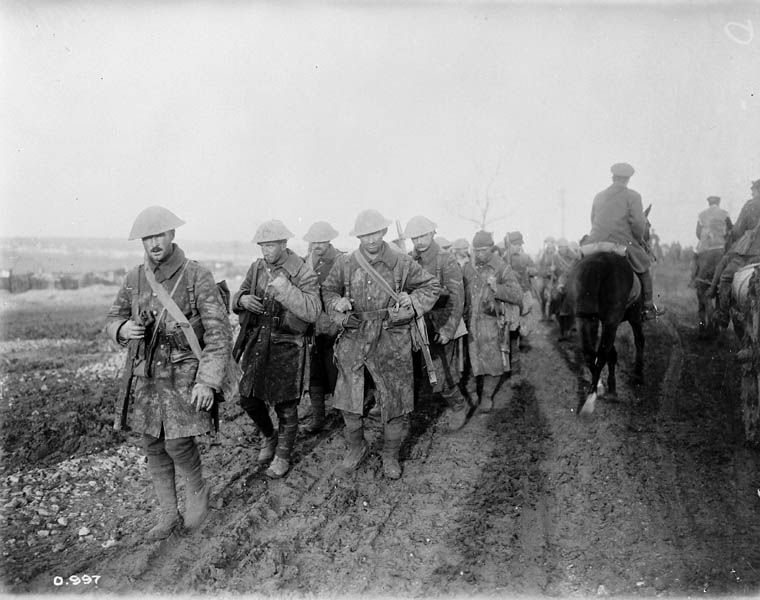
The Corps' reputation for tackling difficult tasks was cemented at the Battle of Passchendaele in late 1917. After the British offensive had bogged down in deep mud at enormous cost, General Currie's Corps was ordered to secure the ridge. Currie insisted on preparation time and took command of the operation. In a series of brutal, set-piece assaults between October 26 and November 10, the Canadians inched forward, capturing the ruined village and the ridge at a cost of 15,654 casualties. Nine Canadians earned the Victoria Cross in the nightmarish conditions. The final chapter of the CEF's war was the Hundred Days Offensive beginning on August 8, 1918. The fresh and experienced Canadian Corps spearheaded a series of relentless attacks at Amiens, the Drocourt-Quéant Line, Canal du Nord, and Cambrai, driving the German army back until the Armistice on November 11, 1918.
International Enlistment and Special Units
The Canadian Expeditionary Force attracted volunteers from beyond Canada's borders, most notably from the neutral United States. A substantial number of American citizens enlisted, leading to the formation of the 97th Battalion (American Legion) in November 1915. Although US government objections caused delays and the official title was later dropped, American volunteers continued to join CEF units throughout the war. A United States Department of War report in early 1918 estimated that 25,000 to 30,000 Americans served in the CEF. After the war, over 2,700 US citizens who fought with Empire forces were interred in Commonwealth War Graves.
Other international contributions were significant. A sizeable percentage of volunteers from Bermuda joined the CEF, either from Canada or by enlisting with Canadian battalions temporarily stationed in the Bermuda Garrison. The CEF did not fight alone. From 1917 to 1918, some 84,000 labourers from China were recruited for the Chinese Labour Corps, many of whom worked with the Canadian Railway Troops on the Western Front, suffering significant casualties. The CEF also deployed small forces to Russia in 1918. The Canadian Siberian Expeditionary Force was sent to Vladivostok, while another contingent fought Bolshevik forces in Archangel, as part of the Allied intervention in the Russian Civil War.
- 97th Battalion (American Legion): Formed November 1915 from US citizens. Title later dropped but unit served.
- Bermudian volunteers: Joined CEF battalions in Canada or in the Bermuda Garrison.
- Chinese Labour Corps: Approximately 84,000 labourers recruited 1917 to 1918, supported Canadian Railway Troops.
- Canadian Siberian Expeditionary Force: Deployed to Vladivostok in August 1918.
- Archangel Force: Canadian soldiers fought in northern Russia against Bolshevik forces.
Casualties and Medical Services
The human cost of the Canadian Expeditionary Force was staggering. Of the over 619,636 who served, more than 233,000 became casualties. This included 60,661 who were killed or died from wounds or disease. Another 12,000 died of wounds after being evacuated from the front, and over 154,000 were wounded and survived, with four out of five survivors returning to duty. The scale of the carnage demanded an unprecedented medical mobilization. The pre-war Canadian Army Medical Corps (CAMC) had only 23 officers but expanded to include 1,525 medical officers, 1,901 nursing sisters, and 15,624 other ranks by war's end.
The CAMC managed a vast network of 36,000 hospital beds overseas and 12,000 in Canada, absorbing nearly half of the nation's active physicians and a majority of its medical leadership. Beyond battlefield injuries, disease posed a major challenge, with venereal disease infecting 29% of all Canadian troops by 1915. The service files of CEF members, now digitized and held by Library and Archives Canada, provide detailed medical histories and were crucial for determining pension eligibility after the war. The records of Nursing Sisters are a particularly valued resource, documenting the major role these women played in saving countless lives.
Structure and Scale of the Force
The Canadian Expeditionary Force was a massive and complex organization that grew far beyond its initial infantry focus. The following table illustrates the wide variety of unit types that constituted the CEF, highlighting the scale of support and combat arms required to sustain a modern army in the field. These figures represent the total number of units raised throughout the war, though many infantry battalions were later broken up to provide reinforcements for the fifty or so that saw sustained action. This extensive structure included specialized corps like the Canadian Machine Gun Corps, which was consolidated into four machine gun battalions in 1918, one attached to each division of the Canadian Corps.
| Unit Type | Number Raised |
|---|---|
| Numbered Infantry Battalions | 260 |
| Named Infantry Battalions (RCR, PPCLI) | 2 |
| Mounted Regiments | 17 |
| Railway Troop Battalions | 13 |
| Pioneer Battalions | 5 |
| Field & Heavy Artillery Batteries | Over 80 |
| General and Stationary Hospitals | 23 |
| Field Ambulance Units | 15 |
| Machine Gun Companies | 19 |
The Canadian Forestry Corps played a critical, though less celebrated, role by felling timber in Britain and France for construction and trench works. The Canadian Railway Troops were indispensable for logistics, building and maintaining the rail networks that supplied the front. Two tank battalions were raised in 1918 but did not see service before the war's end. This diversity shows that the CEF was not just a combat force but a complete national army capable of supporting itself in a protracted global conflict.
Disbandment and Lasting Legacy
The Canadian Expeditionary Force was a special force raised solely for the First World War and was effectively disbanded in 1919. In anticipation of this, the Otter Commission was convened to plan the re-organization of the peacetime militia and to recommend how the legacy of the CEF would be preserved. A key recommendation was the perpetuation of battle honours, allowing militia regiments to inherit the histories and honours of the CEF units that had fought in the war. This created a direct lineage connecting Canada's modern army to the achievements of the Great War. The commission also reported on providing employment and re-education for returning soldiers, particularly those disabled by their service.
The legacy of the CEF is deep. Its battlefield successes, especially the victory at Vimy Ridge, are often cited as a catalyst for Canadian national identity and pride. The Canadian Corps earned the respect of both allies and adversaries as one of the most effective fighting formations on the Western Front. The experience gained by a core of officers and men provided the foundation for the Canadian Army in the Second World War. Today, the service and sacrifice of the over 619,636 who served in the CEF are commemorated annually on Remembrance Day and through ongoing historical research, with personal service records remaining a vital resource for families and historians seeking to understand this defining period in Canadian history.
Questions about Canadian Expeditionary Force
How many Canadians served in the Canadian Expeditionary Force?
Over 619,636 Canadians enlisted in the Canadian Expeditionary Force between 1914 and 1918. This figure includes both volunteers and conscripts. Of this total, approximately 424,000 personnel served overseas in France, Belgium, and other theatres. The force was initially entirely volunteer-based, but conscription was introduced in 1918 under the Military Service Act, resulting in 24,132 conscripts being sent to the front lines during the final Hundred Days Offensive.
What was the Canadian Corps and how was it different from the CEF?
The Canadian Corps was the main fighting formation within the larger Canadian Expeditionary Force. The CEF was the entire overseas army, encompassing all support, administrative, and combat units. The Corps was specifically the tactical headquarters that commanded the four infantry divisions and their attached artillery, engineers, and machine gun units on the Western Front. It was formed as Canadian divisions arrived in Europe and became renowned as an elite formation under commanders like Julian Byng and Arthur Currie, distinguishing itself at battles such as Vimy Ridge and Passchendaele.
What were the major battles fought by the CEF?
The Canadian Expeditionary Force fought in most of the major British Empire campaigns on the Western Front. Its first major engagement was the Second Battle of Ypres in 1915, where it faced chlorine gas. It later fought in the Battle of the Somme in 1916. The Corps achieved a landmark victory at the Battle of Vimy Ridge in April 1917. It then endured the mud of Passchendaele in late 1917. Finally, the Corps spearheaded the Allied Hundred Days Offensive from August to November 1918, beginning at the Battle of Amiens and pushing the German army back until the Armistice.
How can I find service records for someone who served in the CEF?
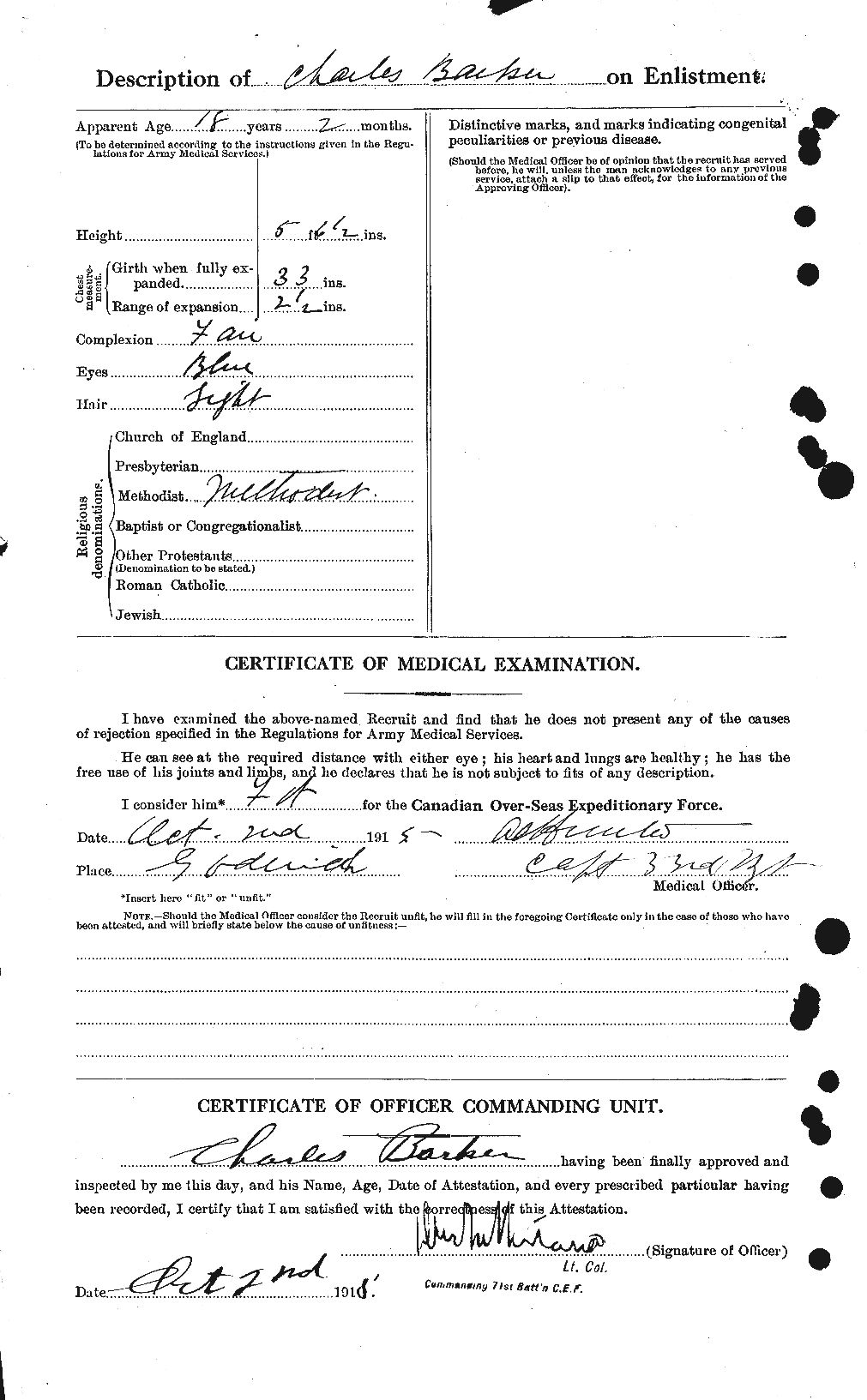
The service files for members of the Canadian Expeditionary Force are held by Library and Archives Canada (LAC). They have been digitized and are freely searchable through LAC's First World War Personnel Records database. This database provides digital images of key documents like the Attestation Paper and the full service file, which includes medical records, casualty forms, and medal cards. Researchers can search by name or service number, though it is advisable to consider spelling variations as names were often recorded phonetically.
Did Americans fight in the Canadian Expeditionary Force?
Yes, a significant number of American citizens enlisted in the CEF while the United States was still neutral. An all-American battalion, the 97th Battalion (American Legion), was formed in November 1915. Although the official title was later dropped, American volunteers continued to serve in Canadian units. A United States Department of War report from early 1918 estimated that between 25,000 and 30,000 Americans served in the CEF. After the war, over 2,700 US citizens who died serving with British Empire forces were buried in Commonwealth War Graves.
What happened to the CEF after the war ended?
The Canadian Expeditionary Force was a special force raised for the First World War and was effectively disbanded in 1919. Before its dissolution, the Otter Commission made plans to transfer its legacy to Canada's peacetime militia. The commission recommended that militia regiments be permitted to perpetuate the battle honours and histories of CEF units, creating a direct lineage. A small core of experienced CEF officers and soldiers remained in the army during the interwar years, forming the foundational professional knowledge for the Canadian Army that would fight in the Second World War.
Sources and further reading
- Canadian Expeditionary Force (Wikipedia)
- Canadian Expeditionary Force, 1914 to 1919 and the ... (warmuseum.ca)
- New Records from the Canadian Expeditionary Force! (fold3.com)
- Commemorative events (veterans.gc.ca)
Checked by the Nosy Mag desk. Last updated 2026-10-28.