Algonquin people
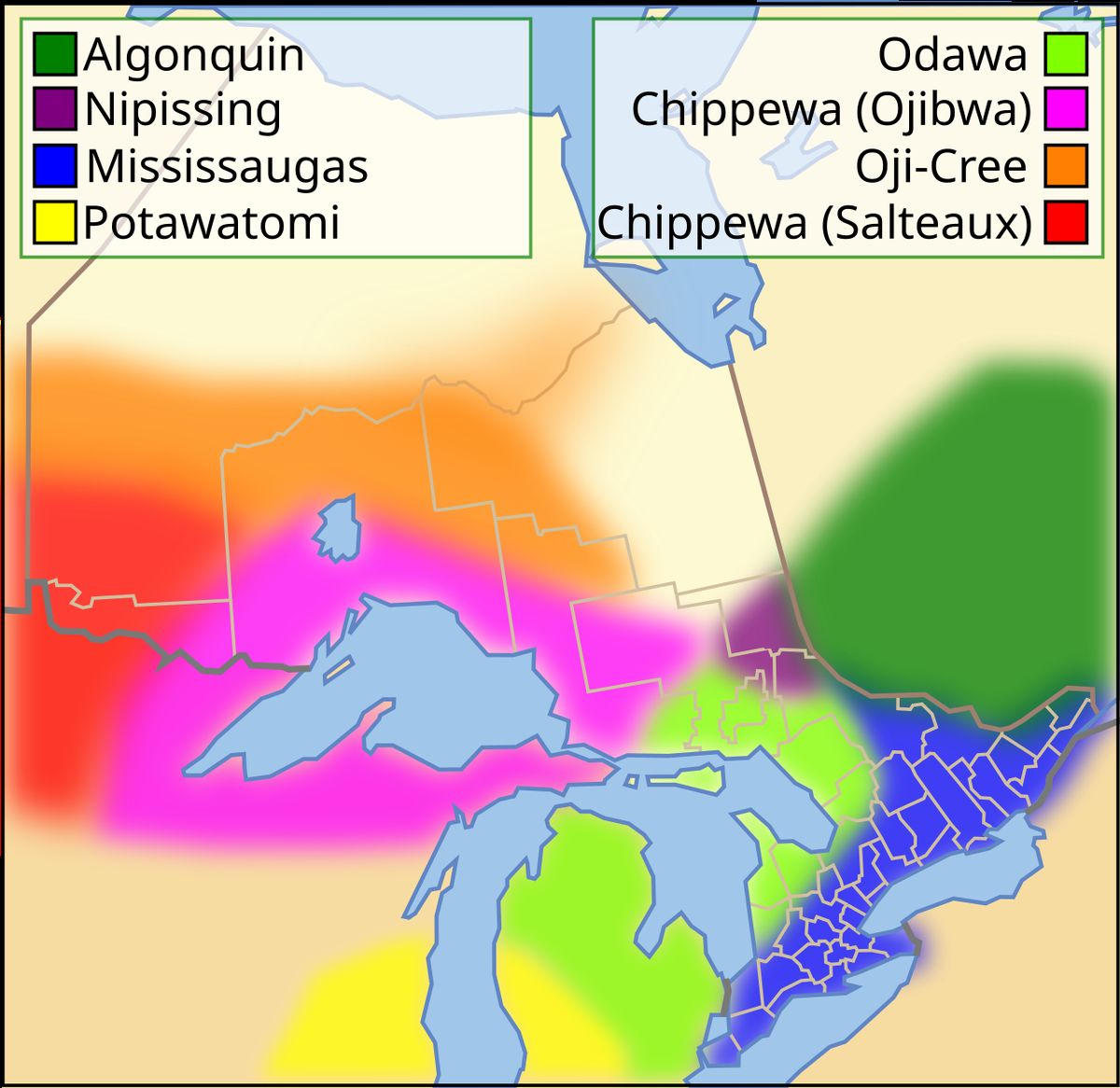
The Algonquin people, known in their language as the Omàmiwinini or Anicinàpe, are an Indigenous nation whose traditional territory spans the Ottawa River watershed and adjacent lands in eastern Ontario and western Quebec. They are part of the larger Anishinaabeg cultural and linguistic family, which includes the Ojibwe, Odawa, Potawatomi, Mississaugas, and Nipissing peoples. Culturally and linguistically, they are closely related to the Odawa, Potawatomi, and Ojibwe. For centuries, the Algonquin have managed complex relationships with European settlers, engaged in a protracted struggle for land rights, and worked to preserve their language and traditions amidst ongoing social and economic pressures.
Origins and Traditional Society
The Algonquin people trace their origins to the Great Anishinaabeg Migration, an oral history that describes a journey from the Atlantic coast. Together with other Anicinàpek peoples, they arrived at the First Stopping Place near present day Montreal. While other groups continued their journey up the St. Lawrence River, the ancestors of the Algonquin settled along Kitcisìpi, now known as the Ottawa River. Scholars have used oral histories, archaeology, and linguistics to estimate this division of the Anicinàpek occurred about 2000 years ago, near present day Detroit. The Ottawa River became the heart of Algonquin territory, serving as a crucial highway for trade, cultural exchange, and transportation for millennia. This river system defined their world, connecting them to neighbouring nations and providing the resources for their hunter gatherer society.
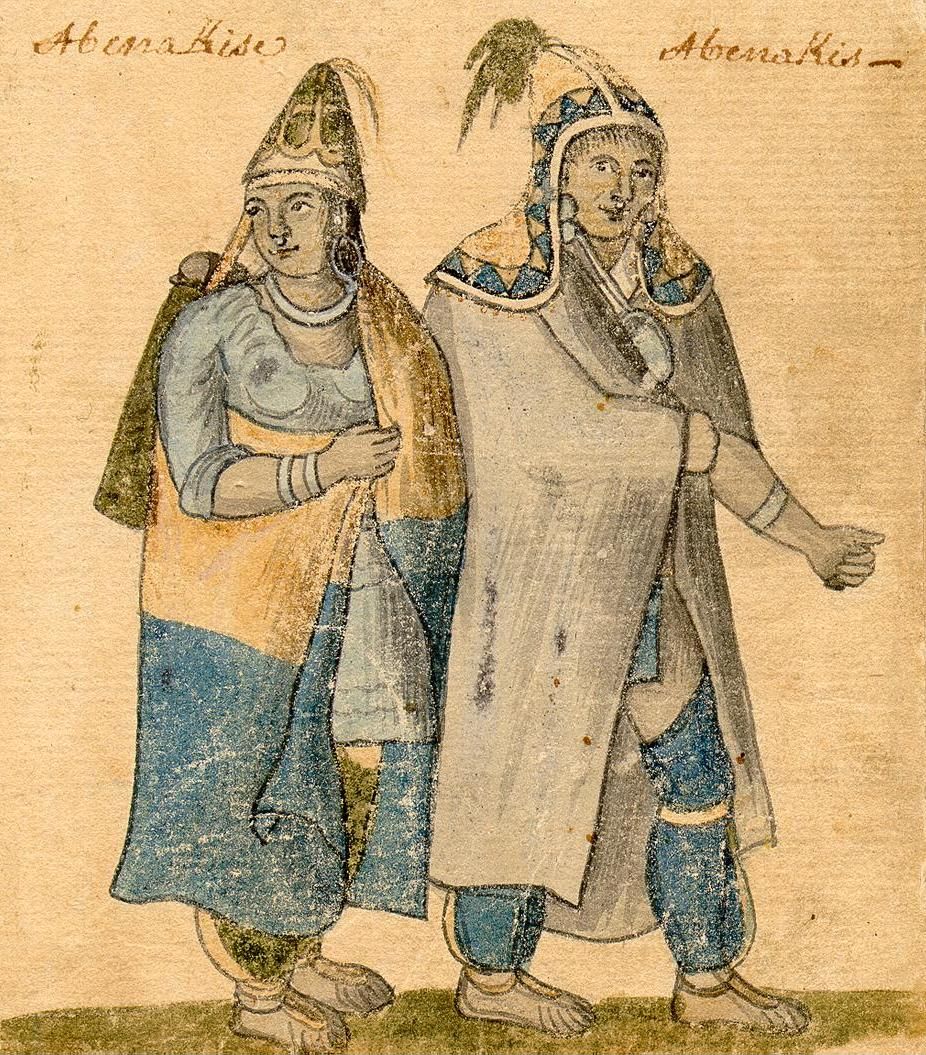
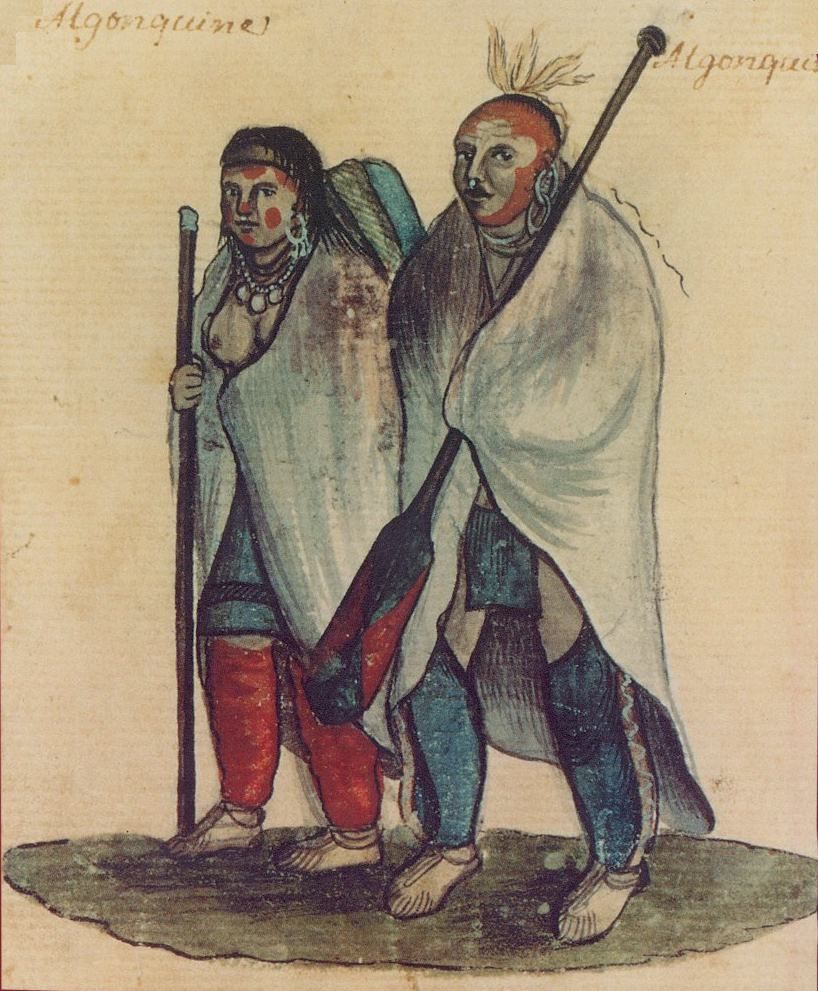
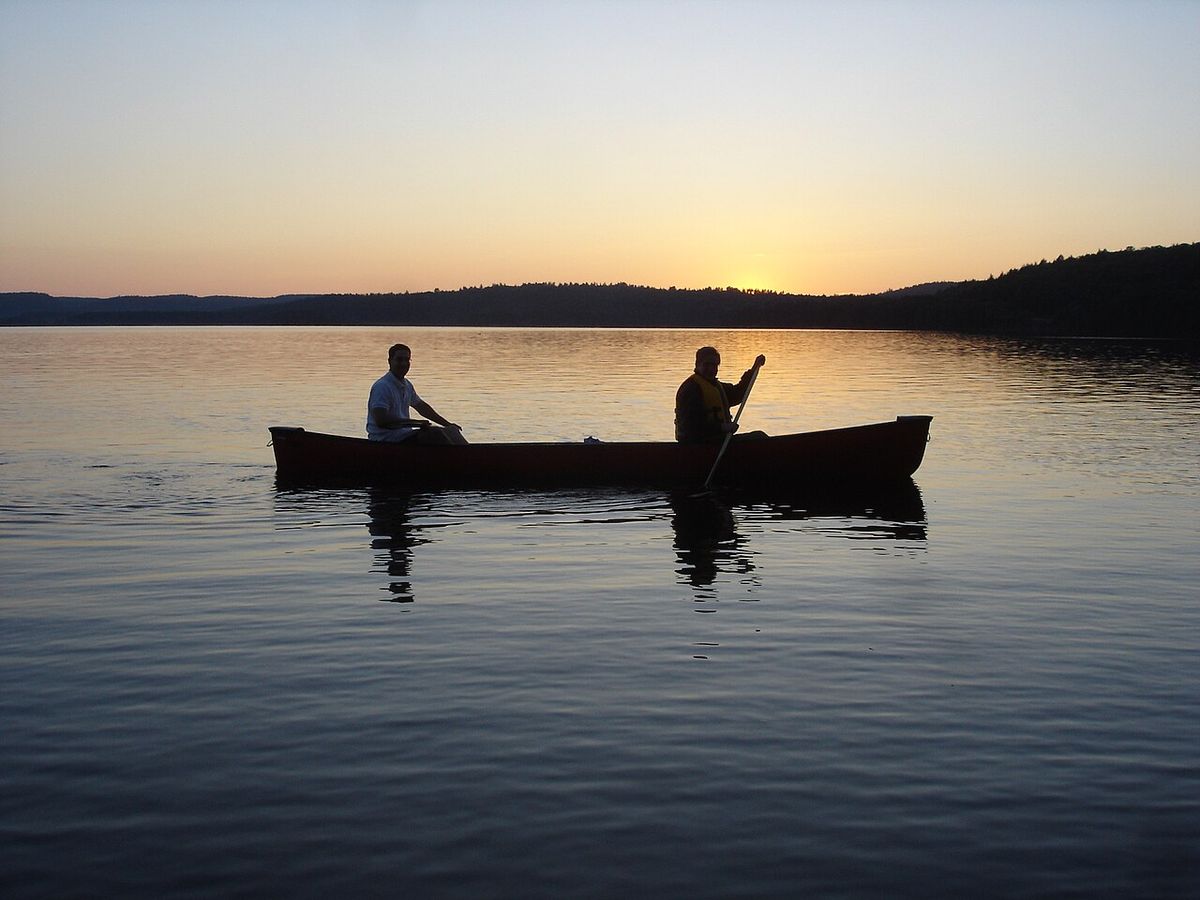
Traditional Algonquin society was highly mobile, organized around seasonal movements to exploit different resources. Their material culture emphasized lightweight, portable items suitable for this lifestyle. Canoes were expertly crafted from birch bark, sewn with spruce roots, and waterproofed with heated spruce resin and bear grease. During winter, people used snowshoes for travel and toboggans to transport goods. Women carried infants using tikinaagan, or cradleboards, which allowed the child to observe their surroundings while being securely fastened to the mother's back. The social structure was based on a strong clan system, with leadership derived from the approval of clan leaders within each band. This decentralized political organization contrasted sharply with European concepts of centralized nationhood.
While hunting and fishing were primary, Algonquin communities also practiced agriculture where climate permitted, particularly south of the Great Lakes. They cultivated indigenous crops like sunflowers and tobacco, and by approximately 800 CE, eastern groups had adopted maize agriculture from neighbouring peoples. Archaeological evidence, such as 1000 year old copper tools found on Morrison Island, indicates a long history of sophisticated material culture and participation in extensive trade networks. Copper ore from north of Lake Superior was worked and distributed, while local pottery styles show widespread similarities, showing the river's role as a conduit for cultural exchange throughout the Canadian Shield.
Early Contact and the Fur Trade Era
The Algonquin first encountered Europeans in the summer of 1603 when Samuel de Champlain came upon a party led by Kitcisìpirini Chief Tessouat at Tadoussac. The Algonquin were celebrating a recent victory over the Iroquois alongside allied Montagnais and Etchemins (Malecite). Champlain's exploration of the Ottawa River during May 1613 brought him to the fortified Kitcisìpirini village at Morrison Island, a strategic location controlling the trade route between the Great Lakes and the St. Lawrence River. This village was unique for its permanence, and its inhabitants prospered through the collection of beaver pelts from Indigenous traders passing through their territory. At first, the French used the term Algonquin only for the Wàwàckeciriniwak band, but by 1615 it was applied to all of the Algonquin bands living along the Ottawa River.
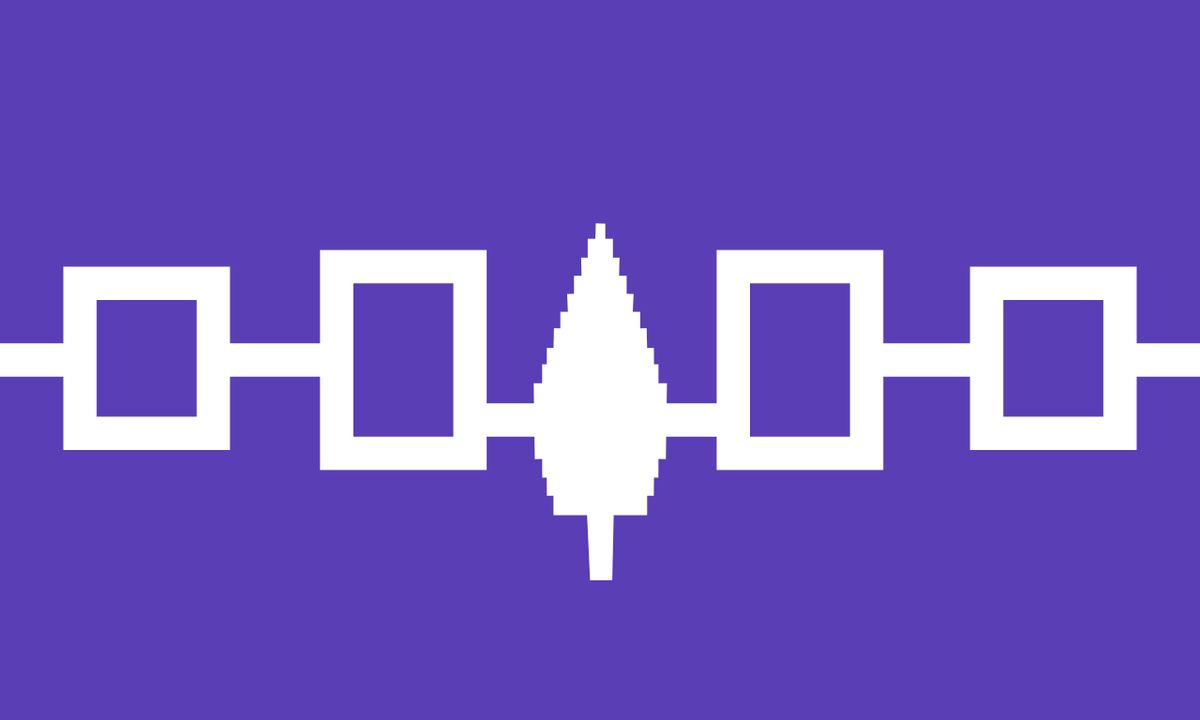
The French Algonquin alliance, beginning in 1603, was driven by mutual interest in the fur trade. The French gained access to inland trade networks, while the Algonquin acquired European firearms. This alliance also drew the Algonquin into prolonged conflict with the Haudenosaunee Confederacy, who were armed by Dutch and later English traders. The Haudenosaunee drove Algonquins from their lands. In 1623, having realized colonial vulnerability, the French began to trade muskets to Algonquins and their allies. Jesuit missionaries also arrived during this period, seeking to convert Algonquin people to Roman Catholicism, a process that continued throughout the 17th and 18th centuries.
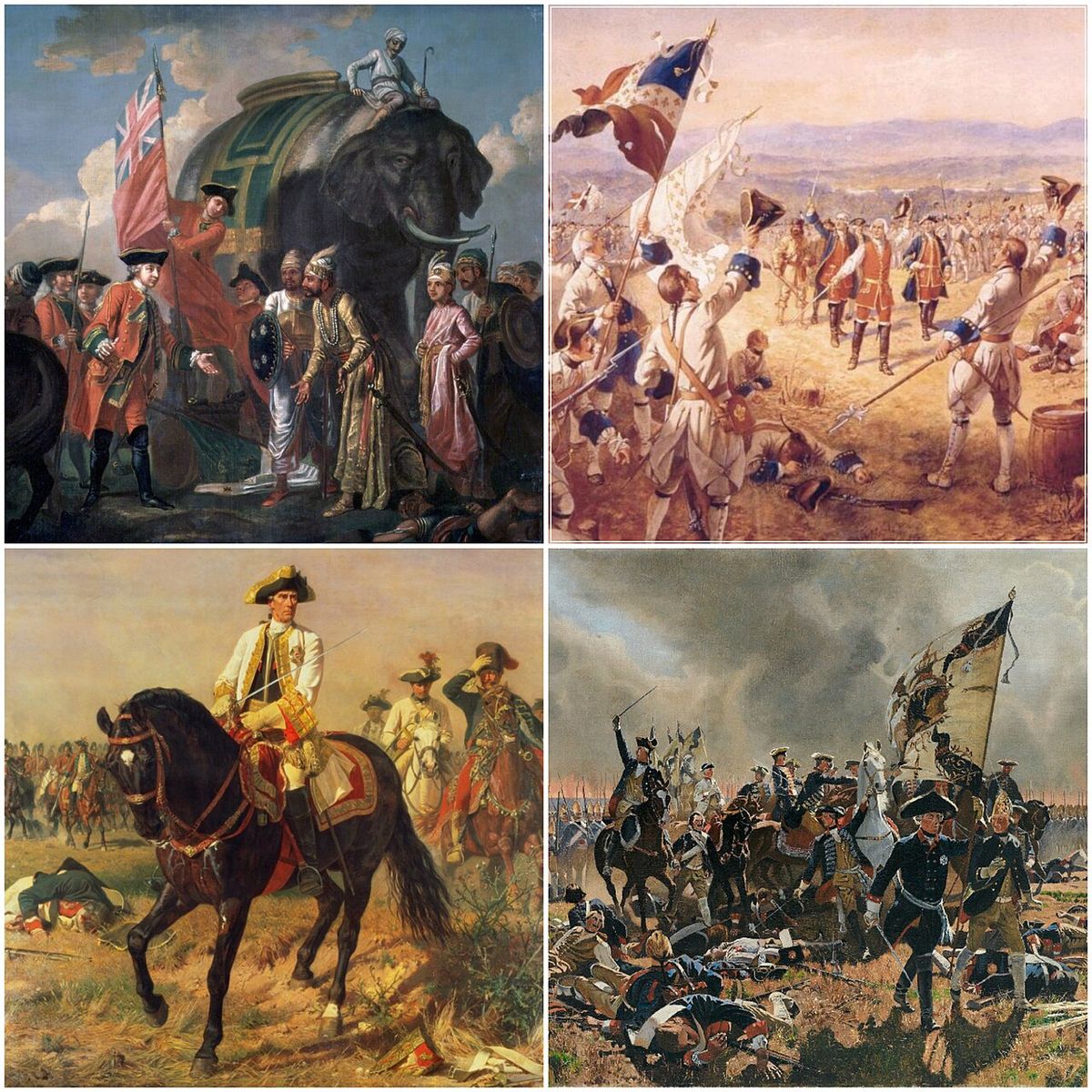
Conflict with the Haudenosaunee intensified, culminating in devastating attacks. A surprise winter raid in 1642 caused severe casualties, and on March 6, 1647, a large Mohawk war party attacked the Kitcisìpiriniwak living near Trois Rivières and almost exterminated them. Despite these pressures, some Algonquin communities persisted. Others joined French missions, such as Sillery, where many were later destroyed by an infectious disease epidemic by 1676. By the end of the 17th century, the geopolitical landscape began to shift with the signing of the Great Peace of Montreal in 1701. Algonquin warriors continued to fight alongside French forces until the British conquest of Quebec in 1760 during the Seven Years' War.
Communities and Population
At the time of their first meeting with the French in 1603, the various Algonquin bands probably had a combined population somewhere in the neighborhood of 6,000 people. A British estimate in 1768 was 1,500, reflecting the severe impacts of warfare and disease. As of 2000, there are close to 8,000 Algonquins in Canada, organized into ten separate First Nations nine in Quebec and one in Ontario. The contemporary Algonquin First Nations are located in Quebec and Ontario. The nine recognized status Algonquin bands in that province and one in Ontario have a combined population of about 17,002. These figures represent status populations. They do not include all Algonquin descendants living off reserve or in urban areas. There are also additional non status Algonquin communities, some of which are controversial.
- Kitigan Zibi Anishinabeg (Maniwaki, QC): Population 3,237.
- Timiskaming First Nation (Notre Dame du Nord, QC): Population 2,129.
- Lac Simon First Nation (Lac Simon, QC): Population 2,149.
- Abitibiwinni First Nation (Pikogan, QC): Population 1,059.
- Kebaowek First Nation (Témiscaming, QC): Population 991.
- Long Point First Nation (Winneway River, QC): Population 866.
- Algonquins of Barriere Lake (Lac Rapide, QC): Population 791.
- Kitcisakik Anicinape Community (Val d'Or, QC): Population 494.
- Wolf Lake First Nation (Témiscaming, QC): Population 232.
- Algonquins of Pikwàkanagàn First Nation (Golden Lake, ON): Population 2,635.
Historically, Algonquin society was composed of several distinct bands, each with its own territory and leadership. Notable historic bands documented by early settlers included the powerful Kichesipirini on Morrison Island, the Weskarini along the Lièvre and Rouge rivers, and the Matàwackariniwak along the Madawaska River. Other bands included the Kinounchepirini, Otaguottaouemin, Sàgaiganininiwak, Saginitaouigama, Iroquet, and Nibachis. The process of relocation, reserve creation, and intermarriage over the centuries has shaped the modern community structure. Some groups, like the Algonquins of Pikwàkanagàn, have released detailed reports on their activities, such as the Lands Management Annual Report for 2025 to 2026, highlighting contemporary governance.
Land Rights and Contemporary Issues
A central and unresolved issue for Algonquin people is the question of land title. Unlike much of Ontario, their traditional territory in the Ottawa Valley has never been surrendered through a treaty. Algonquin title to this land continues to exist, a fact that forms the foundation of a major ongoing land claim. In Ontario, a comprehensive Algonquin land claim has been active since 1983, encompassing much of the southeastern part of the province, stretching from near North Bay to near Hawkesbury and including Ottawa, Pembroke, and most of Algonquin Provincial Park. The claim asserts that the Algonquin never relinquished title to this territory. An agreement in principle between the Algonquins of Ontario, the Government of Canada, and the Government of Ontario was reached in 2015, but it remains controversial and is disputed by many Algonquin people who question the validity of the settlement and the representativeness of the Algonquins of Ontario organization.
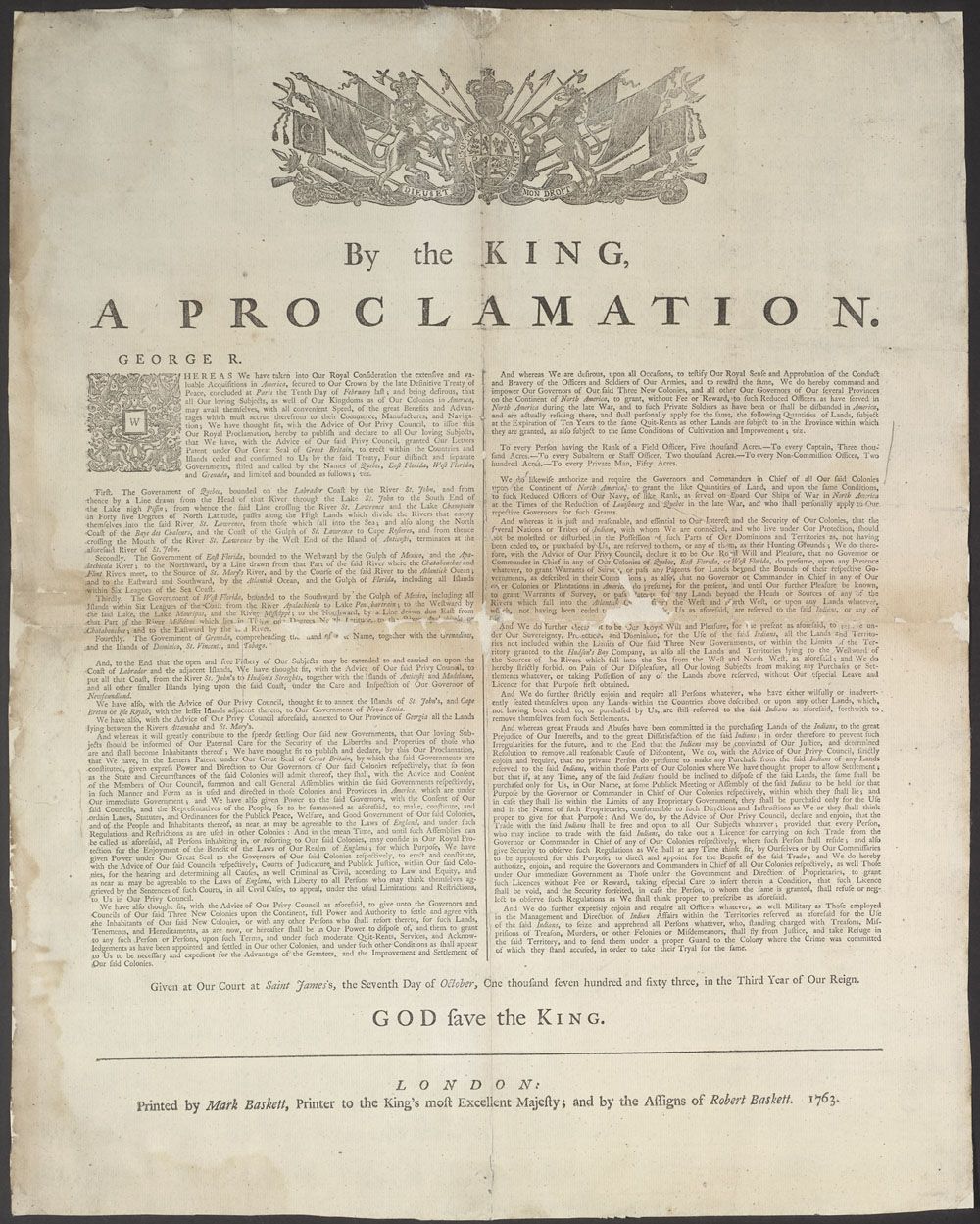
The historical basis for Algonquin land rights is often linked to the Royal Proclamation of 1763, issued by King George III after the Seven Years' War. The Proclamation contained provisions recognizing First Nations' rights to their traditional territories and established a process for treaty making. Algonquin leaders, along with many other First Nations, ratified this proclamation in 1764 as the Treaty of Niagara. Subsequently, fighting on behalf of the British Crown, Algonquins took part in the Barry St Leger campaign during the American Revolutionary War. In the 1820s and 1830s, Algonquin Grand Chief Constant Pinesi sent a series of letters to the British Crown petitioning for the territorial recognition promised in earlier treaties, but he received no response.
In Quebec, the nine Algonquin communities are located primarily in the Abitibi Témiscamingue and Outaouais regions. Many of these reserves were created between 1940 and 1974 as the nation's traditional hunting and trapping economy was disrupted by colonization, prospecting, and logging. Some communities, like Kitcisakik, are not officially reserves. Tensions with resource industries persist today, notably around the practice of clear cut logging. Algonquin communities have also been active in environmental advocacy, such as the Timiskaming First Nation's significant role in the successful local opposition in 2000 to a plan to convert the Adams Mine into a garbage dump. The fundamental struggle remains balancing economic development with the protection of their unceded lands and traditional way of life.
Language and Culture
The Algonquin language, known generally as Anicinàpemowin or specifically as Omàmiwininìmowin, is considered one of several divergent dialects of the Anishinaabe languages. It remains spoken in most Algonquin communities, often as the first language for elders, some of whom know neither English nor French. Many Algonquin people are bilingual or trilingual, using English or French as second languages. The language has experienced influences over time, including strong word borrowings from the Cree language among younger speakers. Efforts to preserve and revitalize the language are ongoing, as it is a critical vessel for cultural knowledge, oral history, and a unique worldview rooted in the territory.
Traditional Algonquin spirituality was based on Midewiwin, or the Path of the Heart, a belief system that recognized they were surrounded by many manitòk or spirits in the natural world. French missionaries converted many Algonquins to Catholicism in the 17th and 18th centuries. Today, many Algonquin practice traditional Midewiwin or a syncretic merging of Christianity and Midewiwin. The forest holds deep sacred significance as the cradle of their spirituality and the resting place of ancestors. Cultural values are often guided by the teachings of the Seven Grandfathers, which emphasize wisdom, love, respect, bravery, honesty, humility, and truth. These principles continue to shape community life and governance.
Arts, crafts, and traditional knowledge remain active aspects of Algonquin culture. Activities like making clothing, moccasins, and jewellery serve as both social practices and expressions of cultural identity. Algonquin ethnobotany demonstrates a deep understanding of the local environment. They gather the berries of Ribes glandulosum and Viburnum nudum var. cassinoides as food, and eat and sell the fruit of Vaccinium myrtilloides. They take an infusion of Epigaea repens leaves for kidney disorders and apply a poultice of the gum or needles of Abies balsamea to open sores, insect bites, boils and infections. This intimate knowledge of the land, sustained over thousands of years, is integral to their cultural heritage and contemporary claims to stewardship.
Economy and Governance
Historically, the Algonquin economy was based on hunting, fishing, trapping, and gathering, with patterns of activity shifting with the seasons. Summer was a time for large communal gatherings and ceremonies, while families dispersed to hunting grounds in the fall and winter. The fur trade era integrated them into a transatlantic economy, with the Ottawa River serving as a critical commercial corridor. In the 19th century, the rise of the lumber industry and the influx of settlers dramatically displaced this traditional economy, forcing many Algonquin into wage labour or onto increasingly constrained reserves. Those who chose not to relocate were often called stragglers and settled in small towns, frequently without recognition as Status Indians.
In contemporary times, Algonquin First Nations administer a wide range of their own government services, which form a major source of employment. These services include education, health care, housing, and municipal infrastructure development. Economic activities vary by community but often include forestry operations, tourism, and arts and crafts. The largest community, Kitigan Zibi, hosts a diverse local economy with small businesses, a cultural centre, a police station, and social service facilities. The Algonquins of Pikwàkanagàn First Nation similarly manages its lands and resources, as detailed in its 2025 to 2026 Lands Management Annual Report, highlighting modern administrative capacity.
The governance structure of Algonquin communities has evolved from the traditional clan based system to incorporate elected band councils under the Indian Act, while also maintaining and revitalizing traditional forms of leadership. Inter community collaboration occurs through bodies like the Algonquin Nation Secretariat. A significant challenge remains the division between status and non status Algonquin, and between those living on reserve and off reserve, particularly in the context of land claim negotiations. The pursuit of economic self sufficiency is closely tied to the broader goals of cultural preservation, environmental protection, and the assertion of Aboriginal title and rights across their unceded traditional territory.
Historical Timeline of Key Events
The Algonquin people have a long history. Beginning at the latest in c. 1 CE, the Algonquin Nation inhabited the islands and shores along Kitcisìpi, the Ottawa River. They were a powerful riverine nation controlling this important trade route. Their history includes alliances, such as with the French under Champlain in 1603, and conflicts, notably with the Haudenosaunee. In modern times, Algonquins are asserting their rights, including through an ongoing land claim in Ontario that began in 1983.
- c. 1 CE: Algonquin ancestors are established along the Ottawa River (Kitcisìpi), controlling trade and travel routes.
- Summer 1603: First recorded contact with Europeans when Samuel de Champlain meets Chief Tessouat at Tadoussac.
- May 1613: Champlain explores the Ottawa River and visits the fortified Kitcisìpirini village on Morrison Island.
- 1623: French begin trading muskets to Algonquin allies, escalating arms race with Haudenosaunee.
- March 6, 1647: Devastating Mohawk attack almost exterminates the Kitcisìpiriniwak near Trois Rivières.
- 1701: Algonquin signatories help broker the Great Peace of Montreal.
- 1760: Algonquin alliance with France ends with the British conquest of Quebec.
- 1763/1764: Algonquin ratify the Royal Proclamation as the Treaty of Niagara. They later fight in the Barry St Leger campaign during the American Revolutionary War.
- 1820s-1830s: Grand Chief Constant Pinesi petitions the British Crown for land recognition. Algonquin are relegated to small reserves.
- 1983: Comprehensive Algonquin land claim in Ontario is formally launched.
- 2000: Timiskaming First Nation plays major role in opposing the Adams Mine garbage dump proposal.
- 2015: Agreement in principle reached for the Ontario Algonquin land claim.
- 2025 to 2026: Algonquins of Pikwàkanagàn First Nation releases its Lands Management Annual Report.
Questions about Algonquin people
What is the Algonquin land claim in Ontario about?
The Algonquin land claim in Ontario, active since 1983, asserts that the Algonquin never surrendered title to their traditional territory in the Ottawa River watershed. This area includes Ottawa, Pembroke, most of Algonquin Provincial Park, and stretches from near North Bay to near Hawkesbury. An agreement in principle was reached between the Algonquins of Ontario, Canada, and Ontario in 2015. The claim is controversial and disputed by many Algonquin who question the settlement's validity and the representation of the Algonquins of Ontario organization.
What language do the Algonquin speak?
The Algonquin language is called Anicinàpemowin or Omàmiwininìmowin. It is considered one of several divergent dialects of the Anishinaabe languages. The language is still spoken in most Algonquin communities, often as the first language for elders. Many Algonquin people are bilingual or trilingual, also speaking English or French. Among younger speakers, the language has experienced strong word borrowings from the Cree language.
Who were the Algonquin historical allies and enemies?
The Algonquin's most significant historical ally was the French, beginning with Samuel de Champlain in 1603. They also maintained strong ties with the Innu (Montagnais), Wendat (Huron), Abenaki, Atikamekw, and Cree. In 1570, the Algonquins formed an alliance with the Innu to the east. Their primary historical enemies were the Haudenosaunee (Iroquois Confederacy), especially the Mohawk, with whom they fought a series of wars over territory and control of the fur trade throughout the 17th century.
What was the traditional Algonquin way of life?
The traditional Algonquin way of life was that of a mobile hunter gatherer society, closely tied to the seasons and the resources of the Ottawa River valley. Primary activities included hunting, fishing, trapping, and gathering. They used birchbark canoes for summer travel and snowshoes and toboggans in winter. Some groups also practiced agriculture, growing sunflowers, tobacco, and later maize. Social organization was based on clan systems, and they lived in dwellings called mìkiwàms.
What is the significance of the Ottawa River to the Algonquin?
The Ottawa River, known as Kitcisìpi in Algonquin, is the heart of their traditional territory and central to their history and identity. For millennia, it served as a vital highway for transportation, trade, and cultural exchange. The Algonquin controlled this strategic route, and powerful bands like the Kitcisìpiriniwak levied a toll on canoe flotillas passing through. On Morrison Island, at the location where 5000 year old copper artifacts were discovered, they collected this toll.
Where do most Algonquin people live today?
Most Algonquin people live in Quebec. The nine recognized status Algonquin bands in that province and one in Ontario have a combined population of about 17,002. The largest community is Kitigan Zibi Anishinabeg near Maniwaki, Quebec. As of 2000, there are close to 8,000 Algonquins in Canada organized into ten separate First Nations. Many Algonquins also live in towns such as Témiscaming and Mattawa as a result of historical displacement.
Sources and further reading
- Algonquin people (Wikipedia)
- Algonquins of Pikwàkanagàn First Nation: Home (algonquinsofpikwakanagan.com)
- Algonquin Territory (canadashistory.ca)
- Algonquin (Anishinaabe) (quebec.ca)
- Algonquin Nation (HC). Indigenous Peoples (Real Voices). ... (goodminds.com)
Checked by the Nosy Mag desk. Last updated 2026-10-19.