Abenaki
The Abenaki are an Algonquian-speaking Indigenous nation whose traditional territory, Ndakinna, spans parts of southern Quebec, northern New England, and the Maritimes. Historically organized into Eastern and Western groups, the Abenaki are part of the broader Wabanaki Confederacy. In Canada, the nation is represented by two First Nations communities in Quebec: Odanak and Wôlinak. According to 2025 figures, these communities have a total registered population of 3,955 people. While only about 400 members reside in these communities, thousands more live across Canada and the United States, maintaining their cultural identity through language revitalization, traditional arts, and community advocacy.
Historical Divisions and Bands
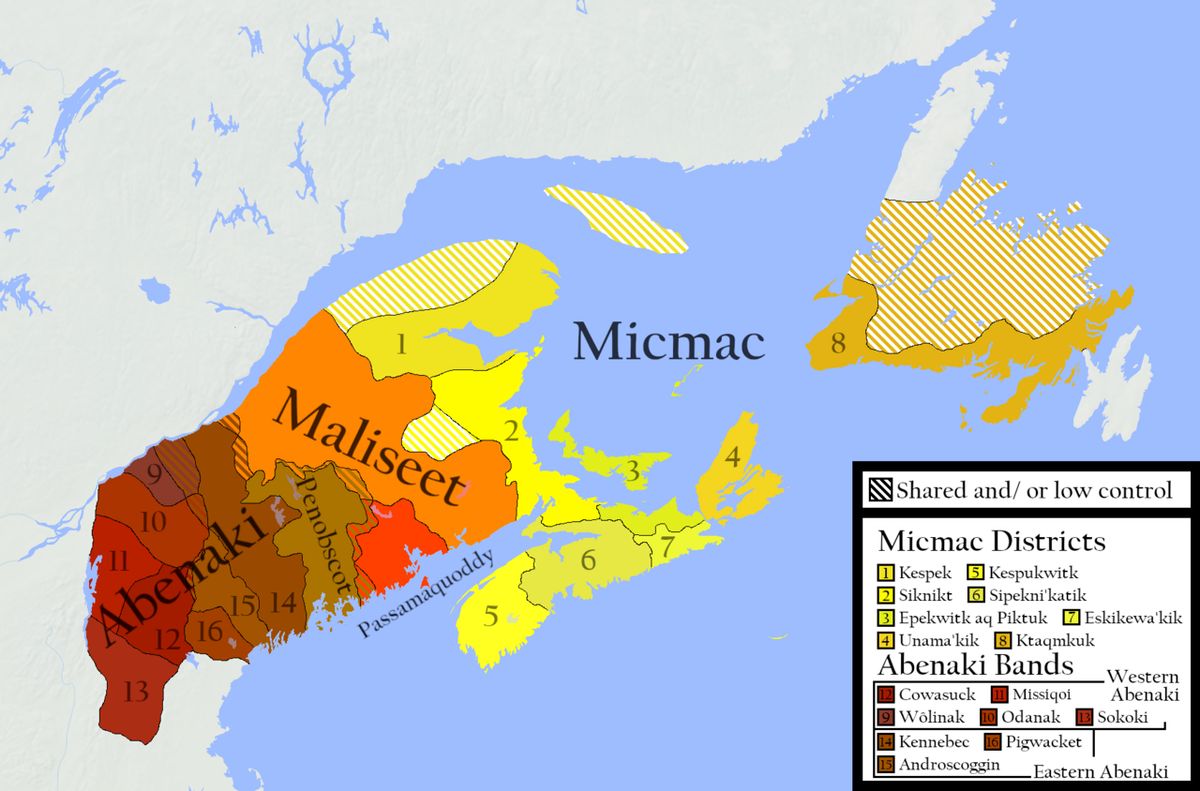
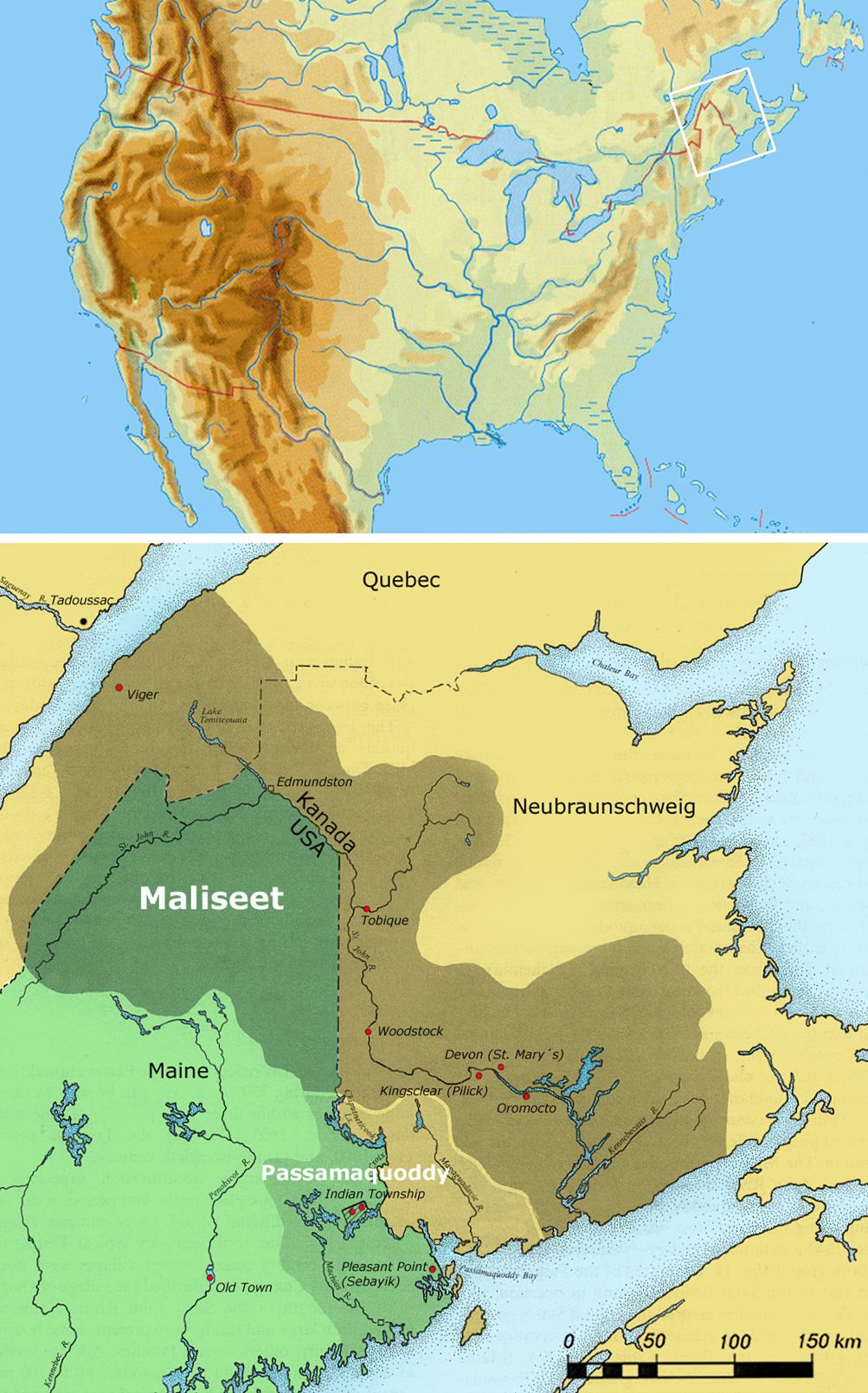
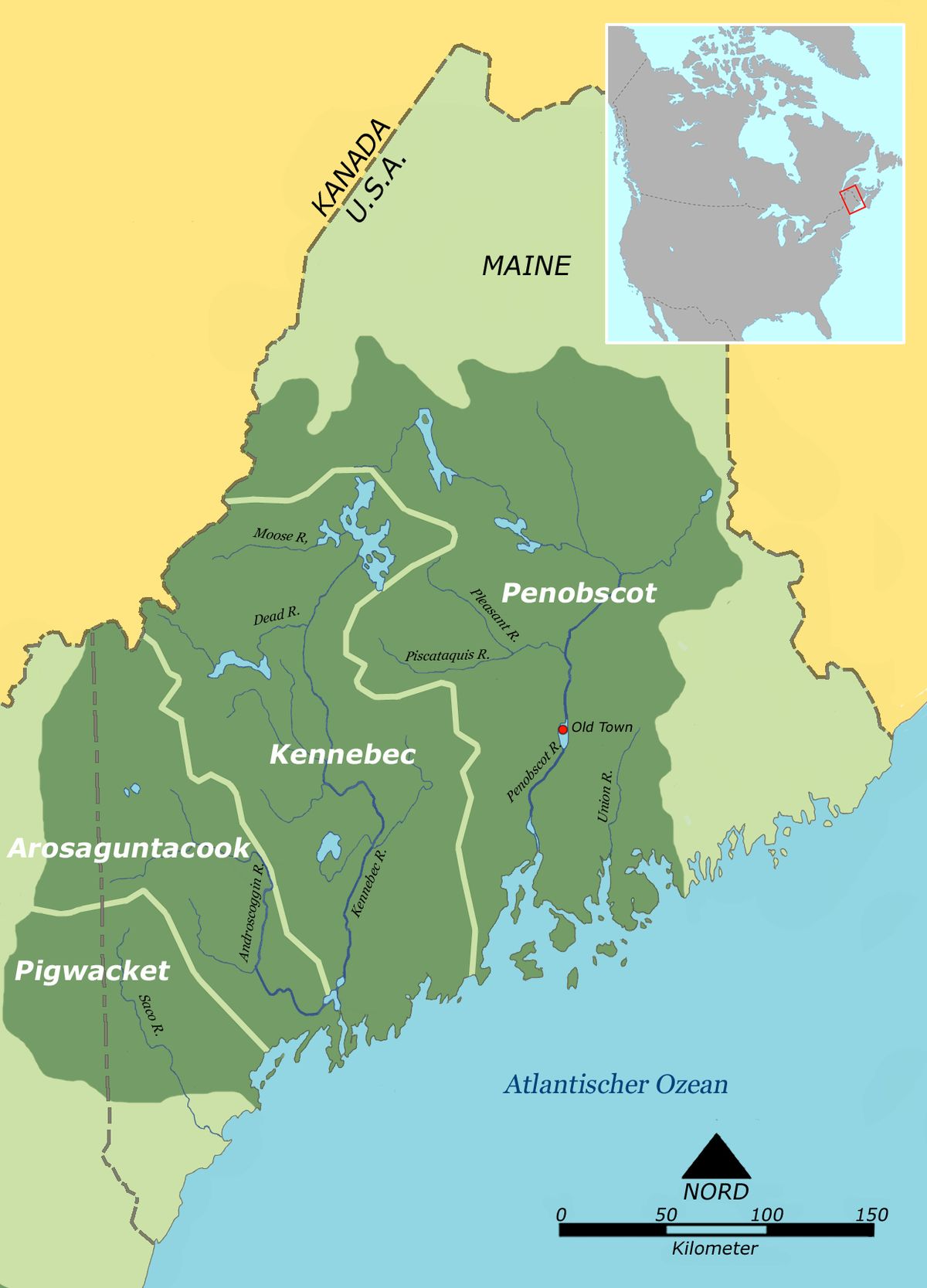
The Abenaki people are historically categorized into two major geographic and linguistic groups: the Eastern Abenaki and the Western Abenaki. The Eastern Abenaki were concentrated in areas now part of Maine, speaking dialects that included Penobscot, Kennebec, and Androscoggin. Their principal villages were often located along major rivers like the Kennebec and Penobscot, with Norridgewock being a significant centre. The Western Abenaki inhabited the Connecticut River valley, areas of Vermont, New Hampshire, and southern Quebec, speaking the Western Abenaki language. Key Western bands included the Missiquoi (Sokoki) around Lake Champlain, the Cowasuck in the upper Connecticut Valley, and the Pennacook in the Merrimack Valley. These bands operated as autonomous political units, coming together in broader alliances primarily in response to external pressures from European colonization and conflict with neighbouring Indigenous nations like the Haudenosaunee (Iroquois).
Smaller, affiliated tribes existed within these broader groupings, often named for their geographic locations. Among the Eastern Abenaki were groups like the Pequawket along the Saco River and the Wawinak along the southern Maine coast. Western groups included the Ossipee near Ossipee Lake in New Hampshire and the Arsigantegok, who became central to the community at Odanak. The distinction between Eastern and Western Abenaki was not always rigid, with some groups like the Ossipee and Pequawket sometimes classified differently by ethnologists. This flexible social organization allowed the Abenaki to adapt to seasonal subsistence patterns and later to the upheavals caused by European contact, warfare, and displacement.
Early Contact and Colonial Conflicts
The first recorded contacts between Abenaki people and Europeans were often violent and exploitative. In 1524, Portuguese explorer Estêvão Gomes kidnapped 58 Abenaki to be sold into slavery in Europe. Throughout the early 1600s, English captains like George Weymouth (1605) and Thomas Hunt (1614) continued this practice, kidnapping Abenaki individuals to learn about the land or to sell them. One of Hunt's captives was Squanto (Tisquantum), who later played a role in early Pilgrim settlements. French contact, initiated by Samuel de Champlain in 1604, was initially more focused on trade and alliance. The Abenaki found themselves in a strategic position between the English colonies to the south and New France to the north, which shaped their political and military actions for over a century.
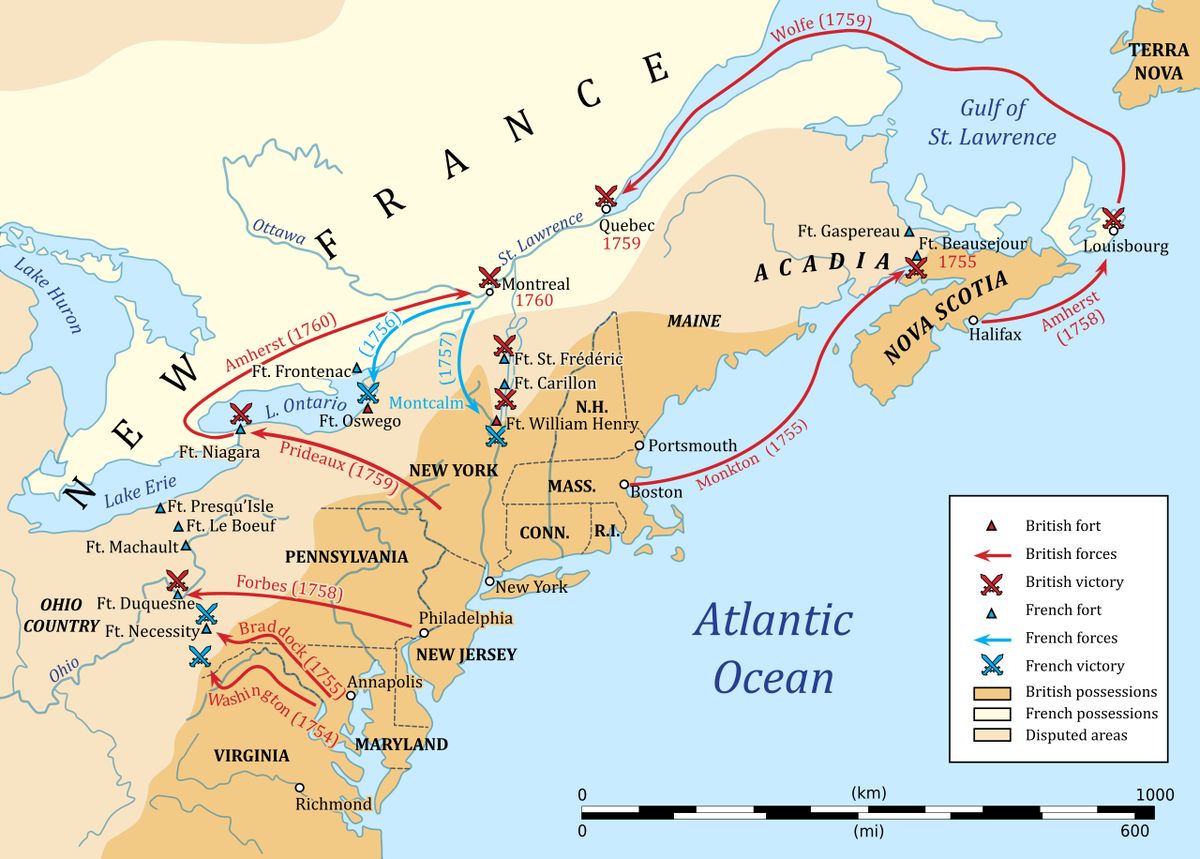
The Abenaki became steadfast allies of the French during the series of Anglo-French colonial wars. This alliance was driven by mutual trade interests and a shared opposition to expanding English settlement, which encroached on Abenaki homelands. Notable conflicts involving the Abenaki include King Philip's War (1675 to 1678), where they fought alongside the Wampanoag in the First Abenaki War, pushing back English settlement lines through raids. The Third Abenaki War, also known as Dummer's or Father Rale's War (1722 to 1725), was sparked by French Jesuit missionary Sébastien Rale encouraging resistance. The war culminated in the bloody Battle of Norridgewock in 1724, where Rale was killed, leading many Abenaki to relocate to the St. Francis River area in Quebec.
Migration and Community Formation in Quebec
Due to warfare, disease, and pressure from English settlement, many Abenaki began migrating north to the protection of New France around 1669. The governor of New France granted two seigneuries that later became the foundation for modern reserve communities. The first was established on the Saint Francis River, evolving into the Odanak Indian Reserve, whose name means "coming home" in Abenaki. The second was founded near Bécancour, becoming the Wôlinak Indian Reserve. These communities, located on the south shore of the St. Lawrence River near Trois-Rivières, became central hubs for the Western Abenaki people. From these bases, Abenaki warriors continued to raid English settlements during later conflicts like Father Le Loutre's War and the French and Indian War.
The populations of Odanak and Wôlinak have grown significantly over time. Updated 2025 figures note totals of 3,209 for Odanak and 746 for Wôlinak, summing to 3,955 registered members. However, only about 400 Abenaki reside within these two communities, which together cover less than seven square kilometres. The vast majority live off-reserve across North America, maintaining connections to their heritage while integrating into urban and rural economies. This diaspora represents a significant aspect of modern Abenaki demography. The Abenaki settled in the Sillery region of Quebec between 1676 and 1680, and subsequently lived on the banks of the Chaudière River for about twenty years before settling in Odanak and Wôlinak in the early 18th century.
Language and Cultural Revitalization
The Abenaki language, known as Aln8ba8dwaw8gan, is an Eastern Algonquian language closely related to Penobscot. It is polysynthetic, meaning complex ideas can be expressed within a single word. For centuries, the language has been transmitted orally, but it came perilously close to extinction due to colonial policies, residential schools, and cultural assimilation. In recent decades, concerted efforts at revitalization have been undertaken. Language programs are active in the Odanak community and throughout New Hampshire, Vermont, and New York state. These initiatives aim to teach new generations of speakers and reconnect people with this fundamental pillar of Abenaki identity.
Traditional arts remain an active and economically important cultural expression. Ash and sweetgrass basketry has been a major source of income for Abenaki families for generations, with families historically travelling to the United States each summer to sell their winter's work. This craft continues today, connecting people to the black ash tree and traditional harvesting techniques. Other cultural activities being actively promoted include:
- Drumming, singing, and dance, performed by groups like the Mikwôbait dance troupe.
- Traditional cooking classes and knowledge-sharing about indigenous meals.
- Drum-making workshops that also teach the care and significance of the instrument.
- Community art gatherings and programs like the Abenaki Circle of Courage, an after-school and summer camp for children.
These activities are supported by cultural organizations such as the Société historique d’Odanak, which manages the Musée des Abénakis. This museum, located a few miles from the Quebec-Montreal axis, was one of the first and largest Indigenous museums in Quebec when it was established in 1960. Over 5,000 people visit the Abenaki Museum annually. Community events are also hosted by the organization Alnôbaiwi, contributing to the preservation and sharing of Abenaki culture.
Contemporary Communities and Recognition
The contemporary Abenaki landscape includes both federally recognized tribes in the United States and state-recognized groups, alongside the Canadian First Nations. In Maine, the Penobscot, Passamaquoddy, and Houlton Band of Maliseet Indians are federally recognized. In Vermont, four groups gained state recognition through Act 107 in 2010: the Elnu Abenaki Tribe, the Nulhegan Band of the Coosuk Abenaki Nation, the Koasek Abenaki Tribe, and the Missisquoi Abenaki Tribe. This state recognition allows members to market artwork as Native-made under the Indian Arts and Crafts Act and to access certain scholarship funds. Vermont Governor Phil Scott has renewed an annual Executive Proclamation for Abenaki Heritage and Recognition Week each year, including for May 3-9, 2026.
The Abenaki Nation at Missisquoi, based in Swanton, Vermont, actively provides community services and promotes cultural education. Their initiatives include a Title VI Indian Education program, a community food pantry, and various cultural events and fundraisers. They also engage in political advocacy to sustain their community. However, the recognition of Vermont-based groups has been a point of contention. The Odanak and Wôlinak communities in Quebec have at times questioned the genealogical and historical continuity of some Vermont claimants, a controversy often referred to as race-shifting. In 2025, leaders of the Quebec communities released a genealogical report finding that prominent Vermont-recognized Abenaki leaders had at least 96.9 percent European ancestry. Despite these disputes, all groups work independently on cultural preservation and community well-being.
Modern Economy and Institutions
Abenaki communities have developed diverse modern economies while striving to preserve cultural traditions. In Wôlinak, economic activities include a pine plantation, a seniors’ residence, and General Fiberglass Engineering, a plant employing a dozen people with annual sales exceeding three million dollars. The community also established Carrefour Wôlinak, a business incubator supporting both Indigenous and non-Indigenous small businesses. Odanak is active in transportation, distribution, and is home to the Kiuna Institution, the first college in Quebec dedicated to Indigenous education. Tourism and cultural heritage also play significant economic roles. The Musée des Abénakis in Odanak, managed by the Société historique d’Odanak since 1960, is one of the largest Indigenous museums in Quebec, attracting over 5,000 visitors annually.
Community development is closely tied to cultural and social services. The Abenaki Nation at Missisquoi runs numerous programs focused on health, education, and family support. Their mission includes identifying and decreasing gaps in service for tribal members. Regular community events, from spaghetti dinner fundraisers and hunter's breakfasts to holiday gatherings and art workshops, strengthen social bonds. These activities are not only for cultural transmission but also for generating funds for larger celebrations like the annual Heritage Celebration.
| Community / Statistic | Details |
|---|---|
| Odanak (Conseil des Abénakis d’Odanak) | Registered population 3,209 (2025). On-reserve population is a small fraction. |
| Wôlinak (Première Nation des Abénakis de Wôlinak) | Registered population 746 (2025). On-reserve population is a small fraction. |
| Combined On-Reserve Residents (approx.) | About 400 people residing in Odanak and Wôlinak. |
| Total with Abenaki Ancestry (2021 Census, QC) | 16,400 people, indicating a large off-reserve population. |
Notable Abenaki Figures
Several Abenaki individuals have gained prominence for their contributions to arts, culture, and leadership, helping to bring wider awareness to their nation. Alanis Obomsawin is perhaps the most internationally recognized, a documentary filmmaker with the National Film Board of Canada known for her powerful films on Indigenous issues in Canada. In the arts, Christine Sioui-Wawanoloath is a respected visual artist and writer, while Joyce Panadis is known for her work in traditional and contemporary Abenaki art forms. Historical figures also played crucial roles in the nation's survival and diplomacy. Chief Assacumbuit (Nescambuit), a Wolastoqew war chief allied with the Abenaki, was famed for his service to France during the reign of Louis XIV. He was reportedly knighted for having killed more than 140 enemies of the French king. In the modern era, leaders of the state-recognized tribes in Vermont and the elected councils in Odanak and Wôlinak continue to advocate for their communities' rights, cultural preservation, and economic development, ensuring the Abenaki voice is heard in contemporary governance and society. Other notable contemporary figures include filmmaker Kim O'Bomsawin and Supreme Court Justice Michelle O'Bonsawin.
Questions about Abenaki
Where are the Abenaki originally from?
The traditional homeland of the Abenaki, known as Ndakinna, extended across most of northern New England, southern Quebec, and the southern Canadian Maritimes. This included areas from Lake Champlain in the west to the coast of Maine in the east. The Eastern Abenaki population was concentrated in portions of Maine and New Brunswick, while the Western Abenaki lived in the Connecticut River valley in Vermont, New Hampshire, and Massachusetts, as well as around Lake Champlain. The Pennacook lived along the Merrimack River in southern New Hampshire. The maritime Abenaki lived around the St. Croix and Wolastoq valleys near the boundary between Maine and New Brunswick.
How many Abenaki people are there today?
Population figures vary by source and location. According to the 2021 Canadian census, 16,400 people in Quebec declared Abenaki ancestry. The two Abenaki First Nations in Quebec, Odanak and Wôlinak, had a combined registered population of 3,955 people in 2025. However, only about 400 of those members reside within the reserve communities themselves. Thousands more Abenaki live off-reserve across Canada and the United States. There are about 3,200 Abenaki living in Vermont and New Hampshire without reservations, and state-recognized tribes in Vermont also represent significant populations.
Is the Abenaki language still spoken?
Yes, but it is considered endangered. The Abenaki language (Aln8ba8dwaw8gan) is an Eastern Algonquian language that came close to extinction due to historical pressures. Significant revitalization efforts are now underway. Language programs operate in the Odanak community in Quebec and throughout New Hampshire, Vermont, and New York state. These initiatives aim to teach new speakers and preserve the language for future generations. The language is polysynthetic, meaning a phrase or entire sentence can be expressed by a single word.
What is the Wabanaki Confederacy?
The Wabanaki Confederacy is a political and cultural alliance formed around 1680. It originally included the Abenaki, Wolastoqiyik (Maliseet), Passamaquoddy, Mi'kmaq, and Penobscot peoples. The confederacy was created for mutual defence, particularly against the Haudenosaunee (Iroquois), and played a role in the colonial wars between France and Britain. After a long period of inactivity, the confederacy was revived in 1993. Today, it serves as a platform for member nations to assert Indigenous rights and collaborate on issues concerning ecology, health, and access to land and resources.
Are the Abenaki recognized by the government?
Recognition status differs between Canada and the United States. In Canada, the Abenaki are represented by the federally recognized First Nations of Odanak and Wôlinak in Quebec. In the United States, the Penobscot and Passamaquoddy in Maine are federally recognized tribes. In Vermont, four Abenaki groups, the Elnu, Nulhegan, Koasek, and Missisquoi, have been recognized by the state government since 2010. This state recognition provides certain benefits, such as the ability to market art as Native-made under federal law, but it is distinct from federal acknowledgment. New Hampshire does not recognize any Abenaki tribes.
What are some traditional Abenaki crafts?
Ash and sweetgrass basketry is the most renowned and economically significant traditional Abenaki craft. For generations, families would make baskets during the winter and sell them during summer trips. This practice continues today, connecting artisans to the black ash tree and traditional harvesting methods. Other important crafts include drum-making, beadwork, and the creation of traditional clothing and jewelry. These arts are taught in community programs like the Abenaki Circle of Courage and are central to cultural preservation and economic activity for many Abenaki people. The Abenaki also used birch bark, ash, and sweetgrass to make containers, canoes, snowshoes, and whistles.
Sources and further reading
- Abenaki (Wikipedia)
- Home, Abenaki Nation (abenakination.com)
- Abenaki (thecanadianencyclopedia.ca)
- 2026 Abenaki Recognition and Heritage Week Proclamation (vcnaa.vermont.gov)
- Abenaki (quebec.ca)
Checked by the Nosy Mag desk. Last updated 2026-10-20.