Cree language
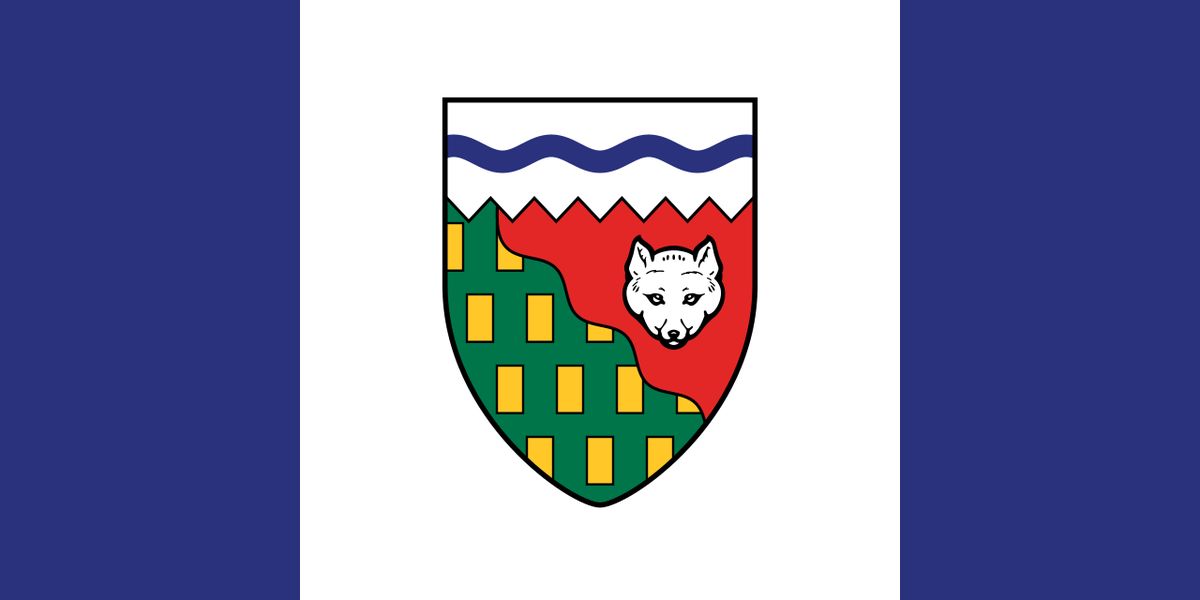
The Cree language, known as Nêhiyawêwin in its Plains dialect, is the most widely spoken Indigenous language in Canada, with approximately 86,475 speakers recorded in the 2021 census. It forms a dialect continuum of Algonquian languages spoken from the Northwest Territories across the Prairies to Labrador, representing a vital part of Canada's cultural heritage. The language holds official status in the Northwest Territories and is a principal language of the Eeyou Istchee James Bay regional government in Quebec. In recent years, a concerted national movement for revitalization has gained momentum, supported by federal legislation and community-led initiatives aimed at ensuring its transmission to future generations.
Dialect Continuum and Geographic Spread
The Cree language is not a single, uniform language but a continuum of closely related dialects spoken across a vast swath of Canada. From west to east, the major dialect groups include Plains Cree (nêhiyawêwin), Woods Cree (nīhithawīwin), Swampy Cree (nêhinawêwin), Moose Cree (ililîmowin), Atikamekw (nehirâmowin), and the East Cree (iyiyiu-ayamiwin) and Montagnais (innu-aimûn) dialects of Quebec and Labrador. This geographic spread results in significant phonological variations, such as the merger of the sounds /ʃ/ and /s/ in western dialects and their distinction in northern Ontario and Quebec dialects. The most studied phonological variation is the reflex of the Proto-Algonquian consonant *l, which manifests as /y/ in Plains Cree, /ð/ (th) in Woods Cree, /n/ in Swampy Cree, and /l/ in Moose Cree and Atikamekw.
Another key sound change occurs east of the Ontario-Quebec border, where Proto-Algonquian *k often becomes /tʃ/ or /ts/ before front vowels, a change that linguistically separates the Cree dialects from the Innu/Montagnais dialects. The continuum's internal diversity is reflected in the numerous endonyms, or self-designations, used by its speakers, which embody community identity and connection to the land. For practical and educational purposes, the dialects are often grouped, with 'Cree' typically referring to those using Cree syllabics as their primary orthography, and 'Innu' or 'Montagnais' applied to those in eastern Quebec and Labrador who use the Latin script. The total number of speakers, while significant among Indigenous languages in Canada, represents a minority within the national context, concentrated in communities where the language remains a daily vehicle of communication and cultural practice.
Historical Development and Linguistic Origins
Cree is descended from Proto-Algonquian, a language believed to have been spoken between 2,500 and 3,000 years ago in a homeland thought to be near the Great Lakes. Linguistic and archaeological evidence suggests that proto-Cree speakers moved northward, diverging into eastern and western groups around James Bay. The timeline for further dialectal divergence, particularly the emergence of the distinct Woodland and Plains Cree peoples, is a subject of scholarly debate. A traditional view links their divergence to the post-1670 expansion enabled by European firearms during the fur trade era, but other evidence indicates Cree presence as far west as the Peace River region of Alberta prior to European contact.
This pre-contact diffusion shows the language's deep roots and the dynamic movements of its speakers across the North American landscape long before colonial history began. The historical development of the dialects was shaped by geography, trade networks, and contact with other Indigenous nations, which led to the creation of several notable contact languages where Cree mixed with others. These languages, primarily associated with Métis communities and specific regions, represent unique facets of Canada's linguistic heritage. The main contact languages involving Cree are Michif, Northern Michif, Bungi, Oji-Cree, and Nehipwat.
- Michif: A mixed language combining Cree verbs with French nouns, spoken in the prairie provinces and parts of the northern United States.
- Northern Michif: A distinct variety of the Michif language.
- Bungi: A creole based on Scottish English, Scots, Gaelic, Cree, and Ojibwe, historically spoken around the Red River Settlement (Winnipeg) but now virtually extinct.
- Oji-Cree: A blend of Cree and Ojibwe languages.
- Nehipwat: A blending of Cree with Assiniboine, found only in a few southern Saskatchewan reserves and now nearing extinction.
Grammar and Linguistic Structure
Cree features a complex polysynthetic morphosyntax where a single word can express something that takes a series of words in English. The language classifies all nouns as either animate or inanimate, a grammatical gender system where the distribution is not semantically transparent and must be learned. A key grammatical aspect is obviation, which marks a third-person participant as less central in discourse than another proximate third person. In Plains Cree, for example, obviative animate nouns are marked by a suffix ending in -a.
In terms of sentence structure, Cree features a non-regulated word order, where subjects, verbs, and objects can appear in various sequences such as SVO, VOS, OVS, or SOV. Grammatical relationships are primarily indicated through inflection on the verb rather than through a fixed syntactic order, and this flexibility allows speakers to place emphasis on different elements of a sentence by changing the word order. The language's phonetic inventory varies by dialect but generally includes a set of stops, nasals, fricatives, and semivowels, with vowel length being a distinctive feature. The complexity and richness of Cree grammar make it a challenging but deeply expressive language to learn, embodying a distinct worldview within its structure.
Writing Systems and Orthography
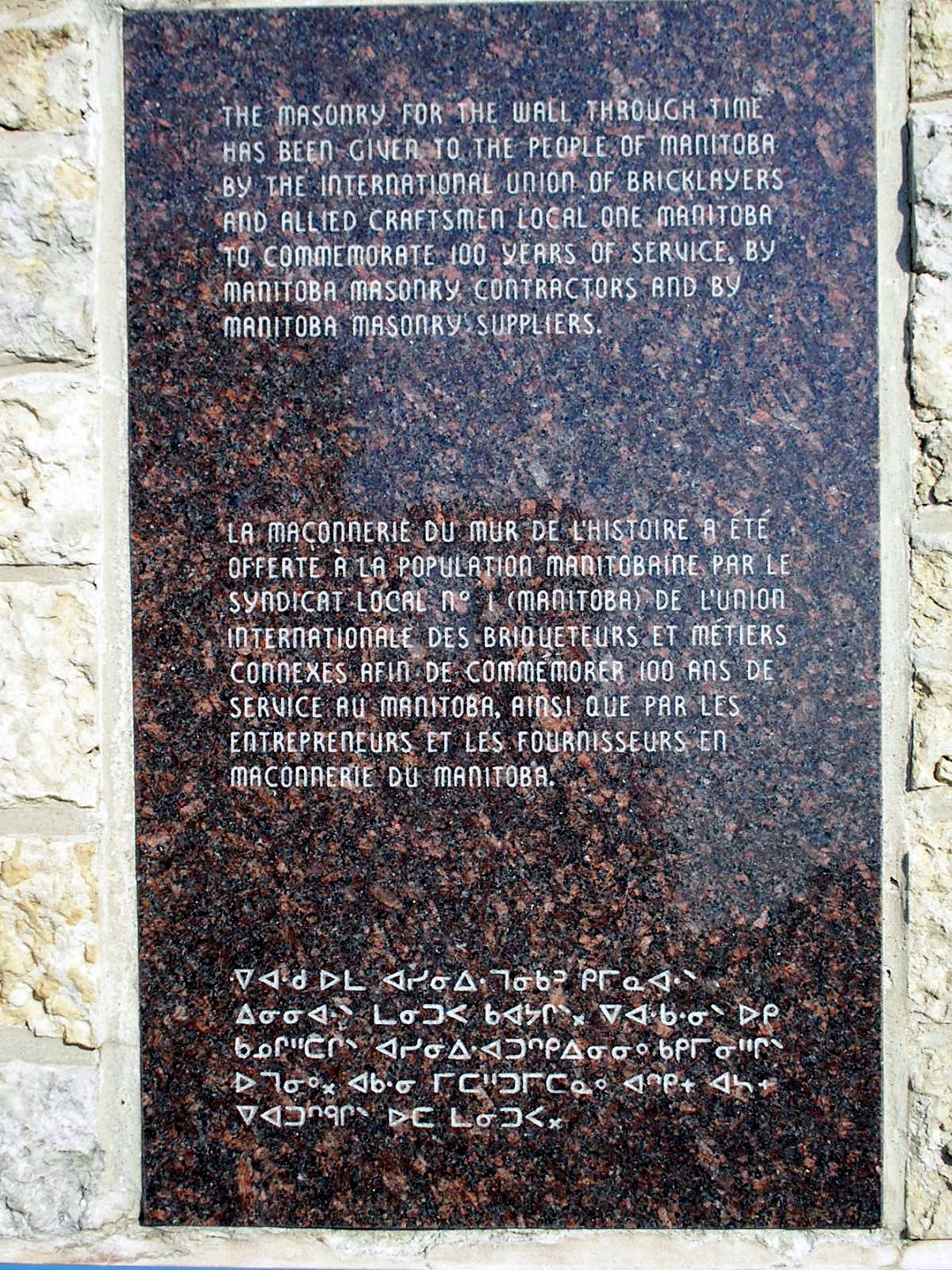
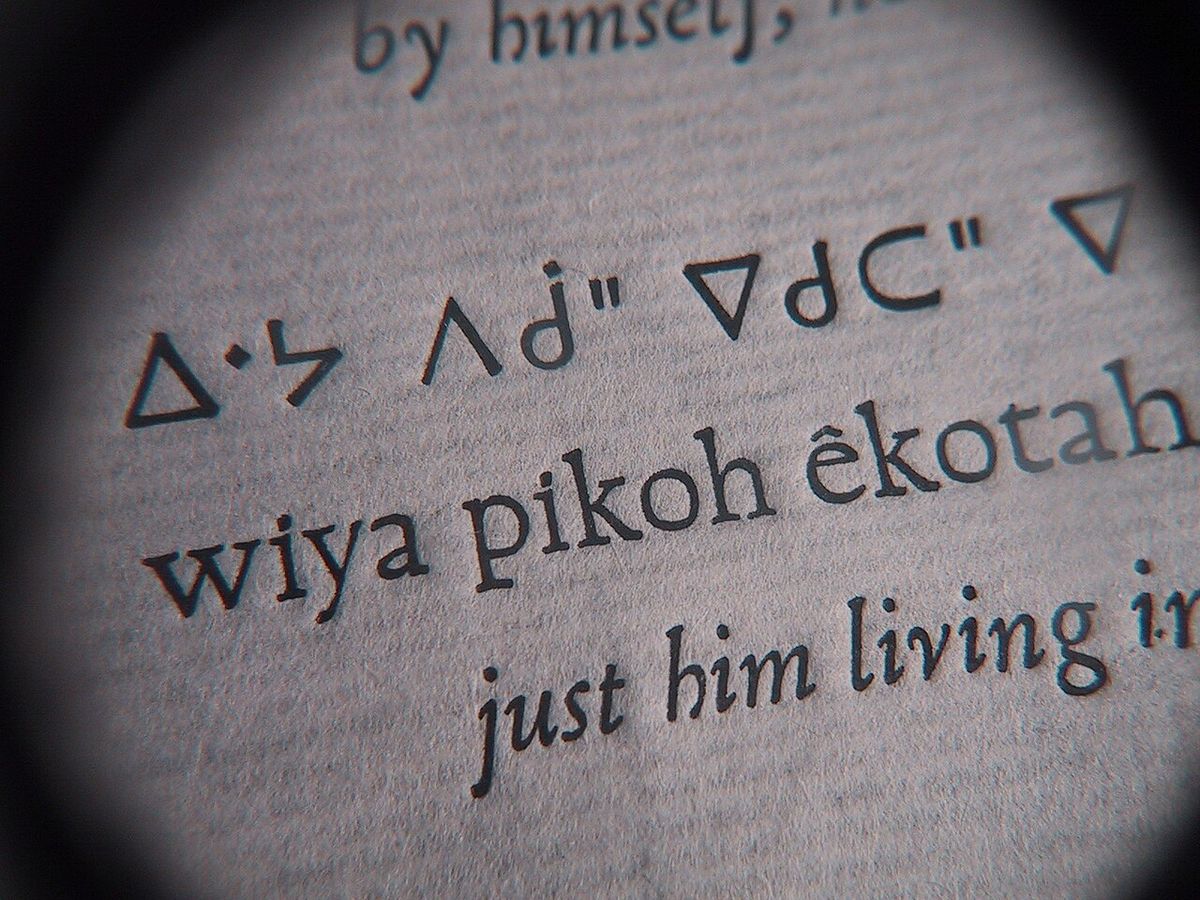
Cree is written using two primary systems: Cree syllabics and the Latin alphabet. Syllabics, a variant of Canadian Aboriginal Syllabics, are used traditionally for all dialects except those in eastern Quebec and Labrador, which use the Latin script exclusively. In the syllabic system, each symbol represents a consonant sound, and its orientation indicates the accompanying vowel (e, i, o, or a), with additional diacritics used to represent other vowels and stand-alone consonants known as finals. The system is always written horizontally from left to right, and it has not commonly used a standard period, instead employing a special glyph or a wide space between sentences.
For Plains Cree and Swampy Cree, Standard Roman Orthography uses fourteen letters of the ISO basic Latin alphabet to denote ten consonants and seven vowels. The stops and affricate are represented by symbols corresponding to their unvoiced pronunciation, such as ⟨p⟩ and ⟨t⟩. Long vowels are denoted with either a macron or a circumflex, and usage should be consistent within a work. The phoneme /t͡s/ is represented by ⟨c⟩, and the vowel ē is always long and the grapheme ⟨e⟩ is never used in SRO.
- ⟨c⟩: Represents the /t͡s/ sound.
- ⟨ā⟩ or ⟨â⟩: Diacritics (macron or circumflex) marking long vowels.
- ⟨th⟩ or ⟨ð⟩: Represents the /ð/ sound in Woods Cree.
- ⟨š⟩: Used in Eastern dialects where /s/ and /ʃ/ are distinct phonemes.
- ⟨l⟩ and ⟨r⟩: Used natively in Moose and Atikamekw Cree, but only for loanwords in other dialects.
- ⟨ý⟩ and ⟨ñ⟩: Used in cross-dialectal material to indicate where /y/ and /n/ are pronounced as /ð/.
In alphabetic writing, the use of punctuation has been inconsistent, though many modern publications now use full punctuation. Hyphenation can be used to separate a particle, like a preverb or prenoun, from the root word it prefixes. Stress can be predicted in some cases based on this hyphenation. Speakers of various Cree dialects have begun creating dictionaries to serve their communities. Some projects, such as the Cree Language Resource Project, are developing an online bilingual Cree dictionary for the language.
Language Loss and Revitalization Efforts
The residential school system actively suppressed Indigenous languages, instilling a prejudice that they were inferior and interrupting the natural intergenerational transmission of knowledge, which left students with an adult vocabulary lacking concepts learned outside the school. Subsequent migration away from reserves further disrupted the community contexts where the language thrived, often leaving elders isolated from youth. Many parents, hoping to spare their children discrimination and improve economic prospects, consciously chose not to teach them Cree, adopting the belief that this would lead to greater success. In response, a powerful and growing revitalization movement has emerged through various community and national initiatives. Key efforts include education, such as the Cree School Board in Quebec making Cree the primary language of instruction in elementary schools starting in 1988, and community action like the Mistissini council mandating Cree syllabics literacy for employees in 1991. Media and technology projects involve dubbing films into Cree, developing Cree-language radio stations, and creating free electronic books for Alberta teachers in 2013. Major conferences and courses, like the Nehiyawewin Cree Language Conference 2026 in Edmonton and introductory courses weaving language with cultural storytelling offered by educator Rollin Baldhead, connect learners and knowledge keepers. These efforts are supported by federal policy, including the Indigenous Languages Act (Bill C-91) passed in 2019, which established a framework and the Office of the Commissioner of Indigenous Languages to provide sustainable funding and support for reclamation and revitalization projects nationwide.
- 1988: Quebec James Bay Cree community resolution makes Cree the language of education in primary schools.
- 1991: Mistissini council requires employees to learn Cree syllabics.
- 2013: Free Cree language electronic books for beginners become available for Alberta teachers.
- 2019: Indigenous Languages Act (Bill C-91) is passed by the Canadian government.
- 2026: Nehiyawewin Cree Language Conference scheduled for April 24-26 in Edmonton, Alberta.
- Ongoing: Cree School Board publishes its annual report in both English and Cree.
- Ongoing: Development of online bilingual dictionaries like the Cree Language Resource Project.
Legal Status and Political Recognition
The legal and social status of Cree varies significantly across Canada. It holds the strongest formal recognition in the Northwest Territories, where it is one of eleven official languages, though its speaker population within the territory is concentrated in specific communities like Fort Smith and Hay River. In Northern Quebec, Cree is a principal language of the Eeyou Istchee James Bay regional government, operating alongside French, which provides a practical framework for its use in official communications and services. A landmark moment for Indigenous languages in Canadian federal politics occurred on January 28, 2019, when Cree Member of Parliament Robert Falcon Ouellette delivered a speech in Cree in the House of Commons.
This parliamentary event was made possible by Ouellette's work in securing unanimous consent to change standing orders to allow Indigenous languages in the House of Commons. His speech was interpreted by language educator Kevin Lewis. Ouellette, as chair of the Indigenous caucus, also advocated for the Indigenous Languages Act, which became law in 2019. This federal legislation supports the reclamation and revitalization of Indigenous languages through a commissioner's office and funding. The Office of the Commissioner of Indigenous Languages was established to provide sustainable funding and support for language projects across Canada.
Speaker Population and Contemporary Context
Cree is spoken by approximately 86,475 people across Canada according to the 2021 census. If considered one language, it is the aboriginal language with the highest number of speakers in Canada. Other estimates, like one from 2017, cite figures around 117,000. Speakers are distributed in a dialect continuum from the Northwest Territories to Alberta to Labrador, but they remain a linguistic minority within Canada.
The contemporary context is one of both challenge and significant activity, as language loss remains a concern but the revitalization movement is creating new spaces for Cree use. The language is increasingly present in education, from early childhood immersion to university courses, and it is featured in artistic expression by individuals like Juno-winning artist Fawn Wood and writer Joshua Whitehead. Community-led conferences, like the major 2026 gathering in Edmonton organized by IndigiWorx with facilitators including Jerry Saddleback Jr. and Audrey Thomas, aim to build networks and share strategies among hundreds of educators, leaders, and learners. These efforts are supported by a growing infrastructure of digital tools, teaching materials, and cross-community collaboration, all working to ensure Cree is a dynamic, everyday language for current and future generations.
- Robert Falcon Ouellette: Cree MP who championed the use of Indigenous languages in Parliament.
- Kevin Lewis: Language educator who provided interpretation for the first Cree speech in the House of Commons in 2019.
- Rollin Baldhead: Nêhiyaw educator from One Arrow First Nation who teaches Cree through storytelling courses.
- Fawn Wood: Juno-winning Cree artist who incorporates and promotes the language.
- Joshua Whitehead: Writer who uses Cree language in his poetry.
- Solomon Ratt: Cree language educator and blogger who promotes the language daily.
- IndigiWorx: Organization hosting the Nehiyawewin Cree Language Conference in 2026.
Questions about Cree language
Is Cree an official language in Canada?
Cree is an official language only in the Northwest Territories, where it is one of eleven official languages. Its use there is concentrated in communities like Fort Smith and Hay River. Outside the territories, it has recognition in specific regional contexts, such as being a principal language of the Eeyou Istchee James Bay regional government in Quebec. At the federal level, the Indigenous Languages Act of 2019 provides support for its revitalization but does not grant it nationwide official status.
What are the main dialects of Cree?
The Cree dialect continuum is broadly divided into several major groups. From west to east, these include Plains Cree (nêhiyawêwin), Woods Cree (nīhithawīwin), Swampy Cree (nêhinawêwin), Moose Cree (ililîmowin), and Atikamekw (nehirâmowin). In Quebec and Labrador, the dialects are often referred to as East Cree (iyiyiu-ayamiwin) and Innu or Montagnais (innu-aimûn). These dialects differ in pronunciation, vocabulary, and certain grammatical features, but they remain mutually intelligible to varying degrees.
How is the Cree language written?
Cree is written using two main systems. The traditional system for most dialects is Cree syllabics, an indigenous writing system where symbols represent consonant-vowel combinations. The easternmost dialects in Quebec and Labrador use the Latin alphabet exclusively. Many dialects can also be written in a Standard Roman Orthography using the Latin script with specific diacritics, such as macrons to indicate long vowels (e.g., ā) and special characters like ⟨ð⟩ or ⟨th⟩ for the Woods Cree sound.
What is being done to revitalize the Cree language?
Revitalization efforts are extensive and growing. They include Cree-language immersion programs in schools, community mandates for literacy, and the development of media like radio broadcasts and dubbed films. Major conferences, such as the Nehiyawewin Cree Language Conference scheduled for April 2026 in Edmonton, bring together educators and learners. The federal Indigenous Languages Act (2019) provides a framework and funding for projects. Community courses that combine language learning with cultural storytelling are also popular tools for engaging new speakers. The Office of the Commissioner of Indigenous Languages provides sustainable funding for these initiatives.
How many people speak Cree?
Approximately 86,475 people spoke a Cree language across Canada according to the 2021 census. This makes Cree, if considered a single language, the Aboriginal language with the highest number of speakers in Canada. These speakers are part of a dialect continuum spoken from the Northwest Territories to Alberta and east to Labrador. A 2017 estimate placed the number of documented speakers at around 117,000.
Has Cree ever been spoken in the Canadian Parliament?
Yes, Cree has been spoken in the Canadian Parliament. On January 28, 2019, Cree Member of Parliament Robert Falcon Ouellette delivered a speech in Cree in the House of Commons. This historic moment was possible because Ouellette had secured unanimous consent to change parliamentary standing orders to allow Indigenous languages to be spoken with full translation services. His speech was interpreted by language educator Kevin Lewis. Ouellette, as chair of the Indigenous caucus, helped ensure the passage of Bill C-91, the Indigenous Languages Act, in 2019 to support language revitalization.
Sources and further reading
- Cree language (Wikipedia)
- Nêhiyawêwin (Cree) Introductory Language Course (outdoorlearning.com)
- Office of the Commissioner of Indigenous Languages: Home (commissionforindigenouslanguages.ca)
- Tansi, HAPPY NEW YEAR!! Nehiyawewin Cree Language ... (ermineskin.ca)
Checked by the Nosy Mag desk. Last updated 2026-10-21.