Canadian Armed Forces
The Canadian Armed Forces (CAF) are the unified military forces of Canada, comprising the Royal Canadian Navy, the Canadian Army, the Royal Canadian Air Force, and the Canadian Special Operations Forces Command. Operating as a professional volunteer force, the CAF is a distinct entity from the Department of National Defence, which provides civilian policy and administrative support. The forces are commanded by the chief of the Defence Staff under the direction of the minister of national defence, with the Governor General serving as commander-in-chief. With a budgeted expenditure of approximately US$63 billion for 2026 to 2027, representing about 2.0 percent of GDP, the CAF is responsible for national defence, domestic emergency response, and international operations sanctioned by bodies like the United Nations and NATO.
Historical Foundations and Unification
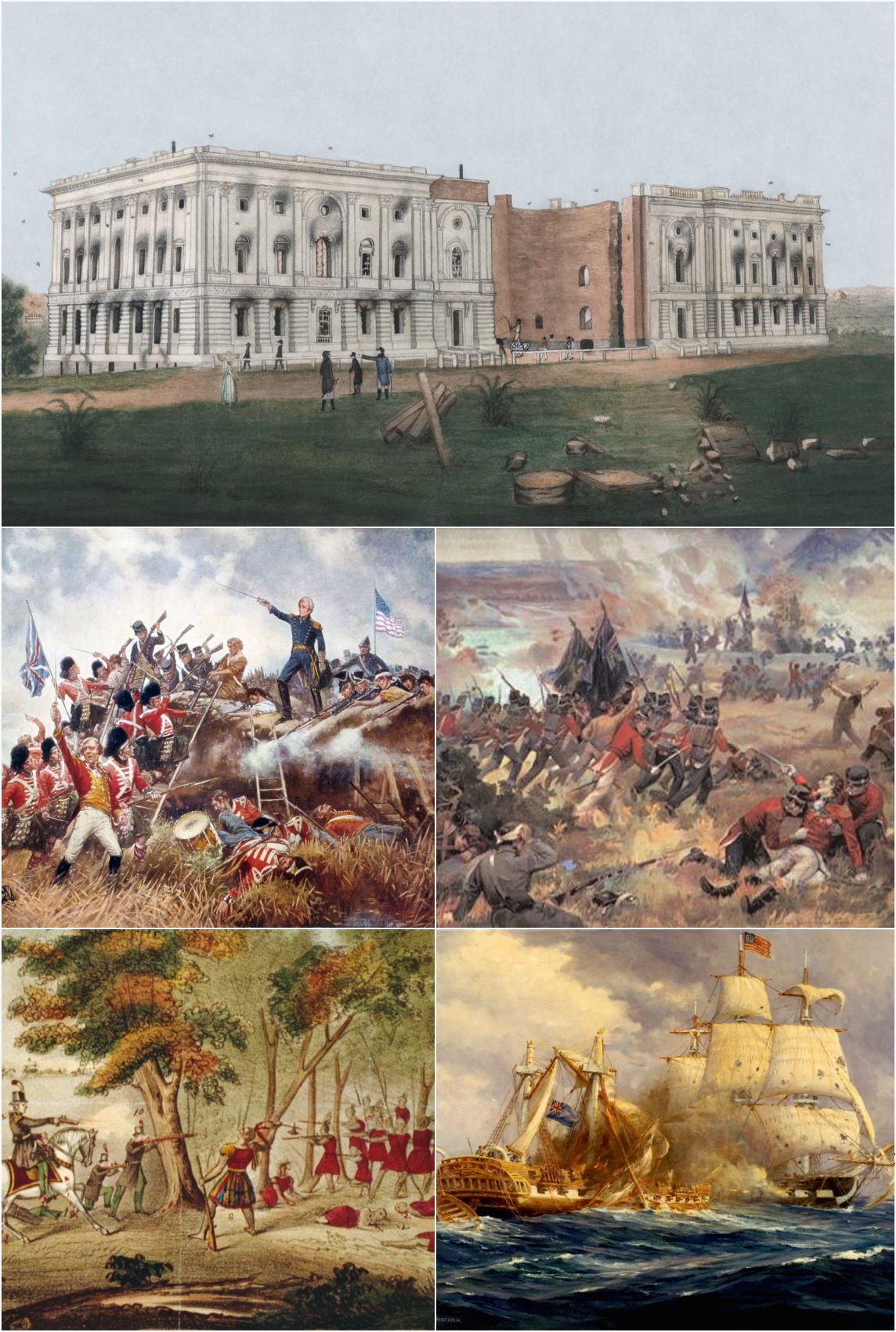
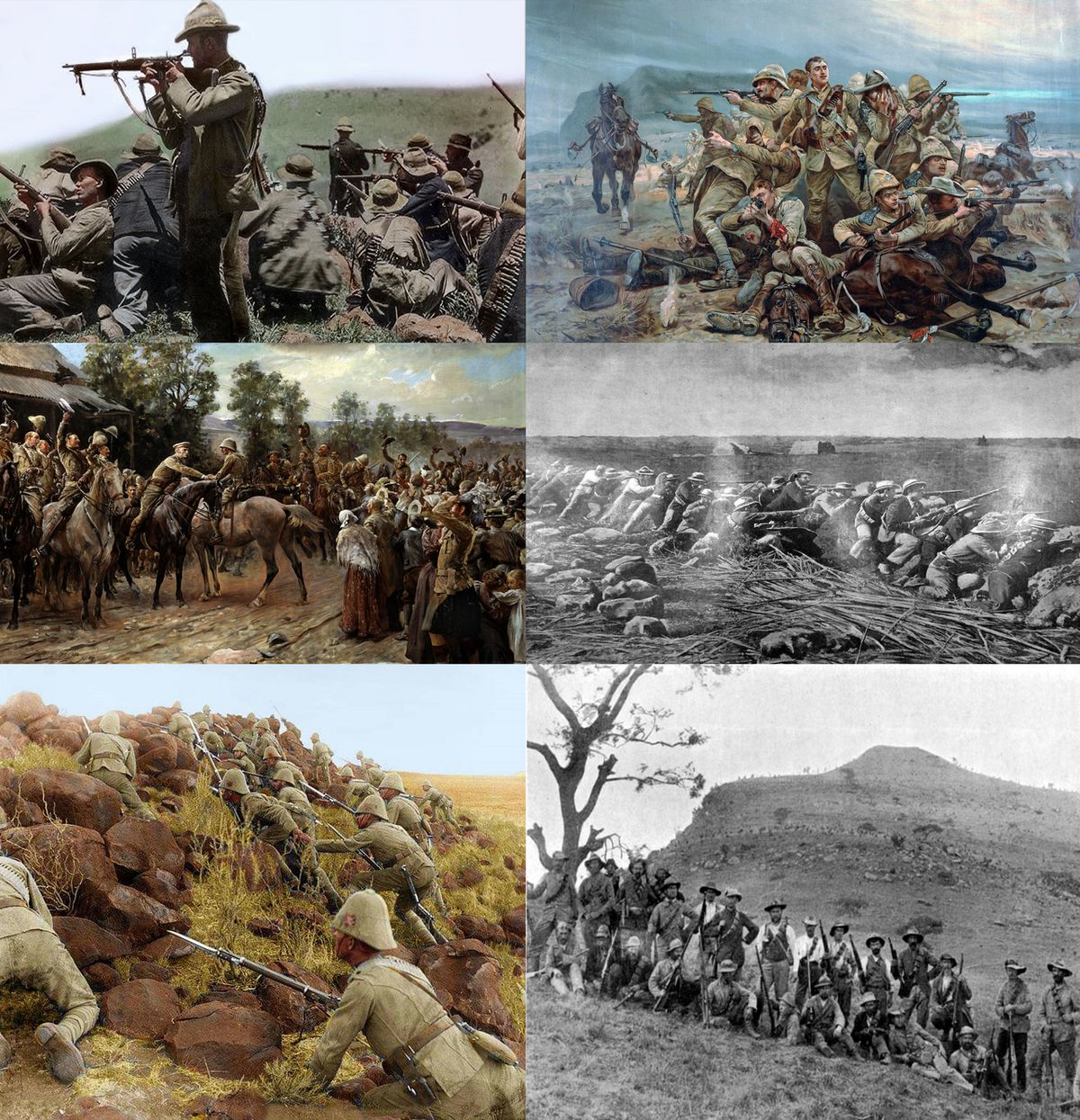
The military lineages in Canada stretch back to local militia groups in British North America, formed to defend against attacks from other European powers, Indigenous nations, and later American forces during conflicts like the War of 1812. These militias are the precursors to modern Canadian Army units. Following Confederation, military command remained with the British Crown until the final withdrawal of British forces from Halifax in 1906, paving the way for a distinctly Canadian navy and air force. The first significant overseas deployment occurred during the Second Boer War, with Canadian units serving under British command. The Canadian Corps' distinguished service in First World War battles such as the Second Battle of Ypres, the Somme, Vimy Ridge, and Passchendaele contributed to Canada's growing autonomy, culminating in legislative independence from the United Kingdom in 1931.
Canada entered the Second World War in September 1939, contributing significantly to the Battle of the Atlantic, the Dieppe Raid, the Italian campaign, and the D-Day landings. By war's end, Canada possessed the world's fourth-largest air force and fifth-largest naval surface fleet. The modern Canadian Armed Forces were created on 1 February 1968 through the unification of the Royal Canadian Navy, Canadian Army, and Royal Canadian Air Force into a single service with elemental commands named Maritime Command, Land Force, and Air Command. This unified structure was maintained even when the historical names for the navy, army, and air force were officially restored on 16 August 2011. The post-unification era has included major combat deployments like the mission in Afghanistan and extensive domestic disaster relief operations.
Constitutional Framework and Command Hierarchy
The constitutional basis for the Canadian Armed Forces is found in the National Defence Act and the Constitution Act, 1867. The Act states the Forces are the armed forces of the Crown raised by Canada, constituting one unified service. Command-in-chief is vested in the sovereign, a role delegated since 1904 to the Governor General of Canada, who holds the title of commander-in-chief. All orders for troop deployment and declarations of war fall under the royal prerogative. Historically issued as orders-in-council, since 1992 such deployments have been authorized by the federal cabinet or by a letter from the prime minister. Under the Westminster parliamentary system, the monarch and viceroy generally follow the advice of ministers, who are accountable to the House of Commons.
The professional head of the CAF is the chief of the Defence Staff (CDS), a commissioned officer appointed by the governor general on the advice of the prime minister. The CDS heads the Armed Forces Council, which includes the vice chief of the Defence Staff and the commanders of the Royal Canadian Navy, Canadian Army, Royal Canadian Air Force, Canadian Joint Operations Command, and Canadian Special Operations Forces Command. This council operates from National Defence Headquarters in Ottawa. The Canadian Royal Family holds numerous ceremonial appointments as colonels-in-chief and honorary commodores for various CAF units. The Forces are governed by the Queen's Regulations and Orders and the National Defence Act, with personnel divided into a hierarchy of officers and non-commissioned members.
Force Structure and Service Components
The Canadian Armed Forces consist of the Regular Force and the Reserve Force. The Reserve Force has four sub-components: the Primary Reserve, the Supplementary Reserve, the Cadet Organizations Administration and Training Service, and the Canadian Rangers, a unique part-time force of approximately 5,000 that operates in remote and northern regions. The total Reserve Force comprises approximately 32,000 personnel. All recruits undergo basic training at the Canadian Forces Leadership and Recruit School in Saint-Jean-sur-Richelieu, Quebec. Officers are typically commissioned through graduation from the Royal Military College of Canada or via direct entry with a civilian university degree.
The Canadian Army is the land component, organized into five geographic divisions that command brigade groups and their subordinate combat and support units. The Royal Canadian Navy is the maritime component, structured into Atlantic and Pacific operational fleets supported by naval aviation and training establishments. The Royal Canadian Air Force is the air and space component, organized into numbered air divisions and wings. Beyond these environmental services, functional commands include the Canadian Special Operations Forces Command for special operations, the Canadian Joint Operations Command for planning and conducting most CAF missions, and the Canadian Forces Intelligence Command for defence intelligence. The CAF operates from 27 Canadian Forces bases across the country, a number reduced from a higher figure through closures and mergers since the 1970s.
Recruitment Trends and Modernization Initiatives
For the 2025 to 2026 fiscal year, the Forces enrolled 7,310 new members, the highest annual enrolment figure in 30 years and exceeding its target of 6,957. This success followed years of challenges, as noted in a 2008 Department of National Defence survey which suggested dwindling recruitment in the 1980s and 1990s might be linked to a public perception of the military as peacekeepers rather than combat soldiers. Applicants must be Canadian citizens or permanent residents, with permanent residents required to submit proof of three years of physical presence in Canada. Despite recent gains, the CAF continues to face personnel shortages, with a deficit of 2,786 in the Regular Force as of August 2026.
Modernization of equipment and capabilities has been a sustained effort. The 2008 Canada First Defence Strategy initiated a push to renew the Forces through new equipment, improved training, and enhanced readiness, including the establishment of the Canadian Special Operations Regiment. Funding increases have been periodic, such as an additional CA$12.5 billion over five years announced in 2005 to increase regular force troops by 5,000 and the primary reserve by 4,500. A 2010 injection of CA$5.3 billion over five years aimed to add 13,000 regular force and 10,000 primary reserve personnel, plus CA$17.1 billion for new army trucks, air force transport aircraft and helicopters, and navy joint support ships. Specific equipment for the Afghanistan mission included main battle tanks, artillery, and unmanned aerial vehicles. Recent acquisitions have included C-17 Globemaster III strategic transports and CH-47 Chinook helicopters.
Evolution of Women's Service and Cultural Reforms
The integration of women into the CAF has been a gradual process shaped by policy reviews and legal changes. In the 1950s, recruitment was limited to roles in medicine, communication, logistics, and administration. A 1971 review following the Royal Commission on the Status of Women lifted the cap of 1,500 women personnel and began opening non-traditional roles such as vehicle driver, mechanic, air-traffic controller, military police, and firefighter. Further reviews in 1978 and 1985, prompted by the Canadian Human Rights Act and the Charter of Rights and Freedoms, allowed women to serve at sea on replenishment ships, in army service battalions, and in most air squadrons.
By 1987, occupations with a primary ground or sea combat role, infantry, armoured corps, field artillery, field engineers, and naval operations, remained closed, leading to the Combat-Related Employment of Women trials. All occupations were opened to women in 1989 except submarine service, which opened in 2000. Full integration required equipment adaptations, with combat helmets, rucksacks, boots, and flak jackets designed for a mixed-gender force, and women provided an annual financial entitlement for bras. Despite formal integration, the CAF has faced a severe crisis regarding sexual misconduct. The 2021 resignation of Lieutenant Colonel Eleanor Taylor brought allegations to the fore. Former justice Louise Arbour's subsequent external review resulted in 48 recommendations for cultural change, including a finding that the CAF should not retain jurisdiction over sexual offence investigations, as it had not improved efficiency, discipline, or morale.
Domestic Emergency Response and International Deployments
The Canadian Armed Forces have been deployed extensively within Canada to provide aid during provincial emergencies. In 1997, over 8,500 personnel were sent to Manitoba for Operation Assistance during the Red River flood, assisting with evacuation and building dikes. In January 1998, the CAF launched Operation Recuperation in response to a severe ice storm, deploying over 16,000 troops to Ontario, Quebec, and New Brunswick, marking the largest troop deployment on Canadian soil for a natural disaster and the largest operational deployment since the Korean War. From August to September 2003, Operation Peregrine saw over 2,200 soldiers mobilized to fight approximately 800 separate forest fires in British Columbia, with over 2,600 personnel involved at its peak.
Internationally, Canadian military units have participated in more than 200 operations since 1947. While Canada's peacekeeping role during the 20th century shaped its global image, its direct participation in UN peacekeeping has greatly declined in the 21st century, with efforts reallocated to NATO-led operations. The CAF served in Afghanistan under the NATO-led International Security Assistance Force until 2011. Canada has typically been reluctant to join conflicts not sanctioned by the UN, such as the Vietnam War or the 2003 Iraq invasion. Historical deployments include the Korean War, the First Gulf War, the Kosovo War, and UN missions in Cyprus, Croatia, Bosnia, and the Golan Heights. During the Cold War, the Royal Canadian Navy operated the aircraft carrier HMCS Bonaventure from 1957 to 1970, which participated in patrols during the Cuban Missile Crisis but never saw combat.
Financial Expenditures and Strategic Posture
Defence spending is the exclusive responsibility of the federal government under the Constitution. For the 2007 to 2010 period, regular defence spending was CA$6.15 billion, about 1.4 percent of GDP. This was augmented by significant multi-year investments, including CA$12.5 billion from 2005 and CA$5.3 billion from 2010, aimed at personnel growth and capital projects. The budget for the 2026 to 2027 fiscal year is approximately US$63 billion, which represents around 2.0 percent of Canada's gross domestic product. This meets the NATO spending guideline for the first time in decades, reflecting increased investment in defence capabilities and personnel.
The strategic posture of the CAF balances domestic responsibilities, continental defence within NORAD, and international commitments through NATO and other alliances. The forces' composition and equipment acquisitions are guided by strategies like the Canada First Defence Strategy, which emphasized modernization. Public perception of the military's purpose has evolved, with a 2008 Department of National Defence poll finding nearly two-thirds of Canadians supported the mission in Afghanistan and believed the military should be stronger, but also desired a different focus, such as greater capacity for natural disaster response. This aligns with the CAF's historical and ongoing domestic emergency role, which has included some of its largest and most visible operations.
Questions about Canadian Armed Forces
What is the Canadian Armed Forces budget?
For the 2026 to 2027 fiscal year, Canada's military expenditures are budgeted at approximately US$63 billion. This represents about 2.0 percent of the country's gross domestic product. This level of spending marks the first time in decades that Canada has met the NATO guideline of allocating 2.0 percent of GDP to defence. The budget funds personnel, operations, maintenance, and major equipment procurement projects.
How can I join the Canadian Armed Forces?
To join the CAF, you must be a Canadian citizen or a permanent resident. Permanent resident applicants must provide proof of three years of physical presence in Canada. The process involves an application, aptitude and medical tests, an interview, and basic training at the Canadian Forces Leadership and Recruit School in Saint-Jean-sur-Richelieu. The CAF offers paid education plans and various entry options for different careers. Recruitment has been strong recently, with 7,310 new members enrolled in the 2025 to 2026 fiscal year.
What are the main branches of the Canadian Armed Forces?
The Canadian Armed Forces consist of four main service branches. These are the Royal Canadian Navy, which is the maritime component, the Canadian Army, which is the land component, and the Royal Canadian Air Force, which is the air and space component. The fourth branch is the Canadian Special Operations Forces Command, which is responsible for special operations. These branches operate within a unified command structure under the chief of the Defence Staff.
What role does the CAF play in domestic emergencies?
The Canadian Armed Forces deploy domestically to provide aid during emergencies and natural disasters. Over 8,500 military personnel were sent to Manitoba after the 1997 Red River flood to help with evacuation and building dikes. Over 16,000 troops were deployed during the 1998 North American ice storm, making it the largest deployment on Canadian soil for a natural disaster since the Korean War. The Forces also deployed to British Columbia in 2003 as part of Operation Peregrine, mobilizing over 2,200 soldiers to combat forest fires after a provincial request for federal aid.
Sources: Wikipedia and current public reporting, checked by the Nosy Mag desk. Last updated 2026-10-18.