Canadian sovereignty
Canadian sovereignty is the ultimate legal authority of Canada to govern itself, its people, and its territory, free from external control. It is a foundational principle that shapes the nation's constitutional monarchy, federal system, laws, and international relations. Sovereignty in Canada is distributed among federal and provincial governments and is a subject of ongoing political and legal discourse, particularly concerning Indigenous rights, provincial autonomy, and Arctic claims. The concept remains central to Canada's identity and its ability to manage complex global pressures and relationships, especially with the United States.
Constitutional and Monarchical Foundations
The sovereignty of Canada finds its origins in the constitutional traditions of the English and British crowns, inherited through statutes like the Bill of Rights, 1689. The modern Canadian state was founded with the Constitution Act, 1867, which granted self-government while maintaining final authority with the British Parliament. Full legal sovereignty was achieved between Canada's separate signature of the Treaty of Versailles in 1919 and the Statute of Westminster in 1931, which brought the Balfour Declaration of 1926 into law. The Constitution Act, 1982, patriated the constitution, removing Canada's final legal dependencies on the United Kingdom and establishing a completely sovereign nation. The country's sovereign is Charles III, King of Canada, who is the personal embodiment of the Crown and the source of executive, legislative, and judicial authority.
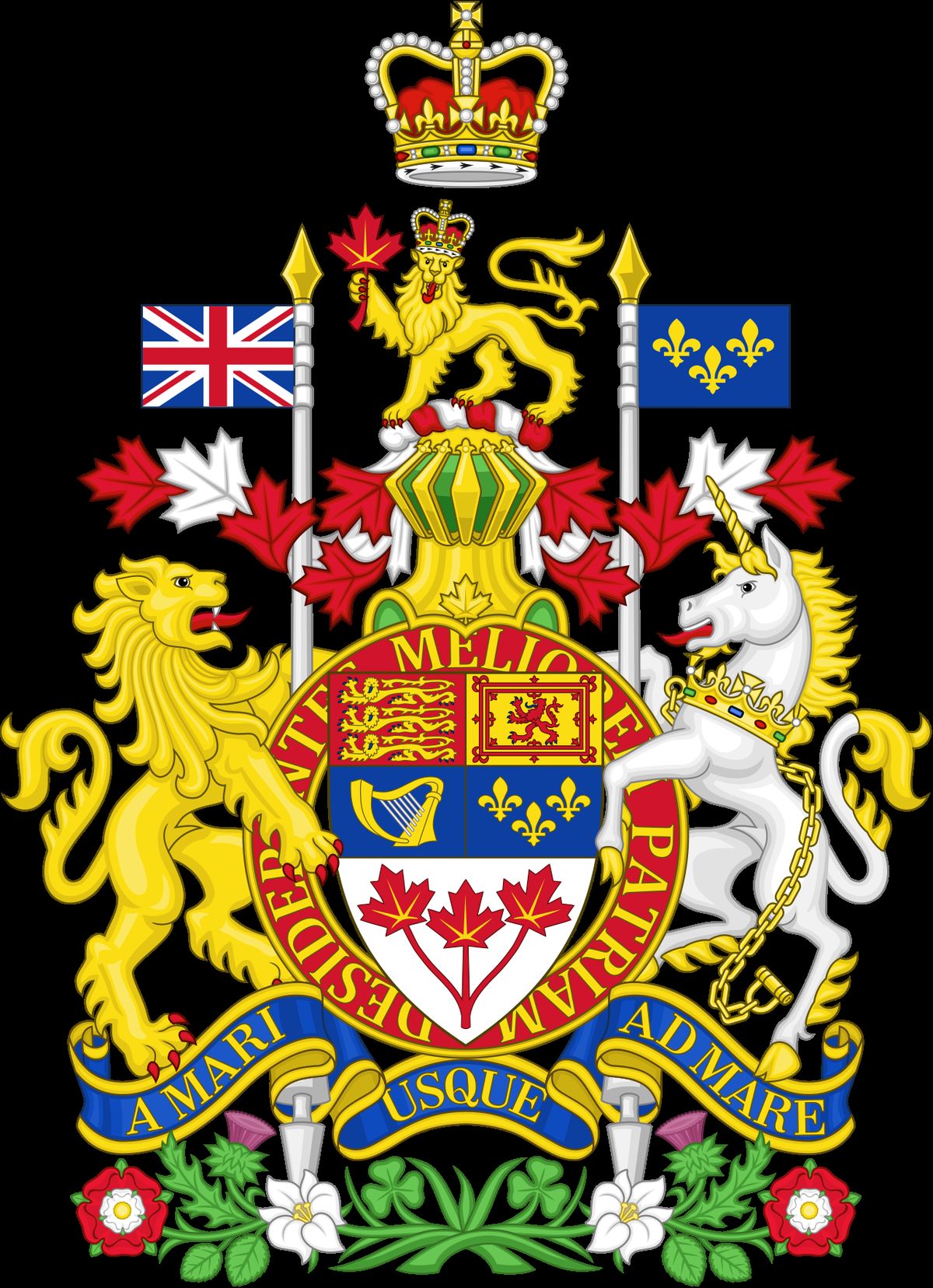
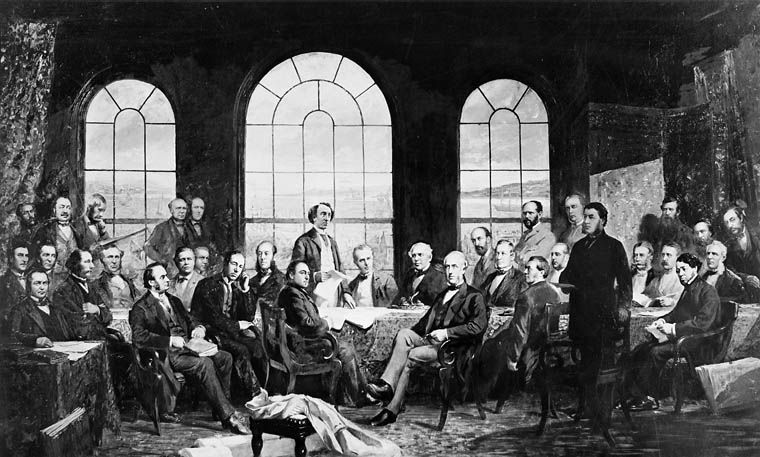
Canadian sovereignty operates under the principle of parliamentary sovereignty, inherited from Britain and later balanced by the constitutional supremacy of the Canadian Charter of Rights and Freedoms. The monarch's authority is represented federally by the governor general and in each province by a lieutenant governor, creating 11 distinct Crowns, one federal and ten provincial. This division is a core feature of Canadian federalism, intended by the Fathers of Confederation as a bulwark against any potential fracturing of the Canadian Confederation. The royal coat of arms and symbols like the Court of King's Bench are manifestations of this sovereign authority. The Crown enjoys sovereign immunity, meaning it is generally free from suit in foreign courts and, through evolving legal doctrine, has certain immunities between the federal and provincial spheres within Canada.
Indigenous Sovereignty and Rights
British colonial policy initially acknowledged Indigenous tribes as sovereign nations, but federal policy after Confederation shifted toward cultural assimilation for approximately a century. Current policy, endorsed by Canada's 2016 support for the United Nations Declaration on the Rights of Indigenous Peoples, aims toward self-determination through treaties and self-government agreements. Unlike in the United States, Canadian law, as reinforced by Supreme Court rulings, does not recognize Indigenous peoples as sovereign nations. Ultimate sovereignty is held by the Crown. However, a growing body of jurisprudence imposes a duty on the Crown to consult and accommodate First Nations, Inuit, and Métis peoples where their rights and interests may be affected. This duty is derived from the honour of the Crown and its historical assertion of sovereignty over prior Aboriginal occupation.
Despite the legal framework, many Indigenous groups assert their own sovereignty. The Federation of Sovereign Indigenous Nations in Saskatchewan, renamed in 2016, and groups like the Chiefs of Ontario and the Union of British Columbia Indian Chiefs explicitly claim First Nations sovereignty. Provincial legislation like the Alberta Sovereignty Within a United Canada Act and the Saskatchewan First Act has been opposed by Indigenous organizations for failing to adequately consult and for not recognizing Métis and Treaty rights. The Federation of Sovereign Indigenous Nations and the Métis Nation, Saskatchewan unanimously rejected the Saskatchewan First Act, stating it does nothing to advance or recognize Métis rights and represents a failure in the duty to consult.
Provincial Autonomy and Sovereignty Movements
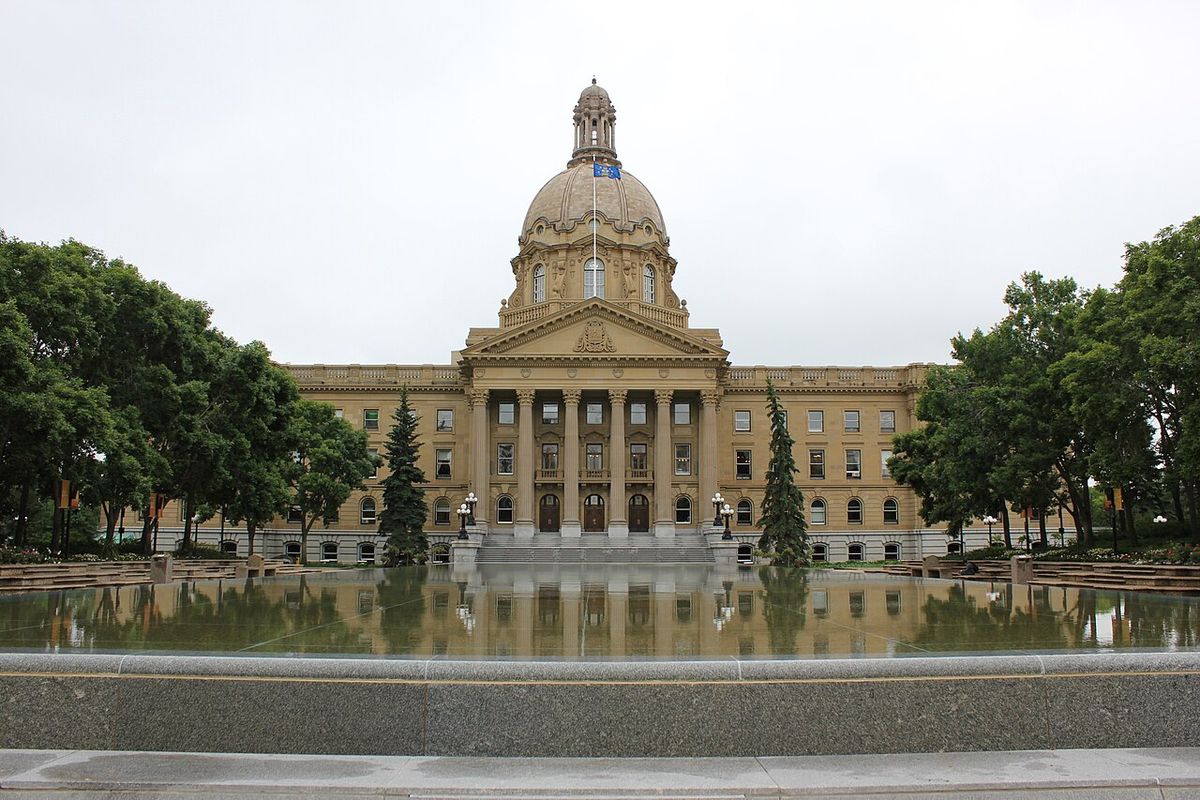
Canada's federal structure divides sovereign law-making power between federal and provincial parliaments as granted by the Constitution Act, 1867, which can lead to jurisdictional conflicts resolved by the courts. In recent years, several provinces have enacted legislation asserting provincial autonomy. The Alberta Sovereignty Within a United Canada Act, enacted on 15 December 2022, provides a framework for the provincial legislature to pass motions identifying specific federal laws or programs as unconstitutional or harmful, potentially directing provincial entities not to enforce them. Premier Danielle Smith has described the federation as composed of sovereign, independent jurisdictions, a view she promoted during her 2022 campaign for the United Conservative Party leadership after referencing the 2001 Alberta Agenda in a 2019 opinion piece.
The Alberta Sovereignty Within a United Canada Act is based on the Free Alberta Strategy co-authored by Rob Anderson, Barry Cooper, and Derek From. The act includes a provision giving the provincial Crown-in-Council the power to amend laws without debate in the legislature, which is a so-called Henry VIII clause. Legal scholars have criticized this as an impermissible delegation of legislative authority. In Saskatchewan, the Saskatchewan First Act was passed on 16 March 2023 to confirm the province's sovereign autonomy. The most significant sovereignty movement is in Quebec, driven by its Francophone majority. The origins of the Quebec sovereignty movement are complex and extend beyond language issues to historical events like the failed Meech Lake and Charlottetown accords.
- The Quiet Revolution: The modern sovereignty movement began during this period of social change in Quebec.
- René Lévesque: Introduced the concept of sovereignty-association in his 1967 manifesto, Option Québec.
- 1978 White Paper: As Premier, Lévesque detailed a plan for sovereignty-association, including a common currency and free trade zone.
- 1980 Referendum: Quebecers voted against negotiating sovereignty-association with Canada.
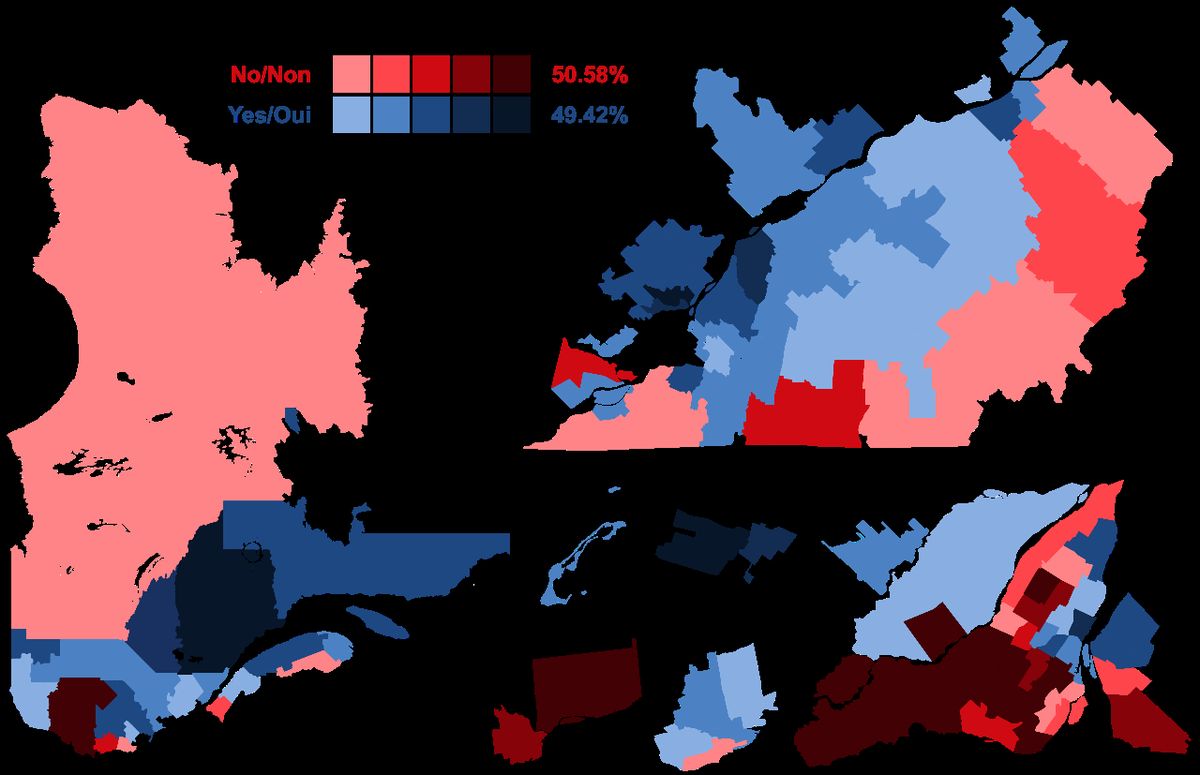
- 1995 Referendum: Quebecers narrowly rejected sovereignty-partnership (49.42% yes to 50.58% no).
- Current Terminology: The simpler term sovereignty has largely replaced sovereignty-association in political discourse.
Arctic Sovereignty and Territorial Claims
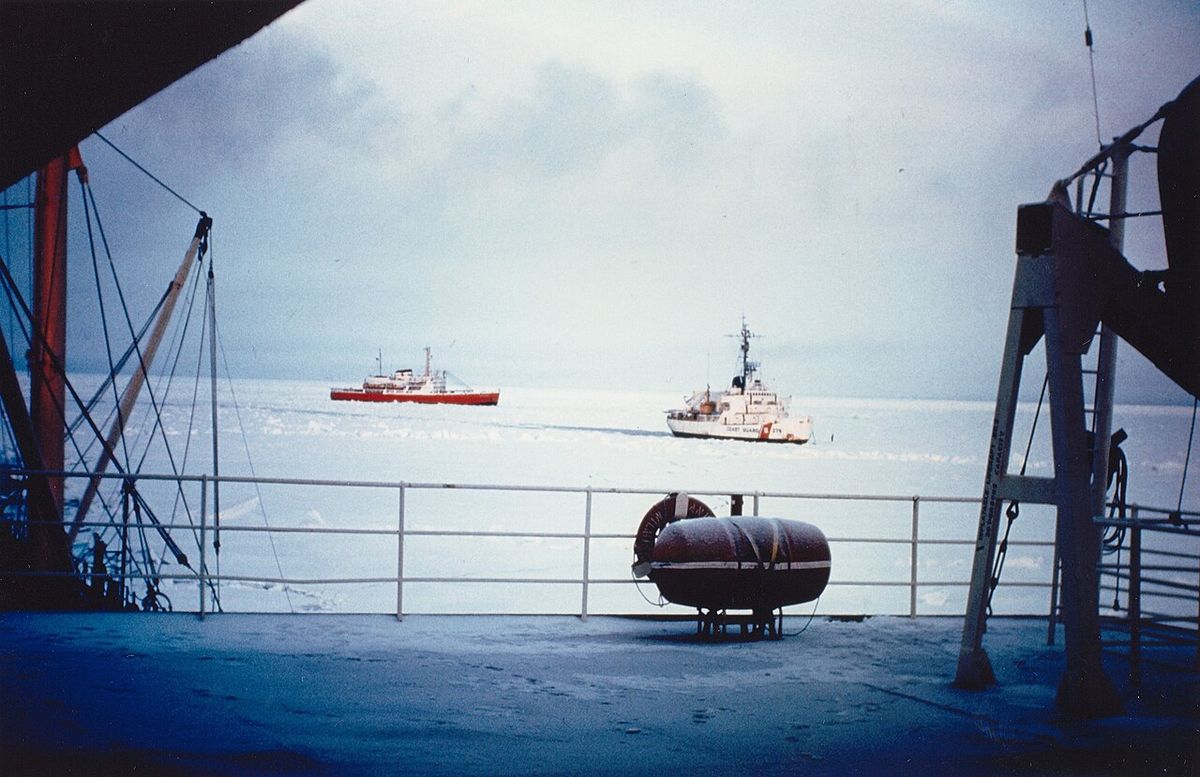
Under international law, no country owns the North Pole or the central Arctic Ocean. The five Arctic coastal states, Canada, Denmark (via Greenland), Norway, Russia, and the United States (via Alaska), are limited to a 200-nautical-mile exclusive economic zone. Canada ratified the United Nations Convention on the Law of the Sea in 2003, triggering a ten-year period to submit claims for an extended continental shelf. Canada, along with Norway, Russia, and Denmark, has launched scientific projects to support such claims. A key dispute concerns the status of the Northwest Passage, which Canada considers internal waters, while the United States and most European Union countries regard it as an international strait.
Canada has undertaken symbolic acts to assert its Arctic claims, including a 1970 royal tour by Queen Elizabeth II, Prince Philip, Prince Charles, and Princess Anne to Inuvik and Tuktoyaktuk. The 1969 transit of the American oil tanker SS Manhattan through the passage sparked national debate. In 2007, a Russian submarine expedition to the North Pole challenged Canadian claims. The strategic importance of the Arctic has grown, with the United States 2026 National Defence Strategy identifying the Arctic and Greenland as key terrain, signalling a shift in American strategic posture that views the region as critical to US security needs and continental defence, moving beyond the older logic of Defence Against Help.
Economic and Communications Sovereignty
Telecommunications and broadcasting are legislated as essential to Canadian sovereignty and cultural identity. The Telecommunications Act mandates a system that safeguards and strengthens Canada's social and economic fabric, promotes the use of Canadian transmission facilities, and protects privacy. It references the Broadcasting Act, which prescribes that the Canadian broadcasting system must be owned and controlled by Canadians. The Canadian Broadcasting Corporation (CBC), inaugurated on 2 November 1936 following the Broadcasting Act's royal assent on 23 June 1936, was created in response to concerns about growing American influence on radio and has played a major role in national unity. Radios, television, and the CBC have significantly helped reunite Canadians and build its sovereignty.
Economic sovereignty involves managing dependencies and foreign investment. The Canadian Shield Institute advocates for policies to advance economic resilience and competitiveness, including a mandate to invest 3 percent of assets in high-growth Canadian companies. Critics argue Canada's framework for foreign direct investment is outdated, assuming it brings unalloyed benefits. The Institute for Peace and Diplomacy's Engineered Vulnerabilities Report frames economic dependence on the United States as a structural security risk, advocating for strategic decoupling to reduce vulnerabilities. This approach treats economic resilience as a core security function and expands the definition of foreign interference to include pressure from allies, enabling leaders to frame resistance to US demands as a security requirement rather than a diplomatic rupture.
Contemporary Threats and Strategic Framework
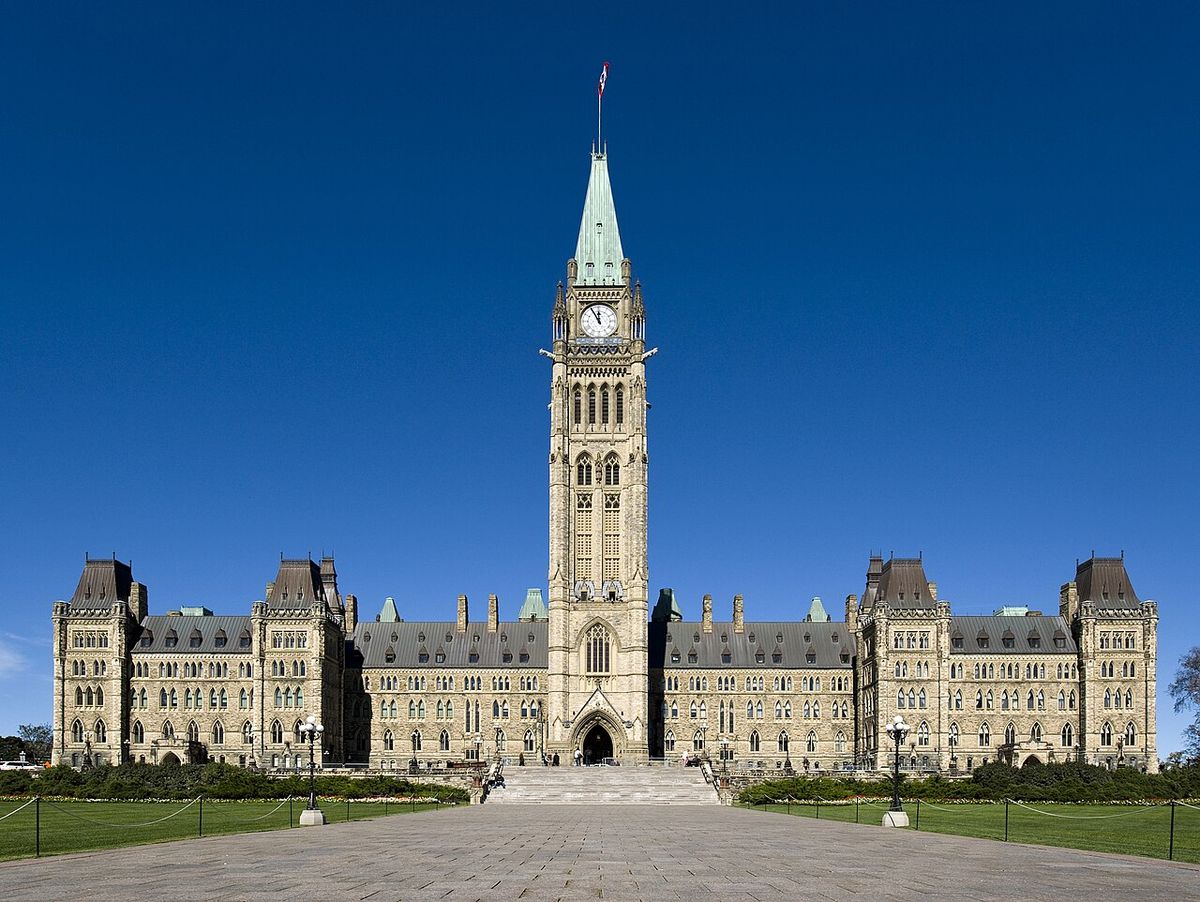
Canadian sovereignty faces contemporary pressures, notably from the United States. Starting in December 2024, then President-elect Donald Trump and his supporters expressed support for annexing Canada as a 51st state, a proposal overwhelmingly opposed in Canada. Ongoing US demands include increased Canadian military spending and border security, following months of tariff threats on Canadian goods. The traditional Canadian strategic doctrine of Defence Against Help, maintaining sufficient capability to deter unilateral US intervention, is now considered outdated by analysts. The 2026 US National Defence Strategy indicates a more acquisitive American posture, seeking to secure a choke-hold on the Arctic to align allied policy with US needs.
Research suggests the primary risk is not overt military threat but the exploitation of Canada's deep structural dependencies through economic pressure, regulatory leverage, and integrated supply chains. The Institute for Peace and Diplomacy's framework analyzes sovereignty through three pillars: authority (decision-making power), legitimacy (public trust), and capacity (material resources). Erosion in one can create a corrosive feedback loop leading to managed subordination. The framework advocates for pragmatic, long-term strategic thinking to design sovereignty, moving beyond reactive policies. It aims to recalibrate a foreign policy establishment historically socialized to value access to Washington as the principal measure of diplomatic success, shifting focus toward reducing dependencies and restoring state authority and public trust.
Sovereignty in International Agreements and Trade
Sovereignty involves the right to make domestic policy, but it is not absolute in international relations. All trade agreements require some compromise of national sovereignty, such as agreeing to common product standards or intellectual property protections in agreements like NAFTA and CUSMA. Similarly, the NATO treaty compromises sovereignty by obligating members to defend each other and spend a fixed percentage on defence, which for Canada means a path to increase defence spending by $16 billion to meet its 2 percent NATO commitment. A 2025 opinion article highlighted concessions Canada made on digital policy to the Trump Administration, questioning what further economic concessions might be demanded. The concept is complex in a federation, where the federal government has used its spending power to influence provincial jurisdictions like healthcare, while bristling at provincial pushback against federal intrusions.
Canadian engagement on sovereignty issues occurs in international forums. The Broadbent Institute joined the Canadian delegation at the 2026 Panamerican Congress in Montevideo, Uruguay, to discuss defending sovereignty and democracy with progressive leaders from across the Western Hemisphere. The congress covered topics including digital sovereignty and artificial intelligence, informed by a pre-congress workshop the institute held in Toronto. These efforts aim to build relationships and strengthen calls to defend democracy. Domestically, the Green Party has proposed plans to protect Canadian sovereignty, and the Carney government, elected with a majority in mid-2026, pursued an agenda of economic growth to achieve greater independence from US-Canada ties, though critics argue this single-minded agenda misses other public needs.
Key Sovereignty Legislation and Policy Instruments
Several matters currently define Canadian sovereignty, including the Canadian monarchy, telecommunications, the autonomy of the provinces, and Canada's Arctic border. The Constitution Act, 1867, granted the federal and provincial parliaments the sovereign ability to make law. The Constitution Act, 1982, removed Canada's final reliances on the British Parliament, making Canada a completely sovereign nation. The Telecommunications Act specifies the need for national ownership and control of Canadian carriers. Provincial acts like the Alberta Sovereignty Within a United Canada Act and the Saskatchewan First Act are recent instruments related to provincial sovereignty.
| Legislation/Instrument | Year | Primary Sovereignty Focus |
|---|---|---|
| Statute of Westminster | 1931 | Established full legal autonomy from UK Parliament |
| Broadcasting Act | 1936 | Ensured Canadian ownership and control of broadcasting |
| Constitution Act | 1982 | Patriated the constitution, entrenching full sovereignty |
| UNCLOS Ratification | 2003 | Provided legal basis for extended Arctic continental shelf claims |
| Alberta Sovereignty Act | 2022 | Asserted provincial autonomy within federal framework |
| Saskatchewan First Act | 2023 | Confirmed provincial sovereignty over natural resources |
These instruments demonstrate the multi-faceted approach to Canadian sovereignty. The constitutional foundations include the monarchy and the division of sovereignty between federal and provincial jurisdictions. The greater autonomy of each province within Canadian federalism is important to Canadian sovereignty. Recent provincial acts reflect ongoing negotiations over the distribution of power within Confederation. The division of sovereignty can lead to conflicts over jurisdiction, which the courts resolve.
Questions about Canadian sovereignty
Who is the sovereign of Canada?
The sovereign of Canada is Charles III, King of Canada. He is the personal embodiment of the Crown, which is the source of all executive, legislative, and judicial authority. His role is constitutional and symbolic, with powers exercised on his behalf by the Governor General federally and by Lieutenant Governors in each province. Canada has been a fully independent kingdom sharing the same monarch with other Commonwealth fields since the Statute of Westminster in 1931.
What is the Alberta Sovereignty Within a United Canada Act?
The Alberta Sovereignty Within a United Canada Act is provincial legislation enacted on 15 December 2022. It provides a framework for the Alberta legislature to pass motions identifying specific federal laws or programs as unconstitutional or harmful to Albertans. Based on the Free Alberta Strategy, the act asserts provincial autonomy and includes provisions allowing the provincial cabinet to amend laws without legislative debate. It has been criticized by Indigenous groups for lack of consultation and by legal scholars for potential constitutional issues regarding the delegation of legislative power.
Does Canada own the Northwest Passage?
Canada considers the Northwest Passage to be Canadian internal waters, based on historical usage and the straight baselines drawn around its Arctic archipelago. However, the United States and most European Union countries regard it as an international strait open to transit passage. This legal dispute remains unresolved. Canada has asserted its claim through symbolic acts, like royal tours and scientific research, and through its submission for an extended continental shelf under the United Nations Convention on the Law of the Sea, which it ratified in 2003.
What was the result of the 1995 Quebec sovereignty referendum?
The 1995 Quebec referendum on sovereignty was defeated by an extremely narrow margin. The proposal was for Quebec to become sovereign after offering a new economic and political partnership to Canada. The final result was 50.58 percent voting No and 49.42 percent voting Yes. This referendum followed the 1980 referendum where Quebecers rejected negotiating sovereignty-association. The 1995 vote remains the high-water mark for the sovereignty movement and continues to influence Canadian federalism and national unity debates.
How does the Telecommunications Act protect Canadian sovereignty?
The Telecommunications Act protects Canadian sovereignty by specifying the need for national ownership and control of Canadian carriers. Its objectives are to facilitate the orderly development of a telecommunications system that serves to safeguard, enrich, and strengthen the social and economic fabric of Canada and its regions. The act promotes the use of Canadian transmission facilities for telecommunications within Canada and between Canada and points outside Canada. The Telecommunications Act references the Broadcasting Act, which prescribes that broadcasting has an important role in Canadian sovereignty and that the Canadian broadcasting system is to be owned and controlled by Canadians.
What are the main threats to Canadian sovereignty today?
Contemporary analysts identify several threats to Canadian sovereignty, primarily stemming from deep economic and strategic dependence on the United States. These include exploitation through economic pressure, regulatory leverage, and integrated supply chains, as outlined in the Institute for Peace and Diplomacy's Engineered Vulnerabilities Report. Political rhetoric from US figures about annexation, demands for increased military spending, and US strategic claims in the Arctic also pose challenges. Internally, debates over provincial autonomy and the implementation of Indigenous rights and title contribute to ongoing negotiations over the meaning and distribution of sovereignty within Canada.
Sources and further reading
- Canadian sovereignty (Wikipedia)
- Designing Canadian Sovereignty: Systematically ... (peacediplomacy.org)
- Canadian Sovereignty = Defending Democracy (broadbentinstitute.ca)
- Be careful how you talk about Canadian 'sovereignty' (thehub.ca)
Checked by the Nosy Mag desk. Last updated 2026-10-27.