Royal Canadian Navy
The Royal Canadian Navy (RCN) is the maritime component of the Canadian Armed Forces, responsible for defending Canada's sovereignty and interests at home and abroad. Established in 1910 as the Naval Service of Canada and granted royal designation in 1911, the RCN has served in both world wars, the Korean War, and numerous multinational operations. As of 2026, the navy consists of approximately 8,400 Regular Force sailors, 4,100 naval reservists, and a fleet of 25 commissioned warships, headquartered in Ottawa. The RCN is organized into two main operational formations on the Atlantic and Pacific coasts, supported by a nationwide Naval Reserve.
Historical evolution and unification
The Royal Canadian Navy was created through the Naval Service Act, which received Royal Assent on 4 May 1910 under Prime Minister Sir Wilfrid Laurier. Initially equipped with two former British Royal Navy vessels, HMCS Niobe and Rainbow, the service was granted permission by King George V to be called the Royal Canadian Navy on 29 August 1911. During the First World War, its small force patrolled Canada's coasts, and the Royal Canadian Naval Air Service was briefly established in 1918 for anti-submarine duties. The interwar period saw a slow fleet buildup, with the first warships designed for the RCN commissioned in 1932. At the outbreak of the Second World War, the navy had only 11 combat vessels and fewer than 2,000 personnel. The RCN expanded dramatically during the conflict, particularly in the Battle of the Atlantic, where it was responsible for the entire Northwest Atlantic theatre. From 1944 to 1946, RCN personnel gained carrier experience crewing two Royal Navy escort carriers, HMS Nabob and Puncher. The RCN also operated HMS Warrior from 1946 to 1948 and HMCS Magnificent from 1948 to 1957.
In the post-war era, the RCN maintained a destroyer presence off the Korean peninsula from 1950 to 1955. During the Cold War, the Navy developed an anti-submarine capability to counter the growing Soviet naval threat. In November 1956, HMCS Magnificent transported men and supplies to Egypt as part of Canada's response to the Suez Crisis. Later in 1957, the RCN paid off HMCS Magnificent and commissioned HMCS Bonaventure, which flew the McDonnell F2H Banshee fighter jet until 1962. In the 1960s, the RCN further developed its anti-submarine warfare capabilities by acquiring the Sikorsky CH-124 Sea King. The RCN successfully pioneered the use of large maritime helicopters on small surface vessels by developing the beartrap, which was first trialed in 1963 and entered operational service in 1967. The beartrap was subsequently adopted by other navies, including Australia, Japan, and the US.
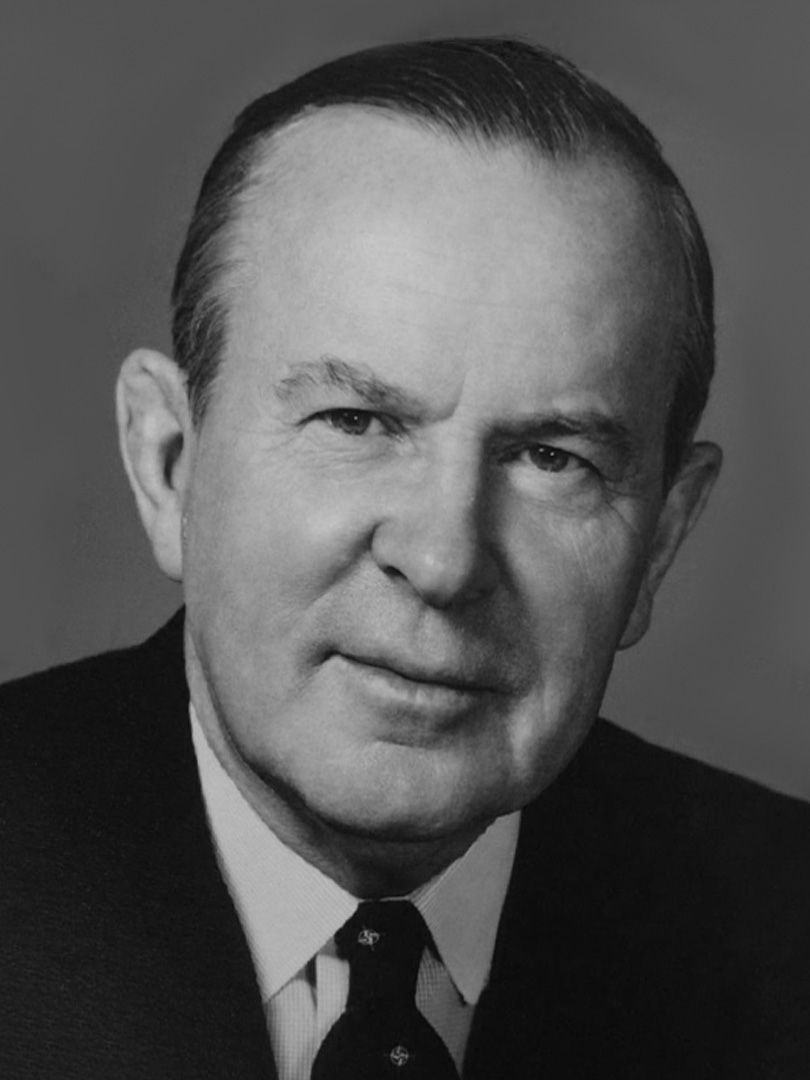
Under Prime Minister Lester B. Pearson and Defence Minister Paul Hellyer, the Canadian Armed Forces were unified into a single service between 1964 and 1968. This controversial merger abolished the RCN as a separate legal entity, with all naval personnel, ships, and aircraft becoming part of Maritime Command (MARCOM). The traditional naval uniform was replaced with a common Canadian Armed Forces rifle green uniform. In the decades that followed, some distinct naval identity was gradually restored, including the introduction of new black naval uniforms in 1985 and the recreation of the Naval Board by 1990. The historic name Royal Canadian Navy was officially restored on 16 August 2011.
Command structure and formations
The Royal Canadian Navy is led by the commander of the RCN, a vice-admiral based at Naval Staff Headquarters in Ottawa. The commander reports to the Chief of the Defence Staff, who in turn reports to the Minister of National Defence. The command team in Ottawa also includes a deputy commander, typically a rear admiral, and the Chief Petty Officer of the Navy, the senior non-commissioned sailor. The operational force is divided into three main formations directly responsible to the commander: Maritime Forces Atlantic, Maritime Forces Pacific, and the Canadian Forces Naval Reserve. This structure ensures coordinated naval presence on both of Canada's ocean coasts and a nationwide reserve capability.
Maritime Forces Atlantic (MARLANT) is headquartered at Canadian Forces Base Halifax in Nova Scotia and commands the RCN's presence on the Atlantic coast. The formation employs over 5,000 military and 2,000 civilian personnel. Its core operational unit is Canadian Fleet Atlantic, which comprises 15 commissioned warships, including seven Halifax-class frigates, four Kingston-class coastal defence vessels, and two Victoria-class submarines. Other key units under MARLANT include the Fleet Maintenance Facility Cape Scott, Sea Training Atlantic, and Fleet Diving Unit Atlantic. The formation commander also serves as the commander of Joint Task Force Atlantic, integrating maritime operations with other military elements in the region.
Maritime Forces Pacific (MARPAC) is based at CFB Esquimalt in British Columbia, the second-largest base in the Canadian Armed Forces, covering 4,900 hectares. The formation employs roughly 4,000 military and 2,000 civilian personnel. Canadian Fleet Pacific, its operational arm, includes 13 ships and two submarines. MARPAC's other units include Fleet Maintenance Facility Cape Breton, Fleet Diving Unit Pacific, and the Naval Training Development Centre (Pacific). The formation is responsible for naval operations across the Pacific Ocean and into the Arctic, playing a critical role in surveillance, sovereignty patrols, and international engagements with allied navies in the Pacific region.
The Naval Reserve and personnel
The Canadian Forces Naval Reserve, headquartered in Quebec City, provides a part-time force of approximately 4,100 sailors spread across 24 Naval Reserve Divisions (NRDs) in communities nationwide. Its primary missions are to generate individuals with small-boat expertise for domestic safety operations, provide unique skill sets for naval security missions, augment the regular fleet's platforms and shore capacity, and serve as a community link for the RCN. Naval reservists typically train at their local NRD one or two evenings per week, with opportunities for full-time service. The Naval Reserve has been integral to implementing the Official Languages Act within the navy, with the first French Language Unit established on HMCS Ottawa following the act's 1969 enshrinement.
Personnel challenges have been a significant concern for the RCN in the 2020s. In 2023, Vice-Admiral Angus Topshee indicated the effective strength of the regular force was considerably lower than establishment, with numerous naval trades experiencing shortages of more than 20 percent in trained personnel. In January 2026, the RCN was reported to be approximately 2,000 sailors short of its Regular Force target of 7,700 personnel. By late 2025, Topshee stated the navy's personnel problem remained dire and unsolved, an assessment echoed by the Auditor General of Canada's report on deeper systemic recruitment issues across the military. To address these shortfalls, the RCN has launched initiatives like the Naval Experience Program, which offers a one-year trial with accelerated enrollment, nine weeks of basic training, and four weeks of naval training before a sea posting.
The RCN has also pursued innovative educational partnerships to build its future workforce. In March 2026, Confederation College in Thunder Bay signed a five-year collaborative agreement with the RCN, represented locally by HMCS Griffon, to enhance work-integrated learning in trades, engineering, electrical, and culinary fields. Similarly, Academy Canada established a pathway in 2026 where students in its Information Technology Associate program can have tuition covered through the Non-Commissioned Member Subsidized Training and Education Plan while training to become Naval Communicators. These partnerships aim to create direct pipelines from postsecondary education to skilled naval trades, addressing critical workforce needs and strengthening connections between education and military service.
Current fleet and capabilities
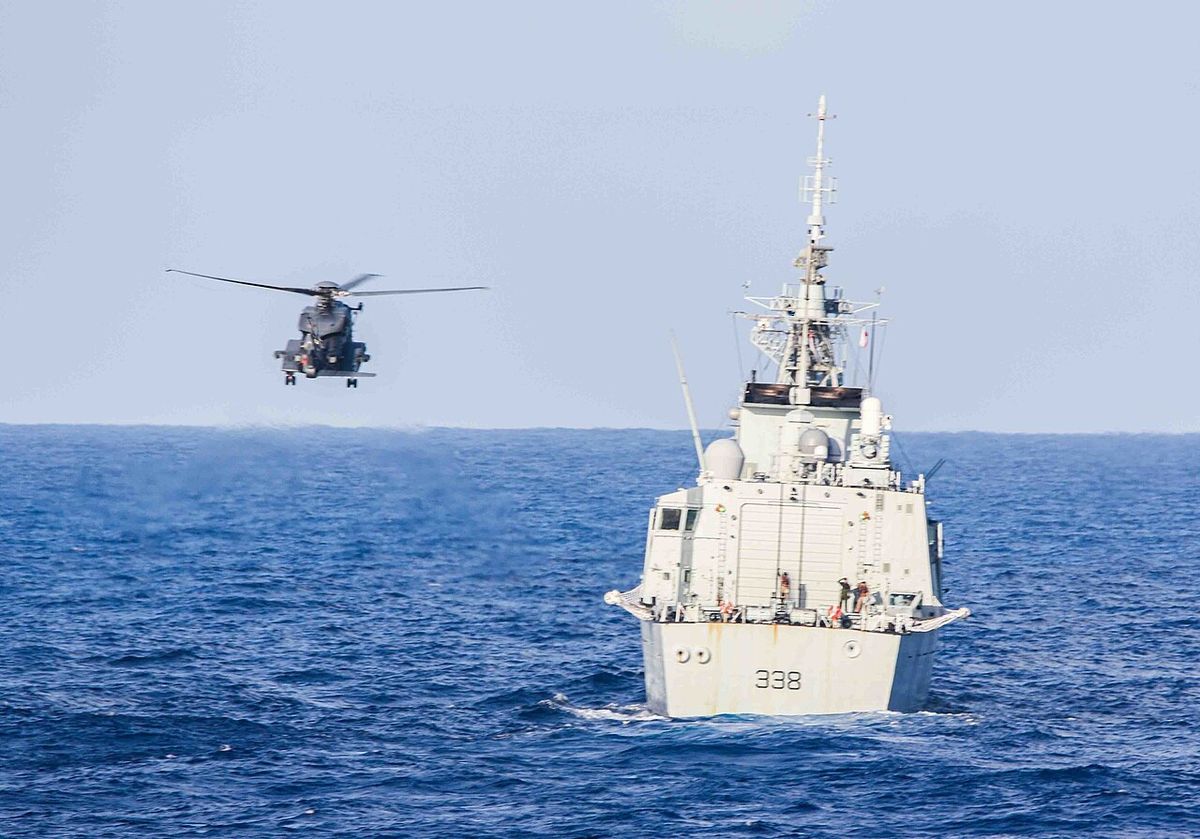
The Royal Canadian Navy's fleet consists of surface combatants, submarines, patrol vessels, and auxiliary ships. A 2024 Department of National Defence internal report indicated approximately 54 percent of the RCN's equipment was unserviceable, primarily due to manpower and funding shortfalls. The surface combatant fleet is built around 12 Halifax-class multi-role frigates, which entered service starting in 1992 and underwent mid-life refits in the 2010s. These frigates are the workhorses for missions ranging from combat operations to humanitarian assistance. They are slated for replacement by the River-class destroyer, a design selected in 2018, with up to 15 ships planned and the first expected in the 2030s.
The RCN's patrol and auxiliary capabilities include several newer classes. Five Harry DeWolf-class Arctic and offshore patrol vessels are in service, with the first commissioned in 2021 and a sixth delivered but not yet in service as of 2026. These vessels are designed for sovereignty patrols in the Arctic and support roles. Four Kingston-class coastal defence vessels remain in service for coastal surveillance and training, down from an original 12 since 1996. The RCN also operates the interim auxiliary replenishment ship MV Asterix, acquired in 2015, while awaiting the new Protecteur-class auxiliary vessels, the first of which began construction in 2020. The training fleet includes nine vessels: the tall ship HMCS Oriole and eight Orca-class patrol craft used primarily for sailor training in British Columbia.
The submarine force consists of four Victoria-class submarines: HMCS Victoria, Corner Brook, Windsor, and Chicoutimi. Originally built for the Royal Navy in the 1990s, they were acquired by Canada, with the first entering RCN service in 2000. Their roles include surveillance, intelligence gathering, and Arctic defence. In 2024, the Canadian Patrol Submarine Project was announced to replace them. In 2026, the RCN announced the future procurement of up to 12 Thyssenkrupp Marine Systems Type 212CD submarines, with the first four scheduled to be in service by 2034. This expansion could shift the RCN towards being a submarine-intensive navy, fundamentally altering its operational character and strategic weight on the world stage.
Major operations and international posture
The Royal Canadian Navy has a long history of participation in international conflicts and peacekeeping missions. During the Second World War, its major contribution was in the Battle of the Atlantic, where it protected vital convoys. In the Korean War, Canadian destroyers conducted shore bombardments and maritime interdiction along the peninsula. In 1990, the RCN deployed three warships to the Persian Gulf in support of coalition forces during the Gulf War. Throughout the 1990s, ships were deployed to the Adriatic Sea during the Yugoslav Wars and the Kosovo War to enforce embargoes and support NATO operations. In the early 2000s, the RCN provided vessels for Operation Apollo, Canada's contribution to the War in Afghanistan, and later for counter-piracy missions off the coast of Somalia.
The RCN regularly participates in bilateral and multinational exercises to maintain interoperability with allies, particularly the United States Navy. In September 2026, the RCN concluded the annual U.S., Canada Maritime Forum at the Allied Maritime Command headquarters in Norfolk, Virginia, focusing on operationalizing partnerships. The RAVEN 2026 exercise, a six-week training event at CFB Esquimalt, provided hands-on experience for personnel in complex maritime scenarios. The navy's international posture has also led to diplomatic friction, as seen in December 2025 when Iran designated the Royal Canadian Navy as a terrorist organization in retaliation for Canada's designation of the Islamic Revolutionary Guard Corps as a terrorist entity.
On the Todd-Lindberg classification system of naval strength, the RCN's capability ranking has fluctuated. By 2015, with the loss of area air defence and resupply capabilities, it was classified as a Rank 5 navy (offshore regional coastal defence), a drop from its Rank 3 status (multiregional power projection) in 2005. The future acquisition of new destroyers and submarines is intended to restore higher-end capabilities. The RCN's domestic operations are crucial, including sovereignty patrols in the Arctic, search and rescue, and support for other government departments in law enforcement and environmental monitoring across Canada's vast coastal waters.
Training, recruitment, and future direction
Basic training for the Royal Canadian Navy involves an eight-week Basic Military Qualification followed by a four-week Naval Environmental Training course. The Naval Experience Program, launched to attract new recruits, condenses this into a nine-week basic military training and four-week naval training block before candidates join the fleet for a trial period. For officers, training is conducted at the Royal Military College of Canada or through other commissioning plans. Trade-specific training occurs at various schools, such as the Naval Training Development Centre in Esquimalt. The RCN also utilizes its training vessels, the Orca-class patrol craft and HMCS Oriole, to provide essential at-sea experience for new sailors.
Recruitment and retention remain pressing issues. The starting annual salary for a Sailor 3rd Class is over $52,000, increasing with rank and specialty pay. The RCN promotes benefits such as paid education plans, comprehensive health services, and opportunities for domestic and international postings. In February 2026, Minister of National Defence David McGuinty visited CFB Halifax, emphasizing that a strong Navy starts with strong people, highlighting the government's focus on personnel. The educational partnerships with colleges like Confederation College and Academy Canada are part of a broader strategy to attract skilled candidates by offering clear career pathways and financial support for education.
The future direction of the RCN is shaped by several major procurement projects aimed at renewing the fleet. The key planned acquisitions include the River-class destroyer, a design selected in 2018 to replace the Halifax-class frigates and the retired Iroquois-class destroyers. Up to 15 River-class destroyers have been planned, with the first expected to enter service in the 2030s. The RCN also has the Continental Defence Corvette project to replace the retiring Kingston-class coastal defence vessels, although a contract has not yet been awarded. The Protecteur-class auxiliary vessels are being introduced to replace the retired Protecteur-class replenishment oilers. These projects, if fully realized, would significantly expand and modernize the RCN's capabilities, though their timelines extend into the 2030s. Success will depend on sustained funding and overcoming persistent personnel shortages.
- The River-class destroyer program (up to 15 ships) to replace the Halifax-class frigates and retired Iroquois-class destroyers.
- The Protecteur-class auxiliary vessels (2 ships) to provide at-sea replenishment and sealift.
- The Thyssenkrupp Marine Systems Type 212CD submarines (up to 12 boats) to replace the Victoria class.
- The Continental Defence Corvette project to eventually replace the Kingston-class coastal defence vessels.
Questions about Royal Canadian Navy
How many people serve in the Royal Canadian Navy?
As of 2026, the Royal Canadian Navy reports having 8,400 Regular Force sailors and 4,100 Reserve Force sailors. The navy also employs about 3,800 civilian personnel in support roles. However, in January 2026, the RCN was reported to be approximately 2,000 sailors short of its Regular Force target of 7,700 personnel. The commander of the RCN, Vice-Admiral Angus Topshee, has stated that the effective strength is lower due to significant shortages in many naval trades. The Naval Reserve component is organized into 24 divisions across Canada.
Where are the main bases of the Royal Canadian Navy?
The two primary operational bases are Canadian Forces Base Halifax on the Atlantic coast in Nova Scotia and Canadian Forces Base Esquimalt on the Pacific coast in British Columbia. CFB Halifax is home to Maritime Forces Atlantic and its fleet, employing over 5,000 military personnel. CFB Esquimalt is the second-largest Canadian Armed Forces base, covering 4,900 hectares, and houses Maritime Forces Pacific and its fleet, with roughly 4,000 military personnel. The national headquarters for the RCN is located in Ottawa, Ontario.
What ships are currently in the Royal Canadian Navy fleet?
The RCN's commissioned warship fleet includes 12 Halifax-class frigates, five Harry DeWolf-class Arctic offshore patrol vessels, four Kingston-class coastal defence vessels, and four Victoria-class submarines. This totals 25 commissioned warships. The fleet also includes auxiliary vessels like MV Asterix, training vessels such as eight Orca-class patrol craft and HMCS Oriole, and support tugs. The ceremonial flagship is the museum ship HMCS Haida, a Second World War destroyer moored in Hamilton, Ontario.
Is the Royal Canadian Navy getting new submarines?
Yes, the RCN has a major submarine replacement program underway. In 2024, the Canadian Patrol Submarine Project was announced to replace the Victoria class. In 2026, the RCN announced the future procurement of up to 12 Thyssenkrupp Marine Systems Type 212CD submarines to replace the existing four Victoria-class submarines. The first four new submarines are scheduled to be in service by 2034. This project represents a significant expansion of the underwater fleet, potentially making the RCN a submarine-intensive navy.
How can I join the Royal Canadian Navy?
You can join through the Canadian Armed Forces recruitment process, which includes meeting eligibility criteria, aptitude testing, and medical examinations. The RCN offers the Naval Experience Program, a one-year trial that features accelerated enrollment, nine weeks of basic military training, and four weeks of naval training before a posting to the fleet. The navy also partners with colleges like Confederation College and Academy Canada on paid education pathways for specific trades, such as the Information Technology Associate program for future Naval Communicators. Basic training pay starts from over $52,000 annually for a Sailor 3rd Class.
What was the impact of the 1968 unification on the navy?
The 1968 unification of the Canadian Armed Forces, under Prime Minister Lester B. Pearson and Defence Minister Paul Hellyer, merged the Royal Canadian Navy, Canadian Army, and Royal Canadian Air Force into a single service. This abolished the RCN as a separate legal entity, placing all naval assets under Maritime Command (MARCOM). The traditional naval uniform was eliminated in favour of a common rifle green uniform for all services. The merger was controversial, but many distinct naval traditions were later restored, including new naval uniforms in 1985 and the official return of the name Royal Canadian Navy in 2011.
Sources and further reading
- Royal Canadian Navy (Wikipedia)
- Academy Canada and the Royal Canadian Navy Launch ... (academycanada.com)
- The Royal Canadian Navy (forces.ca)
Checked by the Nosy Mag desk. Last updated 2026-10-19.