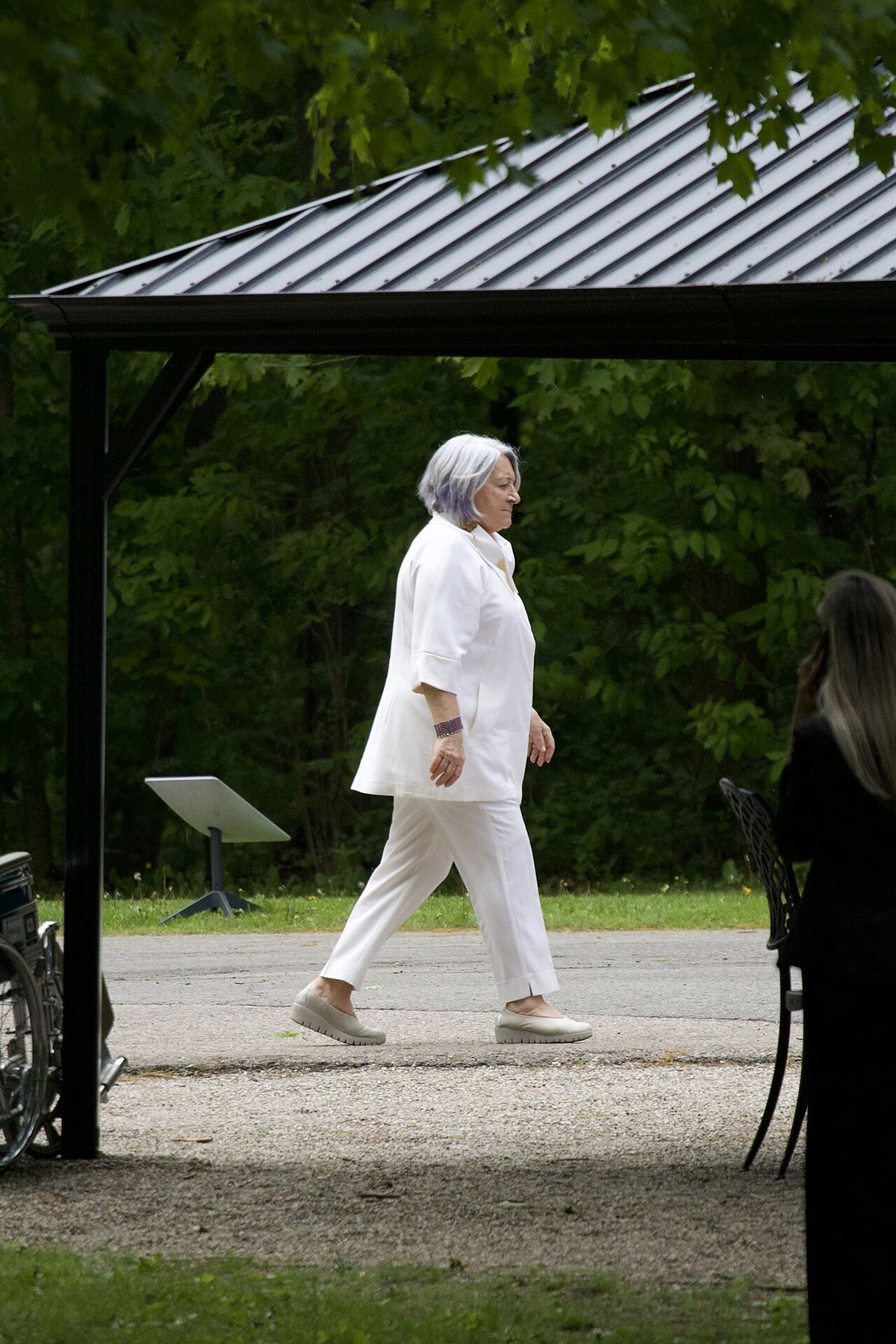
Chief of the Defence Staff
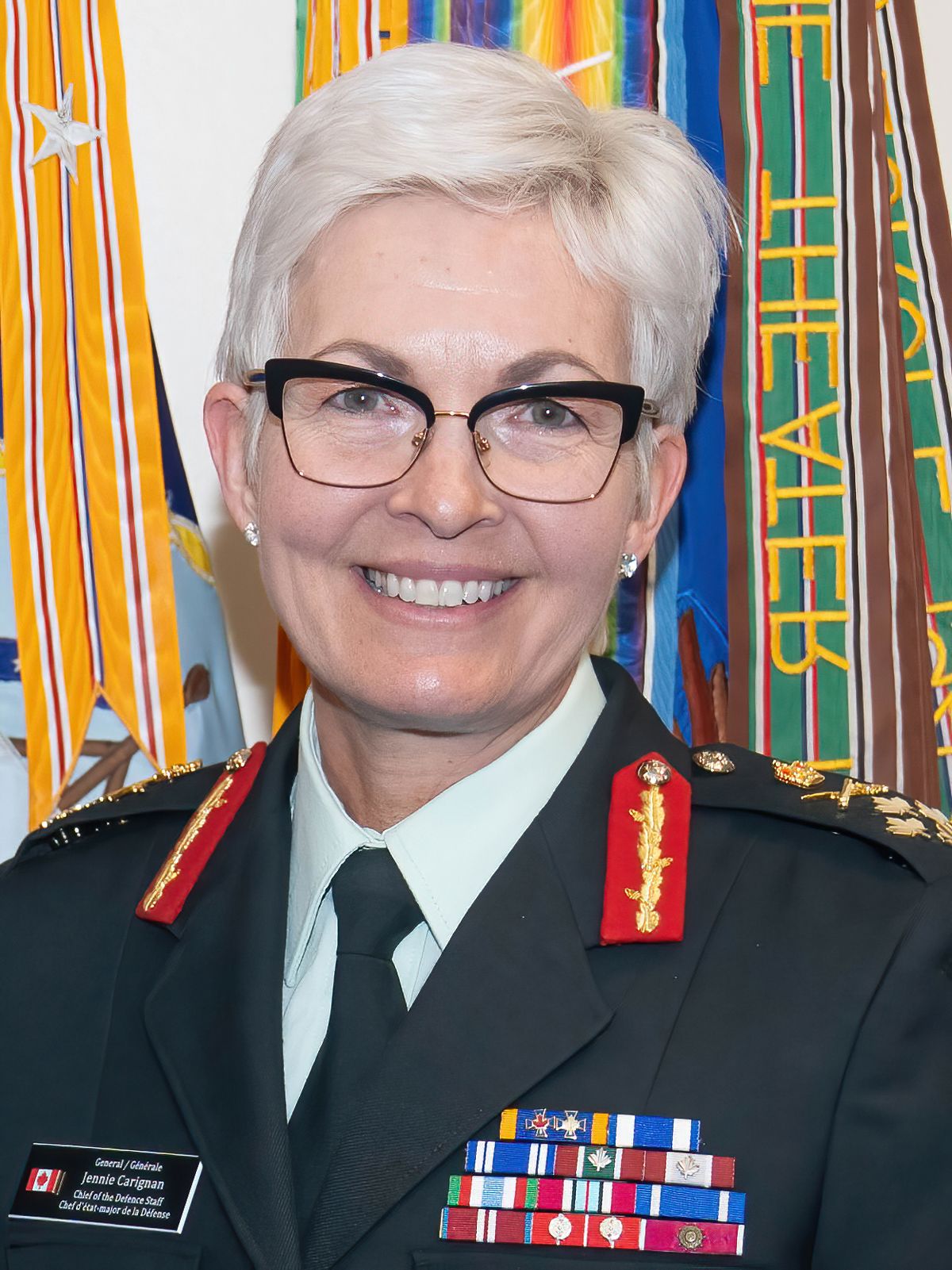
The Chief of the Defence Staff (CDS) is the professional head and senior military officer of the Canadian Armed Forces. Appointed by the Governor-in-Council on the advice of the prime minister, the CDS commands the unified military and serves as the principal advisor to the Cabinet, the minister of national defence, and the prime minister on defence matters. The position was established in 1964 to replace the separate chiefs of the naval staff, general staff, and air staff, centralizing command under a single officer. As of 2024, the role is held by General Jennie Carignan, the first woman to serve as Canada's top military commander.
History and unification of the forces
The position of Chief of the Defence Staff was created in 1964 as part of a major reorganization of Canada's military command structure. Prior to this, the armed forces were divided into three separate services, each with its own chief: the Royal Canadian Navy had a chief of the Naval Staff, the Canadian Army had a chief of the General Staff, and the Royal Canadian Air Force had a chief of the Air Staff. A coordinating role known as the Chairman of the Chiefs of Staff Committee existed from 1951 to 1964, held by General Charles Foulkes and then Air Chief Marshal Frank Robert Miller, but it lacked the unified command authority of the later CDS. The push for unification was initiated by National Defence Minister Paul Hellyer under Prime Minister Lester B. Pearson, leading to legislation that took effect in August 1964.
The new CDS was tasked with heading all military forces, supported by an integrated defence headquarters and six functional commands that replaced the previous eleven service commands. Further legislative action in May 1967, through Bill C-243, formally dissolved the three separate services and created the unified Canadian Armed Forces, effective 1 February 1968. This placed the entire military under the command of the Chief of the Defence Staff. The functional commands were initially named Maritime Command, Land Force Command, and Air Command, but in 2011 these commands had their historic titles reinstated, becoming the Royal Canadian Navy, Canadian Army, and Royal Canadian Air Force once again, though they remained under the operational command of the CDS.
Rank, command, and responsibilities
The Chief of the Defence Staff is the second-highest ranking official in the Canadian military hierarchy, subordinate only to the commander-in-chief, who is the Canadian monarch represented by the governor general. The National Defence Act grants the Governor-in-Council the authority to appoint the CDS, a process that follows the constitutional advice of the prime minister and Cabinet. While the commander-in-chief is the formal source of military orders, constitutional convention means the CDS normally receives direction from and advises the elected government directly. The CDS is charged with four main priority areas, each encompassing several specific tasks essential to the forces' readiness and effectiveness.
The first priority is to conduct operations, which includes the successful execution of domestic and international missions, fostering a culture of risk management to protect personnel, and ensuring recruitment levels sustain operational forces at full capacity. The second priority is to manage the expansion of the regular and reserve forces to meet Canada's obligations, which involves overseeing the Canadian Forces Recruiting Group to streamline the enlistment process. Thirdly, the CDS must implement the national defence strategy as directed by the government, which entails acquiring new equipment and strengthening diplomatic relations through bodies like the United Nations, NATO, and NORAD. The final core responsibility is to enhance programme delivery across the forces while optimizing the use of financial and material resources.
The CDS also holds several ceremonial and honours-related roles. The position chairs the Canadian Forces Decorations Advisory Committee, which reviews and recommends candidates for decorations for valour, bravery, and meritorious service to the governor general. The CDS is an ex-officio member and the Principal Commander of the Order of Military Merit. Separately, the CDS presents two distinct awards: the Chief of the Defence Staff Commendation, a gold bar insignia recognizing service beyond regular expectations for military members, civilian defence employees on overseas operations, and allied foreign military personnel. And the Canadian Forces Medallion for Distinguished Service, awarded on behalf of the entire forces.
Insignia and protocol
The Chief of the Defence Staff is entitled to fly a specific distinguishing flag, the Canadian Armed Forces ensign. This flag is white with the National Flag of Canada in the canton and is defaced by the badge of the Canadian Armed Forces. This ensign serves as a visual symbol of the office and the authority of the CDS. The use of such distinguishing flags is a long-standing military tradition denoting the presence and command of a senior officer, and it is flown wherever the CDS is in official residence or command.

Recent leadership and strategic outlook
General Jennie Carignan assumed the role of Chief of the Defence Staff in 2024, succeeding General Wayne Eyre. Her appointment ceremony was held at the Canadian War Museum in Ottawa and presided over by Governor General Mary Simon. Carignan is a historic figure as the first woman to hold the position, a milestone noted during the emotional ceremony where she reflected on her 38-year career and the people of the armed forces. Her predecessor, General Eyre, emphasized the need for urgency in military preparedness during his farewell address, warning against being caught unprepared by future conflicts and stating that the military has been unprepared in the past when conflicts broke out.
In her early statements as CDS, General Carignan outlined a pressing strategic timeline for the Canadian Armed Forces. She publicly stated that Canada has approximately five years to prepare for emerging long-range security threats, citing the loss of Arctic ice cover and advancements in weaponry as key challenges. Carignan emphasized that Canada is now more open to both conventional and unconventional threats simultaneously and stressed the importance of readiness to defend Canadians. She highlighted ongoing collaboration with NORAD and NATO as central to this preparation. Carignan's career has included commanding the NATO training mission in Iraq in 2020, leading the Task Force Kandahar Engineer Regiment in Afghanistan, and serving in Bosnia. Immediately prior to becoming CDS, she was tasked with leading the military's cultural transformation in response to a sexual misconduct crisis.
- Command of a combat arms unit (2008), becoming the first Canadian woman to do so.
- Command of the Task Force Kandahar Engineer Regiment in Afghanistan (2009 to 2010).
- Service in Bosnia clearing explosive ordnance (2002).
- Command of the NATO training mission in Iraq (2020).
- Leading the military's culture change initiative (prior to 2024).
In 2026, General Jennie Carignan delivered a closing keynote address at the 94th Ottawa Conference on Security and Defence. She also participated in high-level defence discussions, such as the Rim of the Pacific (RIMPAC) 2026 exercise, which was highlighted in a documentary-style clip. Canada has nominated General Carignan for the position of NATO Military Chair. This nomination reflects her standing in international defence circles following her service as Chief of the Defence Staff since 2024.
Organizational structure and senior staff
The office of the Chief of the Defence Staff is supported by a senior staff structure that includes the Vice-Chief of the Defence Staff (VCDS) as the principal deputy. Other key personnel in the CDS's organization include the Canadian Armed Forces Chief Warrant Officer, the senior non-commissioned member advisor. The staff also includes various general and flag officers serving in chief of staff roles. For example, as of 2026, Brigadier-General Krista Lee Ann Bouckaert served as Chief of Staff to the Chief of the Defence Staff. This structure ensures the CDS has the necessary advisory and executive support to manage the vast responsibilities of commanding the Canadian Armed Forces and advising the government on all military and strategic matters.

Questions about Chief of the Defence Staff
Who is the current Chief of the Defence Staff of Canada?
The current Chief of the Defence Staff is General Jennie Carignan. She was appointed to the position in 2024, succeeding General Wayne Eyre. General Carignan is the first woman to hold the role of Canada's top military commander. Her appointment ceremony was held at the Canadian War Museum in Ottawa and presided over by Governor General Mary Simon.
What are the main responsibilities of the Chief of the Defence Staff?
The Chief of the Defence Staff has four main priorities. The first is to conduct domestic and international operations. The second is to expand the regular and reserve forces to meet obligations. The third is to implement the national defence strategy, which requires acquiring new equipment and strengthening diplomatic relations. The fourth is to enhance the forces' programme delivery while optimising the use of resources. The CDS also chairs the Canadian Forces Decorations Advisory Committee and presents the Chief of the Defence Staff Commendation.
When was the position of Chief of the Defence Staff created?
The position of Chief of the Defence Staff was created in 1964. It replaced the positions of the Chairman of the Chiefs of Staff Committee and the three separate service chiefs. Legislation introduced by National Defence Minister Paul Hellyer took effect in August 1964. Bill C-243 was passed in May 1967 and was effective as of 1 February 1968, formally creating the Canadian Armed Forces under the command of the CDS.
What did General Carignan say about Canada's military preparedness?
General Jennie Carignan stated that Canada has about five years to prepare for emerging threats to its security. She identified the loss of Arctic ice cover and the development of new long-range weapons as emerging threats. Carignan said Canada is more open to both conventional and unconventional threats simultaneously. She added that Canada is actively working with NORAD and NATO to prepare for such threats. Carignan also commanded the NATO training mission in Iraq in 2020.
What awards does the Chief of the Defence Staff present?
The Chief of the Defence Staff presents two main awards. The Chief of the Defence Staff Commendation is a gold bar insignia recognizing activity or service beyond regular expectations, awarded to Canadian Forces members, civilian defence employees on overseas operations, and allied foreign military personnel. The CDS also awards the Canadian Forces Medallion for Distinguished Service on behalf of the entire forces. The CDS chairs the Canadian Forces Decorations Advisory Committee which recommends other military honours.
How is the Chief of the Defence Staff appointed?
The Chief of the Defence Staff is appointed by the Governor-in-Council. This means the governor general acts on the constitutional advice of the ministers of the Crown. The National Defence Act gives the authority to appoint the CDS. The commander-in-chief, the Canadian monarch, is the person from whom the CDS receives orders, but the CDS normally advises the prime minister and Cabinet directly.
Sources and further reading
- Chief of the Defence Staff (Wikipedia)
- New chief of the defence staff says Canada has 5 years to ... (cbc.ca)
Checked by the Nosy Mag desk. Last updated 2026-10-27.