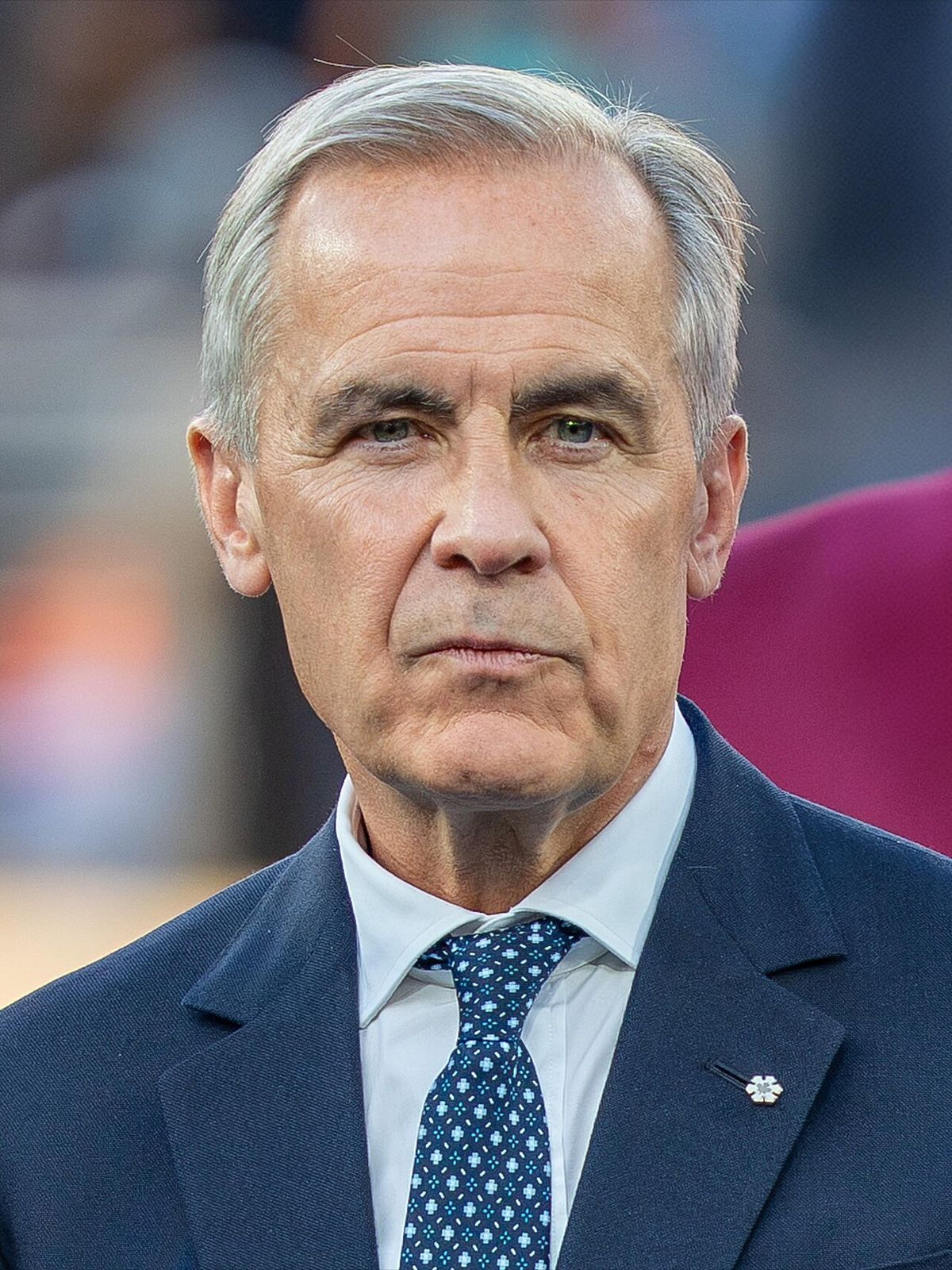
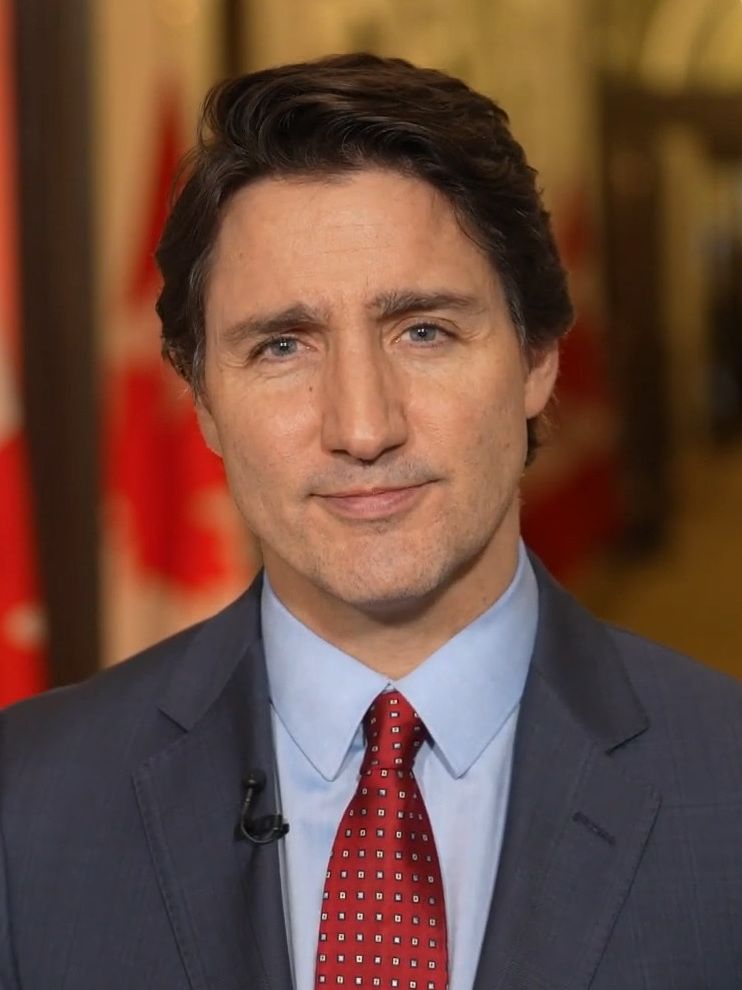
Jason Kenney
Jason Kenney is a former Canadian politician who served as the 18th premier of Alberta from 2019 to 2022. His career spans over 25 years in public office, most notably as a senior federal cabinet minister under Prime Minister Stephen Harper and as the founding leader of Alberta's United Conservative Party. Kenney led his party to a majority government victory in 2019 but resigned in 2022 following a contentious leadership review. His political legacy includes significant reforms to federal immigration policy and, more recently, a prominent public role in advocating for Canadian unity during Alberta's 2026 independence referendum.
Early Life and Pre-Political Career
Jason Thomas Kenney was born on May 30, 1968, in Oakville, Ontario, to parents Lynne Tunbridge and Robert Martin Kenney, a teacher at Appleby College. His grandfather was jazz musician and big band leader Mart Kenney. He attended the private Catholic Athol Murray College of Notre Dame in Wilcox, Saskatchewan, where his father served as president. Kenney later studied philosophy at the University of San Francisco, a Jesuit institution, but did not complete his degree. During a CNN interview segment from that time, credited as 'Jason Kenny, Anti-abortion Activist,' he argued against allowing pro-choice activists on campus, suggesting it would destroy the university's mission. His early professional work was in advocacy and politics, beginning as executive assistant to Saskatchewan Liberal leader Ralph Goodale in 1988, having been very involved in the young Liberals. In 1989, he was hired as the first executive director of the Alberta Taxpayers Association, which advocated for fiscal responsibility, and the following year he became president and chief executive officer of the Canadian Taxpayers Federation, a role that established his public profile as a fiscal conservative scrutinizing government expenditure.
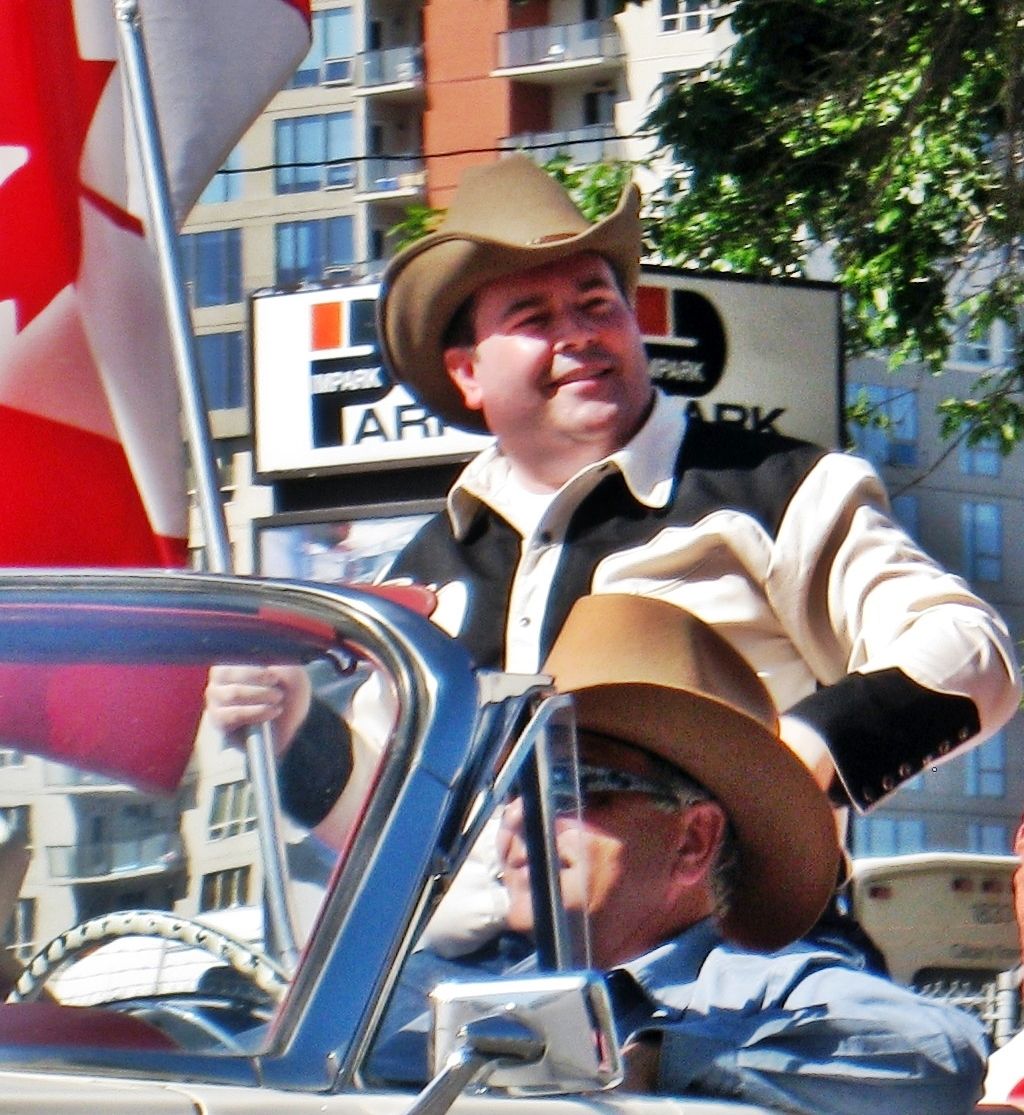
Federal Political Career: Opposition and Early Cabinet Roles
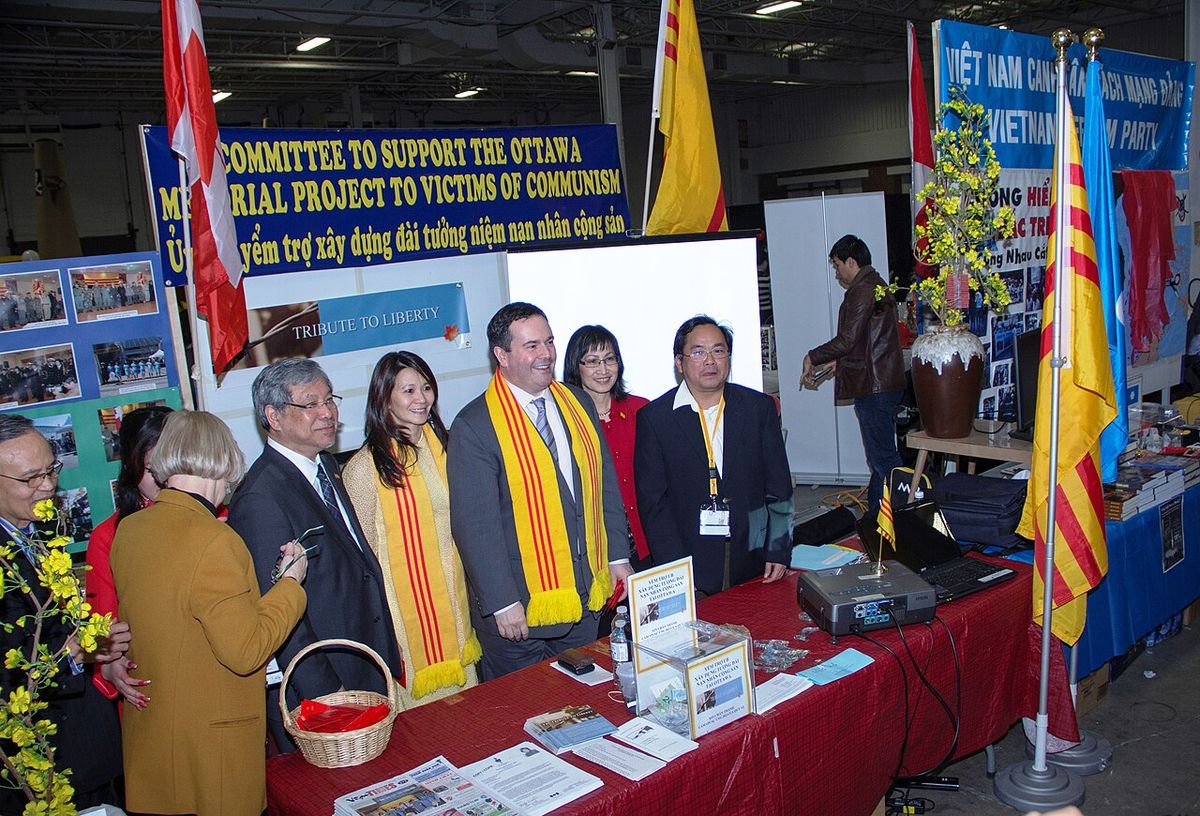
Jason Kenney was first elected to the House of Commons in 1997 at age 29 as a Reform Party member for Calgary Southeast, beginning a federal career that would last 19 years. He was part of a group of Reform MPs known as the Snack Pack for their habit of eating greasy food and ridiculing the governing Liberals. He served in several opposition critic roles, including deputy House leader for the Official Opposition, critic for Canada, United States relations, critic for national revenue, and critic for finance. Kenney supported the 2003 invasion of Iraq and suggested Canada's refusal to participate would damage relations with the United States. Following the Conservative victory in 2006, Prime Minister Stephen Harper appointed Kenney as parliamentary secretary to the prime minister on February 6, 2006. In that role, he came under fire in August 2006 for comparing Hezbollah to the Nazi Party after two opposition MPs suggested removing it from Canada's terrorist list. On January 4, 2007, Kenney was sworn into the Privy Council as the secretary of state for multiculturalism and Canadian identity, becoming the Harper government's key representative to ethnic communities across the country. In early 2008, he officially recognized the flag of the Republic of Vietnam as the symbol of the Vietnamese-Canadian community on his website, declaring attempts to disparage it an attack on multiculturalism. That May, he launched the Community Historical Recognition Program, which provided $13.5 million over five years for projects commemorating historical injustices against ethno-cultural communities.
Minister of Citizenship, Immigration and Multiculturalism (2008 to 2013)
In a cabinet shuffle on October 30, 2008, Kenney was appointed Minister of Citizenship and Immigration while retaining responsibility for multiculturalism. He officially launched Asian Heritage Month in April 2009 to better understand the diversity of the Asian Canadian community. A major new law amending the Citizenship Act came into effect on April 17, 2009, including the 'first generation limitation' on citizenship by descent for children born abroad. On June 26, 2010, Kenney announced sweeping changes to the Skilled Worker Immigration Program, requiring applicants to have a job offer or qualify in one of 29 eligible occupations, alongside an annual cap of 20,000 applications. From July 1, 2011, this was further reduced to a maximum of 10,000 applications per year, with a sub-cap of 500 per occupation. He argued these reforms fixed a broken system, prioritized economic contributions, and reduced processing times, with lawyer Richard Kurland stating they guaranteed 'no more backlogs.' However, Kenney also decided to delete a backlog of 280,000 skilled worker applications, a move challenged unsuccessfully in court. He created the Canadian Experience Class to attract international students and imposed new language requirements for skilled workers. In 2011, he instituted a ban on wearing the niqab during the citizenship oath, a policy the Federal Court of Appeal ruled unlawful in 2015 in the case of Zunera Ishaq. His tenure also saw the creation of a controversial Designated Country of Origin list, which deemed countries like Hungary, Mexico, and Israel as unlikely to produce refugees, subjecting claimants from those nations to a faster process and denying them emergency healthcare coverage. Kenney introduced a new citizenship guide, Discover Canada, in 2010. In 2012, he sponsored the Protecting Canada's Immigration System Act, which gave ministers broad new powers. He also initiated the Office of Religious Freedom within Foreign Affairs Canada in 2013.
- Combating Citizenship Fraud (2011 to 2012): On July 19, 2011, Kenney announced intent to revoke citizenship from 1,800 people for fraud, a unprecedented large-scale crackdown. By September 2012, almost 11,000 cases were under review, with up to 3,100 citizenships revoked.
- Marriage Fraud Measures (2012): Instituted a five-year sponsorship bar for previously sponsored spouses and a two-year conditional permanent residency to deter marriages of convenience.
- Position on U.S. War Resisters (2009): Publicly criticized American soldiers seeking asylum in Canada for refusing to serve in Iraq, calling them 'bogus refugee claimants' and 'deserters,' not legitimate refugees like Vietnam-era draft dodgers.
- Admissibility Decisions: Introduced the Faster Removal of Foreign Criminals Act in June 2012, granting the minister power to deny entry based on 'public policy considerations.' This followed the 2009 exclusion of British MP George Galloway, which a Federal Court later found was based on a flawed interpretation of terrorism laws and an attempt to bar him for his political views.
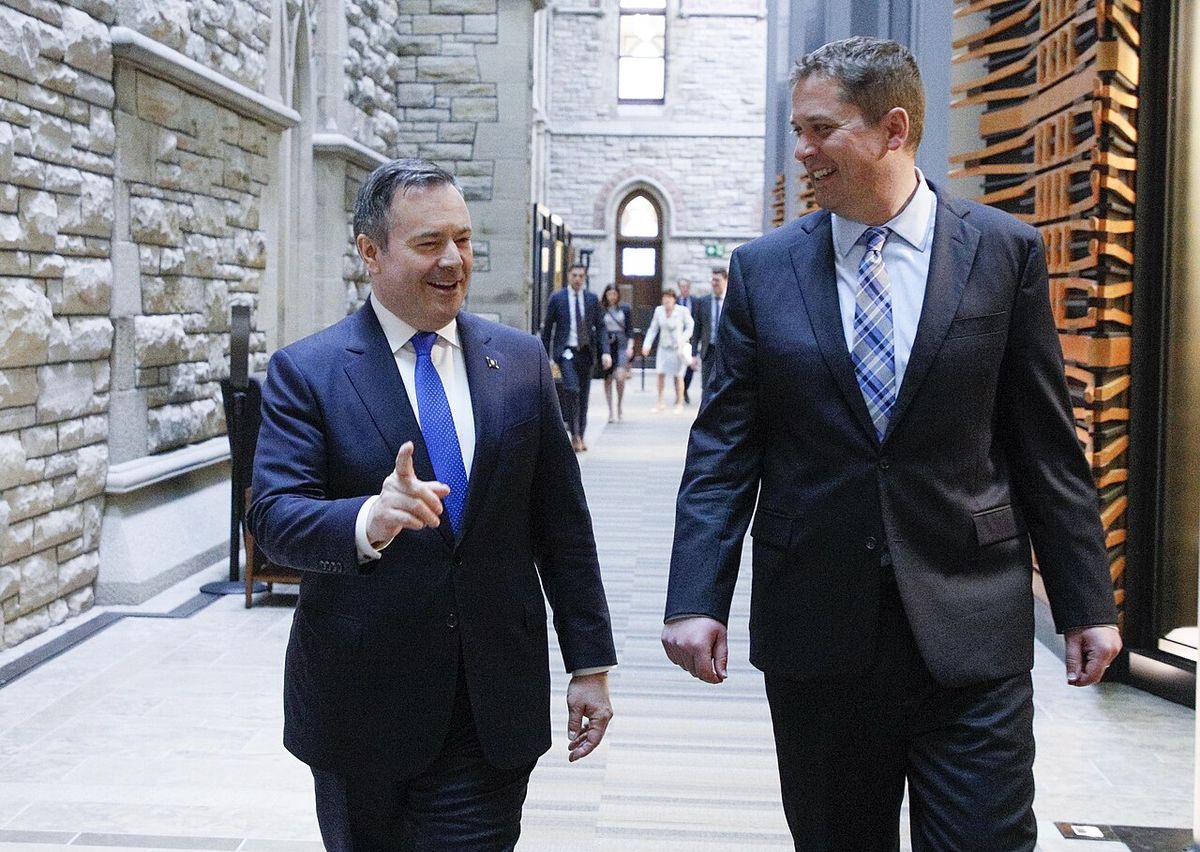
Later Federal Roles and Return to Alberta Politics
In July 2013, Kenney was appointed minister of employment and social development and minister for multiculturalism. In this role, he implemented the Canada Job Grant program in 2014. In February 2015, he was named minister of national defence, serving until the Conservative government's defeat in the October 2015 election. As defence minister, he announced the deployment of Canadian troops to Ukraine as part of Operation UNIFIER. Following Prime Minister Stephen Harper's resignation, Kenney was considered a potential candidate for the Conservative Party leadership. Instead, in July 2016, he announced his intention to run for the leadership of the Alberta Progressive Conservative Party. He resigned his seat in Parliament on September 23, 2016, after over 19 years as an MP. Kenney was elected leader of the Alberta PCs on March 18, 2017, on a platform explicitly focused on merging the party with the Wildrose Party. He successfully negotiated the merger, which was effected on July 24, 2017, dissolving both parties to form the new United Conservative Party. He was then elected the first leader of the UCP on October 28, 2017. A key condition of the merger agreement, which Kenney insisted upon, was the inclusion of language affirming loyalty to a united Canada, a clause he stated was essential for his participation. He was elected MLA for Calgary-Lougheed on December 14, 2017, and sworn in as Leader of the Opposition on January 29, 2018.
Premier of Alberta and UCP Leadership Crisis
Jason Kenney led the United Conservative Party to a majority government victory in the April 2019 provincial election, defeating the incumbent New Democratic Party government led by Premier Rachel Notley. The UCP won 63 seats and 54.88 percent of the popular vote. He was sworn in as Alberta's 18th premier on April 30, 2019, and also served as the MLA for Calgary-Lougheed. His premiership focused on economic development and diversification, leading the creation of Alberta's Recovery Plan, a Natural Gas Vision and Strategy, a Hydrogen Roadmap, and the first-of-its-kind Alberta Indigenous Opportunities Corporation. His government passed legislation to repeal the provincial carbon tax and cut corporate taxes. It also established a $30 million Canadian Energy Centre, often called the 'war room,' and a $2.5 million public inquiry into anti-Alberta energy campaigns. His government's handling of the COVID-19 pandemic, however, drew significant and sustained criticism from within his own party, the public, and the media, triggering a mandatory leadership review. The review vote was held in May 2022. On May 18, 2022, the results showed Kenney narrowly won the review with 51.4 percent support against 48.6 percent opposed. Immediately following the announcement, Kenney stated that this level of backing was insufficient to continue leading the party and announced he would step down as UCP leader. He remained premier until October 11, 2022, providing a transition period after Danielle Smith was chosen to succeed him as UCP leader on October 6, 2022.
Post-Premiership and the 2026 Alberta Independence Referendum
Since leaving office, Jason Kenney has remained a prominent public figure. He resigned as MLA for Calgary-Lougheed on November 29, 2022. He joined the law and lobbying firm Bennett Jones as a senior advisor in February 2023, providing counsel on energy, Indigenous partnerships, and public policy. He was also nominated to the board of ATCO on March 31, 2023. His most visible role post-premiership was as a vocal advocate for Canadian unity during Alberta's historic 2026 independence referendum. He joined forces with his former political rival, Rachel Notley, to campaign for the 'remain' option. The two former premiers headlined events together, including an Edmonton Chamber of Commerce luncheon on October 13, 2026, urging Albertans to vote for Option One on the referendum's tenth question, which asked if the province should remain in Canada or begin the process toward secession. Kenney argued that separation would make Alberta an unreliable place for business and investment, scaring away capital. He also emphasized that commitment to Canada was a foundational principle of the United Conservative Party he helped create, stating that if the loyalty language had not been in the merger agreement, he would have walked away and there would have been no UCP. While encouraging a vote to remain, Kenney expressed perplexity with the nine other constitutional and immigration reform questions on the same ballot, telling voters, 'You don't have to vote on them. Come and vote Option One on Question 10, get out of the ballot box.' Following the referendum, in which Albertans voted overwhelmingly to stay in Canada, he commented on the persistent challenge of separatist sentiment, describing it as 'like a bad cold' that is not going away, and discussed the options available to Premier Danielle Smith to deal with stubborn separatists within the political landscape.
Key Policies, Legal Challenges, and Political Philosophy
Kenney's political career was defined by a consistent conservative philosophy focused on fiscal restraint, a robust immigration system geared toward economic benefit, strong national security, and the promotion of a particular vision of Canadian identity. His policy initiatives often sparked legal and public debate. The niqab ban for citizenship oaths was a prominent example, ruled unlawful by the courts for violating policy guidelines. The exclusion of George Galloway led to a Federal Court rebuke, with the judge finding Kenney's office used a 'flawed and overreaching interpretation' of terrorism laws and acted because they disagreed with his political views. His immigration reforms, while praised for reducing backlogs, were criticized for creating hardship, such as the deletion of 280,000 applications and the differentiated treatment of refugee claimants from 'safe' countries. The Community Historical Recognition Program represented a concerted effort to address historical wrongs, though a portion of funds for Chinese head tax education went unspent. In Alberta, his premiership was marked by an ambitious suite of economic plans aimed at leveraging the province's resources, such as the Hydrogen Roadmap. Throughout, Kenney positioned himself as a staunch defender of Canada's unity and a pragmatic builder of conservative coalitions, a role he reprised forcefully in the 2026 referendum campaign alongside Rachel Notley. Kenney has been a social conservative, voting against same-sex marriage and for abortion restrictions. He received awards including the Queen Elizabeth II Diamond Jubilee Medal in 2012 and an Order of Merit from Ukraine in 2016.
Electoral Record and Parliamentary Service
Jason Kenney was first elected to the House of Commons in the 1997 federal election as a member of the Reform Party. He was re-elected in 2000 as a Canadian Alliance candidate and then re-elected five more times as a Conservative Party of Canada candidate. In April 2019, he led the United Conservative Party to a majority government victory in the Alberta general election, defeating incumbent Premier Rachel Notley. He served as the member of the Legislative Assembly for Calgary-Lougheed from 2017 until 2022.
| Year | Election | Role | Result | Notes |
|---|---|---|---|---|
| 1997 | Federal (Calgary Southeast) | Reform Party Candidate | Elected | First elected to House of Commons at age 29. |
| 2000 | Federal (Calgary Southeast) | Canadian Alliance Candidate | Re-elected | National co-chair of the Alliance's election campaign. |
| 2004 | Federal (Calgary Southeast) | Conservative Candidate | Re-elected | |
| 2006 | Federal (Calgary Southeast) | Conservative Candidate | Re-elected | Conservative victory led to first cabinet appointment. |
| 2008 | Federal (Calgary Southeast) | Conservative Candidate | Re-elected | Appointed Minister of Citizenship and Immigration. |
| 2011 | Federal (Calgary Southeast) | Conservative Candidate | Re-elected | Conservative majority government. |
| 2015 | Federal (Calgary Midnapore) | Conservative Candidate | Re-elected | Conservative defeat. Served as Defence Minister. |
| 2017 | Alberta PC Leadership | Leadership Candidate | Elected Leader | Won on platform to merge with Wildrose Party. |
| 2017 | UCP Leadership | Leadership Candidate | Elected Leader | First leader of the newly formed United Conservative Party. |
| 2019 | Alberta General (Calgary-Lougheed) | UCP Leader & MLA Candidate | Elected MLA. Led UCP to Majority Government | Became 18th Premier of Alberta. |
| 2022 | UCP Leadership Review | Party Leader | Received 51.4% support. Resigned | Stepped down following the narrow victory. |
Questions about Jason Kenney
What is Jason Kenney doing now after being premier?
Since stepping down as premier in 2022, Jason Kenney has remained active in public policy discourse. He played a highly visible role in 2026, campaigning alongside former premier Rachel Notley for the 'remain' side in Alberta's independence referendum. Professionally, he joined the law and lobbying firm Bennett Jones as a senior advisor in February 2023. He was also nominated to the board of ATCO in March 2023. He provides counsel drawing on his extensive experience in energy policy, Indigenous partnerships, and government relations.
Why did Jason Kenney resign as UCP leader?
Jason Kenney resigned as leader of the United Conservative Party in May 2022 following a mandatory leadership review vote. Although he narrowly won the review with 51.4 percent support against 48.6 percent opposed, he announced that this level of backing was insufficient to continue leading the party. The review was triggered by significant internal dissent, largely centred on criticism of his government's management of the COVID-19 pandemic from both UCP members and the general public. He remained premier until a successor, Danielle Smith, was chosen in October 2022, providing a transition period before leaving office.
What were Jason Kenney's main policies as immigration minister?
As Minister of Citizenship, Immigration and Multiculturalism from 2008 to 2013, Kenney implemented several major policy changes. He overhauled the skilled worker program with new caps and a points system to prioritize economic contributions, created the Canadian Experience Class for international students, and established a list of Designated Countries of Origin to fast-track some refugee claims. He also led aggressive efforts to combat citizenship and marriage fraud, resulting in thousands of revocations of status. Additionally, he instituted a ban on wearing the niqab during citizenship ceremonies, a policy later overturned by the courts, and introduced the Faster Removal of Foreign Criminals Act to expand ministerial discretion on admissibility. He introduced the new citizenship guide Discover Canada in 2010.
How did Jason Kenney help create the United Conservative Party?
Jason Kenney was instrumental in creating the United Conservative Party. After being elected leader of the Alberta Progressive Conservative Party in March 2017 on a platform of merger, he successfully negotiated the unification with the Wildrose Party. The merger was formally completed on July 24, 2017, dissolving both parties. Kenney then stood for leadership of the new party and was elected its first leader on October 28, 2017. He insisted that the merger agreement include a clause affirming loyalty to a united Canada, stating he would have walked away from the talks without it, preventing the UCP's formation. He was elected MLA for Calgary-Lougheed in December 2017.
Did Jason Kenney and Rachel Notley really campaign together?
Yes, the former political rivals campaigned together in 2026 to advocate for Alberta remaining in Canada during the province's independence referendum. They appeared jointly at events, including an Edmonton Chamber of Commerce luncheon in October 2026, where they urged voters to select 'Option One' on the ballot question regarding secession. Both cited economic stability and national patriotism as reasons for their unusual alliance, though they encouraged voters to reject the nine other constitutional questions posed by Premier Danielle Smith's government. Notley stated the shared commitment to Canada was deeply felt by both of them, and Kenney highlighted the foundational pro-Canada principle of the UCP.
What was the Community Historical Recognition Program?
The Community Historical Recognition Program (CHRP) was a $13.5 million initiative launched by Jason Kenney in May 2008 during his tenure as secretary of state for multiculturalism. The program provided funding over five years for commemorative projects by ethno-cultural communities that had been subject to historical discrimination in Canadian immigration and wartime policies, such as the Chinese head tax or internment of Ukrainian Canadians. By its conclusion in 2013, all of the funds had been allocated, save for $500,000 earmarked for Chinese head tax education which was left unspent due to a community group's failure to file paperwork. Kenney considered the program a success in educating Canadians about this unfortunate period in history.
Sources and further reading
- Jason Kenney (Wikipedia)
- 2026 Referendum: Notley, Kenney join forces to oppose ... (townandcountrytoday.com)
- Hon. Jason Kenney PC, ECA, Former Alberta Premier (bennettjones.com)
Checked by the Nosy Mag desk. Last updated 2026-10-23.