Father Le Loutre's War
Father Le Loutre's War (1749 to 1755) was a conflict in colonial Atlantic Canada, marking a violent struggle for control of the territory that would become Nova Scotia and New Brunswick. The war pitted British colonial forces and New England settlers against a coalition of Mi'kmaq warriors, Acadian militia, and French military interests, led by the French Catholic missionary Father Jean-Louis Le Loutre. It represented the culmination of decades of Acadian and Mi'kmaq resistance to British expansion, triggered by the British founding of Halifax. The conflict's upheaval, characterized by guerrilla raids, forced population movements, and the construction of numerous fortifications, set the stage for the larger imperial struggle of the French and Indian War and the Acadian Expulsion that followed.
Origins and Background of the Conflict
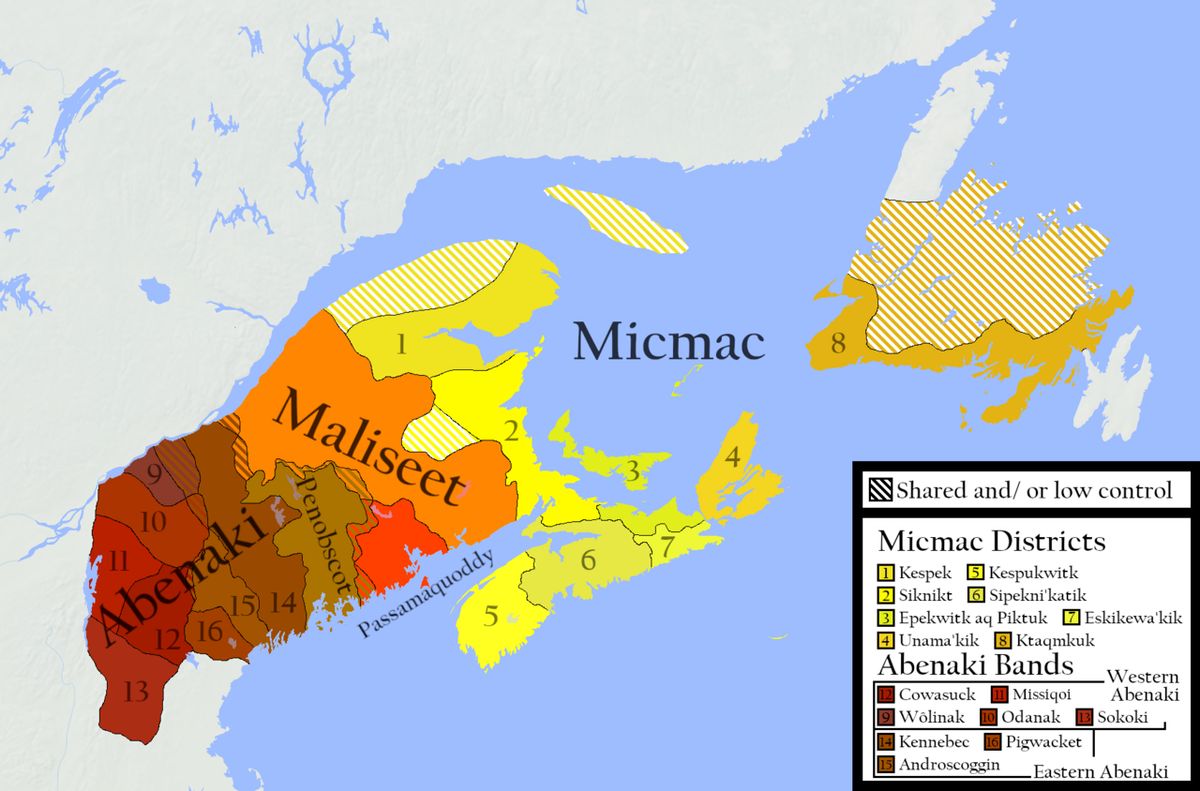
The roots of Father Le Loutre's War lay in the unresolved tensions following Britain's acquisition of peninsular Acadia in the 1713 Treaty of Portsmouth. Despite the formal cession, effective British control remained limited to enclaves at Port Royal and Canso, while the Mi'kmaq and the majority French Acadian population continued to dominate the region. Acadians and Mi'kmaq had a long history of military alliance with France, fighting together in earlier conflicts like King William's War and Queen Anne's War. The Mi'kmaq, as part of the Wabanaki Confederacy, had been engaged in frontier warfare with New England for decades, contesting British encroachment on their traditional territories. The formal peace established by the 1748 Treaty of Aix-la-Chapelle, which ended King George's War, proved fleeting, as British ambitions for consolidation and Protestant settlement directly threatened the existing social and political order in Acadia.
During King George's War, key figures on both sides rose to prominence. Father Jean-Louis Le Loutre, a missionary to the Mi'kmaq since 1738, became deeply involved in military efforts, supporting French-led sieges such as the 1744 attack on Annapolis Royal. On the British side, New England Ranger John Gorham and officer Charles Lawrence gained experience in the region's irregular warfare. The British perception of Nova Scotia as scarcely under their control, as noted by Massachusetts Governor William Shirley, fueled a determination to secure the peninsula through force and settlement. The stage was set for a new conflict when the British government, seeking to project power and alter the demographic balance, authorized the founding of Halifax as a major Protestant settlement and military bastion in 1749. This act was the immediate catalyst for the war, perceived by the Mi'kmaq and Acadians as an existential threat to their homeland and way of life.
The Outbreak of War and British Strategy
The war commenced with the arrival of Edward Cornwallis and over 2,500 settlers to establish Halifax on June 21, 1749. The British strategy was complex and aggressive, aiming to establish firm military control over the entire peninsula and extend British authority into the contested region of present-day New Brunswick. A key component was the rapid construction of fortifications both to protect new settlements and to intimidate Acadian communities. Within the first eighteen months, the British built defences in Halifax, Bedford (Fort Sackville), and Dartmouth, and later in Lunenburg and Lawrencetown. Simultaneously, they moved to assert authority in the major Acadian population centres by constructing forts at Windsor (Fort Edward), Grand Pré (Fort Vieux Logis), and Chignecto (Fort Lawrence). This fortification campaign was intended to break the Acadian and Mi'kmaq hold on the countryside and facilitate Protestant settlement.
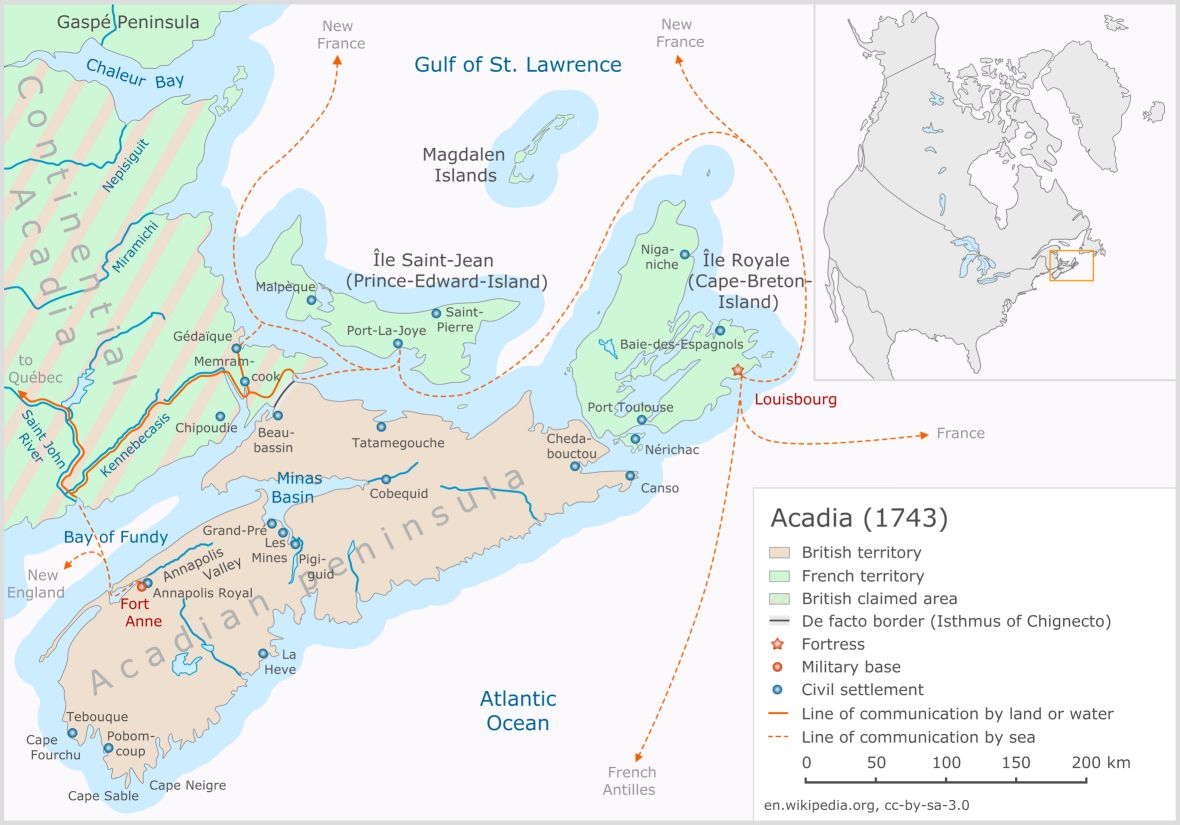
Cornwallis was supported by significant military resources, including New England Ranger units and several British regiments. The 40th, 29th, and 45th Regiments of Foot were stationed at Halifax at the war's outset, joined by the 47th Regiment in 1750. Naval power was commanded by Captain John Rous. The British also pursued a policy of demanding an unconditional oath of allegiance from Acadians, who had long maintained a neutral stance. In September 1749, a petition signed by 1,000 Acadians refused this oath, stating they would leave the country rather than comply. Cornwallis's response was harsh, leading to the deportation of hundreds of Acadians and the confiscation of their property. This policy, alongside the settlement push, triggered what became known as the Acadian Exodus, with many families fleeing to French-controlled territories like Ile Saint-Jean (Prince Edward Island) and Ile Royale (Cape Breton Island). Father Le Loutre, whom the British derisively called 'Moses,' was a central figure in organizing and encouraging this exodus.
Father Le Loutre and the Acadian-Mi'kmaq Alliance
Father Jean-Louis Le Loutre was the spiritual and strategic leader of the resistance. Born in Morlaix, France, in 1709 and ordained as a Spiritan missionary, he arrived in Acadia in 1737. After learning the Mi'kmaq language, he served the Shubenacadie mission, ministering to Mi'kmaq communities across a vast territory. With the outbreak of King George's War, French authorities instructed missionaries working with Indigenous nations to encourage military resistance against the British. Le Loutre embraced this role, becoming a crucial liaison between the Mi'kmaq, Acadian militias, and French military command. He was joined by Acadian resistance leader Joseph Broussard, known as Beausoleil, who provided militant leadership to the Acadian community. Le Loutre's strategy was to use guerrilla warfare to harass British settlements, attack supply lines, and retard British expansion, thereby buying time for France to implement a plan to resettle Acadians on French territory.
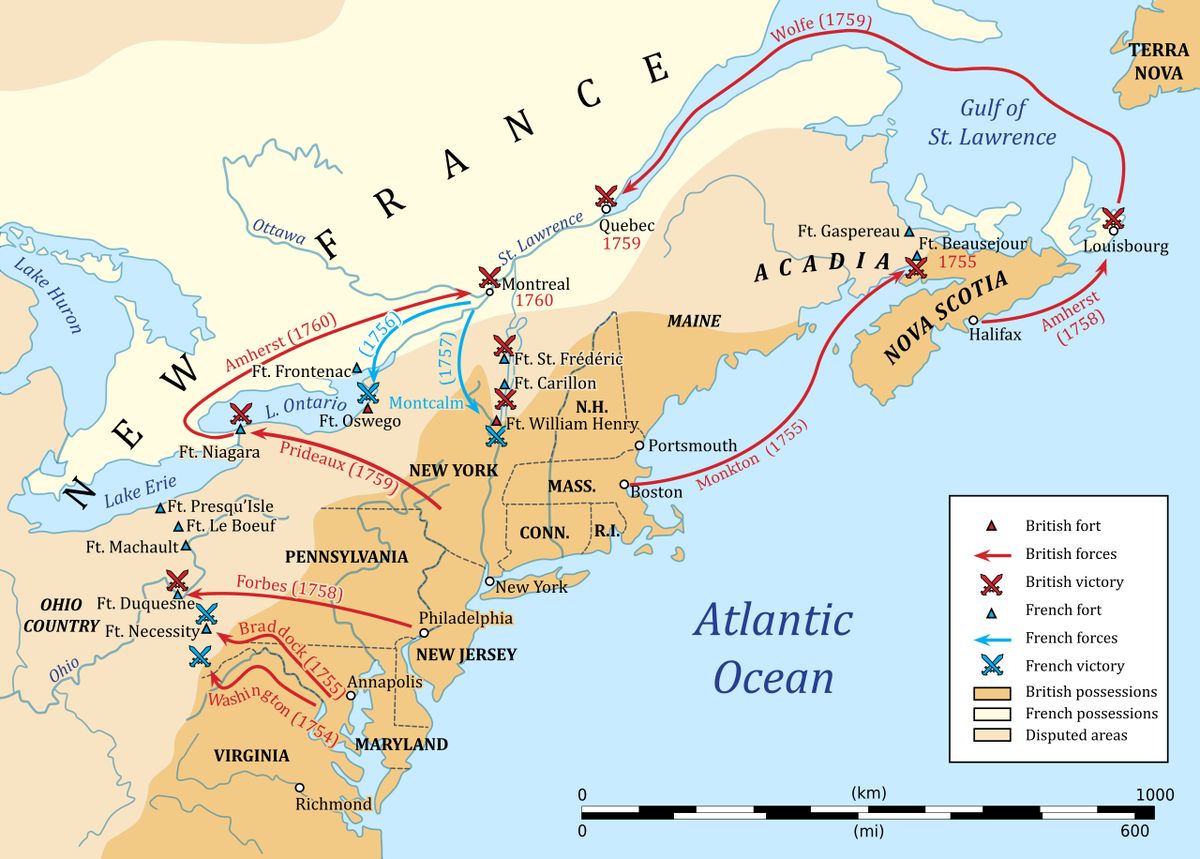
The French government supported this resistance by constructing a chain of forts to protect the vital land corridor between Quebec and Louisbourg. In direct response to the founding of Halifax, they built Fort Menagoueche at the mouth of the Saint John River, Fort Beauséjour at the Isthmus of Chignecto, and Fort Gaspareaux at Baie Verte within eighteen months. Le Loutre operated from Fort Beauséjour, coordinating attacks and encouraging the Acadian Exodus. He famously boasted that the English might build as many forts as they pleased, but he would ensure they could not leave them, pledging to 'torment them with his Indians.' This coalition aimed not only to defend territory but to preserve the Acadian and Mi'kmaq way of life against a Protestant, British colonial project that sought to displace them.
Major Conflicts and Military Actions
The conflict was characterized by frequent raids, skirmishes, and sieges rather than large-scale pitched battles. Hostilities began in August 1749 when Mi'kmaq forces attacked a British party at Canso, taking twenty prisoners to Louisbourg. A significant early attack was the Raid on Dartmouth on September 30, 1749, where about forty Mi'kmaq killed four British woodcutters, took one prisoner, and scalped two victims. This was the first of eight recorded raids on Dartmouth during the war. In response, Governor Cornwallis and his council issued a proclamation on October 2, 1749, authorizing British subjects to 'annoy, distress, take or destroy' the Mi'kmaq anywhere, offering a bounty of ten guineas for every Mi'kmaq killed or captured. The bounty was later increased to fifty guineas in June 1750 after further attacks.
Major recorded actions during the war included the Siege of Grand Pré in November 1749, where a force of 300 Mi'kmaq, Wolastoqey, and Acadians attacked Fort Vieux Logis and captured Lieutenant John Hamilton and eighteen soldiers. Another key action was the Battle at St. Croix in March 1750, where John Gorham's Rangers clashed with Mi'kmaq and Acadian forces near the Acadian village of Five Houses. Thirteen of the war's twenty-four recorded conflicts were raids by Mi'kmaq and Acadians targeting the British capital region of Halifax and Dartmouth. British forces also launched counter-raids against Mi'kmaq and Acadian positions at Mirligueche (Lunenburg), Chignecto, and St. Croix. The warfare created a state of constant insecurity, with British officer Richard Bulkeley later stating Nova Scotia was kept 'in an uninterrupted state of war' between 1749 and 1755, where travel between Halifax and outposts like Fort Edward required armed escorts of thirty men or more.
The Acadian Exodus and Population Upheaval
A defining feature of Father Le Loutre's War was the massive displacement of the Acadian population, known as the Acadian Exodus. Faced with British demands for an unconditional oath, the confiscation of property, and the threat of violence, and encouraged by Le Loutre and French promises of land and support, thousands of Acadians abandoned their homes. This movement was a deliberate strategy of resistance, aiming to deprive the British of a productive population and labour force while strengthening French-controlled territories. The exodus saw Acadians from centres like Beaubassin and Grand Pré trekking to the Isthmus of Chignecto, where they were often escorted by Mi'kmaq forces to boats bound for Ile Saint-Jean and Ile Royale. The scale of this upheaval was unprecedented in the region, and historian Micheline Johnson described Le Loutre as 'the soul of the Acadian resistance' for his role in organizing this movement.
The British response was to deport those Acadians who refused the unconditional oath of allegiance to Britain. The deportation involved the confiscation of their homes, lands and cattle. The British deported almost half of the total Acadian population of Nova Scotia during the war. The expulsion was brutal, often separating children from their families. The leader of the Exodus was Father Jean-Louis Le Loutre, whom the British gave the code name 'Moses'.
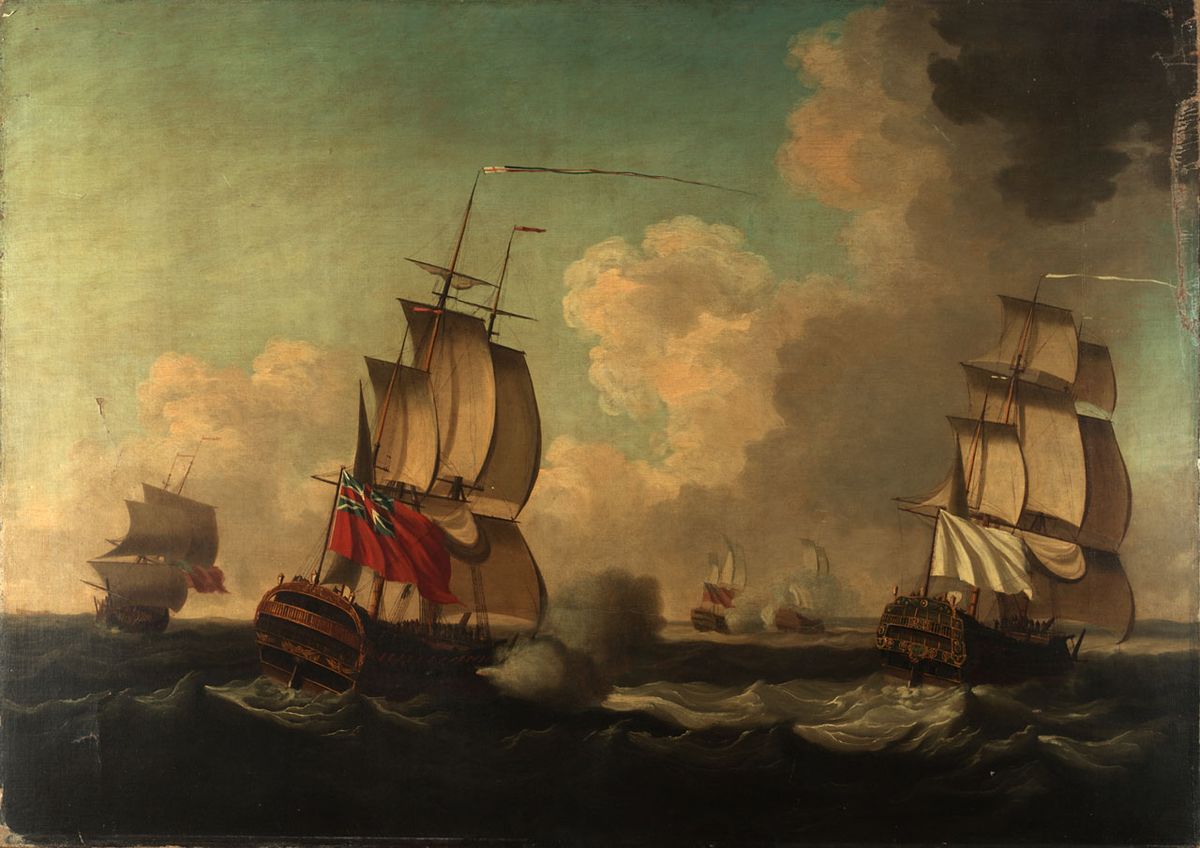
Key British Fortifications and French Counter-Forts
A central feature of the war was the construction of fortifications by both sides to secure territory and control populations. The British built a network of forts to protect their new settlements and to assert dominance over major Acadian communities. The French, in response, constructed their own forts to protect the strategic corridor between Quebec and Louisbourg and to support the resistance. The following lists detail the key fortifications built during the conflict. British forts constructed during Father Le Loutre's War included fortifications in Halifax, Bedford, Dartmouth, Lunenburg and Lawrencetown. The British also built forts in the major Acadian communities of Windsor, Grand Pré and Chignecto. A British fort already existed at Annapolis Royal.
- Citadel Hill in Halifax (1749)
- Fort Sackville in Bedford (1749)
- Fortifications in Dartmouth (1750)
- Fort Edward in Windsor (1750)
- Fort Vieux Logis in Grand Pré (1749)
- Fort Lawrence in Chignecto (1750)
- Fortifications in Lunenburg (1753)
- Fortifications in Lawrencetown (1754)
French forts constructed in response to the British founding of Halifax were built to protect the vital land route between Quebec and Louisbourg. This route went from Baie Verte through Chignecto, along the Bay of Fundy and up the Saint John River. To secure this corridor, the French strategically constructed three forts within eighteen months: Fort Gaspareaux at Baie Verte, Fort Beauséjour at Chignecto, and Fort Menagoueche at the mouth of the Saint John River. The French recognized the threat Halifax posed and that the Saint John River corridor could be used for a British attack on Quebec City itself.
- Fort Menagoueche at the mouth of the Saint John River (1749)
- Fort Beauséjour at the Isthmus of Chignecto (1751)
- Fort Gaspareaux at Baie Verte (1751)
These fortifications became focal points for military action. The Mi'kmaq and Acadians attacked the British forts in Nova Scotia and the newly established Protestant settlements. The British responded by attacking the Mi'kmaq and Acadians at locations such as Mirligueche, Chignecto and St. Croix. The war ended with the defeat of the Mi'kmaq, Acadians and French in the Battle of Fort Beauséjour in 1755.
Conclusion of the War and Aftermath
Father Le Loutre's War concluded in 1755 with the British conquest of the key French fortress of Fort Beauséjour. The fall of this stronghold, which had been Le Loutre's base of operations, broke the back of organized military resistance in the region. The defeat also led to the capture of Father Le Loutre himself later that year, as he attempted to return to France. He was imprisoned and died in France in 1772. The war's end did not bring peace for the Acadians. Instead, it directly precipitated the much larger and more systematic Acadian Expulsion (Le Grand Dérangement), ordered by British Governor Charles Lawrence beginning in 1755.
The conflict had lasting consequences for all parties. It successfully established British military dominance over peninsular Nova Scotia and opened the region to further Protestant settlement, fundamentally shifting the colonial balance of power. For the Mi'kmaq, the war represented a failed but determined effort to defend their homeland and sovereignty against an overwhelming wave of colonization. For the Acadians, the war and the exodus it triggered were preludes to the catastrophe of the expulsion, which scattered their communities across the Atlantic world. Father Le Loutre's War is therefore a critical chapter in the history of Atlantic Canada, marking the violent end of Acadian neutrality and the beginning of a new, British-dominated era in the region.
Key Figures in the Conflict
The war was shaped by the actions and decisions of several prominent individuals on both sides. British leaders included Governor Edward Cornwallis, who founded Halifax and issued the bounty proclamation. Governor Charles Lawrence later ordered the Acadian Expulsion. New England Ranger John Gorham led many military actions, including the Battle at St. Croix. French and Indigenous leaders were led by Father Jean-Louis Le Loutre, the missionary who coordinated the resistance. He was joined by Acadian militia leader Joseph Broussard, known as Beausoleil. French military officers involved included Louis Du Pont Duchambon de Vergor, commander at Fort Beauséjour. Other notable figures include British naval officer Captain John Rous and Mi'kmaq Chief Jean-Baptiste Cope, who signed the Treaty of 1752.
Questions about Father Le Loutre's War
What was Father Le Loutre's War and when did it take place?
Father Le Loutre's War was a colonial conflict fought from 1749 to 1755 in Acadia and Nova Scotia, encompassing present-day Nova Scotia and New Brunswick. It occurred between the larger imperial wars of King George's War and the French and Indian War. The war involved British forces and New England settlers against a coalition of Mi'kmaq warriors, Acadian militia, and French military interests. It is also known by other names including the Indian War, the Mi'kmaq War, and the Anglo-Mi'kmaq War.
Who was Father Jean-Louis Le Loutre and what was his role?
Father Jean-Louis Le Loutre was a French Catholic missionary born in 1709 who served the Mi'kmaq people from the Shubenacadie mission. During the war, he became the political and military leader of the resistance against British expansion. Le Loutre coordinated guerrilla warfare tactics, acted as a liaison between the Mi'kmaq, Acadians, and French authorities, and actively encouraged the Acadian Exodus to French territories. The British referred to him by the code name 'Moses' for his role in leading Acadians away from British-controlled areas. He was captured in 1755 and died in France in 1772.
Why did the Acadian Exodus happen during this war?
The Acadian Exodus was a mass migration of thousands of Acadians from their homes in Nova Scotia to French-controlled lands like Ile Saint-Jean and Ile Royale. It was driven by British demands for an unconditional oath of allegiance, the confiscation of Acadian property, the threat of violence from ongoing warfare, and active encouragement from Father Le Loutre and French officials. This exodus was a form of resistance, aiming to deny the British a productive population and labour force. The British deported almost half of the Acadian population of Nova Scotia during the war in response.
What was the British bounty proclamation against the Mi'kmaq?
On October 2, 1749, British Governor Edward Cornwallis and the Nova Scotia Council issued a proclamation authorizing all British subjects to 'annoy, distress, take or destroy' the Mi'kmaq people. It offered a bounty of ten guineas for every Mi'kmaq person killed or taken prisoner, with payment made upon producing the captive or their scalp. The proclamation treated the Mi'kmaq not as a sovereign enemy but as 'Banditti Ruffians, or Rebels' to British authority. After continued attacks in June 1750, Cornwallis deemed the initial proclamation ineffective and increased the bounty to fifty guineas per person.
How did Father Le Loutre's War end?
The war effectively ended in 1755 with the British victory at the Battle of Fort Beauséjour. The capture of this key French fortress, which had been Father Le Loutre's operational base, broke the organized military resistance. Following this defeat, the British arrested Father Le Loutre later that year as he attempted to sail to France. The conclusion of the war directly led to the British decision to begin the large-scale Acadian Expulsion in 1755.
What were the long-term impacts of this war on Atlantic Canada?
Father Le Loutre's War established British military dominance over peninsular Nova Scotia, paving the way for increased Protestant settlement. It ended the era of Acadian neutrality and set the stage for the Acadian Expulsion. The war caused unprecedented upheaval with more population movements, fortification construction, and troop allocations than ever before in the region. It also contributed to the supply problems that doomed French power in the area, influencing the later fall of Louisbourg.
Sources and further reading
- Father Le Loutre's War (Wikipedia)
- Father Le Loutre's War Facts for Kids (kids.kiddle.co)
- LE LOUTRE (LeLoutre), JEAN-LOUIS (biographi.ca)
Checked by the Nosy Mag desk. Last updated 2026-10-29.