National Film Board of Canada
The National Film Board of Canada (NFB) is a federal Crown corporation and public producer of documentary, animation, and alternative drama films. Established in 1939, the NFB has been a foundational institution in Canadian cultural life, creating a living audiovisual archive that reflects the country's diversity. It reports to Parliament through the Minister of Canadian Heritage and operates bilingual production programs in English and French. With a catalogue of over 43,000 productions and more than 5,000 awards, including 12 Academy Awards, the NFB remains a globally respected creative centre and a key driver of Canada's audiovisual industry.
Founding and the Grierson era
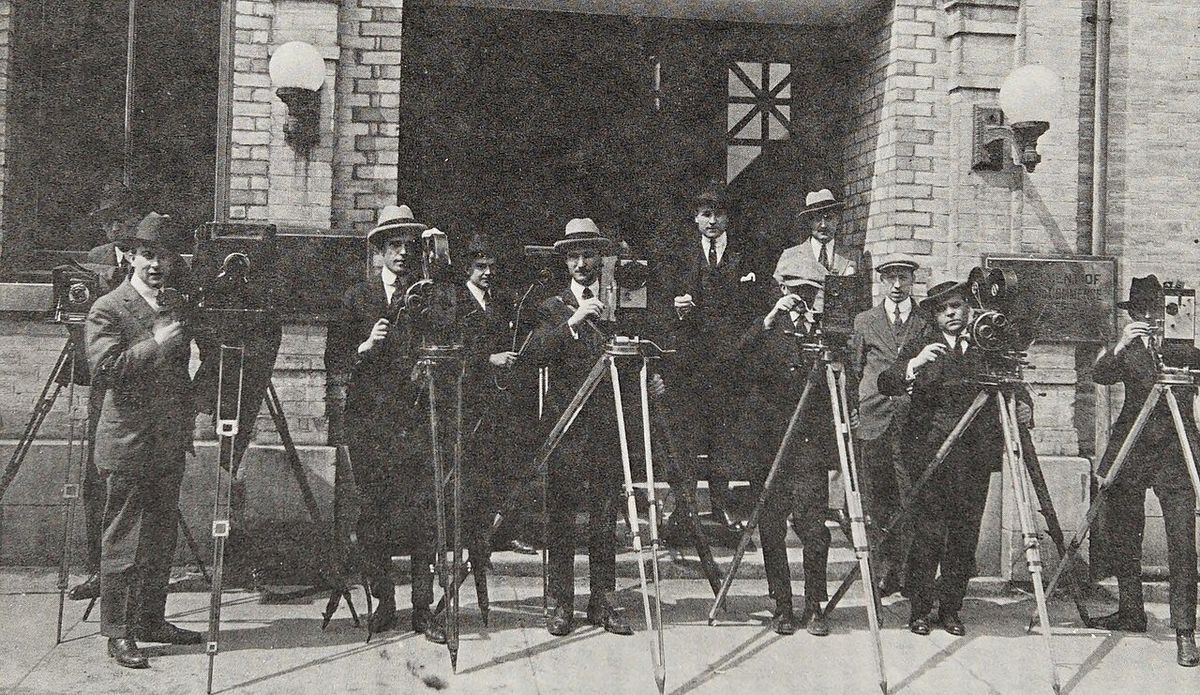
The National Film Board was created on 2 May 1939, following the passage of the National Film Act drafted by Scottish documentary pioneer John Grierson. Grierson had been invited to Canada by government secretary Ross McLean to advise on film policy and his report led directly to the board's formation. After the position of Film Commissioner remained vacant for months, Grierson himself accepted the role in October 1939, serving until 1945. He appointed McLean as assistant commissioner and Stuart Legg to oversee productions, establishing a structure focused on documentary and informational filmmaking. The NFB absorbed the older Canadian Government Motion Picture Bureau on 11 June 1941, consolidating federal film activities under one agency.
Under Grierson's leadership, the NFB grew rapidly to support the Allied war effort, with employment soaring from 55 to 787 between 1941 and 1945. He established twelve specialized production units covering areas from newsreels and animation to agriculture and foreign language programming. Grierson was a pragmatic administrator who believed short-term contracts fostered creativity, though most employees stayed longer. His primary focus was on distribution, successfully negotiating with theatre chains like Famous Players to screen NFB newsreels such as The World in Action and Canada Carries On. By 1944, these newsreels reached an estimated 40 to 50 million viewers per week in Canada, the United States, and the United Kingdom.
The board also pioneered rural film circuits, bringing projectors and films to communities without cinemas. What began as 30 circuits serving 20 rural areas monthly in 1942 expanded to 92 circuits by 1945, with average attendance of 2,220 per screening. Despite this success, Grierson was sceptical of Canada developing a feature film industry, believing the market was too small and that cooperation with American studios was essential. He actively sent scripts to Hollywood for consideration. By the war's end, the NFB's staff of 800 made it one of the largest film studios in the world, though it faced a 40 percent staff reduction with the return to peace.
Post-war challenges and Cold War scrutiny
Grierson's tenure ended under a cloud of Cold War suspicion. Some of his films, like Inside Fighting Russia, were criticized within government for being too sympathetic to communism, and the FBI opened a file on him in 1942. Although Grierson was cleared, the controversy weakened his position and he was not succeeded by his deputy, Ross McLean, until after his departure. McLean served as commissioner from 1945 to 1950, a period where film production was organized into four thematic units.
McLean's administration faced continued political pressure. In 1947, the Secretary of State for External Affairs objected to parts of the film The People Between for being too favourable to Chinese communists. Quebec Premier Maurice Duplessis had NFB films removed from schools on similar grounds. A significant crisis emerged when the RCMP discovered an NFB employee, who was a communist, had photographed secret military equipment. The Department of National Defence subsequently barred the NFB from making films for it and the RCMP demanded the firing of 36 employees deemed security risks. McLean refused to dismiss anyone without proof of disloyalty, a stance that contributed to him not being reappointed as commissioner in 1950. His successor, William Arthur Irwin, reduced the dismissal list to only three employees.
French-language production remained a point of tension during this period. The NFB's first in-house French-language film, La Cité de Notre-Dame, was directed by Vincent Paquette in 1942, and by 1945 a quarter of the board's budget was allocated to French productions. However, output was disproportionate, with only four French films released in 1949 compared to seventy English ones. The 1951 Massey Commission and NFB governor Gratien Gélinas called for improvement, but Duplessis remained opposed. The creation of a dedicated French production unit was a recurring but unresolved internal debate throughout the late 1940s and early 1950s.
Consolidation, television and the move to Montreal
William Arthur Irwin, former editor of Maclean's, became commissioner in 1950 and presided over a period of institutional stabilization. He oversaw the rewriting of the original Film Act, with the new National Film Act taking effect on 14 October 1950. A major success under Irwin was Royal Journey (1951), a colour film documenting the Canadian tour of Princess Elizabeth and Prince Philip. Initially planned as a twenty-minute short, it expanded to a fifty-minute feature that Famous Players agreed to screen in full. It played in 1,249 Canadian theatres, was seen by two million people, and earned a $150,000 profit on an $88,000 investment.
The NFB's relationship with the emerging medium of television was complex. It created its first TV series, Window on Canada and On the Spot, with the CBC in 1953. However, the CBC resisted greater NFB involvement, believing it hindered the broadcaster's own growth, and even produced series like Hawkeye and the Last of the Mohicans with an explicit prohibition on NFB participation. Many NFB filmmakers were also opposed to television work. Despite this, by 1955 half of all NFB productions were made for television. The board's early television advocates, Sydney Newman and Gordon Burwash, were sent to study TV production in the United States in 1948 but ultimately joined the CBC when the NFB could not move into the medium quickly enough.
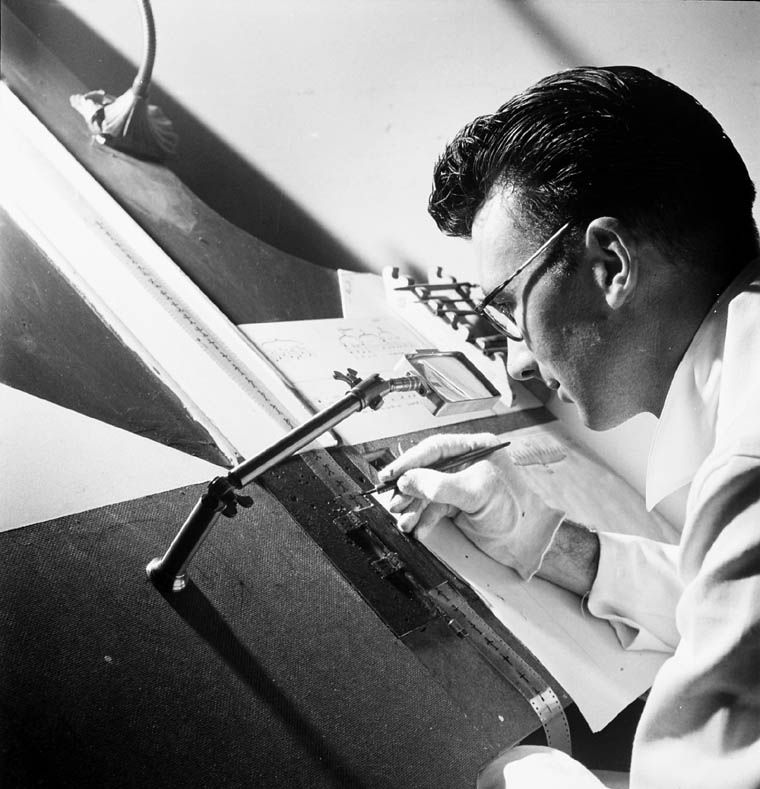
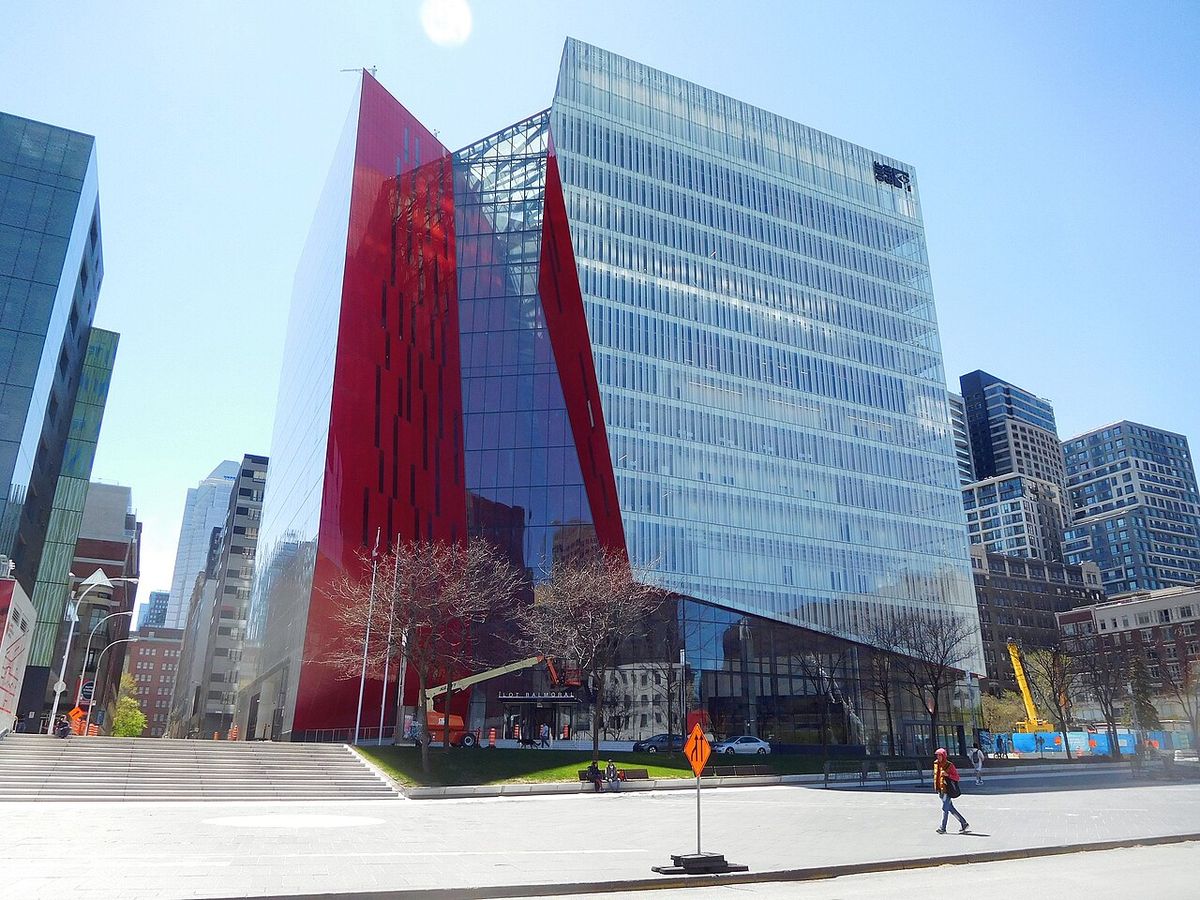
A major and contentious development was the relocation of the NFB's headquarters from scattered offices in Ottawa to Montreal. Selected for its bilingual character and growing CBC presence, the move was agreed upon by Prime Minister Louis St. Laurent and Premier Duplessis. After Irwin's resignation in 1953, his successor Albert Trueman faced opposition from production chief Donald Mulholland. Trueman's neutral stance angered St. Laurent, who suspected sabotage. Despite criticism from the Conservatives over rising costs, a $5.25 million building was constructed in the Saint-Laurent borough from 1953 to 1956, becoming the NFB's home for over six decades. Between 1955 and 1956, most operations and 400 employees were transferred to the new site.
The French Program and institutional evolution
The appointment of Guy Roberge in 1957 as the NFB's first French-Canadian commissioner marked a turning point. His selection ended a period of sustained criticism from French-language media and signalled a commitment to strengthening French production. A key architect of this change was Pierre Juneau, who had been brought into the NFB as an adviser by Trueman. Juneau had long advocated for separate English and French production units to improve communication and creative autonomy. Additional French units were created in 1958, and on 1 January 1964, a fully independent French Program was formally established under Juneau's leadership, receiving one-third of the NFB's total budget.
This period also saw a shift in creative structures. The old unit system was abolished on 28 February 1964. It was replaced by a "talent pool" system, first for English productions and then for French in September 1968, which gave directors more autonomy relative to producers. This system lasted until 1971 when it was succeeded by a studio model. Creatively, the NFB expanded its scope with Drylanders in 1963, its first English-language feature-length fiction film. However, the board also faced internal dissent from a new generation of Quebec filmmakers, including Denys Arcand and Gilles Groulx, who criticized the NFB in the journal Cité Libre. Their reprimand by Roberge led several, including Arcand and Michel Brault, to leave the organization temporarily.
Roberge also played a major role in the development of feature film policy beyond the NFB. He chaired an interdepartmental committee whose 1965 report recommended a loan fund to support a commercial Canadian feature film industry. This led to the Canadian Film Development Corporation Act, passed on 3 March 1967, which established the predecessor to Telefilm Canada. Roberge resigned in April 1966 and was succeeded after an acting period by Hugo McPherson in 1967, closing an era of significant structural and cultural change for the institution.
Modern mandate and production strategy
Today, the National Film Board operates as a federal agency under the Department of Canadian Heritage, with a mandate to create and distribute distinctive audiovisual works that reflect Canadian perspectives. It produces or co-produces more than 50 documentary and animation works each year across various formats, including shorts, features, mid-length films, and series. The NFB functions not only as a public producer but also as a talent incubator, working closely with creators from initial idea through to release. Its approach is grounded in creative collaboration, with a commitment to providing strong resources and development time.
The organization's programming strategy is intentional and seeks a balanced slate in terms of region, budget, format, and audience. It maintains measurable targets for gender parity, regional representation, and equity-seeking groups, including Indigenous, racialized, and minority-language creators. Project selection prioritizes both creative value, emphasizing originality and the filmmaker's unique perspective, and production value, ensuring technical excellence. The NFB actively seeks projects that foster meaningful public connections, push creative boundaries, and explore new storytelling formats to reach audiences where they are.
The NFB accepts proposals from filmmakers year-round. For projects it fully funds, it produces and distributes all documentary and animation formats. It also engages in co-productions and partnerships. Filmmakers are directed to submit proposals to the NFB studio nearest their region of work. This model provides comprehensive support rather than simple grants, encompassing funding, production expertise, and distribution channels. The board's role as a caretaker of Canada's audiovisual heritage is also central, involving the preservation and digitization of its collection for long-term public access.
Collection, distribution and public reach
The NFB maintains and provides access to one of the world's largest collections of publicly owned film. Its total archive encompasses over 43,000 productions dating back to 1939. Of these, more than 7,000 titles are available for free streaming on its digital platform, NFB.ca, which offers films in both English and French. The platform allows users to create profiles, build favourite lists, and rent or download films. The collection includes documentaries, animations, and series that address issues of global and national importance, such as the environment, human rights, and Indigenous experiences.
Beyond public streaming, the NFB operates a significant educational and institutional licensing program. Schools, universities, libraries, and other organizations can purchase licenses to exhibit NFB films hosted on the platform, generating revenue that supports further production. This program is a key part of the board's mission to ensure its works are used as educational resources across Canada. The board's films have won more than 5,000 awards internationally, showing their artistic and technical quality. These accolades include 12 Academy Awards, highlighting the global impact of Canadian storytelling fostered by the NFB.
The NFB actively participates in the broader Canadian media ecosystem. In February 2026, its leadership joined the Canada Media Fund, the Indigenous Screen Office, and Telefilm Canada for a panel discussion at the Prime Time conference in Ottawa. The discussion, entitled "Canada’s Future: Building a Creative Nation" and moderated by a senior government official, focused on cultural sovereignty, supporting Indigenous stories, and strengthening the domestic production ecosystem. Such collaborations illustrate the NFB's ongoing role as a key institutional player in shaping Canada's audiovisual policy and creative future.
Key productions and creative legacy
The NFB's output has been defined by groundbreaking work in both animation and documentary. Its animation department, particularly under Norman McLaren, became world-renowned for innovative techniques like drawn-on-film and pixilation. The animation studio has nurtured generations of acclaimed artists including Cordell Barker, Chris Landreth, Caroline Leaf, and Ryan Larkin. In documentary, the NFB has produced seminal works that have shaped Canadian self-perception and tackled social issues. The board has also been a leader in direct cinema, a candid documentary style pioneered by NFB filmmakers like Michel Brault and Pierre Perrault in films such as Pour la suite du monde (1963). In recent decades, its documentaries have continued to address urgent topics, from climate change to reconciliation with Indigenous peoples, maintaining its role as a public forum for national conversation.
| Year | Title | Director | Significance |
|---|---|---|---|
| 1939 | The Case of Charlie Gordon | Stuart Legg | First English-language NFB production. |
| 1942 | La Cité de Notre-Dame | Vincent Paquette | First in-house French-language production. |
| 1963 | Drylanders | Don Haldane | NFB's first English-language feature film. |
| 1963 | Pour la suite du monde | Michel Brault, Pierre Perrault | Landmark direct cinema documentary. |
| 1952 | Neighbours | Norman McLaren | Academy Award-winning pixilation film. |
| 1968 | The Battle of Crowfoot | Willie Dunn | Early Indigenous film from Challenge for Change. |
The National Film Board of Canada has received 78 Oscar nominations in total. Within that total, 38 of its nominations are specifically for animated short films, a category where it is surpassed only by Disney and MGM. As of 2025, the NFB has produced 14,000 productions over its history. The board is also a public producer and distributor of documentary films, animation, web documentaries, and alternative dramas.
Questions about National Film Board of Canada
What is the National Film Board of Canada?
The National Film Board of Canada is a federal Crown corporation and public agency that produces and distributes documentary films, animation, web documentaries, and alternative dramas. Established in 1939, it is one of the world's oldest and most respected public film organizations. Its mandate is to create audiovisual works that reflect Canadian perspectives and diversity. The NFB reports to the Parliament of Canada through the Minister of Canadian Heritage and operates bilingual production programs in English and French.
How can I watch NFB films?
Over 7,000 NFB titles are available for free streaming on the NFB.ca website and mobile apps. The platform allows users to create profiles, build watchlists, and rent or download films. The NFB also licenses its films to schools, libraries, and institutions. Some documentaries are available on Netflix Canada, and the NFB partners with international platforms like ifeng.com in China for the NFB Zone channel.
How does the NFB support filmmakers?
The NFB produces and co-produces films, providing full funding, production expertise, and distribution for selected projects. It operates regional studios across Canada where filmmakers can submit proposals. The NFB runs training programs like Hothouse for emerging animators and the NFB/CFC Creative Doc Lab for theatrical documentaries. It also has specific initiatives to support Indigenous creators, women directors, and other equity-seeking groups.
What was the NFB's role during World War Two?
During World War Two, the NFB, under founding commissioner John Grierson, became a vital instrument for public information and Allied propaganda. It produced monthly newsreel series like The World in Action and Canada Carries On that were shown in theatres across Canada, the United States, and the United Kingdom, reaching tens of millions of viewers weekly. The board also established rural film circuits to bring films to communities without cinemas. Its staff grew dramatically, peaking at around 800 employees in 1945, making it one of the largest film studios in the world at the time.
When did the NFB move its headquarters to Montreal?
The NFB moved its headquarters from Ottawa to Montreal between 1955 and 1956. The decision was made during William Arthur Irwin's commissionership, chosen for Montreal's bilingual character and the growing presence of the Canadian Broadcasting Corporation. A dedicated building was constructed in the Saint-Laurent borough from 1953 to 1956 at a cost of $5.25 million. This facility served as the NFB's central office for over 60 years, housing most of its operations and approximately 400 employees after the relocation was complete.
How many awards has the NFB won?
The National Film Board of Canada has won over 5,000 awards. It has received 78 Academy Award nominations and has won 12 Oscars. The board's animated shorts alone have earned 38 Oscar nominations. In 2009, Norman McLaren's film Neighbours was inscribed on UNESCO's Memory of the World Register, recognizing its global documentary heritage significance.
Sources and further reading
- National Film Board of Canada (Wikipedia)
- Press Releases, Media Space, National Film Board of Canada (mediaspace.nfb.ca)
- About the NFB (nfb.ca)
- What we're looking for, NFB Production, ONF (production.nfbonf.ca)
- National Film Board of Canada (NFB) Funding Programs (hellodarwin.com)
Checked by the Nosy Mag desk. Last updated 2026-10-25.