Public Service of Canada
The Public Service of Canada is the civilian workforce that supports the federal government's departments, agencies, and other public bodies. Established through reforms beginning in 1908, its foundational principle is a merit-based appointment system designed to ensure a professional and politically neutral administration. The Public Service plays a critical role in delivering programs and services to Canadians. As of 2025, it employs 357,965 people, making it Canada's largest single employer.
Historical Development and Reforms
The origins of the modern Public Service lie in the colonial administration of the Province of Canada before 1867, where government positions were filled through patronage. Following Confederation, Prime Minister John A. Macdonald's government passed the Canada Civil Service Act in 1868, establishing a Civil Service Board with limited powers over examinations in Ottawa. This initial reform failed to fully eliminate political appointments, leading to further inquiries and the 1880 Civil Service Act, which created a Board of Civil Service Examiners. The major shift came in 1908 under Prime Minister Wilfrid Laurier with the Civil Service Amendment Act, which established the Civil Service Commission to enforce a merit-based appointment process for positions in the national capital region.
This was significantly expanded by the Civil Service Act of 1918 under Prime Minister Robert Borden, which applied merit principles to the entire federal service and placed clear restrictions on public servants' political activities. The Great Depression and World War II brought major fluctuations in the size and management of the service. The war effort saw the temporary appointment of over 54,000 employees under the War Measures Act, bypassing normal hiring rules. Post-war, the service grew rapidly with the preferential hiring of approximately 55,000 veterans by 1949.
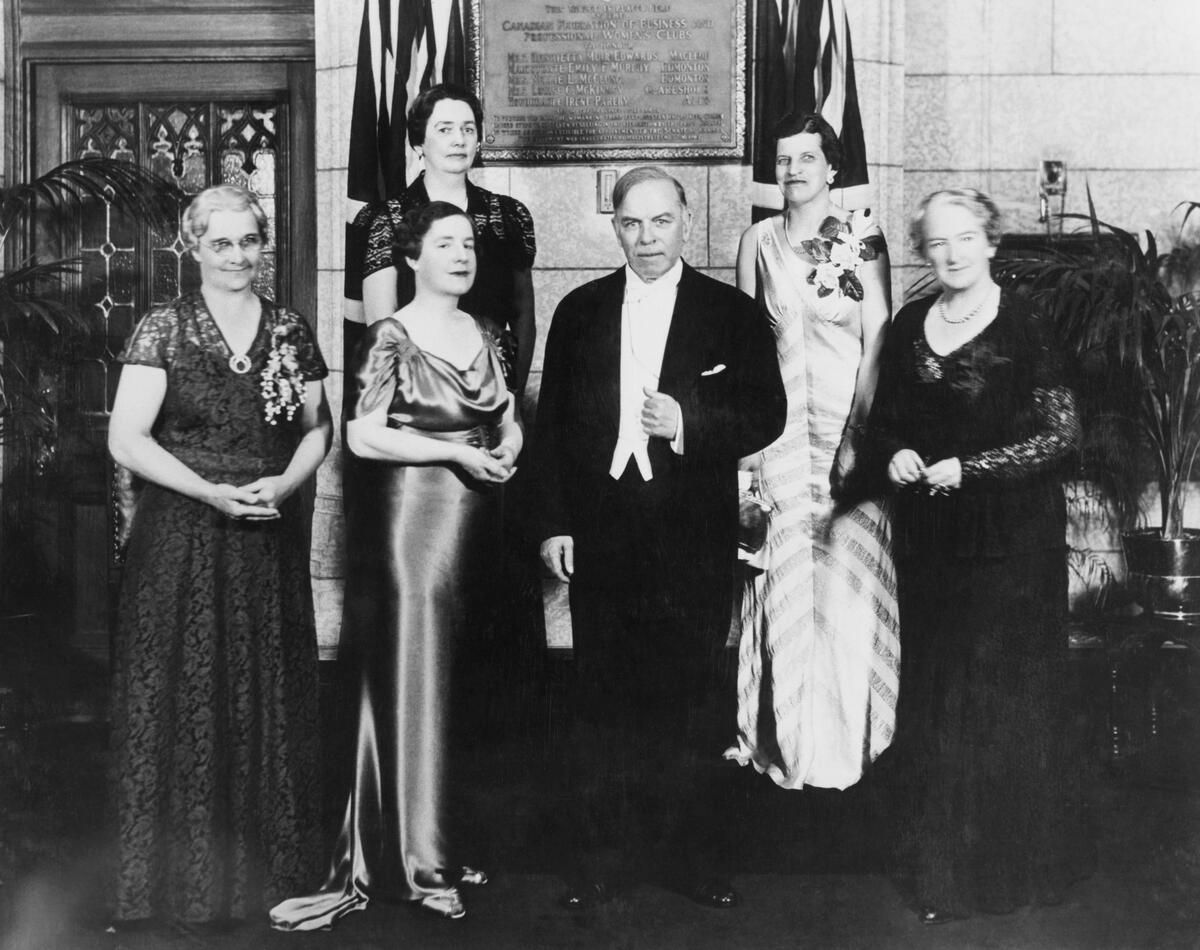
A major legislative milestone was the Financial Administration Act of 1951, which formally established the Treasury Board as the central authority for public service management. In 1955, restrictions on employing married women, which had been in place since 1921, were lifted. The Civil Service Superannuation Act of 1924 had earlier established a pension system to promote a career civil service. These reforms collectively cemented a professional and independent public service.
The Modern Public Service Framework
The contemporary Public Service of Canada operates under a legal and administrative framework established in the late 1960s. The Public Service Employment Act and the Public Service Staff Relations Act, both passed in 1967, repealed the old Civil Service Act and created the modern system. The PSEA enshrined the merit principle and renamed the oversight body the Public Service Commission, while the PSSRA established a formal framework for collective bargaining and created the Public Service Staff Relations Board. The public service is divided into two main categories: the Core Public Administration and Separate Agencies.
The Core Public Administration includes organizations listed under Schedules I and IV of the Financial Administration Act, such as ministerial departments like Global Affairs Canada and agencies like the Correctional Service of Canada. Separate Agencies, listed under Schedule V of the FAA, operate with greater autonomy in human resources and include major entities like the Canada Revenue Agency and Parks Canada. The overall head of the Public Service is the clerk of the Privy Council, the most senior non-political official in the federal government, a role held by Michael Sabia since July 2025. Day-to-day management of people, finances, and administration is largely the responsibility of deputy ministers and the heads of separate agencies.
The Treasury Board, a committee of ministers, acts as the government's employer and central management board, setting policies on staffing, compensation, and labour relations. The Privy Council Office assists the Prime Minister and Cabinet in setting priorities and developing policies. The Public Service Commission ensures recruitment is merit-based and free from political influence. This structure is designed to balance political direction with professional, non-partisan administration.
Size, Composition and Key Organizations
As of 2025, the Public Service of Canada employs 357,965 people, making it the nation's largest employer. It is composed of 137 distinct organizations, which include a wide array of bodies with different mandates and structures. The workforce is distributed across the country, with over 40 percent located in the National Capital Region around Ottawa and Gatineau, and the remainder serving Canadians from approximately 1,600 other locations. The largest bargaining agent is the Public Service Alliance of Canada, which represents more than 245,000 workers.
Other major professional unions include the Professional Institute of the Public Service of Canada. The 137 distinct organizations are broadly categorized into several types. These categories are defined pursuant to the Financial Administration Act. The following list details the organization types and their counts.
- Ministerial (line) departments (23): These are the primary departments, such as National Defence and Health Canada, led by a minister.
- Service agencies (3): Central service providers like Shared Services Canada.
- Departmental corporations (17): Operationally focused organizations like the Canada School of Public Service.
- Departmental agencies (50): Organizations with specific service mandates, such as the Correctional Service of Canada.
- Special operating agencies (12): Agencies that operate like businesses within government, such as the Translation Bureau.
- Agents of Parliament (6): Independent oversight bodies like the Auditor General of Canada.
Crown corporations are owned by the federal government, but their employees are generally not considered public servants and are instead employed by the corporation itself. This distinction means Crown corporation staff are not part of the core Public Service of Canada. The Public Service itself consists of 137 distinct organizations like ministerial departments and agencies. This separation is important for understanding the complete scope of the federal workforce.
Staffing, Pay and Labour Relations
The principle of merit remains the fundamental basis for public service hiring, though its application has evolved. The Public Service Modernization Act of 2003 and a new Public Service Employment Act in 2005 significantly reformed staffing. Authority for recruitment was decentralized from the Public Service Commission to the deputy heads of individual departments and agencies. The definition of merit was also broadened, allowing managers to consider which candidate is the best fit for an organization, moving beyond a strict best qualified rules-based approach.
The Public Service Commission retains its role in overseeing the integrity of the appointment system, conducting audits, and running recruitment programs for students and graduates. Collective bargaining is governed by the Public Service Labour Relations Act. Negotiations over wages, working conditions, and terms of employment occur between the Treasury Board and various bargaining agents like the PSAC. The resulting collective agreements are legally binding and cover the vast majority of public servants.
A major ongoing challenge has been the modernization of the government's pay system. The problematic Phoenix pay system began rollout in January 2016 and led to widespread pay issues for thousands of employees. As of March 2026, the federal government was providing updates on the development of a new public service pay system intended to replace it. In a related move on workplace arrangements, Public Services and Procurement Canada announced that as of May 4, 2026, executives would be required to work onsite five days per week, with the intention to have all employees work onsite four days per week.
Employment Equity and Official Languages
The Public Service has undertaken significant initiatives to become a more representative and inclusive employer. Efforts began in earnest in the 1970s following reports like the Royal Commission on the Status of Women. The Public Service Commission created the Office of Equal Opportunity for Women in 1971 and the Office of Native Employment in 1973. The 1974 amendment to the PSEA added marital status as a prohibited ground of discrimination.
These equity-seeking groups are now formally recognized under the Employment Equity Act of 1986, which identifies women, Indigenous peoples, persons with disabilities, and members of a visible minority. The Act calls for positive measures to promote a more representative public service. Performance is benchmarked by comparing representation in the public service with each group's estimated availability in the Canadian workforce. Recent efforts focus on increasing the representation of these groups among public service executives.
Bilingualism is another key element of the public service's identity. In 1963, the Language Training Centre was created to improve French language capabilities among civil servants. By 1966, French language skills were considered an element of merit for positions in Ottawa. To incentivize bilingual capability, a bilingualism bonus was introduced in 1979 for employees who prove they can communicate in both English and French. The Official Languages Act requires the federal government to provide services in both languages and to ensure a workplace where both linguistic communities can thrive.
Learning, Development and Recent Priorities
Training and professional development are coordinated across the public service. The Canada School of Public Service is the central common learning provider, offering courses and programs to build leadership and core competencies. Its departmental plan for 2026 to 2027 outlines its priorities for supporting a skilled and adaptable workforce. Individual departments also run their own training programs.
For example, the Correctional Service of Canada's 2026 to 2027 plan includes implementing new guides to help staff improve services for Indigenous offenders. Learning initiatives are supported by government-wide online resources and events. The Public Service Commission provides occupational tests and career counselling services. Student employment programs like the Federal Student Work Experience Program also provide developmental opportunities.
Recent years have focused on modernization and addressing specific operational challenges. Departments publish multi-year departmental plans, like the Public Service Commission's plan for 2025 to 2026, to communicate their priorities to Parliament and Canadians. The government continues to work on replacing the problematic Phoenix pay system, with updates provided as recently as March 2026. Workforce management policies are also evolving, as seen in the 2026 directive increasing mandatory in-office presence for executives and eventually all employees.
Challenges and Transformations
The Public Service of Canada has undergone several periods of significant growth and contraction driven by economic conditions and government policy. The 1970s saw expansion alongside new social programs, growing from about 198,000 employees in 1970 to 274,000 by 1975. However, austerity measures led to a reduction of about 7,000 positions by 1979. The most drastic downsizing occurred in the 1980s and 1990s.
In 1986, 20,000 positions were cut. A further 45,000 permanent positions were eliminated over three years starting in 1995 under Prime Minister Jean Chrétien's government. These reductions were part of broader efforts to control the federal deficit and redefine the role of government. The Public Service Reform Act of 1992 also contributed to this transformation period.
Modern challenges include managing a geographically dispersed and increasingly diverse workforce, adapting to digital transformation, and maintaining public trust. The failure of the Phoenix pay system had a significant impact on employee morale. The recent shift toward more in-office work represents another significant change in workplace culture. The public service must continually adapt its skills and structures to address emerging national priorities such as climate change, cybersecurity, and reconciliation with Indigenous peoples.
Questions about Public Service of Canada
How many people work for the Public Service of Canada?
As of 2025, the Public Service of Canada employs 357,965 people, making it the largest single employer in the country. This workforce is spread across 137 distinct organizations. Over 40 percent of these employees work in the National Capital Region, with the rest located in approximately 1,600 other sites throughout Canada. The largest union, the Public Service Alliance of Canada, represents over 245,000 of these workers.
Who is the head of the Public Service of Canada?
The head of the Public Service of Canada is the clerk of the Privy Council. This individual is the most senior non-political public servant in the federal government and serves as the deputy minister to the prime minister and secretary to the Cabinet. The clerk provides impartial advice to the prime minister and Cabinet and leads the federal public service. Michael Sabia has held this position since July 7, 2025.
What is the difference between the Core Public Administration and a Separate Agency?
The Core Public Administration consists of organizations listed under Schedules I and IV of the Financial Administration Act, primarily ministerial departments like Global Affairs Canada and departmental agencies like the Correctional Service of Canada. They operate under centralized human resources and financial policies. Separate Agencies, listed under Schedule V of the same act, have more autonomy in managing their staff and operations. Major examples include the Canada Revenue Agency and Parks Canada, which have their own distinct human resources authorities.
What is the merit principle in public service hiring?
The merit principle is the foundational rule that appointments to and within the Public Service must be based on merit, meaning the selection of the person best qualified to do the work. This system was established to eliminate political patronage and ensure a professional, non-partisan workforce. The current Public Service Employment Act defines merit broadly, allowing managers to hire based on which candidate is the best fit for the organization. The Public Service Commission oversees the integrity of this appointment system through audits and recruitment programs.
Are public servants required to work in the office?
Yes, the federal government has implemented new requirements for in-office work. An announcement from Public Services and Procurement Canada stated that as of May 4, 2026, executives are required to work onsite five days per week. The government's stated intention is to have all public service employees work onsite for a minimum of four days per week. This represents a shift from more flexible hybrid work arrangements that were common following the COVID-19 pandemic.
Sources: Wikipedia and current public reporting, checked by the Nosy Mag desk. Last updated 2026-10-24.