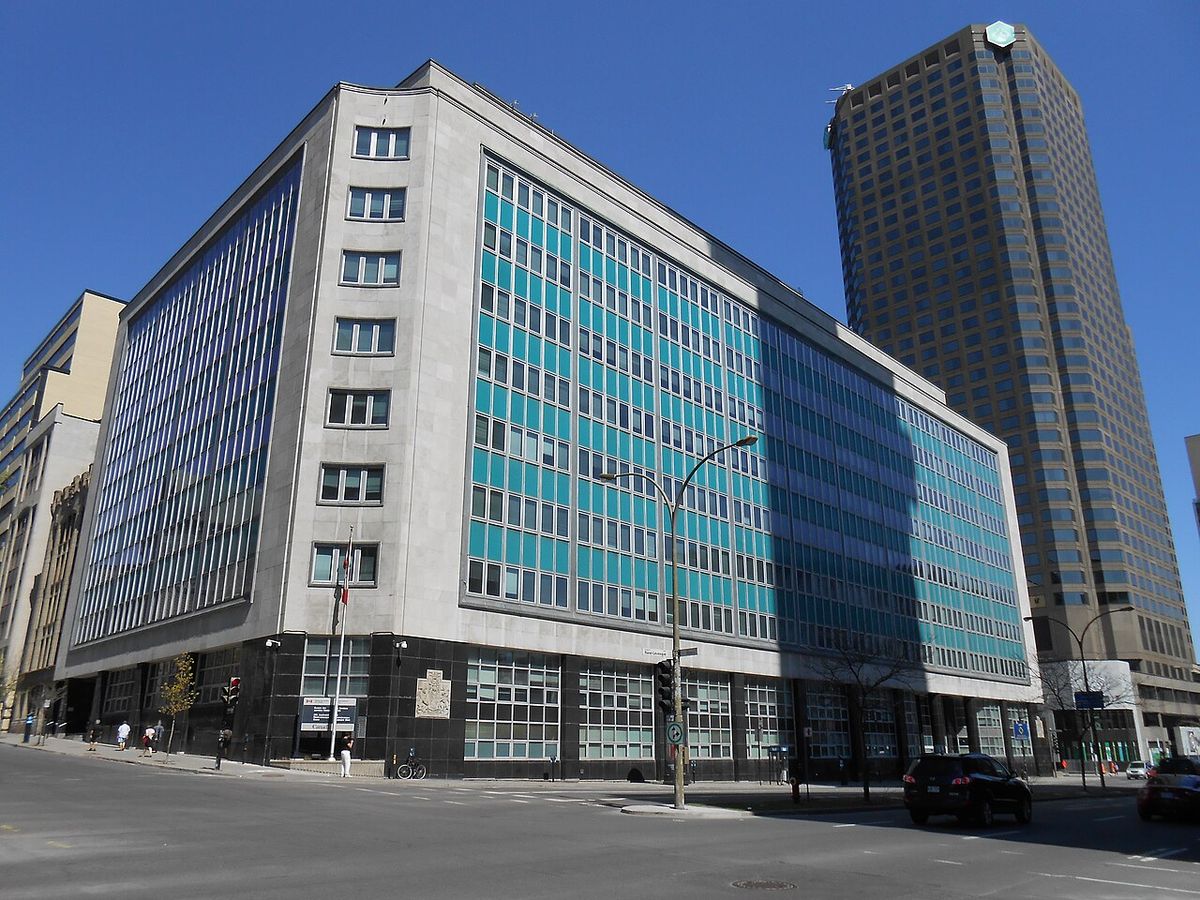
Public Services and Procurement Canada
Public Services and Procurement Canada (PSPC) is a central department of the Government of Canada responsible for the internal servicing and administration of the federal government. It acts as the government's central purchasing agent, real property manager, treasurer, accountant, pay and pension administrator, and linguistic authority, managing a vast portfolio of buildings, infrastructure, and procurement contracts. The department is accountable to Parliament through the Minister of Public Services and Procurement and Receiver General for Canada, a portfolio held by Joël Lightbound. Its operations are critical to the daily functioning of other federal departments and agencies.
Mandate and Core Responsibilities
Public Services and Procurement Canada provides essential internal services that enable other federal departments and agencies to deliver their programs to Canadians. Its mandate is broad, encompassing the centralized procurement of goods and services for the government, which standardizes purchasing and aims to achieve value for taxpayer dollars. The department also acts as the government's primary real property manager, responsible for a massive portfolio that includes office buildings, bridges, dams, and highways across the country. PSPC serves as the Receiver General for Canada, managing the government's treasury, accounting, and the administration of pay and pensions for federal public servants. The department is also the government's integrity adviser and the custodian of a large real estate and infrastructure portfolio.

Organizational Structure
The department is organized into several branches that specialize in different aspects of its mandate, ensuring focused expertise and efficient service delivery. Key branches include Defence and Marine Procurement, which handles major military acquisitions, and the Procurement branch, which manages general government purchasing. The Real Property Services branch oversees the management and maintenance of federal buildings and infrastructure, while the Receiver General and Pension branch administers payments to employees and pensioners. Other critical branches include Digital Services, which focuses on modernizing government IT, and the Office of the Chief Audit, Evaluation and Risk Executive, which provides internal oversight. The department also maintains a regional presence across Canada through offices in the Atlantic, Quebec, Ontario, Western, and Pacific regions, allowing for localized service and project management.
In addition to its core branches, PSPC operates two special operating agencies that deliver specific services. The Translation Bureau is the federal government's central translation and interpretation service, ensuring compliance with Canada's official languages laws. The Defence Investment Agency, established more recently, is tasked with streamlining and managing complex defence procurement projects. The department's organizational leadership is provided by a Deputy Minister, a senior civil servant who oversees day-to-day operations and reports to the Minister, Joël Lightbound.
- Defence and Marine Procurement: Manages major military and naval acquisitions.
- Departmental Oversight: Provides internal audit, evaluation, and risk management.
- Digital Services: Leads the modernization of government IT systems and services.
- Finance: Manages the department's financial operations and planning.
- Human Capital Management: Focuses on workforce strategy and development.
- Human Resources: Handles recruitment, development, and support for employees.
- Legal Services: Provides legal advice and support on contracts and operations.
- Office of the Chief Audit, Evaluation and Risk Executive: Conducts internal oversight.
- Policy, Planning and Communications: Develops departmental policy and strategic communications.
- Procurement: Manages general government purchasing of goods and services.
- Real Property Services: Oversees federal buildings and infrastructure.
- Receiver General and Pension: Administers government payments and pensions.
- Parliamentary Precinct: Responsible for the upkeep and operations of Parliament Hill buildings.
Major Initiatives and Digital Transformation
PSPC is actively engaged in modernizing government operations through digital innovation and major infrastructure projects. A key focus for the 2026 to 2027 period is the expansion of digital tools and the strategic use of artificial intelligence to make government services faster and more efficient for Canadians. The department is also responsible for overseeing the construction of significant federal facilities, such as a new Canada Revenue Agency building in St. John's, for which a construction contract was awarded in August 2026. Another notable project is the development of a secure treatment-first correctional facility with 155 beds, designed to provide enhanced health and mental care services to offenders. The department plays a leading role in national security and defence infrastructure, notably as a key organizer and participant in SEC2026, Canada's premier defence and security trade show. Its forward-looking plans are formalized in public documents like the 2026 to 2028 Accessibility Plan, which commits to improving access for persons with disabilities across its services and workplaces. PSPC also manages the Government Electronic Directory Services, a key internal communications tool.
- SEC2026 Defence and Security Trade Show: A leading event for transforming defence and security procurement, held in 2026.
- New CRA Facility in St. John's: Construction contract awarded on August 10, 2026.
- Secure Treatment-First Correctional Facility: A new 155-bed facility for offenders with enhanced health needs.
- 2026 to 2028 Accessibility Plan: A multi-year plan to improve accessibility for persons with disabilities.
- Digital and AI Tools Expansion: A focus for the 2026 to 2027 period to increase service efficiency.
- Government Electronic Directory Services: An internal government communications directory managed by PSPC.
The Phoenix Pay System
One of the most significant and challenging files managed by PSPC has been the Phoenix Pay System, the federal government's payroll processing platform for employees. The system was launched in early 2016 and almost immediately encountered severe technical problems, leading to widespread inaccuracies in employee pay. Hundreds of thousands of public servants experienced underpayments, overpayments, or complete non-payment for their work, causing considerable financial hardship and eroding trust. The government's effort to stabilize and fix the Phoenix system became a protracted and costly undertaking, with estimated costs to address the problems surpassing $1 billion by March 2018. The ongoing issues with Phoenix have shown the complexities of large-scale IT procurement and implementation within government. While efforts to stabilize the system have continued, the legacy of Phoenix has influenced the department's approach to all major digital transformation projects, emphasizing the need for rigorous testing, stakeholder consultation, and contingency planning.
Transparency and Accountability
As a major federal department, PSPC is subject to access to information laws designed to ensure government transparency. The department's handling of such requests can come under scrutiny, as seen in a 2026 case reviewed by the Information Commissioner of Canada. The case, identified as 2026 OIC 12, involved a complainant who alleged that PSPC took an unreasonable amount of time to respond to an access request for documents related to the parliamentary consideration of the ArriveCAN application from March 12 to November 14, 2024. The Information Commissioner's investigation found that while the extension under paragraph 9(1)(a) of the Access to Information Act was reasonable due to the large number of records, the extension under paragraph 9(1)(b) was not. The OIC determined that PSPC could not demonstrate a genuine assessment of the actual time required, as it relied primarily on internal service standards. Consequently, the Information Commissioner ordered the Minister to provide a complete response to the request by no later than June 1, 2026, and recommended issuing interim releases for documents ready beforehand. PSPC gave notice that it would implement the order and recommendation. The department received the request on November 14, 2024, and issued a notice of extension on December 16, 2024.
- November 14, 2024: PSPC receives the access request for ArriveCAN documents.
- The requested timeframe for documents was from March 12 to November 14, 2024.
- The search retrieved an estimated 20,000 pages of responsive records.
- 2026 OIC 12: The Information Commissioner's case number and year of decision.
- June 1, 2026: The deadline set by the Information Commissioner for a complete response.
- The OIC file number for the case was 5824-03595.
- The access request number was A-2024-00306.
- The extension notice was issued on December 16, 2024.
Recognition and Workforce
Public Services and Procurement Canada has been recognized for its efforts to foster an inclusive workplace, having been named one of Canada's Best Diversity Employers in 2018. This award acknowledges the department's programs and policies aimed at creating a diverse and representative workforce. The department's Human Capital Management and Human Resources branches are dedicated to recruiting, developing, and supporting this workforce. The department's commitment to its employees and to equitable service is further reflected in its published plans, such as its multi-year Accessibility Plan. By focusing on modern workplace practices and diversity, PSPC aims to build an internal culture that mirrors the public it serves across all regions of Canada. The department employs public servants who manage its extensive procurement, real property, and pay administration functions. Its regional offices are critical for delivering federal services locally, with the Pacific Region also having responsibility for the Yukon Territory.
- Atlantic Region: Services the provinces of New Brunswick, Nova Scotia, Prince Edward Island, and Newfoundland and Labrador.
- Quebec Region: Manages federal procurement and property services within the province of Quebec.
- Ontario Region: Oversees operations in Canada's most populous province, including the National Capital Region.
- Western Region: Covers the prairie provinces of Manitoba, Saskatchewan, and Alberta.
- Pacific Region: Responsible for federal services in British Columbia and the Yukon.
Questions about Public Services and Procurement Canada
What does Public Services and Procurement Canada do?
Public Services and Procurement Canada is the federal government's internal service department. It acts as the central purchasing agent for all other departments, buying everything from office supplies to military equipment. PSPC also manages the government's real estate, including buildings and infrastructure like bridges and dams, administers the payment of salaries and pensions to federal employees, and provides translation services. It serves as the government's treasurer, accountant, integrity adviser, and linguistic authority, and is the custodian of a large real estate portfolio.
What was the Phoenix Pay System problem?
The Phoenix Pay System was a new payroll processing system for federal employees launched by PSPC in early 2016. It was quickly plagued by serious errors that resulted in hundreds of thousands of employees being underpaid, overpaid, or not paid at all. Fixing the widespread problems became a massive and costly effort, with estimates exceeding $1 billion by March 2018. The issue highlighted significant challenges in government IT procurement and project management.
How is PSPC modernizing its services?
PSPC has a stated focus on digital transformation to improve efficiency. For the 2026 to 2027 period, the department plans to expand the use of digital tools and leverage artificial intelligence to speed up government services. It is also implementing multi-year plans, like its 2026 to 2028 Accessibility Plan, to make services more inclusive. PSPC oversees the construction of modern federal facilities, such as a new Canada Revenue Agency building in St. John's, and participates in events like the SEC2026 defence and security trade show. It also manages the Government Electronic Directory Services.
Who is the current minister responsible for PSPC?
The current minister responsible for Public Services and Procurement Canada is Joël Lightbound. He serves as the minister of public services and procurement and receiver general for Canada. Day to day operations and leadership are overseen by the deputy minister, who is a senior civil servant. The minister provides political direction and accountability for the department's wide range of services, which include procurement, real property management, and pay administration.
What are PSPC's special operating agencies?
Public Services and Procurement Canada has two special operating agencies. They are the Defence Investment Agency and the Translation Bureau. The Translation Bureau provides linguistic services, aligning with PSPC's role as a linguistic authority for the government. The Defence Investment Agency focuses on defence related procurement and projects, supporting the broader Defence and Marine Procurement branch. These agencies operate with a degree of operational independence to deliver specific services.
How does PSPC handle access to information requests?
PSPC handles access to information requests under the Access to Information Act, which requires a response within 30 days unless an extension is justified. In a 2026 case, the Information Commissioner found an extension under paragraph 9(1)(b) unreasonable because PSPC relied on service standards instead of a genuine assessment. The Commissioner ordered PSPC to provide a complete response by June 1, 2026, which the department agreed to implement. The department issued its extension notice on December 16, 2024.
Sources and further reading
- Public Services and Procurement Canada (Wikipedia)
- Public Services and Procurement Canada (Re), 2026 OIC 12 (oic-ci.gc.ca)
Checked by the Nosy Mag desk. Last updated 2026-11-02.