Canadian Space Agency
The Canadian Space Agency (CSA) is the national space agency of Canada, established by an Act of Parliament in 1990. Headquartered at the John H. Chapman Space Centre in Longueuil, Quebec, the agency is responsible for leading the peaceful development and application of space knowledge for the benefit of Canadians and humanity. The CSA manages Canada's astronaut corps, develops and operates satellites, and contributes advanced robotics like the Canadarm to international space exploration efforts. Its work supports scientific discovery, economic growth, and national priorities such as Earth observation and climate monitoring.
History and Mandate
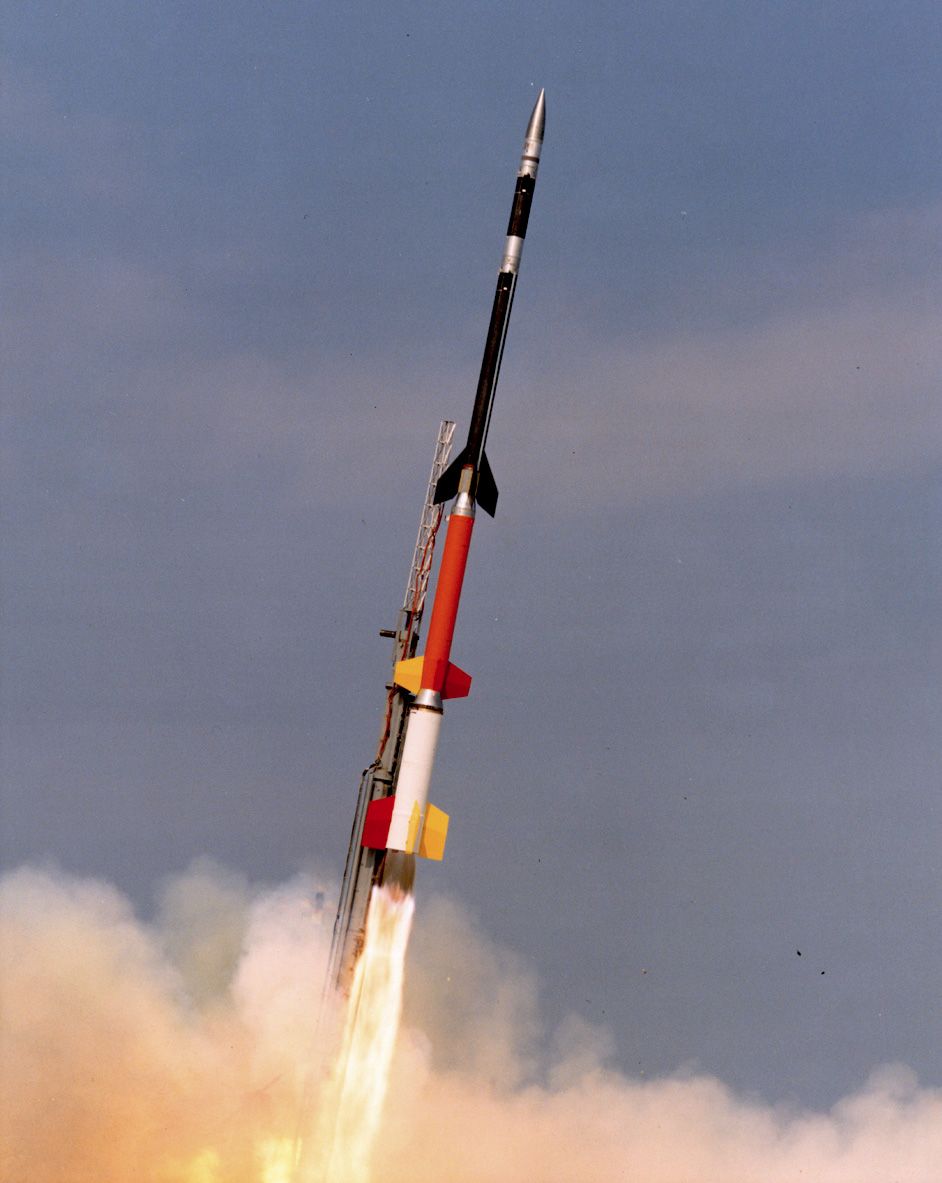
The origins of Canada's space activities trace back to defence research following the Second World War, which included the development of the Black Brant sounding rocket. A major project began in 1957 at the Defence Research Telecommunications Establishment, leading to the creation of Canada's first satellite, Alouette 1. Launched by NASA in September 1962, Alouette 1 made Canada the third nation to operate a satellite in space and exceeded its one-year design life by operating for a full decade. This success spurred the joint Canadian-American ISIS satellite program, later designated an International Milestone of Electrical Engineering by IEEE in 1993. The 1972 launch of the Anik A-1 communications satellite established the world's first domestic geostationary satellite network. These cumulative achievements led the government to formalize its space activities, and the Canadian Space Agency Act received royal assent on May 10, 1990, coming into force on December 14 of that year. The agency's mandate is to promote the peaceful use of space, advance scientific knowledge, and ensure space technology provides social and economic benefits for Canadians. In 1999, the CSA transitioned to a fixed annual base budget, which has since been supplemented by funding for specific projects and initiatives.
Leadership and International Cooperation
The president of the Canadian Space Agency reports to the Minister of Industry and oversees the agency's operations and strategic direction. Lisa Campbell has served as president since September 14, 2020, following a line of predecessors that included Canada's first astronaut, Marc Garneau, and former Chief of the Defence Staff Walter Natynczyk. The CSA maintains a unique and long-standing partnership with the European Space Agency, holding the special status of a Cooperating State since January 1, 1979. This accord, renewed in 2010 for a further 10 years, allows Canada to participate in ESA programs and decision-making bodies and ensures a fair industrial return for Canadian companies bidding on contracts. The agency also has robust collaborations with NASA, the Japan Aerospace Exploration Agency, the Indian Space Research Organisation, and the Swedish National Space Agency. These partnerships are fundamental to Canada's participation in major international projects, from the International Space Station to deep-space telescopes. The head of the Canadian delegation to ESA is the president of the CSA, and as of February 2009, 30 Canadians were employed as staff members at various ESA sites across Europe.
The Canadian Space Agency has had several presidents since its establishment.
- 1989 to May 4, 1992: Larkin Kerwin
- May 4, 1992 to July 15, 1994: Roland Doré
- November 21, 1994 to 2001: William MacDonald Evans
- November 22, 2001 to November 28, 2005: Marc Garneau
- April 12, 2007 to December 31, 2007: Larry J. Boisvert
- January 1, 2008 to September 2, 2008: Guy Bujold
- September 2, 2008 to February 1, 2013: Steven MacLean
- February 2, 2013 to August 5, 2013: Gilles Leclerc (interim)
- August 6, 2013 to November 3, 2014: Walter Natynczyk
- November 3, 2014 to March 9, 2015: Luc Brûlé (interim)
- March 9, 2015 to September 14, 2020: Sylvain Laporte
- September 14, 2020 to present: Lisa Campbell
Canadian Astronauts and Human Spaceflight
The Canadian Space Agency has selected astronauts through four recruitment campaigns, beginning with a 1983 selection by the National Research Council. Ten Canadians have flown on 18 crewed missions to date, comprising 14 NASA Space Shuttle flights, three Roscosmos Soyuz missions, and one Artemis program mission. The agency's current active astronaut corps consists of Jeremy Hansen, David Saint-Jacques, Joshua Kutryk, and Jennifer Sidey. Hansen is assigned to the Artemis II mission, scheduled for 2026, which will make him the first Canadian to fly to the Moon. Joshua Kutryk is scheduled for a long-duration mission to the International Space Station in 2026, marking the first CSA flight under NASA's Commercial Crew Program. These flights are part of Canada's commitment to sustained human spaceflight, secured through contributions like the Mobile Servicing System to the ISS. Two former astronauts, Michael McKay and Ken Money, were selected but never flew in space due to medical reasons and resignation.
Major Programs and Technological Contributions
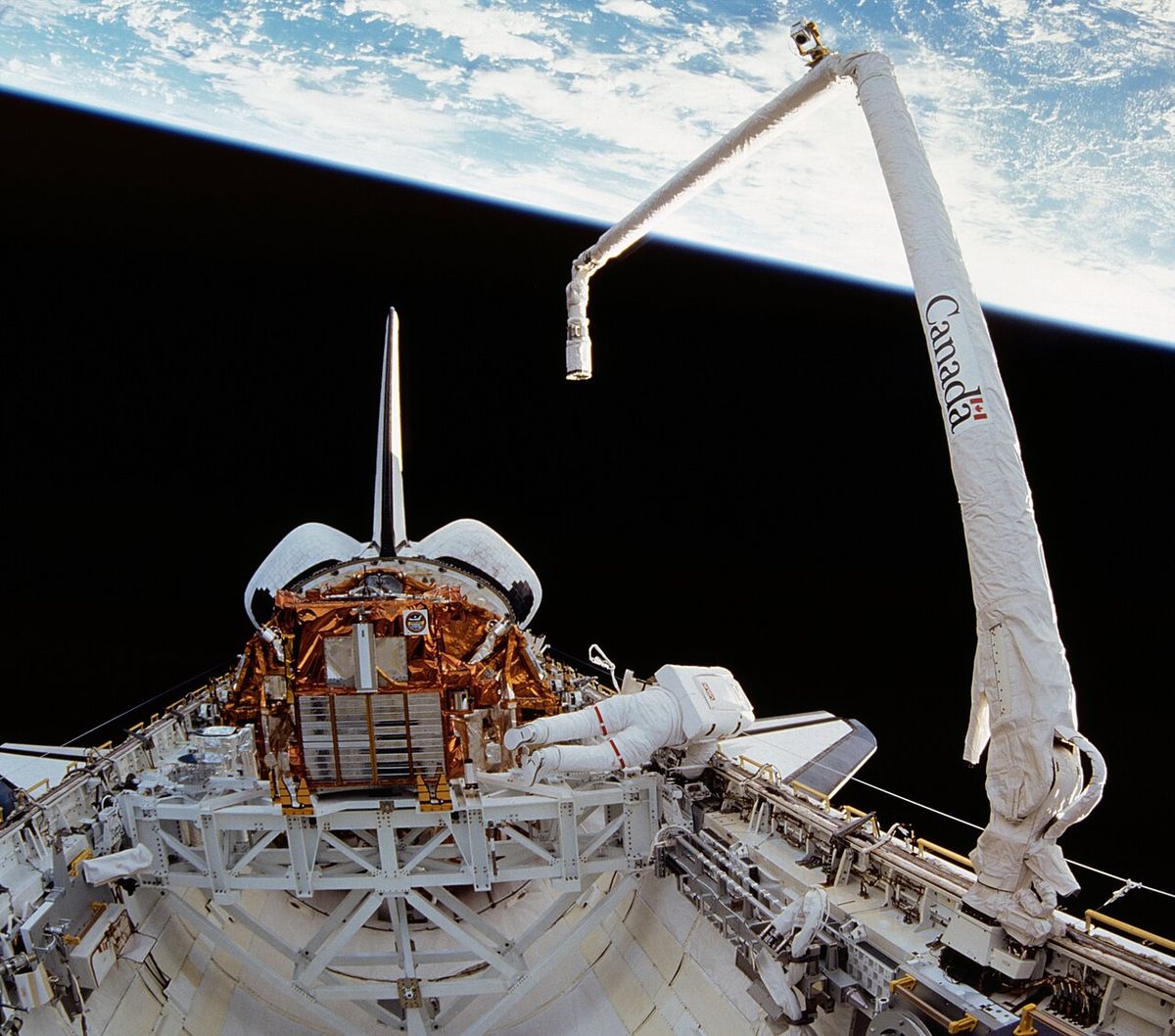
Canada's most famous technological contributions to space exploration are its robotic systems. The original Canadarm was a crucial component of the NASA Space Shuttle fleet for 30 years. Its successor, Canadarm2, along with the Dextre robotic handyman and a mobile base, form the $1.3 billion Mobile Servicing System on the International Space Station. These systems employ the Canadian-developed Advanced Space Vision System for precision operation. The agency also has a significant satellite Earth observation program. The RADARSAT Constellation Mission, a trio of satellites launched in 2019, provides vital data for maritime surveillance, disaster management, and ecosystem monitoring. Looking forward, the CSA is developing new strategic missions including WildFireSat, a dedicated wildfire monitoring constellation projected to save the Canadian economy between $1 billion and $5 billion in its first five years. The High-altitude Aerosols, Water vapour and Clouds mission is also in development to improve weather prediction and climate modelling, with a focus on the Arctic. The CSA contributes components to international projects, such as the Fine Guidance Sensor for the James Webb Space Telescope, and supports Canadian universities and aerospace contractors in providing technology to global space agencies.
Key Canadian spacecraft include Alouette 1, launched in 1962, which made Canada the third country to put a satellite in space. Canada contributed the Canadarm to the Space Shuttle and the Canadarm2 to the International Space Station. The launch of Anik A-1 in 1972 made Canada the first country to have a domestic geostationary communication satellite network. Canada also contributed the Fine Guidance Sensor to NASA's James Webb Space Telescope.
- Alouette 1 (1962): First Canadian satellite, studied the ionosphere.
- Anik A-1 (1972): First domestic geostationary communications satellite.
- Canadarm2 and Dextre (2001, 2008): Robotic servicing system on the ISS.
- RADARSAT Constellation (2019): Three-satellite Earth observation system.
- Fine Guidance Sensor (2021): Canadian contribution to NASA's James Webb Space Telescope.
- Canadarm3 (in development): Next-generation robotic system for the Lunar Gateway.
Future Directions and Current Priorities
A key priority is Canada's participation in the NASA-led Artemis program and the Lunar Gateway. In 2019, Canada became the first international partner for the Gateway, committing $2.05 billion over 24 years to develop the smart robotic system Canadarm3. The CSA is also developing a small lunar rover in partnership with NASA, designed to survive the lunar night and explore a polar region, with a launch planned by 2029. On the domestic front, the agency is working to ensure continuity of its RADARSAT Constellation Mission by adding an additional satellite and advancing the WildFireSat and HAWC Earth observation missions. The CSA supports the commercial space sector through grants and funding for small and medium enterprises, aiming to foster innovation and maintain Canada's competitiveness. In 2026, the federal government announced a commitment of over $200 million to lease a dedicated launch pad at Spaceport Nova Scotia for ten years, a move intended to establish domestic launch capability, though the primary user will be the Department of National Defence. The agency is also planning spending reductions that will involve a decrease of approximately 45 full-time equivalent positions by 2028-29, achieved through natural attrition and revised staffing plans.
Facilities and Operations
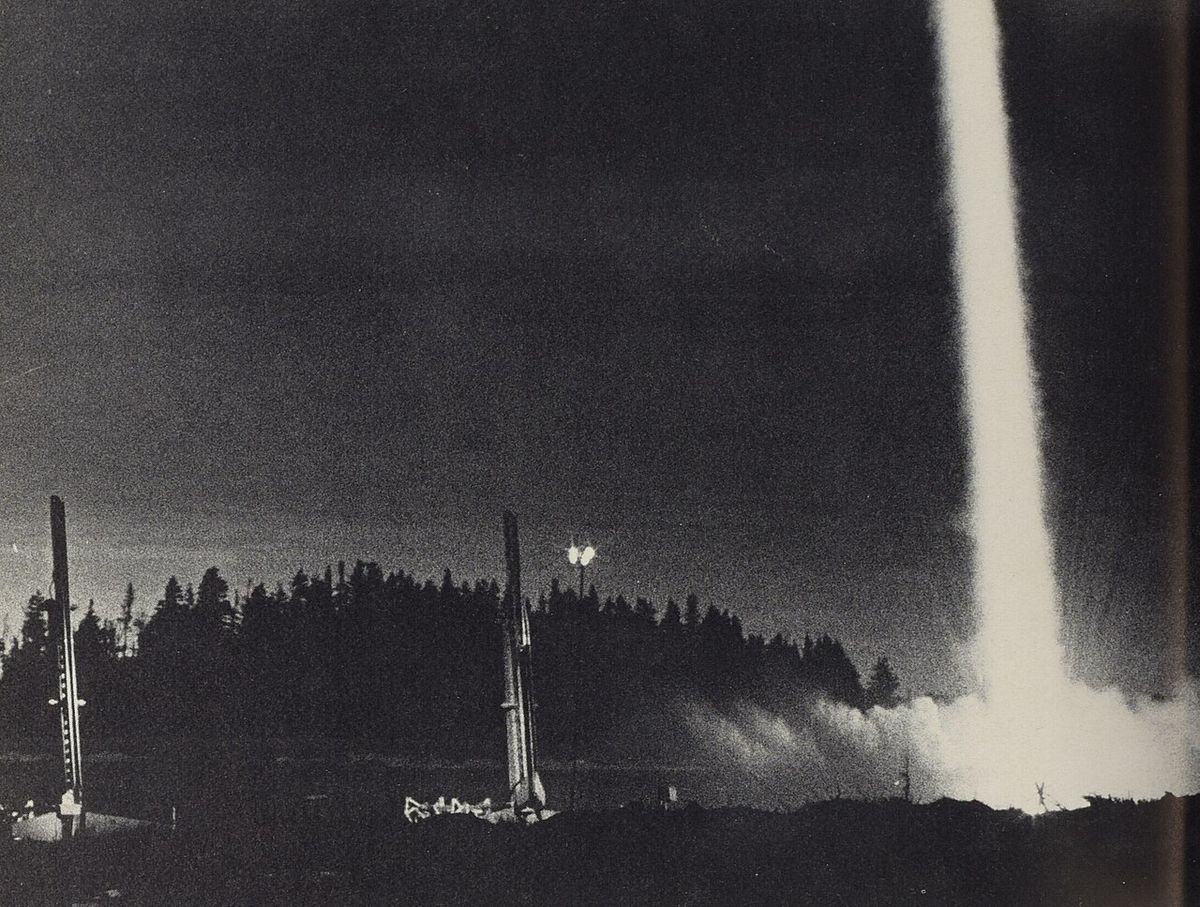
The Canadian Space Agency operates several key facilities across the country. Its headquarters is the John H. Chapman Space Centre in Longueuil, Quebec, which also houses the Marc Garneau Conference Centre. The David Florida Laboratory in Ottawa, Ontario, is the agency's primary satellite assembly, integration, and testing centre. The CSA also maintains an office at the Innovation Place Research Park in Saskatoon, Saskatchewan. For launch services, Canada has historically relied on international partners, utilizing sites like Cape Canaveral and Vandenberg Space Force Base in the United States, the Satish Dhawan Space Centre in India, and the Baikonur Cosmodrome in Kazakhstan. The agency previously used the Churchill Rocket Research Range in Manitoba for sounding rocket launches, and there have been studies into potential future Canadian launch sites in Cape Breton or at CFB Suffield, though no funded project has materialized. The agency's operations include managing grants for student participation in international conferences and supporting educational initiatives like the CubeSat Initiative in Canada for STEM, which engages postsecondary students in real space mission design. The CSA also hosts events like the National Earth Observation Forum, scheduled for October 2026 at its Longueuil headquarters.
Budget and Recent Developments
The CSA's financial resources are allocated through federal budgets and departmental plans. For the 2026-27 fiscal year, the agency's total planned spending is $913,938,318. As part of government-wide spending restraint, the CSA is planning reductions that will involve a decrease of approximately 45 full-time equivalent positions by the 2028-29 fiscal year, achieved largely through natural attrition and revised staffing plans. The agency's expenditures are directed toward its core responsibilities, which include advancing space exploration and science, providing Earth observation services, and fostering a competitive space sector. A significant portion of funding is dedicated to international partnerships like the Lunar Gateway and the continuation of the International Space Station program. The agency also faced a security controversy in March 2022 when information indicated the CSA had been infiltrated by Chinese agents. In December 2021, an engineer, Wanping Zheng, was charged by the RCMP with breach of trust related to alleged foreign interference, though the charges have not been proven in court. Zheng resigned from the CSA after 26 years of service, and court documents alleged he installed unauthorized software and negotiated satellite station agreements on behalf of a foreign company.
| Core Responsibility Area | Key Planned Activities for 2026-27 |
|---|---|
| Human Spaceflight | Support Artemis II mission with Jeremy Hansen. Launch Joshua Kutryk to ISS. |
| Earth Observation | Continue development of WildFireSat and HAWC missions. Add satellite to RADARSAT Constellation. |
| Space Exploration | Advance development of Canadarm3 for Lunar Gateway and a Canadian lunar rover. |
| Commercial Space Sector | Fund innovative small and medium enterprises to develop new technologies. |
Questions about Canadian Space Agency
Which Canadian astronauts are going to space soon?
Jeremy Hansen is a crew member on NASA's Artemis II mission, the first crewed lunar flyby since 1972, scheduled for 2026. This will make him the first Canadian to travel to the Moon. Astronaut Joshua Kutryk is scheduled for a long-duration mission to the International Space Station, also in 2026. His flight will be the first by a CSA astronaut under NASA's Commercial Crew Program.
What satellites does the Canadian Space Agency operate?
The CSA operates the RADARSAT Constellation Mission, a trio of satellites launched in 2019 that use radar to image the planet. The agency is also developing new satellite systems, including WildFireSat for daily wildfire monitoring and the High-altitude Aerosols, Water vapour and Clouds mission for weather and climate data. Historically, Canada's first satellites were the Alouette and ISIS series for ionospheric research.
How does Canada cooperate with other space agencies?
Canada has been a Cooperating State with the European Space Agency since 1979, allowing participation in ESA programs and contracts for Canadian industry. The CSA has a longstanding collaboration with NASA, contributing robotics to the Space Shuttle and International Space Station and instruments to telescopes like the James Webb. Canada is also the first international partner on NASA's Lunar Gateway. Additional partnerships exist with agencies in Japan, India, Sweden, and Russia.
Does Canada have its own rocket launch site?
Canada does not currently have a major domestic launch facility for orbital spacecraft and relies on international launch providers. The agency previously used the Churchill Rocket Research Range in Manitoba for sounding rocket launches. In 2026, the federal government announced a commitment of over $200 million to lease a dedicated launch pad for ten years at Spaceport Nova Scotia, primarily for Department of National Defence use.
Who is the current president of the Canadian Space Agency?
As of 2026, the president of the Canadian Space Agency is Lisa Campbell. She took the position on September 14, 2020. The president is responsible for leading the agency, which reports to the Minister of Industry. The agency's headquarters are located at the John H. Chapman Space Centre in Longueuil, Quebec.
What is the Canadarm and what is Canadarm3?
The Canadarm was the robotic arm used on NASA's Space Shuttle. Canada's contribution to the International Space Station includes the Mobile Servicing System, featuring Canadarm2 and Dextre. Canadarm3 is the next generation robotic system being developed for NASA's Lunar Gateway. In February 2019, Canada committed to spending $2.05 billion over 24 years to develop Canadarm3, marking its largest ever single financial commitment to a space project.
Sources and further reading
- Canadian Space Agency (Wikipedia)
- Canadian Space Agency's 2026, 27 Departmental Plan (asc-csa.gc.ca)
Checked by the Nosy Mag desk. Last updated 2026-10-23.