René Lévesque
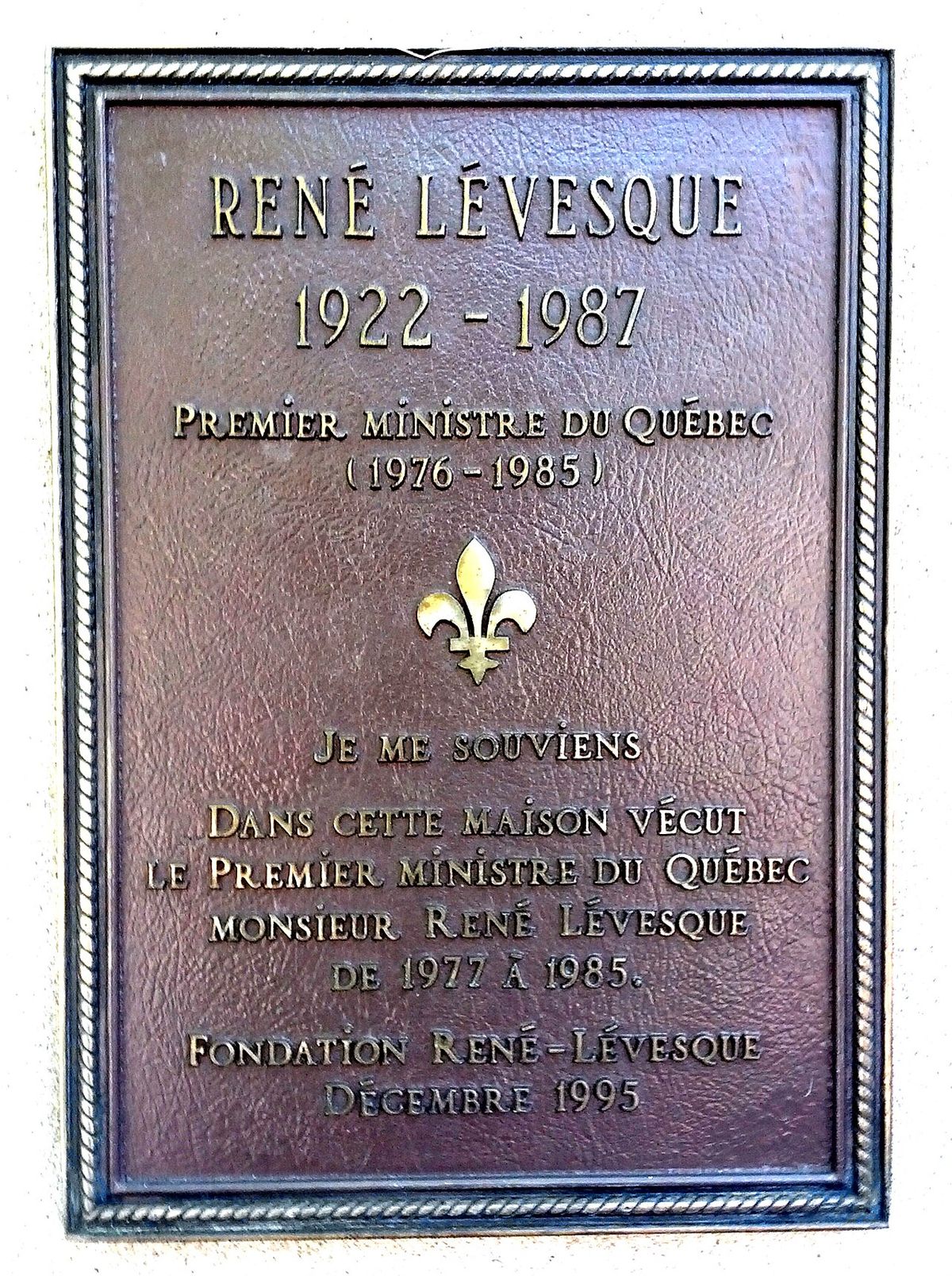
René Lévesque was a Canadian politician and journalist who served as the 23rd premier of Quebec from 1976 to 1985. He was the founder of the Parti Québécois and the first Quebec political leader since Confederation to seek a mandate to negotiate the province's political independence through a referendum. A former radio and television host, Lévesque was a central figure in Quebec's Quiet Revolution, notably in the nationalization of hydro-electricity. His premiership shaped Quebec's language policy, social reforms, and constitutional debates within Canada.
Early life and journalism
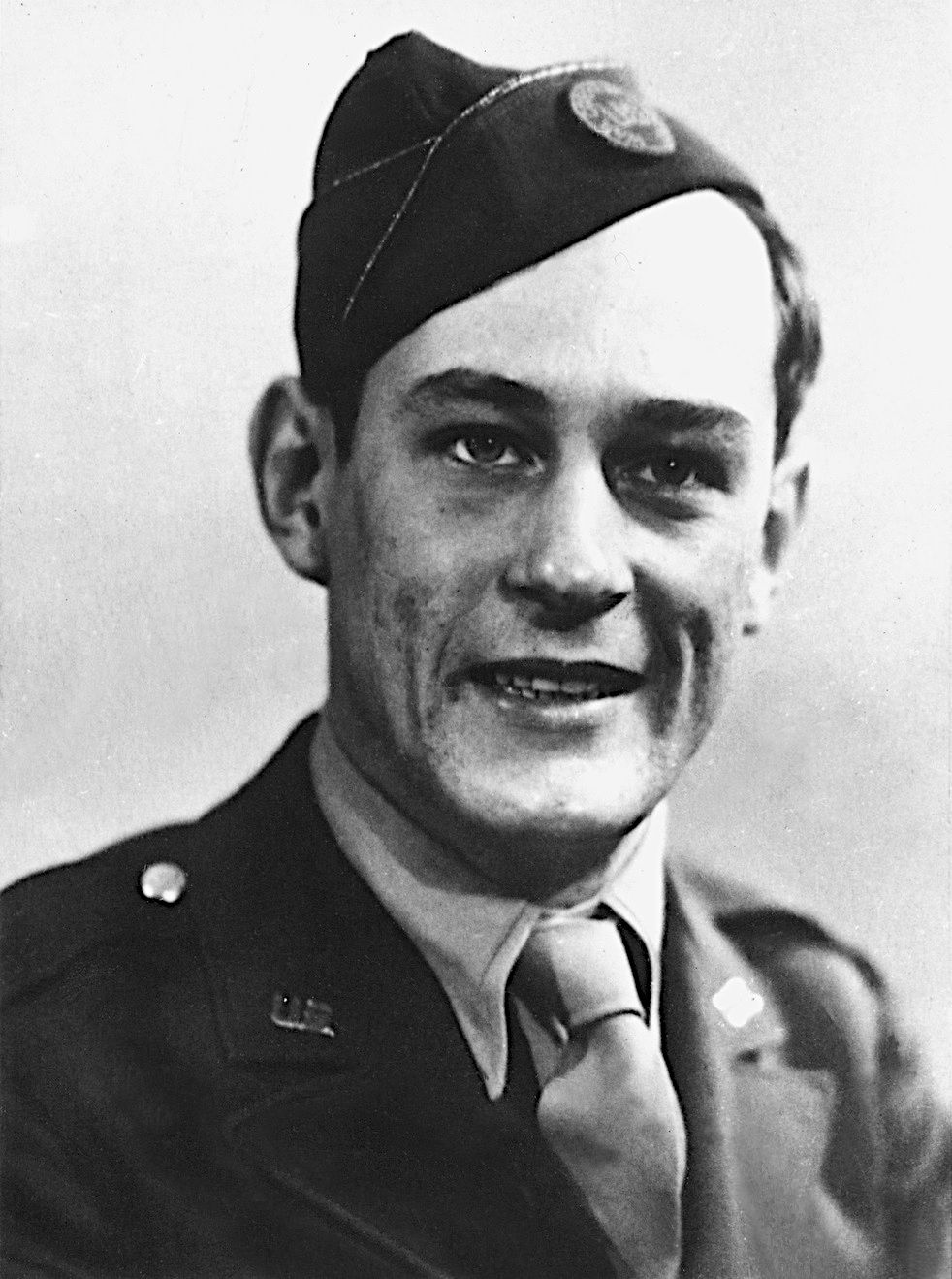
René Lévesque was born on August 24, 1922, in Campbellton, New Brunswick, and raised in New Carlisle on Quebec's Gaspé Peninsula. His father, Dominic Lévesque, was a lawyer, and his mother was Diane Dionne. He had three younger siblings named André, Fernand and Alice. After his father's death when he was 14, Lévesque attended the Jesuit-run Séminaire de Gaspé and Saint-Charles-Garnier College in Quebec City. He then enrolled in law at Université Laval in Quebec City. He left university in 1943 without completing his degree. He began his career as an announcer and news writer at radio station CHNC in New Carlisle and later at CBV in Quebec City. During the Second World War, from 1944 to 1945, he served as a war correspondent and liaison officer for the United States Army in Europe. He reported from London during the Blitz and advanced with Allied troops through France and Germany, being among the first journalists to witness the Dachau concentration camp. After the war, he joined the CBC's French-language international service and served again as a war correspondent during the Korean War in 1952. From 1956 to 1959, he gained national fame in Quebec as the host of the weekly television news program Point de Mire on Radio-Canada. His journalism often covered major labour conflicts, including the 1957 strike at the Gaspé Copper Mine in Murdochville, which was a milestone for organized labour in Quebec. Lévesque's personal involvement in labour issues extended to the 1958 broadcasters' strike, which lasted 68 days. He was arrested during a demonstration in 1959 alongside union leader Jean Marchand and 24 others.
Entry into politics and the Quiet Revolution
Lévesque entered politics in 1960, elected as a Liberal member for Montréal-Laurier in the government of Jean Lesage. He served as a cabinet minister throughout the Quiet Revolution, holding several key portfolios. As minister of hydroelectric resources and public works from 1960 to 1961, and then minister of natural resources until 1965, he was instrumental in the nationalization of Quebec's hydroelectric companies, which greatly expanded the public utility Hydro-Québec. From 1965 to 1966, he served as minister of family and welfare, working with Health Minister Eric Kierans to negotiate social program funding with the federal government. After the Liberals lost the 1966 election to the Union Nationale, Lévesque retained his own seat but grew disillusioned with federalism. He left the Liberal Party after a conference defeated his motion on separation and subsequently founded the Mouvement Souveraineté-Association.
Founding the Parti Québécois and path to power
The Mouvement Souveraineté-Association was founded by Lévesque as a moderate, electoral-focused sovereigntist movement aimed at appealing to what he called normal people. A key early policy debate centred on protecting the rights of Quebec's Anglophone minority, with Lévesque facing down heavy opposition to his insistence that English schools and language rights be protected. In 1968, his movement merged with Gilles Grégoire's Ralliement National to create the Parti Québécois, with Lévesque as its leader. The new party's first electoral test in 1970 yielded 25 percent of the popular vote but only six seats, and Lévesque continued to run the party from Montreal. The 1973 election was a major setback, resulting in a large Liberal victory and creating major tensions within the party after Lévesque was unable to gain a seat. The party's fortunes reversed dramatically in the 1976 election. The Parti Québécois won a landslide victory with 41.1 percent of the vote and 71 of 110 seats, even unseating Liberal Premier Robert Bourassa in his own riding. Lévesque, elected in the riding of Taillon, became premier on November 25, 1976. In his victory speech, he delivered the famous line, I never thought that I could be so proud to be Québécois.
Premiership and major policies
Lévesque's government implemented several foundational policies during its nine years in power. Its signature achievement was the Charter of the French Language, known as Bill 101, enacted in 1977. The law aimed to make French the normal language of work, education, and commerce in Quebec. Its original provisions restricted access to English public schools to children of parents educated in English in Quebec, and required commercial signage to be predominantly in French. Lévesque, more moderate on language than some within his party including language minister Camille Laurin, stated he would have resigned as leader rather than eliminate English-language public schools. His government also completed the nationalization of hydroelectricity under Hydro-Québec. In 1977, Quebec became the first jurisdiction in Canada to prohibit discrimination based on sexual orientation by amending its Charte des droits de la personne. Lévesque's government passed an Act to govern the financing of political parties, which banned corporate donations and limited individual contributions to three thousand dollars. A Referendum Act was also passed to establish rules for province wide votes, giving Yes and No sides equal funding and legal footing. The government's response to the early 1980s recession involved cutting the provincial budget to reduce growing deficits, a move that angered its traditional labour union supporters.
- The Charter of the French Language (Bill 101), 1977.
- Completion of hydroelectric nationalization via Hydro-Québec.
- Political party financing law banning corporate donations, 1977.
- Amendment of the Quebec Charter of Human Rights to prohibit discrimination based on sexual orientation, 1977.
- The Referendum Act, establishing rules for provincial referendums.
- Continued expansion of the social safety net, shifting care from church to state.
The sovereignty project and constitutional battles
The central political project of Lévesque's premiership was Quebec sovereignty. On May 20, 1980, his government held a referendum on sovereignty association, asking for a mandate to negotiate independence. The result of the vote was 40 percent in favour and 60 percent opposed, with an 86 percent voter turnout. In his concession speech, Lévesque told supporters he had been told until next time. Despite the referendum loss, he led the Parti Québécois to victory in the 1981 election, increasing the party's majority in the National Assembly and its share of the popular vote from 41 to 49 percent. A major focus of his second term was the patriation of the Canadian constitution. Lévesque was part of a provincial coalition that initially agreed to a constitutional deal, but he was excluded from the final negotiations between Prime Minister Pierre Trudeau and the other nine provincial premiers in November 1981. The resulting Constitution Act, 1982, was passed without Quebec's consent, and Lévesque was criticized by some in Quebec who said he had been tricked. To this day, no Quebec premier from any political party has endorsed the 1982 constitutional amendment.
Personal life, resignation and death
Lévesque married Louise L'Heureux in 1947, with whom he had two sons and a daughter. A tragic incident on February 6, 1977, brought personal scrutiny when Lévesque, while driving, accidentally struck and killed a homeless man, Edgar Trottier, who had been lying on the road. Police officers did not administer a breathalyzer test, and Lévesque was later fined twenty five dollars for failing to wear his glasses while driving. The incident gained further notoriety when it was revealed his female companion was not his wife but his longtime secretary, Corinne Côté. Lévesque's marriage ended in divorce soon thereafter, and in April 1979, he married Côté. This angered the strongest supporters of sovereignty within the party, leading to senior resignations and by-election defeats. Lévesque resigned as leader of the Parti Québécois on June 20, 1985, and as premier of Québec on October 3, 1985. Lévesque died of a heart attack on November 1, 1987, in Montreal. Over 100,000 people viewed his body lying in state in Montreal and Quebec City.
Honours, memorials and legacy
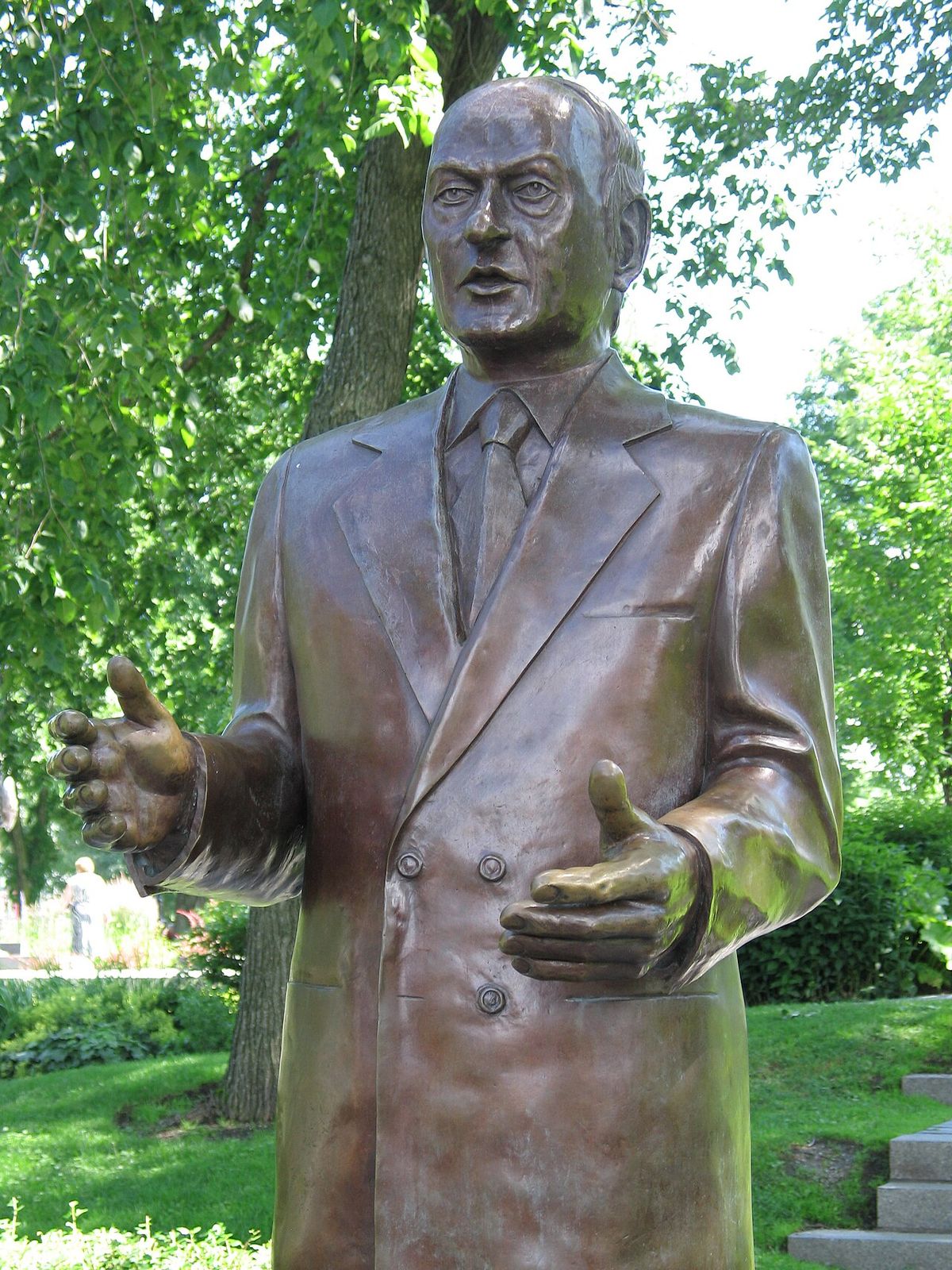
René Lévesque's state funeral in Quebec City was attended by an estimated 100,000 people, with crowds spontaneously singing a version of Gens du pays adapted to Mon cher René. He was made a Grand Officer of the French Legion of Honour during his lifetime and was posthumously made a Grand Officer of the National Order of Quebec in 2008. Major boulevards in Montreal and Quebec City were renamed in his honour, and the Édifice Hydro-Québec and Maison Radio-Canada in Montreal are both located on René Lévesque Boulevard. In 2010, Hydro-Québec and the government of Quebec commemorated his role by renaming the 1244 megawatt Manic 3 generating station in his honour. A monument in his honour was unveiled on boulevard René Lévesque outside the Parliament Building in Quebec City on June 3, 1999. That statue was later moved to his childhood town of New Carlisle and replaced by a larger one. Lévesque is widely regarded as the spiritual father of the modern Quebec sovereignty movement. A 2006 survey by Le Journal de Montréal and Léger Marketing found he was considered by far the best premier to run the province over the last fifty years. His life has been dramatized in television series, including a 1994 production and a 2006 CBC miniseries. In 2023, the Prix du Québec created the Prix René Lévesque to honour lifetime career achievements in Quebec journalism, with the inaugural recipient awarded to longtime television anchor Pierre Bruneau.
- Grand Officer, French Legion of Honour.
- Grand Officer, National Order of Quebec (posthumous, 2008).
- René Lévesque Boulevard in Montreal and Quebec City.
- René Lévesque Generating Station (Manic 3), renamed 2010.
- Statues in Quebec City and New Carlisle.
- Prix René Lévesque for journalism, established 2023.
Electoral record and political career
René Lévesque's electoral career spanned 25 years, from his first election as a Liberal to his final victory as Parti Québécois premier. He represented the riding of Montréal-Laurier from 1960 to 1970, and the riding of Taillon from 1976 until his retirement in 1985. His leadership of the Parti Québécois transformed it from a marginal movement into a governing party. The electoral division of René Lévesque, named in his honour, exists on Quebec's North Shore.
| Election | Party | Riding | Result |
|---|---|---|---|
| 1960 | Liberal | Montréal-Laurier | Elected |
| 1966 | Liberal | Montréal-Laurier | Elected |
| 1970 | Parti Québécois | Dorion | Defeated |
| 1973 | Parti Québécois | Dorion | Defeated |
| 1976 | Parti Québécois | Taillon | Elected |
| 1981 | Parti Québécois | Taillon | Elected |
Questions about René Lévesque
What was René Lévesque's role in the Quiet Revolution?
As a Liberal cabinet minister under Premier Jean Lesage from 1960 to 1966, René Lévesque played a central role in the Quiet Revolution. His most significant contribution was as minister responsible for the nationalization of Quebec's hydroelectric companies, which created and greatly expanded Hydro-Québec. He also served as minister of family and welfare from 1965 to 1966, helping to negotiate social program funding with the federal government. These actions were key reforms that defined the Quiet Revolution era in Quebec.
What did Bill 101 do?
The Charter of the French Language, commonly known as Bill 101, was enacted in 1977. Its goal was to make French the normal language of work, instruction, communication, commerce, and business in Quebec. Key original provisions restricted access to English language public schools to children whose parents had been educated in English in Quebec. The law also required that exterior commercial signage be predominantly in French.
What was the result of the 1980 Quebec referendum?
The referendum held on May 20, 1980, asked Quebec voters for a mandate to negotiate sovereignty association with the rest of Canada. The proposal was defeated, with 40 percent of voters supporting the Yes side and 60 percent opposing it. Voter turnout for this historic vote was 86 percent. In his concession speech, Lévesque told supporters he interpreted the verdict as 'until next time'.
Why did René Lévesque resign?
Lévesque resigned in 1985 following internal party strife over his strategic shift. He advocated for a strategy called Beau risque, which involved seeking an understanding with the federal government of Brian Mulroney and putting sovereignty on hold. This angered the party's core sovereigntist members, leading to senior resignations and by-election defeats. He resigned as party leader on June 20, 1985, and as premier on October 3, 1985.
How is René Lévesque remembered today?
René Lévesque is remembered as the spiritual father of the modern Quebec sovereignty movement. He is honoured with major boulevards in Montreal and Quebec City named after him. In 2010, the 1244-megawatt Manic-3 hydroelectric generating station was renamed in his honour. A 2006 survey by Le Journal de Montréal and Léger Marketing found he was considered the best Quebec premier of the preceding fifty years.
Was René Lévesque a journalist before entering politics?
Yes, René Lévesque had a prominent career in journalism before entering politics. He worked as a radio announcer and news writer at stations like CHNC in New Carlisle and served as a war correspondent for the United States Army in Europe during the Second World War. He later worked for the CBC's French-language service and was a war correspondent in the Korean War in 1952. From 1956 to 1959, he became a household name in Quebec as the host of the weekly television news program Point de Mire on Radio-Canada.
Sources and further reading
- René Lévesque (Wikipedia)
- René-Lévesque, Electoral division information sheet (electionsquebec.qc.ca)
- Élections Québec 2026 - Le débat dans René-Lévesque (ici.radio-canada.ca)
Checked by the Nosy Mag desk. Last updated 2026-10-21.