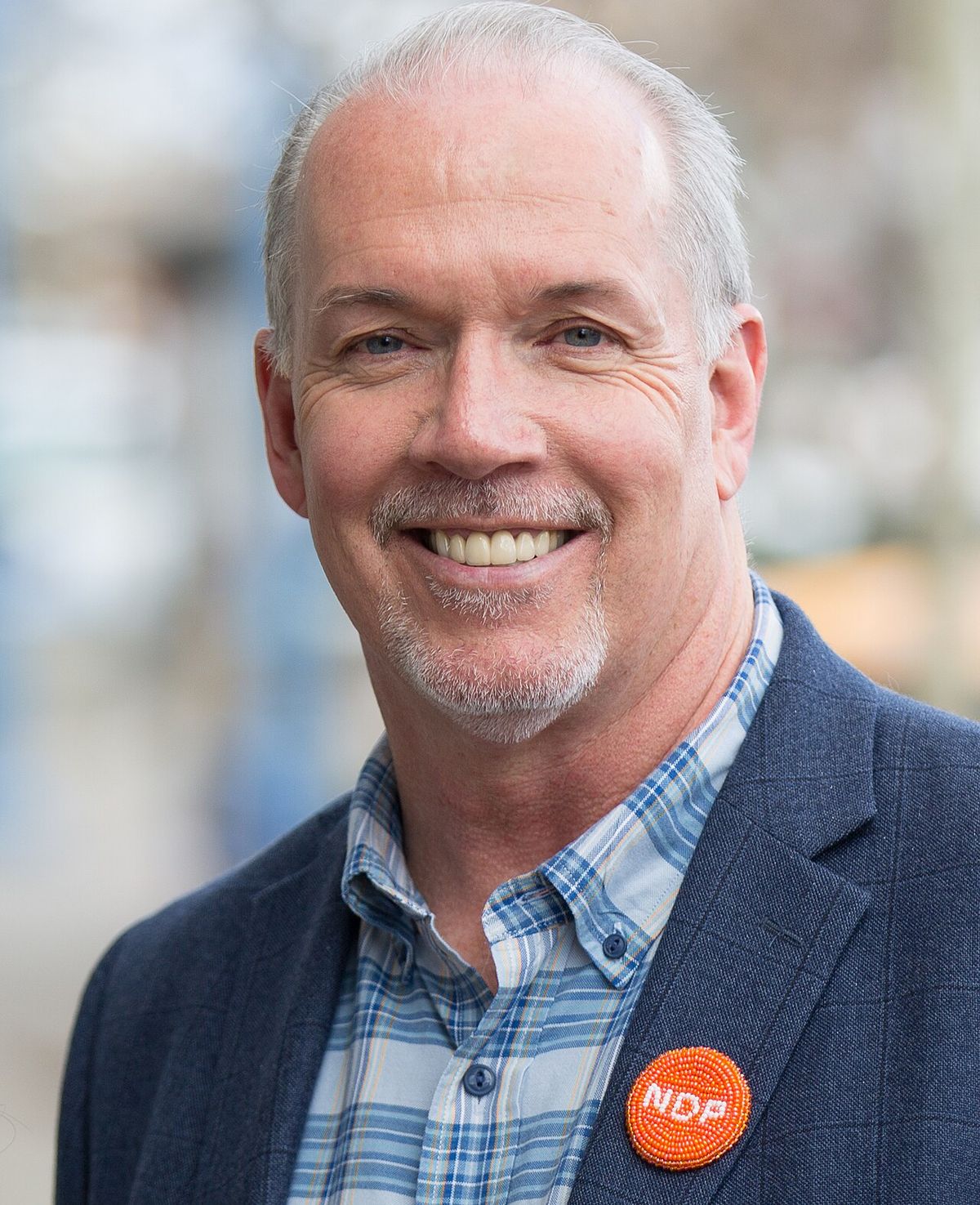
David Eby
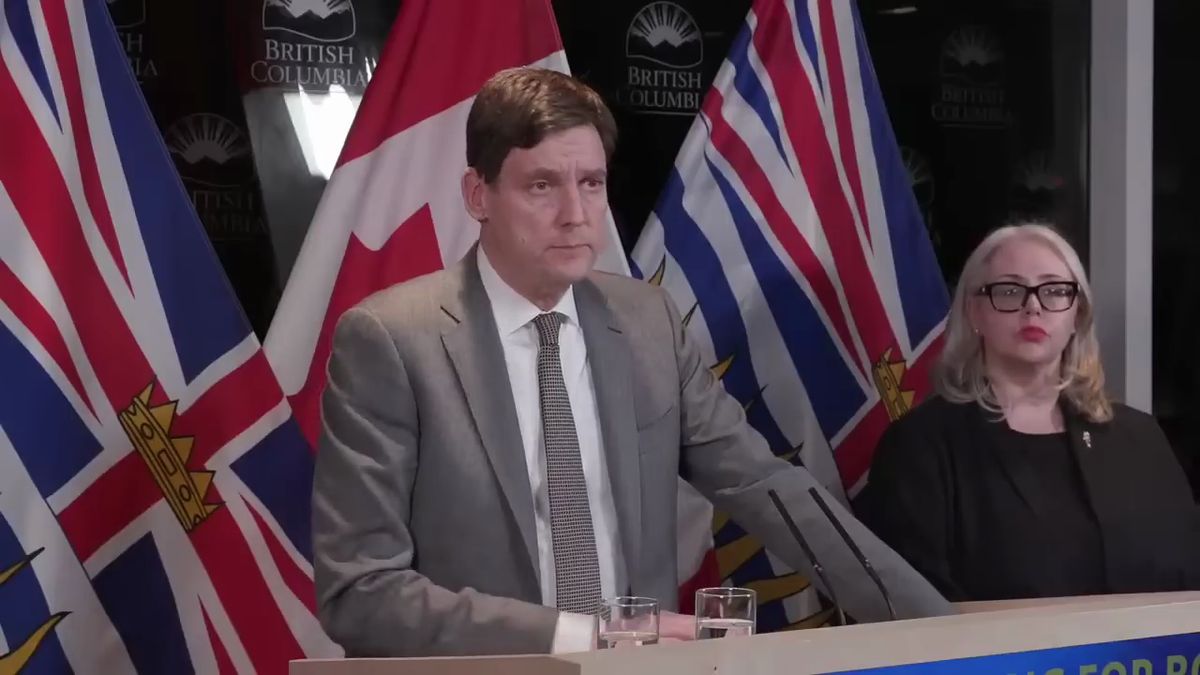
David Eby is the 37th premier of British Columbia, serving since November 2022 and leading the province's New Democratic Party. A lawyer by training with a background in civil rights advocacy, Eby first entered the provincial legislature in 2013 after defeating then premier Christy Clark in her own riding. As premier, his government has focused on addressing the housing crisis, public safety, and health care, while also contending with significant fiscal challenges. Eby led the NDP to a narrow majority in the 2024 provincial election and called a snap election for October 2026.
Early Life and Legal Career
David Robert Patrick Eby was born in Kitchener, Ontario in 1976, the eldest of four children. His father, Brian, was a personal injury lawyer and his mother, Laura, was a teacher who later became an elementary school principal. Eby studied English at the University of Waterloo and, after graduation, worked for a communications firm before deciding to pursue law. He graduated from Dalhousie University's Schulich School of Law in Halifax in 2004, articled with the federal Department of Justice, and was called to the bar in British Columbia in June 2005. His early career was firmly rooted in social justice and civil liberties work in Vancouver.
From 2005 to 2008, Eby worked as a lawyer at the Pivot Legal Society in Vancouver's Downtown Eastside. He then served as the executive director of the British Columbia Civil Liberties Association from 2008 until 2012, during which time he authored The Arrest Handbook: A Guide to Your Rights. Concurrently, Eby was an adjunct professor of law at the University of British Columbia from 2009 to 2013. He also served as president of the Canadian HIV/AIDS Legal Network and worked as a research associate with the Canadian Centre for Policy Alternatives.
Entry into Provincial Politics
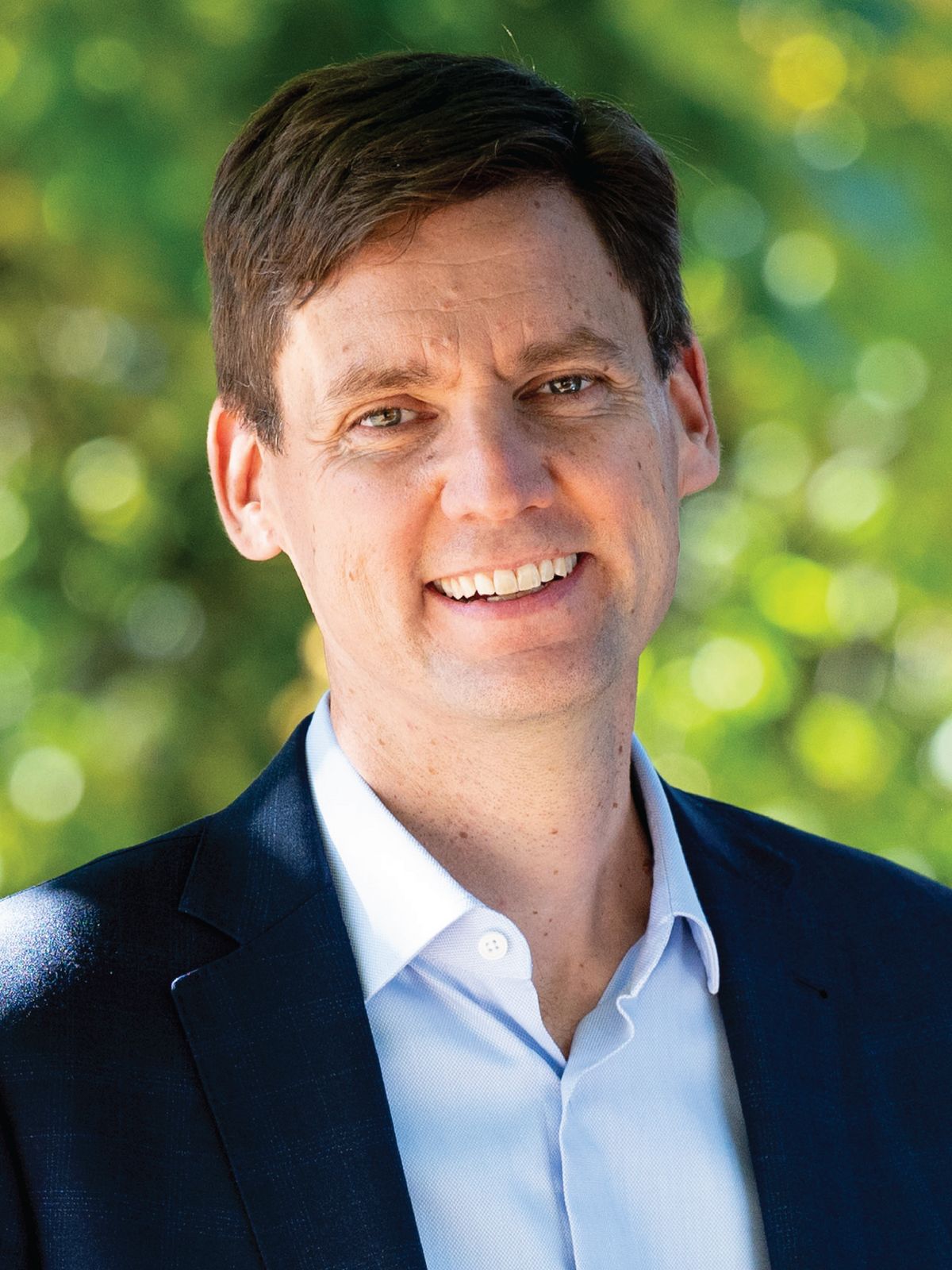
David Eby's first foray into electoral politics was an unsuccessful bid for a Vancouver city council nomination with Vision Vancouver in 2008. His provincial political career began in earnest in 2011 when he ran as the NDP candidate in a by-election for the riding of Vancouver-Point Grey. The seat had been vacated by former premier Gordon Campbell and was contested by the newly sworn in premier, Christy Clark of the BC Liberal Party, who did not hold a seat in the legislature. Eby placed a close second, losing to Clark by only 595 votes. He challenged Clark again in the 2013 general election and defeated the incumbent premier in her own riding. This victory was a rare instance of a premier being unseated despite their party winning re-election province wide.
After his election as MLA, Eby was named to the NDP shadow cabinet as critic for advanced education. He later served as critic for tourism, housing, gaming and liquor policy. In these opposition roles, he was an active investigator, calling for an inquiry into Vancouver's real estate market over practices like 'shadow flipping' and uncovering instances of high value property being purchased by buyers listed as students or homemakers. His work suggested these activities were linked to tax avoidance and money laundering, themes he would later address in government. In 2016, former NDP premier Glen Clark described Eby as 'the future of the NDP.'
Tenure as Attorney General (2017 to 2022)
Following the 2017 British Columbia election, which saw the NDP form government with the support of the Green Party, David Eby was appointed attorney general by Premier John Horgan. He additionally became minister responsible for liquor, gaming and the Insurance Corporation of British Columbia. During his tenure, British Columbia passed anti SLAPP legislation, which was stronger than a previous version from 2001 and was praised by the executive director of the BC Civil Liberties Association as a model for other provinces. Eby launched a major investigation into money laundering in the province's casinos, hiring former RCMP deputy commissioner Peter German to lead it. German's 2018 report found over $100 million had been laundered due to a 'collective system failure.' This led to a public inquiry headed by Justice Austin Cullen, whose final report in June 2022 concluded the federal anti money laundering regime was ineffective and urged the province to develop its own tools. Eby also oversaw a referendum on electoral reform in 2018, which saw 61.3 percent of voters choose to keep the first past the post system. He later noted the result showed British Columbians were 'happy with the system we have.' In July 2022, Eby stepped down from cabinet to stand in the NDP leadership race to succeed the retiring John Horgan.
- Appointed Attorney General and Minister Responsible for ICBC in July 2017.
- Passed anti SLAPP legislation to protect public interest expression.
- Launched the German investigation into casino money laundering in September 2017.
- Oversaw the 2018 electoral reform referendum, which rejected proportional representation.
- Initiated the Cullen Commission of Inquiry into Money Laundering in May 2019.
- Stepped down from cabinet in July 2022 to run for party leadership.
Reforming the Insurance Corporation of British Columbia
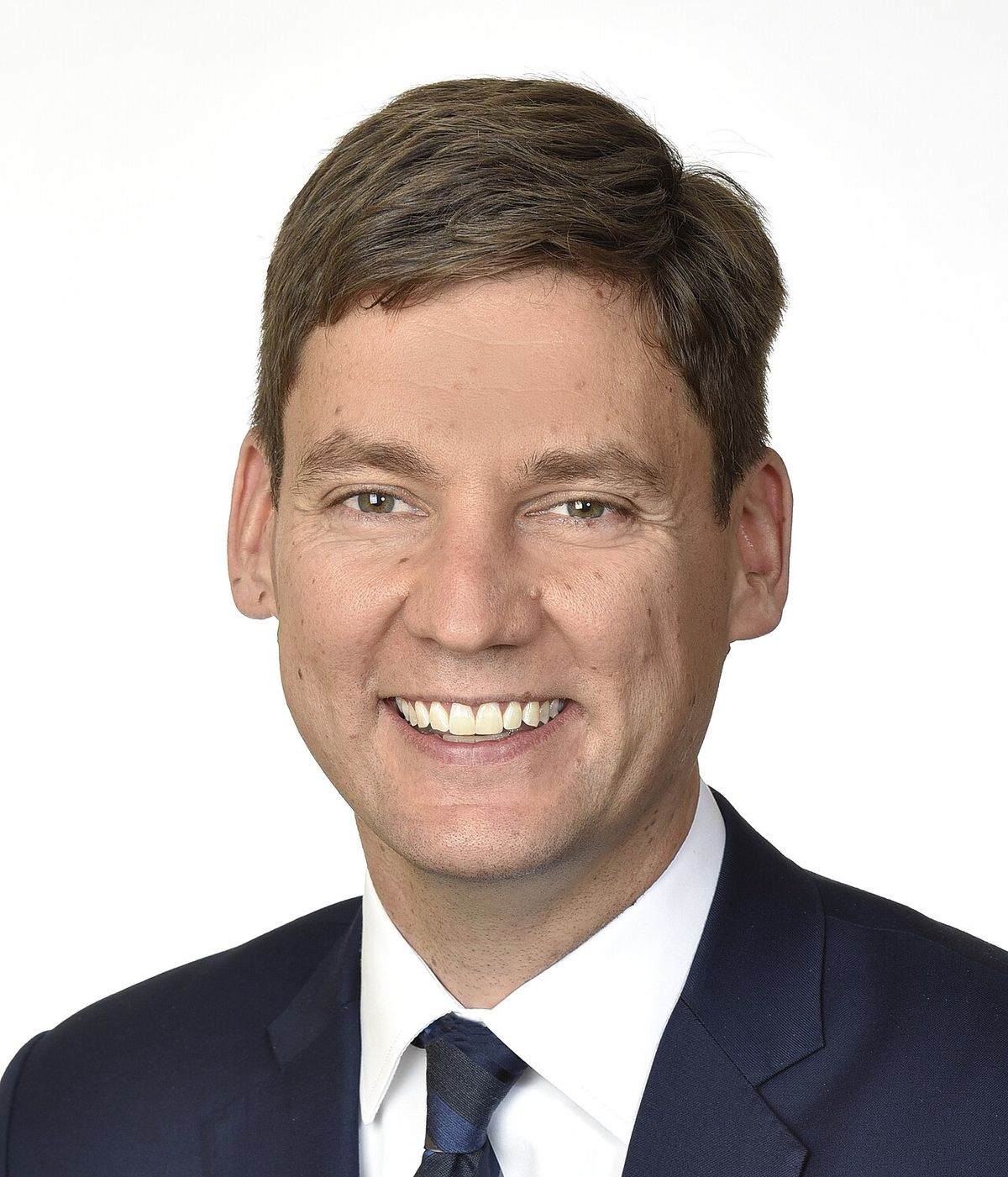
As minister responsible for ICBC, David Eby inherited an auto insurer in severe financial distress. A report released in July 2017 concluded ICBC was in a poor financial situation and warned that without significant reform, driver premiums would need to rise by almost 30 percent in two years. Eby initially enacted measures including a 6.4 percent rate increase and programs to combat distracted driving. In January 2018, with ICBC projecting a net loss of $1.3 billion, Eby described the corporation as a 'financial dumpster fire' due to the 'reckless decisions' of the previous Liberal government.
In February 2018, the government announced major changes to accident coverage, including capping payments for minor injury claims and changing the dispute resolution process to reduce legal costs, reforms estimated to save $1 billion annually. Despite having previously ruled it out, Eby announced in February 2020 that ICBC would move to a 'no fault' insurance system, known as Enhanced Care. This dramatic shift was justified as a way to dramatically reduce legal costs, quicken benefit payments, and lower premiums. The government's 2020 budget projected an $86 million surplus for ICBC, its first since the 2015/16 fiscal year. Eby also introduced legislation to ensure ICBC's profits would remain within the corporation to reduce premiums, criticizing the previous government's practice of using it to cover other expenses.
Housing and Additional Responsibilities
After the 2020 election, Premier Horgan added the role of minister responsible for housing to Eby's portfolio. He vigorously pushed for more homeless shelters, often lobbying municipal governments directly to approve zoning and permits. In February 2021, he outlined a goal to move everyone living in encampments in Victoria's and Vancouver's parks into shelter, later signing deals with both cities to that effect. Eby's direct approach drew criticism from some municipal politicians, but he defended it as necessary to prevent entrenched encampments. Eby faced a notable conflict with the City of Penticton in March 2021 when its council voted to deny a permit for a winter homeless shelter.
On March 2, 2021, Penticton city council voted unanimously to deny a permit needed to run an emergency winter homeless shelter. David Eby called the news deeply troubling and noted the council had assured him they would grant the permit. Two weeks later, on March 18, Eby announced the province would use its power of paramountcy to overrule the council and keep the shelter open, a move the city challenged in court. In 2022, following an independent probe that found BC Housing had inadequate oversight, Eby dismissed the agency's entire board of commissioners and ordered a forensic audit.
Premiership and the 2024 to 2026 Period
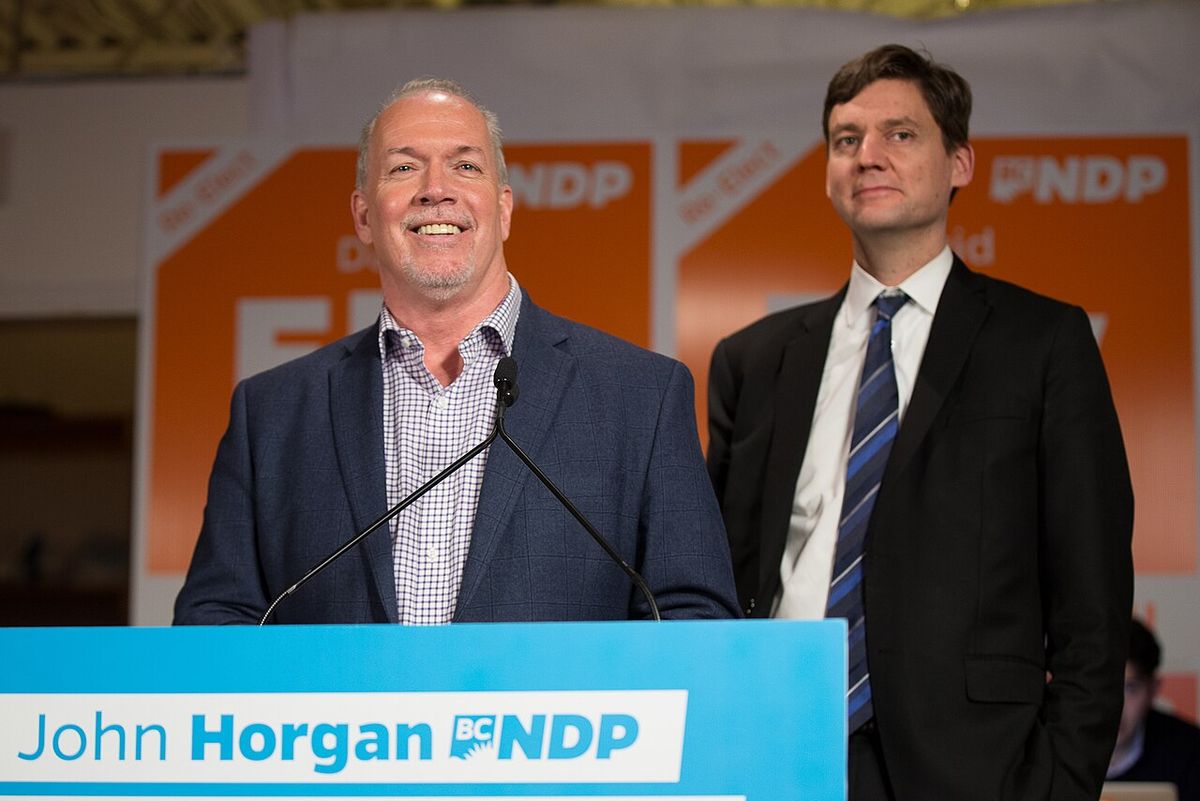
David Eby became leader of the BC NDP by acclamation in October 2022 after the disqualification of his only challenger, Anjali Appadurai. He was sworn in as premier on November 18, 2022, in a ceremony hosted by the Musqueam First Nation. On his first day, he announced immediate cost of living relief, including a credit for electricity bills and a new BC Affordability Credit. He also directed ICBC to freeze basic auto insurance rates for two years. His government's priorities were outlined as housing, public safety and health care.
In the 2024 provincial election, Eby led the NDP to a narrow majority government, securing 47 seats. Shortly after the election, a confidence and supply agreement with the BC Greens was announced to ensure stability. In February 2026, the BC Greens decided not to renew the agreement. In November 2025, Alberta Premier Danielle Smith reached a deal with Prime Minister Mark Carney to build an oil pipeline to the British Columbia Coast, a proposal opposed by Eby and most local First Nations. Following the 2026 Tumbler Ridge shooting, his government's throne speech was cancelled and replaced with tributes to the victims. On September 22, 2026, Eby called a snap election for October 24, 2026, citing concerns about the ongoing trade war between Canada and the United States.
| Policy Area | Key Achievement or Promise (2022 to 2026) |
|---|---|
| Housing | Pushed for homeless shelters, deals with Victoria/Vancouver on encampments, province-wide zoning changes for multi-family homes. |
| Cost of Living | Announced BC Affordability Credit, ICBC rate freeze (2022), permitted 3.5% rent increase for 2024. |
| Health Care | Free prescription contraceptives (2023), expanded pharmacist scope of practice, International Credentials Recognition Act (2023). |
| Economy & Jobs | Trade missions to Asia (2023) and India (2026), focus on value-added forestry products, 2026 budget forecasted a record deficit over $13 billion. |
| Public Safety | New bail directive for violent criminals (2023), province-wide state of emergency during 2023 wildfires, involuntary care facilities for mental health. |
The 2026 Snap Election Campaign
Premier David Eby's decision to call a snap election in September 2026 set the stage for a contentious campaign. He framed the election as an existential moment, arguing his government needed a renewed mandate to protect jobs, build infrastructure, and bolster public services against what he described as the threat of an unstable BC Conservative government. Eby warned that Conservative plans, such as scrapping the Massey Tunnel replacement project, would threaten billions in investments. His campaign promises included capping mark ups on basic groceries, suspending part of the provincial fuel tax, freezing ICBC rates for another three years, and cracking down on empty condos to increase rental supply.
Polls during the campaign showed a tight race, with the BC Conservative party leading in voter intention. One poll in October 2026 found 65 percent of voters thought it was time for a change in government. The same polls indicated BC Conservative leader Lorne Doerkson was considered a better potential premier than Eby by some respondents. The Conservative lead was also notable among Punjabi and Chinese speaking voters, potentially impacting key swing ridings in Surrey and Richmond. Eby campaigned on his government's record, pointing to achievements like connecting over a million British Columbians to a primary care provider and 24 consecutive months of declining rents, while acknowledging that significant challenges remained.
Questions about David Eby
How did David Eby become premier of British Columbia?
David Eby became premier after winning the leadership of the BC New Democratic Party by acclamation in October 2022, following the resignation of Premier John Horgan due to health concerns. He was the only candidate remaining after the disqualification of his challenger, Anjali Appadurai. Eby was sworn in as the 37th premier on November 18, 2022. He had previously served as attorney general and housing minister under Horgan.
What is David Eby's professional background before politics?
Before entering politics, David Eby was a lawyer specializing in civil liberties and social justice. He worked at the Pivot Legal Society in Vancouver's Downtown Eastside from 2005 to 2008. He then served as executive director of the British Columbia Civil Liberties Association from 2008 to 2012. Concurrently, he was an adjunct professor of law at the University of British Columbia and served as president of the Canadian HIV/AIDS Legal Network.
What were Eby's major accomplishments as attorney general?
As attorney general from 2017 to 2022, David Eby enacted strong anti SLAPP legislation. He launched and oversaw a comprehensive investigation and public inquiry into money laundering in BC casinos and real estate, which found billions were laundered. Eby also spearheaded a complete overhaul of the financially troubled ICBC, moving it to a no fault insurance system to stabilize premiums. He conducted a referendum on electoral reform, though voters chose to keep the first past the post system.
Why did David Eby call a snap election in 2026?
Premier David Eby called a snap election for October 24, 2026, citing concerns about the ongoing trade war between Canada and the United States. He also argued that the legislative assembly had become dysfunctional, stating the BC Conservative opposition had voted 13 times to collapse the government since 2024. Eby called the election seeking a renewed mandate to govern effectively during a period of economic uncertainty. The election was called on September 22, 2026, after much speculation about its timing.
What were the main issues in the 2026 BC election campaign?
The 2026 campaign was dominated by issues of affordability, housing, health care, and government accountability. Eby and the NDP campaigned on their record, including major project investments and health care expansions, while promising further relief like grocery price caps and a fuel tax suspension. The BC Conservatives, leading in polls, focused on the need for change, criticizing the NDP's management of the deficit and public safety. The election followed a period where the NDP held a narrow majority with 47 seats after the 2024 provincial election.
What is David Eby's stance on housing policy?
Housing has been a central priority for David Eby since his time as housing critic and minister. As premier, he has aggressively pushed to increase shelter spaces and reduce homelessness, at times overriding municipal decisions to keep shelters open. His government has pursued policies to increase rental supply, including province-wide zoning changes to permit multi-family homes and a proposed tax on house flipping. In April 2023, he and Housing Minister Ravi Kahlon announced a new provincial housing plan that included thousands of new student and social housing units.
Sources and further reading
- David Eby (Wikipedia)
- A rising political star in 2024, NDP's Eby now on defensive (timescolonist.com)
- Jump in voters wanting change 'kiss of death' for David Eby (vancouversun.com)
Checked by the Nosy Mag desk. Last updated 2026-10-19.