Tuscarora people
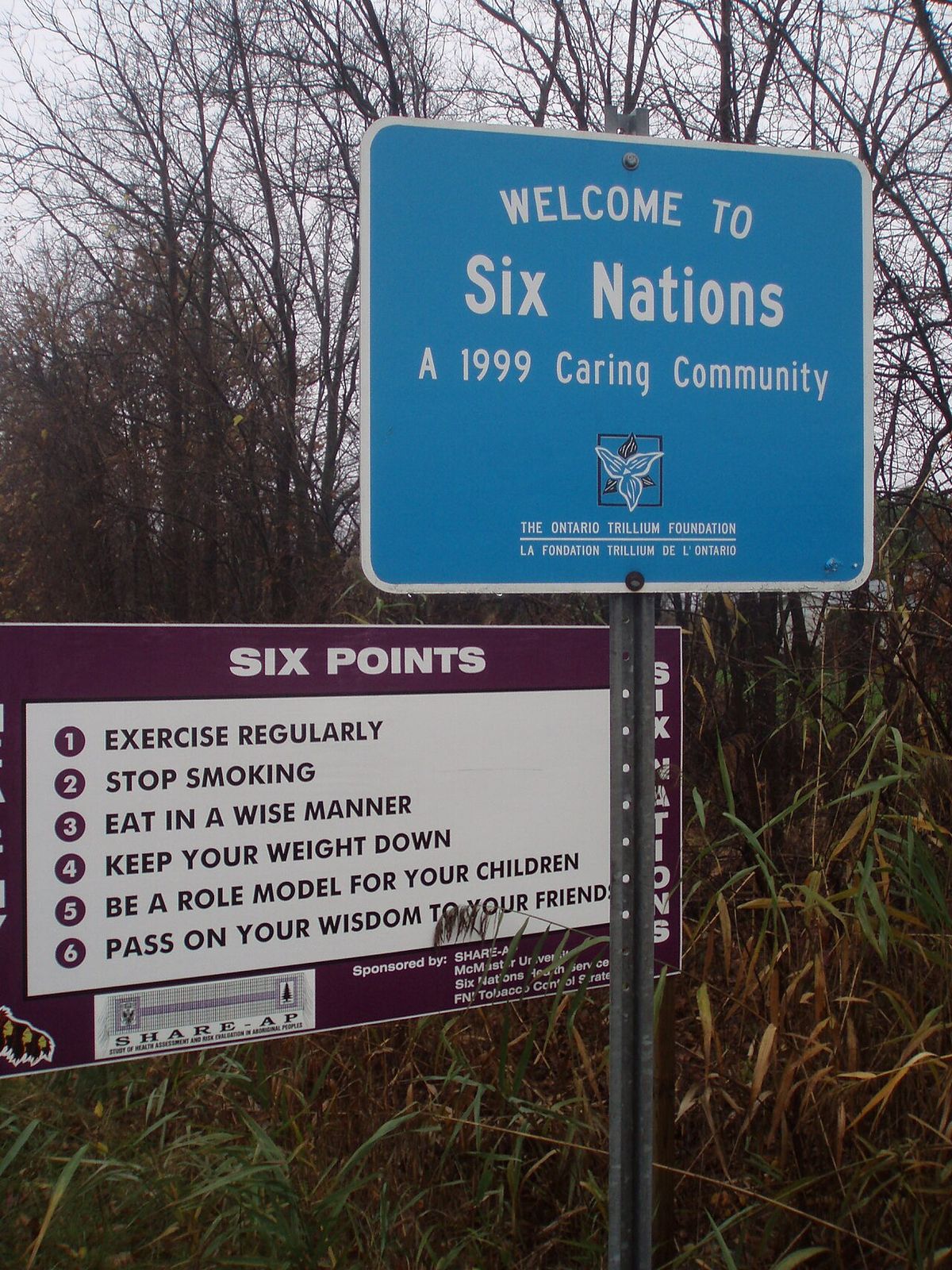
The Tuscarora (Skarù·ręʔ) are an Indigenous Iroquoian people originally from the coastal plains of present-day North Carolina. Following a devastating war with British colonists in the early 18th century, the majority of the nation migrated north, where they were formally adopted as the sixth nation of the Haudenosaunee (Iroquois) Confederacy in 1722. Today, the Tuscarora maintain two principal, government-recognized communities: the federally recognized Tuscarora Nation in Lewiston, New York, and the Tuscarora First Nation, which is part of the Six Nations of the Grand River in Ontario, Canada. Only the tribes in New York and Ontario are recognized on a government-to-government basis. Descendants in North Carolina continue to organize and advocate for recognition, though their status is disputed by the New York nation.
Origins and Pre-Contact Society
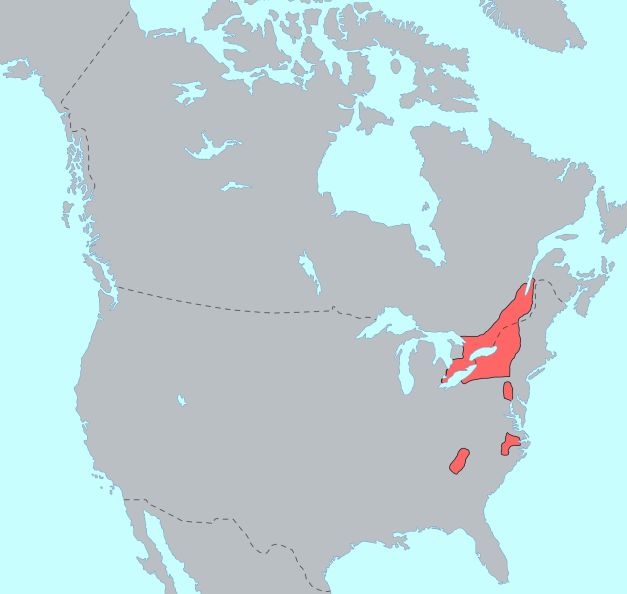
The Tuscarora people are part of the Iroquoian language family, with linguistic and cultural ties to the Haudenosaunee nations of New York. Archaeological and historical evidence suggests they migrated into the coastal plains and eastern piedmont of what is now North Carolina around 500 BCE. By the time of sustained European contact in the late 17th century, they were the most populous and powerful Indigenous nation in the region. Their territory spanned the river basins of the Roanoke, Neuse, Tar, and Pamlico Rivers. The Tuscarora were skilled agriculturalists, cultivating extensive fields of corn, beans, and squash, while also relying on hunting, fishing, and gathering to sustain their communities. The word Tuscarora, derived from their autonym Skarù·ręʔ, may translate to 'hemp gatherers' or 'shirt-wearing people'.
Their society was organized around a confederacy of three primary tribes: the Kautanohakau (people of the submerged pine trees), the Kawenteaka (people of the water), and the Skaruren (hemp gatherers). Social structure was matrilineal, with individuals belonging to one of seven clans: Bear, Beaver, Deer, Eel, Snipe, Turtle, and Wolf. These clan affiliations remained vital social units even after the migration north. The Tuscarora were first recorded by English colonists as the Tuskarood in 1650. Early 19th century historian F. W. Hodge wrote that the Tuscarora traditionally occupied the country between the sea and the mountains, with 24 large towns and could muster about 6,000 warriors, likely meaning persons.
The Tuscarora War and Displacement
By the early 18th century, the encroachment of British colonists from Virginia and the newly established Carolina colonies placed immense pressure on Tuscarora lands and sovereignty. Colonists routinely seized land, cheated the Tuscarora in trade, and conducted raids to kidnap people for the Indian slave trade, with some Tuscarora transported to Pennsylvania for sale. These tensions split the Tuscarora leadership. A northern group, led by Chief Tom Blunt (later Blount), was based around the Roanoke River in present-day Bertie County and maintained a more peaceful relationship with settlers. A southern group, led by Chief Hancock, lived closer to New Bern, south of the Pamlico River, and faced relentless colonization and violence.
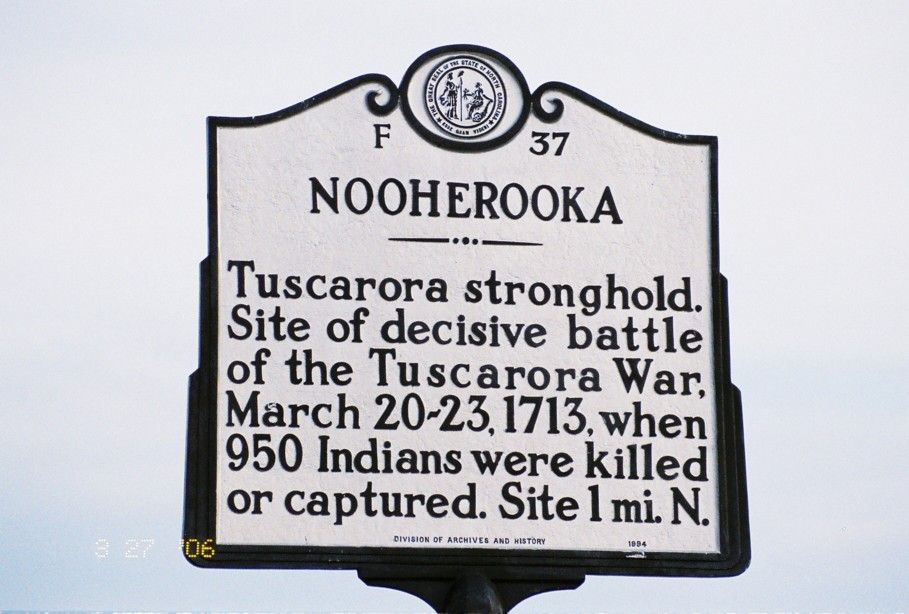
On September 22, 1711, Chief Hancock, allied with the Pamlico, Cothechney, Coree, Mattamuskeet, and Matchepungoe nations, launched a coordinated attack on colonial settlements along the Roanoke, Neuse, and Trent Rivers and the city of Bath, marking the beginning of the Tuscarora War. The colonists, supported by the North Carolina militia, 600 South Carolina militiamen, and 360 British-allied Indian warriors under Colonel John Barnwell, retaliated fiercely. A key development came when colonial Governor Edward Hyde offered Chief Blunt leadership of the entire Tuscarora Nation if he assisted in defeating Hancock. Blunt captured Hancock, who was subsequently tried and executed by North Carolina officials. In 1712, colonists attacked the southern Tuscarora at Fort Narhontes on the Neuse River, killing over 300 and capturing 100. The war culminated in 1713 at the Battle of Neyuherú·kęʔ, known as Fort Neoheroka, where approximately 900 southern Tuscarora were killed or captured.
The defeat was catastrophic and triggered immediate population movements. Following the conflict in 1713, about 1,500 Tuscarora fled north to New York. Another 1,500 sought refuge in the British colony of Virginia, though most are believed to have later returned to North Carolina. About 70 warriors went to South Carolina to assist colonists against the Yamasee, later asking for their families to join them and settling near Port Royal. In 1718, the Tuscarora remaining in North Carolina under Tom Blount signed a treaty with the colony, receiving a 56,000-acre reservation along the Roanoke River in Bertie County, chartered in 1722 and known as Indian Woods. This was the first reservation for Indigenous people in North America. However, the community immediately faced discrimination, illegal logging, encroachment by herders and squatters, and the colonial government continually forced cessions of land, reducing the tract over the subsequent decades.
Migration North and Life on the Reservation
The migration north was a protracted process spanning nearly 90 years, with contingents leaving steadily after 1713. These groups established temporary villages along the migration route, including a main village at present-day Martinsburg, West Virginia, on Tuscarora Creek, and another group sojourned along the Monocacy River in Maryland from 1719 to 1721. The Haudenosaunee Five Nations of New York had penetrated as far as the Tuscarora homeland by 1701 and were eager to accommodate a linguistically related tribe. In 1722, sponsored by the Oneida, the Tuscarora were formally adopted as the sixth nation of the Haudenosaunee Confederacy. This migration was largely complete by the early 19th century, with a final contingent arriving in New York in 1803.
Life for those who remained on the Indian Woods reservation in North Carolina grew increasingly difficult. The Tuscarora were overcharged or denied use of ferries, restricted in hunting, and cheated in trade by surrounding settlers. Moravian missionaries visiting in 1752 noted that many had already gone north to live on the Susquehanna and that others were scattered. The reservation population declined precipitously as a result. In 1722, about 300 fighting men lived there with their families. By 1731, the number fell to 200 warriors, and by 1755, a colonial census recorded only 100 warriors and a total population of 301 persons. In 1763 and 1766, additional groups migrated north to join Iroquoian peoples in Pennsylvania and New York. By 1767, only 104 persons remained on the reservation, and by 1804, only ten to twenty old families were left before the reservation closed. The Tuscarora in New York, after the migration was complete, no longer considered those remaining in North Carolina as members of the tribal nation.
- 1722: 300 warriors at Indian Woods.
- 1731: 200 warriors at Indian Woods.
- 1755: 100 warriors, 301 total population at Indian Woods.
- 1767: 104 total persons on the reservation.
- 1804: Reservation closes. Final families depart for New York.
During the migration north, some Tuscarora did not join the main group going to New York. A record from around 1763 indicates some remained in the eastern panhandle of West Virginia. There they stayed and fought under Shawnee Chief Cornstalk. Their legacy is preserved in local place names like Tuscarora Creek and roads in the area from Martinsburg to Berkeley Springs. A development in Hedgesville called 'The Woods' contains a burial mound adopted as a West Virginia archaeological site in 1998.
The American Revolution and Subsequent Divisions
The American Revolutionary War further divided the Tuscarora, as it did the broader Haudenosaunee Confederacy. While the Mohawk, Seneca, Onondaga, and Cayuga nations largely allied with the British, the Tuscarora and Oneida predominantly supported the American colonists. This alliance came at a high cost, as their villages were attacked by British and other Iroquois forces. Late in the war, the pro-British Tuscarora followed Chief Joseph Brant of the Mohawk, other British-allied tribes, and Loyalists north to Ontario, then called Upper Canada. They helped establish the Six Nations of the Grand River reserve in Ontario, which remains the largest First Nations reserve in Canada and is home to members of all six Haudenosaunee nations, including the Tuscarora First Nation. This created the enduring geographic division between the New York and Ontario Tuscarora communities. The pro-American Tuscarora who remained in New York eventually secured lands at Lewiston, which became the site of the modern Tuscarora Reservation.
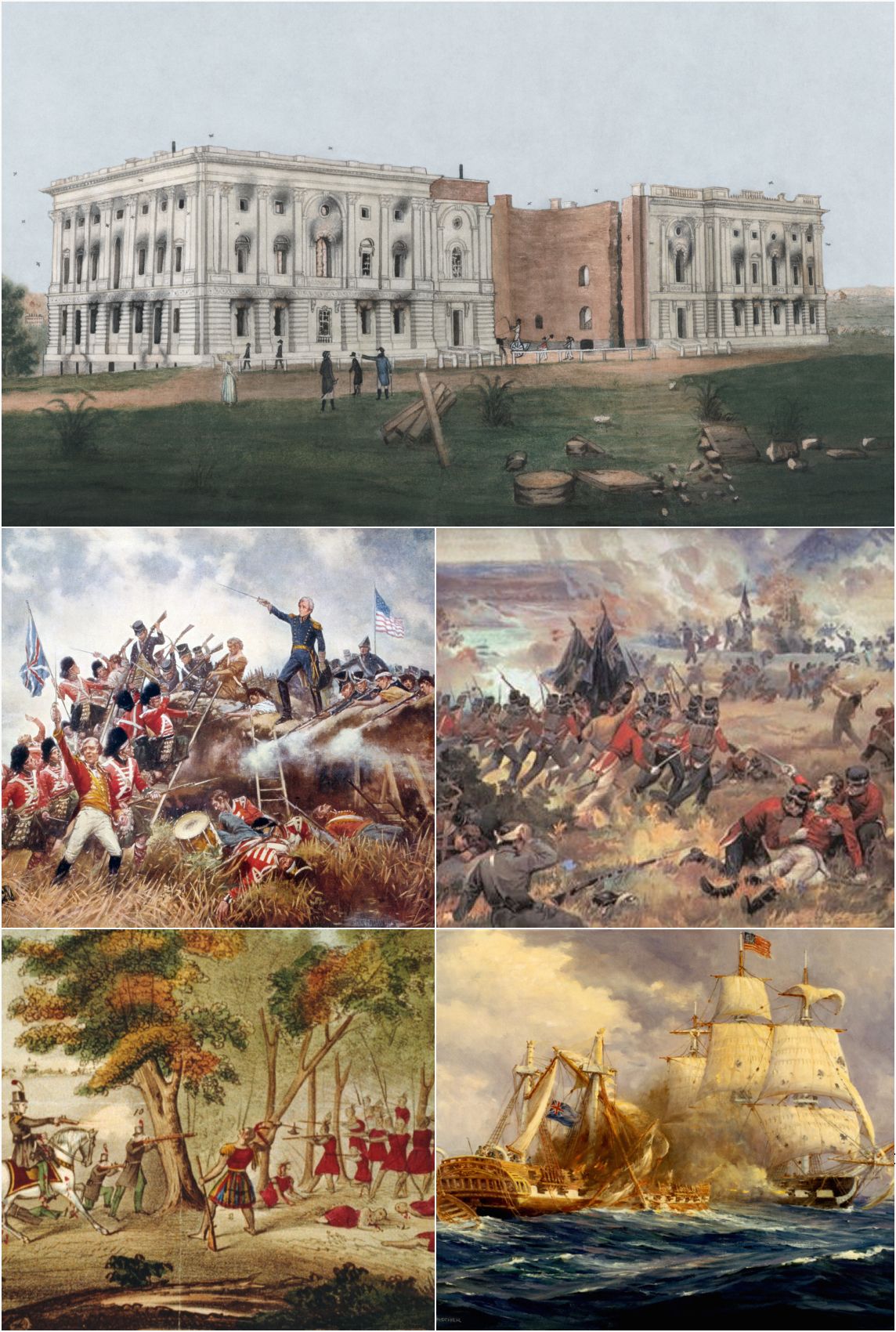
During the War of 1812, on December 19, 1813, a British force accompanied by Mohawk warriors and some white colonists disguised as Mohawks attacked Lewiston, New York. A band of Tuscarora living in a village on an escarpment above the town staged a heroic delaying action against odds of thirty to one. They used tactics such as sending warriors to blow horns along the ridge to suggest a larger force while others attacked with war whoops, which allowed many townspeople to escape before the militia fled. In retaliation, the attackers burned both Lewiston and the undefended Tuscarora village.
20th Century Challenges and Activism
In the mid-20th century, the Tuscarora Nation of New York faced a major challenge to its sovereignty and land base. In the late 1950s, New York City commissioner Robert Moses negotiated with the Tuscarora Sachem council to purchase 550 acres of the Tuscarora reservation for the reservoir of a new hydroelectric project along the Niagara River. This project, the Niagara Power Project, was the largest in the world when it first generated power in February 1962. The Tuscarora Nation fought the land seizure in court, arguing it violated federal law requiring congressional approval for the taking of Indian land. The case, Federal Power Commission v. Tuscarora Indian Nation, reached the U.S. Supreme Court, which ruled against the tribe in 1960. Although they lost the legal battle, their resistance helped inspire the emerging American Indian activism of the 1960s.
Tuscarora individuals were at the forefront of Indigenous rights activism. Wallace 'Mad Bear' Anderson (1927 to 1985) was a prominent Tuscarora activist known for his advocacy. Clinton Rickard (1882 to 1971) was another Tuscarora activist who founded the Indian Defense League of America and fought for Native American treaty rights and border-crossing rights between the US and Canada. Their work highlighted ongoing struggles for sovereignty, cultural preservation, and justice. Studies in the late 20th century showed that despite these pressures, the Tuscarora retained an unusually large portion of their traditional culture, social structure, and national identity, demonstrating their resilience in the face of centuries of change.
Contemporary Tuscarora Communities and Recognition
Today, there are two primary, government-recognized Tuscarora entities. The Tuscarora Nation in Lewiston, New York, is a federally recognized tribe in the United States. The Tuscarora First Nation is a constituent community within the Six Nations of the Grand River in Ontario, recognized by the Canadian government. Both communities actively work to preserve their language, culture, and sovereignty. Other Tuscarora descendants are enrolled as part of the Seneca-Cayuga Nation headquartered in Oklahoma, primarily descendants of groups absorbed by Senecas and Cayugas in Ohio in the early 19th century before their removal to Indian Territory.
In North Carolina, descendants of those who remained have organized into several groups. The most prominent is the Tuscarora Nation of North Carolina, which consists of three historic autonomous bands in Robeson County that united as one group in 2010: the Prospect, Saddletree, and Maxton communities. These groups assert a continuous Tuscarora identity and have sought state and federal recognition for decades. In the spring of 1973, students and local Tuscarora staged a protest involving a 100-mile walk from Pembroke to the State Capitol in Raleigh, demanding recognition, the right to run their own schools, and better job opportunities. The Tuscarora Nation of New York maintains that the great majority of the tribe moved north and does not recognize these North Carolina groups as having continuous political tribal status, a position that leads to ongoing disputes over identity and recognition.
Several notable Tuscarora individuals have contributed to arts, scholarship, and sports. David Cusick (circa 1780 to 1840) was an early Tuscarora artist and author. His relative Dennis Cusick (circa 1800 to 1824) was also a painter. John Napoleon Brinton Hewitt (1859 to 1937) was a renowned Tuscarora linguist and ethnographer who worked for the Smithsonian Institution's Bureau of American Ethnology. Contemporary author Alicia Elliott, a Six Nations Tuscarora born in 1987 or 1988, has received acclaim for her essays on Indigenous life in Canada. Frank Mount Pleasant (1884 to 1937) was a Tuscarora athlete.
Language, Culture, and Historical Documentation
The Tuscarora language, Skarure, belongs to the northern branch of the Iroquoian languages. Linguists and historians have studied its relationship to the languages of the Meherrin and Nottoway tribes of Virginia, determining they were distinct but closely related. English colonists in the 1650s, relying on reports from Algonquian neighbours who used the exonym Mangoag, initially thought the Tuscarora, Meherrin, and Nottoway were one people. They soon discovered they could use the same interpreters, confirming the linguistic kinship. The Nottoway language went extinct in the early 1900s, though the Cheroenhaka (Nottoway) Tribe has begun revitalization efforts. Tuscarora itself is now critically endangered, with community-led revitalization projects underway to preserve this key element of cultural heritage.
Cultural preservation extends beyond language. The matrilineal clan system of Bear, Beaver, Deer, Eel, Snipe, Turtle, and Wolf continues to inform social organization. Historical documentation of the Tuscarora experience is found in various archival collections. The Lewis Thompson papers include indentures and documents from 1723 to 1833 related to Tuscarora land in Bertie County. The William Laurence Saunders Collection holds a 1766 petition from Tuscarora leaders like Billy Taylor, John Wiggins, and Captain Blunt concerning land disputes and the violated terms of the 1714 treaty. The Arwin D. Smallwood Collection contains photographs from the 1990s and 2000s of the Indian Woods site in Bertie County, taken by the historian during his research on the northern Tuscarora. These records provide crucial evidence of Tuscarora history and their struggle to retain their homeland.
| Year | Event or Document | Significance |
|---|---|---|
| 1650 | First recorded as 'Tuskarood' by English | Marks sustained European contact. |
| 1718 | Treaty establishing Indian Woods reservation | Grants 56,000 acres in Bertie County, NC. |
| 1766 | Petition to North Carolina government | Tuscarora leaders protest land sales and seek compensation for relocation. |
| 1802/1803 | Unratified treaty with the United States | Promised land held in trust. Led to later claims for accounting in 1971. |
| 1831 | Sale of remaining Indian Woods land rights | Final disposition of reservation. Only 2,000 acres remained from original 56,000. |
Questions about Tuscarora people
Are the Tuscarora one of the original Five Nations of the Iroquois?
No, the Tuscarora are not one of the original Five Nations. The Haudenosaunee (Iroquois) Confederacy originally consisted of the Mohawk, Oneida, Onondaga, Cayuga, and Seneca nations. Following their migration from North Carolina after the Tuscarora War, the Tuscarora were formally adopted into the confederacy in 1722. Their inclusion transformed the alliance into the Six Nations, a name by which it is still often known today. This adoption was based on long-standing linguistic, cultural, and political connections, and they were sponsored by the Oneida nation.
Where are the recognized Tuscarora tribes located today?
There are two primary government-recognized Tuscarora communities. The Tuscarora Nation is a federally recognized tribe based in Lewiston, New York. In Canada, the Tuscarora First Nation is part of the larger Six Nations of the Grand River reserve near Brantford, Ontario. These two communities are the result of historical divisions during the American Revolutionary War, with the New York group largely supporting the American colonists and the Ontario group descending from those who allied with the British and relocated north with Mohawk leader Joseph Brant.
Why are there Tuscarora groups in North Carolina if the tribe moved north?
Descendants of Tuscarora who remained in North Carolina after the main migration have continued to live in the region, particularly in Robeson County. Over generations, they intermarried with neighbours but maintained a Tuscarora identity and lived in isolated settlements. In the late 20th century, they began organizing into groups such as the Tuscarora Nation of North Carolina, which consists of three bands in Prospect, Saddletree, and Maxton. They seek state and federal recognition, but the Tuscarora Nation of New York views the historic migration as complete and does not recognize these groups as constituting the same political nation. Researcher Andre Kearns states some descendants of the early free African-American Cumbo family later adopted Native American identity, self-identifying as Tuscarora.
What was the Tuscarora War?
The Tuscarora War (1711 to 1713) was a conflict between the Tuscarora nation and British colonists in North Carolina. Sparked by colonial land encroachment, enslavement, and unfair trade, the war began with a coordinated Tuscarora attack on settlements on September 22, 1711. The colonists, aided by South Carolina militia and Yamasee allies, retaliated brutally. The defeat, particularly at the Battle of Fort Neoheroka in 1713 where approximately 900 were killed or captured, forced the Tuscarora to cede vast territories and triggered the mass migration north. Chief Hancock was captured and executed, while Chief Tom Blunt allied with the colonists.
Is the Tuscarora language still spoken?
The Tuscarora language, Skarure, is a Northern Iroquoian language that is critically endangered. By the late 20th century, the number of fluent speakers had dwindled. However, the Tuscarora are engaged in language revitalization efforts to preserve this key part of their heritage. The language is closely related to the extinct Nottoway and Meherrin languages, and early English colonists noted they could use the same interpreters for all three peoples, confirming their linguistic family ties.
What is the significance of the Indian Woods reservation?
The Indian Woods reservation in Bertie County, North Carolina, was established by treaty in 1718. It was a 56,000-acre tract granted to the Tuscarora who remained under Chief Tom Blount after the war. Historically, it is significant as the first reservation for Indigenous people in North America. It became a site of continuous pressure and loss, as the land was systematically reduced through illegal encroachment and pressured sales over the next century, shrinking to 2,000 acres by 1831 before the reservation closed in 1804. In 1802, the last Indian Woods Tuscarora negotiated an unratified treaty with the United States, which led to claims for an accounting of lands and rents in 1971.
Sources and further reading
- Tuscarora people (Wikipedia)
- Indigenous Peoples of North Carolina: Tuscarora (guides.lib.unc.edu)
- skarù:ręʔ tuscarora history (tuscarorabandindians-govtribe.co)
- Tuscarora Nation (data.nativemi.org)
- Tuscarora | Language and Linguistics | Research Starters (ebsco.com)
Checked by the Nosy Mag desk. Last updated 2026-10-23.