Beothuk
The Beothuk were an Indigenous Algonkian-speaking people who inhabited the island of Newfoundland for generations prior to European contact. Their culture, which formed around AD 1500, was characterized by a hunter-gatherer lifestyle, distinctive conical dwellings called mamateeks, and the ceremonial use of red ochre, which led Europeans to refer to them as "Red Indians." The Beothuk are central to the colonial history of Newfoundland and Labrador, as their story encompasses cultural resilience, violent conflict with settlers, and eventual demographic collapse. They were declared extinct in 1829 following the death of Shanawdithit, the last known full-blooded Beothuk, though oral histories and genetic evidence suggest some survivors may have integrated into other communities. Today, their legacy is preserved through archaeological sites, historical records, and ongoing efforts to repatriate ancestral remains.
Culture and Way of Life
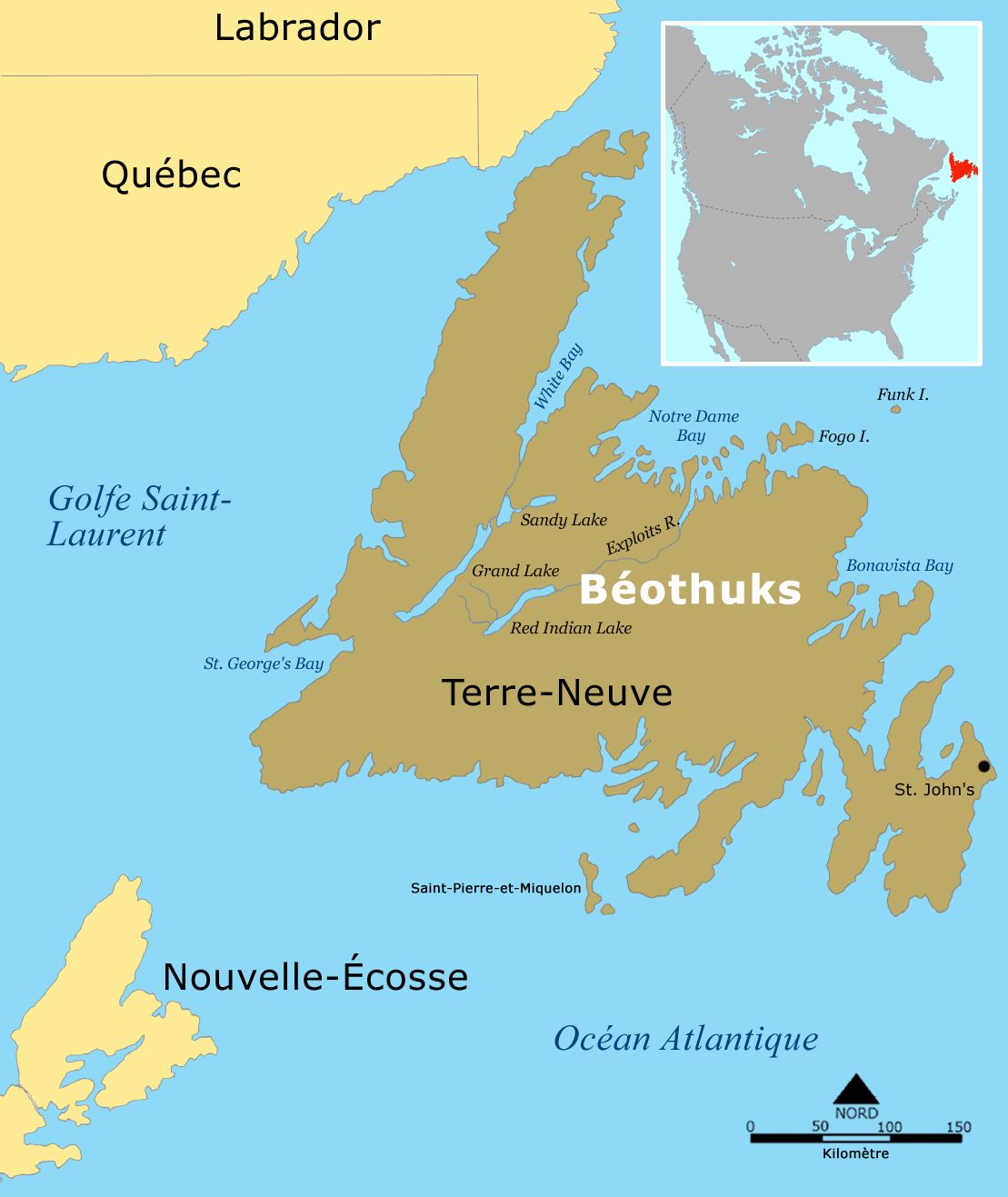
The Beothuk lived in independent, self-sufficient extended family groups of 30 to 55 people throughout Newfoundland, with a particular concentration in the Notre Dame and Bonavista Bay areas. Their social structure appears to have been organized around band leaders rather than formal chiefs. They constructed their distinctive conical dwellings, known as mamateeks, by arranging poles in a circle, tying them at the top, and covering the structure with birch bark. These dwellings were fortified for the harsh winter, with floors dug to create sleeping hollows and a central fireplace for cooking and warmth. The Beothuk followed the seasonal migrations of their principal food sources, which included caribou, salmon, and seals, supplemented by other animals, birds, fish, and gathered plants.
During the spring, the Beothuk used red ochre to paint their bodies, houses, canoes, weapons, and tools. This multi-day celebration had deep cultural significance, designating tribal identity and serving as a way to welcome newborns into the community. The practice was so prominent it led European observers to call them "Red Indians." For transportation and hunting, the Beothuk built skin-covered canoes resembling kayaks, which were about 4.6 metres long and 0.76 metres wide, capable of carrying children, dogs, and property. They were skilled at preserving surplus food for winter, trapping fur-bearing animals, and crafting warm clothing from caribou and seal skins, worn with the fur side inward to trap insulating air.
The Beothuk followed elaborate burial practices that reflected their spiritual beliefs. They wrapped the bodies of the deceased in birch bark and buried them in isolated locations, often in caves or under rock overhangs on smaller islands. Burial methods included shallow graves covered with rock piles, placement of the body on a scaffold, or interment in a burial box with the knees folded. Survivors placed offerings at the grave sites to accompany the dead, which included carved wooden figurines, pendants, and miniature replicas of tools. Their material culture demonstrated remarkable adaptability, as evidenced by archaeological finds showing they repurposed European metal objects like nails and fish hooks into projectile points, scrapers, and awls.
European Contact and Conflict
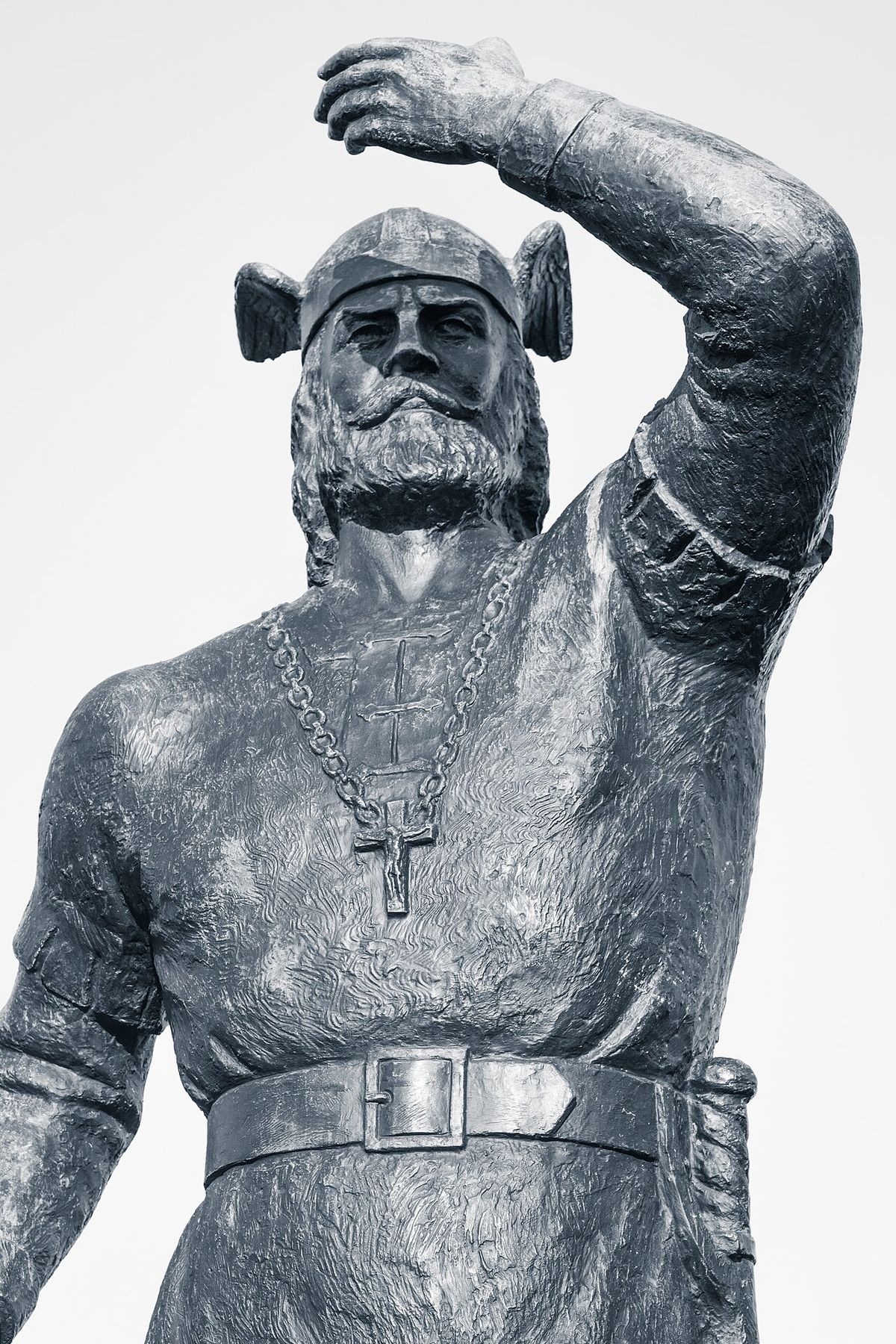
The first documented European encounters with Indigenous people in Newfoundland occurred around AD 1000 with Norse explorers led by Leif Erikson, who may have met ancestors of the Beothuk or Dorset peoples. Sustained contact began in 1497 with John Cabot's voyage, initiating waves of European fishermen and explorers. Unlike some other Indigenous groups, the Beothuk generally avoided contact with Europeans, moving inland as settlements grew along the coast. They would, however, visit former coastal camps to scavenge metal objects, tools, and building materials left behind by seasonal fishermen. This avoidance strategy set the stage for competition over critical natural resources like salmon, seals, and birds, and increasingly led to hostile encounters.
Relations between the Beothuk and European settlers were marked by mutual suspicion and violence. In the interior, European fur trappers established traplines that disrupted traditional caribou hunts, and they sometimes ransacked Beothuk food stores and camps. In retaliation, the Beothuk stole traps for their metal and took goods from settlers' shelters. These clashes were often one-sided due to the settlers' superior firearms, a technology the Beothuk notably showed no interest in adopting. Several violent incidents were recorded, including a raid in the winter of 1781 led by John Peyton Sr., who with two other men attacked a Beothuk encampment on the Exploits River, killing and wounding an unknown number of people and beating an injured individual to death.
Despite the prevailing hostility, there were intermittent official efforts to establish peaceful relations with the Beothuk. In 1768, Governor Hugh Palliser commissioned an expedition led by George Cartwright, which, while failing to make contact, gathered important cultural information. In 1811, Lieutenant David Buchan led another expedition under Governor John Duckworth. After an initially friendly meeting near Beothuk Lake, Buchan left two marines with a Beothuk group. The next day, he found them murdered and mutilated. According to later testimony from Shanawdithit, the marines were killed when one refused to give up his jacket and both attempted to flee. These failed encounters showed the deep mistrust and the tragic cycle of violence that characterized relations.
Demographic Collapse and Extinction
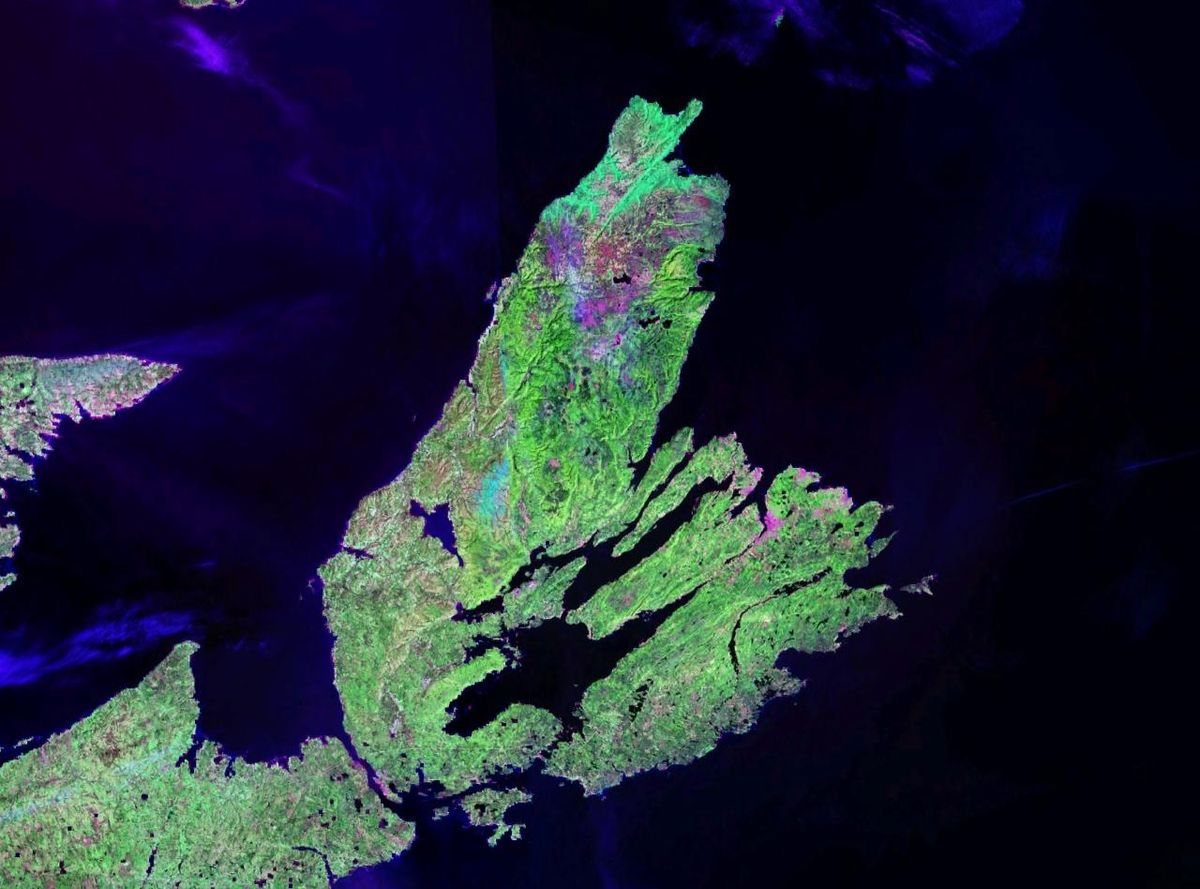
The Beothuk population dwindled rapidly in the late 18th and early 19th centuries due to a confluence of devastating factors. Their forced displacement from rich coastal areas inland, away from European settlements, critically severed their access to primary food sources like seals and fish. This led to over-reliance on and over-hunting of inland caribou herds, contributing to starvation. They also faced territorial pressure from other Indigenous groups, including Mi'kmaq migrants from Cape Breton Island and Inuit from Labrador, though historians dispute the claim that French bounties induced the Mi'kmaq to kill Beothuk, a theory known as the "Mercenary Myth." The most catastrophic factors were diseases introduced by Europeans, such as smallpox, to which the Beothuk had no immunity, and endemic tuberculosis, which persistently weakened the population.
By the first decade of the 1800s, estimates of the remaining Beothuk population varied from about 150 to 3,000, though later accounts suggest the true number was at the lower end. The last known groups wintered on the Exploits River or at Red Indian Lake and resorted to the coast in Notre Dame Bay. The capture and deaths of the last known Beothuk individuals marked the end of the people as a distinct cultural entity. Demasduit was captured in 1819 and died of tuberculosis in 1820 while attempting to rejoin her people. Her niece, Shanawdithit, was taken in 1823 along with her mother and sister. The latter two soon died of tuberculosis. Shanawdithit herself, the last known full-blooded Beothuk, died of tuberculosis in St. John's on June 6, 1829. Following her death, the Beothuk were declared extinct.
Key Factors in Beothuk Population Decline- Loss of access to coastal food sources (seals, fish) due to displacement by European settlements.
- Over-hunting of inland caribou herds following displacement.
- Violent encounters with European trappers and settlers.
- Introduced infectious diseases, particularly smallpox, against which they had no immunity.
- Endemic tuberculosis that weakened and killed many individuals.
- Competition for resources and territorial pressure from other Indigenous groups.
Notable Beothuk Captives
The stories of Demasduit and Shanawdithit, two Beothuk women captured by settlers, provide crucial firsthand accounts of Beothuk life and the final years of their people. Demasduit was captured in March 1819 near Beothuk Lake by a party led by John Peyton Jr., who were seeking stolen fishing gear. During the capture, her husband, Nonosabasut, was killed trying to defend her. Demasduit, a nursing mother, was taken to Twillingate, but her infant died during the journey. Renamed Mary March by the settlers, she was later brought to St. John's, where the colonial government hoped she could become a bridge to her people. She learned some English and taught settlers approximately 200 words of the Beothuk language. In January 1820, she was released to return to Notre Dame Bay but died of tuberculosis en route.
Shanawdithit was Demasduit's niece and the last known full-blooded Beothuk. In April 1823, she, her mother, and her sister, starving and seeking help, approached a white trapper at Badger Bay. All three were taken to St. John's, where her mother and sister soon died of tuberculosis. Renamed Nancy April, Shanawdithit lived for several years as a servant in the home of John Peyton Jr. In the winter of 1828 to 1829, the explorer William Cormack, founder of the Beothuk Institute, brought her to his centre to learn from her. During this time, Shanawdithit created ten detailed drawings for Cormack, which depicted parts of the island, Beothuk implements, dwellings, myths, and encounters with the British. She also provided vocabulary and stated that, to her knowledge, only about a dozen Beothuk survived at the time of her capture. Despite medical care from Dr. William Carson, she died of tuberculosis on June 6, 1829.
Archaeology and Modern Understanding
Archaeological work has been vital in expanding knowledge of Beothuk culture, especially given the limited written records from European observers. The most significant site is Boyd's Cove on the northeast coast of Newfoundland in Notre Dame Bay, discovered in 1981. This site, located on a glacial moraine, covers approximately 3,000 square metres and was a major Beothuk village. The area's rich ecosystem of seals, fish, seabirds, and caribou made it an attractive location. Surveys in eastern Notre Dame Bay have identified sixteen Indigenous sites spanning from the Maritime Archaic era to recent Indigenous occupation, with two directly associated with the historical Beothuk.
Artifacts recovered from Boyd's Cove provide concrete evidence of how the Beothuk adapted to the presence of Europeans while maintaining their distance. Excavations of four house interiors and their surroundings yielded over 1,157 nails, the majority of which had been forged and modified by the Beothuk. They fashioned these and other European materials into practical tools, creating projectile points from nails and bone, using straightened fish hooks as awls, and shaping lead into ornaments. This evidence strongly supports the historical observation that the Beothuk avoided direct contact but scavenged metal from seasonal fishing stations to augment their own technology. The coastal location of all major Beothuk sites shows how their displacement from these resource-rich areas was a primary factor in their starvation and decline.
Legacy, Survivor Claims, and Repatriation
The narrative of Beothuk extinction has been complicated by oral histories and claims of modern descendants. Since the 19th century, stories have persisted that some Beothuk survived around the Exploits River and Twillingate areas, forming unions with Europeans, Inuit, and Mi'kmaq. Some families in the Twillingate region claim descent from these survivors. A notable claim came in 1910 from Santu Toney, a 75-year-old Indigenous woman who said her father was Beothuk and her mother was Mi'kmaq. She recorded a song in the Beothuk language for anthropologist Frank Speck, which she said her father taught her. As Toney was born around 1835, her account suggests some Beothuk individuals survived beyond 1829. Contemporary researchers have worked to transcribe and enhance this recording, and the song has been learned by some Indigenous groups for use in cultural celebrations.
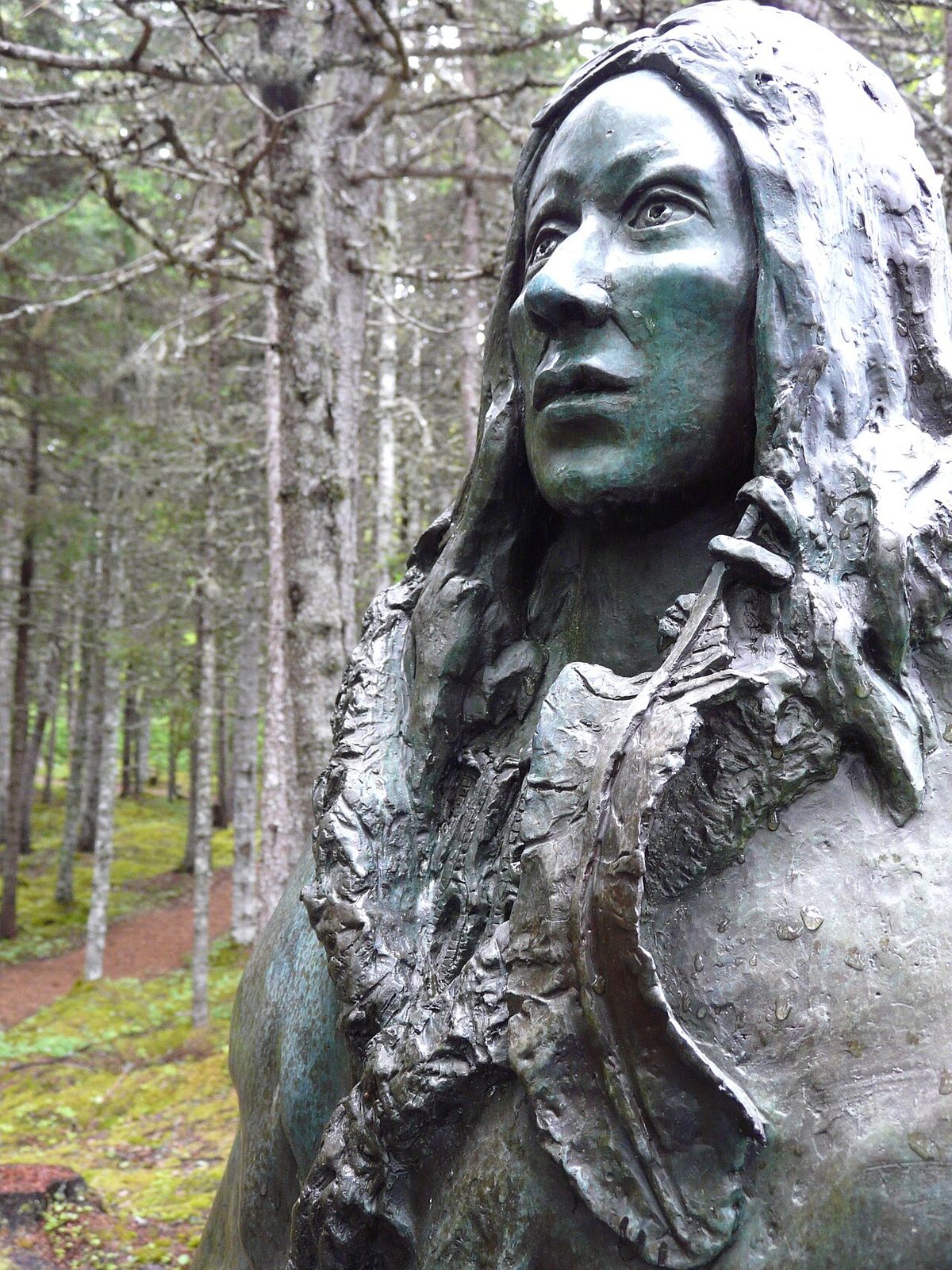
In recent years, there has been a significant movement led by Indigenous leaders in Newfoundland and Labrador for the repatriation and reburial of Beothuk ancestral remains. Leaders continue to advocate for their respectful reburial. The Beothuk Interpretation Centre at Boyd's Cove is central to educating the public about Beothuk history and culture. The centre features exhibits and artifacts, and a 1.5-kilometre trail leads to the village site, where the outlines of housepits remain. A sculpture by Gerald Squires, "The Spirit of the Beothuk," and a Spirit Garden where visitors can leave offerings commemorate the people. The centre is open seasonally and is fully accessible.
Historical Debate on Genocide
Scholars continue to debate whether the fate of the Beothuk constitutes genocide. Some historians argue their disappearance was an unintended consequence of European colonization, stemming from disease, resource competition, and displacement. Others contend there is evidence of a sustained campaign of violence by Europeans that meets definitions of genocide. Historian Mohamed Adhikari points to the intentional nature of destructive violence from European forces as key evidence. Legal historian Sydney Harring draws parallels with the treatment of Aboriginal Tasmanians and argues that the colonial government's knowledge of the violence, coupled with its failure to effectively prevent it, implies tacit approval.
Historical proclamations reveal official awareness of the violence. In 1766, Governor Hugh Palliser reported to British authorities that "the barbarous system of killing prevails amongst our people towards the Native Indians." In 1769, Governor John Byron issued a proclamation strictly prohibiting such conduct and enjoining subjects to live in "amity and brotherly kindness" with the Beothuk. A subsequent proclamation by Governor John Holloway on July 30, 1807, again prohibited mistreatment and offered a reward for information on such acts. Despite these official decrees, violent encounters continued, as documented by figures like Lieutenant George Pulling in 1792, who collected numerous accounts of settlers killing Beothuk. The debate centres on whether this pattern of violence, occurring alongside devastating social and environmental pressures, was systematic and intentional enough to be classified as genocide.
Questions about Beothuk
Who were the Beothuk?
The Beothuk were an Indigenous people who lived on the island of Newfoundland. They were hunter-gatherers who lived in independent family groups of 30 to 55 people and followed the seasonal migrations of caribou, salmon, and seals. Their culture included living in conical birch-bark dwellings called mamateeks and using red ochre in significant cultural practices. They were declared extinct in 1829.
Why were they called 'Red Indians'?
Europeans referred to the Beothuk as 'Red Indians' because of their practice of covering their bodies, houses, canoes, and tools with red ochre. This was a significant cultural practice performed during an annual multi-day spring celebration. The ochre designated tribal identity and was used to welcome newborns into the community. Forbidding a person to wear ochre was a form of punishment.
What caused the extinction of the Beothuk?
The extinction of the Beothuk resulted from a combination of factors over the 18th and early 19th centuries. Their displacement from coastal food sources by European settlements led to starvation and over-hunting of caribou. They suffered devastating losses from European-introduced diseases like smallpox and endemic tuberculosis, against which they had no immunity. Violent encounters with settlers and trappers, and competition with other Indigenous groups, also contributed. The last known full-blooded Beothuk, Shanawdithit, died of tuberculosis in 1829.
Who was Shanawdithit?
Shanawdithit was the last known full-blooded Beothuk. Captured in 1823 with her mother and sister, she was renamed Nancy April by settlers and lived for a time as a servant. In 1828 to 1829, she worked with explorer William Cormack, creating ten detailed drawings of Beothuk life, geography, and encounters with Europeans, and providing vocabulary from her language. Her records are the most important firsthand account of Beothuk culture. She died of tuberculosis in St. John's on June 6, 1829.
Are there any Beothuk descendants today?
While the Beothuk culture is regarded as extinct, oral histories and some claims suggest that a few individuals survived and intermarried with Europeans, Mi'kmaq, and Inuit. Some families in the Twillingate area claim Beothuk ancestry. A notable account came from Santu Toney in 1910, who claimed a Beothuk father and recorded a Beothuk song. These stories indicate that genetic and cultural lineage may have continued through integration into other communities, though no distinct Beothuk society remains.
Where can I learn about the Beothuk today?
The primary site for learning about the Beothuk is the Beothuk Interpretation Centre at Boyd's Cove in Notre Dame Bay, Newfoundland. The centre features exhibits, artifacts, and a walking trail to the archaeological village site. A sculpture by Gerald Squires and a Spirit Garden commemorate the people. Academic research and historical accounts, particularly those derived from Shanawdithit, also provide deep insight into their culture.
Sources and further reading
- Beothuk (Wikipedia)
- Beothuk Interpretation Centre (nationaltrustcanada.ca)
- Beothuk | Language and Linguistics | Research Starters (ebsco.com)
- Where Did They Go? (our-story.ca)
Checked by the Nosy Mag desk. Last updated 2026-10-22.