CCH Canadian Ltd v Law Society of Upper Canada
CCH Canadian Ltd v Law Society of Upper Canada is a landmark 2004 decision of the Supreme Court of Canada that reshaped Canadian copyright law. The case centred on a lawsuit by three major legal publishers against the Law Society of Upper Canada for its photocopying services at the Great Library. In a unanimous ruling, the Court established a new test for originality and expanded the scope of the fair dealing exception, characterizing it as a user right. The decision has had implications for libraries, educational institutions, and the balance between creators' rights and public access to information.
Background and Litigation
The dispute originated in the practices of the Law Society of Upper Canada, the governing body for lawyers in Ontario, at its Great Library located in Osgoode Hall. Since 1954, the library had offered a request-based photocopying service to its patrons, including law students, lawyers, judges, and authorized researchers. The service provided single copies of legal materials such as case reports, statutes, and journal articles. Many of these materials were non-circulating, meaning they could not be borrowed, so the photocopy service was crucial for remote access. The library also maintained self-service photocopiers for patrons to make their own copies of works in the collection. Three of the largest publishers of legal sources, CCH Canadian Limited, Carswell Thomson Professional Publishing and Canada Law Book Inc., sued the Law Society for copyright infringement of 11 specific works. These works included reported judicial decisions along with accompanying headnotes, case summaries, topical indices, and an annotated statute. The publishers sought a declaration that copyright subsisted in these works and a permanent injunction to stop the library from reproducing them. The Law Society defended its actions as essential for providing equal access to legal information, arguing its activities were either non-infringing or fell within statutory exceptions like fair dealing.
The Supreme Court's Analytical Framework
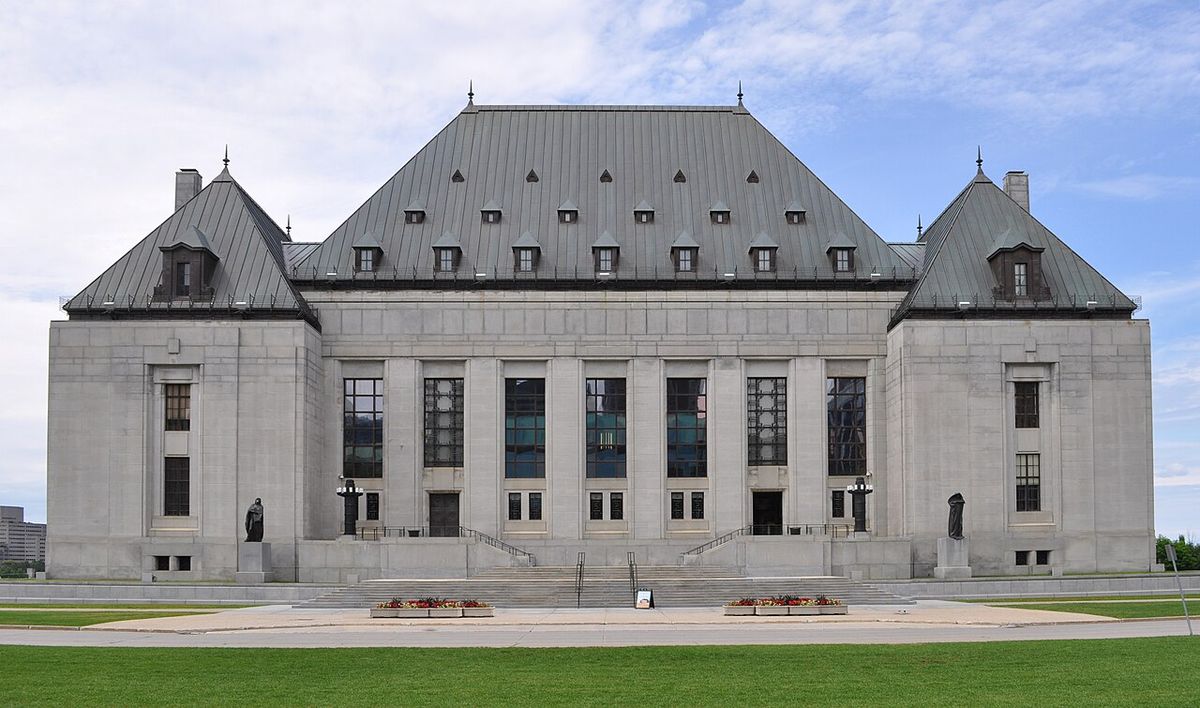
The Supreme Court of Canada, in a judgment authored by Chief Justice Beverley McLachlin, addressed a series of legal questions to resolve the case. The Court's analysis proceeded in a structured manner, examining the subsistence of copyright, authorization, fair dealing, and other subsidiary issues. The unanimous ruling systematically rejected the publishers' claims and provided new foundational principles for Canadian copyright law. The Court's reasoning emphasized the need to balance the public interest in promoting the encouragement and dissemination of works with obtaining a just reward for the creator, a theme it had highlighted in the Théberge v. Galerie d'Art du Petit Champlain inc. decision. In reaching its ruling, the Court needed to rule on four primary questions. The Court also considered four sub-issues related to fax transmissions, the sale of copies, a potential library exemption, and the availability of injunctive relief.
The Court framed four specific legal questions for its analysis. The first question was whether the publishers' materials were original works protected by copyright. The second question was whether the Great Library authorized copyright infringement by maintaining self-service photocopiers and copies of the publishers' works. The third question was whether the Law Society's dealings with the publishers' works were fair dealings under section 29 of the Copyright Act. The fourth question was whether Canada Law Book had consented to have its works reproduced by the Great Library. The Court's methodical approach to these four questions formed the structure of its judgment.
- Were the publishers' materials 'original works' protected by copyright?
- Did the Great Library authorize copyright infringement by maintaining self-service photocopiers and copies of the publishers' works for its patrons' use?
- Were the Law Society's dealings with the publishers' works 'fair dealing[s]' under s. 29 of the Copyright Act?
- Did Canada Law Book consent to have its works reproduced by the Great Library?
The unanimous judgment of the Supreme Court of Canada was delivered by Chief Justice Beverley McLachlin. The Court held that the Law Society of Upper Canada did not infringe any copyright when single copies of legal decisions, statutes, and regulations were made by the library staff or by its patrons using self-service photocopiers. This ruling was central to the 2004 case, which addressed photocopying services at the Great Library in Osgoode Hall. The decision established important principles regarding the threshold for originality and the scope of fair dealing under Canadian copyright law.
Establishing a New Test for Originality
The Court first had to determine whether the publishers' works were 'original' and thus protected by copyright. Chief Justice McLachlin rejected two competing approaches that were influential in other jurisdictions. She explicitly dismissed the American 'minimal degree of creativity' standard from Feist Publications v. Rural Telephone Service as being too high a threshold for Canadian law. Simultaneously, she rejected the older 'sweat of the brow' doctrine, which granted copyright based solely on labour and investment, deeming it too low. Instead, the Court established a middle-ground test that has since become the definitive standard for Canadian originality analysis. An original work must be the product of an exercise of 'skill and judgment.' The Court defined 'skill' as the use of one's knowledge, developed aptitude, or practised ability in producing the work. It defined 'judgment' as the use of one's capacity for discernment or ability to form an opinion or evaluation by comparing different possible options in producing the work. This exercise must not be so trivial that it could be characterized as a purely mechanical exercise, and the work must be more than a mere copy of another work. Importantly, the Court stated that creativity is not required to make a work 'original.' Applying this test, the Court found that the creation of headnotes, case summaries, and topical indices involved sufficient skill and judgment to be original. However, it clarified that the text of judicial decisions themselves are not copyrightable, and mere typographical corrections done by editors were insufficient to attract copyright protection.
Authorization and Technological Neutrality
The publishers argued that by providing photocopiers and copies of their works, the Law Society was authorizing copyright infringement by its patrons. The Court firmly rejected this argument, setting an important precedent for institutions that provide public access to technology. Chief Justice McLachlin held that merely providing access to a machine capable of infringing copyright does not amount to authorization. There is a presumption that patrons will use the machines lawfully. This presumption can only be rebutted by evidence showing a certain relationship or degree of control existed between the alleged authorizer and the persons who committed the copyright infringement. The publishers presented no such evidence. The fact that the library posted a notice to patrons stating that photocopiers should not be used to infringe on copyrights was not an acknowledgment that such infringement occurred. The Law Society did not have direct control of its patrons, as with a master-servant relationship, and therefore could not be said that it exercised control over its patrons. This finding insulated libraries and similar entities from liability simply for making reproduction technology available.
Fair Dealing as a User Right and the Six-Factor Test
The Court's most significant contribution was its expansive interpretation of the fair dealing exception in section 29 of the Copyright Act. Chief Justice McLachlin characterized fair dealing not merely as a defence to infringement but as a 'user right' that is an integral part of the copyright scheme. This conceptual shift required that fair dealing be given a large and liberal interpretation to ensure users' rights are not unduly constrained. The Court held that 'research' for the purpose of fair dealing is not limited to private or non-commercial contexts, thereby encompassing the professional research activities of lawyers and law students. Consequently, the library was found to have made the copies for the allowable purpose of research. To determine whether a dealing is 'fair,' the Court adopted a multi-factor, flexible test, drawing from Canadian, English, and American jurisprudence. The six factors to be considered are the purpose of the dealing, the character of the dealing, the amount of the dealing, alternatives to the dealing, the nature of the work, and the effect of the dealing on the work. In application of these factors to the facts McLachlin found that, given the restrictions put in place by the Law Society for copying the materials, the library was acting fairly. She also found that the library could rely on its general practice to establish fair dealing, and was not required to show that all patrons used the material in a fair way.
The Court outlined six specific factors for assessing the fairness of a dealing. Chief Justice McLachlin adopted reasoning which incorporated English and US views in defining these six factors. The factors are the purpose of the dealing, the character of the dealing, and the amount of the dealing. The other factors are alternatives to the dealing, the nature of the work, and the effect of the dealing on the work.
- The purpose of the dealing.
- The character of the dealing.
- The amount of the dealing.
- Alternatives to the dealing.
- The nature of the work.
- The effect of the dealing on the work.
This six-factor framework provided courts and institutions with a practical tool for evaluating fair dealing claims. In applying these factors to the facts, McLachlin found that the Law Society was acting fairly given the restrictions it put in place for copying materials. The Court stated that fair dealing was to be regarded as an integral part of the Copyright Act rather than simply a defence. The fair dealing exceptions were characterized as a user right that must be balanced against the rights of copyright owners.
Resolution of Subsidiary Issues
The Court also addressed several other arguments raised by the publishers in the four sub-issues. On the legality of fax transmissions, McLachlin concluded that a single fax transmission to a single recipient was not a 'transmission to the public' within the meaning of the copyright law. Regarding the sale of materials, the Court ruled that for secondary infringement to occur, the copy must be a product of primary infringement, the seller must have known it was infringing, and a sale must have occurred. Since the primary copying was fair dealing, there was no primary infringement, so the sale of the materials could not involve secondary infringement. Concerning the library exemption under sections 2 and 30.2(1) of the Copyright Act, the Court determined that the Great Library would have qualified as it was non-profit, not controlled by a for-profit body, and maintained a collection open to the public or researchers. Since the Court had already concluded the library's dealings were fair, it did not need to rule on this issue definitively. Finally, because the Great Library was found not to have infringed on any copyrighted material, the Court made no determination on whether the publishers were entitled to a permanent injunction under section 34(1) of the Copyright Act.
The Court considered specific sub-issues alongside the four main questions. The Court considered whether the Law Society infringed copyright by providing a fax service and whether the Great Library qualified under the library exemption. One sub-issue was whether the Law Society's fax transmissions constituted communications to the public under the Copyright Act. Another was whether the Law Society infringed copyright by selling copies of the publishers' works. The Court also considered if the Law Society qualified for a library exemption and whether the publishers were entitled to a permanent injunction.
- Did the Law Society's fax transmissions constitute communications 'to the public' under s. 3(1)(f) of the Copyright Act?
- Did the Law Society infringe copyright by selling copies contrary to s. 27(2) of the Act?
- Does the Law Society qualify for an exemption as a 'library, archive or museum' under ss. 2 and 30.2(1)?
- Were the publishers entitled to a permanent injunction under s. 34(1)?
The Court's clear answers to these technical questions provided comprehensive guidance on the limits of library services. McLachlin concluded that a single fax transmission to a single recipient was not a transmission to the public. She ruled that the sale of materials could not involve secondary infringement because the copies were fair and not a product of primary infringement. The Court determined that the Great Library would have qualified for the library exemption, though a ruling was not necessary as the dealings were already found to be fair.
Immediate and Enduring Impact on Canadian Law
The CCH decision immediately became a foundational precedent in Canadian intellectual property law. Its moderate 'skill and judgment' test for originality has been applied consistently in subsequent cases, moving Canadian law away from the extremes of other jurisdictions. The reconceptualization of fair dealing as a user right, coupled with the six-factor fairness test, provided a powerful analytical tool for users and institutions. This framework was directly applied and reinforced in later landmark Supreme Court decisions, such as Society of Composers, Authors and Music Publishers of Canada v. Bell Canada in 2012 regarding streamed music previews and Alberta (Education) v Canadian Copyright Licensing Agency (Access Copyright) in 2012 regarding photocopied textbooks in public schools. The ruling provided crucial legal certainty for libraries, archives, and educational institutions across Canada. It affirmed that providing access to knowledge through reasonable copying services is a legitimate and protected activity under copyright law. The decision also showed the Supreme Court's commitment to a balanced copyright system, influencing the development of the law in the digital age.
Related Legal Precedents and Context
The CCH case exists within a broader comparative and historical context of copyright law. The Court explicitly considered the similar US Supreme Court case of Feist Publications Inc. v. Rural Telephone Service from 1991 on the threshold of originality, rejecting its creativity test but agreeing with its assessment of the 'sweat of the brow' approach. Other relevant cases include Williams & Wilkins Co. v. United States from 1973, a US case dealing with fair use in a library context. The decision in CCH built upon the balancing principles articulated in the Canadian case Théberge v. Galerie d'Art du Petit Champlain inc. The six-factor test for fairness incorporated reasoning from English law, citing Lord Denning in Hubbard v. Vosper, and from Canadian jurisprudence, adopting the reasoning of Justice Linden. The legal principles established in CCH continue to be cited and applied, demonstrating its lasting role in shaping how Canadian courts interpret the Copyright Act.
Key related cases and legal sources referenced in the CCH decision include the similar US Supreme Court case of Feist Publications Inc. v. Rural Telephone Service. The Court also referenced Hubbard v. Vosper, where Lord Denning described fair dealing as a question of degree. The decision connects to Théberge v. Galerie d'Art du Petit Champlain inc., which emphasized balancing public interest and creator reward. The Court also considered the reasoning of Linden JA, which incorporated English and US views on fair dealing.
- Feist Publications Inc. v. Rural Telephone Service (1991), a similar US case on originality.
- Théberge v. Galerie d'Art du Petit Champlain inc., a prior Canadian Supreme Court case on balancing rights.
- Hubbard v. Vosper, an English case cited for its description of fair dealing.
- The reasoning of Justice Linden from the Federal Court of Appeal.
- Williams & Wilkins Co. v. United States (1973), a US library copying case.
- Society of Composers, Authors and Music Publishers of Canada v. Bell Canada, 2012 SCC 36.
- Alberta (Education) v Canadian Copyright Licensing Agency (Access Copyright), 2012 SCC 37.
These connections illustrate how CCH is situated within an ongoing judicial conversation about copyright. The decision sets a new standard for originality in Canadian copyright law. It also signals an open and expansive approach to interpreting the fair dealing defences. The Court embraced an approach to copyright that places limits on the scope of the rights of owners of copyright.
Questions about CCH Canadian Ltd v Law Society of Upper Canada
What is the 'skill and judgment' test established by this case?
The Supreme Court established the 'skill and judgment' test as the definitive standard for originality in Canadian copyright law. A work is original if it is the product of an exercise of skill, defined as using one's knowledge, developed aptitude or practised ability, and judgment, defined as using one's capacity for discernment to compare options in producing the work. This exercise must not be trivial or purely mechanical, and the work must be more than a mere copy. The Court explicitly stated creativity is not required, rejecting both lower and higher standards from other jurisdictions.
How did the case change the understanding of fair dealing?
The Court fundamentally changed fair dealing from being viewed merely as a legal defence to being recognized as a 'user right' that is an integral part of copyright law. It ruled that fair dealing must be interpreted in a large and liberal way to ensure users' rights are not constrained. The Court also established a six-factor test to determine fairness and clarified that 'research' includes professional and commercial research, not just private study. It held an institution can rely on its general practice being fair and need not police every individual use.
Why did the Court rule that providing photocopiers was not authorization?
The Court ruled that providing access to technology like photocopiers does not, by itself, constitute authorizing copyright infringement. There is a presumption that patrons will use the machines lawfully. For authorization to be found, there must be evidence of a certain relationship or degree of control by the institution over the infringing acts, which the publishers failed to provide. Since the Law Society had no direct control over its patrons akin to a master-servant relationship and posted copyright warnings, it was not liable for authorizing infringement.
What was the outcome for the Law Society and libraries?
The Law Society won a complete victory. The Supreme Court unanimously held that its photocopying services and provision of self-service copiers fell within the fair dealing exception for research and did not infringe copyright. The Court also found the works were original but that the library did not authorize infringement. This outcome provided strong legal protection for libraries, affirming that their core services for providing access to non-circulating materials are lawful under Canadian copyright law when conducted fairly.
How has this case influenced later copyright decisions in Canada?
CCH is a foundational precedent that has influenced subsequent copyright law. Its 'skill and judgment' test for originality is consistently applied. Its fair dealing analysis as a user right and the six-factor test were directly used in major Supreme Court cases like SOCAN v. Bell Canada in 2012 and Alberta v. Access Copyright in 2012. The decision established a balanced interpretive approach that courts continue to follow, emphasizing the public interest in access and dissemination of works alongside creators' rights, particularly in technological and educational contexts.
What was the main issue in the CCH v. Law Society case?
The main issue was whether the Law Society of Upper Canada infringed copyright by providing request based photocopying services and self service photocopiers at its Great Library. Three major legal publishers sued the Law Society for copyright infringement regarding 11 specific works including case reports with headnotes summaries and annotated statutes. The Supreme Court of Canada had to rule on whether these works were original if the Law Society authorized infringement and if its dealings were fair under copyright law. The Court unanimously held the Law Society's practice fell within the bounds of fair dealing. This case established important thresholds for originality and fair dealing in Canadian copyright law.
Sources and further reading
- CCH Canadian Ltd v Law Society of Upper Canada (Wikipedia)
- A Comment on the Supreme Court of Canada" by Teresa ... (digitalcommons.schulichlaw.dal.ca)
Checked by the Nosy Mag desk. Last updated 2026-11-04.