Canadian maritime law
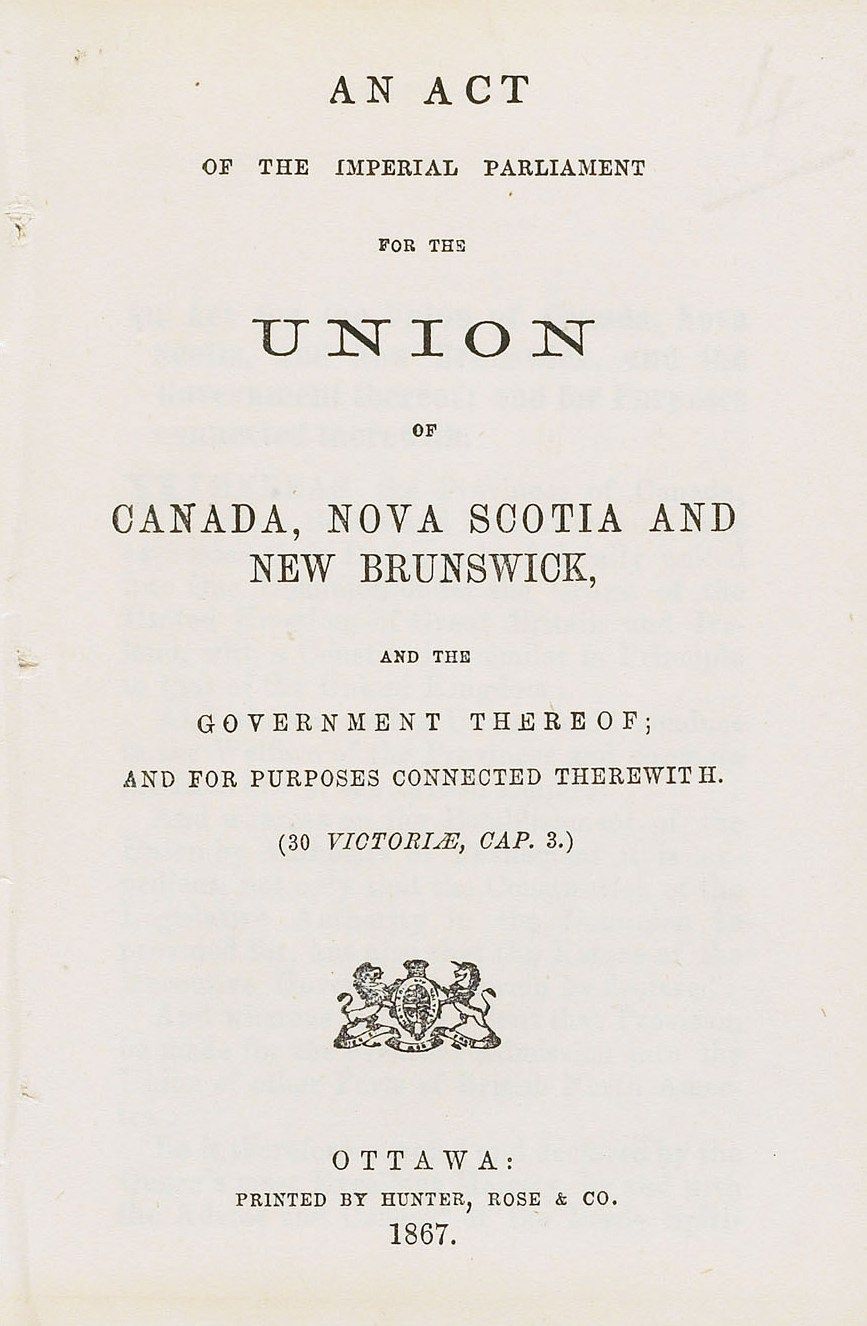
Canadian maritime law is the comprehensive body of federal law governing all matters related to navigation and shipping in Canada. Its constitutional foundation is section 91(10) of the Constitution Act, 1867, which grants the Parliament of Canada exclusive jurisdiction over this field. The law encompasses a wide range of activities, from traditional admiralty matters like collisions and salvage to commercial contracts like marine insurance and contracts of carriage. As a uniform federal law, it is crucial for regulating Canada's extensive coastline, inland waterways, and international maritime trade.
Constitutional Scope and Historical Development
Canadian maritime law derives its authority from the exclusive federal power over Navigation and Shipping granted by the Constitution Act, 1867. This jurisdiction was originally consolidated in Canadian law in 1891 and was significantly expanded in 1934 following the Statute of Westminster 1931, which increased Canada's legislative autonomy. A major legislative expansion occurred in 1971 with the extension to dry matters integrally connected to maritime commerce. The Federal Court Act of 1971 provided a statutory definition, stating that Canadian maritime law means the law that was administered by the Exchequer Court of Canada on its Admiralty side by virtue of the Admiralty Act, or any other statute, or that would have been so administered if that Court had had unlimited admiralty jurisdiction. Section 42 of that Act specified that the law as it existed immediately before June 1, 1971 continues subject to changes made by Parliament. This framework established that the law is not static but is a living body that develops through judicial precedent and parliamentary action, forming a uniform federal legal regime applicable across all provinces and territories.
Substantive Content and Key Principles from Ordon v. Grail
The substantive content of Canadian maritime law is determined by reference to its legal heritage, which includes the body of English admiralty law as it existed in 1934, as amended by Canadian statutes and developed by Canadian courts. In the landmark 1998 case Ordon Estate v. Grail, the Supreme Court of Canada articulated several foundational principles that define the modern scope of the law. The Court held that Canadian maritime law is a comprehensive federal law dealing with all claims in respect of maritime and admiralty matters. Its scope is not limited by historical English admiralty law but is to be interpreted within the modern context of commerce and shipping, constrained only by the constitutional division of powers. The test for inclusion is whether a subject matter is so integrally connected to maritime matters as to be legitimate federal law within this competence. The Court also emphasized that the law is uniform throughout Canada, constitutes federal law not provincial law, and draws from both common law and civilian legal traditions. This body of law addresses a wide array of issues central to maritime activity, and the nature of navigation and shipping in Canada makes a uniform maritime law a practical necessity, particularly for tortious liability in accidents occurring during navigation.
- Collisions, salvage, and towage between vessels.
- Contracts of carriage by sea and marine insurance.
- Stevedoring, warehousing, and security services.
- Maritime liens and in rem proceedings against vessels.
- Tortious liability for personal injury occurring in the course of navigation.
- Contracts of agency and bailment performed at sea.
- Issues directly concerning the seaworthiness of a ship and the work of mariners.
The Supreme Court of Canada has stated that in those instances where Parliament has not passed legislation dealing with a maritime matter, the inherited non-statutory principles embodied in Canadian maritime law as developed by Canadian courts remain applicable. Resort should be had to these principles before considering whether to apply provincial law to resolve an issue in a maritime action. The Court confirmed that Canadian maritime law is not static or frozen. The general principles established by the Court with respect to judicial reform of the law apply to the reform of Canadian maritime law. This allows for development in the law where the appropriate criteria are met.
Limits and Interaction with Provincial Law
While broad, the scope of federal maritime law is not absolute and has defined limits where provincial jurisdiction remains operative. The Supreme Court has refined these boundaries in subsequent jurisprudence. In the 2006 case Isen v Simms, the Federal Court of Appeal, endorsed by the Supreme Court, provided a clear example of a matter falling outside maritime law. The case involved an injury caused on land by a boat's engine cover flapping in the wind during road transport after the boat had been taken out of the water. The court listed multiple factors demonstrating no integral connection to navigation or shipping, noting the accident occurred on land, was caused by a person neither on the boat nor in the water, and involved no contract for carriage of goods, no goods at issue, and no concerns of good seamanship. The court concluded there was no practical necessity for a uniform federal law on securing an engine cover during land transport. In 2012, the Court in Tessier Ltée v. Quebec declared that federal power over shipping must be construed alongside provincial power to regulate works and undertakings, allowing provinces to regulate transportation within their boundaries while the federal government regulates interprovincial and international transportation. The 2013 decision in Marine Services International Ltd. v. Ryan Estate indicated that the application of provincial law in maritime contexts may still be affected by constitutional doctrines of paramountcy and interjurisdictional immunity, meaning the effect of the Ordon decision was restricted insofar as provincial jurisdiction may be affected by these fields.
Recent Legislative Developments and the Authorized Representative
Canadian maritime law continues to evolve through parliamentary action, often reflecting policy priorities around safety and environmental protection. In June 2026, the federal government enacted Bill C-47, which introduced significant amendments to several key maritime statutes as part of its ongoing Oceans Protection Plan. The bill made substantial changes to the Marine Liability Act, the Canada Shipping Act, 2001, and the Wrecked, Abandoned or Hazardous Vessels Act. A central feature of these amendments is a significant increase in penalties for regulatory offences and a clarification of liability for key roles within the shipping industry. The amendments show the critical responsibilities of the Authorized Representative of a vessel, a role defined under the Canada Shipping Act, 2001. Every Canadian vessel operating in Canadian waters must have an Authorized Representative who is responsible for acting in all matters relating to the vessel not otherwise assigned by legislation to another person. For Canadian vessels, the Authorized Representative is the owner or bareboat charterer unless the owner has entered into an arrangement with a qualified person, who may be a Canadian citizen, permanent resident, or a federally or provincially incorporated corporation. The 2026 amendments increased the maximum monetary fine for certain offences under the Canada Shipping Act, 2001 from $10,000 to $25,000, and the Authorized Representative can be held jointly and severally liable for these penalties alongside the vessel's owner. The responsibilities of an Authorized Representative are extensive and directly tied to maritime safety and compliance with the Canada Shipping Act, 2001 and the Wrecked, Abandoned or Hazardous Vessels Act.
- Ensuring the vessel and its machinery and equipment meet all regulatory requirements under the Canada Shipping Act, 2001.
- Developing procedures for the safe operation of the vessel and for dealing with emergencies.
- Ensuring the crew and passengers receive safety training.
- Using all reasonable means to ensure the vessel's seaworthiness at the start of and during a voyage.
- Ensuring the vessel is inspected to obtain all required Canadian maritime documents and that every term attached to those documents is met.
- Developing procedures for preventing pollution from the vessel.
Bill C-47 also increased the liability limits under the Marine Liability Act for specific claims involving vessels under 300 gross tonnage. This legislative change is part of the ongoing development of Canadian maritime law. For foreign-flagged ships that are operating in Canadian waters, the master of the vessel serves as the Authorized Representative. This role carries specific legal responsibilities under Canadian jurisdiction.
The Canadian Maritime Law Association and Professional Discourse
The Canadian Maritime Law Association is the principal professional organization dedicated to advancing the development of effective, modern commercial maritime law in Canada. It welcomes members from the legal profession, industry, government, and academia who have an interest in maritime law. The CMLA organizes conferences and seminars to discuss emerging issues and developments in the field. For instance, the CMLA is encouraging member attendance at the Understanding Maritime Law in Practice: A Bench and Bar Conference scheduled for November 12 and 13, 2026, in Ottawa. This bilingual conference, organized with the Canadian Institute for the Administration of Justice, is designed for both judges and lawyers and covers procedural and substantive issues. The association also holds its own annual conference. The CMLA's leadership includes President Rui Fernandes, a partner at Gardiner Roberts LLP, National Vice-President Eric Machum of Metcalf and Co., and directors such as Simon Ledsham, Robin Squires, and Leona Baxter. The organization facilitates updates and an Annual General Meeting for its voting members. The CMLA is a member of the Comité Maritime International.
Primary Governing Statutes and Legal Framework
The operation of Canadian maritime law is supported by several key federal statutes that provide the regulatory and liability framework for navigation and shipping. These acts are regularly amended to address new challenges and policy goals. The Canada Shipping Act, 2001 serves as the principal legislation governing safety, marine personnel, and environmental protection for vessels in Canadian waters and Canadian vessels worldwide. The Marine Liability Act consolidates and modernizes the law relating to civil liability for maritime claims, including ship-source oil pollution, passenger injury, and carriage of goods. The Canada Marine Act provides the framework for the administration of Canada's major ports, aiming to make them more efficient and commercially oriented. Other essential statutes include the Marine Insurance Act, which codifies the law relating to marine insurance contracts, and the Pilotage Act, which establishes pilotage authorities to ensure safe navigation in designated waters. The Wrecked, Abandoned or Hazardous Vessels Act addresses the environmental and safety risks posed by derelict vessels and places specific obligations on the Authorized Representative. This legislative framework is complemented by the body of non-statutory principles developed through court decisions, which fill gaps where Parliament has not acted.
| Statute | Key Purpose |
|---|---|
| Canada Shipping Act, 2001 | Governs safety, personnel, and environmental protection. |
| Marine Liability Act | Consolidates civil liability for maritime claims. |
| Canada Marine Act | Provides framework for major port administration. |
| Marine Insurance Act | Codifies law for marine insurance contracts. |
| Pilotage Act | Establishes pilotage authorities for safe navigation. |
| Wrecked, Abandoned or Hazardous Vessels Act | Addresses risks from derelict vessels. |
Admiralty Jurisdiction and Court Practice
The Federal Court of Canada, and its predecessor the Exchequer Court, exercise admiralty jurisdiction over Canadian maritime law matters. This jurisdiction includes both in rem actions against the vessel itself and in personam actions against individuals or companies. The 1971 Federal Court Act crystallized this jurisdiction, granting the court authority over the comprehensive body of Canadian maritime law. Specialized admiralty rules and practices apply in these courts, distinguishing them from ordinary civil litigation. For example, urgent in rem motions can be brought during a judge's duty week, a procedure of particular importance in maritime law where vessels may be preparing to leave port. The Federal Court's jurisdiction is not exclusive. Provincial superior courts also have concurrent jurisdiction over many maritime matters, though they must apply federal maritime law. This dual system requires judges and lawyers in both court systems to be familiar with maritime law's unique principles. The practice of maritime law often involves international conventions, and the legal rights and obligations of those engaged in navigation and shipping are designed not to arbitrarily change according to jurisdiction within Canada. The Canadian Maritime Law Association provides resources and summaries on developments in case law to aid practitioners in this specialized field.
Questions about Canadian maritime law
What is the constitutional basis for Canadian maritime law?
The constitutional basis for Canadian maritime law is the field of Navigation and Shipping vested in the Parliament of Canada by virtue of section 91(10) of the Constitution Act, 1867. This grants the federal government exclusive jurisdiction over maritime matters. The Supreme Court of Canada has held that the ambit of Canadian maritime law should be considered limited only by this constitutional division of powers. The word maritime is to be interpreted within the modern context of commerce and shipping. This body of law is uniform throughout Canada and is not the law of any province.
Does Canadian maritime law only apply to accidents that happen at sea?
No, Canadian maritime law extends beyond traditional wet admiralty matters to include dry matters that are integrally connected to maritime commerce. This can include contracts for stevedoring, marine insurance, warehousing, and contracts of carriage. However, there are limits. For example, in the 2006 case Isen v Simms, an injury caused on land by a boat part during road transportation was found to have no integral connection to navigation or shipping and thus fell outside federal maritime law. The court noted the absence of issues related to seaworthiness, good seamanship, or any practical necessity for a uniform federal law on the matter.
What was the impact of the Supreme Court's decision in Ordon Estate v. Grail?
The 1998 Ordon Estate v. Grail decision by the Supreme Court of Canada is the seminal case defining the modern scope of Canadian maritime law. It established that the law is a comprehensive, uniform body of federal law not limited by historical English admiralty law. The Court set out the integral connection test for determining whether a subject falls under federal maritime jurisdiction and confirmed that the law is dynamic and can develop through judicial precedent. This decision had the effect of displacing many provincial statutes previously used in maritime liability cases.
What are the recent changes brought by Bill C-47?
Enacted in June 2026, Bill C-47 introduced significant amendments to key maritime statutes including the Marine Liability Act, the Canada Shipping Act, 2001, and the Wrecked, Abandoned or Hazardous Vessels Act. It increased the maximum fines for certain regulatory offences under the Canada Shipping Act, 2001 from $10,000 to $25,000. It also raised liability limits for certain claims involving vessels under 300 gross tonnage. The amendments reinforce the heavy responsibilities and liability of the Authorized Representative of a vessel for safety and compliance.
Who is the Authorized Representative of a vessel and what are their duties?
Under the Canada Shipping Act, 2001, every Canadian vessel must have an Authorized Representative responsible for all matters relating to the vessel not assigned to another person. The Authorized Representative is usually the owner, bareboat charterer, or a designated qualified person who is a Canadian citizen, permanent resident, or corporation. Their duties include ensuring the vessel meets all safety regulations, developing safe operating and emergency procedures, providing crew and passenger safety training, and ensuring the vessel's seaworthiness. The 2026 amendments in Bill C-47 increased the Authorized Representative's potential liability for fines.
What is the role of the Canadian Maritime Law Association?
The Canadian Maritime Law Association is the leading professional organization dedicated to advancing modern commercial maritime law in Canada. It brings together lawyers, industry professionals, and academics interested in the field. The CMLA organizes conferences, such as its annual meeting and the upcoming Bench and Bar conference in November 2026, to discuss developments in case law and practice. It also contributes to professional discourse through updates and its Annual General Meeting. The association is a member of the Comité Maritime International.
Sources and further reading
- Canadian maritime law (Wikipedia)
- The Canadian Maritime Law Association | CMLA (cmla.org)
- Understanding Maritime Law in Practice: A Bench & Bar ... (ciaj-icaj.ca)
- CMLA Conference 2026 - Canadian Maritime Law Association (cmla-portal.org)
- Canadian maritime law: Increased penalties and ... (nortonrosefulbright.com)
Checked by the Nosy Mag desk. Last updated 2026-11-04.