Canadian Armed Forces ranks and insignia
The ranks and insignia of the Canadian Armed Forces (CAF) form the visual and hierarchical structure of Canada's military, denoting authority, responsibility, and specialization across the Royal Canadian Navy, Canadian Army, and Royal Canadian Air Force. These symbols are a key part of military tradition and identity, evolving through the nation's history from British models to distinctly Canadian designs following unification in 1968. Understanding the rank structure is essential for comprehending the chain of command, career progression, and the professional distinctions within the country's defence forces. The system is officially bilingual, with French titles following English, and incorporates unique regimental traditions and historical commemorations.
Structure and Categories of Ranks
The Canadian Armed Forces rank structure is divided into two primary categories: commissioned officers and non-commissioned members (NCMs). Commissioned officers hold the King's commission and are responsible for leadership, command, planning, and decision-making, with duties encompassing the safety, well-being and morale of their personnel. Their ranks begin at officer cadet and second lieutenant and progress through to general, admiral, or general of the air force, with subordinate officer ranks including lieutenant, captain, and major. Non-commissioned members are the skilled technicians, operators, and support personnel who form the backbone of the forces, providing operational and support services. They begin as recruits and are trained for specific jobs, advancing through ranks such as private, corporal, sergeant, and chief warrant officer, with progression based on trade qualification, skill, and leadership. The rank insignia for these groups differ in placement and design, with general officer and flag officer insignia featuring distinctive elements like crossed sabres and batons, and NCM rank insignia for petty officer 1st class/warrant officer and above worn on the lower sleeve. The system is designed to clearly indicate a member's level of authority and their specific role within the complex hierarchy of the navy, army, and air force.
Insignia and Uniform Placement
Rank insignia in the CAF are displayed on multiple uniform orders, with specific rules for each type of dress. On the service dress jacket, commissioned officers wear rank insignia on the shoulder straps, while navy and air force NCMs wear theirs on the upper or lower sleeves depending on rank, with petty officer 2nd class/sergeant and below on the upper sleeve. For army NCMs, rank is often indicated by enamelled metal pins on the collar points or lapels when in DEU shirts, sweaters, and outerwear, with their slip-ons displaying only the word 'Canada' or a regimental title. A ubiquitous feature across environments is the use of rank slip-ons, which are cloth straps worn on the shoulder straps of shirts, sweaters, and operational dress like the CADPAT uniform, where they are placed on a strap in the centre of the chest. Slip-ons display the rank insignia along with a shoulder title such as 'Canada' or a regimental name, and are worn on the No. 3 Service Dress shirt, overcoat, raincoat, sweater, CANEX parka, Naval Combat Dress, flying suits, and Military Police Operational Patrol Dress. Flag and general officers' slip-ons omit the sleeve braid and show only the crown, crossed sabre and baton, and maple leaves from the shoulder straps. Slip-ons are not used on the service dress jacket or with mess dress, which have their own formal insignia protocols.
Historical Evolution by Service
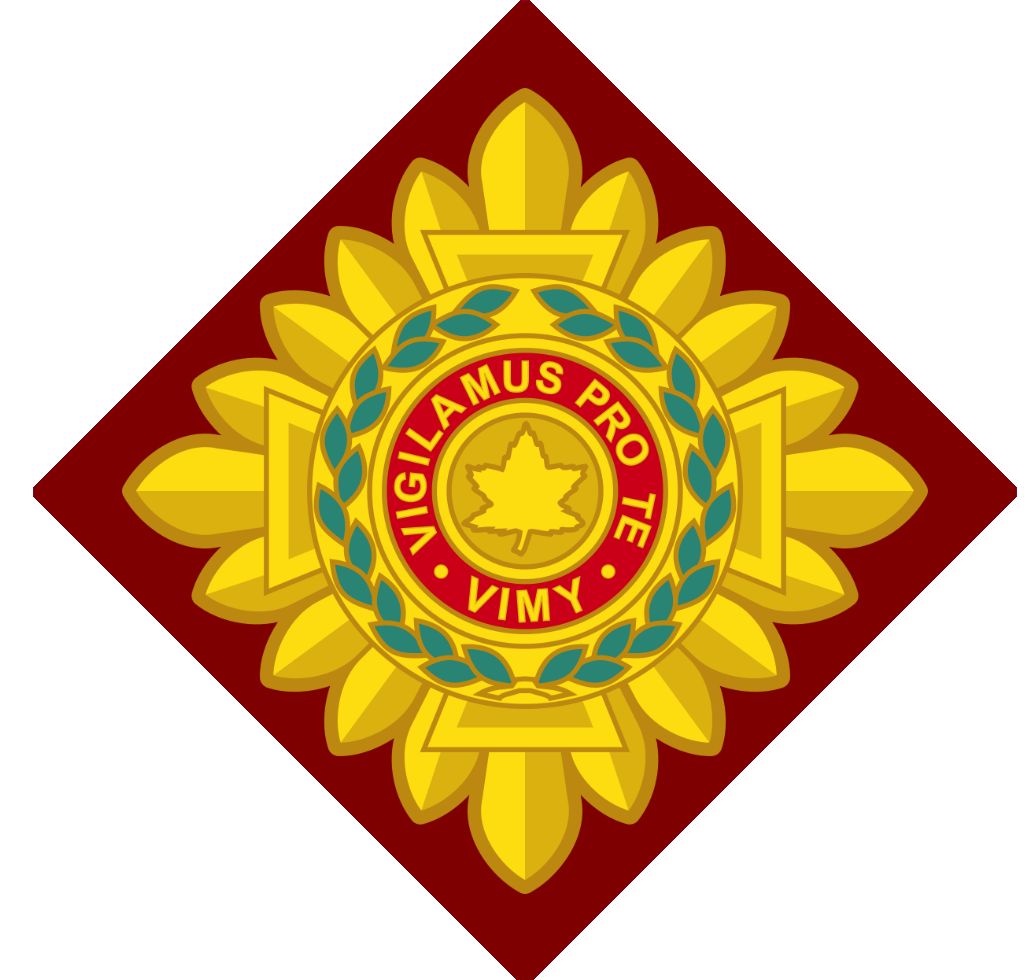
The rank insignia of each service has a distinct evolutionary path rooted in British tradition. The Royal Canadian Navy, established in 1910, originally used Royal Navy-style sleeve braid with an executive curl, with 'wavy' braid for the Royal Canadian Naval Volunteer Reserve and narrow interwoven gold lace for the Royal Canadian Navy Reserve. This curl was removed after unification in 1968 when unembellished straight braid became common, but was reinstated on 11 June 2010 following a parliamentary motion moved by Guy Lauzon and ministerial authorization by Peter MacKay to mark the naval centennial, taking effect at the Pacific Canadian Naval International Fleet Review in Victoria. The Canadian Army used British 'pips and crowns' insignia until 1968, then switched to gold sleeve stripes on the universal green uniform. On 8 July 2013, the army announced a return to more traditional crown and star insignia for officers and restored gorget patches for colonels and above, though general officers reverted to the unification-era style on 2 April 2016 based on naval flag officer shoulder boards. From 2017 to 2023, the standard Bath Star was replaced by the 'Vimy Star' featuring a maple leaf and the motto 'vigilamus pro te' to commemorate the Battle of Vimy Ridge. The Royal Canadian Air Force, which originally used RAF-style ranks, adopted new pearl-grey-on-black rank stripes for officers and pearl-grey insignia for NCMs in April 2015, also changing the rank of private to aviator indicated by a two-bladed propeller.
Distinctive Traditions and Appointments
Beyond the standard rank structure, several distinctive traditions and appointments exist within the CAF. Certain army regiments and branches use unique rank titles for privates (trained), such as trooper in armoured regiments, guardsman in foot guards, fusilier in fusilier regiments, or rifleman in rifle regiments. The Royal Regiment of Canadian Artillery uses the rank titles bombardier for corporal and master bombardier for master corporal, while in the guards regiments, warrant officers are called colour sergeants and second lieutenants are known as ensigns. The governor general, as the commander-in-chief's representative, wears a special uniform with a flag/general officer sleeve braid embellished with the governor general's badge and a large embroidered badge on the shoulder straps facing forward. Historically, service stripes were awarded for long service between 1955 and 1968, with one to five silver chevrons for every two years or a silver maple leaf for ten years, but this practice ceased after unification as the Canadian Forces' Decoration covered long service awards. The Canadian Army also uses distinctive coloured borders on officer rank slip-ons and mess dress to denote corps affiliation, such as scarlet for infantry and royal blue for artillery. The Household Guard regiments and personnel in the seasonal Ceremonial Guard use the distinctive Guards Star on their rank insignia.
Compensation and Career Incentives
The Canadian Armed Forces offers a structured pay scale that increases with rank, time in service, and skill acquisition, with pay increments (PI) providing automatic annual raises within each rank. As of 1 April 2025, new pay rates are in effect, and on 8 August 2025, the Government of Canada announced further improvements to compensation and benefits to be rolled out over the following twelve months. A new direct entry recruit in the Regular Force can earn between $4,337 and $5,484 per month during basic training, with salary increasing significantly once fully trained for a chosen occupation. To address critical occupations, a significant recruiting allowance of up to $50,000 is offered for eligible roles in the Regular Force, with eligibility criteria and specific occupations set for 1 November 2025. The CAF also provides paid education plans, with students receiving at least $30,200 during their studies, along with comprehensive benefits including healthcare, dental, vision, pension, and four to six weeks of paid vacation annually. Signing bonuses for non-commissioned members are determined by work qualifications, education, experience, or prior military training, while officer bonuses are based on academic qualifications and professional licenses.
| Rank Level Example | Starting Monthly Pay (Approx.) |
|---|---|
| Private (Recruit) | $4,337 - $5,484 |
| Corporal (Trained) | Higher than Private rate |
| Sergeant | Increased with seniority |
| Warrant Officer | Significantly higher base |
| Chief Warrant Officer | Senior NCM pay scale |
Key Historical Changes to Rank Insignia
The visual language of Canadian military rank has undergone several deliberate transformations, often tied to national identity and historical anniversaries. These changes reflect an ongoing dialogue between modern functional design, heritage, and the distinct identities of the naval, army, and air force elements within a unified command structure. The 1968 unification of the armed forces led to the adoption of a universal CF green uniform with gold braid sleeve stripes for all services, replacing distinct British-style insignia and ceasing the award of service stripes that had been in place since 1955. On 8 July 2013, the Canadian Army announced the return of traditional 'pips and crowns' (St Edward's Crown and Star of the Order of the Bath) for officer rank insignia, replacing the unification-era sleeve stripes and using the pre-1920 brigadier-general insignia for brigadiers. In April 2015, the Royal Canadian Air Force introduced new rank insignia with pearl-grey stripes on black backing for officers and pearl-grey chevrons for NCMs, reviving a pre-unification aesthetic and changing all gold uniform accents to pearl-grey. On 2 April 2016, the Commander of the Canadian Army announced that general officers would revert to wearing the 1968 to 2013 style rank insignia on shoulder straps, based on naval flag officer designs, consisting of a crown, crossed sabre and baton, and maple leaves. From 2017 to 2023, the Canadian Army replaced the standard Bath Star on officer insignia with the 'Vimy Star' featuring a maple leaf and the motto 'vigilamus pro te' to mark the centenary of Vimy Ridge.
- 1968: Unification of the armed forces leads to the adoption of a universal CF green uniform with gold braid sleeve stripes for all services, replacing distinct British-style insignia and ceasing the award of service stripes.
- 8 July 2013: The Canadian Army announces the return of traditional 'pips and crowns' (St Edward's Crown and Star of the Order of the Bath) for officer rank insignia, replacing the unification-era sleeve stripes and using the pre-1920 brigadier-general insignia for brigadiers.
- April 2015: The Royal Canadian Air Force introduces new rank insignia with pearl-grey stripes on black backing for officers and pearl-grey chevrons for NCMs, reviving a pre-unification aesthetic and changing all gold uniform accents to pearl-grey.
- 2 April 2016: The Commander of the Canadian Army announces that general officers will revert to wearing the 1968 to 2013 style rank insignia on shoulder straps, based on naval flag officer designs, consisting of a crown, crossed sabre and baton, and maple leaves.
- 2017 to 2023: The Canadian Army replaces the standard Bath Star on officer insignia with the 'Vimy Star' featuring a maple leaf and the motto 'vigilamus pro te' to mark the centenary of Vimy Ridge.
Further historical nuances include the use of distinctive insignia for the Women's Royal Canadian Naval Service. Officers of the Women's Royal Canadian Naval Service used sky blue lace with a diamond shaped loop for rank insignia. Warranted Royal Canadian Sea Cadet Corps officers had a small anchor in place of the executive curl. Prior to 1915, Canadian Army rank and trade were indicated by metal badges like crossed bugles for buglers or a hammer and pincer for tradesmen. Greater standardization was introduced during the First World War.
Pre-Unification Insignia and Legacy Systems
Before the 1968 unification, each service maintained its own rank insignia system heavily influenced by its British counterpart. The Canadian Army's system was identical to the British Army's, using wire embroidery for warrant officers and herringbone lace chevrons for non-commissioned officers on Service Dress. During the Second World War, most NCO badges were embroidered in dull thread on khaki wool or tan Khaki Drill, with warrant officers sometimes wearing leather bracelets with metal badges on short-sleeved shirts. The Royal Canadian Air Force ranks and insignia were taken directly from Royal Air Force practice. The Royal Canadian Navy maintained the executive curl for its regular force but used the distinctive 'wavy' gold braid for the Royal Canadian Naval Volunteer Reserve until the reserves were merged into a single component in 1946. The practice of awarding service stripes from 1955 to 1968 allowed Militia personnel to wear silver chevrons on the right sleeve for every two years of service, or a silver maple leaf for ten years, though qualifying service excluded Canadian Army reserve forces units. The legacy of these systems is still visible in post-unification changes, such as the 2015 RCAF reform and the 2013 army reversion, which consciously reached back to pre-1968 designs to re-establish environmental identity.
Mess Dress and Special Uniform Conventions
Mess dress, the formal evening uniform, follows unique conventions for rank display that differ from service dress. In the Royal Canadian Navy, officers wear rank insignia on mess dress following the naval pattern but without the executive curl. For the Canadian Army, officers of the rank of colonel or higher wear gorget patches on their mess dress, a tradition restored in 2013. Contrary to the other services, mess dress uniform ranks for officers of the Royal Canadian Air Force follow the naval pattern without the executive curl, and general officers do not wear shoulder straps with this order of dress. The governor general's special uniform adaptations for flag/general officer dress also apply to mess dress contexts. The use of distinctive corps colours on the borders of rank insignia on army officer mess dress slip-ons continues the tradition of identifying branch affiliation. These formal attire rules show the ceremonial importance of rank and the preservation of historical distinctions within the CAF's most traditional uniforms.
Questions about Canadian Armed Forces ranks and insignia
What are the highest ranks in the Canadian Armed Forces?
The highest ranks in the Canadian Armed Forces are general (Gen) in the Canadian Army and Royal Canadian Air Force, and admiral (Adm) in the Royal Canadian Navy. These four-star officers sit at the pinnacle of the military hierarchy. The commander-in-chief of the CAF is the King of Canada, with the governor general acting as his representative. The governor general may wear a flag or general officer's uniform with special embellished braid and a large embroidered badge on the shoulder straps facing forward.
How do army ranks differ from navy and air force ranks?
While the hierarchy of authority is parallel, the rank titles and insignia differ by environment. The army uses titles like private, corporal, and general, with insignia often featuring crowns, stars, and chevrons, and uses distinctive titles like bombardier in artillery. The navy uses titles like ordinary seaman, leading seaman, and admiral, with rank indicated by gold sleeve braid and the executive curl for officers. The air force uses titles like aviator, corporal, and general, with officer rank shown by pearl-grey stripes on a black backing. Each service also has unique traditional titles, such as colour sergeant in the guards regiments.
What was the significance of reintroducing the executive curl for the navy?
Reintroducing the executive curl was a significant restoration of naval heritage and identity. The curl, a loop in the top stripe of an officer's sleeve braid, is a centuries-old Royal Navy tradition adopted by the Royal Canadian Navy at its founding in 1910. It was removed during the unification of the forces in 1968 when straight braid became standard. Following a House of Commons motion in March 2010, Minister of National Defence Peter MacKay authorized its return to mark the Canadian Naval centennial. The change took effect on 11 June 2010 during an international fleet review in Victoria, reconnecting the navy with a symbol used by over 54 countries including most Commonwealth navies.
What are rank slip-ons and when are they worn?
Rank slip-ons are cloth straps worn on the shoulder straps or chest straps of various uniforms to display rank and a shoulder title. They are used on service dress shirts, sweaters, overcoats, raincoats, and operational dress like the CADPAT shirt, jacket, and parka, where they are centred on the chest. Slip-ons typically have the word 'Canada' or a regimental name embroidered below the rank insignia. They are not worn on the service dress jacket or with mess dress. For army NCMs in DEU shirts and sweaters, rank is shown on metal collar pins, and the slip-on displays only the shoulder title.
What is the new recruiting allowance and who is eligible?
A new recruiting allowance of up to $50,000 is available for selected critical occupations in the Regular Force. This allowance is part of broader improvements to compensation and benefits announced by the Government of Canada on 8 August 2025. Eligibility is determined by specific criteria for each designated occupation, and the allowance is paid in installments. The final installment requires the member to commit to an additional thirty six months of continuous service in their military occupation after achieving Trained Status. Trained Status is defined as successfully completing basic military occupation training. It is recommended that potential applicants speak with a recruiter to evaluate their potential entitlement to this allowance.
How did the Canadian Army's rank insignia change for the Vimy Ridge centenary?
From 2017 to 2023, the Canadian Army modified its officer rank insignia to mark the centenary of the Battle of Vimy Ridge. The standard Bath Star pip, which bears the Latin motto 'tria juncta in uno', was temporarily replaced with a special 'Vimy Star'. This commemorative insignia depicted a maple leaf and was surrounded by the Latin motto 'vigilamus pro te', meaning 'we stand on guard for thee'. This change applied to the rank insignia worn by commissioned officers during that period. The Vimy Star was a visual tribute connecting modern soldiers to a key historical event. The traditional Bath Star insignia was reinstated after the commemorative period ended in 2023.
Sources and further reading
- Canadian Armed Forces ranks and insignia (Wikipedia)
- Life in the Forces (forces.ca)
- Rank & Appointment Insignia (canadiansoldiers.com)
Checked by the Nosy Mag desk. Last updated 2026-10-21.