2006 Dawson College shooting
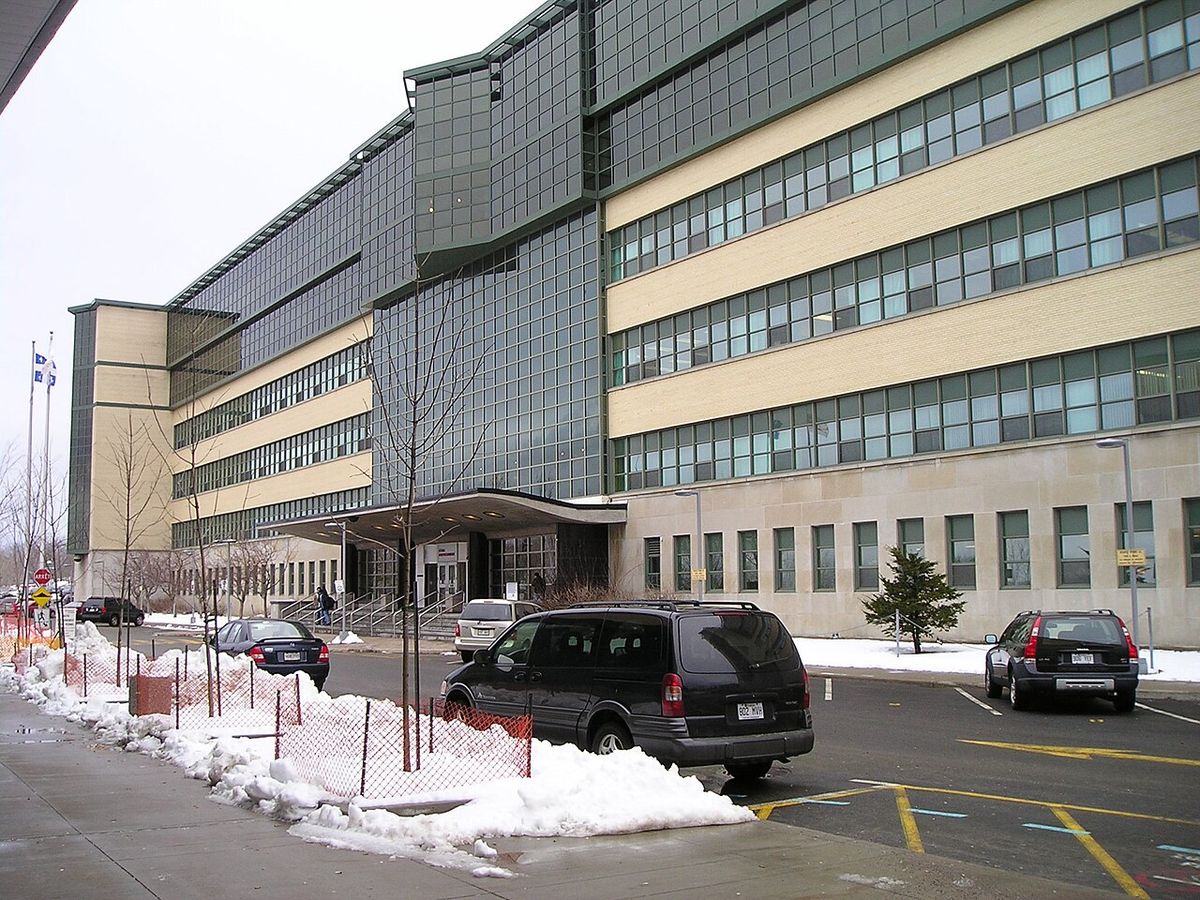
The 2006 Dawson College shooting was a mass shooting that occurred on September 13, 2006, at Dawson College, a CEGEP in downtown Montreal, Quebec. The perpetrator, 25-year-old Kimveer Singh Gill, opened fire outside and inside the school, killing 18-year-old student Anastasia De Sousa and injuring 19 other people. Gill died by suicide after being wounded by police. It was the third fatal school shooting in Montreal's history.
Chronology of the Attack
The shooting began shortly before 12:40 p.m. EDT on September 13, 2006. Kimveer Gill parked his black Pontiac Sunfire on de Maisonneuve Boulevard about 100 metres from the college campus. Bystanders observed him removing bags and a semi-automatic carbine from his trunk, prompting one to call 911. As Gill walked towards the college, he briefly took a passerby hostage, forcing him to carry a bag containing a Norinco shotgun, four knives, a crowbar, and extra ammunition. Upon seeing a police car outside the school, Gill fired 10 shots from his carbine at students on the rear entrance steps at 12:42:01 p.m., injuring several. The hostage fled, discarding the bag. Gill then jumped over a small wall to enter the school, pursued by one of the police officers who had been on site for an unrelated drug matter.
Gill entered the school at 12:42:12 p.m. and proceeded almost directly to the cafeteria on the main floor. By 12:42:24 p.m., he had positioned himself in a corner near a vending machine. He loaded a Glock pistol and began shooting students in front of him, wounding several including Anastasia De Sousa. The pursuing police officer attempted to approach but was driven back by Gill's fire. Over the next several minutes, Gill taunted officers, fired at students trying to escape, and took a male student hostage. He repeatedly asked if De Sousa was dead and, after receiving uncertain answers, fired several more shots into her with his carbine, yelling, 'Now she's dead!'
Additional police officers arrived and surrounded the campus, with some taking positions on the floor above the cafeteria. A standoff ensued, during which Gill repeatedly peeked out from behind cover and at one point aimed his pistol under his chin. At 1:01 p.m., he took two students hostage and ordered one to retrieve his ammunition bag. As he moved north with the hostages, Officer Denis Côté, positioned above, fired two shots at 1:01:36 p.m., striking Gill in the right elbow. The impact caused Gill to fall to his knees, and he then placed his Glock in his mouth and shot himself at 1:01:42 p.m. Police attempted resuscitation but were unsuccessful. Gill's body was removed from the building at 1:30 p.m., and a short suicide note was later found on his body during autopsy, confirming the attack was premeditated. Gill discharged his rifle 72 times and his pistol six times during the shooting.
Victims and Injuries
The sole fatality was 18-year-old student Anastasia De Sousa, who was shot nine times and died at the scene. Part of Dawson College's Peace Garden, known as Anastasia's Loop, is dedicated to her memory. The Montreal Police Service confirmed 19 other people were wounded in the attack. Eight victims were initially listed in critical condition, with six requiring surgery. One male victim, who was visiting friends at the college, suffered two gunshot wounds to the head. He underwent intensive surgery where one bullet was removed, and he remained in a coma for one week as doctors assessed whether to remove the second. After two weeks on a ventilator, he emerged from the coma and was in recovery by early November 2006. A follow-up study by the McGill University Health Centre Research Institute found that 30 percent of Dawson students present during the shooting suffered mental health consequences including post-traumatic stress disorder, major depression, alcohol dependence, and social phobia, a rate twice that of the general population. Approximately 18 percent of respondents developed a mental health disorder despite never having had one before.
The Perpetrator: Kimveer Singh Gill
Kimveer Singh Gill was a 25-year-old Canadian born on July 9, 1981, in Lachine, Quebec. His parents were of Punjabi descent and had moved to Saint-Laurent, Quebec from India in early 1981. The family later settled in the Fabreville area of Laval in 1987. Gill attended Twin Oaks Elementary School in Laval from 1988 to 1993 and later Rosemere High School, where teachers remembered him as quiet and unassuming. He performed well academically, had friends, and was not bullied. He graduated in June 1998 and briefly enrolled at Vanier College before dropping out in January 1999.
Gill's background included a short stint in military training. From January 17 to February 16, 1999, he attended the Canadian Forces Leadership and Recruit School in Saint-Jean-sur-Richelieu, Quebec. He told friends he wished to become a mercenary but did not complete basic training and was voluntarily discharged before receiving extensive weapons training, deemed unsuitable for service. He was a member of a rifle club and visited the Ville Saint-Pierre facility the day before the shooting. Gill's online presence was discovered on the website VampireFreaks under the screen name 'fatality666,' with his last login at 10:35 a.m. on the day of the attack. The profile was later restricted and then removed entirely.
Gill was armed with three firearms during the attack: a Beretta Cx4 Storm pistol-caliber carbine, a Glock pistol, and a Norinco HP9-1 shotgun. Reports indicated a fourth firearm was in the bag he forced his initial hostage to carry. Security camera footage from the adjacent Place Alexis Nihon shopping centre showed Gill had been staking out the area as early as August 10, 2006, more than a month prior. During a police search of his home, an apology note to his family was found, along with firearm accessories and a letter praising the actions of Columbine High School shooters Eric Harris and Dylan Klebold.
Immediate Aftermath and Response
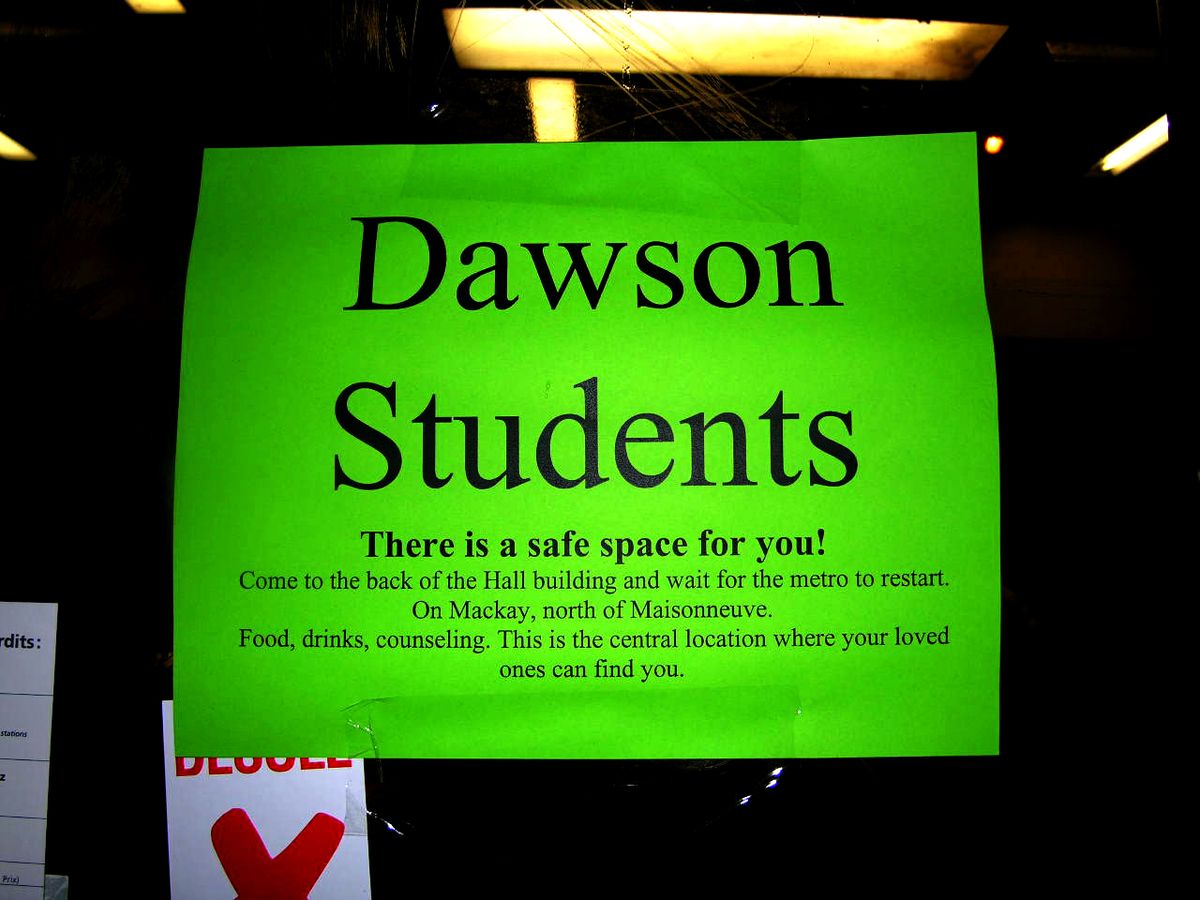
The campus area was immediately cordoned off by police, who swept the school for remaining students. Approximately 80 police vehicles and up to 24 ambulances responded to the scene. Students and faculty were evacuated from the campus. Adjacent buildings, including the Place Alexis Nihon and Westmount Square shopping centres linked to the Atwater metro station, were evacuated. The green line of the Montreal Metro was shut down for several hours between Lionel-Groulx and McGill stations. The Pepsi Forum entertainment centre across from the college went into lockdown, later reopening one entrance under police guard.
A large number of evacuees were directed to nearby Concordia University. The Concordia Student Union cancelled its orientation activities and used its venues to shelter evacuated Dawson students, providing food, water, blankets, and phones. A coordination team was established, and counselling services were offered. Claude Dauphin, the mayor of Lachine and a vice-president of Montreal's executive committee, met with student union leaders that night to coordinate city support. Police established several phone lines for parents and friends of students. Dawson College remained closed for several days, reopening for an 'Open House' support day on September 18, with classes resuming on September 19, 2006.
The police investigation quickly concluded Gill acted alone. Montreal Police Chief Yvan Delorme confirmed the shooter was a single individual who died by suicide. Eyewitnesses described a man with a Mohawk hairstyle, wearing a black trench coat, studded black trousers, and combat boots. That evening, the Sûreté du Québec confirmed the shooter was a 25-year-old male born in Quebec. Police located his car and searched his home in Laval, seizing a computer and other belongings. Around midnight, police identified the suspect as Kimveer Gill. An autopsy later revealed Gill committed suicide after being hit in the arm by police officer Denis Côté's gunfire.
Political and Public Reactions
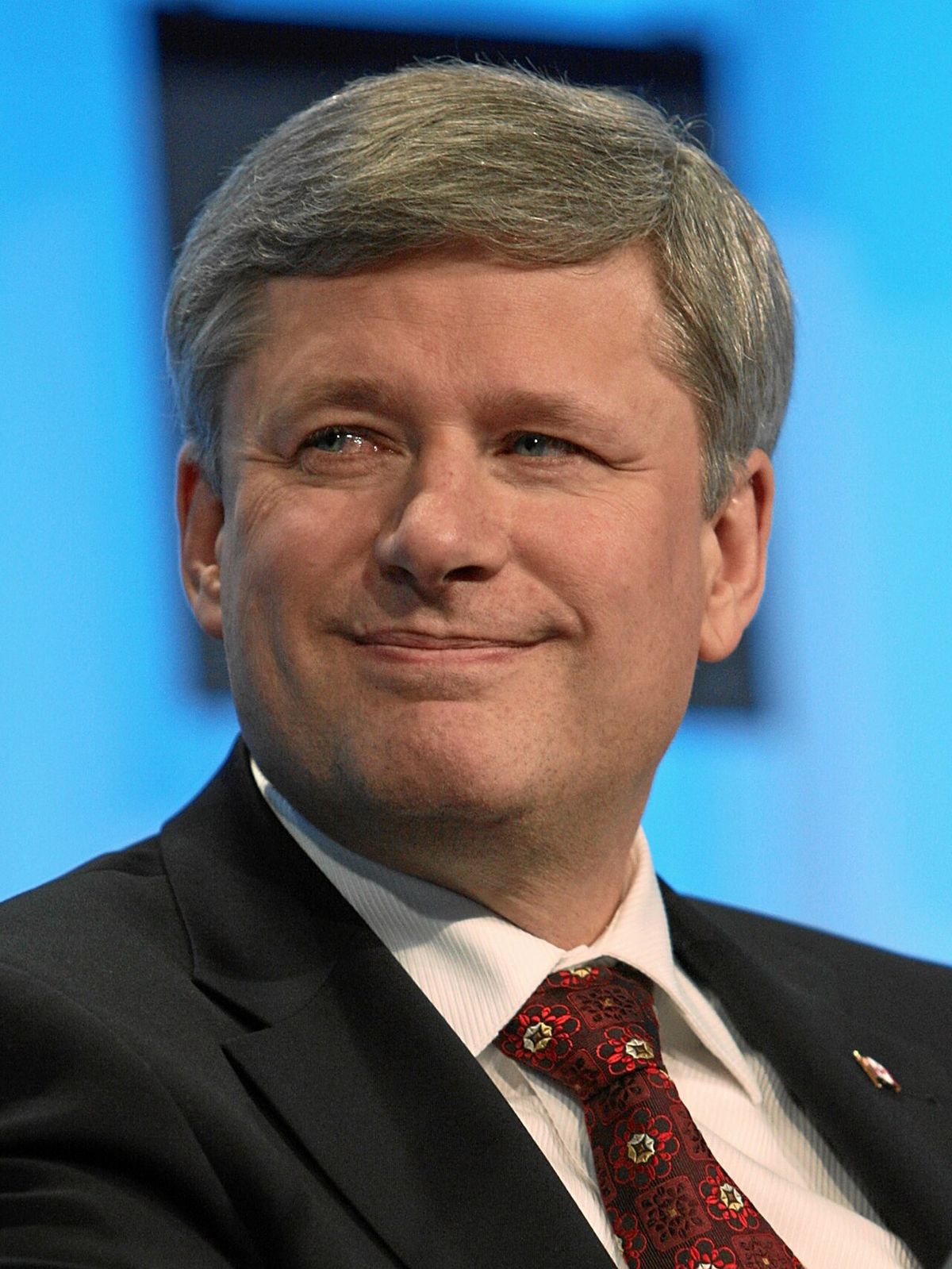
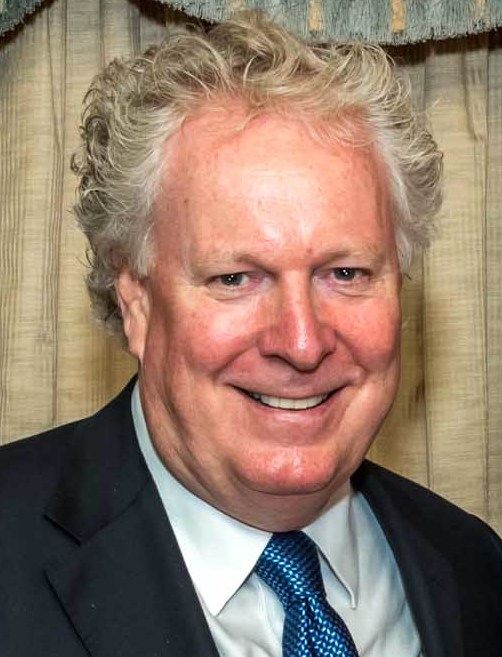
Political leaders across Canada expressed shock and sorrow. Prime Minister Stephen Harper called the shootings 'a cowardly and senseless act of violence.' Interim Liberal Party leader Bill Graham and MP Lucienne Robillard emphasized the need for national compassion. Bloc Québécois Leader Gilles Duceppe noted the tragedy was inexplicable and suggested a need for the national gun registry. New Democratic Party Leader Jack Layton, a Montreal-area native, said it was a grim reminder of previous school shootings. Quebec Premier Jean Charest expressed deep sadness for the victims and families, while Montreal Mayor Gérald Tremblay conveyed his care for the affected parents. Some student leaders criticized the immediate response of the Dawson College administration, noting that help from the Concordia University Student Union was crucial. Dawson's director-general Richard Filion defended the response, stating staff were in shock and scattered, and that the existing emergency plan was designed primarily for fire safety. One of the victims, Hayder Kadhim, who was shot in the head and neck, later publicly challenged Prime Minister Harper to a gun control debate on CBC.
- Prime Minister Stephen Harper: Condemned the violence as 'cowardly and senseless.'
- Bloc Québécois Leader Gilles Duceppe: Suggested re-examining the national gun registry.
- Quebec Premier Jean Charest: Expressed deep sadness for victims and families.
- Montreal Mayor Gérald Tremblay: Voiced empathy for the grieving parents.
- Victim Hayder Kadhim: Challenged the Prime Minister to a gun control debate.
Media Controversies and Lasting Impact
Several media controversies arose in the wake of the shooting. Journalist Jan Wong wrote a front-page article in The Globe and Mail three days after the event titled 'Get under the desk.' In it, she drew a link between the three major school shootings in Quebec and suggested the perpetrators, who were not 'old-stock French Quebecers,' may have been alienated by a society concerned with 'racial purity.' The article provoked widespread condemnation in Quebec. Premier Jean Charest called it a 'disgrace' that betrayed Canadian values. Prime Minister Stephen Harper denounced it as 'prejudiced, absurd, irresponsible and without foundation.' On September 20, 2006, the House of Commons unanimously passed a motion requesting an apology for the column.
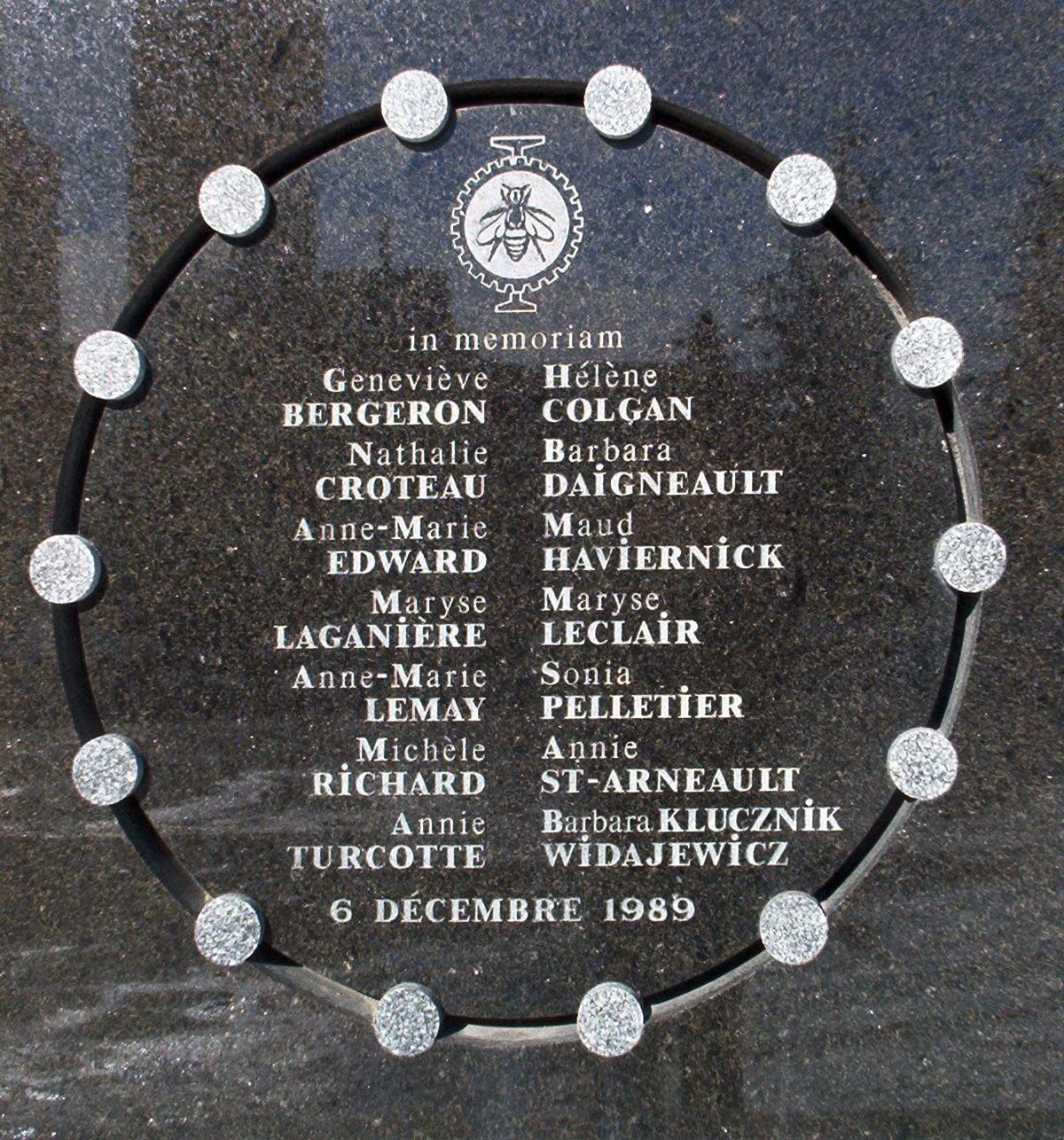
Monique Lépine, the mother of Marc Lépine who perpetrated the 1989 École Polytechnique massacre, spoke out publicly for the first time in 16 years following the Dawson shooting. In 2007, the Canadian Broadcast Standards Council faulted Vancouver radio station CKNW for a broadcast code violation. The station had simulcast content from its Montreal sister stations during the shooting, including cellphone calls from students inside the school. A complaint argued this could have informed the gunman of student locations. The council ruled that modern technology reduced geographic barriers and CKNW breached the code on coverage of violent situations. The shooting had a long-term impact on the Dawson community and Canadian policy discussions. Survivor James Santos, who was with Anastasia De Sousa during the attack and was later awarded the Star of Courage, became a Montreal police officer, citing the officers who saved his life as his inspiration.
Questions about 2006 Dawson College shooting
What happened during the 2006 Dawson College shooting?
On September 13, 2006, 25-year-old Kimveer Singh Gill opened fire outside and inside Dawson College in Montreal. He began shooting students on the rear entrance steps at 12:42 p.m., then entered the cafeteria, where he killed 18-year-old Anastasia De Sousa and injured 19 others. After a standoff with police, during which he took hostages, Gill was shot in the arm by Officer Denis Côté. Gill then died by suicide at 1:01:42 p.m. The shooter discharged his rifle 72 times and his pistol six times during the incident.
Who was the shooter, Kimveer Gill?
Kimveer Singh Gill was a 25-year-old Canadian from Laval, Quebec, born to parents of Punjabi descent. He attended Rosemere High School and briefly enrolled in Vanier College. In early 1999, he underwent a short period of military training at the Canadian Forces Leadership and Recruit School but was voluntarily discharged before completing basic training. He was a member of a rifle club and maintained an online profile on the website VampireFreaks. Police found a note in his home praising the Columbine shooters, and his attack was deemed premeditated.
How many people were killed and injured?
The shooting resulted in one fatality and 19 injuries. The sole person killed was 18-year-old Dawson College student Anastasia De Sousa, who was shot nine times. Of the 19 wounded, eight were initially listed in critical condition, with six requiring surgery. One victim suffered two gunshot wounds to the head, underwent surgery, and was in a coma for a week before recovering.
How did the police respond to the shooting?
The response was rapid due in part to the coincidental presence of two police officers at the school for an unrelated matter. They radioed a high-urgency code, and officers from multiple units swarmed the scene within minutes. During the standoff in the cafeteria, Officer Denis Côté, positioned on a floor above, shot Gill in the arm, which preceded Gill's suicide. Police cordoned off the area, evacuated the school and adjacent buildings, and established phone lines for concerned families.
What was the Jan Wong controversy?
The Jan Wong controversy stemmed from a front-page article she wrote for The Globe and Mail three days after the shooting. In it, she drew a link between the three major school shootings in Quebec, suggesting the perpetrators, who were not 'old stock French Quebecers,' were alienated by a society concerned with 'racial purity.' This article created a public outcry and was condemned by politicians. Quebec Premier Jean Charest called it a disgrace, and Prime Minister Stephen Harper deemed it prejudiced and irresponsible. The House of Commons unanimously passed a motion requesting an apology for the column.
How is the shooting remembered today?
The shooting is remembered through annual commemorations and lasting tributes at Dawson College. A section of the school's Peace Garden, known as Anastasia's Loop, is dedicated to the memory of Anastasia De Sousa. The event continues to influence national discussions on gun control and mental health support. A follow-up study found that 30% of Dawson students present during the shooting suffered lasting mental health consequences, with about 18% developing a new disorder, highlighting the long-term impact of the tragedy.
Sources and further reading
- 2006 Dawson College shooting (Wikipedia)
- Dawson College remembers 20th anniversary of fatal ... (montreal.citynews.ca)
- Gunman Opens Fire at Dawson College (thecanadianencyclopedia.ca)
- Dawson college shooting survivor now serves as Montreal ... (globalnews.ca)
Checked by the Nosy Mag desk. Last updated 2026-10-21.