Spades
Spades is a trick-taking card game devised in the United States in the 1930s. It is most commonly played by four players in two partnerships, where teammates sit opposite each other and combine their bids and tricks. The game's enduring popularity stems from its blend of simple rules, strategic depth, and reliance on teamwork, making it a staple of casual play and online gaming. Canadians have embraced Spades both as a social pastime and through numerous digital platforms offering free online play against bots or live opponents. The objective is to be the first partnership to reach a target score, typically 500 points, by accurately predicting and winning tricks.
History and Origins
Spades originated in the American Midwest, with bridge author George Coffin ascertaining its creation in Cincinnati between 1937 and 1939. The game is a direct descendant of the Whist family, which also includes Bridge, Hearts, and Oh Hell, and it simplified many concepts from Contract Bridge. Its popularity surged during the Second World War, as American soldiers spread the game around the globe. The game's simplicity compared to Bridge and Euchre, along with its ease of interruption compared to Poker, made it an ideal pastime for military personnel. After the war, veterans brought the game back to the U.S., where it spread to and became popular among college students. It also remained popular in countries where U.S. troops were stationed, establishing a foundation for its global reach and eventual adoption on digital platforms.
Standard Rules and Gameplay
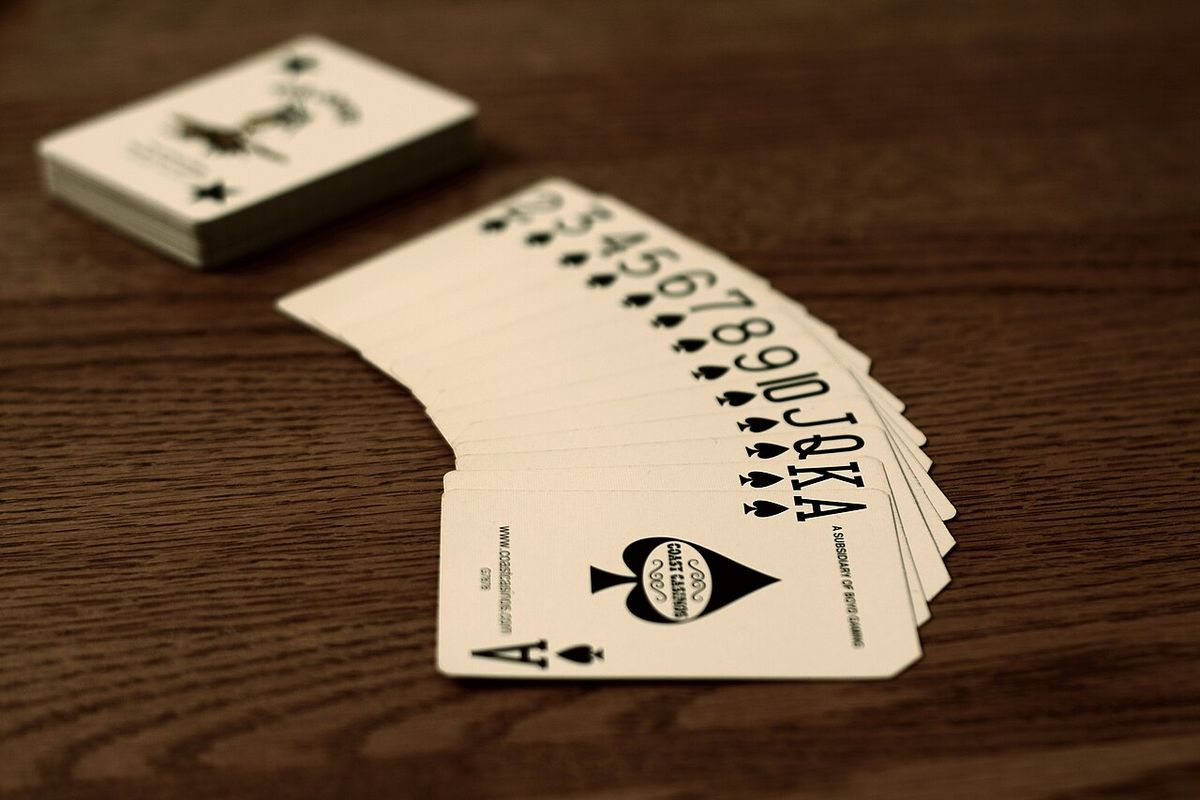
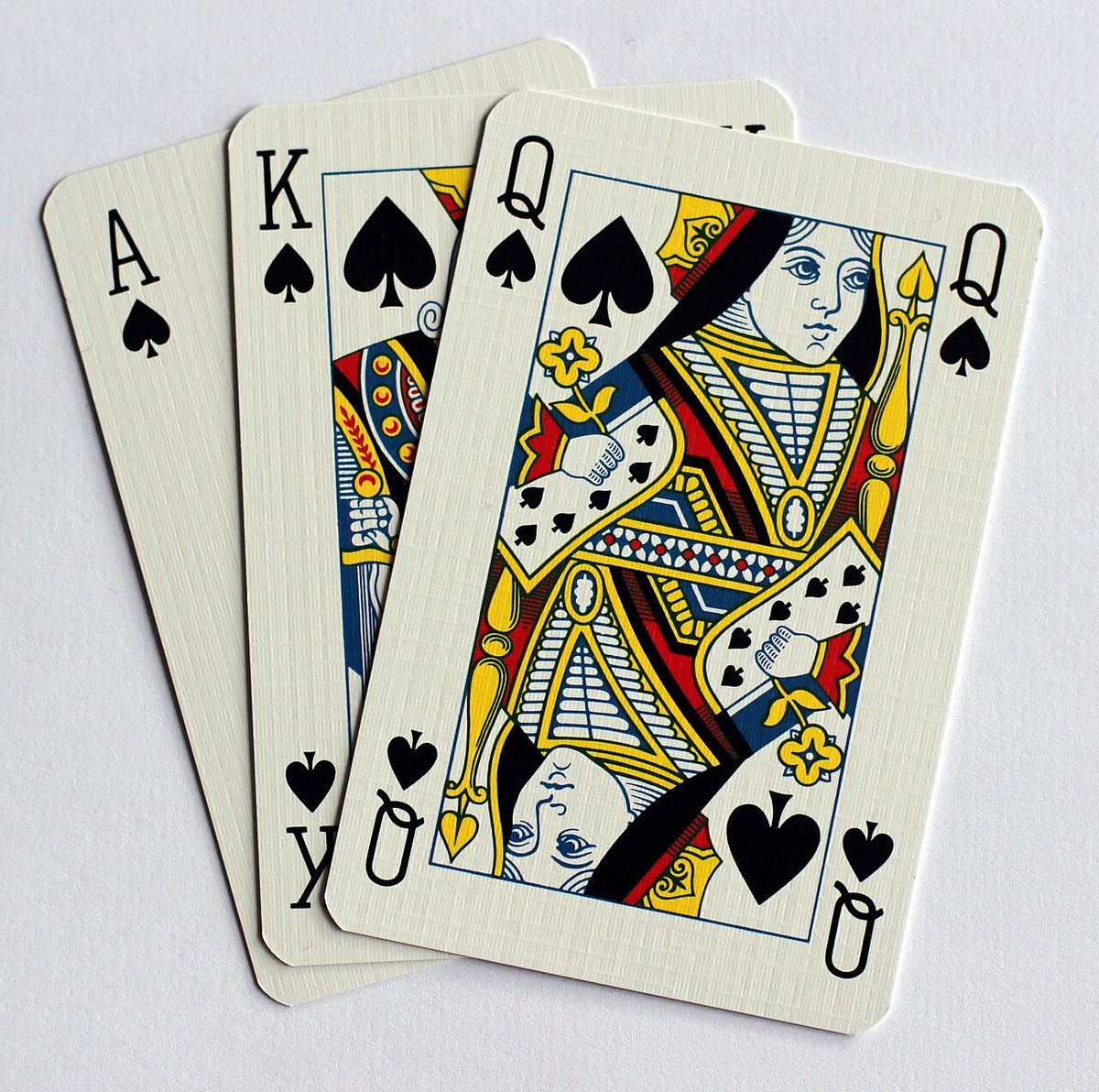
A standard game of partnership Spades is played by four players with a standard 52-card deck. The cards in each suit rank from highest to lowest: Ace, King, Queen, Jack, 10, 9, 8, 7, 6, 5, 4, 3, 2. The spade suit is always trump, meaning any spade will beat a card from any other suit. The first dealer is chosen at random, often by drawing for the highest card or first spade, and the deal rotates clockwise after each hand. The dealer shuffles the deck, offers a cut to the player on their right, and deals all 52 cards singly in clockwise order, resulting in each player receiving 13 cards. Players pick up and arrange their hands, typically by suit and rank, to prepare for the bidding phase. A misdeal, such as an uneven distribution of cards, results in a redeal by the same dealer if discovered before bidding begins.
The core gameplay consists of 13 tricks per hand. The player to the dealer's left makes the opening lead by playing any card except a spade, due to a common rule borrowed from Hearts. Play proceeds clockwise, and each player must follow the suit led if they are able. If a player cannot follow suit, they may play any card, including a spade. The trick is won by the player who played the highest card of the suit led, unless a spade was played, in which case the highest spade wins. The winner of the trick gathers the four cards into a facedown pile and leads the first card for the next trick. A key rule is that spades cannot be led until they have been 'broken', meaning until a spade has been played previously in the hand to trump a trick. Once spades are broken, they may be led normally, and players must follow suit if a spade is led. Another common variant rule is that a player cannot lead spades on the very first trick of the hand.
Bidding and Special Bids
Bidding is a critical strategic phase that occurs before play begins. Starting with the player to the dealer's left and moving clockwise, each player declares the number of tricks they expect to take, from 0 to 13. In partnership play, the two individual bids are added together to form the team's contract. A bid of zero is called a 'nil', where the player aims to take no tricks. Players must bid at least one if they are not bidding nil. The most common and impactful special bids are nil and blind bids, which carry significant bonuses and penalties. A nil bid is made after looking at one's hand, while a blind nil is made without looking, often for a larger bonus and only when a team is trailing by at least 100 points. Bidding blind on a number from one to seven is also possible, offering a bonus for success and a penalty for failure.
- Nil: A player bids zero tricks after looking at their hand. If successful, the team earns a 100-point bonus. If the nil bidder takes even one trick, the team incurs a 100-point penalty.
- Blind Nil: A player bids zero tricks without having looked at their cards. This carries a higher risk and reward, often granting a larger bonus, such as 150 points. It is frequently only allowed when a team is trailing by at least 100 points.
- Blind Bidding: A player bids a number from one to seven without looking at their cards. A successful blind bid earns a bonus, while failure results in a penalty.
- Double Nil/Double Blind Nil: Both partners bid nil or blind nil. Success can win the game outright or award double bonuses, while failure typically results in no penalty depending on house rules.
In some variants, the player bidding nil passes one or two of their cards to their partner and receives an equal number of cards back from said partner. This passing is allowed to improve the bidder's chances of making their nil or blind nil bid. Once a bid is made, it is final and cannot be reduced. One common variant rule is that the sum of all bids must not equal the number of tricks to be played, which ensures at least one player or team will be set or forced to take an overtrick.
Scoring System
Scoring in Spades involves calculating points based on whether a team made its contract and accounting for overtricks and special bids. After the final trick, each team counts the total tricks taken by its two partners. If a team makes at least its combined bid, it scores 10 points for each trick bid. For example, a bid of 5 tricks that is made earns 50 points. If a team fails to make its contract, it is 'set' and loses 10 points for each trick bid, resulting in a negative score for that hand. Any tricks taken beyond the bid are called 'overtricks', 'bags', or 'sandbags', and each adds 1 point to the team's score. A bid of 5 tricks with 6 taken results in a score of 51 points.
Bonuses and penalties from nil and blind bids are applied independently. A successful nil adds 100 points to the team's score for the hand, while a failed nil subtracts 100 points. A successful blind nil often adds 150 points. The tricks taken by a nil bidder do not count toward the team's trick total for contract purposes. A common and strategic scoring variant involves tracking bags over multiple hands. Every 10 accumulated bags triggers a penalty of 100 points, after which the bag count resets. This 'bagging out' or 'sandbag' rule penalizes teams that consistently underestimate their tricks. In shorter games played to 250 points, a penalty of 50 points may be assessed after accumulating 5 bags. The game is won when one team reaches or exceeds the predetermined winning score, most commonly 500 points, or when an opponent is forced down to -200 points.
Popular Game Variations
As a widely played and adaptable game, Spades has spawned numerous variations that adjust dealing, bidding, and play. Deal variations include the 'kitty' method for games with an uneven number of players, where leftover cards form a kitty that the highest bidder picks up and then discards from. Another variant dictates that the player holding the 2 of clubs must lead it to start the game. In a 'face-up deal', the dealer may reveal a set number of cards per player to add a psychological element. Bidding variations are plentiful, with one common rule borrowed from Oh Hell requiring that the sum of all four bids must not equal 13, guaranteeing at least one team will be set or bagged. Some games allow a player to increase their bid by one after all bids are in, but reductions are never permitted.
Play variations often modify the rules for leading spades. While the standard rule prohibits leading spades until they are broken, some variants also forbid leading spades on the very first trick of the hand. 'Cutthroat' or solo Spades is a popular variation for three or more individual players, where everyone plays for themselves without partnerships, making nil bids far more difficult. Six-player Spades typically uses two decks and can be organized as three partnerships of two or two teams of three. Penalties for reneging, or failing to follow suit when able, are also subject to house rules, often resulting in an automatic loss of the bid or a three-trick penalty added to the team's contract. Other variations include 'Deuces high' where all 2s are the highest spades, and 'Jokers high' where jokers are the highest trumps.
Spades in the Digital Era
The transition of Spades to digital platforms has cemented its status as a globally accessible pastime. The game became a classic video game in the late 20th century with PC CD-ROMs and flash-based web titles. By 2026, millions of hands are played daily on numerous free online platforms and mobile applications. These digital versions faithfully replicate the standard rules while offering features like adjustable AI opponents, private tables for friends, ranked competitive play, and tutorials for beginners. Popular apps such as 'Spades: Classic Card Game 2026' and web portals like World of Card Games provide accessible, no-download gameplay directly in browsers. Digital play has also standardized certain conventions, such as common chat abbreviations like 'gc' for 'good cover' and 'ns' for 'nice set'.
| Platform/App Name | Key Features (as of 2026) | Availability |
|---|---|---|
| World of Card Games / cardgames.io | Free browser play, multiplayer, private tables, bag penalty options | Web browser |
| Spades: Classic Card Game 2026 | 250/500 point games, auto-bidder, custom card backs, adaptive AI, offline play | iOS, Android, PC |
| Spades, Card Game (Blackout Lab) | Goal of 250 points, adaptive AI, strategic gameplay | Android |
| Solitaired | Free online play, no signup, team-based | Web browser |
Basic Strategy and Terminology
Success in Spades relies on thoughtful bidding, cooperative play with a partner, and careful management of risks. A fundamental strategy is to bid based on 'certainties', tricks you are virtually guaranteed to win, typically high spades or long suits where you can deplete opponents' cards. Partners must communicate implicitly through their plays, such as 'covering' a partner's potential winning card to protect a nil bid or 'ducking' a trick by playing a low card to avoid winning it. Setting the opponents, or causing them to fail their contract, is a major strategic goal that results in a large point swing. Managing bags is also crucial. While overtricks provide a point, accumulating ten triggers a severe penalty, so sometimes it is strategic to deliberately lose a trick to avoid future sandbags.
- Bag (Sandbag): An overtrick taken beyond the team's bid, worth 1 point but penalized in groups of ten.
- Breaking Spades: The act of playing the first spade in a hand, after which spades may be led.
- Cover: To play a higher-ranking card to prevent a partner, especially a nil bidder, from winning a trick.
- Duck: To deliberately play a low card to avoid winning a trick.
- Nil: A bid of zero tricks, aiming to win none.
- Set: To fail to make one's contract, resulting in a penalty.
- Trump: The spade suit, which outranks all other suits.
- Renege: To fail to follow suit when able, which is considered cheating.
- Void: To have no cards in a particular suit.
Questions about Spades
What are the basic rules of Spades?
Spades is played by four players in two partnerships using a standard 52-card deck. Each player receives 13 cards. Players bid on the number of tricks they think their team can win. The player left of the dealer leads the first trick, and players must follow suit if possible. Spades are always the trump suit. The team's goal is to win at least as many tricks as they bid, scoring 10 points per bid trick. The first team to reach 500 points wins. Key rules include not leading with a spade until spades have been 'broken' by being played on a previous trick.
How do you score a nil bid in Spades?
A nil bid is a declaration that a player will take zero tricks. If successful, the player's team earns a 100-point bonus added to their score for the hand. The tricks taken by the nil bidder do not count toward the team's contract. If the nil bidder takes even one trick, the bid is 'set' and the team incurs a 100-point penalty. A blind nil, bid without looking at one's cards, often carries a larger bonus of 150 points or a corresponding penalty.
What are 'bags' or 'sandbags' in Spades?
Bags, also called sandbags or overtricks, are tricks a team wins beyond its combined bid. Each bag adds 1 point to the team's score. However, bags accumulate across hands, and every 10 bags triggers a penalty of 100 points, after which the bag count resets. This rule is designed to penalize teams that consistently underestimate their tricks. In shorter games played to 250 points, a penalty of 50 points may be applied after 5 bags.
Can you play Spades online for free?
Yes, numerous platforms offer free online Spades with no download or signup required. Websites like World of Card Games (cardgames.io) and Solitaired allow you to play instantly in a web browser against computer opponents or live players. Mobile apps such as 'Spades: Classic Card Game 2026' are also free to download and play on iOS and Android devices. These digital versions often include features like adjustable difficulty, private tables for friends, tutorials, and both 250-point and 500-point game modes.
What is the difference between partnership and cutthroat Spades?
Partnership Spades, the most common form, involves four players in two fixed teams of two, with partners sitting opposite each other. They combine bids and tricks and share a score. Cutthroat Spades, also known as solo Spades, is played by three or more individual players, each competing for themselves. Without a partner to help, strategies like bidding nil become much riskier and less common. In cutthroat, a player would rarely bid on a king in a long side suit due to the risk of being trumped.
How many players can play Spades?
Spades is traditionally played by four players in two partnerships. Variations allow for different numbers. Two players can play with a special drawing and discarding method. Three, five, or six players can play in a cutthroat (solo) style. Six players can also be organized as three partnerships of two or two teams of three, often using two decks. Games with seven or more players are less common and may be split into smaller groups.
Sources and further reading
- Spades (Wikipedia)
- Spades, Online & Free | Play Classic Card Games (worldofcardgames.com)
- Spades: Classic Card Game 2026 1.2.9 Free Download (spades-classic-card-game-2026-ios.soft112.com)
- Spades: Classic Card Game 2026 - App Store, Apple (apps.apple.com)
- Spades, Card Game for Android, Download the APK from Uptodown (spades-card-game.en.uptodown.com)
- Spades | Play it online for free (cardgames.io)
- Spades, Play online and 100% Free (solitaired.com)
Checked by the Nosy Mag desk. Last updated 2026-11-07.