Pinochle
Pinochle, also spelled pinocle or penuchle, is a trick-taking and melding ace-ten card game typically for two to four players, played with a 48-card deck. It is derived from the card game bezique via the German game Binokel. The standard game today is partnership auction pinochle, which proceeds through phases of bidding, melding, and trick-taking. In Canada, pinochle is enjoyed both as a social pastime and in organized online communities, with digital platforms offering free play in popular variants like three-player cutthroat and four-player partnership auction.
History and Origins
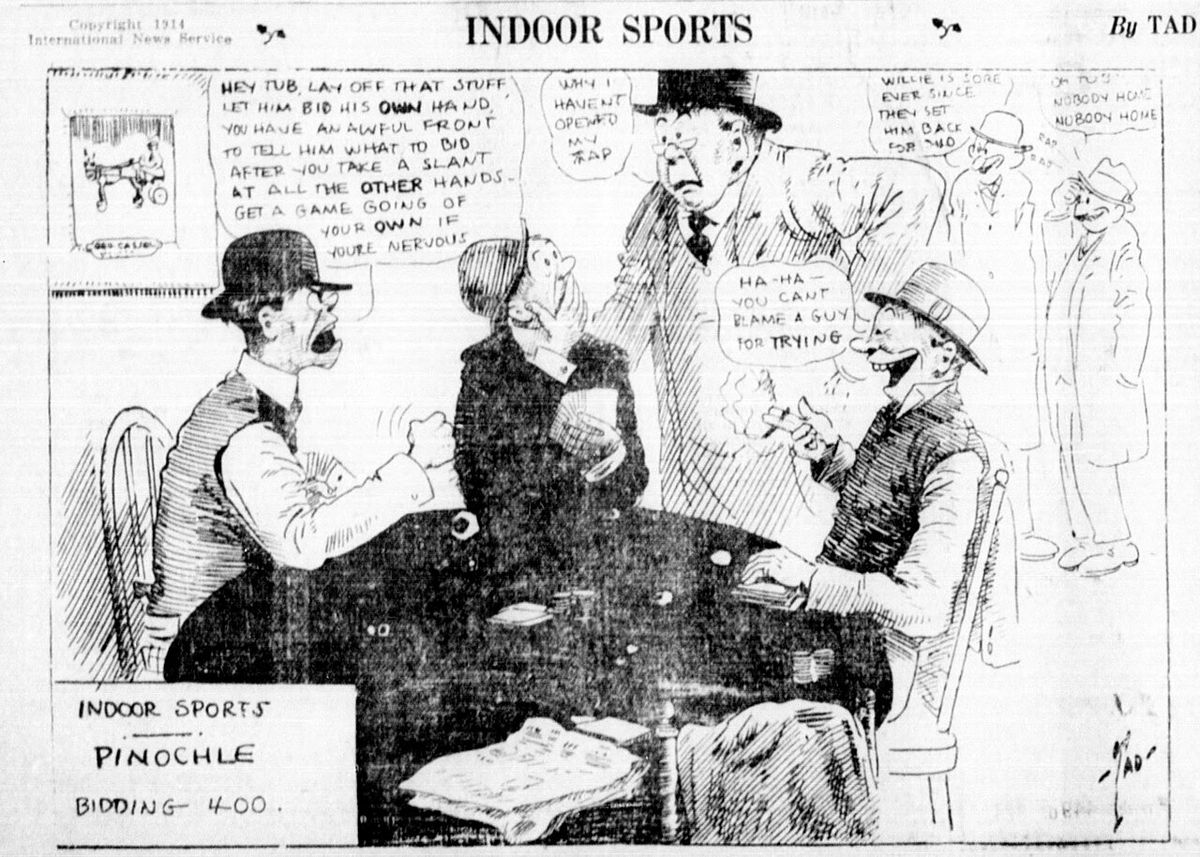
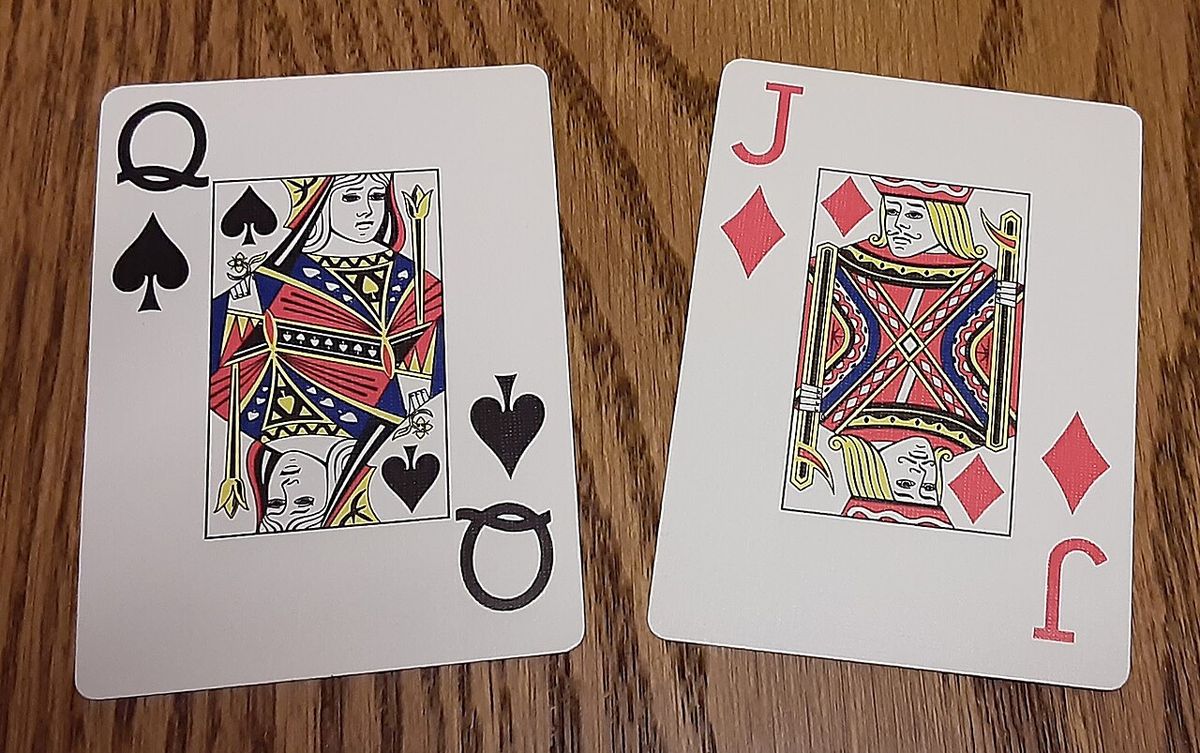
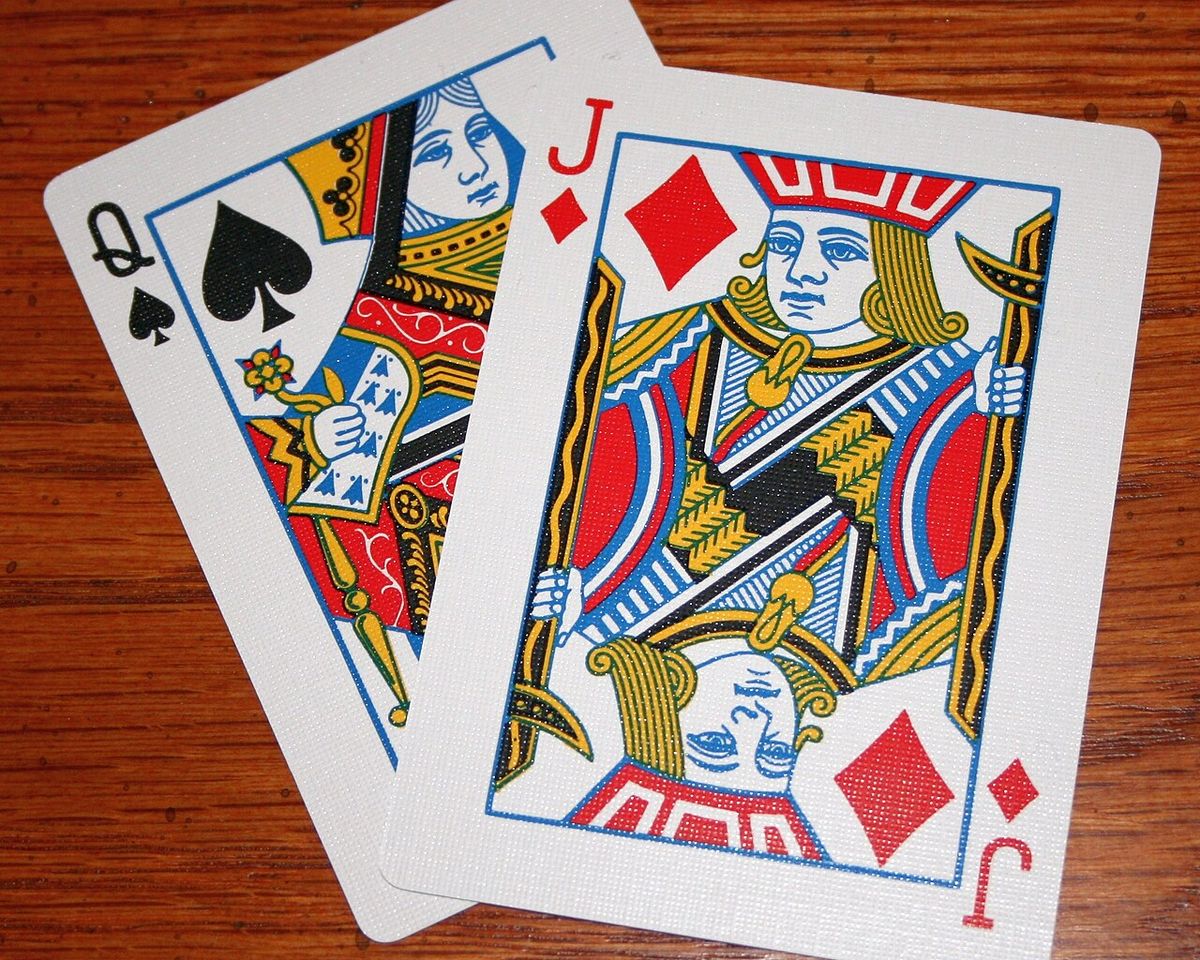
The game of pinochle has its roots in German immigration to North America in the last quarter of the 19th century. German settlers brought the game Binokel, itself a descendant of the French game Bezique. In America, the name was mispronounced and misspelled as pinochle. The word may come from the French binocle meaning eyeglasses, possibly referring to a fabled deck where the Queen of Spades and Jack of Diamonds were pictured in side profile. Pinochle became the favorite card game of American Jewish and Irish immigrants, while Skat was preferred by a majority of German immigrants. During the 19 months when the USA was involved in World War I, the city of Syracuse, New York, outlawed the playing of pinochle in a gesture of anti-German sentiment. The game survived these bans and evolved into the partnership auction game most commonly played today.
The Pinochle Deck and Card Ranking
A pinochle deck consists of two copies of each of the 9, 10, jack, queen, king, and ace cards of all four suits, for 48 cards per deck. The card ranking is nonstandard. From highest to lowest, the order is ace, ten, king, queen, jack, and nine. Originally, players created this deck by combining two poker, piquet or euchre decks and removing unneeded cards. A piquet deck does not have the 2 to 6, making it easier to modify, and a euchre deck is exactly half a pinochle deck. With the game's popularity in the early 1900s, specialized pinochle decks were marketed. For larger games, a double deck of 80 cards is used, containing four copies of each rank from ace to nine. Variants of pinochle can be played with five, six, eight or more players using these combined decks.
Partnership Auction Pinochle: Core Rules
Partnership auction pinochle for four players is the most common modern form. The game proceeds through three phases: bidding, melding, and trick-taking. The dealer deals all 48 cards to the four players. In auction pinochle, players bid for the points they predict their hand could earn. The opening bid might be 100 or 250 points. Each subsequent bid must be greater, often in multiples of 10. The highest bidder wins the contract and declares the trump suit. In some house rules, trump cannot be declared in any suit not containing a run, marriage, or dix meld. The winning team must meet or exceed their bid by combining meld and trick points. If they fail, the bid amount is subtracted from their score, a penalty known as being set, and they often lose their meld points for that hand. In some versions, the bid winner may exchange cards with their partner after the bid. A popular variation involves dealing a 4-card kitty, with the bid winner taking the kitty and discarding 4 cards from their hand.
Melds and Scoring Values
Melding consists of displaying specific combinations of cards for points before trick-taking. Melds are categorized, and a card can be used in different meld types but not in the same type twice. Points are traditionally in multiples of ten, though simplified scoring often drops the trailing zero. All players meld after the bid winner shows meld first. The points are counted and each player totals their individual meld scores. The primary melds and their point values are as follows.
- Arounds: Four aces of different suits score 100 points, four kings 80, four queens 60, and four jacks 40. With all eight cards of a rank in a double deck, scores are 1000, 800, 600, and 400 respectively.
- Sequence Melds: A flush or run (A, 10, K, Q, J of trump) scores 150. A marriage (king and queen) in trump scores 40, while a marriage in a non-trump suit scores 20. A double run scores 1500 points. A marriage in each suit, called a roundtable or round house, is worth 240 points.
- Special Melds: A pinochle (Jack of Diamonds and Queen of Spades) is worth 40 points, and a double pinochle (both jacks and both queens) scores 300. The dix (nine of trumps) scores 10 points each.
Trick-Taking and Game Play
After melding, cards are returned to hands and the 12 tricks are played. The high bidder leads the first trick. Players must follow the suit led if possible. If a player cannot follow suit, they must play a trump if they have one, and must play a trump higher than any already in the trick if possible. In post-1945 rules, players must try to win a trick only when a trump is led. In pre-1945 rules, players must always try to win the trick if they can. If two identical cards are the highest in a trick, the one played first wins. The last trick awards a 10-point bonus. Points from tricks are counted separately. The classic counting system assigns aces 11 points, tens 10, kings 4, queens 3, jacks 2, and nines 0. A simpler method counts aces and tens for 10 points, kings and queens for five points. An even simpler method has aces, tens, and kings worth 10 points each. The total points available in tricks is always 250 per hand. Game play continues until one partnership reaches a predetermined score, commonly 500 or 1000 points.
| Card Rank | Classic Trick Value | Simplified Trick Value | Counters Method |
|---|---|---|---|
| Ace | 11 points | 10 points | 10 points |
| Ten | 10 points | 10 points | 10 points |
| King | 4 points | 5 points | 10 points |
| Queen | 3 points | 5 points | 0 points |
| Jack | 2 points | 0 points | 0 points |
| Nine | 0 points | 0 points | 0 points |
| Last Trick | 10 points | 10 points | 10 points |
Popular Game Variations
Beyond the standard four-player partnership game, several popular pinochle variants exist. Two-handed pinochle is the original form, most closely resembling Bezique. In this version, 12 cards are dealt to each player with a 24-card stock. Players draw from the stock after each of the first 12 tricks and may meld one combination after winning a trick. For the last 12 tricks, melds are taken into each player's hand and the traditional trick-taking rules apply. Three-handed pinochle is a common variant where each player acts alone. Using a 48-card deck, 15 cards are dealt to each player and three cards form a kitty. The high bidder takes the kitty, declares trump, and discards three cards. A player must win at least one trick to save their meld points for that round. Double deck pinochle is a major variant for four players using an 80-card deck. Each player receives 20 cards. The minimum bid is often 500, and bids increase in increments of 10 or more until 600 is reached, then by 50 points. The total trick points are 50, with aces, tens, and kings each worth 1 point and the last trick worth 2. The game is typically played to 500 points and is played by the National Pinochle Association.
- Two-Handed: The original game, with a stock and melding after each won trick.
- Three-Handed (Cutthroat): Each player for themselves with a three-card kitty. If no player takes a winning bid, play continues even if a score threshold is crossed.
- Partnership Auction: Standard four-player game with bidding and teams. Play is often to 1,000 or 1,500 points.
- Double Deck: Four-player game with an 80-card deck and 20-card hands. Features meld bidding to communicate with a partner.
- Check Pinochle: A gambling variant of three-hand where players keep track of checks for certain melds and outcomes like a flush or double aces.
- Racehorse: A double-deck variant played to six hands with inflated point values and a blind.
Pinochle in the Digital Age
Pinochle has found a steady second life online, with numerous free platforms allowing players to connect. Sites like Pinochle Palace and World of Card Games host large communities where players can join public tables or create private games. These platforms typically offer both the three-player and four-player partnership variants. Online play often includes features like an automatic meld identifier to help players find scoring combinations. Tournaments are regularly organized, such as those promoted by online pinochle communities. These digital versions are designed to be cross-platform, playable on computers, tablets, and smartphones. They often allow a choice between traditional German (Württembergian) or American deck patterns and rule sets. The online environment has helped sustain and grow interest in this classic card game across Canada and beyond. Organizations like the American Pinochle Association and National Pinochle Association also have an online presence.
Strategy and Tips for Players
Success in pinochle relies on card evaluation, memory, and partnership communication. Effective bidding conveys information about your hand's meld strength to your partner. Bids should reflect your estimated meld points and your ability to win high-value tricks. During the melding phase, careful planning is required to maximize point yield from your cards, as a single card can often be used in multiple combinations. In trick-taking, memory is paramount. Tracking which high cards, particularly aces and tens, have been played is essential for making informed decisions later in the hand. Paying attention to the cards your partner plays can also signal their strength or weakness in a suit. In double deck, the principle of heading the trick when trump is led adds a layer of forced strategy that must be anticipated. Managing risk is key. Overbidding frequently leads to being set, while overly conservative play may cede the contract. In three-handed games, a player must take at least one trick to save their meld points. A player can declare a technical misdeal in double deck if dealt 13 or more non-counters and no aces before playing the first trick.
Questions about Pinochle
How do you play the card game pinochle?
Pinochle is played in three main phases. First, players bid to determine who declares the trump suit. Second, all players display point-scoring card combinations called melds, such as marriages or aces around. Third, players engage in trick-taking, where they must follow suit if possible, with the goal of capturing cards with point values. The team that wins the bid must meet or exceed their bid by combining their meld and trick points. If they fail, the bid amount is subtracted from their score. The game is typically played to a target score like 500 or 1000 points.
What is a pinochle deck?
A standard pinochle deck has 48 cards. It contains two copies each of the 9, 10, jack, queen, king, and ace in all four suits. The cards rank from high to low as ace, ten, king, queen, jack, and nine. For the double deck variant, an 80-card deck is used with four copies of each rank from ace to nine. Specialized pinochle decks have been sold since the early 1900s. A euchre deck is exactly half a pinochle deck.
What is double deck pinochle?
Double deck pinochle is a popular four-player partnership variant played with an 80-card deck, containing four of each card from ace to nine in every suit. Each player is dealt 20 cards. Bidding starts at a minimum of 500, and bids increase in increments of 10 or more. The total trick points available are 50, with aces, tens, and kings worth 1 point each and the last trick worth 2. The game is played to 500 points, and is exclusively played by organizations like the National Pinochle Association and the American Pinochle Association.
What are the melds in pinochle and how are they scored?
Key melds include arounds, sequences, and special combinations. Four aces of different suits score 100 points, a flush in trump scores 150, and a marriage in trump scores 40. The signature meld, a pinochle (Jack of Diamonds and Queen of Spades), scores 40 points. The dix (nine of trumps) scores 10. In double deck, eight aces score 1000. A double pinochle scores 300 points. A marriage in each suit is worth 240 points total.
What is the history of pinochle?
Pinochle originated in the United States in the late 19th century from the German card game Binokel, which itself descended from the French game Bezique. German immigrants brought the game to America in the last quarter of the 19th century, where its name was anglicized. It became a favourite among Jewish and Irish immigrant communities. During World War I, it was temporarily banned in some U.S. cities like Syracuse, New York, due to anti-German sentiment.
Can you play pinochle online for free?
Yes, several websites and platforms offer the game for free without requiring a download. Sites like Pinochle Palace and World of Card Games allow players to engage in the trick taking and melding card game. These online venues facilitate play with others over the internet and often host tournaments. The game can be played on computers, tablets, and smartphones.
Sources and further reading
- Pinochle (Wikipedia)
- Double Deck Pinochle, Online & Free | Play Classic Card Games (worldofcardgames.com)
- Pinochle (bicyclecards.com)
- Pinochle Palace, Play Pinochle Online Now (pinochle-palace.com)
- Pinochle | Play it online (cardgames.io)
Checked by the Nosy Mag desk. Last updated 2026-11-10.