Solitaire
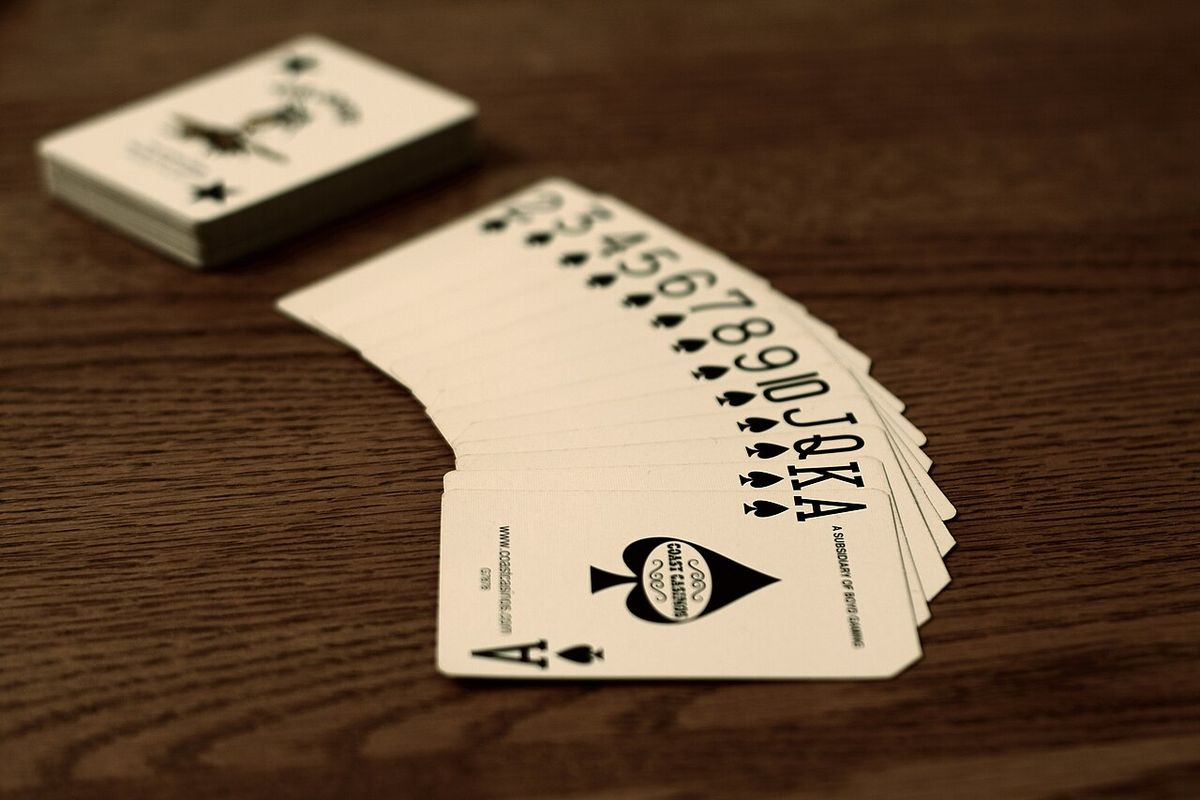
Solitaire, also known as patience, is a genre of card games whose aim is to arrange the cards in a systematic order or to pair them off to discard them. Most are intended for a single player, but there are varieties for two or more. The most recognized variant, Klondike Solitaire, is a staple of digital entertainment. While the term 'solitaire' is predominant in North America, the original name 'patience' reflects the perseverance required to master these games.
Etymology and Naming Conventions
The earliest recorded name for this genre of card games is 'patience', a term used in both British and American sources derived from the perceived exercise in perseverance required to play. During the 20th century, the name 'solitaire' became common in North America. British games scholar David Parlett argues that 'patience' is the more precise term, as 'solitaire' can also refer to single-player board games like peg solitaire. In practice, in North America the name 'solitaire' is often used to refer specifically to the game of Klondike. Authors writing internationally tend to include both terms in titles. Individual game names have evolved from older forms like 'The Beleaguered Castle' to simpler modern titles. American sources sometimes change names with European themes, such as 'British Constitution' to 'Constitution'. The earliest English and American sources often used the definite article before game names.
Historical Origins and Development
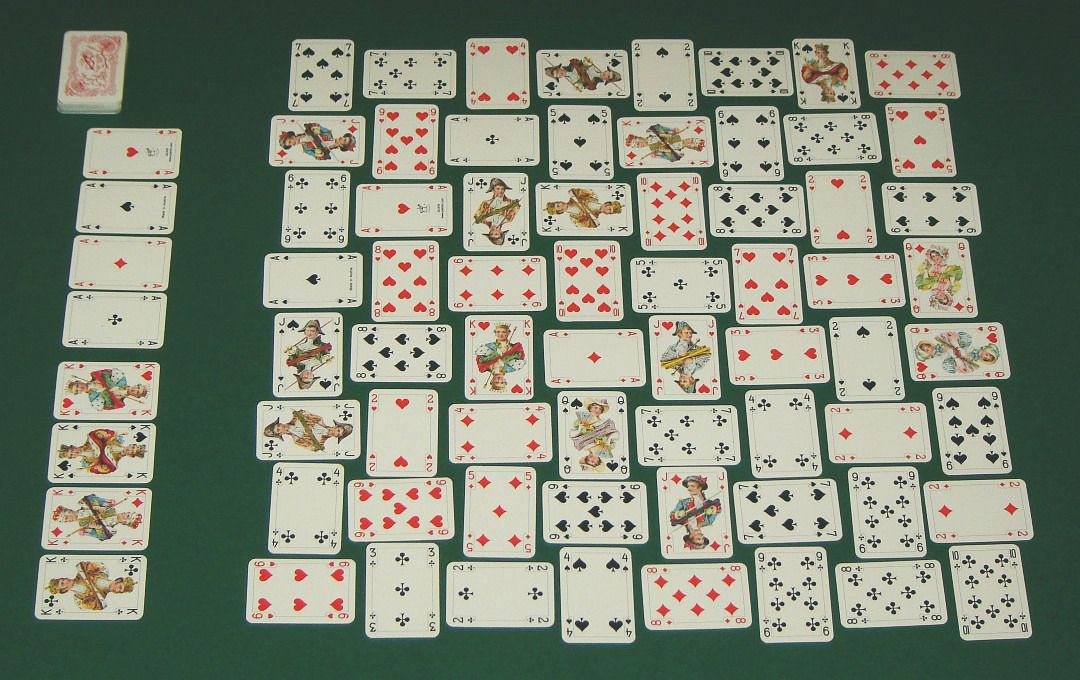
Solitaire games are probably of German or Scandinavian origin, with the first known description appearing in the 1783 German game anthology Das neue Königliche L'Hombre-Spiel. The game described was a two-player competitive patience. The practice spread to France in the early 19th century and subsequently to Britain and America in the latter half of the century. The earliest known book of solitaires was published in Russia in 1826, followed by others in Sweden. The connection between solitaire layouts and cartomancy developed around 1765, supported by the game's name in Danish and Norwegian, kabal(e). The first major English-language collection is attributed to Lady Adelaide Cadogan's Illustrated Games of Patience, published around 1870. However, a lost book called Patience by 'Perseverance' (William Henry Cremer) was published in London in 1860. The earliest American treatise is Patience: A Series of Games with Cards by Ednah Dow Littlehale Cheney (1869). Prolific author Mary Whitmore Jones published numerous volumes between 1888 and 1911, documenting around 250 different games. Other notable authors included H. E. Jones (Cavendish), Angelo Lewis (Professor Hoffmann), Basil Dalton, Ernest Bergholt and 'Tarbart'.
Gameplay Fundamentals and Classifications
Solitaire games are usually intended for a single player, although a small number are designed for two or more. They are games of skill, chance, or a combination of both. There are three classes grouped by aim. The most common involves building cards in sequences, usually by suit. The card starting the required sequence is the foundation card. A second object is to pair cards and discard them. A third object is to discard any two cards whose combined value forms a particular total, such as eleven or thirteen. Games are further classified by their starting information and mechanism. Closed games are those in which, throughout the game, not all the cards are visible. They require judgment as cards are drawn from a face-down stock. This category includes simple builders, reserved builders, simple packers, reserved packers, and non-builders. Open games have all cards visible at the outset, turning the game into a puzzle of perfect information. This group comprises open builders, open packers, and open non-builders. Half-open games start with some hidden cards but become fully open as play progresses. This family includes half-open builders, blockades, planners, half-open packers, and spiders. Competitive solitaires like Russian Bank and Spit are games of a solitaire character played by two or more players.
Major Solitaire Variants
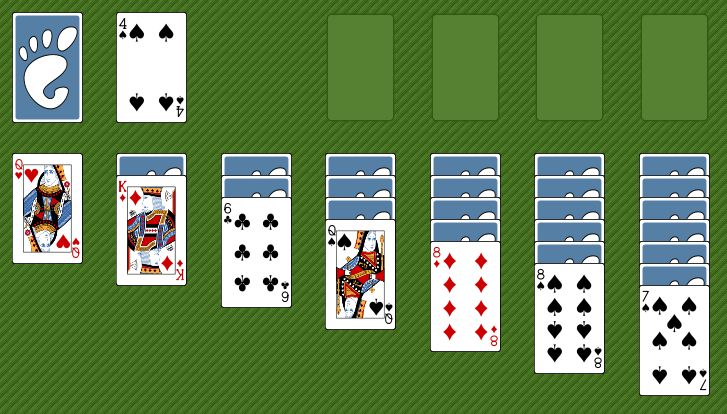
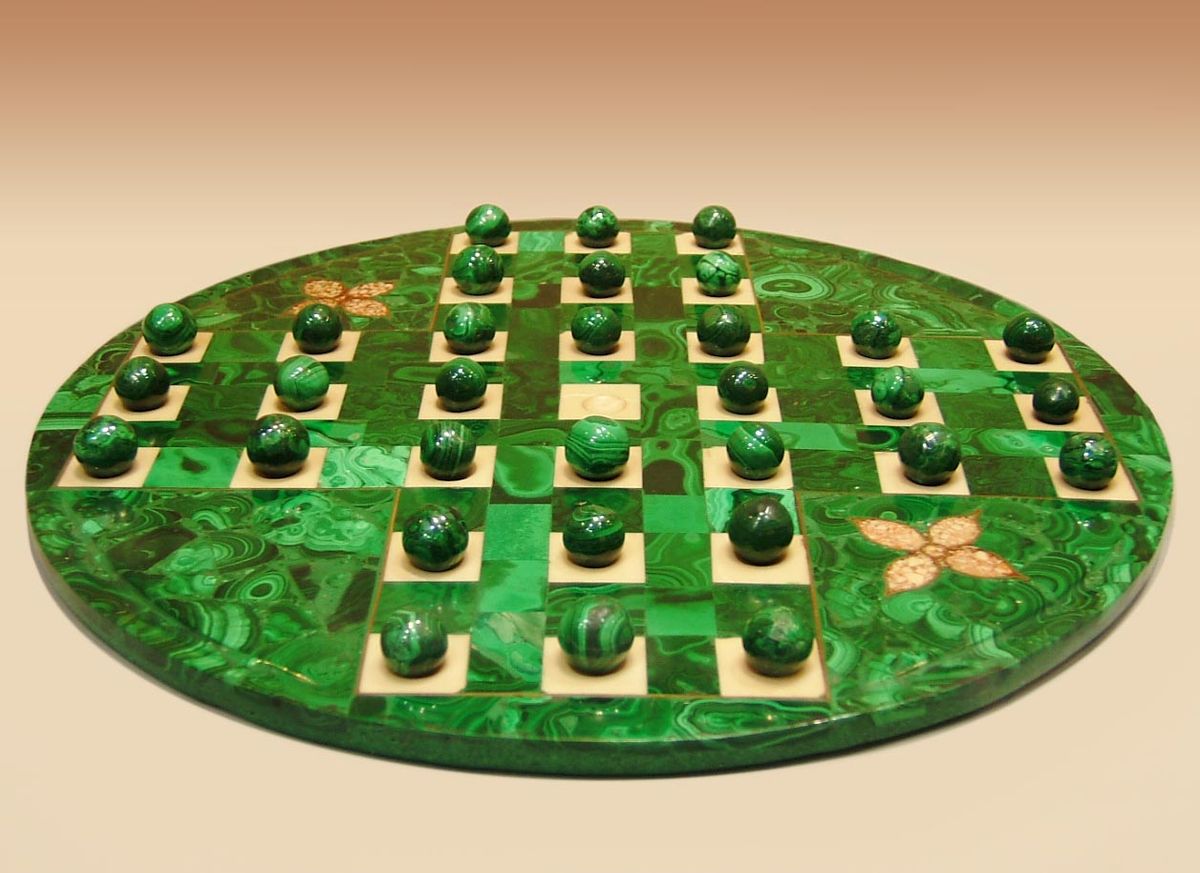
While hundreds of solitaire games exist, a few have achieved widespread popularity, especially in their digital forms. Klondike Solitaire, often simply called 'Solitaire', is the classic game where the goal is to build four foundation piles up from Ace to King by suit. Its digital version, Microsoft Solitaire, was included with Windows from 1990. Spider Solitaire is a two-deck game where the aim is to build eight descending sequences from King to Ace on the tableau. It originated in 1949 and was included in Microsoft Windows in 1998. FreeCell is an open game where all cards are dealt face-up at the start, and the player uses 'free cells' as temporary holding spaces. Other notable variants include Pyramid, TriPeaks, and Yukon. The progenitor game Napoleon at St Helena gave rise to several variants. Mahjong solitaire is a computer variant notable for using mahjong tiles instead of playing cards.
- Klondike: The classic 'Solitaire'. Build from Ace to King on foundations.
- Spider: Uses two decks. Build descending sequences on the tableau.
- FreeCell: All cards are face-up. Uses free cells for temporary storage.
- Pyramid/TriPeaks: Objective is to pair cards that total a specific value.
- Yukon: Allows movement of card groups within the tableau.
- Napoleon at St Helena: A progenitor game.
- Golf: A totalling game where cards are removed in pairs that add to specific values.
- Mahjong Solitaire: A computer variant using mahjong tiles.
The Digital Renaissance and Modern Play
The adaptation of solitaire to computer software sparked a major resurgence in its popularity. Microsoft Solitaire became a ubiquitous feature on personal computers. This led to a proliferation of electronic versions across platforms, including mobile apps and websites offering dozens of variants. Modern digital solitaire games often include features like unlimited undos, hints, daily challenges, and statistical tracking. The digital format has enabled precise tracking of win rates. For example, analysis indicates a win rate of approximately 33.0% for Klondike Solitaire Turn 1. The online solitaire landscape is vast, with sites like Solitaire Bliss and Solitaired offering free, instant-play access to many games. These platforms cater to common online searches. Popular digital variants consistently include Klondike, Spider, and FreeCell. The digital era has solidified solitaire's status as a globally accessible form of solo entertainment. Cards used for patience are often smaller than standard, measuring about 67 by 42 mm, but are also produced in standard and mini sizes. Many games require two full decks, which are frequently sold as twin packs in a single box.

Spider Solitaire: A Closer Look
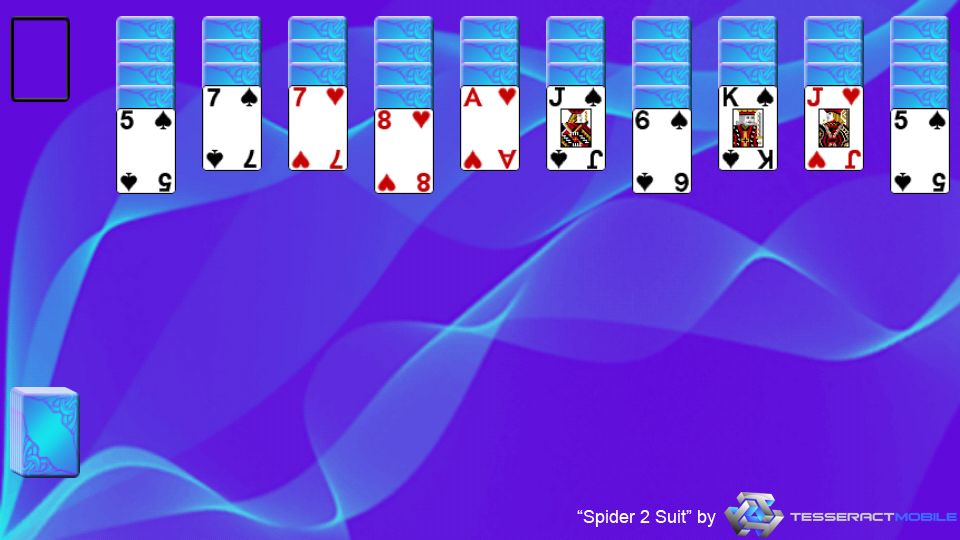
Spider Solitaire is one of the most popular and distinct variants. It is played with two standard 52-card decks, totaling 104 cards. The initial tableau consists of ten columns, with the first four columns containing six cards each and the remaining six containing five cards each. Only the bottom card in each column is face-up. The remaining 50 cards form a face-down stock pile. The objective is to build complete, descending sequences from King to Ace within a single suit on the tableau. Once a full sequence is assembled, it is automatically moved to a foundation pile. The game is won when all eight foundation sequences are completed. The game offers three difficulty levels. The easiest version uses only one suit. The medium-difficulty version uses two suits. The hardest and classic version uses all four suits. The name 'Spider' is derived from the eight foundation piles. Strategic play involves exposing face-down cards and creating empty columns. Building in-suit sequences is always preferable as they can be moved as a unit. The game is a member of the 'spiders' family within the half-open games classification.
Win Rates and Strategic Considerations
Statistical analysis of online solitaire play provides data on the difficulty of various games. These win rates offer players a benchmark for performance. Success in solitaire hinges on strategic planning and calculated risk-taking. Effective strategies involve maximizing face-up cards, creating empty tableau columns, and managing the draw pile. For Klondike, a primary strategy is to move an Ace or Deuce to the foundation as soon as it appears. Players should avoid filling tableau spaces prematurely. In Spider, key tactics include trying to create an empty column as soon as possible. Building in-suit sequences is always preferable to mixed-suit sequences. Since not all deals are winnable, part of the skill is recognizing when to restart. Patience sorting is a computer algorithm named after the card game genre.
| Game Variant | Key Rule | Approximate Win Rate |
|---|---|---|
| Klondike Solitaire (Turn 1) | Draw one card from stock at a time | 33.0% |
| Klondike Solitaire (Turn 3) | Draw three cards from stock at a time | 11.1% |
| Spider Solitaire (1 Suit) | Uses cards from a single suit only | 52.29% |
| Spider Solitaire (2 Suits) | Uses cards from two suits | 16.6% |
| Spider Solitaire (4 Suits) | Uses all four suits (standard) | 6.2% |
Key Historical Publications and Authors
The documentation and spread of solitaire games were heavily influenced by publications from the 19th and early 20th centuries. These books collected, described, and often invented new variants. The authors ranged from aristocratic enthusiasts to professional game writers. Lady Adelaide Cadogan's work was reprinted several times. Mary Whitmore Jones's first book, Games of Patience for One or More Players, appeared in 1888. Dick's Games of Patience was a popular American collection from 1883. Before the 19th century, there were no literary mentions in large game compendia like Charles Cotton's The Compleat Gamester (1674). An 1895 account describes a variant used exclusively for cartomancy.
- 1783: First known description in the German anthology Das neue Königliche L'Hombre-Spiel.
- 1826: First known book dedicated to solitaire published in Russia.
- 1860: Patience by 'Perseverance' (William Henry Cremer) published in London.
- 1869: Patience: A Series of Games with Cards by Ednah Dow Littlehale Cheney, the first American treatise.
- c. 1870: Illustrated Games of Patience by Lady Adelaide Cadogan, a foundational English-language collection.
- 1888 to 1911: Multiple volumes by Mary Whitmore Jones, documenting around 250 games.
- 1883: Dick's Games of Patience published, another popular American collection.
- 1895: Account of a solitaire variant used for cartomancy.
Questions about Solitaire
How do you play classic Klondike Solitaire?
Klondike Solitaire uses a standard 52-card deck. The game begins with a tableau of seven columns: the first has one card, the second two, and so on, with only the top card face-up. The goal is to build four foundation piles, one per suit, in ascending order from Ace to King. On the tableau, you can build descending sequences of alternating colours. You draw cards from the stock pile to find playable cards. The game is won when all cards are moved to the foundation piles. The foundation card is often an Ace.
What is Spider Solitaire and how is it played?
Spider Solitaire is a popular variant played with two decks (104 cards). Ten tableau columns are dealt, with the bottom card face-up. The goal is to build eight complete, descending sequences from King to Ace within a single suit directly on the tableau. Completed sequences are automatically moved to a foundation. You draw ten new cards from the stock when no moves remain. The game has three difficulty levels based on using one, two, or all four suits. It is a member of the 'spiders' family of half-open games.
What are the odds of winning a game of solitaire?
Win rates vary by game and rules. For Klondike Solitaire where one card is turned from the stock at a time (Turn 1), the win rate is approximately 33.0%. For Turn 3, it drops to about 11.1%. For Spider Solitaire, the win rate for the one-suit version is 52.29%, for two suits it is 16.6%, and for the four-suit version it is 6.2%. These figures are based on statistical analysis of online games. Not all deals are winnable, which is part of the challenge.
What is the difference between solitaire and patience?
The terms solitaire and patience refer to the same genre of card games, but 'patience' is the original and more precise name. The word patience derives from the games being seen as an exercise in patience. Although 'solitaire' became common in North America, it can also refer to non-card games like peg solitaire. In practice, the name 'solitaire' is often used to refer specifically to Klondike. Internationally, authors tend to include both terms. American games authors Wood and Goddard define patience as any game played with cards where the object is to arrange them in systematic order.
Can you play solitaire for free online?
Yes, numerous websites offer free, instant play directly in a web browser without downloads. Popular platforms like Solitaire Bliss host over 30 games including Klondike, FreeCell, and Spider Solitaire. These online versions provide features like unlimited undos and daily challenges. The games are often supported by advertising or optional premium subscriptions. Some electronic versions are produced under proprietary names different from the actual game name. This digital availability has contributed to a renaissance for solitaire games.
Why is it called 'patience'?
The genre is called 'patience' because the games are seen as an exercise in patience. Successfully arranging or discarding an entire shuffled deck is a difficult task. Players must be prepared for many failures, sometimes occurring when very close to winning. This requirement for calm persistence gave the genre its earliest recorded name. The endeavour to arrange, pair, or combine the cards of a whole pack varies in difficulty according to the rules of the particular game.
Sources and further reading
- Solitaire (Wikipedia)
- Solitaire, Play Online for Free (solitairebliss.com)
- Solitaire - 2026 - App Store, Apple (apps.apple.com)
- Solitaire, Play Online & 100% Free (solitaired.com)
- Spider Solitaire for Nintendo Switch (nintendo.com)
- Spider Solitaire (cmccanada.org)
- Spider Solitaire 247 - Play Free Spider Solitaire Card Games Online (247spidersolitaire.com)
Checked by the Nosy Mag desk. Last updated 2026-11-07.