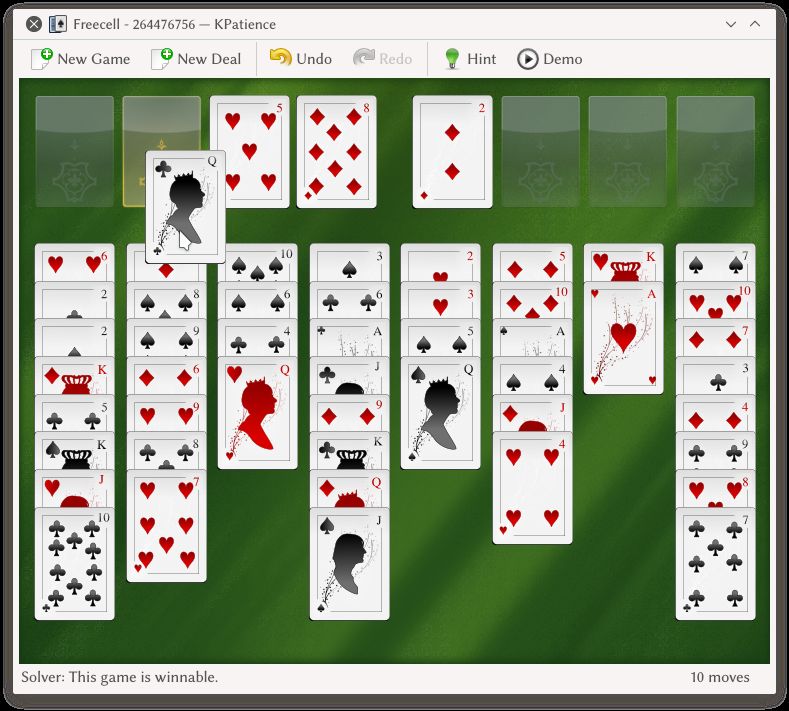
Napoleon at St Helena
Napoleon at St Helena is a classic two-deck patience or solitaire card game for one player, renowned for its challenging nature and historical lore. It is famously associated with the French emperor Napoleon Bonaparte, who is said to have played this game during his final exile on the remote island of St Helena from 1815. In Canada and the United States, the game is more commonly known as Forty Thieves or Big Forty, and it remains a staple in digital and physical solitaire collections. The game requires significant strategic planning but is heavily influenced by luck, with an estimated win rate of only one in ten games. Its enduring popularity has spawned a large family of variant games designed to alter the difficulty and play experience.
Historical Origins and Names
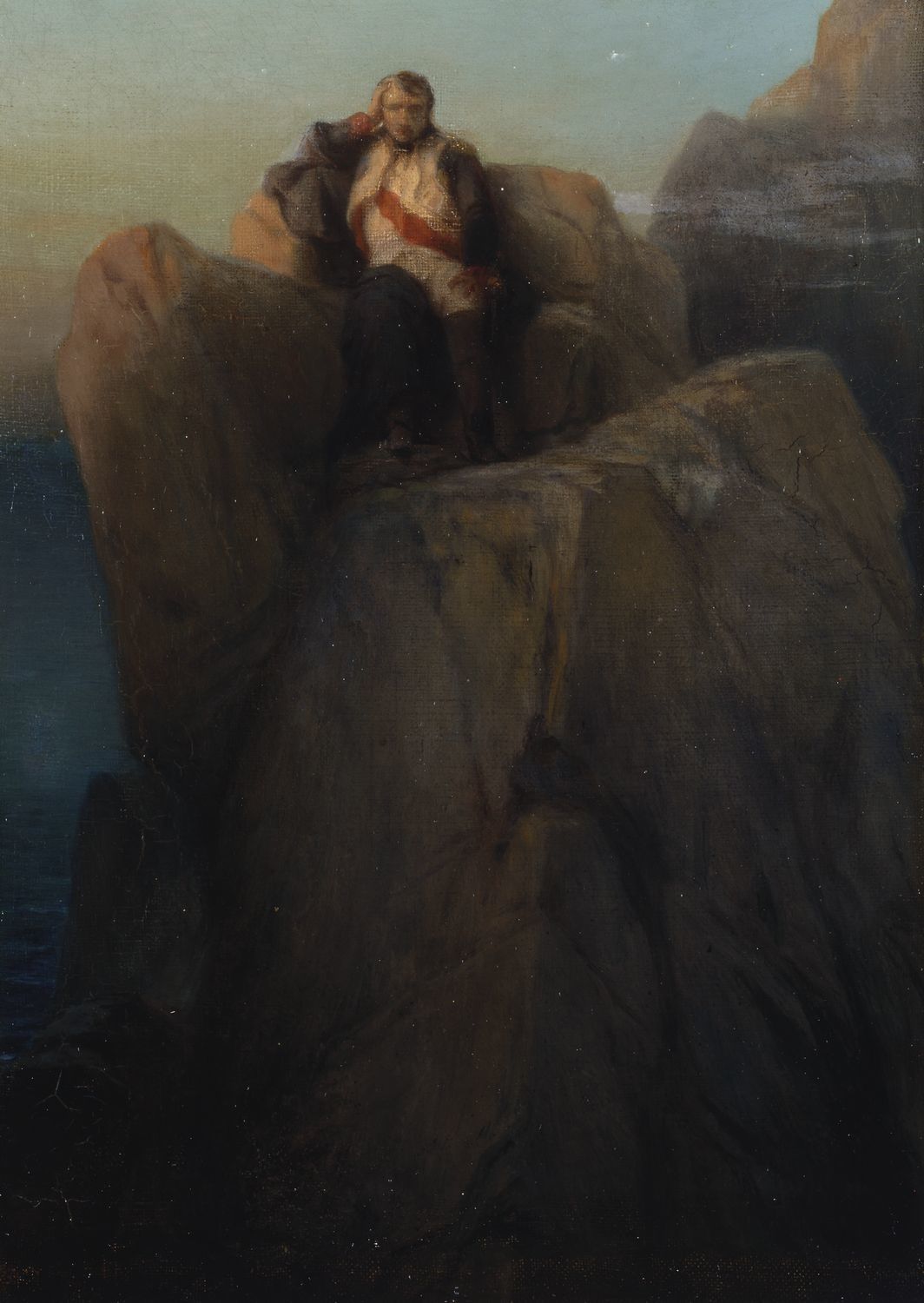
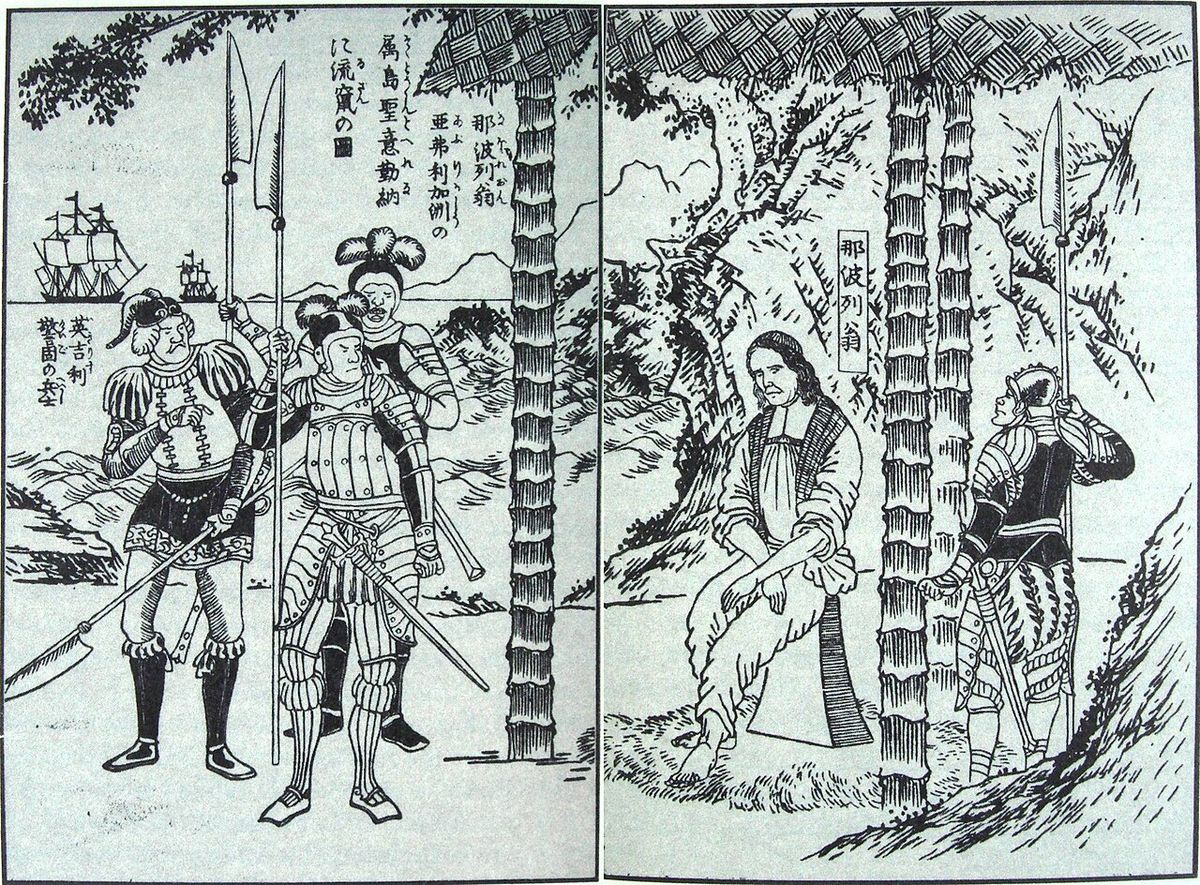
The game's connection to Napoleon Bonaparte dates to at least 1870, when Annie Henshaw described it in her book Amusements for Invalids as a favourite of the emperor during his exile. This association, while popular in legend, is debated by historians like David Parlett, who question whether Napoleon played solitaire at all. The game appeared frequently in late 19th-century patience collections, with Lady Adelaide Cadogan recording it in 1874 under the French name Le Cadran, suggesting a possible French origin. By the 1920s, American sources began using the names Big Forty and Forty Thieves, reflecting the forty cards dealt to the tableau. Another American name, Roosevelt at San Juan, was first recorded by Helen Leslie Coops in 1939. The game continues to be compiled in solitaire rulebooks, often under its Napoleonic title, though Peter Arnold revived the name Le Cadran in his 2011 book Card Games for One to honour this earlier historical strand. Early American sources from the 1920s also documented early variant forms based on the size of the tableau, including Twenty-Four Card Tableau, Twenty-Eight Card Tableau, Thirty-Two Card Tableau and Thirty-Six Card Tableau. The name Forty Thieves itself is derived from the forty cards dealt face up at the start, each metaphorically representing a thief obstructing the player's path to victory. The persistence of multiple names across centuries demonstrates the game's broad appeal and the blending of historical anecdote with descriptive gameplay features.
Standard Rules and Setup
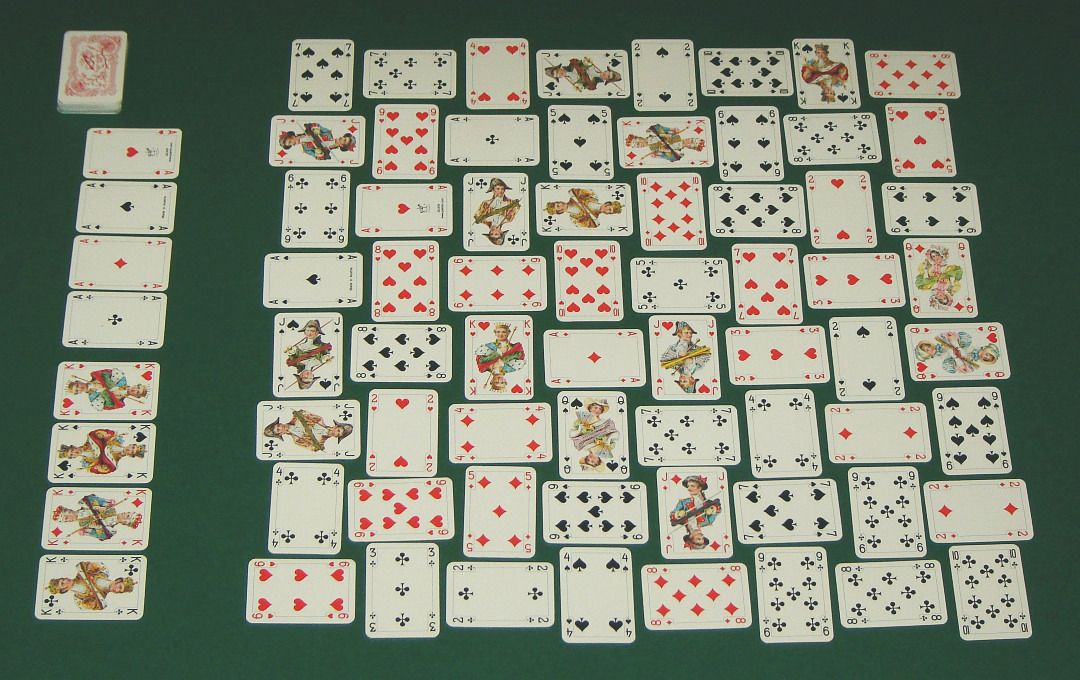
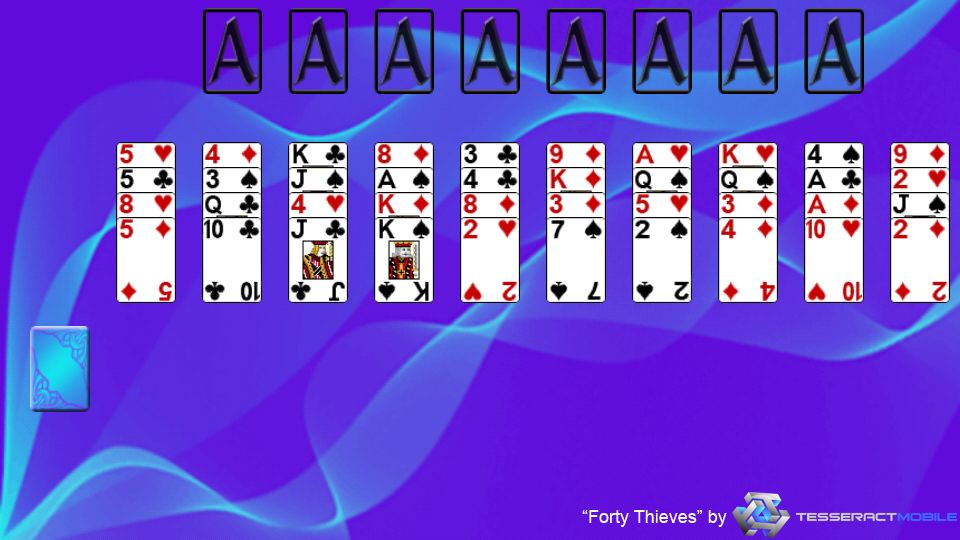
Napoleon at St Helena is played with two standard 52-card decks shuffled together, making a total of 104 cards. The player begins by dealing forty cards face up into a tableau of ten columns, with each column receiving four cards. The cards are dealt by rows and should overlap so that all are visible. Space is reserved above the tableau for eight foundation piles. The remaining sixty-four cards form the stock, which is placed face down. The primary objective is to build all eight foundations up in suit from ace to king. Aces are moved to the foundation row as soon as they become available from the tableau or stock. In the tableau, building is done down by suit, meaning only a card of the same suit and one rank lower can be placed on another card. For example, only the six of clubs can be placed on the seven of clubs.
Only the top card of any tableau column is available for play. When a card is moved, it reveals the card beneath it. If an entire column becomes empty, the space may be filled with any single available card from the tableau, waste pile, or stock. The player draws cards from the stock one at a time. Each drawn card may be played directly to the tableau or a foundation. If it cannot be used, it is placed face up on a waste pile, of which only the top card is available for play. A critical rule is that the stock may be gone through only once, with no redeals permitted. The game is won if all 104 cards are successfully moved to the foundations. The game ends in a loss when no further legal moves are possible. The rule that only one card can be moved at a time, prohibiting the transfer of built sequences, is a defining characteristic that increases the game's difficulty. This structure demands careful planning to avoid burying lower-ranking cards beneath higher ones, as uncovering them requires moving all intervening cards individually to other columns or foundations.
Gameplay Strategy and Difficulty
Success in Napoleon at St Helena depends significantly on the initial deal and the order of cards in the stock, making luck a major factor. The winning chances have been estimated as 1 in 10 games, with success typically dependent on the player's ability to clear one or more columns. The key to winning often lies in clearing one or more columns to create empty spaces, which act as temporary holding cells for key cards and facilitate deeper access to the tableau. Players must prioritize moving aces and low cards to the foundations early to create building space. Strategic sequencing involves planning several moves ahead, considering which tableau cards to expose and which to keep blocked. Because sequences cannot be moved as a unit, every card must be moved individually, requiring meticulous planning to avoid trapping important cards. The limited access to the stock, with no redeal, means every drawn card must be used judiciously.
The initial layout of forty face-up cards presents immediate obstacles, as many necessary aces and low cards may be buried under higher-ranking cards in deep columns. Effective strategy involves a constant evaluation of which column to clear first, often targeting columns with visible aces or those with the fewest cards blocking access to useful ranks. Players must also decide when to use an empty column space, as filling it prematurely can limit future options. Monitoring the waste pile is crucial, as its top card is the only one accessible from that stack, making the order of discards from the stock a critical element of luck. The following list outlines key strategic priorities for players attempting to improve their odds.
- Create Empty Columns: Clearing an entire column provides a flexible space to temporarily hold any card, which is essential for rearranging the tableau.
- Build Foundations Early: Move aces and deuces to the foundations as soon as possible to increase available space in the tableau and reveal new cards.
- Expose Buried Cards: Plan moves to uncover cards trapped beneath others, especially low cards and aces needed for foundation starts.
- Conserve Stock Cards: Since there is no redeal, avoid drawing from the stock until necessary, and try to use drawn cards immediately.
- Manage the Waste Pile: Be aware that only the top waste card is playable, so avoid burying useful cards under others when discarding from the stock.
- Plan Sequence Unbuilding: To access a lower card, you must move all cards above it individually to other columns or foundations, so plan these transfers efficiently.
Major Variants and the Game Family
As the progenitor of a large family of similar games, Napoleon at St Helena has inspired numerous variants, most designed to increase the odds of winning. Common modifications include dealing the aces to the foundations at the start, building the tableau down by alternating colour instead of by suit, and allowing sequences of cards built down to be moved together as a unit. Other variations involve changing the number of tableau piles or cards per pile, dealing some cards face down, or allowing multiple cards from the waste pile to be used. The family includes both single-pack and double-pack variants, each with distinct rules and win rates. The proliferation of these games demonstrates the enduring desire to adapt the core challenge of Forty Thieves to different skill levels and preferences.
- Single-pack variants: Canister uses one deck with six rows of eight cards. Martha uses one deck with aces pre-placed and a mix of face-down and face-up rows. Westcliff is an American variant with three rows, the first two face down, and allows moving sequences.
- Double-pack variants: Deauville deals the first three rows face down and builds by alternating colour. Emperor allows worrying back cards from foundations to the tableau. Indian builds down by any suit other than the card's own. Josephine permits moving sequences of the same suit built down. Lucas pre-places the aces as foundations. Maria uses four rows of nine cards and builds by alternating colour. Number Ten allows moving sequences as a unit. Octave deals eight grace cards below the tableau for additional play. Rank and File only exposes the top card of each face-down row. Red and Black has a high win rate of five in six.
- Triple-pack variant: Sixty Thieves uses three decks and deals twelve columns of five cards each.
Other closely related games in the family include Congress, Diplomat, Napoleon's Square, Corona, Blockade, and the simpler Busy Aces. The variant known as Josephine is particularly notable as even its small change of allowing correctly ranked piles to be moved vastly improves the odds of winning. The existence of a variant like Roosevelt at San Juan shows how the game's theme was adapted to other historical figures in different cultural contexts. This extensive family tree ensures that whether a player seeks a near-impossible challenge or a more manageable puzzle, there is a version of this solitaire to suit them.
Digital Availability and Modern Play
Napoleon at St Helena, under its common name Forty Thieves, is widely available in digital formats for modern players. Numerous websites, such as Solitaire Network, offer free browser-based versions that require no download or registration, allowing instant play. These digital implementations often include features like unlimited undo, auto-complete functions, and detailed game statistics. In 2026, a dedicated Forty Thieves Solitaire Collection was released for the Nintendo Switch, bundling twenty popular Forty Thieves variants including Ali Baba, Busy Aces, Red and Black, and the standard Forty Thieves game. The collection supports the console's full functionality and includes rule sets for each variant. Online platforms like Green Felt also host the game, with code licensed under the GNU Free Documentation License and material adapted from Wikipedia. These digital versions have helped maintain the game's popularity, allowing new generations to experience this challenging classic solitaire.
The features of digital versions significantly enhance the play experience by mitigating some of the frustration inherent in such a luck-based game. Common digital tools include keyboard shortcuts for functions like auto-finish, undo, redo, and flipping stock cards. Many sites also incorporate card-finder features that highlight all cards of a specific rank or suit when keys are pressed. Mouse controls allow for super moves, where dragging a card can automatically move all cards above it to make the move valid. The Nintendo Switch collection emphasizes accessibility with its unlimited undo and auto-complete options. The online presence is extensive, with sites like Solitaire Network reporting that the game is a popular choice despite its low win rate, indicating a dedicated player base drawn to its enduring challenge.
Comparative Odds of Winning for Select Variants
The difficulty of Napoleon at St Helena and its variants is often quantified by their estimated odds of winning. These odds highlight how rule changes significantly affect a player's chance of success. The standard game is notoriously tough, while some variants are designed to be much more forgiving. The following table compares the win rates for several well-known double-pack variants, as recorded in solitaire literature.
| Variant Name | Estimated Odds of Winning | Key Rule Difference from Standard Game |
|---|---|---|
| Napoleon at St Helena (Standard) | 1 in 10 | Baseline rules: build down by suit, no sequence moves. |
| Indian | 1 in 2 | Build down by any suit except the card's own. |
| Lucas | 1 in 3 | Aces removed to foundations before dealing. |
| Maria (Thirty-six Card Tableau) | 1 in 8 | Four rows of nine cards. Build down by alternating colour. |
| Limited | 1 in 5 | Three rows of twelve cards each. |
| Rank and File (Dress Parade) | 1 in 2 | First three rows face down. Sequences can be moved. |
| Red and Black | 5 in 6 | Eight columns built down by alternating colour. |
As shown, variants that allow building by alternating colour or moving sequences generally offer better odds. The high win rate for Red and Black makes it one of the easiest variants in the family, while the standard game remains a test of patience and favourable card distribution. The odds for Limited and Maria show that even changes to the tableau size can impact difficulty. The variant Emperor includes the unique rule of worrying back cards from foundations to the tableau, a strategic option not found in the base game. These quantified odds provide players with a clear guide when selecting a version that matches their desired level of challenge.
Rules Summary and Key Constraints
The core rules of Napoleon at St Helena establish a framework that is both simple to learn and difficult to master. The game's constraints are what define its character and high difficulty level. Understanding each rule's implication is crucial for effective play. The following list enumerates the fundamental rules and their direct consequences on gameplay.
- Two Decks (104 cards): The double deck increases complexity and the number of cards to manage compared to single-deck solitaires.
- Tableau of 40 Cards: Ten columns of four face-up cards are dealt, creating the initial puzzle where many cards are buried.
- Build Tableau Down by Suit: Cards can only be placed on a card of the same suit and next-higher rank, restricting movement options.
- Build Foundations Up by Suit: Eight piles must be completed from ace to king, the ultimate goal of the game.
- Move Only Top Cards: Only the exposed card of each column is available, preventing access to buried cards without first moving those above them.
- Fill Empty Spaces with Any Card: A cleared column can be filled with any single available card, a critical tactical resource.
- Stock Used Once, No Redeal: Sixty-four cards are drawn one at a time and cannot be recycled, making every draw consequential.
- Waste Pile Top Card Available: Only the most recently discarded card from the stock is playable, limiting access to the waste pile.
These rules combine to create a game where foresight is paramount. The prohibition on moving built sequences as a unit (except in variants like Josephine) means that to access a low card buried deep in a column, a player must find temporary homes for every card above it, one by one. The single pass through the stock eliminates a common safety net found in other solitaires, turning each decision with a drawn card into a potential point of no return. Mastery involves not just knowing these rules but internalizing their interactions to work within the tight constraints toward a successful outcome.
Questions about Napoleon at St Helena
What is the difference between Forty Thieves and Napoleon at St Helena?
Forty Thieves and Napoleon at St Helena are two names for the same classic two-deck solitaire game. The name Napoleon at St Helena references the legend that Napoleon Bonaparte played it during his exile. In North America, the game is most commonly called Forty Thieves or Big Forty. The rules are identical: using 104 cards, dealing ten columns of four face-up cards, building foundations up by suit, and building the tableau down by suit with only one pass through the stock.
How do you win at Forty Thieves solitaire?
To win Forty Thieves, you must move all 104 cards to the eight foundation piles, building each up in suit from ace to king. Key strategies include creating empty columns by clearing all cards from a tableau pile, as these spaces can hold any single card and are crucial for manoeuvring. Prioritize moving aces and low cards to the foundations early to free up space. Plan moves carefully to expose buried cards, and remember you can only go through the stock once, so use each drawn card wisely. The win rate is low, estimated at one in ten games, due to the heavy influence of luck in the initial deal.
Can you play Forty Thieves solitaire online for free?
Yes, Forty Thieves solitaire is widely available to play online for free on numerous websites. Platforms like Solitaire Network offer instant play in a web browser with no need for downloads, plug-ins, or registration. These digital versions often include helpful features such as undo options, auto-complete functions, and game statistics. The game is also part of larger digital collections, such as the Forty Thieves Solitaire Collection released for the Nintendo Switch in 2026, which includes twenty different variant games.
What are the rules for building in the tableau in Forty Thieves?
In the tableau of Forty Thieves, you build cards down by suit. This means you can only place a card on top of another card if it is of the same suit and is exactly one rank lower. For example, you can place the seven of hearts only on the eight of hearts. Only the top card of each tableau column is available to be moved. You cannot move sequences of cards as a unit in the standard game. If a column becomes completely empty, you may fill that space with any single available card from the top of another column, the waste pile, or a newly drawn card from the stock.
What is the hardest variant of Forty Thieves?
The standard game of Napoleon at St Helena, or Forty Thieves, is considered one of the hardest variants due to its strict rules. It requires building down by suit in the tableau, allows no redeal of the stock, and prohibits moving sequences of cards. With an estimated win rate of only one in ten, it presents a significant challenge. Variants like Josephine, which allow moving sequences of the same suit, or Red and Black, which builds by alternating colour, are specifically designed to be easier and have much higher win rates, making the original arguably the most difficult core version.
Is there a Forty Thieves solitaire app for Nintendo Switch?
Yes, a dedicated Forty Thieves solitaire app was released for the Nintendo Switch. Titled Forty Thieves Solitaire Collection, it bundles twenty popular Forty Thieves variant games into one software package. The collection includes the standard Forty Thieves game alongside variants like Ali Baba, Busy Aces, Red and Black, Miss Milligan, and Thieves of Egypt. The app features unlimited undo, auto-complete, game statistics, and rules for each variant. It was released in 2026 and is fully compatible with the Nintendo Switch console's functionality.
Sources and further reading
- Napoleon at St Helena (Wikipedia)
- Napoleon at St. Helena (bicyclecards.com)
- Forty Thieves (Napoleon at St. Helena) (denexa.com)
- Napoleon Card Game, Solitaire Games (isolitairegames.com)
- Forty Thieves Solitaire (greenfelt.net)
- Forty Thieves Solitaire (games.aarp.org)
- Forty Thieves Solitaire, Play Instantly! (solitairenetwork.com)
Checked by the Nosy Mag desk. Last updated 2026-11-10.