Mahjong solitaire
Mahjong solitaire is a single-player tile-matching puzzle game played with a set of 144 traditional mahjong tiles. Although it shares its tiles with the classic four-player game, its solitaire gameplay is entirely distinct, focusing on clearing a pre-arranged board by removing matching pairs of exposed tiles. For Canadian players, it has become a popular digital pastime, offering a relaxing yet mentally engaging challenge accessible through countless free online platforms and mobile apps. The game's appeal lies in its simple rules, strategic depth, and the process of clearing classic layouts such as the 'Turtle'.
Gameplay and Rules
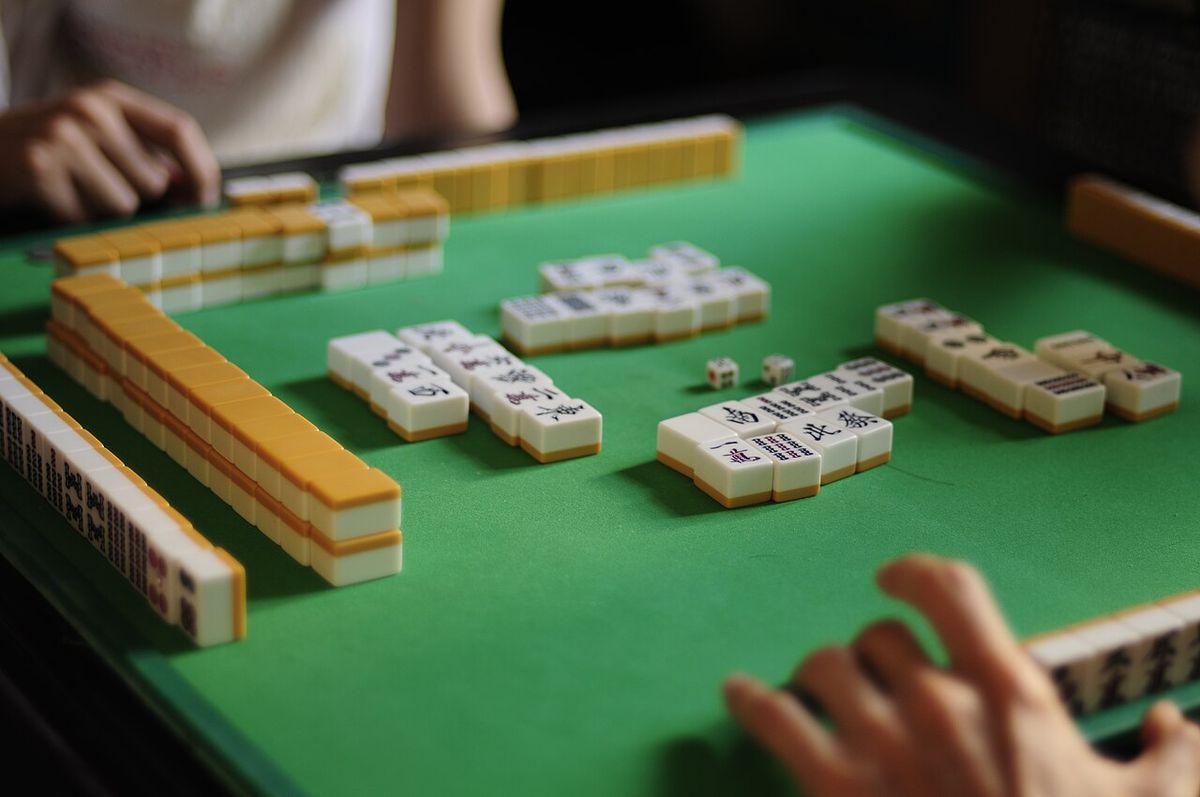
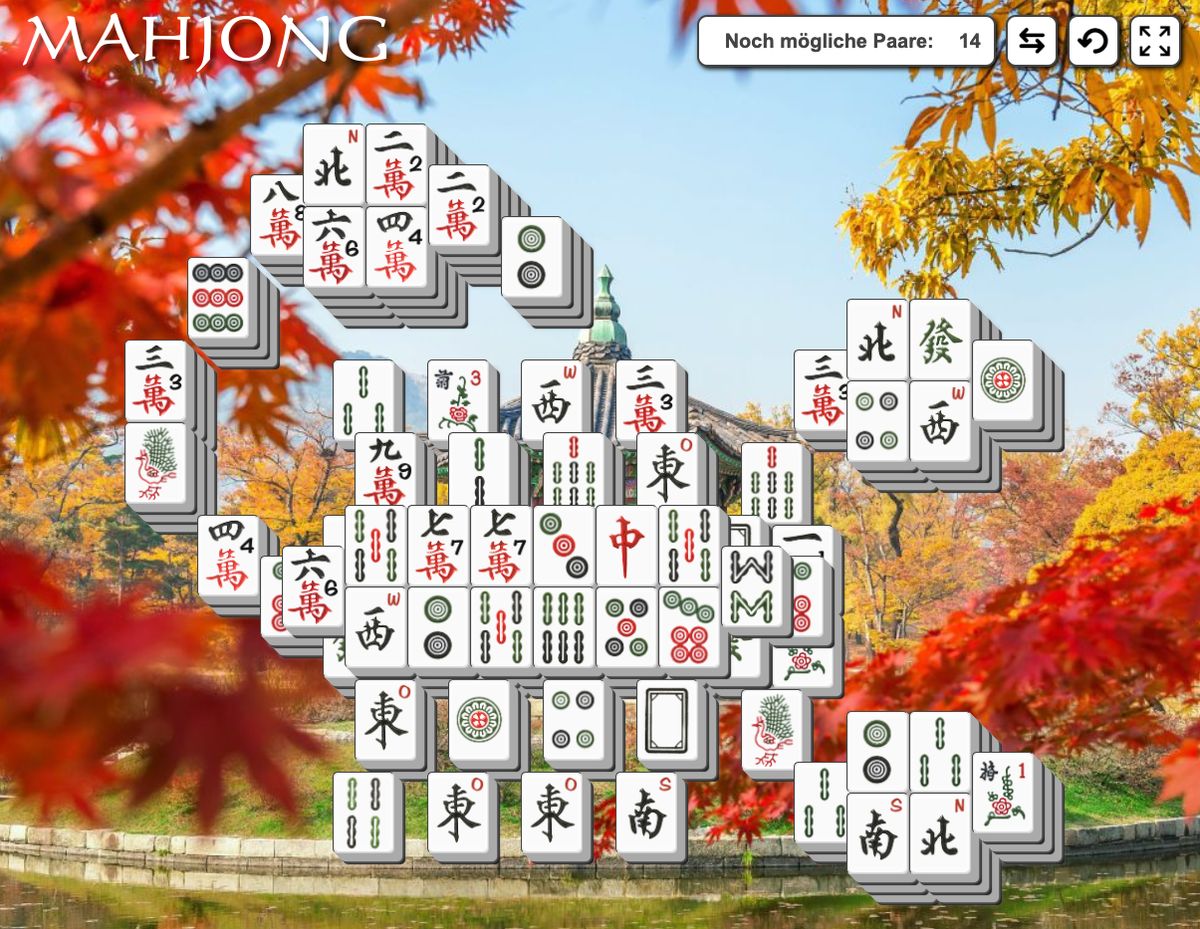
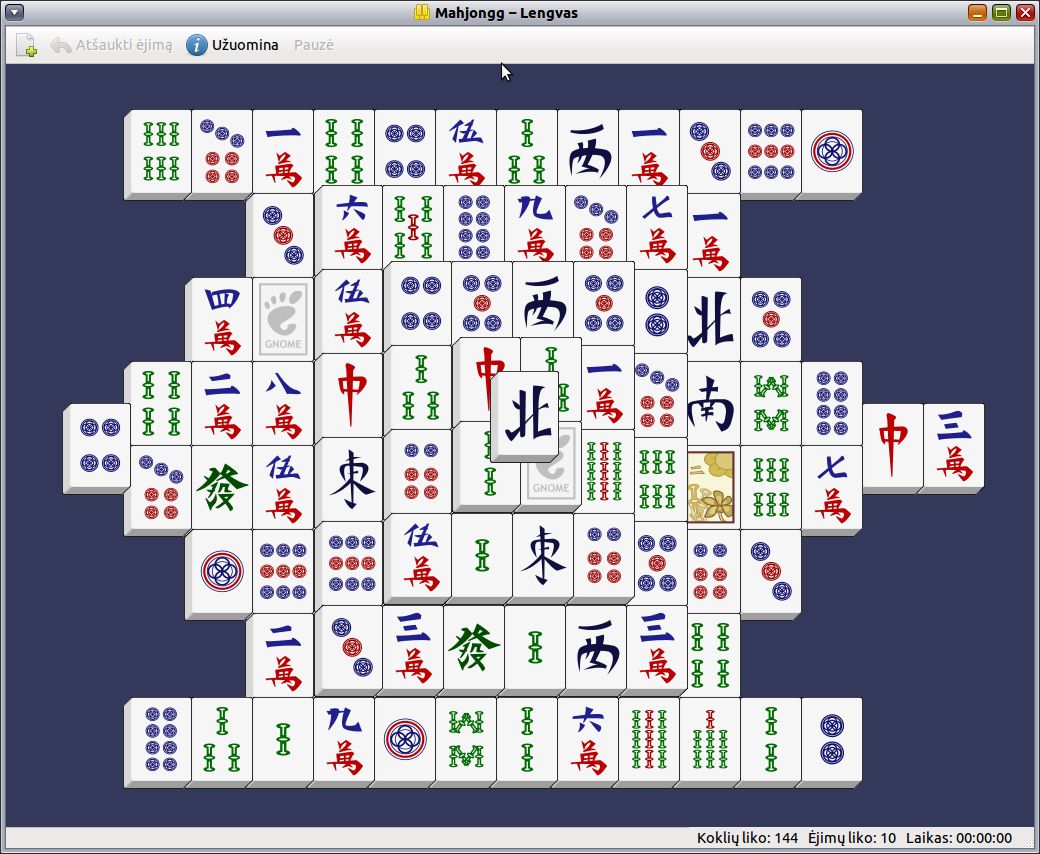
Mahjong solitaire is played with a full set of 144 mahjong tiles arranged in a four-layer pattern with their faces upwards. The objective is to clear the entire board by removing pairs of identical tiles. A tile is considered open or exposed if it can be moved left or right without disturbing other tiles and has no tile stacked directly on top. Players must strategically select matching pairs from these open tiles to remove them, which then exposes the tiles beneath. The game is won when all pairs of tiles have been removed from the board. The game is lost if the remaining tiles contain no exposed pairs. This core rule creates the game's strategic challenge, as removing certain tiles can block access to others. Many digital implementations include an undo feature. Some versions also offer a shuffle function when no moves are available.
Scoring varies between implementations but often involves awarding points for each matched pair. Bonus points are frequently awarded for making matches in quick succession or for removing tiles that belong to specific sets, such as the dragon or wind suits. In partner or two-player variants, which appear in games like Clubhouse Games: 51 Worldwide Classics, the goal shifts to accumulating the most points or being the last player to make a valid match. The standard solo experience remains a race against one's own strategy to achieve a perfect clear.
Tile Sets and Suits
The 144 tiles used in mahjong solitaire are divided into several distinct suits and categories, which dictate matching rules. The three primary numerical suits each contain four identical sets of nine tiles, numbered one through nine. The Stone or Dots suit features circular designs, the Bamboo suit uses line patterns, and the Characters suit displays Chinese numerals. For these three suits, players must match tiles that are identical in both suit and number. The Honour suit contains two subgroups that also require identical matches. The Dragon tiles consist of four sets of three distinct tiles. The Wind tiles consist of four sets of four distinct tiles representing the four cardinal directions. Matching any of these honour tiles requires finding an exact duplicate.
The final category is the Bonus tiles, which include four distinct Flower tiles and four distinct Season tiles. Unlike the other suits, the matching rule for Bonus tiles is more flexible. Players can match any Flower tile with any other Flower tile, and any Season tile with any other Season tile. They do not need to be identical. This rule provides crucial flexibility during gameplay. To assist players, many digital versions offer a tile label feature that clearly identifies each tile's suit and value.
History and Digital Evolution
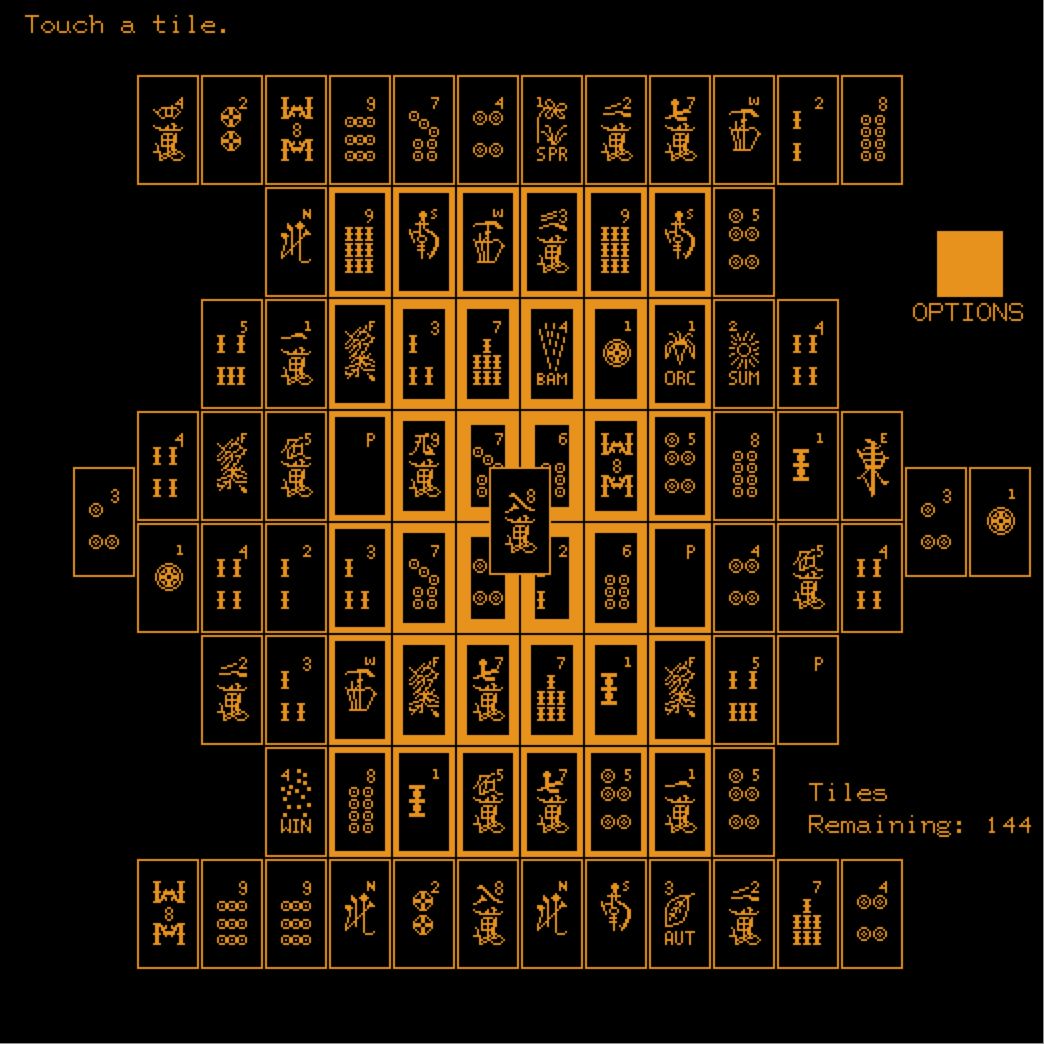
The digital version of mahjong solitaire was first created in 1981 by programmer Brodie Lockard on the PLATO educational computer system. He named his game Mah-Jongg and designed it for use with a CDC-721 touch screen terminal, releasing it for free. The game's major commercial breakthrough came in 1986 when Activision published it under the title Shanghai for the IBM PC, Commodore Amiga, Macintosh, Atari ST, and Apple IIGS. Activision marketed it as being based on a centuries-old Chinese game called 'the Turtle', a claim not made by Lockard himself. Activision's Shanghai was a massive success, selling approximately 10 million copies. The Macintosh version was implemented by Lockard, and the Apple IIGS version was ported by Ivan Manley with Brad Fregger as producer.
Following this success, the game was ported to numerous other platforms. A version named Taipei was included in the Microsoft Entertainment Pack for Windows 3.x in 1990 and later in the Best of Windows Entertainment Pack. Premium editions of Windows Vista and Windows 7 included a version called Mahjong Titans. In the modern era, mahjong solitaire has thrived as a free-to-play online and mobile game. Major platforms include Arkadium, which hosts a traditional version. The game continues to be included in curated collections, such as in Clubhouse Games: 51 Worldwide Classics for the Nintendo Switch, which notably features a two-player competitive mode. Its adaptation into social puzzle games like Mahjong Trails also demonstrates its ongoing relevance in digital gaming.
Common Layouts and Difficulty
Mahjong solitaire games are defined by their starting layout, which is the specific three-dimensional arrangement of the 144 tiles. These layouts, often given thematic names, present varying levels of challenge. The most famous and historically significant layout is 'the Turtle', which was the default in Activision's original Shanghai game. Other common layouts include the Fish, the Bird, the Gate, and the Triangle, each with a unique shape and tile distribution. The difficulty of these layouts is not uniform. Statistical analysis of the classic Turtle layout indicates it has a win rate of approximately 14.17 percent when played optimally. This means that even with perfect play and the ability to see under tiles, only about one in seven Turtle games is theoretically solvable.
An analysis of ten million games with the default Turtle layout found that about 3 percent of the games cannot be solved even when looking below tiles is allowed. The other common layouts are generally considered more challenging. This inherent difficulty stems from the mathematical complexity of the game, where a single early move can determine whether the entire puzzle can be completed. Digital versions frequently expand on these classic layouts by offering dozens or even hundreds of different patterns. Players can typically choose a layout based on their desired challenge level, from simple, flat arrangements to complex, multi-tiered structures. Many games offer a series of different layouts with varying levels of difficulty, which are usually given names such as 'the ox' or 'the snake'.
Digital Features and Variations
Modern digital implementations of mahjong solitaire have introduced a wide array of features that enhance and vary the core gameplay. A standard feature in most versions is an undo function, allowing players to reverse their last move or a series of moves. Many games also include a hint system that highlights a possible match. Timers are another common addition, adding a layer of urgency, though many apps explicitly remove time limits. Developers have created numerous variations on the traditional theme to keep the game fresh. These include the ability to change the visual tile set from classic mahjong designs to themed items like jewels, flowers, or animals. The introduction of wildcard tiles or special tiles that can match with any other tile of its type is another popular twist. Some games increase the number of tile pairs or introduce entirely new symbols to create larger and more complex boards.
- Undo and Hint Systems: Standard tools for assistance and learning strategy.
- Themed Tile Sets: Visual alternatives to traditional mahjong art, such as jewels or animals.
- Special Tiles: Wildcards or flexibly matching bonus tiles.
- Guaranteed Winnable Boards: Algorithms that ensure a solution exists from the start.
- Shuffle Function: Rearranges remaining tiles to prevent dead ends, often with a score penalty.
- Time Attacks and Relaxed Modes: Different pacing options, from timed challenges to untimed relaxation.
- Multiplayer Modes: Competitive two-player or turn-based partner versions.
- Endless Puzzle Generators: Creating unlimited new layouts for continuous play.
Other common variations involve modifying the core rules. Some implementations guarantee a winnable board by not generating unsolvable layouts. The shuffle feature, when available, randomly rearranges the remaining tiles when no exposed pairs are left, making completion almost always possible but often at a score penalty. Multiplayer modes transform the experience into a competitive race for points or a turn-based challenge.
Strategic Considerations
Success in mahjong solitaire requires more than just spotting matching tiles. It demands foresight and planning. A fundamental strategy is to prioritize matches that open up the greatest number of new tiles or that free key tiles which are part of multiple identical pairs. Since the four identical tiles of each suit and number are often buried at different depths, players must think several moves ahead to avoid creating an impassable block. A common beginner mistake is to quickly match the most obvious exposed pairs without considering how that will affect access to the layers below. Experts recommend focusing on clearing tiles from the highest layers first to maximize the number of open tiles available.
It is also crucial to keep track of the number of remaining copies of each tile type. For instance, if only two of a particular dragon tile are left and both are buried, removing other tiles that block them becomes a high priority. The flexible matching rule for Flower and Season bonus tiles makes them powerful tools, as they can often be saved to clear a blockage later in the game when specific matches are unavailable. Players should also be mindful of the game's mathematical constraints. Analysis has shown that even with perfect information and optimal play, many layouts have a low probability of being solvable. This means that sometimes a game will be lost due to the initial arrangement, not player error. Utilizing available tools like undo functions allows for experimentation with different branching paths.
Availability and Platforms
Mahjong solitaire is ubiquitously available across virtually all modern digital platforms, typically as a free-to-play game. For web browsers, major gaming portals like CrazyGames and Arkadium offer instant-play versions that require no download or registration. Arkadium's version is notable for adhering to traditional rules. Dedicated sites provide a vast array of layouts and a weekly puzzle challenge, catering to both beginners and experienced players. On mobile devices, the game is a staple of both the Apple App Store and Google Play Store. Titles such as Mahjong Solitaire 2026 and Mahjong Solitaire Classic emphasize relaxation and brain training, often featuring offline play and scalable difficulty. Mahjong Club reports its mobile and online game has been enjoyed by over 35 million players globally.
The game also has a presence on dedicated gaming consoles and within operating systems. As mentioned, Mahjong Titans was included in premium editions of Windows Vista and Windows 7. It is also featured in compilation titles like Clubhouse Games: 51 Worldwide Classics for the Nintendo Switch. The major platforms and their characteristic versions are listed below, showing the game's broad accessibility.
| Platform | Example or Version | Notable Features |
|---|---|---|
| Web Browser | Arkadium Mahjongg Solitaire | Traditional rules, free online play |
| iOS / Apple | Mahjong Solitaire 2026 | Relaxation focus, brain training, offline play |
| Android | Mahjong Solitaire Classic | Classic gameplay, free download, various layouts |
| Windows OS | Mahjong Titans (Vista/7) | Pre-installed in premium OS editions, multiple layouts |
| Nintendo Switch | Clubhouse Games compilation | Includes a two-player competitive version |
| Historic PC | Activision's Shanghai (1986) | Commercial original, sold ~10 million copies |
The computer game has been ported to many different platforms since its original creation. It was originally created on the PLATO system and later released for the IBM Personal Computer, Commodore Amiga, Macintosh, Atari ST, and Apple IIGS. A version was included in the Microsoft Entertainment Pack for Windows 3.x under the name Taipei. The game is also available as a free online game on websites and as apps on Google Play and the Apple App Store.
- Web Browser: Arkadium Mahjongg Solitaire offers traditional rules and free online play with no shuffles.
- iOS / Apple: Mahjong Solitaire 2026 focuses on relaxation, brain training, and offline play.
- Android: Mahjong Solitaire Classic provides classic gameplay as a free download with various layouts.
- Windows OS: Mahjong Titans came pre-installed in premium editions of Windows Vista and 7.
- Nintendo Switch: Included in Clubhouse Games: 51 Worldwide Classics with a two-player competitive version.
- Historic PC: Activision's Shanghai (1986) was the commercial original, selling around 10 million copies.
Questions about Mahjong solitaire
How do you play mahjong solitaire?
Mahjong solitaire is played by matching and removing pairs of identical tiles from a stacked layout of 144 mahjong tiles. A tile can only be matched if it is 'free', meaning it can be moved left or right without disturbing other tiles and has no tile on top. The primary goal is to clear the entire board by removing all tile pairs. The game is lost if you reach a state where no exposed, matching pairs remain, which creates the strategic challenge of planning moves to avoid blocking access to tiles needed later.
What is the difference between mahjong and mahjong solitaire?
Mahjong is a traditional four-player game of skill, strategy, and chance that involves drawing and discarding tiles to build specific sets, similar to rummy. Mahjong solitaire is a single-player puzzle game that uses the same set of 144 tiles but with completely different rules. In solitaire, the tiles are pre-arranged in a layout, and the sole objective is to clear the board by matching exposed pairs. There is no drawing, discarding, or interaction with other players in the solitaire version.
Is mahjong solitaire good for your brain?
Yes, mahjong solitaire is widely considered a beneficial brain training exercise. As a puzzle game, it challenges and enhances cognitive skills such as pattern recognition, strategic planning, visual memory, and problem-solving under constraints. The need to think several moves ahead to avoid creating unsolvable blocks provides a consistent mental workout. Many modern apps are explicitly marketed for relaxation and cognitive exercise, particularly for seniors and adults seeking to maintain brain health and acuity.
Where can I play mahjong solitaire for free online?
You can play mahjong solitaire for free on numerous websites without any download or registration. Popular options include Arkadium, which offers a traditional version with no shuffle feature, and gaming portals like CrazyGames which host free, browser-based versions with modern visuals. Dedicated sites like MahjongClubGame.com provide a vast array of layouts and a weekly puzzle challenge. These sites are accessible on both desktop and mobile web browsers, providing instant access to the classic puzzle game.
What are the hardest and easiest layouts in mahjong solitaire?
The difficulty of a layout depends on its specific tile arrangement. The classic 'Turtle' layout has an estimated win rate of about 14.17 percent with optimal play, but an analysis of ten million games found about 3 percent are unsolvable even with perfect information. Layouts like the 'Gate' or complex custom designs typically have lower win rates, often below 10 percent, making them harder. Easier layouts are usually flatter, with fewer overlapping tiles and more immediately exposed pairs. Most digital games offer a range from 'Easy' to 'Expert' layouts to suit different skill levels.
Can you always win a game of mahjong solitaire?
No, you cannot always win a game of mahjong solitaire. Due to the mathematical complexity of the tile arrangements, many games are inherently unsolvable from the start, regardless of player skill. Analysis of the default 'Turtle' layout shows that only about 3 percent of the games cannot be solved even when looking below tiles is allowed. This intrinsic unsolvability is a core part of the game's challenge. Many digital versions now generate only winnable boards, and others offer a shuffle function to rescue a stuck game, but in traditional play, a loss is always a possibility.
Sources and further reading
- Mahjong solitaire (Wikipedia)
- Mahjong Solitaire 2026 - App Store, Apple (apps.apple.com)
- Mahjong Club, Free Majong Solitaire Puzzle Game (mahjongclubgame.com)
- Mahjong Solitaire, Play Online & 100% Free (solitaired.com)
- Mahjongg Solitaire 🀄 Play on CrazyGames (crazygames.com)
Checked by the Nosy Mag desk. Last updated 2026-11-10.