Euchre
Euchre is a trick-taking card game with a strong social tradition, popular in Canada, the Midwestern United States, Great Britain, Australia and New Zealand. Played most commonly by four players in two partnerships, the game is distinguished by its use of a small 24-card deck and a unique trump hierarchy where the Jacks, known as bowers, are the most powerful cards. The objective is for a team to win at least three of the five tricks in a hand after naming the trump suit, racing to be the first to score a target number of points, typically five, ten, or eleven. Its fast pace, reliance on partnership strategy, and regional variations have sustained its popularity as a staple of family game nights and community tournaments.
Origins and Historical Development
The game of euchre emerged in the United States in the early 19th century, with a brief mention as 'Eucre' appearing as early as 1810. The most supported theory of its origin, advanced by card game historian David Parlett, traces it to an 18th-century Alsatian game called Jucker or Juckerspiel. This German connection is reinforced by terminology still used in the game, such as 'bower' from the German 'Bauer' (meaning farmer, but referring to the jack in cards) and 'march' from the German 'Marsch' for a slam. Another theory suggests the game was brought to America by German settlers in Pennsylvania. A separate tradition holds that it was introduced to southwest England by French prisoners during the Napoleonic Wars and later carried to North America. The earliest surviving written rules were published by Thomas Mathews in America in 1844, describing a game played with a 32-card Piquet pack and no joker. Euchre holds the distinction of being responsible for introducing the joker into the modern deck of cards. The joker first appeared in euchre packs in the 1850s as a blank specimen card, later becoming the top trump, known as the 'best bower' or 'Benny', before its use spread to other games like poker. By the late 19th century, euchre was widely regarded as the national card game of the United States, though its popularity later declined with the rise of games like Contract Bridge.
Standard North American Rules and Gameplay
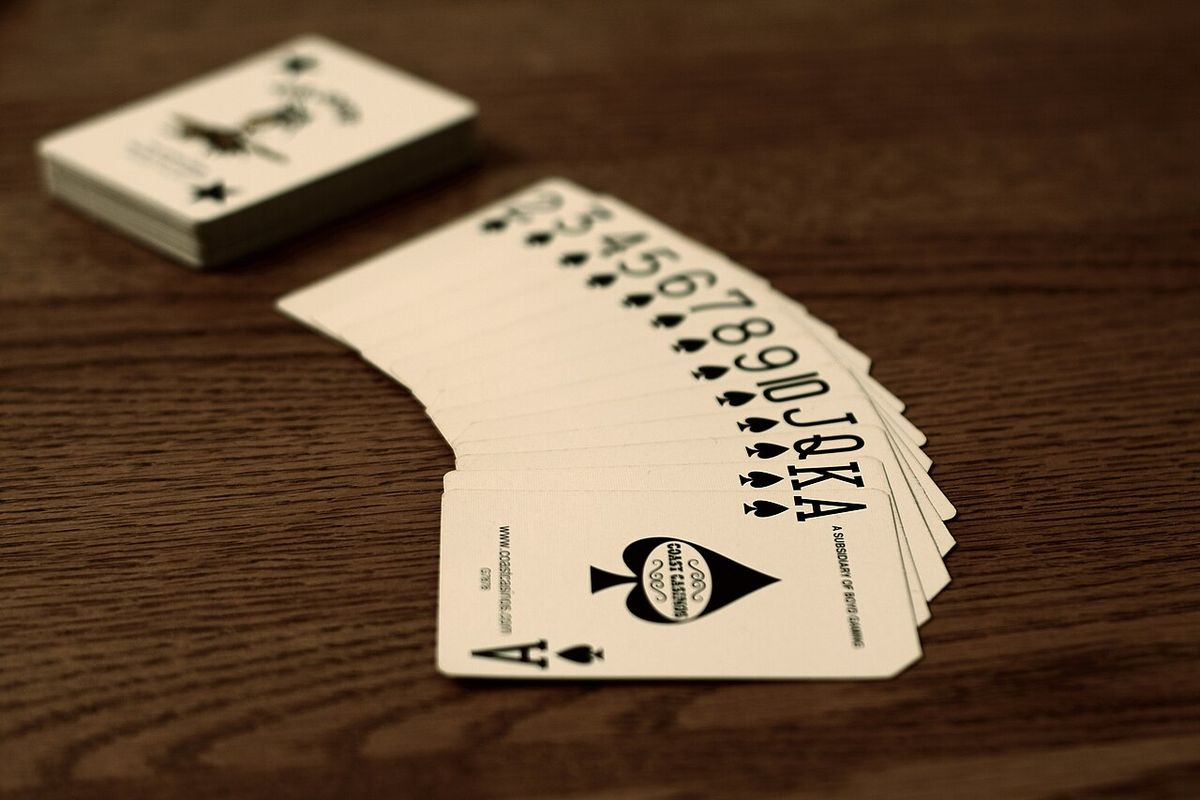
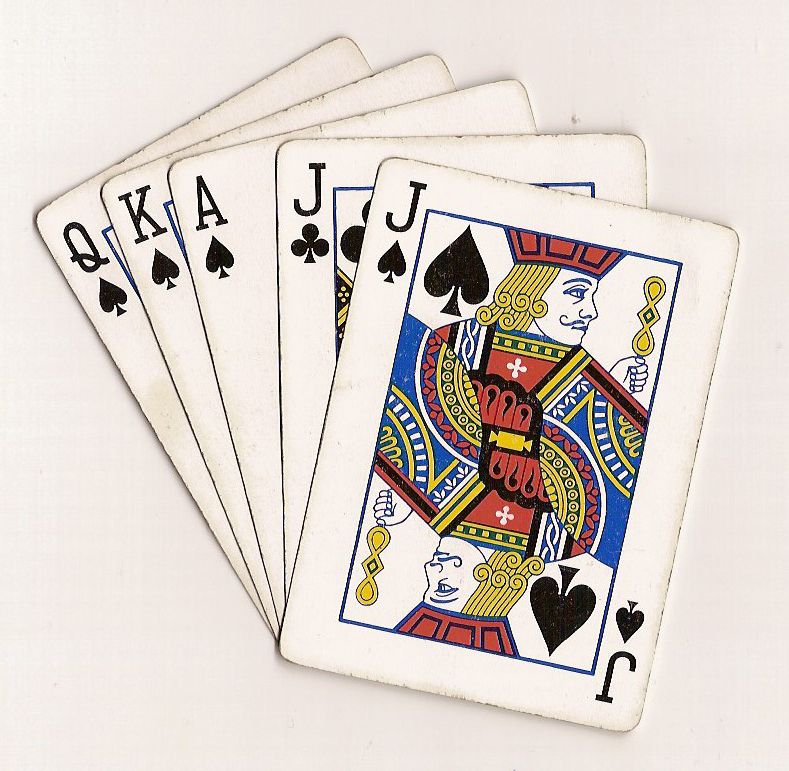
The most common form of euchre in Canada and the United States is the four-player partnership game using a 24-card deck. This deck consists of the 9, 10, Jack, Queen, King, and Ace from each of the four suits. Players form two teams of two, with partners sitting opposite each other. The initial dealer is often determined by drawing cards from a spread deck, with the players drawing the two lowest cards becoming partners and the lowest card holder dealing first. The dealer shuffles and deals five cards to each player, typically in rounds of two and then three cards, or three and then two. The next card is placed face up to start the kitty, and its suit is offered as the potential trump. The player to the dealer's left, known as the eldest hand, begins the bidding by either ordering the upcard up (accepting its suit as trump) or passing. If all players pass, a second round of bidding allows any player to name a different suit as trump. A common rule variation, known as 'stick the dealer' or 'screw the dealer', forces the dealer to name a trump suit if everyone passes a second time. When trumps are made, the team that called it becomes the 'makers'. The dealer, if on the making team, picks up the upcard and discards one card face down. The trump suit features a unique ranking order where the Jack of the trump suit, called the right bower, is the highest card. The Jack of the other suit of the same colour, the left bower, becomes the second-highest trump and is considered part of the trump suit for the duration of the hand.
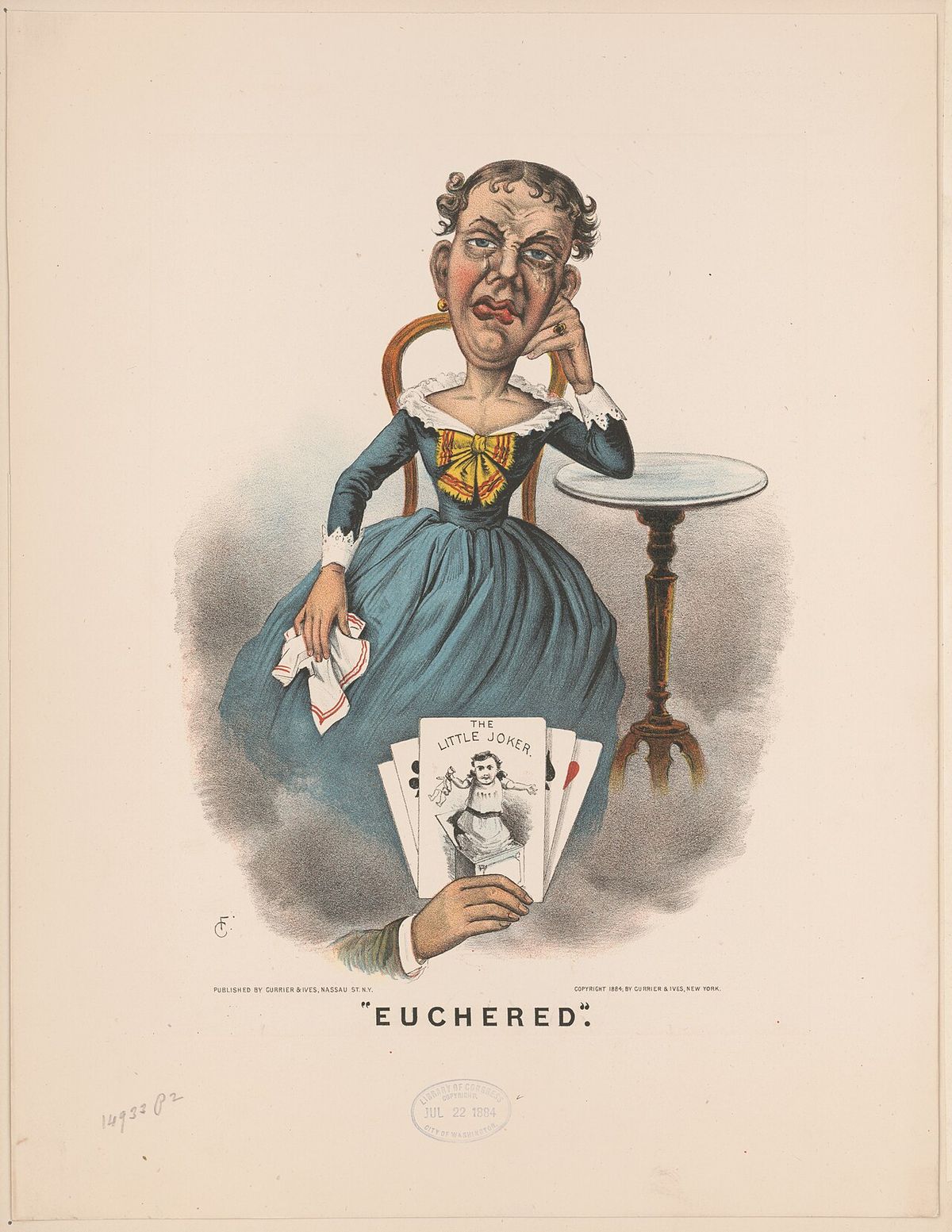
The eldest hand leads to the first trick, and play proceeds clockwise. Players must follow suit if able. If they cannot, they may play any card, including a trump. The highest card of the suit led wins the trick, unless a trump is played, in which case the highest trump wins. The winner of each trick leads to the next. A hand consists of five tricks. The makers must win at least three tricks to score points. If they win three or four tricks, they score 1 point. Winning all five tricks is called a march and scores 2 points. If the makers fail to win three tricks, they are 'euchred' and the defending team scores 2 points. A player who calls trump may also declare they are 'going alone', in which case their partner lays their cards down and takes no part in the hand. A lone player who wins all five tricks scores 4 points for their team, while winning three or four tricks alone still scores 1 point. The first team to reach the agreed-upon point total, commonly 5, 7, or 10 points, wins the game.
British Rules and the Benny
In Britain, euchre maintains a strong following in Cornwall, Devon, Guernsey, and coastal East Anglia. The British game is typically played with a 25-card pack, which includes a joker, and uses the cards Ace, King, Queen, Jack, 10, and 9 from each suit. A defining feature of British euchre is the 'Benny' (also called the 'best bower'), which is the highest trump. The Benny is represented by the joker or, in some sets, the 2 of Spades. The bidding process, known as 'shouting', follows a specific sequence where the dealer's partner has limited options in the first round. If the upcard is the Benny, the dealer must announce trumps before looking at their hand, a move called a 'blind shout'. The standard game is played to 11 points. British terminology includes unique phrases such as 'dockyard play' or 'playing policemen', which describes when the dealer's opponents withhold ordering up to try to euchre the makers, and 'whitewashed' for being beaten without scoring, such as 11 to 0.
- Benny: The joker or 2♠, serving as the highest trump.
- Shout: The act of bidding or naming trump.
- Lone Shout: A bid to play alone.
- Sleeping Hand: The partner's cards laid face down when going alone.
- Have an Eye: To have at least 1 point.
- Bump: To knock the deck instead of cutting it.
- Trump Caller: The player who makes trump.
Scoring Methods and Common Variations
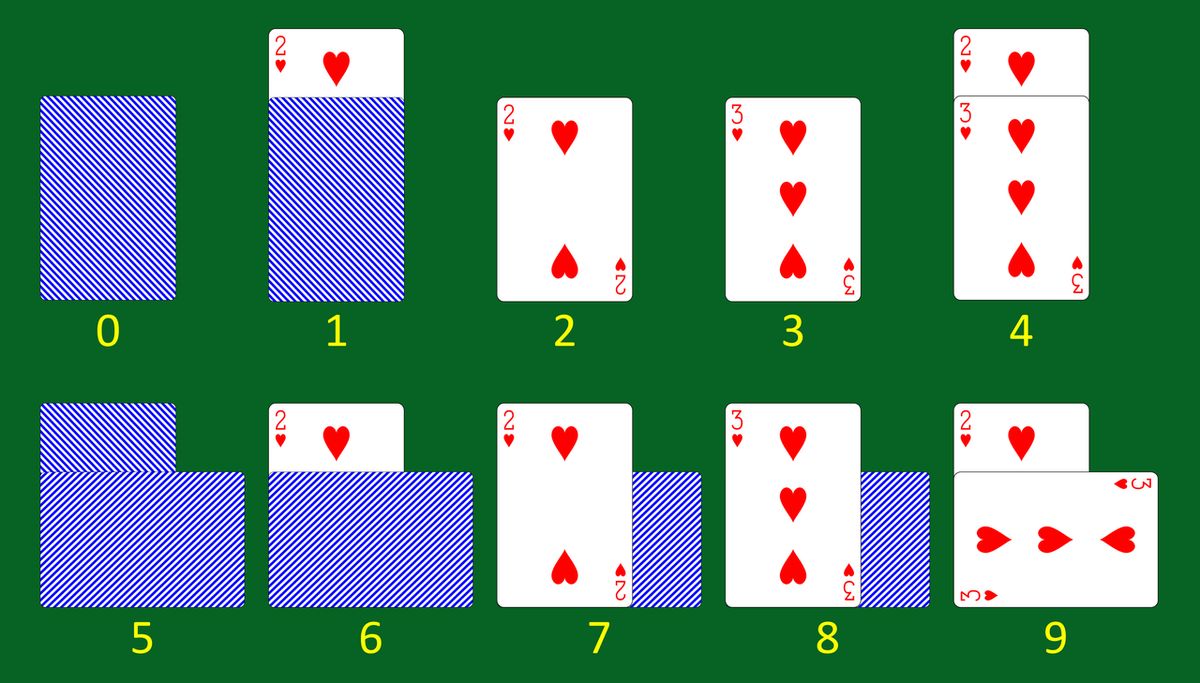
Euchre features several traditional methods for tracking scores, often using spare playing cards as markers. In Ohio and Indiana, it is common to keep score with a 4 and a 6, traditionally with the 4 on top of the 6. A method used in Western New York and Ontario involves each team using the 2 and 3 of one suit, crossing them to indicate 5 points. In Canada, Michigan, and Nebraska, teams often use two 5s of the same colour, one red and one black, as counting cards. Beyond scoring, numerous rule variations exist across different regions and households. The deck size can vary, with games sometimes using 28 cards (adding the 7s and 8s) or the original 32 cards. The point target for game can be set at 5, 7, 10, 11, or 21. A popular variation for six players is known as 'Railroad Euchre'. The 'stick the dealer' rule, which forces the dealer to choose trump if all else pass, is a common default in online and tournament play to ensure every hand is played. Another variation dictates that if the dealer's partner makes trump in the first round, they must go alone, a rule common in Britain, Canada, Australia, and parts of New Zealand.
| Variation | Key Feature |
|---|---|
| Stick the Dealer | Dealer must name trump if all pass twice. |
| Canadian Loner | A specific rule set for lone play. |
| Railroad Euchre | Played with 6 players. |
| 24-Card Deck | Standard in North America (9-A). |
| 28-Card Deck | Adds 7s and 8s. |
| 32-Card Deck | Original pack (7-A). |
| Bid Euchre | Trump decided by auction. Also called auction euchre or pepper. |
| Set-back Euchre | Players start with points and aim to reach zero. Maker plays alone. |
Euchre in Canadian and Modern Culture
Euchre retains a strong cultural foothold in Canada, particularly in the province of Ontario, where it is played as a social and family game. Its accessibility and quick hands make it a perennial favourite for gatherings. The game's presence is reinforced by commercial products like the Regal Games Euchre Card Games set. The game has also successfully transitioned to the digital age. Several platforms offer free online euchre, allowing play directly in a web browser or via mobile apps. Euchre.com is a prominent online platform and an official partner of the World Euchre Federation, featuring true multiplayer matchmaking, private tables, and tournaments. These online venues often track detailed player statistics and host weekly leaderboards. The social aspect of the game remains central, as seen in live tournaments like the annual World Euchre Championship held in New Glarus, Wisconsin.
Strategy and Key Concepts
Successful euchre play hinges on two primary skills: judging when to call trump and knowing how to play the hand effectively. Bidding strategy involves evaluating the strength of one's five-card hand, considering the potential trump suit and the position of the bowers. A hand containing the right bower, the left bower, and another trump, for example, is considered very strong. Players must also consider their position relative to the dealer and the upcard. Ordering up the dealer's upcard to one's partner gives the dealer a chance to improve their hand, while ordering it up to an opponent can be a defensive tactic. A player with both bowers of a colour has two guaranteed tricks if that suit becomes trump. During play, communication between partners is limited to legal plays. Any 'table talk' or secret signals designed to convey information are considered cheating. A common strategic situation is the 'bridge' or 'barn', referring to when a team is 1 point away from winning while their opponents are 4 points away, creating a scenario where a lone march could decide the game. Leading trump early, especially when one's team called it, is a standard tactic to draw out the opponents' trump cards and establish control of the suit.
- Right & Left Bower: Holding both guarantees two tricks if their suit is trump.
- Ordering Up: Can help a partner's hand or block opponents.
- Going Alone: High-risk, high-reward tactic for 4 points.
- Leading Trump: A common strategy to pull trump from opponents.
- Bridge/Barn: Critical endgame score situation (e.g., 9 to 6).
- Table Talk: Illegal communication between partners.
- Lay-down Loner: An unbeatable hand where a player can lay down their cards and claim 4 points.
Questions about Euchre
How do you play euchre for beginners?
Euchre is played by two teams of two using a 24-card deck (9 through Ace). Each player is dealt five cards. A card is turned up from the remaining kitty. Starting left of the dealer, each player has a chance to accept the upcard's suit as trump or pass. If all pass, players can name a different suit as trump. The team that names trump tries to win at least three of the five tricks. The right bower (Jack of trump) is the highest card, and the left bower (Jack of the same colour) is the second highest. Players must follow suit if possible. Makers score 1 point for 3 or 4 tricks, 2 for all 5. If euchred (fail to get 3), defenders score 2 points. The first team to reach 5, 7, or 10 points wins.
Can you play euchre online for free?
Yes, euchre is widely available to play online for free. Platforms like Euchre.com allow you to play directly in your web browser without downloading software or creating an account, though registration offers additional features. These sites often provide solo play against computer bots, matchmaking against other human players, and the ability to host private tables for friends. The game Euchre.com is also an official partner of the World Euchre Federation. Many online versions include rule variations like 'stick the dealer' and 'Canadian loner' as selectable options.
What does it mean to be euchred?
A team is euchred when they are the makers (the side that named the trump suit) but fail to win at least three of the five tricks during that hand. Being euchred is a setback, as the team scores no points for the hand. Instead, the defending team (the opponents) are awarded 2 points. This penalty encourages careful bidding, as calling trump without a reasonably strong hand carries the risk of gifting points to the other side. The term 'euchred' is also used more broadly to mean being outmaneuvered or defeated.
What is 'stick the dealer' in euchre?
'Stick the dealer' is a common rule variation in euchre. It applies when, after the upcard is turned down and a second round of bidding takes place, all four players pass again on naming a trump suit. With this rule in effect, the dealer is not allowed to pass a second time and is forced to choose a trump suit. This rule ensures that every hand is played and speeds up the game. It is the default setting on many ranked online euchre tables and is also known as 'screw the dealer'.
Can you lead with trump in euchre?
Yes, any card may be led on any trick in euchre, including a trump card. There is no rule akin to 'breaking hearts' that restricts leading trump. In fact, leading a high trump card early in the hand is often a sound strategic move, especially for the team that called trump. This tactic, known as 'leading trump' or 'pulling trump', helps to draw out the opponents' trump cards, potentially establishing control of the suit and making subsequent tricks easier to win with high off-suit cards. Strategic leading is a key part of advanced play.
What is the World Euchre Championship?
The World Euchre Championship is an annual competition held in New Glarus, Wisconsin. It is a major event for euchre enthusiasts, with prizes donated by sponsors. This tournament highlights the competitive and social aspects of the game beyond casual play. The championship draws players from various regions to compete in a structured tournament format.
Sources and further reading
- Euchre (Wikipedia)
- Euchre, Online & Free | Play Classic Card Games (worldofcardgames.com)
- Regal Games Euchre Card Games 2 Pack, Adult Playing Card Game Set ... (amazon.ca)
- Play Euchre Card Game Online, Euchre.com (euchre.com)
- How To Play Euchre, Berries & Barnacles (berriesandbarnacles.com)
Checked by the Nosy Mag desk. Last updated 2026-11-09.