Crazy Eights
Crazy Eights is a shedding-type card game where the objective is to be the first player to discard all cards from their hand. It is the best-known American member of the Eights group of games, which includes Switch, Mau-Mau, Whot!, and Uno. The game is characterized by simple rules centred on matching suits or ranks, with all eights acting as wild cards that allow the player to change the active suit. Crazy Eights is an accessible game for two to seven players and is often used to teach children basic card game concepts.
Origins and Historical Development
The game first appeared as Eights in the 1930s, and the name Crazy Eights dates to the 1940s. The name is derived from the United States military's Section 8 discharge for mentally unstable soldiers. It may have derived from the German game Mau-Mau. Originally played by children with leftover cards from Euchre, Crazy Eights evolved to use a standard 52-card deck. David Parlett describes Crazy Eights as a basic pattern of play on which a wide variety of changes can be rung. The game belongs to the larger family of shedding games, where the goal is to be the first to get rid of all cards.
Standard Equipment and Setup
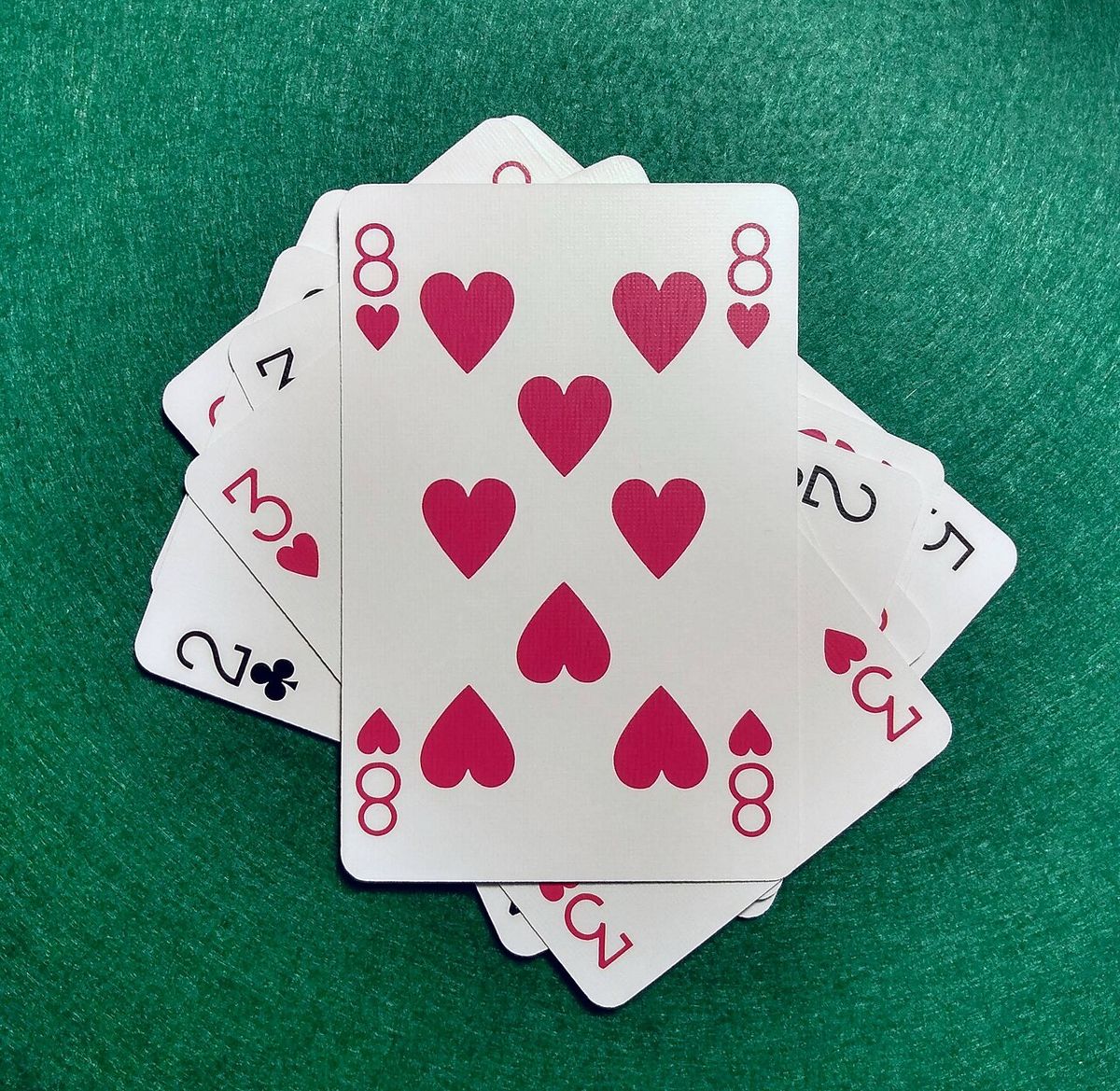
A standard 52-card French deck is used for games with five or fewer players. For games with six or seven players, two standard decks are shuffled together to create a 104-card stock. The dealer distributes cards one at a time, face down, beginning with the player to their left. In most games, each player receives five cards. A common variation for two-player games deals seven cards to each. The remaining deck is placed face down in the centre as the stock pile. The dealer then turns the top card face up beside the stock to form the starter discard pile. If this initial card is an eight, it is buried in the middle of the stock pile and the next card is turned to start play.
Rules of Play and Turn Sequence
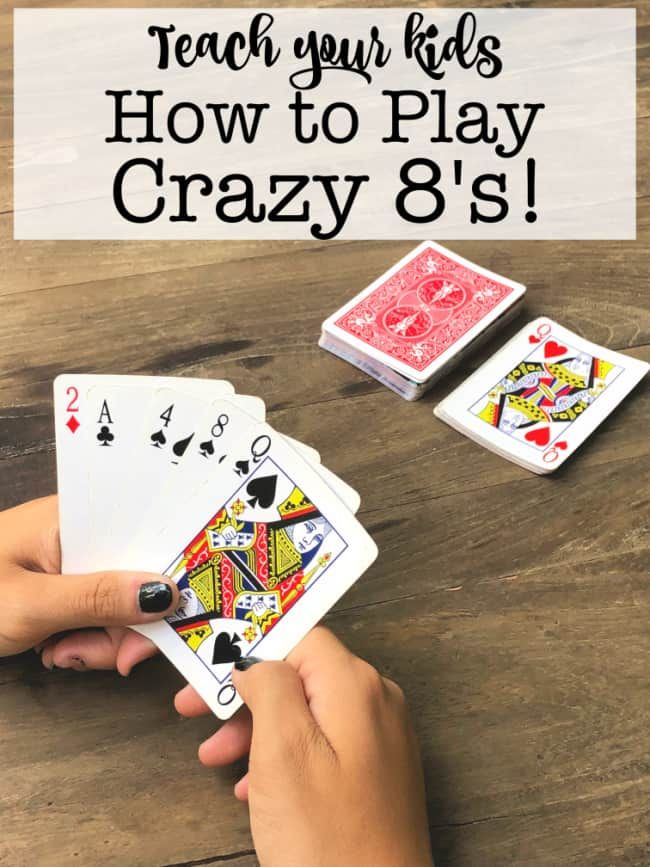
Play proceeds clockwise from the player left of the dealer. On a turn, a player must place one card face up on the discard pile. To play a card legally, it must match the top card of the discard pile either in suit or in rank. For example, if the top card is the Queen of Clubs, a player may play any club or any Queen. If a player cannot play a matching card, they must draw cards from the top of the stock pile until they draw a playable card. A player may draw even while holding a playable card. If the stock pile is exhausted and a player cannot play, they must pass their turn. All eights are wild. A player may play an eight at any time on their turn. Upon playing an eight, the player declares a new suit, which the next player must follow.
Scoring, Winning, and Card Values
The game ends immediately when one player empties their hand of all cards. That player is the winner of the round and collects points from each opponent based on the cards remaining in those opponents' hands. The winner of the overall game is the first player to reach a predetermined cumulative point total. The number of points needed to win is calculated by multiplying the number of players by 50. So, for two players it is 100 points, three players 150, four 200, five 250, six 300 and for seven players 350. The specific point values for each card are as follows. If the players run out of cards in the deck, the player with the lowest point score in their hand scores the difference between that hand and each opponent's hand. This alternate ending ensures a winner even if no player empties their hand.
| Card | Point Value |
|---|---|
| Any Eight | 50 points |
| King (K) | 10 points |
| Queen (Q) | 10 points |
| Jack (J) | 10 points |
| Ten (10) | 10 points |
| Ace (A) | 1 point |
| Nine (9) | 9 points |
| Two (2) through Seven (7) | Face value (2 to 7 points) |
These point values are used for penalty scoring. The high value of eights encourages players to use them strategically rather than hold them until the end of a round. Scoring is typically recorded on paper, and play continues over multiple rounds until the target score is reached. The game can also be played without cumulative scoring, where each round is a separate contest.
Common Rule Variations and House Rules
Card game historian John McLeod describes Crazy Eights as one of the easiest games to modify by adding variations. Many groups introduce special powers for other ranks beyond the eight. A common variation is the Queens skip rule, where playing a Queen causes the next player to miss their turn. Another popular rule assigns the Aces reverse function, where playing an Ace reverses the direction of play. The Draw Two rule is also widespread, where playing a two forces the next player to draw two cards from the stock unless they can also play a two, in which case the penalty stacks. If the game ends on a special card, that card's rule is not applied. A popular variant in the United States is Crazy Eights Countdown, where players start with a score of 8. A player's score determines how many cards they are dealt at the start of each round, and which rank of card is wild for them. The first player to reduce their score to zero wins the game.
- Crazy Eights Countdown: A variant where players start with a score of 8, which determines their hand size and personal wild card for each round.
- Switch: A commercial card game and a member of the Eights group.
- Uno: The hugely popular proprietary game that uses a specialized deck with colours and action cards.
- Mau-Mau: The German precursor game from which Crazy Eights may have derived.
- Taki: An Israeli card game that is part of the same family.
- Bartok/Mao: Complex variants where players must deduce secret rules through penalties.
Strategy and Tips for Players
Effective strategy in Crazy Eights involves careful hand management and observation. A key tactic is to hold onto wild eight cards for as long as strategically useful, deploying them to avoid drawing cards or to sabotage opponents by forcing them into an unfavourable suit. Players should pay close attention to which suits have been played extensively, as this indicates a scarcity that can be exploited. Managing high-point cards is crucial. Prioritize discarding face cards and eights when safely possible to minimize potential penalty points. Observing opponents' draw patterns can provide clues about the suits they are collecting or avoiding. In games with variations like Draw Two, saving a two to counter an opponent's two can be advantageous. Tracking the number of cards in opponents' hands can help anticipate when they might go out.
Cultural Presence and Availability
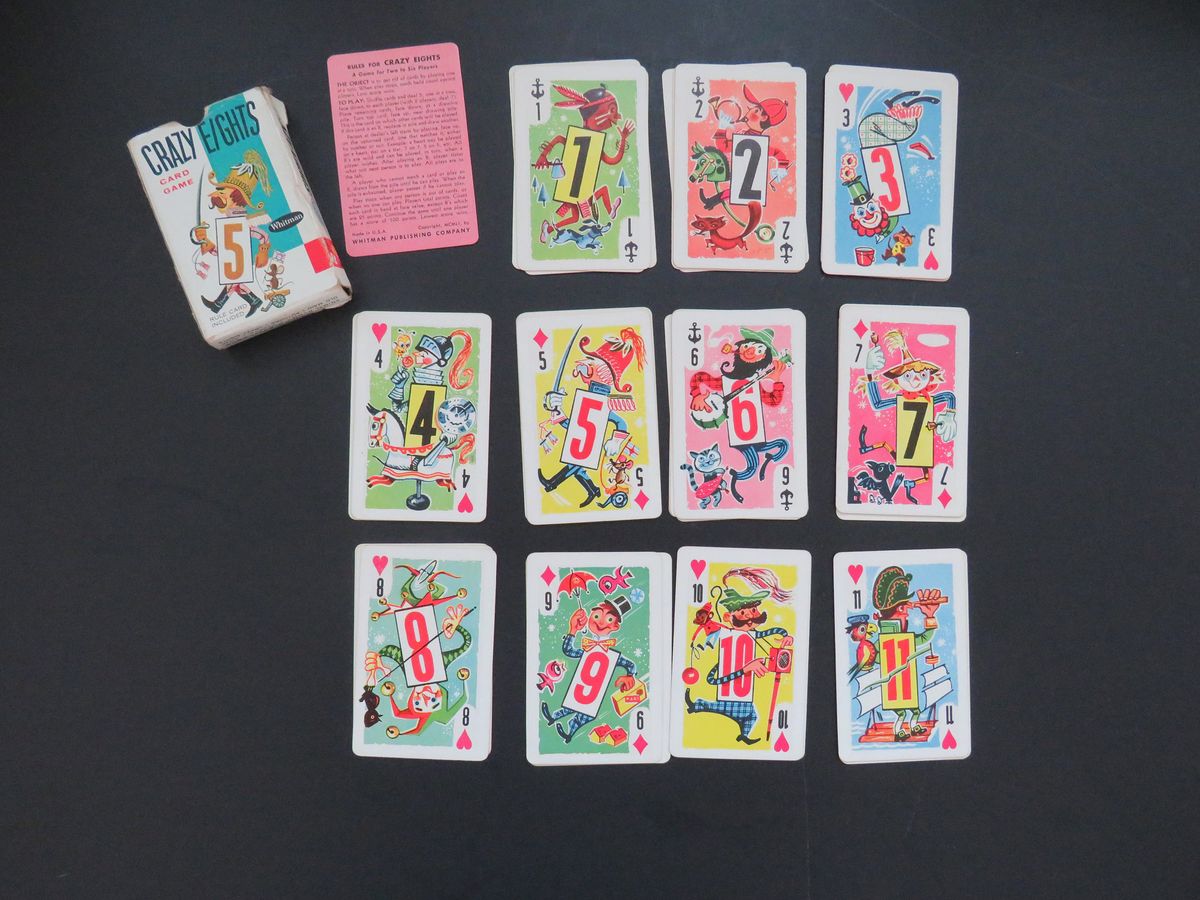
Crazy Eights maintains a strong cultural presence as a classic, public-domain card game. It is frequently featured in compilations of card game rules and is a standard offering on numerous online gaming platforms. The game's enduring appeal has led to dedicated physical editions, such as the Crazy Eights Classic Playing Card Game by eeBoo, which features illustrations by Caldecott Award winner Chris Raschka. This edition uses cards measuring 3.25 by 4.5 inches and is marketed for ages five and up. The game's simple mechanics make it a favourite for teaching children basic game concepts. The rules are widely available in books like Hoyle's Rules of Games and on websites dedicated to card games. Many software implementations exist, including as part of digital collections on computers and mobile devices.
- Online Play: Available on websites like CardGames.io, allowing free play against computers or other people.
- Physical Decks: Standard 52-card decks from brands like Bicycle are commonly used.
- Themed Editions: Special sets like the eeBoo edition with art by Chris Raschka.
- Rule Resources: Widely published in game rulebooks and on instructional websites.
- Video Tutorials: Numerous online videos teach the standard rules and variations.
Questions about Crazy Eights
How many cards do you deal in Crazy Eights?
In a standard game, each player is dealt five cards. For a two-player game, a common variation is to deal seven cards to each player. The cards are dealt one at a time, face down, starting with the player left of the dealer. The number of cards dealt can be adjusted by house rules, but five is the standard for three or more players.
What are the rules for playing an eight in Crazy Eights?
All eights are wild cards. A player may play an eight at any time on their turn. When an eight is played, the player must declare a new suit. The next player must then play a card of that declared suit or play another eight. The declared suit can be any of the four suits, regardless of the suit of the eight played.
How do you score points in Crazy Eights?
Points are penalty points collected by the winner from opponents. When a player goes out, opponents count points for cards left in their hands. Each eight is worth 50 points. Each King, Queen, Jack, and ten is worth 10 points. Aces are worth 1 point. All other cards are worth their face value. The first player to reach a target score wins. The target is calculated by multiplying the number of players by 50, so a four-player game ends at 200 points.
Can you play Crazy Eights with two players?
Yes, Crazy Eights is commonly played by two people. The standard adjustment is to deal seven cards to each player. All other rules regarding matching, playing eights, drawing, and scoring remain identical. The target score to win a two-player game is 100 points. Two-player games often have a more strategic pace as players have more information about the remaining cards.
What happens if you run out of cards in the draw pile?
If the stock pile is exhausted, all played cards except for the current top card of the discard pile are reshuffled to form a new face-down stock pile. Play then continues. If a player is unable to play a card when the stock is exhausted, they must pass their turn. This rule prevents the game from stalling indefinitely.
What is the difference between Crazy Eights and Uno?
Uno is a proprietary commercial card game that is a direct descendant of Crazy Eights. Uno uses a specialized deck with four colours and specific action cards like Skip, Reverse, and Draw Two, while Crazy Eights is played with a standard 52 card deck where only the eights are wild. Crazy Eights is in the public domain, which allows for many free variations. Uno has a fixed set of rules and is sold as a branded product by Mattel.
Sources and further reading
- Crazy Eights (Wikipedia)
- Crazy Eights (bicyclecards.com)
- Crazy Eights | Play it online (cardgames.io)
- Crazy Eights Classic Playing Card Game by eeBoo | Great Gifts for Kids (eeboo.com)
Checked by the Nosy Mag desk. Last updated 2026-11-10.