Canasta
Canasta is a classic partnership card game of the rummy family, renowned for its deep strategy and engaging team play. In Canada, it is commonly played in its Modern American form in clubs and tournaments, as well as casually online and in homes. The game's core objective is for teams to score points by forming melds of matching cards and building them into seven-card combinations called canastas, racing to a target score, typically 5,000 or 8,500 points.
History and Origins
The game of Canasta was devised in 1939 in Montevideo, Uruguay, by attorney Segundo Sánchez Santos and his bridge partner, architect Alberto Serrato. Their goal was to create a time-efficient game that was as strategically engaging as bridge. After experimenting with combinations of bridge, rummy, and the game Conquan, they invited Arturo Gómez Hartley and Ricardo Sanguinetti to test their creation. The game found immediate favour at their local bridge club, the Jockey Club, and spread rapidly throughout South America in the 1940s, with rules being refined in countries like Argentina. Canasta was introduced to the United States in 1949, where it was initially called Argentine Rummy. The game's name, Spanish for "basket," likely refers to the tray originally used to hold the undealt cards. Santos and Serrato never trademarked the name or sold specialized decks, thus receiving no royalties from the subsequent international craze. Canasta's popularity peaked in the 1950s before waning in the 1960s, but it endures as a classic game with active leagues and a strong online presence.
Classic Game Setup and Core Mechanics
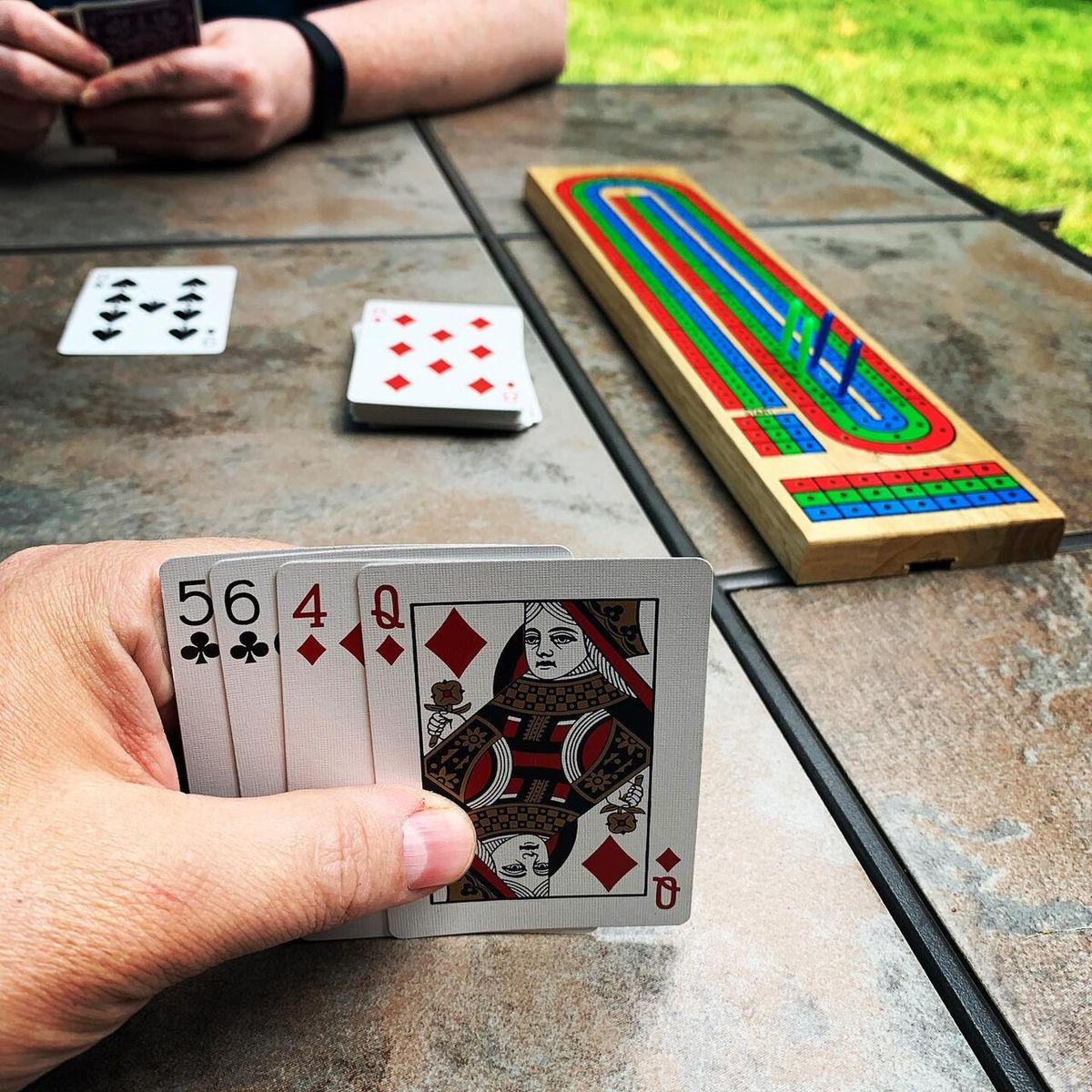
The classic game of Canasta is designed for four players forming two fixed partnerships, with partners seated opposite each other. The game uses two standard 52-card decks along with four Jokers, creating a 108-card pack. The initial dealer is chosen at random, and the deal rotates clockwise each hand. The dealer shuffles, the player to the right cuts, and the dealer deals 11 cards to each player. The remaining cards form the stock pile in the centre of the table. One card is turned face up to start the discard pile. If this card is a wild card or a red three, additional cards are turned until a natural card or a black three appears. The rotating of a wild card freezes the discard pile. If a player is dealt any red threes, they must immediately place them face up on the table and draw an equal number of replacement cards from the stock.
Play proceeds clockwise from the dealer's left. A player's turn begins by drawing the top card from the stock or picking up the entire discard pile, subject to specific restrictions. If the card drawn from the stock is a red three, the player must table it and draw another card. After drawing, a player may lay down new melds or add cards to their team's existing melds. A meld is a set of three or more cards of the same rank, and suits are irrelevant. Wild cards, Jokers and twos, can be used in melds but a legal meld must contain at least two natural cards and no more than three wild cards. A player ends their turn by discarding one card onto the discard pile. The hand continues until a player goes out or the stock is exhausted.
Key Strategic Elements
Several interlocking rules create Canasta's distinctive strategic depth, focusing on hand management, pile control, and partnership coordination. The first major element is the initial meld requirement. Before a team can lay down its first meld in a hand, the combined point value of the cards in that meld must meet a minimum threshold based on the team's cumulative score. At the start of a game, this requirement is 50 points. It increases to 90 points once a team's score reaches 1,500, and to 120 points upon reaching 3,000. If a team has a negative score, the requirement is only 15 points. This system forces teams to strategically withhold melds early in a game to preserve a lower opening requirement.
The second critical element is the management of the discard pile. Picking up the pile is a powerful move that can rapidly advance a hand, but it is heavily regulated. A player can only take the pile if they can immediately use the top card in a meld, either in an existing meld or in a new meld made with at least two matching natural cards from their hand. If the team has not yet melded, they must also meet the initial meld requirement using the top card. The pile becomes frozen against a team that has not yet melded. It is also frozen for all players if a wild card is discarded onto it, indicated by placing the wild card at a right angle. A frozen pile can only be taken if a player holds two natural cards matching the top card. Discarding a black three acts as a stop card, preventing the next player from taking the pile, but does not freeze it.
- Card Values for Melds: 4s-7s = 5 points, 8s-Ks = 10 points, Aces & 2s = 20 points, Jokers = 50 points.
- Freezing the Pile: Done by discarding a wild card or when a team has not yet melded.
- Blocking the Pile: Done by discarding a black three.

Scoring, Canastas, and Going Out
Scoring in Canasta involves a combination of card values, bonuses, and penalties. The primary goal is to build canastas, which are melds of seven or more cards. A natural canasta, containing no wild cards, scores a 500-point bonus. A mixed canasta, which includes one to three wild cards, scores a 300-point bonus. At the end of each hand, a team totals the point values of all cards in its melds and canastas, then subtracts the point values of any cards left in both partners' hands. Bonuses for red threes and going out are then added. Each red three is worth 100 points, with an extra 400-point bonus if a team collects all four. If a team fails to make any melds in a hand, however, their red threes count as penalties and are subtracted from their score. If they collected all four without melding, 800 points are deducted.
A hand ends when a player goes out by playing all cards from their hand, provided their team has completed at least one canasta. Going out earns a 100-point bonus. A player may go out concealed, melding their entire hand in one turn without having previously melded, for a 200-point bonus. Before going out, a player customarily asks their partner for permission. If asked, the partner's answer is binding. If the partner says no, the player cannot go out that turn. If the partner says yes or does not answer in time, the player must go out. The game is won when a team's cumulative score reaches or exceeds 5,000 points after a hand. If both teams surpass 5,000 in the same hand, the team with the higher total wins.
| Scoring Element | Point Value |
|---|---|
| Natural Canasta Bonus | 500 |
| Mixed Canasta Bonus | 300 |
| Each Red Three | 100 |
| All Four Red Threes Bonus | +400 |
| Going Out Bonus | 100 |
| Going Out Concealed Bonus | 200 |
Popular Variations
While classic Canasta is played to 5,000 points, numerous variations have evolved with different rules and scoring targets. Modern American Canasta is the dominant variation played in social clubs and tournaments across the United States and Canada. It uses a 108-card pack, deals 13 cards to each player, and is played to 8,500 points. Its rules are more prescriptive, including specific requirements for melding sevens and aces, a different scale for initial melds, and the concept of a "Talon" of extra cards for the first team to meld. The Canasta League of America, founded in 2011, has worked to standardize these commonly played North American rules.
Samba is a faster-paced variant using three decks for a total of 162 cards, dealing 15 cards to each player, and having players draw two cards per turn. It is played to 10,000 points and introduces sequence melds. A sequence of seven cards, called a samba, scores 1,500 points. Bolivian Canasta also uses three decks and sequences but is played to 15,000 points, with wild card canastas called bolivias worth 2,500 points. Brazilian Canasta has its own escalating minimum meld requirements and is played to 10,000 points. For two or three players, the core rules adapt, typically by dealing more cards and sometimes requiring two canastas to go out in a two-player game where each player draws two cards per turn.
- Samba: 162 cards, 15 cards dealt, draw two per turn, 10,000 points to win.
- Bolivian Canasta: 162 cards, 15,000 points to win, bolivias worth 2,500.
- Brazilian Canasta: 162 cards, 10,000 points to win.
- Hand and Foot: A variant using four to seven decks where each player is dealt a "hand" and a "foot".
Playing Canasta in Canada and Online
In Canada, Canasta enjoys a dedicated following both in person and through digital platforms. The Modern American variation is particularly prevalent in organized play. The game's appeal lies in its blend of teamwork, memory, and tactical calculation, making it a staple for game nights and club meetings. The rise of online gaming has significantly expanded access, allowing players to enjoy the game at any time. Websites like Canasta Palace offer free online play without registration, featuring live opponents and organized tournaments. In 2026, Canasta Palace hosted events like an Autumn Tournament and a special Halloween game night on October 31, demonstrating the active online community.
Playing online provides flexibility and a wide pool of opponents, though it requires a stable internet connection. These platforms often include tutorials and strategy guides for new players, helping them learn the rules of melding, managing the discard pile, and coordinating with a partner. Physical Canasta sets remain widely available for purchase in Canada, with products like the Regal Games Canasta Cards Set offering two 54-card decks specifically designed for the game. Whether played with physical cards across a kitchen table or with digital cards on a screen, Canasta continues to be a engaging and socially rewarding card game for Canadian enthusiasts.
- Canasta Palace: A major online platform offering free Canasta games without registration, with live multiplayer and tournaments (2026).
- Modern American Canasta: The most common tournament and club version in North America, played to 8,500 points.
- Physical Game Sets: Available from retailers like Calendar Club and online, often including two specialized decks and rulebooks.
- Key Skills for Players: Memory, strategic planning, discard pile control, and partnership communication.
Questions about Canasta
What are the basic rules of Canasta?
Canasta is typically played by four players in two partnerships. Using two decks plus jokers (108 cards), each player is dealt 11 cards. The goal is to score points by forming melds of three or more cards of the same rank and building them into canastas of seven cards. On a turn, you draw from the stock or take the discard pile if you can use its top card, then meld if possible, and end by discarding. Your team's first meld must meet a minimum point value based on your score. The game ends when a team reaches 5,000 points.
How do you score points in Canasta?
Points are scored from card values in melds, bonuses for canastas, and bonuses for going out. Cards have set values: 4s-7s are 5 points, 8s-Kings are 10, Aces and 2s are 20, and Jokers are 50. A natural canasta (seven cards, no wilds) earns a 500-point bonus, while a mixed canasta earns 300. Each red three is worth 100 points, with a 400-point bonus for all four. Going out gives a 100-point bonus (200 if concealed). At hand's end, total meld values minus unplayed card values plus bonuses gives the hand's score.
Can you play Canasta online for free?
Yes, several websites offer free online Canasta. A prominent example is Canasta Palace, where as of 2026 you can play without registration against live opponents or bots. These platforms often feature multiplayer tables, private games with friends, and competitive leagues or tournaments. Playing online provides flexibility and access to a large community of players at any time, though a stable internet connection is required. The rules implemented are typically the classic or Modern American variations.
What is the difference between a natural and a mixed canasta?
A natural canasta is a meld of at least seven cards all of the same natural rank, containing no wild cards (Jokers or twos). It scores a 500-point bonus. A mixed canasta, sometimes called a dirty canasta, is a meld of at least seven cards of the same rank that includes one to three wild cards. It scores a 300-point bonus. In both types, the cards are stacked and a top card indicates the type: a red card for natural, a black card for mixed.
What does it mean to freeze the discard pile in Canasta?
Freezing the discard pile imposes a restriction on when it can be picked up. The pile becomes frozen for everyone when a wild card is discarded onto it, indicated by placing the wild card at a right angle. It is also frozen against a specific team if that team has not yet made any melds in that hand. When frozen, the pile can only be taken if a player has two natural cards in their hand that match the top card of the pile, allowing them to meld those two with the top card immediately.
How many players can play Canasta?
Canasta is most commonly and ideally a four-player partnership game. However, variations exist for other numbers. A two-player game sees each player acting alone, often with 15 cards dealt and a rule requiring two canastas to go out. A three-player game is also every player for themselves, with 13 cards dealt. There is also a six-player variant played in two partnerships of three. The core mechanics of melding and building canastas remain, but card counts and some rules adjust to accommodate the player count.
Sources and further reading
- Canasta (Wikipedia)
- Canasta Palace, Play Canasta Online Now (canasta-palace.com)
- Canasta, Online & Free | Play Classic Card Games (worldofcardgames.com)
- Canasta 2 Deck Cards (calendarclub.ca)
- Regal Games Canasta Cards Set for Adults, Rummy Style 2-6 Player ... (amazon.com)
Checked by the Nosy Mag desk. Last updated 2026-11-10.