Thorfinn Karlsefni
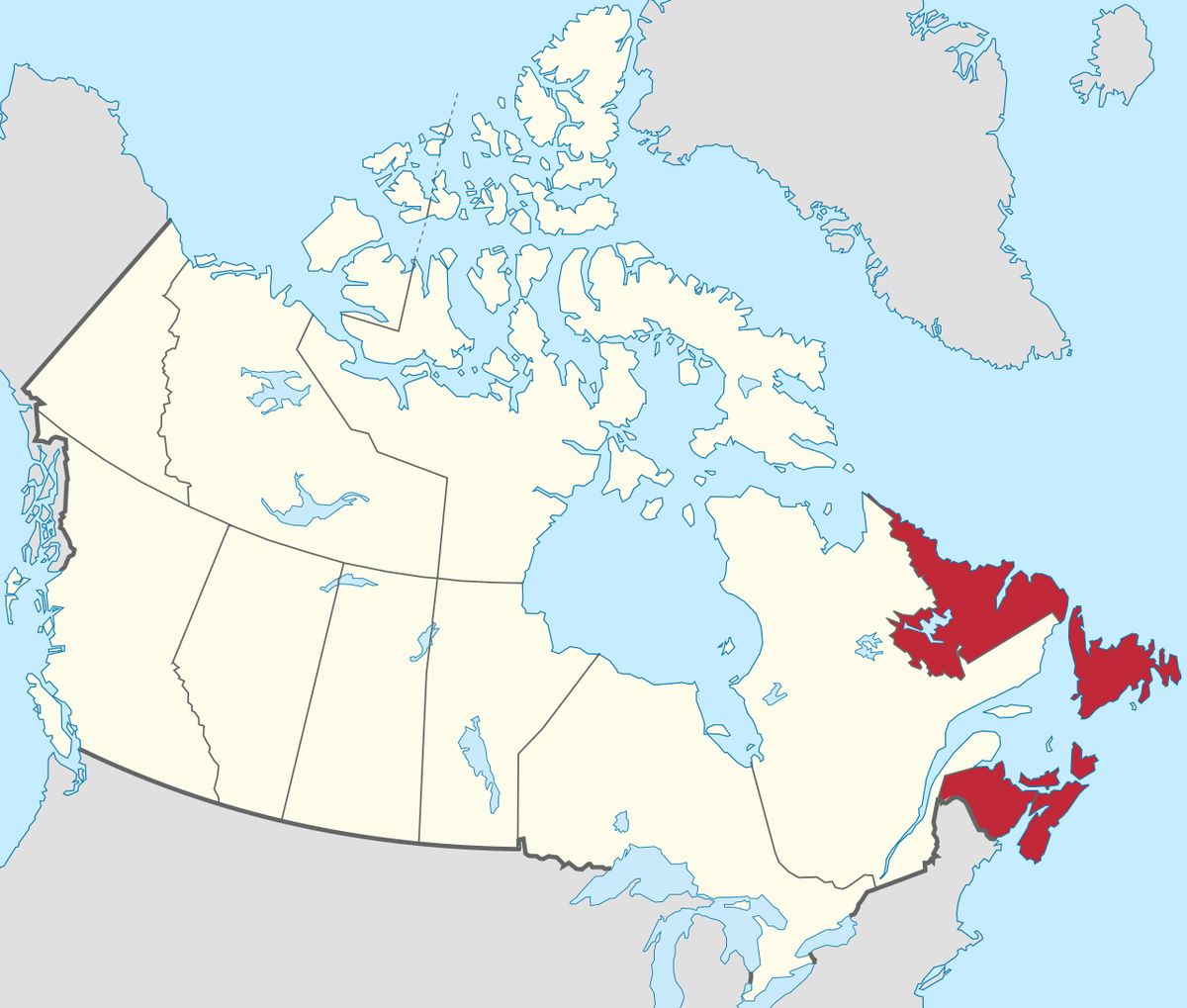
Thorfinn Karlsefni Thórdarson was an Icelandic explorer and trader who, around the year 1010, led a Norse expedition to Vinland, a region of North America. His voyage represents one of the earliest documented European attempts to establish a settlement in the New World, predating Christopher Columbus by nearly five centuries. Karlsefni's journey is significant to Canada as the lands he explored, Helluland (Baffin Island), Markland (Labrador), and Vinland (Newfoundland), are part of the Canadian Arctic and Atlantic coastline. His story, preserved in the 13th-century Vinland Sagas, provides a historical link to the Norse presence at L'Anse aux Meadows, Newfoundland, a UNESCO World Heritage site.
Early Life and Family Background
Thorfinn Karlsefni was born in Iceland around 980 to 985 CE. His father was Thord Horsehead (Thórðr Hesthöfði Snorrason), and his mother was named Thorunn. The family claimed descent from several European royal lines, including Olaf the White of Dublin and the matriarch Aud the Deep-Minded through Thord Gellir. Karlsefni's great-grandfather, Thord of Hofdi, established the family's roots at the farm of Hofdi in Hofdastrond within the Skagafjörður region of northern Iceland. Thorfinn was presumably raised at his father's estate called Stad in Reynisnes (Reynistaður). As a young man, he acquired a share in an ocean-going merchant ship and began a successful trading career, transporting goods between Iceland and Norway. His nickname, Karlsefni, which translates to 'the makings of a man' or 'a thorough man', was likely earned through these ventures and his character. According to the Landnámabók, his lineage is also traced through Snorri, son of Thord of Hofdi, connecting him to early settlers of Iceland.
Marriage to Gudrid and Life in Greenland
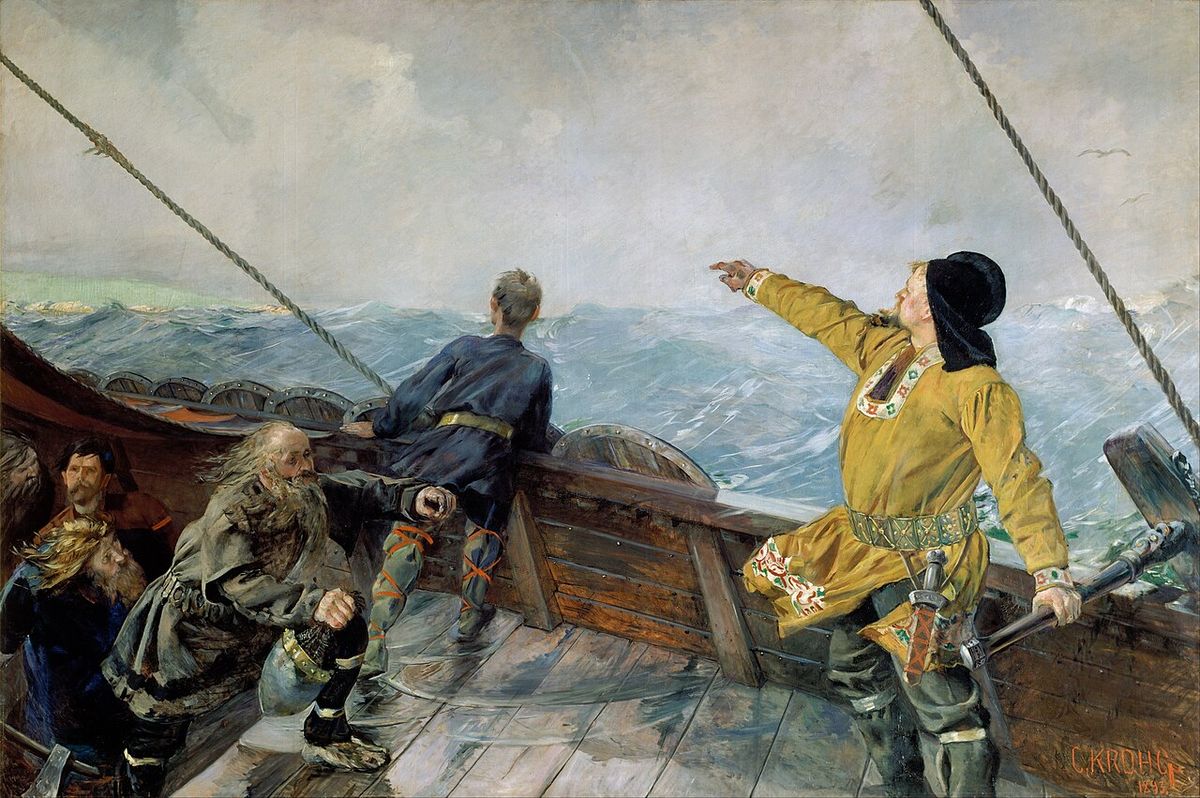
Karlsefni's life changed during a trading voyage to Greenland, where he arrived at Brattahlíð, the estate of Erik the Red, with his business partner Snorri Thorbrandsson and a crew of 40 men. According to the Saga of Erik the Red, they were hosted by Erik himself, though the Saga of the Greenlanders places Gudrid under the care of her brother-in-law Leif Eriksson at Brattahlíð after Eirik's death around 1003. At Brattahlíð, Karlsefni met and married Gudrid Thorbjarnardóttir, a well-educated Icelander who was the widow of Erik the Red's son, Thorstein Eiriksson. Karlsefni sought and received permission to marry her, either from Erik the Red himself or from Leif. The wedding took place at Brattahlíð, probably sometime after 1010. This marriage connected Karlsefni directly to the most prominent Norse family in Greenland and set the stage for his famed expedition, as talk of the lands of Vinland, recently explored by Leif Eriksson, was widespread. Gudrid's first husband, Thorstein, had reportedly predicted her marriage to Karlsefni upon his own deathbed, as recorded in the Saga of the Greenlanders. The saga also notes Thorstein died in an epidemic that swept the Greenland settlement.
The Vinland Expedition: Planning and Departure
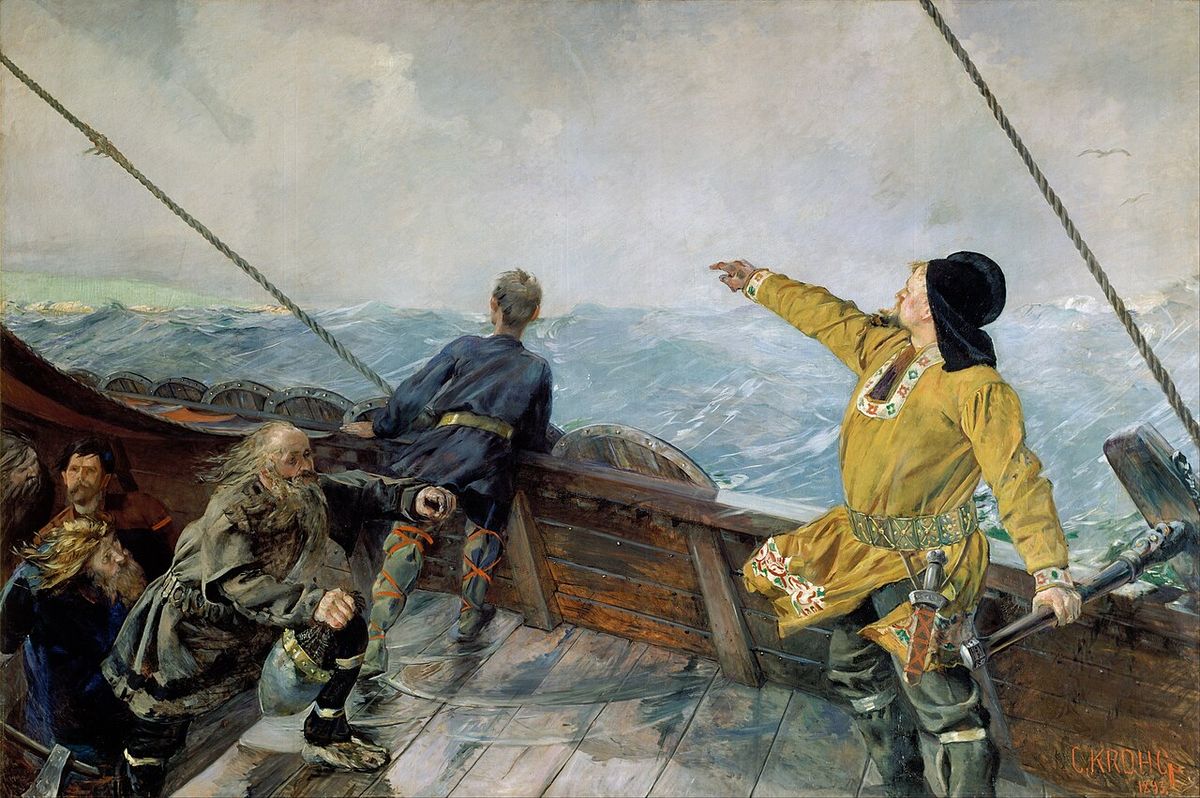
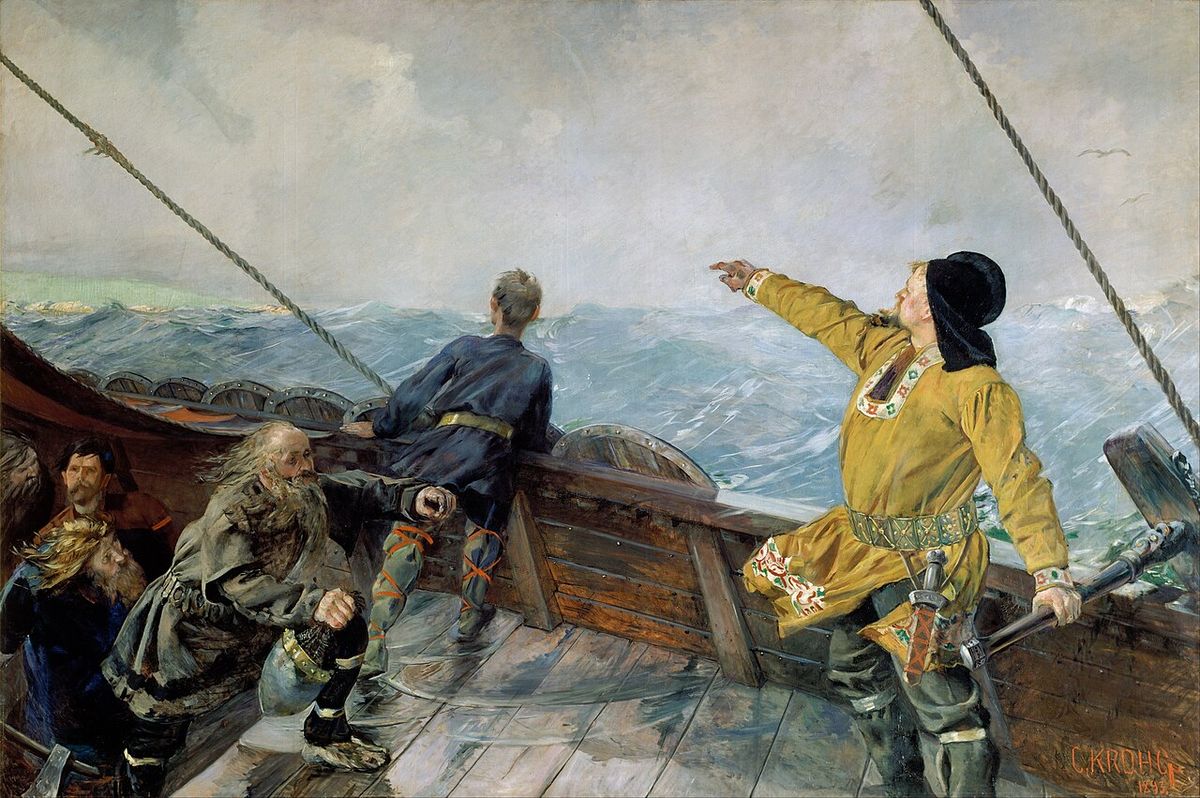
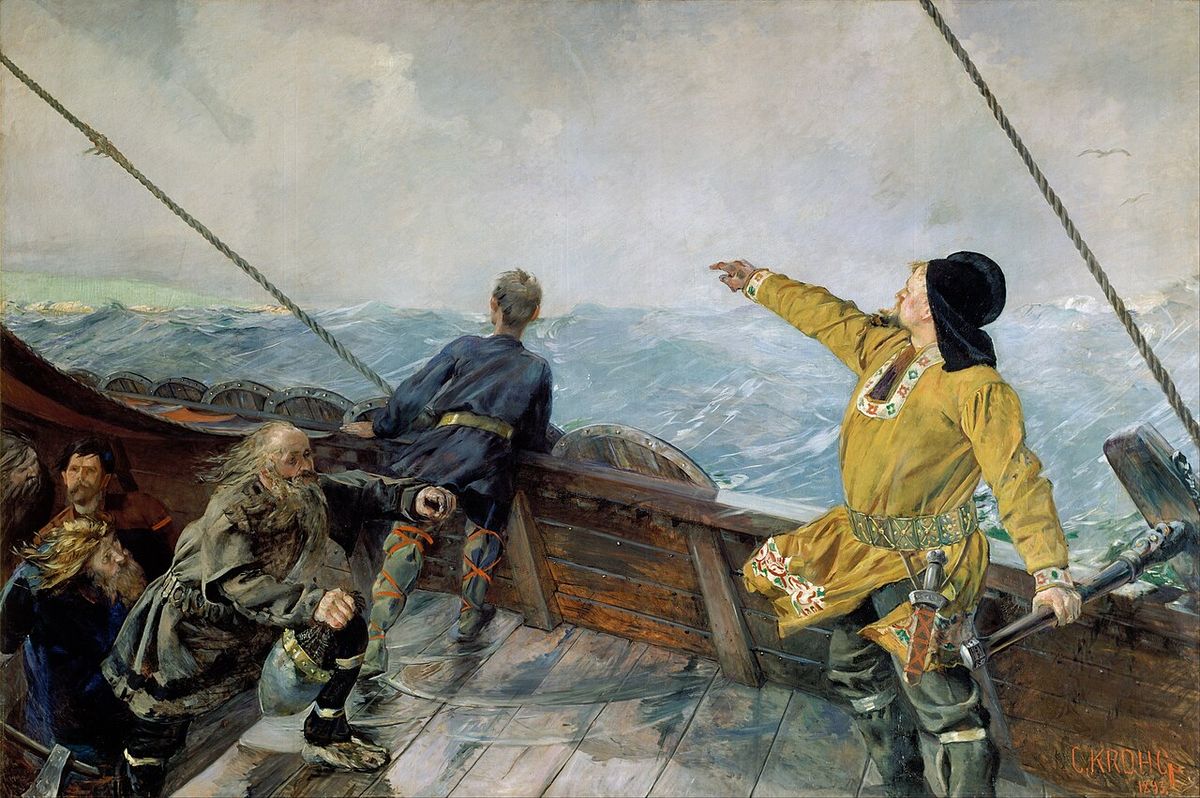
Encouraged by his wife Gudrid and the tales of resources in Vinland, Thorfinn Karlsefni organized a colonizing expedition. The two primary saga sources provide different accounts of the expedition's scale and leadership. The Saga of the Greenlanders records that Karlsefni's was one of four separate voyages to Vinland and that he left Greenland with 60 men and five women, following the route previously taken by Leif and Thorvald Eiriksson. The Saga of Erik the Red describes a larger endeavour with three ships and 140 people, including Leif's siblings Thorvald and Freydis. Most scholars consider the Saga of the Greenlanders to be the more reliable and earlier source. The expedition's goal to establish a settlement was clear from their composition, as they brought women, livestock, and tools intended for long-term habitation. They planned to use Leif Eriksson's existing camp, Leifsbúðir, as a base, though Leif explicitly stated that Karlsefni could use it but that it remained his property. The Saga of Erik the Red adds that before departure, Karlsefni's men engaged in a Christian prayer for a successful journey, highlighting religious divisions within the Norse party.
Life in Vinland: Exploration and Conflict
The Norse settlement in Vinland was marked by both initial prosperity and escalating conflict. The group spent three summers in the new land. They engaged in harvesting the area's resources, cutting timber, gathering wild grapes, and catching fish and game. During their stay, Gudrid gave birth to a son, Snorri, who is recognized as the first child of European descent known to be born in the New World. Many Icelanders trace their lineage back to him. The colony's existence was shaped by encounters with the Indigenous peoples of the region, referred to in the sagas as Skrælings. Initial contact involved trade, with the Norse offering milk and cloth in exchange for furs. However, tensions escalated due to cultural misunderstandings. One critical incident involved a Norse bull they had brought breaking loose and frightening the Indigenous visitors. The Norse attempt to appease them by offering milk reportedly made some natives ill. Later, a more hostile encounter occurred, resulting in a skirmish. The Saga of Erik the Red credits Freydis, sister of Leif Eriksson, with helping to repel an attack by slapping her bare breast with a sword. These conflicts, combined with internal tensions within the settlement over the ratio of men to women, were major factors in the decision to abandon the venture. The Saga of the Greenlanders also describes an earlier peaceful trade where the Skrælings offered furs and grey pelts.
Return Journey and Later Life in Iceland
After deciding to leave Vinland, Thorfinn Karlsefni and his family returned safely to Greenland, though the Saga of the Greenlanders notes that many of the other settlers drowned when their ship was wrecked in the Irish Sea. They eventually sailed back to Iceland. The sagas differ on his final residence: the Saga of Erik the Red states he went back to his farm at Reynisnes in Skagafjörður, while the Saga of the Greenlanders records that he bought new lands at Glaumbaer in northern Iceland. Karlsefni continued his career as a wealthy merchant, trading with Norway. His son Snorri founded a notable Icelandic lineage that included bishops, an abbess, and the 13th-century lawspeaker and knight of Norway, Hauk Erlandson. Hauk Erlandson, who claimed direct descent from Karlsefni, had a particular interest in the family history and his version of the Saga of Erik the Red is found in the Hauksbók manuscript. Another descendant was Bishop Björn Gílsson of Hólar, whose potential sanctity may have motivated the glorification of Karlsefni in the later saga.
Conflicting Saga Accounts and Historical Interpretation
The Saga of the Greenlanders and the Saga of Erik the Red offer valuable but often contradictory details, requiring careful historical analysis. Key differences between the two sources include the scale and leadership of the expeditions, the portrayal of other explorers, and supernatural elements. Historians generally view the Saga of the Greenlanders as the more accurate and less embellished account. The distortions in the Saga of Erik the Red are believed to stem from a later effort, around 1200, to bolster the sanctity case for Bishop Björn Gílsson, a great-grandson of Karlsefni and Gudrid, by glorifying his ancestors. This led to the consolidation of multiple voyages into Karlsefni's single expedition and the transfer of credit for discoveries like Helluland and Markland from Leif Eriksson to Karlsefni, which scholars note 'flatly contradicts' the earlier saga. ES postpones the death of Thorvald Eiriksson so he can accompany Karlsefni and be killed by a fantastical Uniped, whereas GS records Thorvald died earlier on his own voyage from a Native American arrow. The Saga of Erik the Red also includes episodes not found in the earlier saga, such as Karlsefni's men finding and baptizing two Skræling children they captured in Markland.
- Expedition Scale: GS describes four separate voyages to Vinland, while ES combines them into one large expedition led by Karlsefni.
- Leadership Credit: ES magnifies Karlsefni's role, sometimes at the expense of Leif Eriksson's discoveries, while GS gives Leif primary credit for the initial exploration and naming of lands.
- Companions and Events: In ES, Leif's brother Thorvald accompanies Karlsefni and is killed by a mythical Uniped, whereas GS states Thorvald died on his own earlier voyage. ES also includes a story of Karlsefni's men finding and baptizing two Skraeling children.
- Geographic Naming: ES attributes the naming of Helluland and Markland to Karlsefni, which GS credits to Leif Eriksson, a point scholars consider 'assuredly wrong'.
- Supernatural Elements: ES incorporates more fantastical elements, like the Uniped and the Skrælings disappearing into the earth, while GS maintains a more straightforward narrative.
Archaeological Evidence and Connection to Canada
Thorfinn Karlsefni's story is linked to Canadian history and archaeology, providing a narrative framework for physical evidence of Norse activity in North America. The lands described in the sagas, Helluland (Baffin Island), Markland (Labrador), and Vinland (Newfoundland), are within Canadian territory. The archaeological site at L'Anse aux Meadows in Newfoundland, a UNESCO World Heritage site, is generally accepted as the type of base described as Leifsbúðir, used by Leif Eriksson and potentially by later expeditions like Karlsefni's. Excavations at the site of Karlsefni's former home in Greenland in 1930 uncovered a deposit of anthracite coal that was geologically identified as originating in the vicinity of Rhode Island or New England, suggesting Norse exploration or trade contacts may have reached further south along the North American coast. This physical evidence corroborates the saga accounts of voyages to a resource-rich land. Other Norse artifacts, such as a Norse coin found in Maine and potential Norse-style stone structures in the Canadian Arctic, continue to be studied for their connection to these early voyages.
Modern Commemoration and Controversy
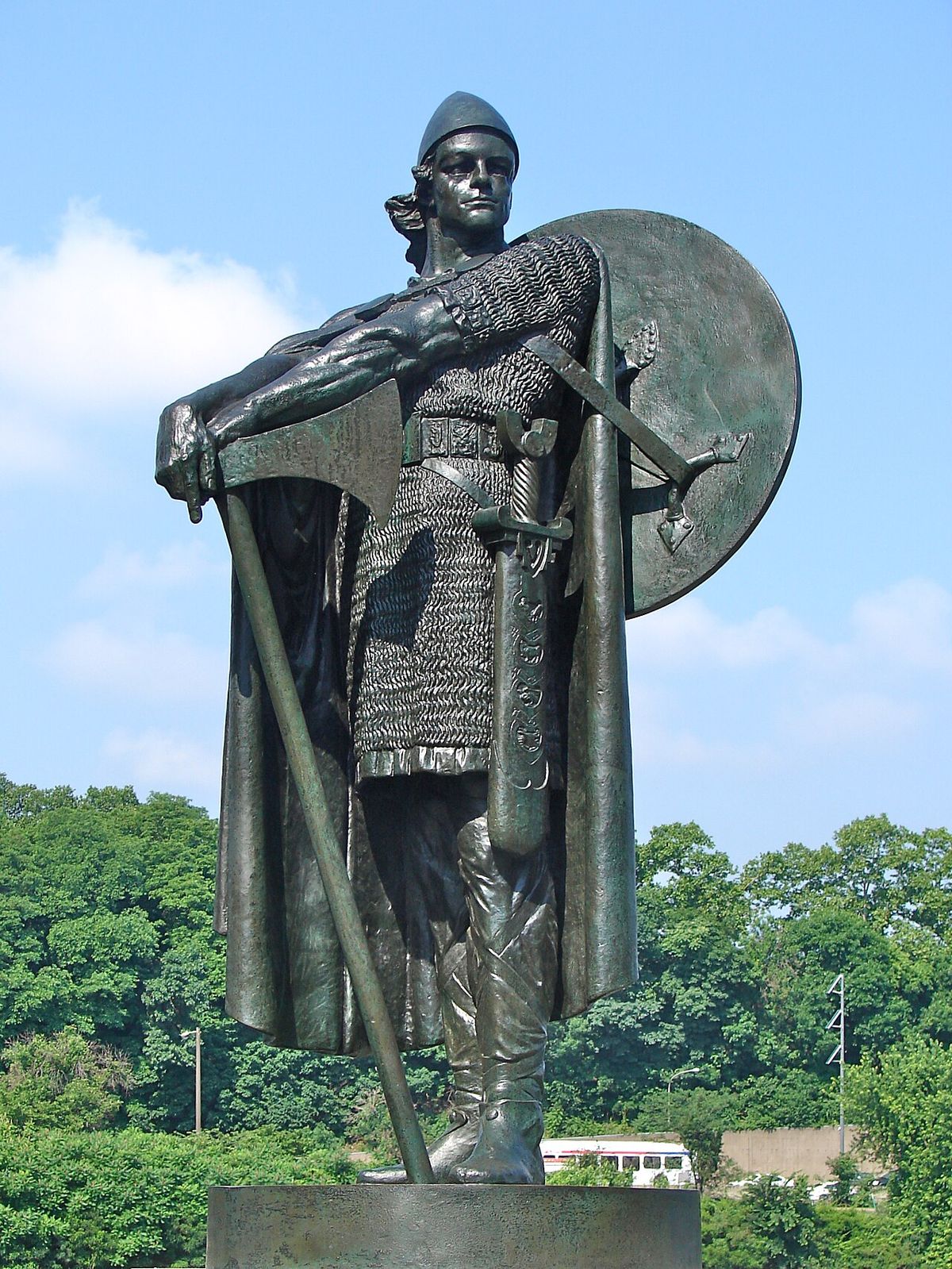
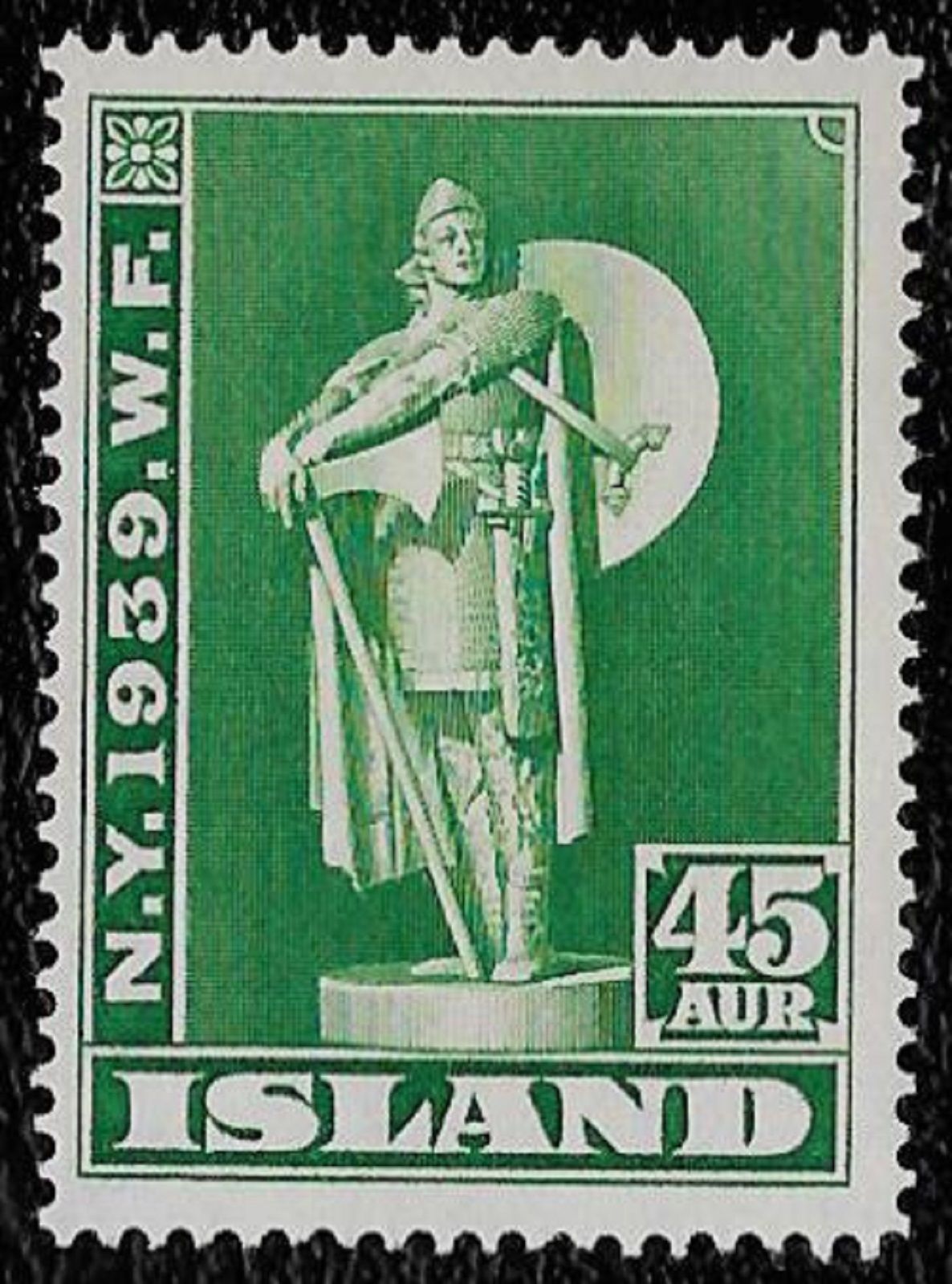
The figure of Thorfinn Karlsefni has been commemorated in modern times, though not without controversy. In the early 20th century, Icelandic sculptor Einar Jónsson was commissioned through a bequest from Ellen Phillips Samuel to the Fairmount Park Art Association in Philadelphia to create a statue emblematic of American history. The statue of Thorfinn Karlsefni, crafted between 1915 and 1918, was installed along Kelly Drive and unveiled on November 20, 1920. A second casting of the statue was placed in Reykjavík, Iceland. By the 21st century, the Philadelphia statue had become a common rallying point for local white supremacy groups, leading to counter-protests and vandalism. In the early morning of October 2, 2018, the statue was toppled from its stone base and dragged into the nearby Schuylkill River. As of 2020, the statue was undergoing conservation, but the City of Philadelphia had established no timeline for its reinstallation and was considering the appropriation of the statue by hate groups in its future planning for the artwork. The bequest for the statue was part of a series funded by Ellen Phillips Samuel to depict the history of America, with other sculptures representing different ethnic groups and historical periods.
Thorfinn Karlsefni in Literature and Popular Culture
The story of Thorfinn Karlsefni has inspired numerous works of fiction and popular media. He appears as a character in Harry Harrison's 1967 comedic science fiction novel 'The Technicolor Time Machine', where it is revealed that a Viking consultant named Ottar is actually Thorfinn Karlsefni. Elizabeth H. Boyer published 'Freydis and Gudrid' in 1978, a fictionalized account of the first Vinland settlement. Margaret Elphinstone's 2000 novel 'The Sea Road' is a first-person narrative told by an elderly Gudrid as she recounts her voyages with Karlsefni. A fictionalized version of Thorfinn Karlsefni serves as the protagonist of the 2005 manga series 'Vinland Saga', which was adapted into an anime in 2019. This series, while using historical names and the backdrop of Viking exploration, creates an original narrative focused on themes of vengeance and pacifism, departing significantly from the saga accounts. In the manga, Thorfinn's fictional father, Thors, is killed by the mercenary Askeladd, setting Thorfinn on a path of revenge before he ultimately seeks a peaceful life in Vinland, a central creative invention of the story.
Questions about Thorfinn Karlsefni
Who was Thorfinn Karlsefni?
Thorfinn Karlsefni Thórdarson was an Icelandic explorer and wealthy merchant. Around the year 1010, he followed Leif Eriksson's route to Vinland in an attempt to establish a settlement there. He is a central figure in the Vinland Sagas. His expedition is notable for the birth of his son Snorri in Vinland, the first known European child born in the Americas. His lineage is detailed in the Landnámabók.
Did Thorfinn Karlsefni discover America?
Thorfinn Karlsefni did not discover America. He led a colonizing expedition following Leif Eriksson's earlier route. His voyage is notable for its attempt at permanent settlement, the involvement of women and livestock, and for the birth of his son Snorri, the first known European child born in the New World. The Norse exploration of North America was a multi-voyage effort involving several figures from Greenland.
Who was Thorfinn Karlsefni's wife?
Thorfinn Karlsefni married Gudrid Thorbjarnardóttir, an Icelander, in Greenland after the death of her first husband, Thorstein Eiriksson, son of Erik the Red. Gudrid accompanied Karlsefni on the Vinland expedition, where she gave birth to their son Snorri. After Karlsefni's death, she undertook a pilgrimage to Rome before returning to Iceland. Her descendants included many notable Icelandic figures, including bishops and the lawspeaker Hauk Erlandson.
Is the anime Vinland Saga based on a true story?
The anime and manga series Vinland Saga is inspired by historical figures but is largely fictional. It uses the name of the explorer Thorfinn Karlsefni and the concept of Vinland. However, the series creates an original story focused on vengeance and warfare in medieval Europe, involving fictional characters like Askeladd and a revenge plot against King Sweyn of Denmark. The real Thorfinn Karlsefni's life involved exploration, trade, and an attempted settlement in North America as recorded in the 13th-century sagas.
What does the name Karlsefni mean?
Karlsefni is a nickname or byname. Its meaning has been interpreted in various ways. According to the preface by Magnus Magnusson and Hermann Pálsson, it means 'the makings of a man'. The Cleasby-Vigfusson dictionary glosses it as 'a thorough man', elaborated elsewhere as a 'real man' or a 'sterling man'. It was likely bestowed upon Thorfinn Thórdarson to describe his character. The name is unique to him in the historical record.
Where is Vinland and did Karlsefni settle there?
Vinland is the name given by Norse explorers to a region of North America, now widely identified with parts of Atlantic Canada, including Newfoundland. Thorfinn Karlsefni led an expedition there around 1010 AD, spending about three years in an attempt to establish a settlement. He used Leif Eriksson's camp, Leifsbúðir, as his base. The settlement was ultimately abandoned due to internal tensions and conflicts with Indigenous peoples, known as Skrælings in the sagas. The only confirmed Norse site is L'Anse aux Meadows in Newfoundland.
Sources and further reading
- Thorfinn Karlsefni (Wikipedia)
- Karlsefni (thecanadianencyclopedia.ca)
- Who was Thorfinn Karlsefni and What is He Famous For? (discoveryuk.com)
Checked by the Nosy Mag desk. Last updated 2026-10-20.