Second Boer War
The Second Boer War, fought from 11 October 1899 to 31 May 1902, was a conflict between the British Empire and the two independent Boer republics of South Africa, the South African Republic (Transvaal) and the Orange Free State. The war was triggered by the discovery of vast gold deposits on the Witwatersrand in 1884, which intensified British imperial ambitions and Boer desires to maintain political independence. For Canadians, the war was a significant imperial undertaking, with over 7,000 Canadian troops volunteering to serve, and it marked a turning point in the public perception of British military power and colonial warfare. The conflict is remembered for its three distinct phases, the brutal guerrilla warfare that defined its later years, and the controversial British policies of scorched earth and concentration camps that resulted in tens of thousands of civilian deaths.
Origins and Causes
The roots of the Second Boer War were deeply embedded in a century of conflict between expanding British imperial interests and the fiercely independent Boer republics. The Boers, descendants of Dutch settlers who undertook the Great Trek from British-controlled Cape Colony between 1836 and 1852, had established the South African Republic in 1852 and the Orange Free State in 1854. The immediate catalyst for war was the 1884 discovery of the Witwatersrand gold reef, the world's largest deposit of gold ore, which transformed the Transvaal from a struggling agrarian state into an economic powerhouse. This gold rush precipitated a massive influx of foreign prospectors and workers, predominantly British from the Cape Colony, who were termed Uitlanders. The Boer government, led by President Paul Kruger, feared being politically and culturally overwhelmed by these newcomers. To maintain control, it imposed strict franchise laws requiring 14 years of residence for voting rights and levied heavy taxes on the mining industry, most infamously through a dynamite monopoly granted to a non-British company. These grievances were seized upon by British imperialists like Colonial Secretary Joseph Chamberlain and Cape Prime Minister Cecil Rhodes, who saw an opportunity to bring the gold-rich republics under British control. Diplomatic efforts to resolve the Uitlander issue collapsed at the Bloemfontein Conference in June 1899, setting the stage for military conflict.
The Jameson Raid and Prelude to War
A critical event that poisoned relations and made war increasingly likely was the Jameson Raid of December 1895. This was a failed coup attempt orchestrated by Cecil Rhodes and led by his associate Leander Starr Jameson, the Administrator of Rhodesia. A force of about 600 armed men from the British South Africa Company crossed from Bechuanaland into the Transvaal, aiming to spark an Uitlander uprising in Johannesburg. The raid was a complete fiasco, with the column being surrounded and captured by Boer commandos near Krugersdorp after a brief skirmish. The aftermath significantly hardened attitudes on both sides. The Transvaal government tried and imprisoned the Uitlander ringleaders of the Reform Committee, while Jameson was tried in Britain and became a popular hero among jingoistic elements. Internationally, German Kaiser Wilhelm II's 'Kruger telegram' congratulating the Boer president inflamed British public opinion. Most importantly, the raid convinced the Boer republics of British hostile intent, leading them to conclude a formal military pact in 1897 and to begin a major rearmament program. They imported over 37,000 modern Mauser Model 1895 rifles from Germany and dozens of heavy artillery pieces, including Creusot fortress guns. As future South African leader Jan Smuts later wrote, the Jameson Raid was the real declaration of war, creating a four-year period of tense preparation for the inevitable conflict.
Phases of the War
The Second Boer War unfolded in three distinct military phases, moving from conventional battles to a protracted guerrilla struggle. The first phase, from October 1899 to early 1900, saw the Boers take the initiative with preemptive strikes into British-held Natal and the Cape Colony. Boer commandos, skilled marksmen and highly mobile, achieved several notable victories against larger British forces at battles like Stormberg, Magersfontein, Colenso, and the bloody engagement at Spion Kop. They also successfully besieged key British garrisons at Ladysmith, Mafeking, and Kimberley, creating a series of crises for British command. The second phase began in early 1900 with the arrival of a massive British expeditionary force under Lord Roberts and Lord Kitchener. This force, eventually numbering over 180,000 men, relieved the besieged towns, invaded the Boer republics, and captured their capitals, Pretoria and Bloemfontein, by June 1900. Britain formally annexed the two republics, and Prime Minister Lord Salisbury called a 'khaki election' in Britain to capitalize on the perceived victory. The third and longest phase was a bitter guerrilla war that lasted from mid-1900 until May 1902. Unable to confront the large British armies directly, Boer commandos under leaders like Christiaan de Wet and Louis Botha broke into small, mobile units called 'bittereinders'. These units conducted effective hit-and-run raids across a vast territory, targeting British supply lines, railways, and isolated outposts. This unconventional campaign proved extremely difficult for the conventional British forces to counter, prolonging the war for nearly two more years and necessitating a drastic and brutal change in strategy. The British response to this guerrilla campaign would become the most controversial aspect of the entire war.
British Counterinsurgency and Concentration Camps
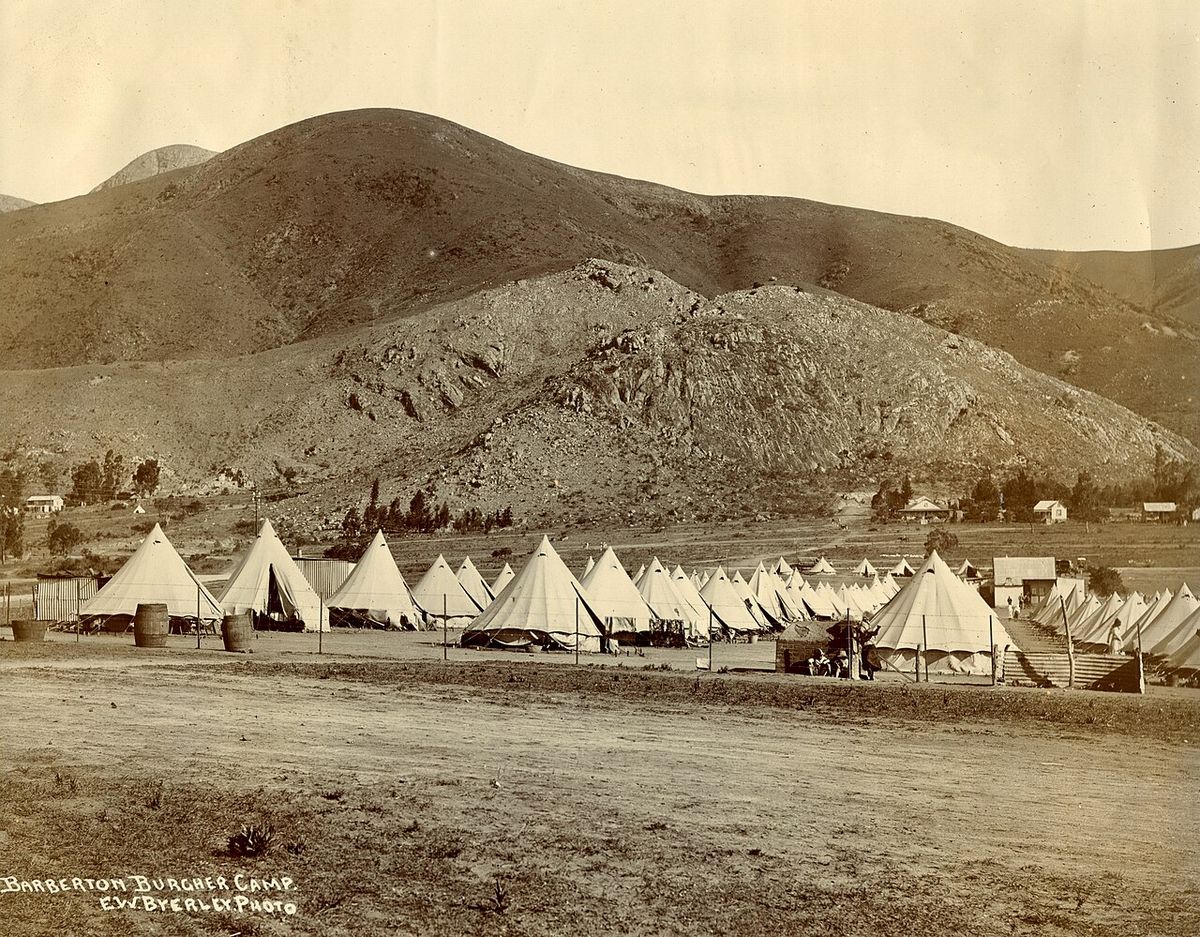
To defeat the Boer guerrilla campaign, British High Command, under Lord Kitchener, implemented a harsh and systematic counterinsurgency strategy. This involved a comprehensive scorched earth policy, where British forces systematically burned thousands of Boer farms, destroyed crops, and slaughtered livestock to deprive the commandos of food, shelter, and local support. The most controversial aspect of this policy was the forced relocation of Boer civilians, primarily women and children, as well as black African labourers, into a network of concentration camps. These camps were hastily established and poorly administered, leading to catastrophic conditions. Overcrowding, inadequate sanitation, and scarce food and medical supplies resulted in rampant disease, particularly measles, typhoid, and dysentery. The death toll was staggering, with over 26,000 Boer women and children perishing in the camps. In separate camps for black Africans, who were interned to prevent them from aiding the Boers, approximately 20,000 died from similar causes. These civilian casualties, widely reported by figures like English activist Emily Hobhouse, caused a scandal in Britain and around the world, turning international public opinion sharply against the British campaign and leaving a lasting legacy of bitterness.
International Involvement and Canadian Participation
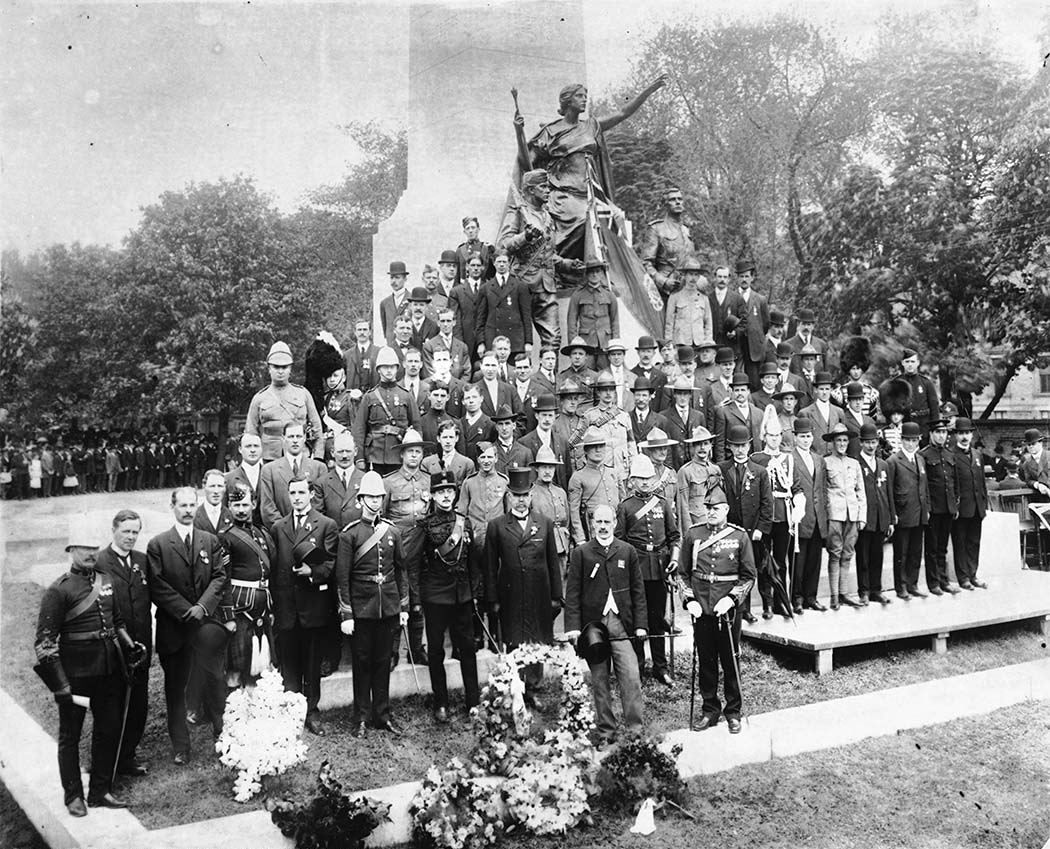
The war attracted significant international attention and involvement, both in support of the British Empire and in sympathy for the Boer cause. The British war effort was aided by colonial forces from across the empire, including Australia, New Zealand, and Canada. Over 7,000 Canadian troops volunteered for service, with the primary contingent being the 2nd (Special Service) Battalion of the Royal Canadian Regiment. Canadians fought in several key engagements, including the Battle of Paardeberg in February 1900, which was a significant British victory. The war also drew volunteers from neutral countries who sympathized with the Boers as underdogs fighting a vast empire. Notably, around 250 Russian volunteers travelled to South Africa at their own expense to fight alongside the Boers. One of the most notable was Yevgeny Maximov, a former Imperial Russian officer appointed as a combat general by the Boer leadership, who commanded the Hollander Corps. The Russian Empire also demonstrated strong solidarity through organized humanitarian initiatives that sent food, clothing, and financial assistance to the Boer republics. This international dimension highlighted the war as a global event that resonated far beyond southern Africa.
Aftermath and Legacy
The war formally ended with the signing of the Treaty of Vereeniging on 31 May 1902. Boer leaders, recognizing the devastation of their homeland and the suffering in the camps, accepted British terms, surrendering their independence in return for promises of eventual self-government, war reparations, and the use of Dutch in schools. The former republics were transformed into the British colonies of the Transvaal and the Orange River Colony. In 1910, these colonies were merged with the Cape Colony and Natal to form the Union of South Africa, a self-governing dominion within the British Empire. The war had profound and lasting effects. It was exceptionally costly for Britain, both in financial terms and in prestige, revealing military deficiencies and contributing to a period of national introspection and army reform. The conflict is often cited as the beginning of the end of unquestioned British imperial dominance. In South Africa, the war deepened racial divides, as the peace agreement excluded political rights for black Africans, setting the stage for later apartheid policies. The memory of the war, particularly the concentration camps, became a central pillar of Afrikaner nationalism.
Commemoration and Museums
The Second Boer War is commemorated through numerous museums, memorials, and battlefield sites across South Africa and in countries that participated. The premier institution dedicated to the conflict is the War Museum of the Boer Republics in Bloemfontein, South Africa, established in 1931 in the capital of the former Orange Free State. The museum's vision is to be an institution of excellence, and it provides a comprehensive understanding of the background and events of the war through its unique art collection, dioramas, and exhibitions. It notably highlights the suffering endured in the concentration camps. Other significant sites include the Klerksdorp Museum, which hosts exhibitions on the war's beginning, and the numerous battlefields like Spion Kop and Majuba Hill, which are destinations for historical tours. The conflict is also remembered in Commonwealth countries like Canada, where memorials honour those who served. Key institutions and sites related to the war include the War Museum of the Boer Republics in Bloemfontein, the Klerksdorp Museum in North West Province, the battlefield of Spion Kop in KwaZulu-Natal, the siege sites of Ladysmith, Mafeking, and Kimberley, memorials to Canadian volunteers in various Canadian cities, and the Surrey Fire and Rescue Service Chapel in Reigate, UK, which houses a memorial to former pupils of St David's School who died in the war.
Military Forces and Equipment
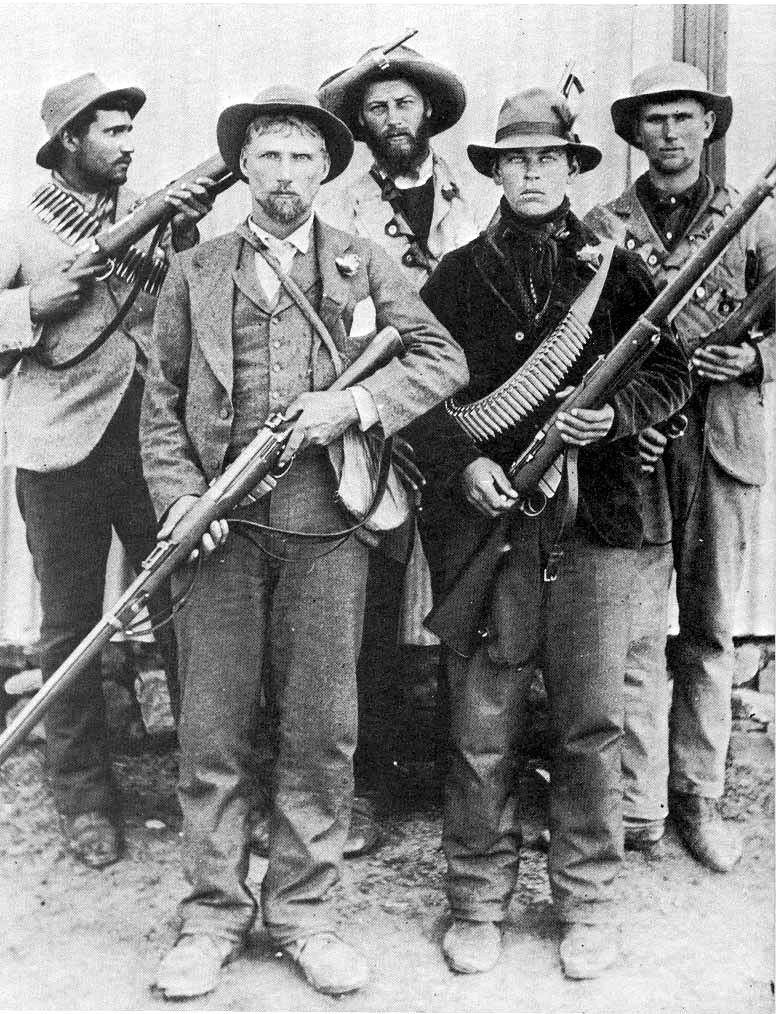
The opposing forces in the Second Boer War presented a stark contrast in composition and tactics. The Boer armies were not professional soldiers but citizen militias known as commandos, mustered from districts and led by elected officers. Each man provided his own horse and rifle, making them highly mobile and expert marksmen. By 1899, the Transvaal had transformed its forces, equipping approximately 25,000 men with modern weaponry imported from Europe. Their primary rifle was the 7x57 mm Mauser Model 1895, a bolt-action weapon with a high rate of fire and minimal smoke discharge, of which 37,000 were purchased from Germany. They also possessed significant artillery, including four 155 mm Creusot fortress guns and numerous 37 mm Maxim Nordenfeldt 'pom-pom' automatic cannons. The British Army, in contrast, was a large, professional force but was initially unprepared for the unconventional warfare it faced. British troops were equipped with the .303 Lee-Metford and later Lee-Enfield bolt-action rifles. Their tactics were often overly rigid, and their uniforms, particularly the bright red jackets used early in the war, made them easy targets for Boer marksmen. The British eventually adapted by raising large numbers of mounted infantry units to match Boer mobility and by adopting khaki uniforms for camouflage.
| Force | Primary Rifle | Key Artillery | Force Type |
|---|---|---|---|
| Boer Commandos | Mauser Model 1895 | Creusot guns, Maxim 'Pom-Pom' | Citizen militia, mounted |
| British Army | Lee-Metford/Lee-Enfield | Field guns (15-pounder, etc.) | Professional infantry & cavalry |
| Colonial Volunteers (e.g., Canada) | Lee-Enfield | Integrated with British artillery | Mounted infantry & contingents |
Questions about Second Boer War
What caused the Second Boer War?
The conflict was triggered by the discovery of gold in the Transvaal, specifically the Witwatersrand gold fields. This discovery caused an influx of British expatriates, known as Uitlanders, into the South African Republic. A political dispute arose over the voting rights of these Uitlanders, who could only vote after 14 years of residence. Negotiations to resolve this issue failed at the Bloemfontein Conference in June 1899, and the war broke out in October of that year after the British government decided to send troops.
How many people died in the concentration camps?
The British-run concentration camps resulted in massive civilian casualties. Over 26,000 Boer women and children died in the camps due to disease, malnutrition, and poor sanitation. In separate camps established for black Africans, who were interned to prevent them from aiding the Boers, approximately 20,000 people perished. These deaths caused international outrage and remain one of the most infamous aspects of the war.
Did Canada participate in the Boer War?
Yes, Canada participated as part of the British Empire. Over 7,000 Canadian troops volunteered for service, with the main contingent being the 2nd (Special Service) Battalion of the Royal Canadian Regiment. Canadians were involved in several key battles, most notably the Battle of Paardeberg in February 1900. Their service marked Canada's first major dispatch of troops to an overseas war.
Who won the Second Boer War and what was the outcome?
The British Empire won the war militarily, leading to the signing of the Treaty of Vereeniging on 31 May 1902. The Boer republics surrendered their independence and became British colonies: the Transvaal and the Orange River Colony. In 1910, these colonies were merged with the Cape and Natal to form the Union of South Africa. The peace terms promised the Boers eventual self-government and the use of Dutch in schools, but excluded political rights for the black African majority.
What is the main museum dedicated to the Boer War?
The main museum dedicated to the conflict is the War Museum of the Boer Republics in Bloemfontein, South Africa. Founded in 1931, it focuses exclusively on the Boer War. The museum provides comprehensive exhibitions on the causes, major events, and consequences of the war. It places a particular focus on the experience of civilians in the concentration camps.
What was the Jameson Raid and why was it important?
The Jameson Raid was a failed coup attempt in December 1895, led by Leander Starr Jameson and backed by Cecil Rhodes. About 600 armed men invaded the Transvaal to spark an Uitlander uprising. It was a complete failure, but its importance was profound. It convinced the Boer republics of British hostile intent, leading them to form a military pact and massively rearm. It also inflamed British jingoism and international tensions, with the German Kaiser's congratulatory telegram to President Kruger angering Britain. Historian Jan Smuts called it the 'real declaration of war'.
Sources and further reading
- Second Boer War (Wikipedia)
- Second Boer War: history, business and facts | Nosy Mag (nosymag.ca)
- Home, Anglo-Boer War Museum: An agency of the ... (wmbr.org.za)
- Russia touts collaboration with Africa's Anglo-Boer War ... (urgentmatter.press)
- The Second Boer War (1899 to 1902) (exploringsurreyspast.org.uk)
Checked by the Nosy Mag desk. Last updated 2026-10-18.