Opinion polling for the 2025 Canadian federal election
Opinion polling for the 2025 Canadian federal election constitutes the collection and analysis of public sentiment conducted from the conclusion of the 2021 election through to the 2025 campaign. These surveys measure voting intentions, leadership approval, and public attitudes on key issues. Following the election of a Liberal minority government under Prime Minister Justin Trudeau, polling has continued to track the government's performance and the evolving dynamics of federal politics. The data provides insights for political parties, media, and the public, shaping campaign strategies and informing democratic discourse.
The Role and Methodology of Election Polling
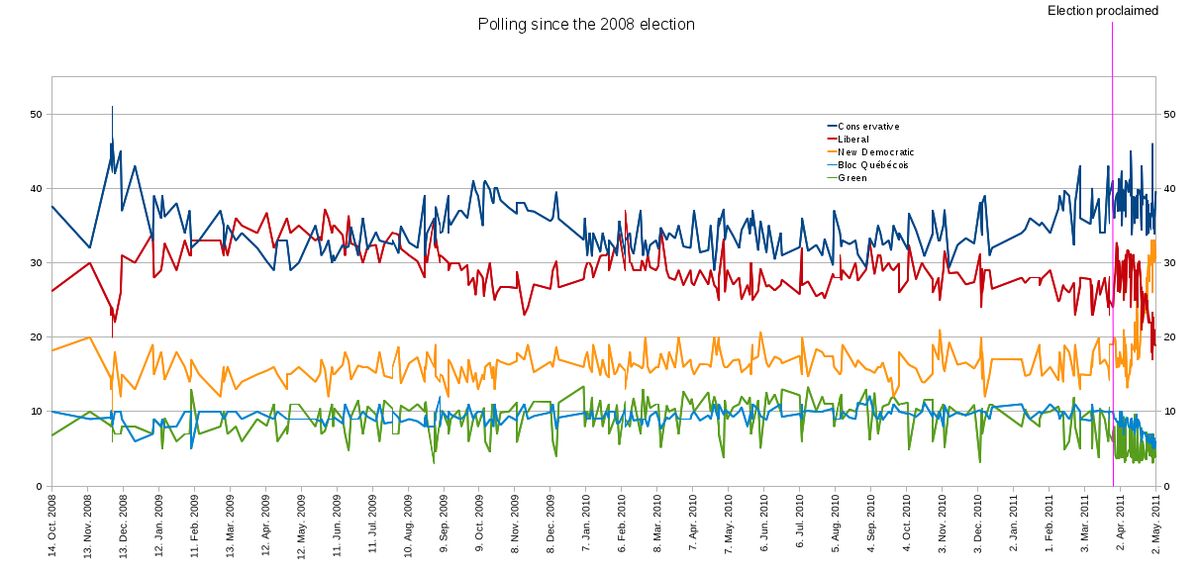
Public opinion polling ahead of a federal election serves several functions within Canada's democratic framework. For political parties, polls offer feedback on the appeal of policy platforms and leadership figures, shaping campaign strategy and the allocation of resources. Media organizations and the public rely on polls as an indicator of the shifting political climate, helping to contextualize daily political news. The sustained tracking of opinion between elections allows for the analysis of long-term trends on issues such as immigration and energy policy. Polling firms employ scientific methodologies to ensure their findings are representative of the Canadian population. Results are weighted according to demographic factors like age, gender, region, and education to reflect the broader electorate. For a sample of this size, the associated margin of error is typically around 2.5 percentage points, 19 times out of 20. Aggregators like 338Canada and PolitPro use statistical models to combine data from multiple polling institutes, creating weighted averages that smooth out short-term fluctuations.
National Voting Intentions and Seat Projections
National polling has shown the Liberals maintaining a lead over the official opposition Conservatives. The PolitPro Election Trend as of October 22, 2026, calculated from a weighted average of polls, placed Liberal support at 47.1 percent, followed by the Conservatives at 31.6 percent. The New Democratic Party held 10.6 percent, the Bloc Québécois 6.3 percent, the Green Party 2.6 percent, and the People's Party 1.5 percent. This national picture masks considerable regional variation that directly impacts seat projections. Polling aggregators and analysts use complex models, such as Multilevel Regression with Poststratification (MRP), to translate popular vote numbers into probable seat counts in Canada's first-past-the-post system. Ahead of the election, YouGov published an MRP model projecting seat totals. One projection from October 2026 suggested the Liberals were leading in 241 seats across the country. These models incorporate not just national and regional polls but also demographic data and electoral history to predict outcomes at the riding level. The Liberal lead in the popular vote, if sustained, typically translates into a seat advantage in the House of Commons, though the distribution of that support is crucial.
Regional and Demographic Divisions in Support
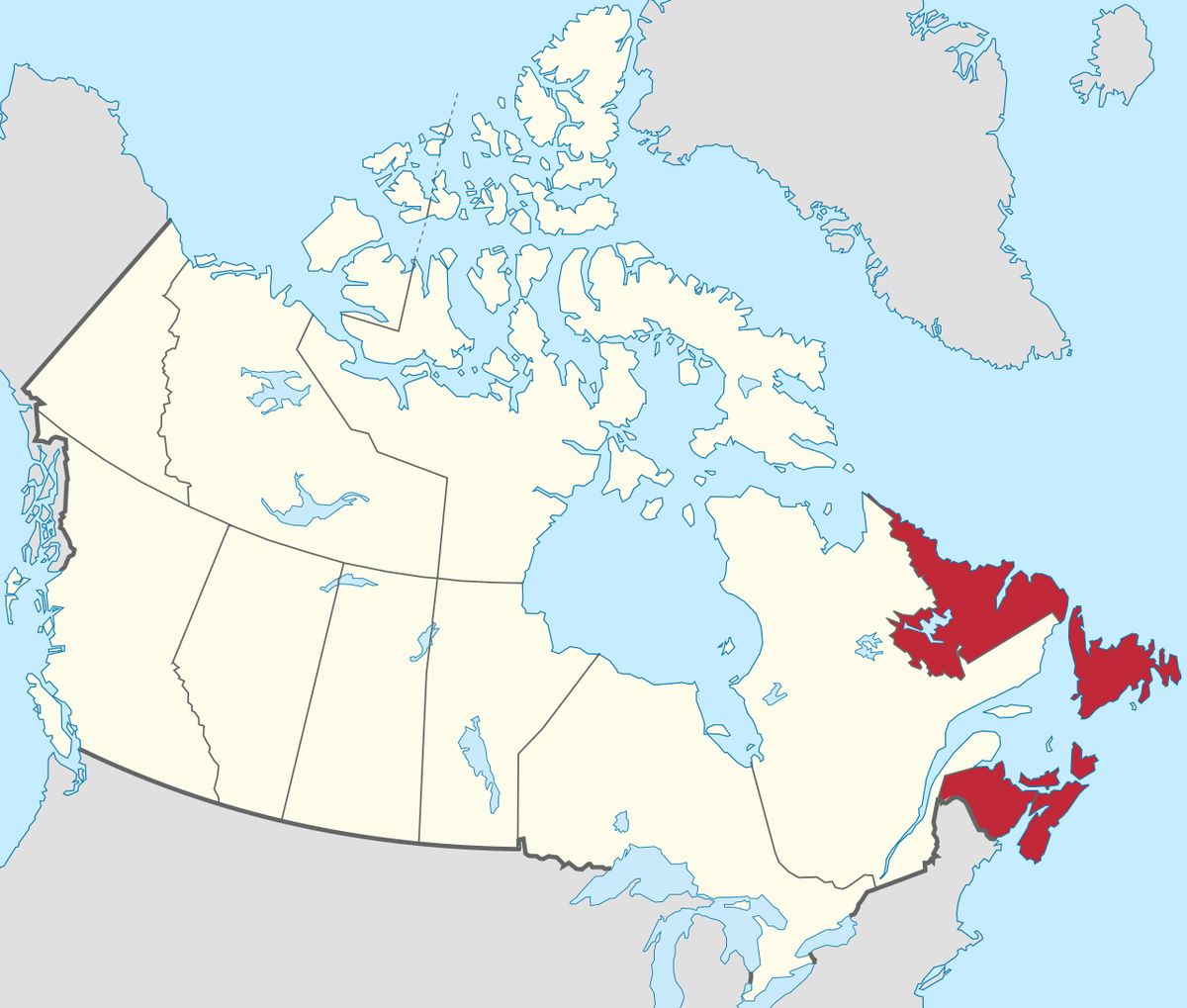
Detailed polling reveals that national party support is far from uniform, with stark contrasts evident across regions and age groups. According to Leger's October 2026 data, Liberal support is strongest in Atlantic Canada at 53 percent, Ontario at 51 percent, and British Columbia at 50 percent. The Conservatives lead in the Prairie provinces of Manitoba and Saskatchewan with 46 percent support, while Alberta is a closely divided battleground with 43 percent support for each of the two major parties. In Quebec, the Liberals hold a commanding lead with 47 percent of decided voting intentions, ahead of the Bloc Québécois at 26 percent and the Conservatives at 17 percent. A pronounced generational divide is also a persistent feature of the political scene. The Liberals maintain a particularly strong lead among Canadians aged 55 and older, commanding 58 percent support compared to 27 percent for the Conservatives. Among voters aged 35 to 54, the race is nearly tied, with the Liberals at 41 percent and the Conservatives at 39 percent. This demographic split suggests that while the government enjoys stability from older voters, it faces a more competitive environment among the working-age population.
Leadership and Government Performance Ratings
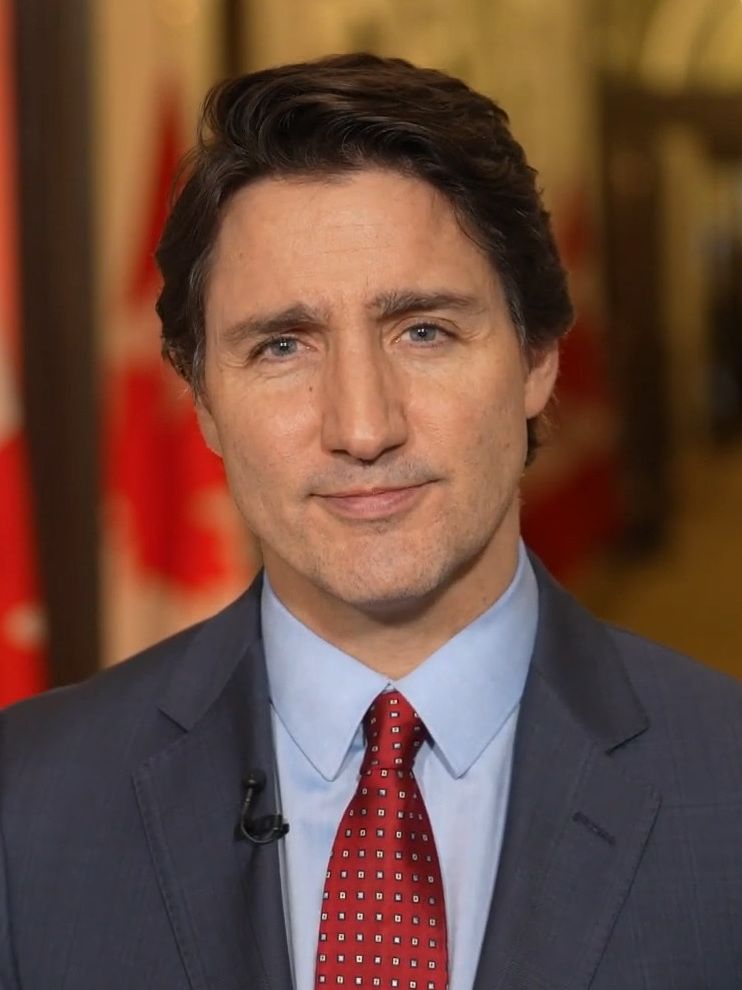
Approval ratings for Prime Minister Justin Trudeau and satisfaction with the federal government have remained steady. The October 2026 Leger poll found that 58 percent of Canadians approved of Trudeau's performance as Prime Minister, a figure unchanged from the previous month. Similarly, 57 percent of Canadians reported being satisfied with the federal government overall. These leadership numbers are higher than public assessments of the government's progress on specific policy files. Perceptions of national unity have shown marked improvement, with 56 percent of Canadians believing it has improved since Trudeau took office, a nine-point increase since November 2025. This positive sentiment is strongest among older Canadians, with 66 percent of those aged 55 and older sharing this view. Even among Conservative supporters, a significant minority of 33 percent believe national unity has improved under the current government. The government's 'Projects of National Interest' infrastructure initiative has gained traction, with familiarity highest in British Columbia at 71 percent and Alberta at 62 percent, though lower in Quebec at 37 percent. Canadians familiar with the initiative are far more likely to assess its progress positively, with 66 percent believing Trudeau is doing a good job getting these projects underway compared to just 21 percent among those unfamiliar with it.
Key Policy Issues and Public Assessment
Polling consistently tracks public opinion on major policy areas, revealing both strengths and vulnerabilities for the governing party. Canadians give the federal government comparatively higher ratings on external and strategic files. Trade diversification receives the highest average performance rating at 6.5 out of 10, while managing Canada-U.S. trade relations has seen the largest improvement, with its rating rising by 1.2 points to 5.9 out of 10 since November 2025. Progress on getting natural resources to international markets and strengthening military capacity also receives above-average assessments. In contrast, domestic affordability issues are the government's weakest areas. Housing affordability receives an average rating of just 5.0 out of 10, and the cost of living is rated at 4.9 out of 10. Nearly two-thirds of Canadians are disappointed with the government's progress on housing affordability and addressing the cost-of-living crisis. Public opinion on immigration has stabilized after a period of significant concern. The proportion agreeing there is 'too much immigration' peaked at 58 percent in 2024 but stabilized at 56 percent in 2025, potentially in response to new federal caps on new arrivals. A pronounced partisan gap exists on this issue, with 82 percent of Conservative supporters agreeing immigration is too high, compared to 40 percent of Liberal supporters.
Significant shifts have also occurred in public attitudes toward energy and climate policy. The proportion of Canadians who favour boosting oil and gas exports over meeting emissions targets has slowly increased to 29 percent in 2025 from 19 percent in 2021. This trend is particularly evident in British Columbia, where support for this position rose to 33 percent from 18 percent over the same period. Concurrently, the proportion who see meeting Paris Agreement targets as a high priority has dropped nationally to 31 percent from 41 percent. These changes have effectively narrowed the long-standing gap in public opinion between residents of British Columbia and Alberta on energy issues. The national proportion saying Canada needs to prioritize jobs in the oil and gas industry has increased to 37 percent from 31 percent, with the change in British Columbia being even larger at a ten-point increase.
Economic and Geopolitical Context in Polling
Opinion polling is conducted against a backdrop of economic uncertainty and geopolitical realignment, which shapes voter concerns and government priorities. The Canadian economy faced headwinds in late 2026, with a loss of 68,000 jobs in September erasing earlier annual gains. High living costs persist, with inflation at 3.0 percent in August 2026, and two-thirds of Canadians reporting their standard of living is at a historic low. The Bank of Canada's policy rate was held at 2.25 percent to balance inflation risks against subdued growth. In response, the government introduced policy measures like a 'Productivity Mega Deduction' to boost investment and directed funds to the food sector to secure supply. Public skepticism about the effectiveness of these policies is reflected in the low ratings on cost-of-living progress. On the geopolitical front, polling reveals a Canadian public perceiving an increasingly hostile world. Traditional alliances with the United Kingdom and France remain strong, but trust in other major powers has eroded. The proportion of Canadians viewing China as a friend has been halved since 2013, falling from 49 to 25 percent. This sentiment aligns with the government's strategic pivot toward deeper partnerships with the European Union, including planned summits on defence and artificial intelligence cooperation. Domestic unity is simultaneously tested by separatist movements in Alberta and Quebec, which complicate Canada's external reorientation and are a constant subject of polling analysis regarding national cohesion. The federal government is also fine-tuning immigration policy through the Express Entry system while managing provincial demands for greater control.
Notable Polls and Surveys Since the 2025 Election
Several major polls and survey trends have defined the political narrative following the 2025 election. The regular tracking by firms like Leger, Ipsos, and Nanos provides a continuous stream of data on voting intention and leader approval. The Leger poll from October 9 to 12, 2026, found a 15-point Liberal lead with 48 percent support compared to 33 percent for the Conservatives, alongside a 58 percent approval rating for Prime Minister Trudeau. An Ipsos poll from early 2026 reported a much tighter race, with the Liberals holding a slim three-point lead over the Conservatives. The PolitPro Election Trend as of October 22, 2026, showed an aggregated weighted average with Liberals at 47.1 percent, Conservatives at 31.6 percent, and the NDP at 10.6 percent. A seat projection from The Writ on October 20, 2026, projected the Liberals leading in 241 seats nationally. Long-term issue tracking from 2022 to 2025 documented the dramatic rise in concern over immigration levels, which stabilized in 2025 after federal policy changes. Another significant trend from 2021 to 2025 tracked the gradual increase in public support for prioritizing oil and gas exports, a shift most pronounced in British Columbia.
- Leger (October 9-12, 2026): Found a 15-point Liberal lead (48% to 33% for Conservatives), with 58% approval for PM Trudeau and improved ratings on national unity.
- Ipsos (Early 2026): Reported a tighter race, with the Liberals holding a slim three-point lead over the Conservatives.
- PolitPro Election Trend (October 22, 2026): The aggregated weighted average showed Liberals at 47.1%, Conservatives at 31.6%, and the NDP at 10.6%.
- Seat Projection (The Writ, October 20, 2026): Projected the Liberals leading in 241 seats nationally.
- Issue Tracking (2022 to 2025): Documented the rise in concern over immigration levels, which stabilized in 2025.
- Energy Policy Shift (2021 to 2025): Tracked the increase in public support for prioritizing oil and gas exports, a trend most pronounced in British Columbia.
Questions about Opinion polling for the 2025 Canadian federal election
Which party is leading in the polls for the next Canadian federal election?
As of October 2026, the Liberal Party under Prime Minister Justin Trudeau holds a lead in national polling averages. The PolitPro Election Trend shows the Liberals with 47.1 percent support among decided voters, followed by the Conservative Party at 31.6 percent. Other parties trail significantly, with the NDP at 10.6 percent, the Bloc Québécois at 6.3 percent, and the Green Party at 2.6 percent. This lead has been consistent in polls conducted after the 2025 election, though some individual surveys, like an early 2026 Ipsos poll, have shown a tighter race.
How do Canadians rate Prime Minister Justin Trudeau's performance?
Approval ratings for Prime Minister Justin Trudeau have remained steady. According to a Leger poll from October 2026, 58 percent of Canadians approve of his performance as Prime Minister. This level of approval is closely linked to satisfaction with the federal government overall, which stands at 57 percent. His leadership is particularly associated with improved perceptions of national unity, with 56 percent of Canadians believing unity has improved since he took office. These approval numbers are higher than public assessments of his government's progress on specific economic issues like housing affordability.
What are the biggest issues for Canadian voters according to recent polls?
Polls consistently identify the cost of living and housing affordability as the top concerns for Canadian voters and the government's weakest policy areas. In October 2026, Canadians gave the government an average rating of just 4.9 out of 10 on addressing the cost of living and 5.0 out of 10 on housing affordability. Nearly two-thirds of Canadians express disappointment with the progress on these files. In contrast, the government receives higher ratings on external issues like trade diversification and managing Canada-U.S. relations. Immigration levels, national unity, and energy policy are also significant issues tracked closely by pollsters.
How does support for the Liberals and Conservatives vary across different regions?
Support for the major parties varies dramatically by region, which is crucial for seat projections. Liberal support is strongest in Atlantic Canada (53%), Ontario (51%), and British Columbia (50%). They also lead decisively in Quebec with 47% support. The Conservative Party leads in the Prairie provinces of Manitoba and Saskatchewan with 46% support. Alberta is a competitive battleground, with the latest polls showing both the Liberals and Conservatives tied at 43% support each. This regional polarization means the Conservative vote is concentrated in less populous regions, while Liberal support is distributed more efficiently across seat-rich provinces.
Has public opinion on immigration and energy policy changed recently?
Yes, public opinion on both immigration and energy policy has undergone significant shifts. Concern over immigration levels rose sharply between 2022 and 2024, with 58% of Canadians saying there was too much immigration. This sentiment stabilized at 56% in 2025, likely in response to new federal caps. On energy, there has been a gradual shift in priorities. The proportion of Canadians who favour boosting oil and gas exports over meeting climate targets increased to 29% in 2025 from 19% in 2021. This trend is especially strong in British Columbia, narrowing the traditional opinion gap between that province and Alberta on energy issues.
What is the seat projection based on current polling?
Seat projections based on current polling models suggest the Liberal Party is in a strong position. One projection from October 2026 indicated the Liberals were leading in 241 seats across the country. Ahead of the election, YouGov published a Multilevel Regression with Poststratification (MRP) model projecting seat totals. Canada's first-past-the-post electoral system amplifies the seat advantage for a party with a significant and efficiently distributed lead in the popular vote. These projections use sophisticated methods to translate regional and national polling numbers into probable outcomes in individual ridings.
Sources and further reading
- Opinion polling for the 2025 Canadian federal election (Wikipedia)
- Federal Politics: Liberals Hold 15-Point Lead, Leger Marketing (leger360.com)
- What public opinion tells us about the political outlook for 2026 (policyoptions.irpp.org)
- Canada election polls | Voting intention ... (politpro.eu)
Checked by the Nosy Mag desk. Last updated 2026-10-21.