Canadian passport
The Canadian passport is the official travel document issued to citizens of Canada, enabling international travel and serving as proof of citizenship and identity. Issued by Immigration, Refugees and Citizenship Canada (IRCC), it grants holders visa-free or visa-on-arrival access to many countries, ranking seventh globally in 2026. The passport is legally the property of the Crown and must be returned upon request. Recent changes include a new design in 2023, updated fees and a processing guarantee in 2026, and expanded citizenship eligibility through legislative reform.
Historical Development
The first Canadian passports were issued in 1862 during the American Civil War, taking the form of a 'Letter of Request' from the Governor General to facilitate border crossing into the United States. This format persisted until 1915, when Canada adopted the British-style single-sheet folder passport. The modern booklet form was established in 1921. Until 1947, Canadians were British subjects and passports reflected this. The first page declared the bearer was a British subject until the Citizenship Act 1976 replaced that clause with 'The bearer of this passport is a Canadian citizen.' Between 1947 and 1970, applications were made by mail to Ottawa. The first three Passport Canada offices opened in Montreal, Toronto, and Vancouver in 1970.
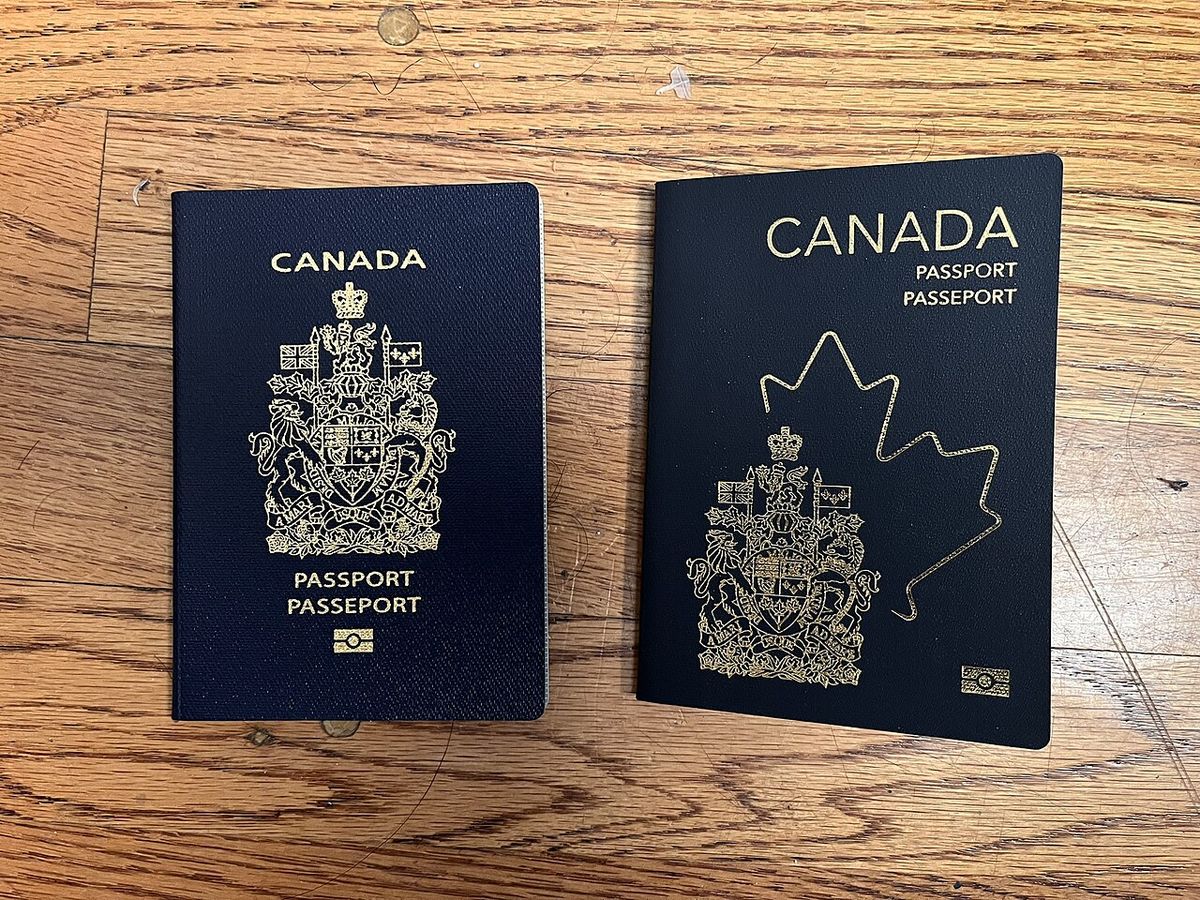
The passport's physical format has evolved significantly. In the early 1980s, the booklet size was reduced in preparation for machine-readable technology. Canada introduced its first Machine-Readable Passport in 1985. Enhanced versions followed in 1991 and 1993. An update in 2002 embedded the bearer's digital photo on the data page and added holograms and ultraviolet features. The final MRP revision in 2010 included optically variable ink and laser perforation. On 1 July 2013, Canada began issuing biometric e-passports containing an embedded electronic chip. The administration of the passport program was transferred from Foreign Affairs and International Trade Canada to Citizenship and Immigration Canada, now IRCC. The most recent visual redesign, featuring a polycarbonate data page and new artwork, was released on 18 June 2023.
Application Process and Requirements
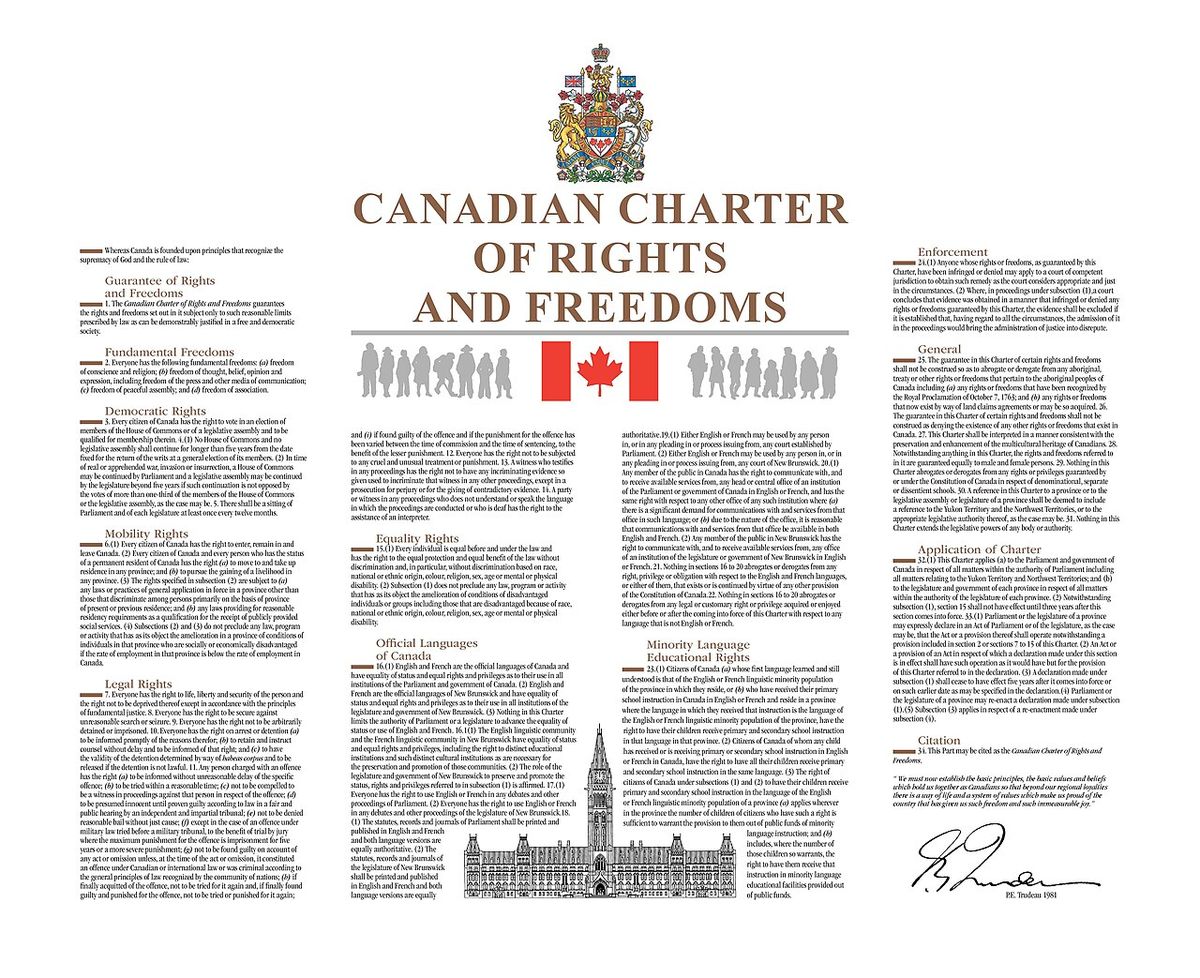
All Canadian citizens are legally entitled to a passport under the Canadian Charter of Rights and Freedoms. Proof of citizenship is required and can be established through documents such as a Canadian citizenship certificate, a provincial or territorial birth certificate, or specific historical certificates. a provincial birth certificate is accepted by IRCC as proof, but under the Citizenship Act, a child born in Canada to certain foreign diplomats is not a citizen despite potentially holding a passport. Applications can be submitted in person at a passport office or Service Canada location, by mail within Canada or from the United States and Bermuda, or through a Canadian diplomatic mission abroad for those living elsewhere. Expedited services are only available at passport offices within Canada.
The application process requires a guarantor for first-time applicants, a security measure modelled after the United Kingdom's system. The guarantor must have known the applicant for at least two years. For applicants within Canada, the guarantor must be a Canadian passport holder. Canadians abroad without access to a Canadian guarantor may use a non-Canadian who works in a licensed profession such as medicine, law, or policing. The passport is issued under the Royal Prerogative in the name of the reigning monarch, as per the Canadian Passport Order, which also outlines the grounds for refusal or revocation.
- Submit a completed application form with supporting documents.
- Provide proof of Canadian citizenship (e.g., birth certificate, citizenship certificate).
- Submit two identical passport photos meeting government specifications.
- Have application and photos signed by a guarantor if it is a first application.
- Pay the applicable fee, which varies by service type and location.
- Provide any previous Canadian travel document if applicable.
Fees and the 2026 Service Guarantee
Passport fees increased on 31 March 2026 for the first time since 2013, adjusting for inflation and service delivery costs under the Service Fees Act. The new fee for a standard 10-year adult passport issued in Canada is $163.50, while a 5-year adult passport costs $122.50. A 5-year child passport issued in Canada costs $58.50. Fees for documents issued outside Canada are higher, with a 10-year adult passport costing $266.25. Additional fees apply for urgent pick-up, temporary passports, and other special services. Passport fees will now be adjusted annually based on the Consumer Price Index.
Beginning 1 April 2026, the government introduced a 30-business-day processing guarantee for passport applications. If a complete application is not processed within this timeframe, the applicant receives a full automatic refund of the passport fee. This guarantee applies to applications submitted online, in person, or by mail from anywhere in the world. Refunds are issued by cheque to the mailing address on file for applications from within Canada or the United States, and via credit card or electronic transfer for those from elsewhere. This new policy replaces an older partial refund system. Certain fees, such as the $25 consular fee for adults and fees for expedited services, are excluded from this refund guarantee.
| Service | Fee (from 31 March 2026) |
|---|---|
| 10-year adult passport (in Canada) | $163.50 |
| 5-year adult passport (in Canada) | $122.50 |
| 10-year adult passport (outside Canada) | $266.25 |
| 5-year adult passport (outside Canada) | $194.25 |
| Child passport, 5-year (in Canada) | $58.50 |
| Child passport, 5-year (outside Canada) | $102.50 |
| Urgent pickup | $125.75 |
The 2023 Passport Design and Controversy
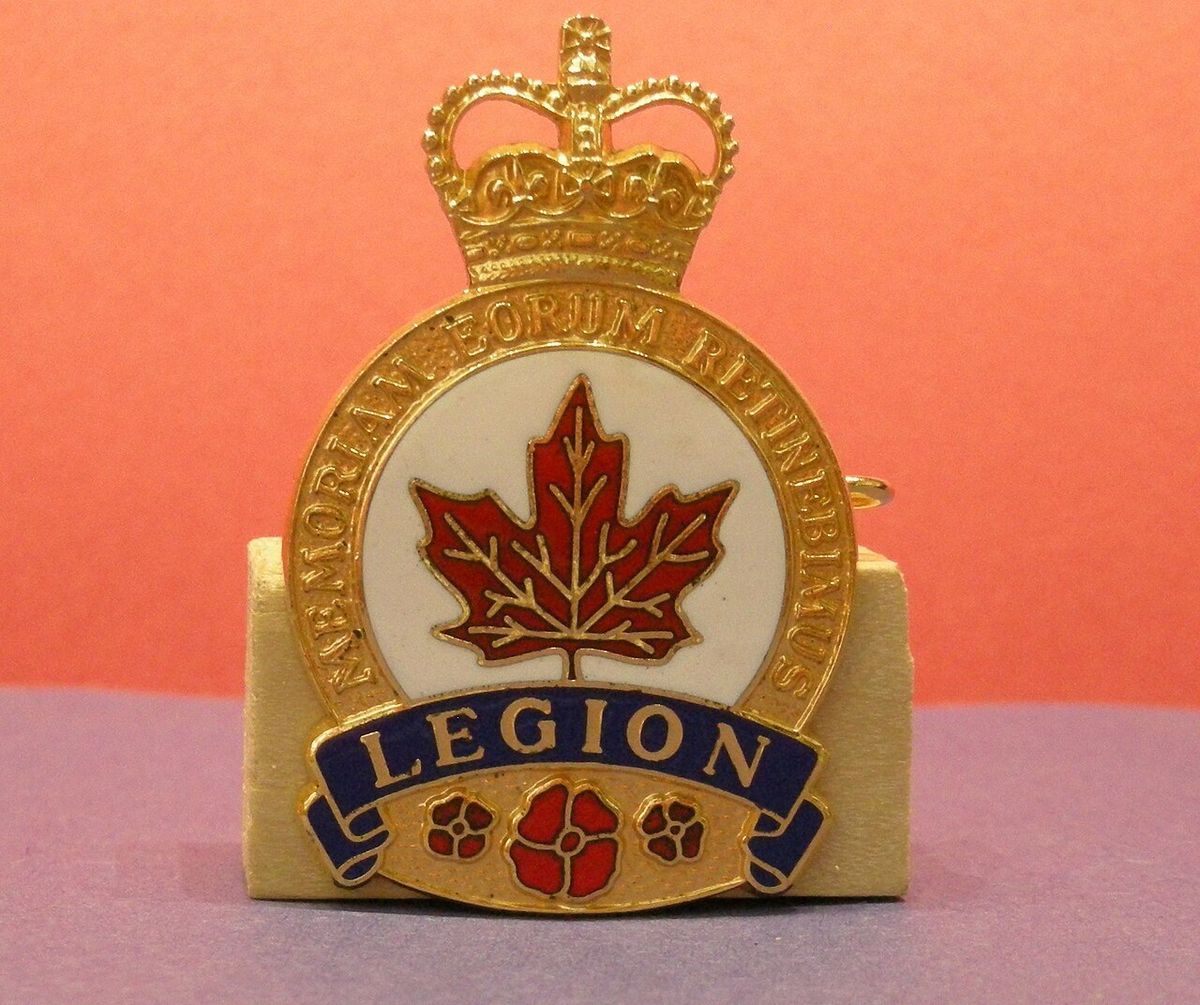
A newly designed passport series became available on 18 June 2023, featuring updated security features, a polycarbonate data page, and new thematic artwork. The rollout was met with significant public and institutional backlash over the removal of numerous historic national and Indigenous symbols that had been featured in previous editions. Images commemorating Canadian military history, such as the Vimy Ridge Memorial and the National War Memorial, were omitted. Well-known Canadian figures like Terry Fox, Nellie McClung, and Billy Bishop were also removed, along with quotes from former prime ministers. The removal of these elements prompted statements of disappointment from organizations like the Vimy Foundation and the Royal Canadian Legion, and from public figures including the mayor of Terry Fox's hometown.
The design changes extended to many other cultural and historical symbols. Removed imagery included the HMCS Sackville, the Grey Cup and Stanley Cup, the Bluenose schooner, Pier 21, the RCMP, the Last Spike, Parliament's Centre Block, Niagara Falls, and Cape Spear. Indigenous symbols like the inukshuk, eagle feather, and Métis infinity symbol were also taken out. The government, through then-Minister of Immigration Sean Fraser, stated that consultation feedback had expressed a desire to celebrate diversity, inclusion, and the natural environment, which guided the new artistic direction. Some users reported that the new passport booklets were more prone to bending, a concern IRCC attributed to manufacturing sensitivity to heat and humidity but stated did not affect the document's functionality or validity.
Citizenship Expansion Under Bill C-3
A change to the basis of passport eligibility came into force on 15 December 2025 with the implementation of Bill C-3, which amended the Citizenship Act. This legislation removed the 'first-generation limit' that had prevented Canadian citizens born abroad from passing citizenship to their own children born outside Canada. The change followed a 2023 Ontario Superior Court ruling that found the limit unconstitutional. The government did not appeal and instead introduced this legislative remedy, potentially making hundreds of thousands of people newly eligible for Canadian citizenship and, consequently, a passport.
The new law operates with two key timelines. For individuals born before 15 December 2025, citizenship is restored retroactively to those in the second, third, or later generations abroad, provided they have an unbroken ancestral line to a Canadian citizen. There is no 'substantial connection' test for this group. For children born on or after 15 December 2025, a Canadian parent born abroad must demonstrate a 'substantial connection' by having been physically present in Canada for at least 1,095 days prior to the child's birth to pass on citizenship. The law also rectifies historical gender inequities in citizenship transmission and facilitates citizenship for internationally adopted children of Canadians.
Security, Use, and Global Standing
The Canadian passport incorporates numerous security features to prevent counterfeiting and fraud. Since 1 July 2013, all issued passports have been biometric e-passports containing a chip that stores the bearer's name, gender, date and place of birth, and a digital facial image. The documents also feature holographic laminates, optically variable ink, laser perforation, and polycarbonate data pages in the latest series. The government reserves the right to refuse or revoke a passport on grounds including national security, criminality, or misrepresentation, as outlined in the Canadian Passport Order. A notable case occurred in July 2004 when the government invoked the Royal Prerogative to deny a passport to Abdurahman Khadr on national security grounds, a justification later formally added to the Order.
For travel to Canada, a Canadian passport is effectively required for citizens arriving by air. Since November 2016, visa-exempt foreign travellers need an Electronic Travel Authorization to fly to Canada, but Canadian citizens are barred from applying for an eTA. Therefore, a Canadian citizen travelling by air to Canada must present a valid Canadian passport at check-in to board their flight, unless they qualify for a limited exception such as entering by land or private conveyance. At the border itself, Canadian citizens cannot be denied entry for lacking a passport, but they must report to customs. In terms of global mobility, the Canadian passport is highly ranked, offering visa-free or visa-on-arrival access to 182 destinations as of 2026, placing it seventh on the Henley Passport Index. Canada is a member of the Five Nations Passport Group, an international forum for cooperation between the passport issuing authorities of Canada, Australia, New Zealand, the United Kingdom, and the United States.
- Biometric chip with holder's data and digital photo.
- Holographic images and laminates.
- Optically variable ink that changes colour.
- Laser perforated number.
- Ultraviolet light visible features and hidden imagery.
- Polycarbonate data page (2023 series onwards).
- Machine-readable zone on the data page.
Questions about Canadian passport
How much does a Canadian passport cost in 2026?
As of 31 March 2026, new fees apply. A standard 10-year adult passport issued in Canada costs $163.50, while a 5-year adult passport costs $122.50. For children under 16, a 5-year passport costs $58.50 when issued in Canada. Fees are higher for applications submitted outside Canada, with a 10-year adult passport costing $266.25. These fees are now adjusted annually for inflation.
What is the new passport processing guarantee?
Starting 1 April 2026, the Government of Canada guarantees that a complete passport application will be processed within 30 business days. If this deadline is not met, the applicant will receive a full automatic refund of the passport fee. This guarantee applies to applications submitted online, in person, or by mail from anywhere in the world. Fees for expedited services are not covered by this refund guarantee.
What changed with the new passport design in 2023?
The passport design released on 18 June 2023 introduced a polycarbonate data page, new security features, and updated artwork. It sparked controversy because it removed many historical and cultural symbols. These removed symbols included images of the Vimy Ridge Memorial, Terry Fox, Nellie McClung, the RCMP, and Indigenous symbols like the inukshuk. The government stated the new design aims to celebrate diversity, inclusion, and Canada's natural environment.
Do I need a Canadian passport to fly back to Canada?
Yes, with very limited exceptions. Since 2016, visa-exempt foreign nationals need an Electronic Travel Authorization to fly to Canada, but Canadian citizens cannot get an eTA. Therefore, a Canadian citizen must present a valid Canadian passport at airline check-in to board a flight to Canada. Exceptions include entering by land, sea, or private conveyance. At the border itself, citizens cannot be denied entry for lacking a passport.
What is Bill C-3 and how does it affect passport eligibility?
Bill C-3, in effect from 15 December 2025, removed the 'first-generation limit' on citizenship by descent. This means Canadian citizens born abroad can now pass citizenship to their children born outside Canada. It retroactively restores citizenship to many 'Lost Canadians' in later generations abroad. The bill also introduces a 'substantial connection' test for children born after that date, significantly expanding the pool of people eligible for a Canadian passport.
How powerful is the Canadian passport for travel?
The Canadian passport is one of the world's most powerful travel documents. As of 2026, it ranks seventh on the Henley Passport Index. This ranking provides its holders with visa-free or visa-on-arrival access to 182 destinations globally. The high ranking reflects the document's security, Canada's international relationships, and the trust placed in Canadian citizens by other nations.
Sources and further reading
- Canadian passport (Wikipedia)
- New Canadian passport fees kick in March 31 (cicnews.com)
Checked by the Nosy Mag desk. Last updated 2026-10-21.