Omar Khadr
Omar Ahmed Said Khadr is a Canadian citizen whose legal case became a prolonged and controversial saga in Canadian law and international human rights. At the age of 15, he was captured by United States forces following a firefight in Afghanistan in July 2002 and subsequently detained for a decade at the Guantanamo Bay detention camp. In 2010, he pleaded guilty before a United States military commission to charges including murder in violation of the laws of war, a conviction he later sought to overturn. The case culminated in a 2017 settlement with the Canadian government, which paid Khadr $10.5 million and issued a formal apology after the Supreme Court of Canada found Canadian officials had violated his Charter rights.
Early Life and Family Background
Omar Ahmed Said Khadr was born in Toronto on September 19, 1986, to parents Ahmed Said Khadr, an Egyptian immigrant, and Maha Elsamnah, a Palestinian immigrant, both of whom were Canadian citizens. The Khadr family moved to Peshawar, Pakistan, in 1985, where Ahmed worked for Muslim charities aiding Afghan refugees. He spent his childhood moving back and forth between Canada and Pakistan. In 1992, the family moved to Toronto after Ahmed was severely injured in Logar, Afghanistan, during which time Omar attended Grade 1 at ISNA Elementary School.
In 1995, Omar Khadr's father, Ahmed Khadr, was arrested in Pakistan and accused of financially aiding the Egyptian Islamic Jihad in the bombing of the Egyptian embassy in Pakistan. During his imprisonment, Ahmed was hospitalized following a hunger strike before being released a year later due to a lack of evidence. In 1996, Ahmed Khadr moved his family to Jalalabad, Afghanistan, where he worked for an NGO. Following the September 11, 2001 attacks, Omar's mother and his siblings feared U.S. bombing of Afghanistan and retreated toward the Pakistani mountains.
In early 2002, Omar Khadr was living in Waziristan with his mother and younger sister. At one point, he was forced to wear a burqa and disguise himself as a girl to avoid scrutiny, an act that upset him. When his father returned, Omar asked to be allowed to stay at a group home for young men, despite his mother's protests. His father agreed, and a month later allowed Omar to accompany a group of Arabs associated with Abu Laith al-Libi who needed a Pashto translator during their stay in Khost. According to April 2007 charges from the military commission, Khadr received one on one weapons training in June 2002.
The 2002 Firefight and Capture
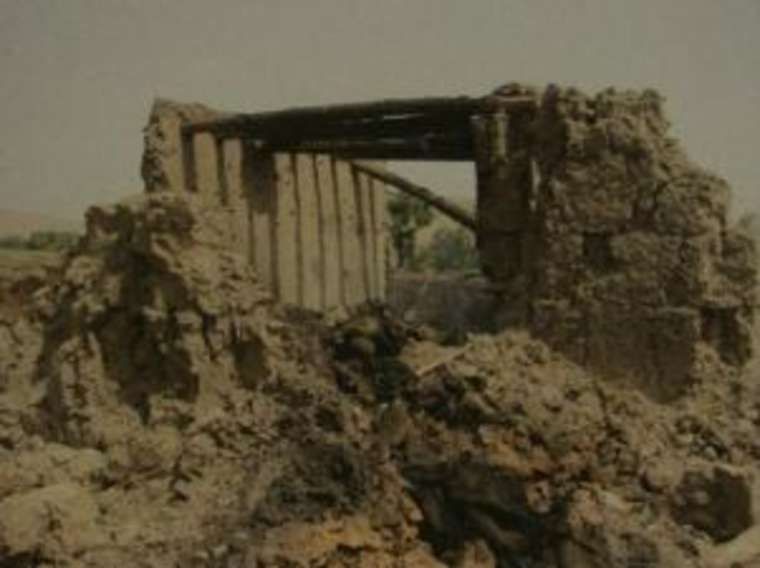
On July 27, 2002, a joint team of American soldiers from the 19th Special Forces Group and the 505th Infantry Regiment, along with about twenty Afghan fighters, conducted a reconnaissance mission near a house in the village of Ayub Kheyl, Afghanistan. Intelligence indicated a monitored satellite phone had been used within 300 to 600 metres of their location, and a team of seven soldiers was sent to investigate. This group approached a residential compound surrounded by a stone wall, and after attempts to negotiate with the occupants failed, the occupants opened fire, shooting two Afghan messengers and initiating a firefight where grenades and intermittent rifle fire were used against the American and Afghan troops. During the intense exchange, Sergeant Layne Morris was wounded by shrapnel above his right eye and in his nose.
American forces called for MedEvac and air support, with AH-64 Apache helicopters strafing the compound and A-10 Warthog aircraft later dropping multiple 500 lb bombs on the site. After the bombardment, a ground team entered the compound through a hole in the south wall. According to the account of a US soldier identified as OC-1, a grenade was lobbed over the wall and exploded near the rear of the group, fatally injuring Sergeant First Class Christopher Speer. OC-1 reported entering an alleyway, where he shot and killed one militant and then shot the wounded Omar Khadr twice in the back. Khadr, critically wounded, was given on-site medical attention and repeatedly asked medics to kill him, but Delta Force soldiers ordered them not to harm the prisoner, and he was loaded onto a CH-47 helicopter and flown to Bagram Airbase.
Soldiers returned to search the premises the day after the firefight. They uncovered five boxes of rifle ammunition, two rockets, two grenades and three rocket-propelled grenades in the huts. A plastic bag was discovered in the granary, containing documents, wires and a videocassette. The video shows Khadr toying with detonating cord as other men, including one later identified as Abu Laith al-Libi, assemble explosives in the same house that had been destroyed the day before by US forces. The men plant landmines while smiling and joking with the cameraman.
- Five boxes of rifle ammunition found in the huts.
- Two rockets and three rocket-propelled grenades discovered.
- Two grenades recovered from the site.
- A plastic bag in the granary containing documents, wires, and a videocassette.
- A videotape showing Khadr and others handling explosives and assembling landmines.
Sergeant Speer was moved from Bagram airbase to Ramstein Air Base in Germany, where he was removed from life support on August 7 and died. His heart, liver, lungs and kidneys were donated for use by other patients. A US source noted the firefight was the first time the enemy had stood his ground since Operation Anaconda had ended four months earlier. Master Sergeant Scotty Hansen and Major Randy Watt were both awarded a Bronze Star for running forward under fire to retrieve two fallen bodies.
Detention, Interrogation and Military Commission Charges
Omar Khadr was airlifted to receive medical attention at Bagram Airbase. He regained consciousness approximately a week later, and interrogations began while he remained stretcher-bound for several weeks. Col. Marjorie Mosier operated on his eyes after his arrival. According to a motion to suppress ruling by Guantanamo military judge Patrick Parrish, various interrogation techniques were used on Khadr at Bagram.
- The 'Fear Up' technique, described as an attempt to raise the detainee's fear level, which in Khadr's case included telling him a detainee who lied was raped by 'big, black guys' in the showers.
- The 'love of freedom' and 'Pride/Ego Down' techniques, attempts to gather information by appealing to a desire to go home or implying he was not important.
- The 'Fear of Incarceration' technique, an attempt to gain cooperation to return to a normal life rather than be detained.
Khadr states that he was refused pain medication for his wounds, that he had his hands tied above a door frame for hours, had cold water thrown on him, had a bag placed over his head and was threatened with military dogs, and was flatulated upon. On August 20, the United States informed Canada of the capture and asked them to confirm the identity of their prisoner. Ten days later, Canadian officials sent a diplomatic query to the United States requesting consular access to their citizen being held at Bagram, but the request was denied. Khadr was sent to the Guantanamo Bay detention camps in Cuba in October 2002. After eight years in detention, Khadr pleaded guilty in October 2010 to five charges at a hearing before a United States military commission. The charges were filed under the US Military Commission Act of 2006 and considered under US law to be war crimes, although the act was not in place at the time the alleged offenses took place.
- Murder in violation of the law of war for the death of Sergeant First Class Christopher Speer.
- Attempted murder in violation of the law of war.
- Conspiracy.
- Providing material support for terrorism.
- Spying.
Khadr agreed to an eight-year sentence with no credit for eight years already served and the possibility of a transfer to Canada after a minimum of one year and parole eligibility after three years. He later appealed his conviction, claiming that he falsely pleaded guilty so that he could return to Canada. According to the UN, Khadr was the first person since World War II to be prosecuted in a military commission for war crimes committed while still a minor. His chief interrogator at Bagram was Joshua Claus, who later pleaded guilty to abusing detainees to extract confessions following the in-custody death of Dilawar.
Legal Challenges and Supreme Court of Canada Rulings
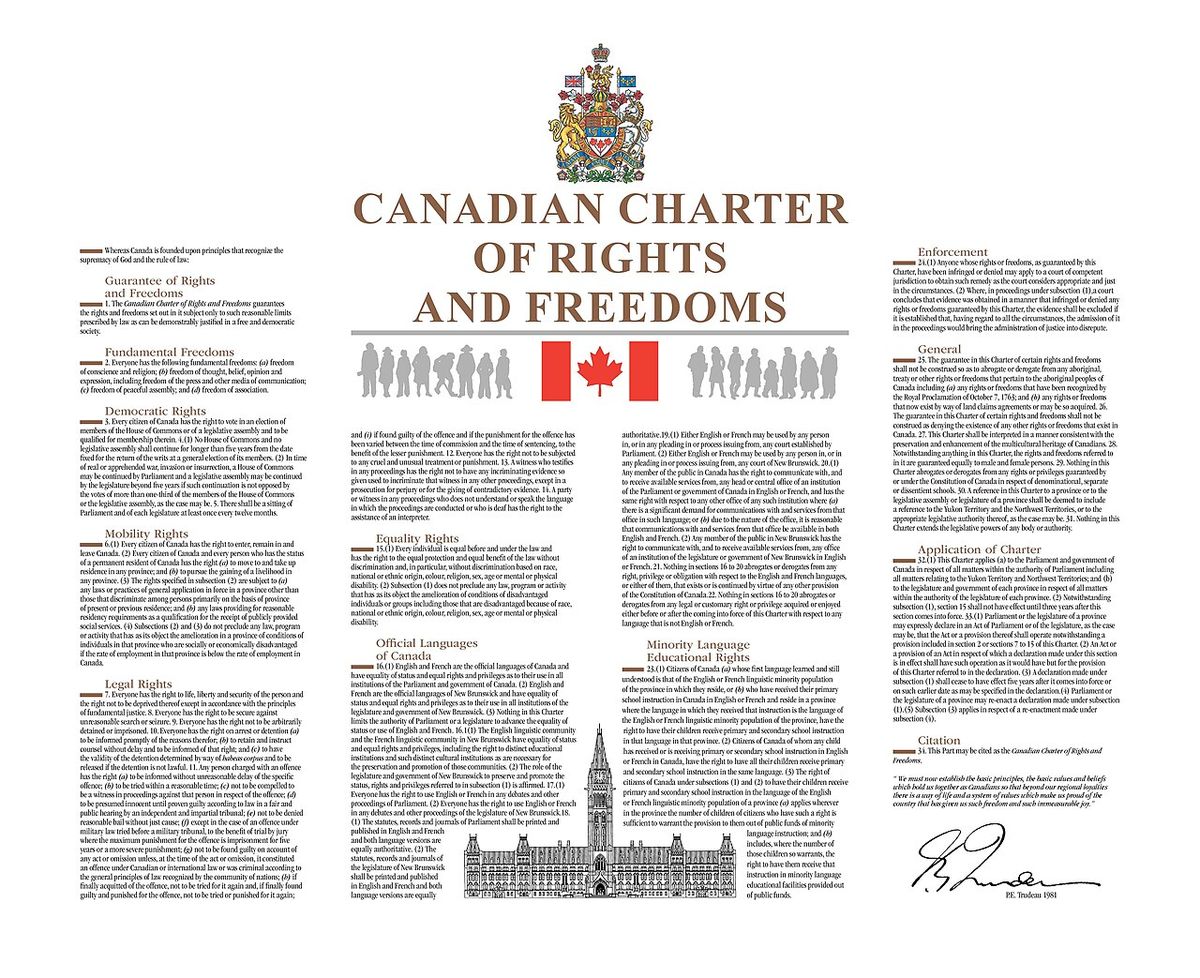
In January 2010, the Supreme Court of Canada ruled that the Canadian government's interrogation of Khadr at Guantanamo Bay offended the most basic Canadian standards of the treatment of detained youth suspects, but stopped short of ordering Khadr's repatriation. The Court referred to the denial of Khadr's legal rights and the use of sleep deprivation techniques to soften him up for interrogation. Khadr sued the Canadian government for infringing his rights under the Canadian Charter of Rights and Freedoms. His lawsuit was settled in 2017 with a CA$10.5 million payment and an apology from the federal government.
Following the 2010 ruling, Khadr was transferred to Canada on September 29, 2012, to serve the remainder of his sentence under Canadian custody. He was initially held at maximum-security Millhaven Institution in Ontario. In May 2015, the Alberta Court of Appeal refused to block his release on bail pending an appeal of his US conviction, and he was released under strict conditions, with his legal team, led by lawyers Dennis Edney and Nathan Whitling, continuing to challenge the validity of his US conviction. In May 2015, the Supreme Court of Canada ruled that Khadr had clearly been sentenced by the U.S. military tribunal as a minor, meaning any remaining time would be served in a provincial facility.
The 2017 Settlement and Aftermath
In July 2017, the Canadian government announced a CA$10.5 million settlement with Khadr to compensate for damages arising from its previous handling of the case. Attorney General Jody Wilson-Raybould and Public Safety Minister Ralph Goodale confirmed the settlement and issued a formal apology on behalf of the government. Khadr had filed a CA$20 million civil suit against the Government of Canada in 2013. Tabitha Speer, Christopher Speer's widow, and Layne Morris filed an application to enforce a US$134 million Utah default civil judgment in Canada. In March 2019, the Alberta Court of Queen's Bench ruled that Khadr's time on conditional release counted towards his sentence, officially declaring his sentence completed. The court also addressed the civil judgment, but Khadr's status as a free citizen was now legally established.
Parallel to the Canadian proceedings, Khadr continued to challenge his US conviction. In 2012, the US Court of Appeals for the District of Columbia Circuit, in an opinion by then-Judge Brett Kavanaugh, had ruled that military commissions lacked the power to try individuals for offenses like 'material support for terrorism' that were not recognized as war crimes before the 2006 Act's enactment. Following his release, Khadr was engaged to Muna Abougoush, an Edmonton-based human-rights advocate. In December 2018, an Edmonton judge denied relaxed bail conditions for Khadr, meaning he could not get a passport to travel to Saudi Arabia.
Public Opinion and Lasting Significance
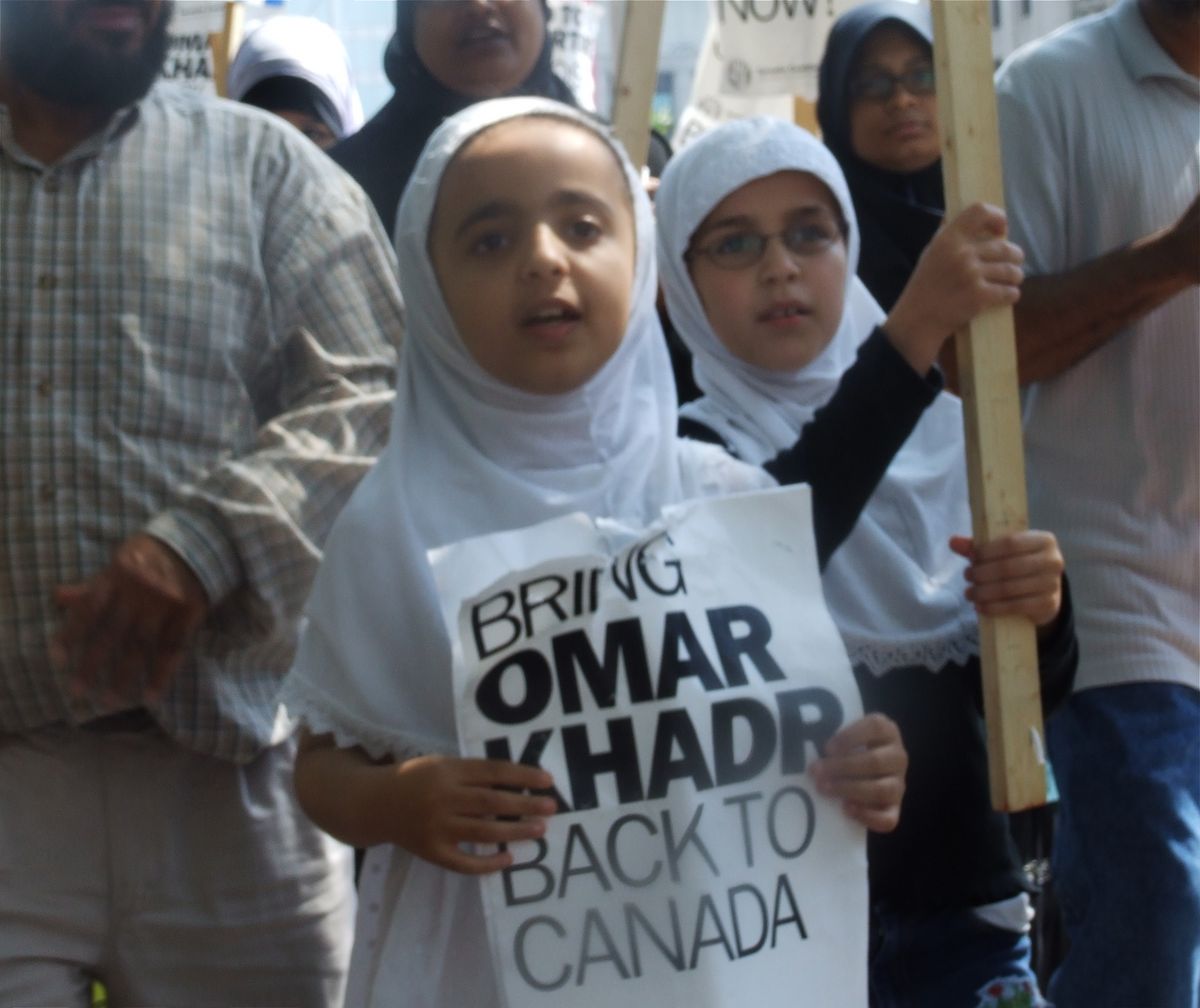
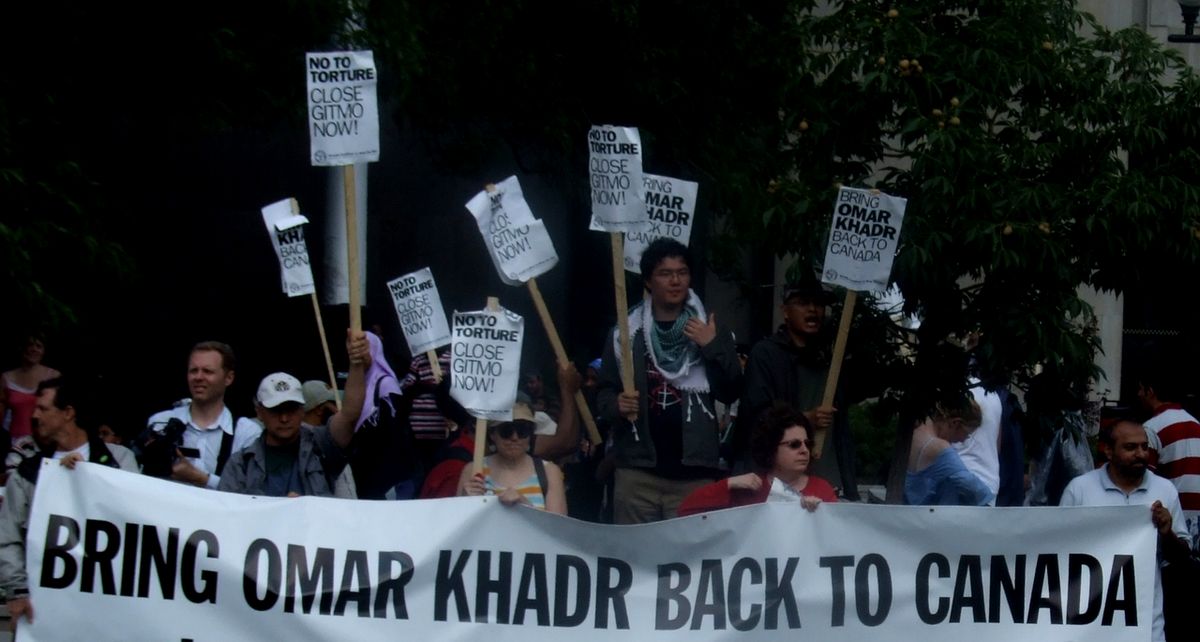
Public opinion in Canada on the Omar Khadr case was deeply polarized and evolved over time. Early sentiment was largely unsympathetic, hardened by a March 2004 CBC documentary in which Khadr's mother and sister expressed views sympathetic to al-Qaeda. An Angus Reid poll in September 2009 found 52 percent of respondents unsympathetic to Khadr, and an Abacus Data poll in August 2012 showed 60 percent opposed his return from Guantanamo to Canada. However, as details of his treatment as a minor and the Supreme Court's rulings on Charter violations became more widely understood, perceptions began to shift. A January 2009 poll showed 64 percent of Canadians supported repatriating Khadr, up from 41 percent in June 2007.
The CA$10.5 million settlement with Khadr remains one of the largest of its kind in Canadian history. His case sparked enduring debate about justice, security, and the treatment of minors in armed conflict. His conviction and sentence were denounced by some civil rights groups and the United Nations Special Representative for Children and Armed Conflict. The legal battle surrounding Omar Khadr's treatment involved multiple rulings by the Supreme Court of Canada, which consistently found the Canadian government had violated his rights under the Canadian Charter of Rights and Freedoms.
- July 27, 2002: Capture of 15-year-old Omar Khadr after the Ayub Kheyl firefight.
- October 2002: Transfer to Guantanamo Bay detention camp.
- October 2010: Guilty plea to five charges before a US military commission.
- January 2010: Supreme Court of Canada ruling on Charter violations during interrogations.
- September 29, 2012: Repatriation to Canada to serve his sentence.
- May 2015: Release on bail by the Alberta Court of Appeal.
- July 2017: $10.5 million settlement and apology from the Canadian government.
- March 25, 2019: Alberta court declares his sentence completed.
Omar Khadr's case established several important legal and political precedents in Canada. It reinforced the extraterritorial application of the Canadian Charter of Rights and Freedoms regarding Canadian government actions abroad. The Supreme Court of Canada's 2008 ruling ordered the release of videotapes of Canadian interrogations of Khadr at Guantanamo, which were later used in the documentary 'You Don't Like the Truth: Four Days Inside Guantanamo'. These events ensure Omar Khadr's name remains a reference point in discussions of Canadian law, human rights, and ethics.
Questions about Omar Khadr
Why did the Canadian government pay Omar Khadr $10.5 million?
In 2017, the Canadian government settled a lawsuit with Omar Khadr, paying him $10.5 million and issuing a formal apology. This settlement was based on multiple rulings by the Supreme Court of Canada, which found that Canadian officials had violated Khadr's Charter rights. Specifically, the Court ruled that interrogations of Khadr at Guantanamo Bay in 2003 and 2004, conducted while he was a youth detainee and being subjected to sleep deprivation, offended fundamental Canadian standards of justice. The government stated the settlement respected the rule of law and avoided potentially higher costs from continued litigation.
Is Omar Khadr still in prison?
No, Omar Khadr is no longer in prison. He was transferred from Guantanamo Bay to Canadian custody in 2012. He was released on bail in Alberta in May 2015 while appealing his US conviction. On March 25, 2019, the Alberta Court of Queen's Bench ruled that his time on conditional release counted towards his sentence and officially declared his sentence completed, making him a free man with no restrictions.
What was controversial about Omar Khadr's trial?
Omar Khadr's trial by a US military commission was controversial for several reasons. He was prosecuted for acts committed when he was 15 years old, making him the first person since World War II tried in a military tribunal for war crimes allegedly committed as a minor. The charges were laid under the Military Commissions Act of 2006, which was enacted four years after the alleged offences, raising issues of retroactivity. His guilty plea in 2010 was later described by him as coerced, motivated by a desire to leave Guantanamo Bay. The UN Special Representative for Children and Armed conflict stated the trial violated international legal norms.
How was Canada involved in Omar Khadr's detention?
Canadian officials were involved in Omar Khadr's detention through interrogations and intelligence sharing. In February 2003, Canadian Foreign Affairs intelligence officer Jim Gould and an official from the Canadian Security Intelligence Service interrogated Khadr at Guantanamo Bay. For three weeks prior to this visit, US guards had deprived Khadr of sleep to make him more amenable to questioning. The Supreme Court of Canada later ruled these actions violated Khadr's Charter rights. Canada was informed of his capture on August 20, 2002, but its request for consular access was denied by the United States.
What did Omar Khadr do to be sent to Guantanamo Bay?
Omar Khadr was detained by the United States and sent to Guantanamo Bay after being captured as a 15 year old following a firefight in Afghanistan on July 27, 2002, in the village of Ayub Kheyl. US forces alleged he threw a grenade that killed US Army Sergeant First Class Christopher Speer. After his capture he was first held at Bagram Airfield before being transferred to the Guantanamo Bay detention camps in Cuba in October 2002. During his detention he pleaded guilty to murder in violation of the laws of war and four other charges before a US military commission in 2010.
What happened to the civil lawsuit filed by the widow of Sergeant Speer?
Tabitha Speer, the widow of Sergeant Christopher Speer, and Layne Morris filed a wrongful death and injury lawsuit against Omar Khadr. In 2015, a Utah judge granted them a US$134 million default judgment after Khadr did not respond to the suit. In 2017, they filed an application to make the judgment enforceable in Canada. As of July 2017, a judge rejected a bid to freeze Khadr's assets in relation to this judgment. The status of enforcing the US civil judgment within Canada remains a distinct legal matter from Khadr's criminal case and government settlement.
Sources and further reading
- Omar Khadr (Wikipedia)
- Canadian formerly held at Guantanamo seeks to erase ... (scotusblog.com)
- Canada settled with Omar Khadr to respect the rule of law (sencanada.ca)
- Omar Khadr Case (thecanadianencyclopedia.ca)
- Amnesty International welcomes ruling that Omar Khadr ... (amnesty.ca)
Checked by the Nosy Mag desk. Last updated 2026-10-23.