Three Card Poker
Three Card Poker is a casino table game based on poker. It was designed in 1994 by Derek Webb. The game is a fast-paced variant where players compete directly against the dealer using three-card hands. Its straightforward rules and multiple betting options, including the popular Pair Plus side bet, have made it a staple in Canadian casinos. The game is licensed and marketed by SHFL entertainment, Inc., and is available both in physical casinos and through online platforms operated by provincial lottery corporations.
History and Development
Derek Webb created Three Card Poker in 1994 with the goal of designing a poker-based game that played with the speed of other casino table games. Webb founded Prime Table Games to market his invention. After unsuccessful pitches in Reno, Las Vegas, and Atlantic City, the game found its first home at the Grand Casino Gulfport in Mississippi through Vice President Barry Morris. A key aspect of Webb's offer was his personal involvement in training dealers and ensuring correct gameplay. The game was patented in 1997, and United Kingdom gambling regulations were changed to allow its introduction in 2002.
In 1999, Shuffle Master acquired the marketing rights to Three Card Poker outside the British Isles. This sale was prompted by a patent infringement lawsuit filed that year by Mikohn Gaming, then-owners of Caribbean stud poker. As part of the purchase agreement, Shuffle Master assumed the defence of that litigation. In a 2007 countersuit, Prime Table Games demonstrated that Mikohn's patent claims were invalid, leading to a settlement where the renamed Progressive Gaming International Corporation paid $20 million. Prime Table Games later filed suit against Shuffle Master in 2008, alleging Shuffle Master had undisclosed knowledge of the invalid claims before the 1999 purchase, a case settled for over $2 million. Today, the game is a licensed trademark of SHFL entertainment, Inc.
Game Rules and Gameplay
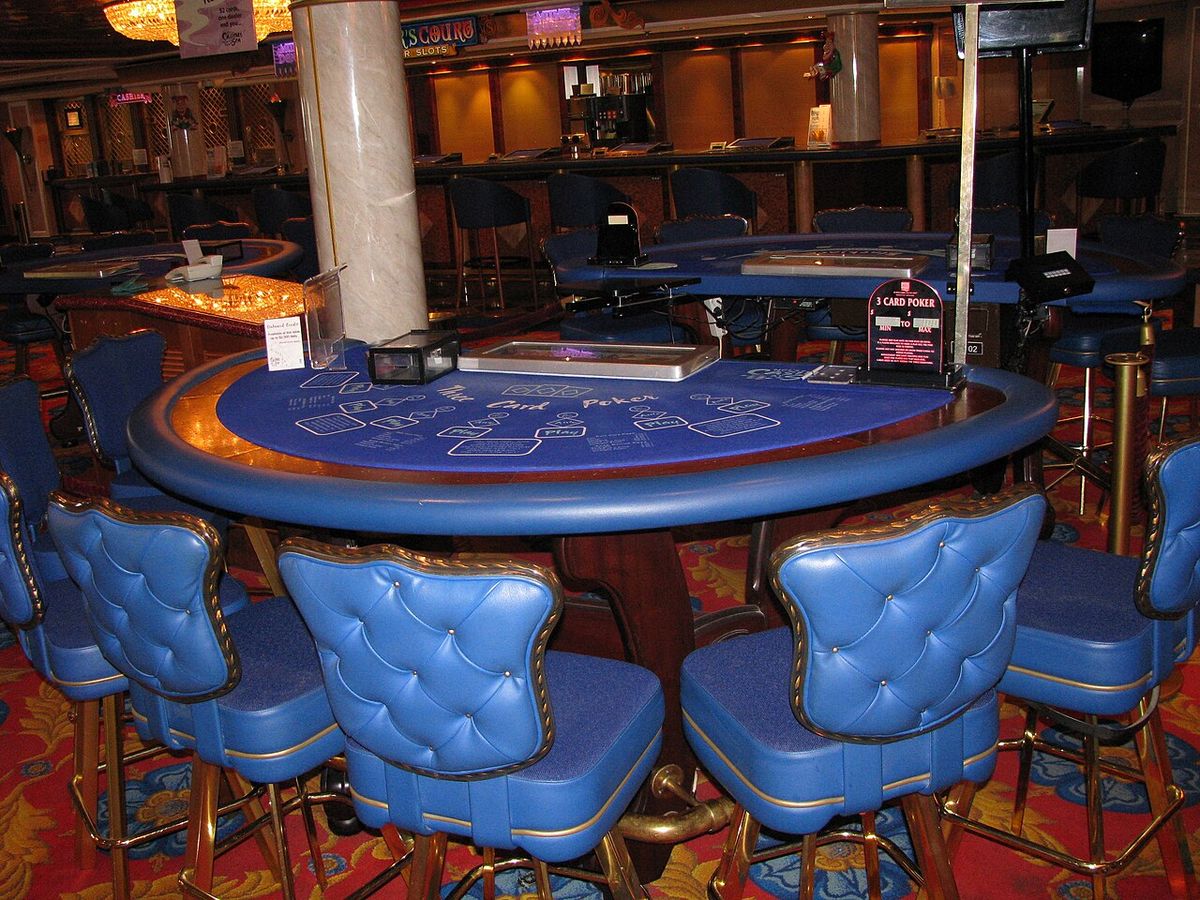
Three Card Poker is played as heads-up between the player's hand and the dealer's hand. After all ante wagers are placed, three cards are dealt face down to each player and the dealer. Players have a choice to either fold or continue in the game by placing a play wager equal to their ante. The dealer's hand must be Queen high or better for the dealer hand to play. If the dealer does not play, then there is no action on play wagers and ante wagers are paid 1 to 1. If the dealer does play, the dealer and player hands are compared. If the player hand loses, both the ante and play wagers are lost. If the player hand wins, both wagers are paid 1 to 1. If the hands are tied, there is no action on either wager.
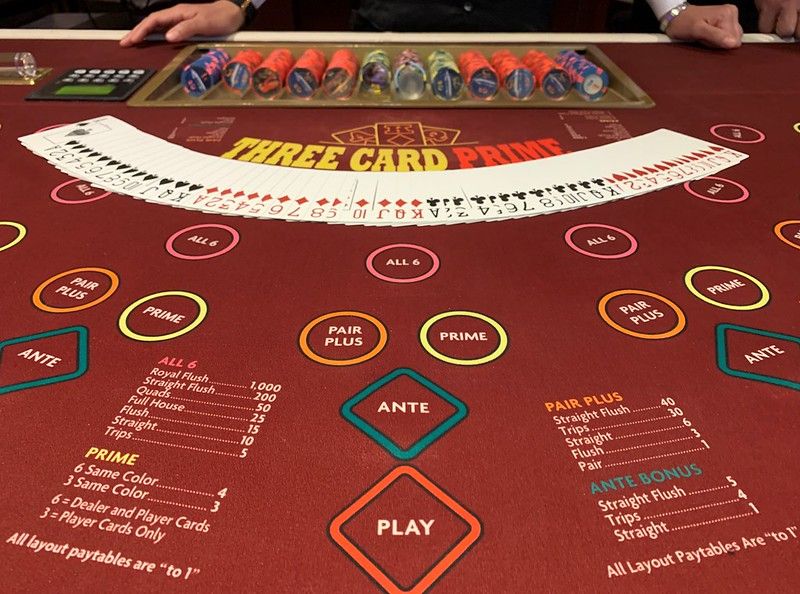
Additional optional bets are offered. The Pair Plus wager is a bet that the player's hand will be a pair or better. The Pair Plus wager wins if the player has at least a pair of twos. The payoff applies regardless of the dealer's hand. Some casinos also offer an Ante Bonus, which is paid on the ante wager for a straight or better. The typical Ante Bonus paytable pays 5 to 1 for a straight flush, 4 to 1 for a three of a kind, and 1 to 1 for a straight. The probability of the dealer qualifying is approximately 69.59 percent.
- Place an Ante bet, a Pair Plus bet, or both before cards are dealt.
- The dealer deals three cards face down to each player and themselves.
- Players with an Ante bet must choose to fold or place an equal Play bet.
- The dealer reveals their hand and must have Queen-high or better to qualify.
- If the dealer qualifies, player and dealer hands are compared to resolve Ante and Play bets.
- The Pair Plus bet is paid based solely on the player's three cards.
Hand Rankings and Payouts
Three Card Poker uses a distinct hand ranking system that differs from traditional five-card poker. In this three-card format, a straight beats a flush. The rankings, from highest to lowest, are straight flush, three of a kind, straight, flush, pair, and high card. A straight flush consists of three consecutive cards of the same suit. A three of a kind is three cards of the same rank. A straight is three consecutive cards of mixed suits. A flush is three non-consecutive cards of the same suit. A pair is two cards of the same rank. When no pair or better is made, the hand is valued by its highest card.
The primary payouts are for the Ante/Play contest, which pays even money when the player beats a qualifying dealer. Many casinos offer an Ante Bonus, paid on the Ante bet when the player makes a straight or better, regardless of the dealer's hand. A typical Ante Bonus paytable pays 1 to 1 for a straight, 4 to 1 for three of a kind, and 5 to 1 for a straight flush. The house edge on the main Ante bet is approximately 3.37 percent.
Common Variations and Side Bets
Beyond the standard Ante, Play, and Pair Plus bets, numerous variations and optional side bets have been introduced to Three Card Poker. One popular addition is the Six Card Bonus bet, where the player wins based on the best five-card poker hand that can be made using any combination of the player's three cards and the dealer's three cards. Payoffs range from 5 to 1 for three of a kind to 1000 to 1 for a royal flush. Another variation, known as Prime Three Card Poker in the United Kingdom, includes a Prime wager on the colour of the cards. It pays 3 to 1 if the player's three cards are all the same colour, and 4 to 1 if all six cards are the same colour.
Many Canadian casinos offer progressive jackpot side bets. For example, Loto-Québec promotes a Poker progressive jackpot across its locations. Casinos in Western Canada may feature a Progressive Bonus bet. These side bets are entirely optional and operate under their own paytables, which players should review before playing. The core game structure remains consistent.
- Six Card Bonus: A bet on the best five-card hand from the player's and dealer's combined six cards.
- Prime Bet: A UK variation where players bet on all cards being the same colour.
- Progressive Jackpot: A side bet that contributes to a growing prize pool, often for hands like a straight or better.
- Ante Bonus: A common bonus paid on the Ante wager for a straight, three of a kind, or straight flush.
Availability in Canadian Casinos
Three Card Poker is widely available in commercial and charitable casinos across Canada, operated by provincial gaming authorities. In Quebec, Loto-Québec offers the game at its casinos et salons de jeux, played with a single 52-card deck and featuring the standard Ante, Play, and Pair Plus bets along with progressive jackpot options. In Saskatchewan, Casinos Regina and Moose Jaw provide the game. Alberta casinos, such as Grey Eagle Resort and Casino, also feature Three Card Poker tables.
The game is also accessible through online platforms run by provincial lottery corporations. For instance, Ontario residents can play Three Card Poker via the Ontario Lottery and Gaming Corporation (OLG) website, which offers single-deck gameplay with Ante, Play, and Pair Plus betting options. These online versions include responsible gaming tools like loss limits. A licensed video game version, 3 Card Poker for Nintendo Switch, provides a single-player, non-gambling simulation with virtual currency.
| Province/Jurisdiction | Primary Operator | Notable Features |
|---|---|---|
| Quebec | Loto-Québec | Progressive jackpot |
| Saskatchewan | SaskGaming | Available at Casinos Regina & Moose Jaw |
| Alberta | Alberta Gaming, Liquor & Cannabis | Available at properties like Grey Eagle |
| Ontario | Ontario Lottery and Gaming Corporation (OLG) | Online play with loss limit controls |
| British Columbia | British Columbia Lottery Corporation (BCLC) | Available in many casino properties |
Strategy and House Edge Considerations
Three Card Poker is a house-banked game, meaning players compete against the casino, which has a mathematical edge. The house advantage on the main Ante bet is approximately 3.37 percent. Basic strategy for the Ante/Play decision is straightforward: the player should place the Play bet whenever their hand is Queen, 6, 4 or better. Folding with a weaker hand minimizes losses over time. Expert analysis highlights common player mistakes, including playing hands weaker than Queen-6-4 or misunderstanding the independent nature of the Pair Plus bet. It is crucial for players to remember that the Pair Plus and Ante Bonus payouts are based solely on the player's cards and are not affected by the dealer's hand or qualification.
Compared to other casino card games, Three Card Poker offers a faster pace and simpler decisions than games like Ultimate Texas Hold'em or Pai Gow Poker. However, for players seeking the lowest possible house edge, traditional blackjack or video poker with optimal strategy are mathematically superior choices. The probability of the dealer qualifying is 69.59 percent. The Pair Plus wager wins if the player has at least a pair of twos.
Responsible Gambling and Legal Status
The game's legal status as a proprietary table game is secured through licensing agreements with SHFL entertainment, Inc. Players are reminded that the rules in provincial gaming bylaws take precedence over any summary provided at the table. The fast-paced nature of Three Card Poker requires players to manage their bankroll carefully. All provincial authorities emphasize that gambling should be a recreational choice made by informed adults. Online platforms like OLG enforce player-defined loss limits on every wager. Provincial help lines include Saskatchewan's 1-800-306-6789 and Alberta's 1-866-332-2322. The GameSense program provides educational resources. Provincial gaming bylaws are the final authority on game rules.
- Online platforms like OLG enforce player-defined loss limits on every wager.
- Provincial help lines include Saskatchewan's 1-800-306-6789 and Alberta's 1-866-332-2322.
- The GameSense program, licensed from BCLC, provides educational resources.
- Provincial gaming bylaws are the final authority on game rules.
Questions about Three Card Poker
How do you play Three Card Poker?
Players start by placing an Ante bet to play against the dealer, a Pair Plus bet on their own hand's value, or both. The dealer gives three cards face down to each player and themselves. After looking at their cards, players with an Ante bet must either fold or place a Play bet equal to the Ante. The dealer then reveals their hand and must have at least Queen-high to qualify. If the dealer qualifies and the player's hand is higher, both Ante and Play bets win even money. If the dealer does not qualify, Play bets are returned and Ante bets are paid even money. The Pair Plus bet pays based on the player's cards alone.
What are the hand rankings in Three Card Poker?
Hand rankings differ from traditional poker. The highest hand is a straight flush, which is three consecutive cards of the same suit. Next is three of a kind, followed by a straight. A flush ranks below a straight in this three-card format. Then comes a pair, and finally a high-card hand. A unique feature is that a straight beats a flush. The Ace is high except when forming the lowest straight, Ace-2-3. These rankings are used to compare hands against the dealer.
What is the Pair Plus bet in Three Card Poker?
The Pair Plus is an optional side bet that the player's three-card hand will contain a pair or better. It wins if the player has at least a pair of twos. The payoff applies regardless of the dealer's hand, as the Pair Plus wager is not in competition against the dealer's hand. This bet loses if the player's hand contains only a high card. Paytables vary by casino, but it is a popular bet due to its simplicity and independence from the main game outcome.
Can I play Three Card Poker online in Canada?
Yes, Three Card Poker is available online through provincially regulated platforms. For example, the Ontario Lottery and Gaming Corporation (OLG) offers an online version with single-deck gameplay and the three main betting options. These sites include responsible gambling features like loss limits and self-exclusion tools. A non-gambling video game version, 3 Card Poker for Nintendo Switch, provides a simulation experience using virtual currency. Online play follows the same standard rules as the land-based casino game.
What is the house edge in Three Card Poker?
The house edge on the primary Ante bet is approximately 3.37 percent. This edge assumes the player uses the basic strategy of playing with a hand of Queen, 6, 4 or better. Optional side bets like the Six Card Bonus or progressive jackpots have their own, usually higher, house edges. Compared to other casino games, this edge is higher than blackjack or baccarat but is standard for poker-based table games. Players should review specific paytables as rules can vary slightly between casinos.
What does it mean for the dealer to qualify in Three Card Poker?
For the dealer's hand to 'qualify,' it must be ranked Queen-high or better. If the dealer does not qualify, all active Play bets are returned to players as a push. Players' Ante bets are then paid at even money. If the dealer does qualify, the hands are compared, and the higher hand wins both the Ante and Play bets. The dealer qualifies roughly 69.59 percent of the time. This qualification rule is a key part of the game's structure and affects the strategy for placing the Play bet.
Sources and further reading
- Three Card Poker (Wikipedia)
- How to Play 3-Card Poker (rwnewyork.com)
- Three Card Poker | Casinos et Salons de jeux | Loto-Québec (casinos.lotoquebec.com)
- Three Card Poker (thebike.com)
- Casino Card Games (2026): Best and Worst Odds Ranked (pokercoaching.com)
- Play Three Card Poker on OLG (olg.ca)
- Three Card Poker (greyeagleresortandcasino.ca)
Checked by the Nosy Mag desk. Last updated 2026-11-11.