Caribbean stud poker
Caribbean stud poker, also known as casino stud poker, is a house-banked casino table game derived from five-card stud poker. Unlike traditional poker, players compete exclusively against the dealer rather than each other. The game gained popularity as casinos sought to attract poker enthusiasts to table games, with its modern form emerging in Aruban casinos in the 1980s. Its appeal lies in its simple rules, the potential for a progressive jackpot, and its status as a staple in the casino poker genre.
Gameplay and Basic Rules
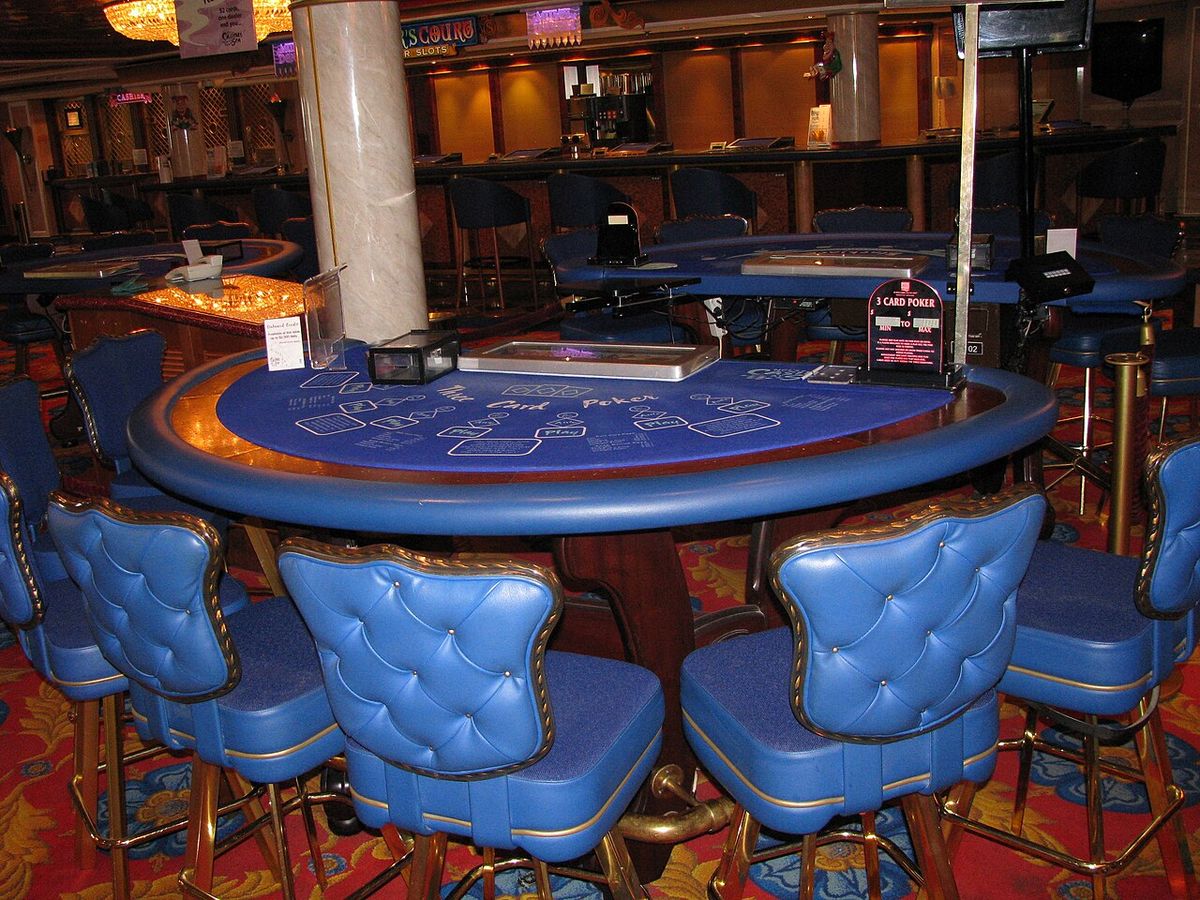
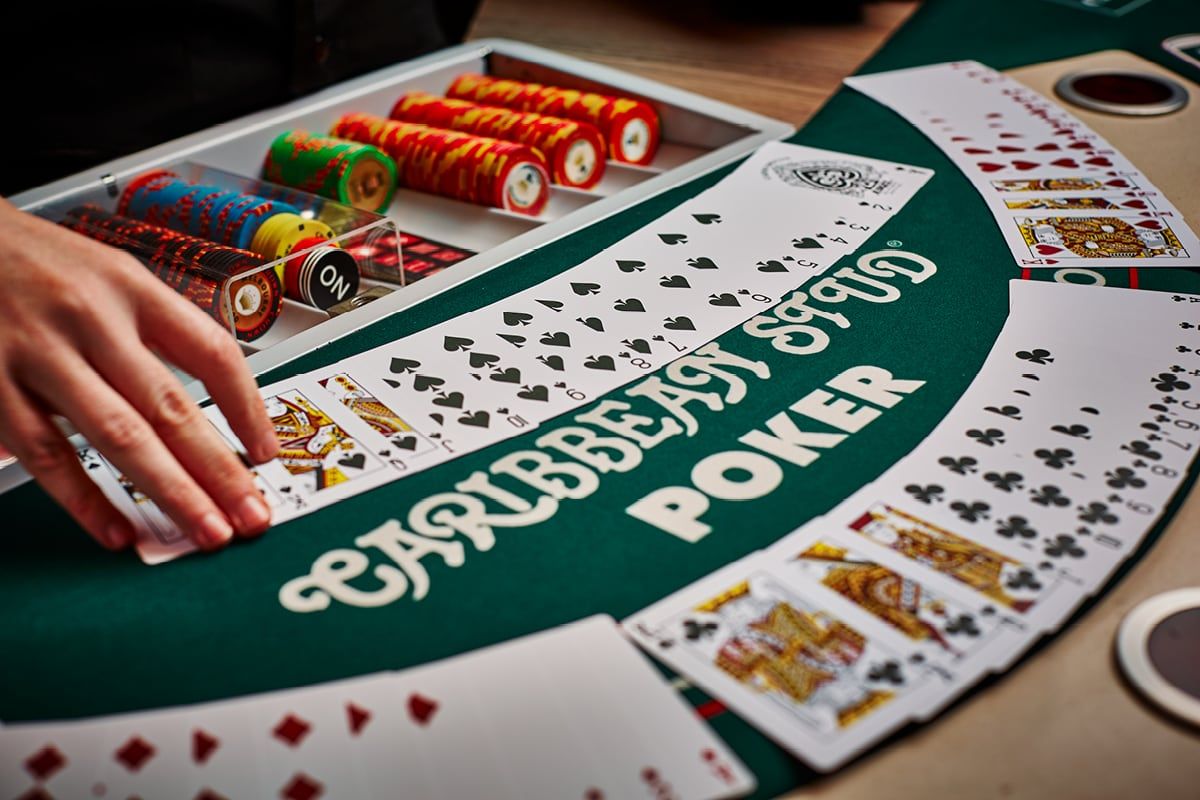
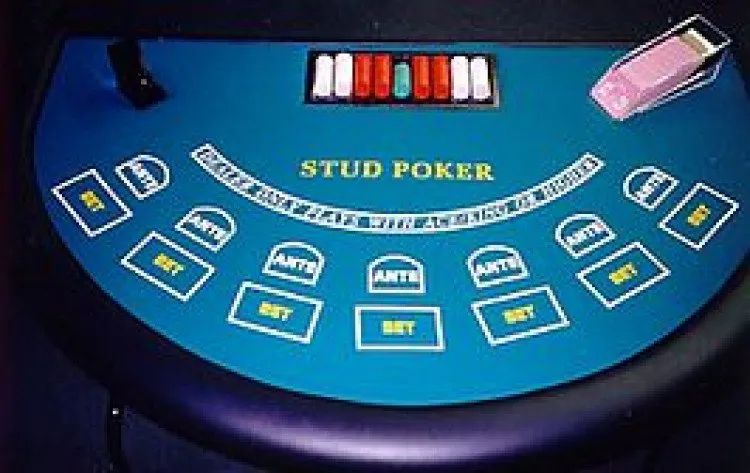
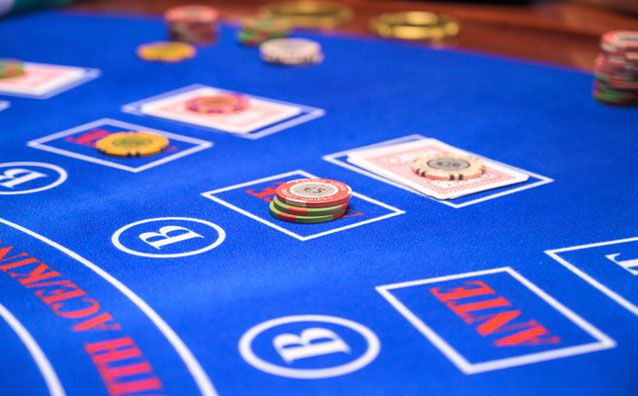
Caribbean stud poker is played with a single standard 52-card deck on a table typically accommodating six or seven players. Each round begins with all participants placing a mandatory initial wager called the ante on a designated spot on the table layout. Before cards are dealt, players may also place an optional side bet to qualify for the progressive jackpot. The dealer then distributes five cards face down to each player and five cards to themselves, with one of the dealer's cards revealed face up. Players are permitted to look at their own cards privately but should not reveal them to other participants. After assessing their hand and the dealer's visible card, each player must decide to either fold or raise. Choosing to fold means forfeiting the ante bet and sitting out the remainder of the hand. Choosing to play requires placing a second bet called the raise, which must be exactly twice the amount of the original ante wager.
Once all players have made their decisions, the dealer reveals their remaining four face-down cards. The dealer's hand must qualify for play by containing at least an Ace and a King or forming any standard poker pair or better. If the dealer's hand does not qualify, all players who did not fold win even money on their ante bets, and their raise bets are returned as a push with no winnings. If the dealer's hand does qualify, it is compared individually to each remaining player's hand using traditional poker rankings. Players with a higher-ranking hand than the dealer win both their ante and raise bets, with the ante paid at even money and the raise paid according to a fixed paytable. Players with a lower-ranking hand lose both wagers, while a tie results in both bets being pushed back to the player. The structured flow of the game makes it easy for newcomers to follow while maintaining the pace expected in a casino environment.
- Players place an ante bet and an optional progressive jackpot bet.
- The dealer announces no more bets and deals five cards to each player and themselves, with one dealer card face up.
- Players examine their cards and decide to fold or raise.
- The dealer reveals their remaining four cards and checks if their hand qualifies.
- If the dealer qualifies, each player's hand is compared to the dealer's hand to determine payouts.
- If the dealer does not qualify, ante bets are paid even money and raise bets push.
Historical Development
The game was developed to capitalize on the popularity of poker by creating a house-banked version where players compete against the casino. Professional poker player and author David Sklansky has publicly claimed he invented the game around 1982 under the name Casino Poker. His original version reportedly differed from the modern game, featuring two dealer cards revealed instead of one and lacking a progressive jackpot component. Sklansky has stated he faced difficulties patenting his creation. A few years later, another poker player acquired the rights to the game and brought it to the King International Casino in Aruba, now known as the Excelsior Casino. It was there that the rules were refined into the Caribbean stud poker format known today, including the introduction of the progressive jackpot feature. The game's spread from Aruba to casinos worldwide followed a typical pattern for new table games, gaining a foothold in Caribbean resorts before appearing on the floors of major casinos in Las Vegas, Atlantic City, and internationally. In the United Kingdom, the game is officially marketed as Casino Five Card stud poker or Casino Jackpot Five Card stud poker where the progressive bet is offered.
Hand Rankings and Payout Structure
Caribbean stud poker uses the traditional ranking of five-card poker hands, from highest to lowest. Players must be familiar with these rankings to evaluate their hand strength against the dealer's potential hand. The dealer's single face-up card provides a crucial clue, as a high card like an Ace or King increases the probability of a qualifying hand. The fixed paytable for the raise bet provides bonus payouts for premium hands, independent of whether the dealer qualifies or the player wins the main bet. Standard payouts on the raise bet, which can vary slightly by casino, typically follow a structure like the one below. Maximum payouts per hand are commonly capped, often at $5,000 USD on the raise bet in many jurisdictions.
| Hand | Typical Payout (Raise Bet) |
|---|---|
| Royal Flush | 100 to 1 |
| Straight Flush | 50 to 1 |
| Full House | 7 to 1 |
| Flush | 5 to 1 |
| Straight | 4 to 1 |
| Three of a Kind | 3 to 1 |
| Two Pair | 2 to 1 |
| One Pair or Less | 1 to 1 |
The optional progressive jackpot side bet, usually requiring a separate wager of one or two dollars, offers significantly larger payouts for the highest-ranking hands, often with a royal flush paying 100 percent of the jackpot pool. Payouts for this side bet are typically awarded regardless of the dealer's hand qualification or the outcome of the main game. Common progressive jackpot payouts include a fixed amount for a straight flush, four of a kind, and a full house, with the flush often paying a smaller fixed sum. The progressive jackpot amount is displayed on a prominent meter above the table, and it can sometimes exceed $500,000, adding a major draw for players seeking a large bonus win.
Strategy and Decision Making
Since Caribbean stud poker is a game of incomplete information played against the house, optimal strategy focuses on the mathematically correct decision to raise or fold based on one's hand and the dealer's single upcard. The core strategic principle is to raise only with hands that have a positive expected value against the dealer's range of qualifying hands. Basic strategy dictates that players should almost always raise with a pair or better, and should also raise with an Ace-King high hand even if it lacks a pair. The decision becomes more nuanced with weaker Ace-high or King-high hands, where the dealer's visible card significantly influences the correct play. For instance, if the dealer's upcard is an Ace, King, Queen, or Jack and matches a card in the player's hand, it reduces the dealer's chance of qualifying, making a raise with a weaker hand more favourable. Conversely, folding is generally recommended for hands lower than Ace-King high, such as Queen-Jack high or worse. Players should never raise with less than Ace-King high if the dealer's upcard is a low card like a two through nine, as the probability of the dealer failing to qualify is higher, making it better to fold and limit losses. The optional progressive jackpot bet is a separate wager with a high house edge and does not affect the strategy for the main ante and raise bets. Mastering this basic strategy minimizes the house edge, though the game remains a casino advantage play.
- Always raise with a pair or any higher-ranking hand.
- Always raise with Ace-King high, regardless of the dealer's upcard.
- Consider raising with Ace-Queen high only if the dealer's upcard is a ten or lower and does not pair your Queen.
- Fold all other hands, including King-Queen high or lower.
- The optional progressive jackpot bet is a separate wager with a high house edge. It does not affect the strategy for the main ante and raise bets.
Caribbean Stud in Canadian and Online Casinos
In Canada, Caribbean stud poker is available in licensed land-based casinos in provinces where casino gambling is legal, such as British Columbia, Ontario, and Quebec. Canadian casinos typically offer the game with rules and paytables consistent with major international markets, including the optional progressive jackpot side bet. Tables display maximum payout limits per hand, which are regulated by provincial gaming authorities. The game's presence contributes to the diverse suite of table games offered alongside blackjack, roulette, and baccarat. The rise of online and mobile casinos has significantly expanded access to Caribbean stud poker for Canadian players. Numerous licensed international online casinos accept Canadian players and offer digital versions of the game, often with lower minimum bets than physical tables. A key development is the advent of live dealer Caribbean stud, where a real human dealer streams the game from a studio, combining the convenience of online play with the social atmosphere of a land-based table. These live games, popularized by providers like Evolution Gaming, allow thousands of players to participate simultaneously. When playing online, Canadians should ensure they use reputable, licensed operators and be aware of the terms and conditions regarding bonuses, withdrawals, and game fairness.
Comparison to Other Casino Poker Games
Caribbean stud poker is one of several popular house-banked poker variants found in casinos, each with distinct rules and appeal. Unlike Texas hold'em or Omaha, which are player-versus-player games often offered in casino poker rooms, Caribbean stud and its cousins are pit games where the casino is the perpetual opponent. This fundamental difference means there is no bluffing, no community cards, and no complex betting rounds. The most direct comparison is with Three Card Poker, another immensely popular casino game. Both require an ante bet and a raise/fold decision, but Three Card Poker uses only three cards per hand and has different hand rankings and a separate Pair Plus bonus bet. The dealer qualification rule also differs, as in Three Card Poker the dealer must have Queen-high or better. Other notable casino poker games include Let It Ride and Ultimate Texas Hold'em. Let It Ride involves three equal bets and allows players to withdraw two of them as the hand develops, based on community cards and two private cards. Ultimate Texas Hold'em, as the name implies, uses Texas hold'em rules and community cards but pits the player against the dealer. Caribbean stud's unique selling points are its straightforward five-card stud format, the clear dealer qualification threshold of Ace-King high, and its historically strong association with large progressive jackpots.
Questions about Caribbean stud poker
What is Caribbean stud poker?
Caribbean stud poker is a casino table game where players compete against the dealer, not each other, using five-card stud poker hand rankings. Players make an initial ante bet, receive five cards, and decide to fold or raise based on their hand strength and the dealer's single face-up card. The dealer must have at least an Ace and a King or a pair to qualify. The game often features an optional progressive jackpot side bet.
How do you play Caribbean stud poker?
To play, first place an ante bet. You and the dealer are then dealt five cards each, with one of the dealer's cards face up. After looking at your hand, you must either fold, losing your ante, or raise by placing a second bet equal to double your ante. If you raise and the dealer's hand qualifies, your hand is compared to the dealer's. If you beat the dealer, you win even money on the ante and a bonus on the raise according to a paytable. If the dealer does not qualify, you win even money on your ante and your raise bet is returned.
What are the Caribbean stud poker rules for the dealer?
The dealer must have a qualifying hand to play against the players. A qualifying hand is defined as any five-card poker hand that contains at least an Ace and a King, or any pair or better. If the dealer's hand does not meet this threshold, it does not qualify. When the dealer does not qualify, players who raised win even money on their ante bet only, and their raise bet is pushed. If the dealer qualifies, they compare their hand to each player's hand to determine wins and losses.
What is a good Caribbean stud poker strategy?
A basic strategy minimizes the house edge. You should always raise with a pair or any better hand. You should also always raise with Ace-King high, regardless of the dealer's upcard. With Ace-Queen high, consider raising only if the dealer's upcard is a ten or lower. For all other hands, including King-Queen high or worse, you should fold. The optional progressive jackpot bet is a separate wager with independent odds.
Can you play Caribbean stud poker online?
Yes, Caribbean stud poker is widely available at online casinos. Many sites offer digital versions with random number generators, and a growing number feature live dealer Caribbean stud. In live dealer games, a real human dealer streams the action from a studio, dealing physical cards to players who are participating remotely. This format, offered by providers like Evolution Gaming, replicates the social feel of a land-based table.
What is the progressive jackpot in Caribbean stud poker?
The progressive jackpot is an optional side bet, typically costing one or two dollars, placed alongside the ante. It qualifies you for large bonus payouts if you make a very strong hand, regardless of the dealer's hand or the main game outcome. A royal flush usually pays 100 percent of the jackpot pool. Other premium hands like a straight flush, four of a kind, a full house, and a flush typically pay fixed amounts or a smaller percentage of the jackpot.
Sources and further reading
- Caribbean stud poker (Wikipedia)
- How to Play Caribbean Stud Poker (christchurchcasino.co.nz)
- Caribbean Stud at Crown Casino (crownmelbourne.com.au)
- How to Play Caribbean Stud Poker (rwnewyork.com)
- Caribbean Stud Poker Game Strategies 2026 (btcgosu.com)
Checked by the Nosy Mag desk. Last updated 2026-11-11.